How to do cold email outreach in 2024 (you're doing it wrong)
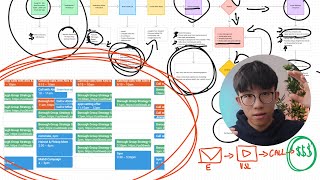
Jimmy Fung walks through a cold email system: set up 50-100 Outlook accounts on purchased domains, warm them for 14 days, research your niche, build verified lead lists, create video sales letters, then run broad campaigns followed by hyper-targeted ones by job title and company size.
Questions this video answers
50 to 100 email accounts.
Approximately 1,500 to 3,000 cold emails per day.
14 days.
Smart Lead (referred to as Smartly AI / Smart Lead).
Title: Systems Integrator; pay: $3–$7 per hour.
All right, so in today's video, I will be walking you through our entire cold email process. And obviously this works, whether that is for yourself. If you're running a lead generation agency and you're looking to launch your very first cold email campaign or for your client, right. This is very specific towards either or of those scenarios because as a lead generation agency for cold emails, you're doing the exact same process, number one, for yourself to sign a client for yourself, and then you're using a similar process for, for your clients as well. So I'll be walking you through exactly how we do it at my own lead generation agency and how I set up my own cold email campaigns and the cold email campaigns for our clients. So the very first thing that we want to do, right, so right after you sign your very first client, or if this is for yourself, the very first thing you want to do is set up 50 to 100 email accounts. That's personally what I do at my own lead generation agency. It's called Salesway IO. And this way it ensures that I'm able to send enough cold emails every single day to generate enough attention, get enough people to, number one, find out about who I am, and number two, generate enough attention so that people understand who I am, what I sell and what I have to offer. Right? So depending on the clients, depending on the scenario, I might set up a little bit less email accounts, I might set up more. But the vast majority of my own email campaigns and for my clients as well, I set up somewhere between 50 and 100 email accounts every single day, which means that I'm able to send consistently somewhere between 1500 and 3000 cold every single day. Right. And the main tools that I use in order to do that is Microsoft Domains and Ms. Outlook. A lot of people ask me if they could use other things like GoDaddy, like Namecheap. Yes, you can. Those are just domain providers. It really doesn't matter. But what you need to do is you need to first buy your domains from your domain provider. I use Pork Bun and then connect them to Microsoft Outlook, Microsoft Outlook business basic for GoDaddy, for example. I know there's a way to buy the Microsoft Outlook directly with the domain provider, which is GoDaddy. I don't recommend that because the deliverability is just not that good. What you want to do is you want to buy your domains first and then buy your email account second and connect them together. So that's what we do. After we do that, our next process is we go into smartly AI or instantly AI. Again, those are pretty competitive tools. Either or works. Personal preference. I just use Smartly AI. And what we use this tool for is for the warm up emails for 14 days, right? So it's very important that you warm up your email accounts for 14 days minimum. Because if you do not, what's going to happen is all of your emails are just going to land in the spam folder or the junk folder, depending on what you're using. So what you have to do is you have to warm up your email accounts for 14 days. One of the benefits is Smart Lead, the tool that I use personally. It actually has a 14 day free trial. So if you're able to line that up correctly, technically you're able to use smartly for free. And the only time you pay for Smart Lead is when you're actually sending your cold emails. But that's what I use. I don't think, I think instantly the AI has a seven day free trial. I could be wrong. I don't really use instantly, but it has a trial. I don't think it's for the full 14 days, but I use Smart Lead AI and I know 14 days after that the very first thing that I do, right? So these two things together, it takes a couple hours to do, right? Setting up the email accounts, warming them up, connecting Smart Lead, it's a pretty simple process. It just takes a couple hours. It takes some time to do. It's pretty tedious for me. At my agency, I personally hired a VA to help me do that. The title is Systems Integrator. I pay them anywhere between three and seven dollars an hour and all they do is anytime I sign a new client or for my own campaigns, I personally just buy the domains. I buy actual licenses and my VA then goes into the actual account to set them all up, configure them with the dmarc, the dkim, all of those records and connect them to smartly. Because it does take a while. It takes a couple hours to do that. So that's what I do. The first thing that I do after all of those things are done, after the infrastructure setup aspect of things is I want to understand the niche and understand some and conduct some research, basically, right? And this is important because let's say I sign a completely new client and they sell their own services or products to industry that I just don't really know too much about or I don't have any experience, or let's say for myself, for example, let's say I come up with a New idea for a new niche that I could target to sell my own cold email lead generation services to. I obviously don't know too much about it. So what I want to do is obviously I need to, number one, understand the niche and number two, conduct some research. So here are some tools that I leverage in order to help me conduct this actual research. So the first one is obviously Google. We use ChatGPT. You know, ChatGPT is very, very effective as long as you're giving it the right prompts. We watch YouTube video to understand a little bit more about the business model as a whole, we then go into communities, right? So for example, over here I have Facebook groups, I have Reddit, I have Twitter. What all of these are, are they're just community platforms because that's just a place where all the people of my niche, my target, icp, they're all just congregated there. So for example, if you find a Reddit forum which is, let's say, strictly marketing agency owners, you go through that forum and learn a lot about the common pain points, the common problem, the things that marketing agency owners have tried and what they're looking to achieve. Generic goals, right? Or Facebook groups work extremely well as well. But certain industries aren't necessarily on Facebook groups. LinkedIn groups are really good ones as well. And Twitter X, whatever you want to call it, is also really good as well because it's kind of like a community based platform after that. These are some of the things that I want to understand in my research, right? The first one is I need to understand the niche inside out. If someone were to ask me, what does this ICP do? What do marketing agency owners do? I want to understand, be able to explain to other people exactly how it works, how people make money, all of those things. Because I understand the niche, I want to understand how large or how small the total market size is. I want to understand common pain points and common problems that business owners inside of that industry might face. I want to understand what have they typically tried before? So for example, if I'm selling cold email lead generation services, I want to understand, have marketing agency owners tried cold emails before? Have they tried lead generation, have to try LinkedIn lead generation, cold calling, what have they kind of tried? Certain industries haven't really tried too many of these things before. So that changes kind of the overall direction of our cold email campaign. And finally, I want to understand market sophistication. So what this means is certain industries, they're just more aware about these online marketing and online sales strategies. So, for example, let's say you are reaching out to plumbers. There's a very strong chance that plumbers don't really understand that much about cold emails. They don't really know too much about ads, about funnels, about, you know, all of these different things. Now, on the other side, if you were to reach out to marketing agencies, which are highly sophisticated market agency owners, they probably understand how advertising works, they probably know about cold emails, they probably tried cold emails, they understand funnels, they understand all of these different things. So the way that you want to communicate to them in order to actually sell your service would be completely different versus reaching out to plumbers who just don't understand it. Because the main idea of what you have to do is for unsophisticated niches, you have to, number one, present what you're doing and explain to them how it works. However, if you're reaching out to marketing agency owners and they just understand how cold emails work, you don't really have to present them as a new opportunity, you don't have to present cold emails as a new opportunity. And you might not have to explain how everything works. You just have to explain to people why you are the best person to run the cold email system and set everything up on their behalf. So there's a slight little difference. So after that is done, right after I understand the niche, I then go and build my leads list. Because obviously what we're doing is cold emails. We need the actual email addresses of the decision makers of the people that we are trying to reach out to to sell our own products or services, or sell our clients products and services. So we're building a leads list. There's a couple of different tools you can use to do that. You could use Apollo, LinkedIn, Sales Navigator, Crunchbase, Custom Directories. And you know, you obviously after you build out your leads list, you want to verify that, to clean your leads list and make sure everything is good to go, good to set, good to safe to send and nothing bounces and things like that. So make sure you're building your leads list after that. And this is kind of where it gets a little bit more tactical is I want to build my sales asset. So based on the research that I've conducted over here, that is where I go and build my sales asset. Because this is why it's so important to actually do research and why you can't just necessarily go and copy some random person's niche because it's not going to work. What you want to do is based on Your research because you're understanding, number one, how the business works and number two, you're understanding common problems and pain points. You're now able to create sales assets that are solutions to these common pain points and problems that businesses might have. And the way you want to present that is through video sales letters. Now obviously you could present them through PDFs, do white papers, you can send people a slide, you can send people a Google Doc. However, I've tested a bunch of different things and almost always, nine times out of ten, sending a video, it just performs way better than any other form of sales asset. And obviously the reason why, or at least my theory as to why videos perform so much better is because there's that human to human interaction, that aspect. Think about what we're doing right now. You're watching a video for me explaining a process. It's way more personalized than if I just sent you over a link to this diagram or if I put this in a Google Doc and I just sent it to you without a video. This is way more interactive. You see who I am, you see what I sound like, you see what I look like, you see all of those different things. So if you're creating a video as a sales asset, I like to call it a vsl, a video sales letter. There's a couple different types you could create. There is process selling VSLs, there are case study VSLs, there's insight based VSLs. There's some slight minor differences between all three of these variations. But the overarching idea is you're explaining the process, you're telling people how you can solve a very specific problem, how you could help them achieve a very specific result and your overall process to actually achieve this result. That's basically what you want to be doing. And again, you want to be taking the research that you found in the previous step and creating a sales asset around that. So for example, here's an example of what I mean. Let's say you're selling to marketing agencies and you join all of these community groups, you join these Facebook groups and you realize that marketing agencies, they struggle with getting consistent sales calls because the vast majority of them rely on word of mouth, rely on networking, rely on all of these other things. So basically in person, person to person interactions. So you understand that it's not that effective because networking and word of mouth is not that consistent. You can't control if people refer you to another client or this client, on which days, that type of thing, it's not consistent. So what then you can do is create a sales asset where you're essentially telling these marketing agency owners how you can help them generate consistent sales costs every single week or every single month, or even every single day without relying on word of mouth, networking and referrals. So you see how based on your research where you're identifying a problem, you're now creating a sales asset, where inside that sales asset, you're generally giving someone a solution to a problem that they're solving. That's what we do and that's the process. And a lot of people ask me, do I do this for my clients? To answer is yes. What I do is if I'm putting together a video, I might put it together, the Google Doc or the diagram or whatever the case is, and I walk my client through the process and then they sit in front of the camera and record themselves running through the process. But that's the overall idea. Okay, so after I create the sales asset, the next step is I build the actual cold email campaign. And there's a couple of different cold email campaigns that actually build out for myself and for my clients. I'll walk you through what that looks like. But the very first campaign that I do is what I like to call a broad campaign. And as the name suggests, this is a very broad campaign especially. And this works especially well if you're in niches or your client is in a niche where there's just a lot. So for example, there are literally over 100,000 marketing agencies. So if you're selling to marketing agency owners, this will work extremely well. Or there's over 50,000 recruitment agencies, this will work extremely well in those industries as well. And as the name suggests, what you're doing is you're creating it with a broad messaging. So there's a lot of talk online about how to create hyper personalized emails. Should you use templates, should you do all of these different things? Well, what I found in my testing and what we use inside of our process is we always start broad. And I'll explain to you why. But we want to go broad. That way we're letting volume. Basically volume negates luck, essentially. Right? If we're reaching out to 50,000 recruitment agencies, if we're reaching out and emailing 100,000 marketing agency owners, it's very unlikely that people aren't going to buy. You're going to find one person, two persons, three persons, multiple people who are interested in your service and you're probably going to sign a couple of clients from that. Now, with that being said, you're not spamming people. There's a very strict way that you want to be emailing people. I have videos on my channel talking about that. But we're not spamming a million people and hoping for the best. That's not what this strategy is about. We're still conducting our research. What we're doing is we're leveraging our sales assets which talks about common pain points and we are messaging mass market essentially. That's the entire idea of what we're doing in a very broad way. Again, we're split testing our sales asset offer because we're positioning our sales asset in a couple of different ways and we're focusing on relevancy versus personalization because it's way more important to be relevant than it is to be hyper personalized. That's what our data suggests. That's what we found after sending well over a million cold emails. Just be relevant. So for example, here's the idea of the type of messaging. You don't want to copy this because I put this together in like 30 seconds when I was putting this video together. But this is the overall message of what I'm trying to communicate with my broad targeting cold email campaign. Hey John, I saw you run a marketing agency. I have a video that explains how marketing agencies can achieve their desired goals. Can I share it with you? So based on exactly the example that I shared with you earlier about the sales asset, that's kind of what we're doing in this section where we are taking the pain points, we're calling that out and we're telling people we have a solution. It's a video. Can I send it with you so that you could check it out and take a look? It's completely free. That's the entire idea and it's a no brainer. If you do your research correctly and you are creating sales assets which talk about solutions to actual real problems, people are going to be interested in what you have to say. That's just the fact. And if you're not getting replies, it means the positioning of your sales asset is wrong. It means maybe there's an error in your research process or you're just saying the wrong things. You're not talking about something that is actually relevant. That is not a real problem that, that let's say these marketing agencies face. So after we do that, we're obviously sending the cold email campaigns. We're going to be sending them out. We're expecting replies. Do people reply yes or no? Let's assume that people do not Reply. So let's assume people don't. Obviously I have a part for people to say, yes, we're going to talk about that afterwards. But let's say people don't reply back, which is probably going to be like 95% of your cold email campaign. They're just not going to reply back. That's just the way it works. What we then want to do with this 95% of people who didn't reply is we want to create something called a hyper relevant cold email campaign. So the very first cold email campaign was a broad campaign where we're kind of just mass emailing the entire industry. Very broad, with pain points, with sales assets, that type of thing. Now with this type of campaign, we're going way more specific. So what we're doing is we're segmenting the leads list based on job titles, based on sub niches and based on company sizes. So for example, let's say back to marketing agencies as an example. Inside of your broad campaign, you might have people who are CEOs, who are founders, who are owners. You might also have, let's say head of sales, head of marketing, VP Sales, VP Marketing. Depending on how you're building your leads list, you might have those. But understand that someone who is the vice president of marketing, the way you want to talk with them is going to be slightly different than how you communicate with the owner. So as an example, as a business owner, the main things they care about is generating revenue, signing new clients. But if you're talking to marketing agencies, they care about return on ad spend. They might care more about cost per acquisition. They care more about these things that business owners don't. So you want to segment your list so that you're able to be way more relevant when you're talking to them. They want a sub niche. So for example, under marketing agencies, there's a bunch of different sub niches. There are Facebook ads agencies, social media management agencies, Klaviyo email marketing agencies, SEO companies. All of them fall under the giant bucket of marketing agencies. But they're all in slightly different sub niches. So when you're cold emailing them now, you're able to call out, hey, we help Facebook ads agencies do xyz. It's way more specific, right? And obviously company sizes. Depending on the size of the company, it will dictate your overall messaging. Because obviously larger companies, they care about different things than if you're cold emailing a company with five team members or five employees. Right? What we're doing is we're being hyper specific in terms of the problems that the leads might have. Because we're going so much more segmented, your leads list is going to be a lot smaller. It's not going to be 50,000 people. It might be somewhere between 250 to 5,000, 10,000 people. That's how you know that your list is way more segmented. And as a result, since it's way smaller, you're able to be way more specific in terms of the problems that the leads might have that the leads might be facing. And finally, again, similar to the broad campaign, we want to be providing unique insights that would not be possible for broad campaigns. Because obviously for broad campaign, you're creating a messaging that might be somewhat relevant for 50,000 people, but obviously it's not going to be that relevant. But if you're able to create a sales asset for let's say 1,000 people, 1,000 Facebook ads, agencies, that by itself is already way more specific and way more relevant as opposed to leveraging a sales asset that you might be sending to 50,000 people. So after that, again, so key things to remember kind of as a summary is specific job titles have different goals, sub niches have slightly different goals, different jargons and different problems. And you could also be way more relevant when segmenting into sub niches. So as an example, take a look at these two examples. We help marketing agencies do XYZ versus we help paid ads agencies do xyz. Obviously the second one is way more specific. So that's what we want to do. And obviously we're going to be cold emailing people and then that's going to bring us back over into the replies. And then once people reply back, this is how you want to do. You want to have an inbox management system. So for ourselves, at my own lead generation agency, we have inbox managers, right? If you're watching this video and you're starting your lead generation agency, there's a very strong chance you don't have inbox managers. And that's completely fine. I manage my own replies, at least in the beginning as well. But essentially you want to build a system that allows you to reply back to leads, because obviously you're emailing all of these people, your prospects, your leads are gonna reply back and say, sure Jim, send me that video. Sure, Jim, I have a question. How much does this cost? Sure, Jim, I have a question. Does this work for web design agencies in Europe, for example? Right. Those are the type of questions that people might have. And you need to reply back to People. So focus on inbox management, a system where you're actually able to send these sales assets that you're leveraging. Because. Because you don't want to bait people. If you're telling people you're going to send them a video talking about how to sign new clients, send them the video talking about how to sign new clients. It should be a process to answer your questions and it should be a process. The main idea is this is the appointment setting process. Your goal is to book sales calls onto the calendar. So obviously do people book calls? Yes or no? If they don't, you want to follow up with them. Because again, sometimes people are very busy. Sometimes people forget. Sometimes maybe you emailed someone while they were cooking dinner or they were taking the kids to a soccer game, whatever the case is. So you want to be following with people and since they've already replied back saying that they're interested, saying that they want to chat with you, you're actually able to follow up with them until they just tell you they're not interested anymore. Right. For the actual cold email sequence, you want to follow up with people. But be smart about it. You don't want to be annoying people by emailing them 30 times when you have no ideas if they're actually interested in what you have for sale at all. Right. But once people express interest, you're now able to follow them way more. And then finally your goal again is to get a booked call. If people books a call, you want to send them some pre sales assets. You want to set up some call reminders so that people actually show up to the call. But yeah, so that's basically the process. Hopefully you're able to understand this kind of like this chicken scratch. Hope you found this video valuable. If you do, make sure you drop me a. Like, make sure you drop me a subscribe. And if you made it to the end of this video, if you make sure you know, comment the banana emoji. Because I want to see who actually watches the entire video, who makes it to the end. So make sure you drop me a banana down below and I'll see you in the next video. See ya.






