How To Start A Lead Generation Agency In 2025 - FREE Course For Beginners
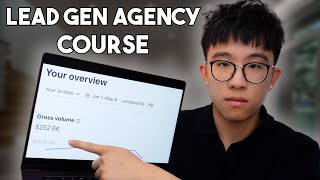
Jimmy Fung teaches how to launch a B2B lead-generation agency using cold email. He covers setting up infrastructure, a four-step sales framework that surfaces client pain points, and a repeatable onboarding process designed to scale to $10k+ monthly revenue.
Chapters
In the first four months of this year, I made a hair over $250,000. In fact, I made $252,000 from January 1st to May 6th. And I'm not saying this to brag or to show off, because the truth is, is I'm just a regular kid from Canada, because a few years earlier, I was flipping burgers at McDonald's for $14 an hour. I had no skills, I had no experiences, and. And quite frankly, I was moving through life feeling just kind of lost. In October 2022, I came across the lead generation agency business model. Pretty much, I was using cold emails to help business owners get new clients. And the catch? I was also using cold emails to land clients for myself, meaning there's no complex service delivery. Because all I needed to know was how to send simple cold emails. By December, basically 2ish months later, I had scaled my business from 0 to $10,500 in a single month. And then the rest was history. So, in today's video, I will be sharing with you everything I have learned about building a lead generation agency. I don't hold anything back. I'm not gatekeeping anything, I'm not hiding anything. And this is the type of information that online gurus will literally sell to you in a course. And I'm literally sharing with you everything I have learned growing my own lead generation agency from zero to $59,000 in a single month. Now, I know this video is going to be free on YouTube, but that doesn't mean that it's not valuable. In fact, this might honestly be the most valuable video that you have watched this month. Because the key is that you need to be taking action and implementing everything. Otherwise none of this will matter. So grab a coffee, grab a notebook, grab a pen, because what I'm about to share with you today, it might just change your life. I know it did for me. So in today's video, it's Obviously the day one, we will be talking about how to make $10,000 every single month by simply sending emails for businesses. And obviously, in this challenge, I'll be breaking down how I was able so to make $57,000. This is actually a screenshot of my own stripe of how much money I've made in the month of January. So, like two months ago and last month in April, I actually had a day where I made $10,000 in a single day by using this exact same business model. And in my opinion, this is the fastest path to making thousands of dollars online. And again, right, it's by building a lead generation business. It's not drop shipping, it's not building a smma. It's not by doing copywriting or affiliate marketing. I think it's by building a lead generation agency. And if you stick to the end of this video, you're going to understand why I think this is the best business model for beginners, for people who have no prior business experience and why it is the business model that will make it the most likely for them to actually make money online and for them to make it to $10,000 a month. Right. So obviously again, welcome to day one of the five day challenge to making $10,000 with your own lead generation agency. Each day for the next five days I will be releasing a full in depth guide in the video going over everything that you need to know. Going over everything that I personally know of how I went from zero towards building a business that is consistently making me over $50,000 a month. And by the end of these five days you will know everything you need in order to build and sustain a lead generation business. That will allow you to get to your first $10,000 a month and, and that has allowed me to make $50,000 plus every single month. And following what you're about to learn in the next five days, you will have access to the exact same strategies, the exact same frameworks, the exact same insights and the exact same thesis that will allow you to make $10,000 per month in the next 90 days or more without having any clients to begin with. So this will work. If you don't have any clients right now with without you knowing how to sell and fulfill on the service, if you know absolutely nothing about the lead generation business right now, that's fine. You're able to do this without having tens of thousands of dollars to invest. So if you don't have, you know, $10,000 just chilling in your bank account right now, that's completely fine as well. You don't need to know how to build teams or have any systems in place. That's completely fine. And this is also for you. And this can help you get, if you're struggling to build and predictably land your first few clients, maybe you started your own business, you started your own lead generation agency. You're trying to get it off the ground, you don't have any clients right now. You're just learning the ropes, learning how everything works. This is for you as well. And you're able to do this. And it doesn't matter if you haven't made your first $10,000 per month. If you haven't seen success or much success with other previous business models that maybe you've tried before, it doesn't matter if you don't have any previous sales experience, it doesn't matter if you don't yet have your first clients. And it also doesn, it doesn't matter if you just don't know where to start yet. Because over the next five days I will be sharing with you everything I've learned about building a lead generation agency. And there will be zero gatekeeping. So here's what we'll be covering kind of as agenda over the next five days. So day one, which is obviously today, I'll be talking about what a lead generation agency is and what it is and how you can make money, what it takes to actually succeed with this business model. And then we will be going over how to set up the email infrastructure, so how to set up the domains and the email accounts. The very first thing that you want to do if you want to make money and you don't want to spend half a year until you sign your first client. In day two, which will take place two days from now, on May 3rd, we'll be talking about niching down and scraping leads. Day three, which will happen on May 5, we'll be talking about how to craft an offer, how to craft code emails and build your BSL. Day four, which will take place on May 7, we'll be talking about sales. And then finally on day five, which is the last day of this challenge, we'll be talking about service delivery and scale which is. And throughout these five days, throughout all of these videos, I have included an action step. So pretty similar to what you see right now, which will help you take action and understand what you actually need to do to move one step closer towards starting your first client. Right? So as an action step right now, I want you to pause this video. I want you to go grab a coffee, grab a pen, grab a notebook and take some notes because this will be extremely actionable. And I promise you, if you follow everything I share with you and you listen to all the steps that I tell you to do, you will make money by the end of this five day challenge. It's pretty hard not to, right? And again, right, take action after this video because it doesn't matter if you're just grinding this video and you're just absorbing all the information and you just don't take action because you're just not going to make any money because no progress is going to be made. So using what we're going to cover in the next five days, here are just some of the people that I'm working with. They, they are starting to own lead generation agencies and using what we are covering over the next five days, they're making a lot of money. Right. So we have Brian and if you look at the dates, these are all pretty recent. So Right now is May 2024. Brian, one of the people I'm working with, he did this process in February. So like two or three months ago. And he was able to collect $3,000. So 2.5k USD setup plus $300 per call. He was making $11,000 in January. Right. He's getting some more wins. This happened in March, but with Michael, who closed out his second month at $13,000. This took place in December. So roughly five months ago. He was at three months, his first month using this process, building this business and his month two, he was at $13,000. We have Kevin, I actually have an interview with him on my YouTube channel. You could go look at this video right here where he was able to go from 0 to 9.5k in literally a month and literally 30 days using this exact infrastructure. We have Tyler, who I also have an interview with who using this process, he was able to go from zero to $6,000 in basically a month as well in 28 days. This took place in March. So like two months ago. We a Chino, who I also have an interview with on my YouTube channel. Right. He's from the Philippines and he was able to land his first client for I think it was like $2,000 in less than a month of starting his own business. So we, I have a lot of different just case studies of people using this process who are just making money. You could go and pause this video and read through some of these. But I just have countless of these case studies and people who are using this exact same process just making thousands of dollars. Because I personally believe it is the easiest and most simplest business model for complete beginners to make money online. So if you're new here, here is my story. So my name is Jimmy Fang and back in 2018, I was actually working at McDonald's for $15 an hour as making the minimum wage here in Canada. I'm from Toronto, Canada by the way, and I was making the minimum wage. I was flipping burgers at McDonald's and while I was doing that, I actually ended up in $15,000 in credit card debt. So if you're watching this video and you're in debt. Trust me, I know how it feels. Right? It's super stressful. I couldn't sleep at night because the burden of the debt was just really, really tough. And this was credit card debt. This wasn't even like the student debt that I had and all of that stuff. This is high interest credit card debt with like 25% interest rates. So super, super stressful. This took place in 2020-2022 while I was working at McDonald's. And then in December 2022, as I was building my business, my own lead generation agency, I actually experienced my first real win. So a little bit more background context. I actually started my own lead generation agency in October 2022 and basically two months after that. So 60ish days into starting my own business as a $10,000 a month, as a 10.5k. And this is just a screenshot of my strike because I super, super excited that I got to 10k and basically 60ish days. And I did that in December 2022, in February 2023. So basically around 4ish months after I started my business, I was at $20,000 per month. I closed the month at 23,000 in a single month. This is actually my Twitter that I made this tweet. I just wrote, checking my strike balance today, 23k cash collected in the last 28 days. So I super excited for that. I posted this tweet on February 28, 2023 from Toronto, Ontario. And basically for the rest of 2023, basically my first, first year just running my business, I was able to travel the world while running my business. And throughout the full year of 2023, I actually took home a little bit over $300,000 in a single year. So that's a little bit over 25k per month on average. Right? So here is a picture of me. This was taken in Osaka, Japan. Absolutely beautiful place. This is me in October of 2023. I took this in Santorini, Greece, another very beautiful place. I was actually just traveling the world and I was making money as well while doing that. And it was just a really great feeling. And then after that I started hitting consistent 50k months. So by the end of 2023, so roughly a year after starting, I hit $55,000. So if we look at this, right, so I actually could not find the screenshot of me hitting my first 50k month. But as we can see, so from January 1st, this is in 2024, right? So January 2024, I made $57,000 in a single month, the month prior. So in December 2023, so around a year after starting my business, I was making $55,000 in a single month. So across these two months, I collected over $100,000 cash for my businesses. Right. So I'm not showing you this to Flex. I'm actually showing you this so that you can see that this is real. Because I know when I was first starting business, I didn't even think this was possible. I didn't think making $10,000, $20,000, 30, 40, 50 plus thousand dollars a month was possible in business. And I am living proof that it is possible. I'm just a regular guy. I'm 23 year old in living, living in Canada. And literally just 18 months ago, 1.5 years ago, a year and a half ago, I didn't even think that I'd be able to build a business which not only just covers all of my bills, but also allows me to buy just random things like buy fancy watches, go on vacations and things like that, while also making thousands of dollars while I just, you know, go and travel the world. And I did this all by sending emails for businesses. Right. So if you're curious about how I was able to do this, the specific business that I leveraged that allowed me to make all of this money, I actually built a lead generation agency. And if you're curious about what that is, I want to first ask you a question and I want you to really just stop and think about this. How do businesses go and find new customers to sell their services to? How do they actually do that? And I want you to stop and think about that answer right now. How do they go and get new customers? Well, the answer is there's a bunch of different ways that businesses can go out and find new customers. But one of the best ways for B2B businesses, for business that sell their products or services to other businesses, is to leverage cold outreach to other businesses. Meaning what they're doing is they're reaching out to other businesses who do not know them and they're essentially just pitching the services to them. Right. And here's a picture of Jordan Belfort. This is one of my favorite movies, Wolf of Wall street, which is where Jordan is cold calling random people to sell. I think he was selling penny stocks in the movie, right. But he picked up the phone and just started cold calling random people. Right. So that is what cold outreach is. And obviously as part of cold outreach, there's a bunch of different channels that could be used to reach out to, to cold traffic. But some of the most popular channels include cold emails, includes cold calls of what Jordan Belfort is doing, and it includes cold dms over social media. Those are kind of the key and the most popular channels for cold outreach. But for the purposes of what we're talking about here today, we will only be focusing on cold emails. Why? Well, because cold emails is extremely effective for B2B businesses. Right. So again, B2B businesses are businesses that sell the products or services to other businesses. We're not working with B2C, we're not working with realtors or gyms or, or stuff like that business that sell to regular consumers. We're working with businesses that sell their products or services to another business. And for those type of business, for B2B businesses, cold emails is extremely effective. This is actually a screenshot of a statistic I found on Google which says cold emailing is one of the most effective tactics in a B2B salesperson's arsenal. 71% of buyers actually want to hear from sellers who, when they're exploring a new product or idea because cold emailing works extremely well. And obviously the next, the next picture I got was I went on ChatGPT leveraging just some, you know, just some AI. In 2024 I asked it, what is a lead generation agency in simple terms? And the answer I got was a lead generation agency is a company that helps other businesses find potential customers who are interested in their products or who are interested in their services. They use various methods like online advertising, telemarketing, blah blah, blah, blah, to collect information about these potential customers and then provide that information to the businesses for them to reach out to and for them to make sales. So that's the ChatGPT AI answer for what a lead generation agency is. But that doesn't really tell us what that is. Right. So just to summarize, as a lead generation agency, as a lead generation business, what you'll be doing is you'll be helping businesses find potential new customers or potential new clients by generating them qualified sales calls. And we will be using cold emails to do this. Right again. Right. We know that cold emails work really, really well. So what essentially we're doing is we're using cold emails to find customers for our clients for different businesses. And if you're watching this video and you're questioning this or you're telling yourself, oh, I've tried other business models in the past and just never make money. I tried drop shipping and I lost money. I've tried building an smma, a social media marketing agency, or I tried copywriting and I spent four months and I didn't make a single dollar. How is this any different? Well, according to Google, there are more than 3 million B2B businesses in the US alone, right? And these 3 million businesses generate trillions of dollars in revenue annually. Right? And if we were able to expand this to outside of just the us so if we looked at Canada, which is where I'm from, if we looked at Canada, we look at uk, we look at Australia, we look at New Zealand, there are millions more of other B2B businesses. So the reason why I'm explaining this to you is because there are quite literally tens of millions of B2B businesses that exist online, that exist around the world, and every single one of them exist needs this service. Every single one of Those millions of B2B businesses needs lead generation as a service, right? And the reason why is because every single business owner wakes up every single day with the goal of getting more customers and more clients for their business. Every single one of these businesses need more customers. Every single One of these 3 million B2B businesses needs new customers. And what you're doing is you're helping them get more customers by generating them sales costs and sales opportunities. So all of them, they have this massive problem and you're providing a solution. And another image that I took just to kind of just back this up and reinforce this point. A company's most valuable asset is its customers because without them, they're out of business. That's pretty straightforward. If companies, businesses don't get more customers, they're just not going to make money and they'll eventually close down the shop, shut down, close the doors and kind of just go out of business. So regardless of the economy, regardless of worldwide events, regardless of wars, regardless of anything that can happen, every business will still need more customers. And what you're doing is you're providing these businesses with exactly what they want. And again, right? Again, there's over 3 million B2B businesses in the USA alone, meaning this number is significantly higher. If you add in Canada, you're adding Europe and, and major English speaking countries. But like everything else, this business model, building a lead generation agency is not for everybody, right? So I actually found this DM from Instagram. So someone, he actually became someone who ended up working with me, but he asked me what is the cons with a lead generation agency? And I told him that if you hate sales, this is not for you, right? And aside from that, there's not really any cons. So again, right, this business model, building a lead generation agency, this is not for you. If you just hate sales, if you dread the idea of talking to people, this is not for you. And if you want to make money without talking to anyone, or if you want to make money while remaining faceless, then this is not for you. Right? Then that's why a lot of people like other business models such as dropshipping or YouTube automations, because they like the idea where they're able to create a business and make money with without showing face. But you know, every business model has its pros and cons, right? And I think for this specific business model as a lead generation agency, that's just not realistic and it's not possible. So how exactly does a lead generation agency work? We understand it at a high level of the service they're providing, but I put together this diagram to get a better illustration of how it actually works. So I want you to imagine a marketing agency, let's say they're running ads for, for an E commerce brand. So they are helping e commerce stores like Gymshark or like Kylie cosmetics or something like that. And they are running ads for that e commerce brand, for Gymshark. So they're running ads to doing SEO, they're doing email marketing. How does this marketing agency find these e commerce brands to get them as a client? Well, they're probably running, you know, paid ads. They're relying on referrals, you maybe they're relying on word of mouth to get to these e commerce brands. That's currently what they're doing, but as a lead generation agency. So I put an LG over here. As a lead generation agency, you will be approaching these marketing agencies to try to land them as a client for yourself. And essentially what you're doing is you're going to be connecting these marketing agencies to these e commerce brands using things like cold emailing, cold LinkedIn and cold calling. But for the purpose of what we're talking about, we'll be only focusing on cold emailing. That's what I've used to build up my business from zero to $50,000 per month. I use cold emailing and essentially we're connecting these marketing agencies to these e commerce brands using cold emailing and we're making money from that. That's essentially what a lead generation agency is and how it works. So how does a lead generation agency, how do they get paid? So generally speaking, there are three different ways to get paid. The first way is a monthly retainer so if you approach a random company, this marketing agency, and you're like, hey, our services cost $3,000 a month. That is a monthly retainer. Every single month, you're just making $3,000. Regardless of whether you're getting them great results, you're getting them okay results, or kind of just bad results, you're still making that same $3,000. The second way to get paid is a setup fee plus a performance. So up front, you're charging, let's say, a few thousand dollars, $2,000, 2.5k, $3,000. And after that, you get paid for every single sales call that you generate. So each qualified call that you generate for your clients, you might make 200 bucks or 300 bucks, whatever that is. And finally, the third pricing model is a monthly retainer plus performance. So kind of a combination of both, where every single month, let's say you're charging three or four thousand dollars, and then you also charge either rev share, so revenue share, so you know, a percent of every single closed deal, or maybe a percent of every single lead that you generate, whatever that is. So for most people who are just starting out, I strongly recommend using the setup fee plus performance pricing structure. And the reason why is because this will ensure that you're making money on the front end. Because obviously we're providing a service and you don't want to be just working for free. That doesn't make sense. You don't want to be working for free. You need to be collecting money upfront. And that's why I recommend the setup fee plus the performance aspect of things will give you the opportunity to make money in the back end to maximize your profit. Profits on the back end with a setup fee, I recommend somewhere between charging somewhere between 2 and $3,000 for your first few clients and then charging any less than this. So if you're charging, you know, 500 bucks, if you're charging $700, if you're charging $1,000, you're probably underpricing your own service, and you're just not really charging what you're worth. Right? That's personally what I found. My first client I've ever signed, I charged $3,000. So use that as a benchmark in terms of the performance you're charging. Based on each sales call that you will generate for your clients, I recommend charging somewhere between 200 and $300 per call that you generate. So every single call that you bring to your clients, you're charging them 200 bucks, $250, $300 again, my first client that I ever signed, I charged them a $3,000 setup fee and $250 per car. So for the purposes of explaining profitability. Profitability. Sorry, I just fumbled that word. For the purposes of explaining profitability, you should be able to earn somewhere between 2 and $4,000 a month from each client. So the next aspect is, I kind of want to explain to you why actually making $10,000 a month with this business model is just way easier than you think and why I kind of just think it is one of the best business models for complete beginners because I was able to go from 0 to $10,000 a month in basically two months in 60ish days. Why is that? And the reason why is because the numbers just work in your favor. So I don't want to go too much into details because we will be talking about what this kind of means over the next few days, over the next four videos. But essentially we know that we are generating sales opportunities using cold emails. You're using cold emails to land clients for yourself. And then once you have clients, because you generate them using cold emails, you're using the exact same cold email infrastructure that you use to land clients for yourself. And you're building that same infrastructure for your clients, and you're using cold emails to get them results as well. And if you send enough emails and you follow everything that I'll be sharing with you over the next four videos over the next five days, there's just no way that you don't make money from this process. So here's a screenshot. You might not know what this means, but. But this was actually a cold email campaign that I launched in September 2023, so probably around half a year ago. Right? I sent 21,000 emails. I got, you know, 7,000 opens, so 64% open rates and almost 1,000 replies. Right. And you might not know what any of this stuff means, which is completely fine, but let me just break down the math for you. So basically, after I sent these 20,000 emails, you know, I got these 67 positive replies. And, and let's say I was booking sales costs at a 50% booking rate. That meant that I generated 33 sales costs for myself for my own business. And let's say if I was closing 25% of people, so 1 in 4 people of these 33 costs, I meant, that meant I made $8,000. And let's assume I was charging $2,000 setup fee, which is pretty conservative because again, my first client paid me $3,000 I made $16,000, right? So using what we're about to share, hopefully you see how the numbers just kind of work in your favor. And if you do this process correctly and you follow these KPIs, it's kind of just hard for you not to make money and for you not to get to $10,000 per month, right? So you might not know what this means again, right? I don't want to just bombard you with information that you might not understand, but getting to $10,000 per month is actually relatively simple, right, with this business model. And again, these are with highly conservative numbers with a relatively low closing rate if you do the process correctly. So the vsl, again, you might not know what that is, but if you do this process correctly, you should be getting 40 to 50% closing rate minimum. Even if you're not that great at sales or you've never taken a sales call in your life. This is also assuming that you're charging $2,000 setup. Again, my first deal was $3,000 for just a little bit more background context, right? So hopefully you see why getting to $10,000 per month is kind of just easier than you might think. Because what we're doing now is I'm showing you the numbers and I'm breaking it down using just numbers and using logic. And getting to $10,000 per month is actually not quite as it's not the beast that you think it might be. But what does it actually take to succeed? Right? Because everyone just wants to make money, right? Everyone wants to make money. No one. I never met a single person who just doesn't want to make money, right? But what does it actually take to succeed? So before we jump into the specific tactics and jump into the specific strategies, I first want to run over what it takes to succeed and actually make money in this business. And no, this isn't going to be some generic mindset stuff. This isn't going to me telling you, take cold showers, wake up at 5am, go on monk mode, this and that. I'm not going to be talking about any of those things. Rather, I'm going to be talking about the patterns that I realized after building my own lead generation business again, right? From zero to $50,000 per month and working with over 80 plus people to start and build their own lead generation business. So the very first thing is do not look at this business model as a get rich quick scheme. So if you're watching this video, you're watching it right now and you think that this is an opportunity to for you to just get rich quick. This is not for you. If you want to get rich quick, you're just better off just going to your local convenience store, buying a lottery ticket, or maybe going to casino or buying a random crypto coin. If your goal is to get rich quick. Because you will have a better chance of getting rich quick from those methods than from building a business. What we're doing is we are building a real business. And yes, while building a lead generation agency, it is extremely profitable. It is 100% not easy. It's not rocket science. And it's simple, but it's 100% not easy. You're not going to be making $10,000 a month by working one hour a month. Right. That's just not how it works. That's not. You'll never be able to make money working one hour a month. Right. But this is not rocket science. It's simple but not easy. This is obviously what I think is one of the best business models for beginners. That due to its simplicity and the fact that you don't need thousands of dollars up front, there's not drop shipping, there's not Amazon, fba. We need thousands of dollars upfront to invest into inventory or invest into capital. And you also don't need to learn 20 plus different skills because we are using the same cold email system that you're using for yourself and selling that as a service for your clients. So you're really only learning one key skill, which is how to send effective cold emails. So you don't need to learn 20 plus different skills. But if you think that you could become a millionaire in the next three months, in the next 60 days, in the next 100 days, then this is not for you. The second thing is the importance of taking action. So when I was first starting an online business, one of the largest mistakes that I made was thinking to myself that I just needed to learn everything, that I needed to understand every single aspect of the business in order to successfully start start. And because I had this thought, I probably spent over half a year, six plus months, just buying course after course after course, binging through YouTube video after YouTube video after YouTube video before I actually started my business. What I have done was I had fooled myself into believing that I was actually just moving the needle by watching another YouTube video. But what I realized is that the most important thing you can do to succeed with just any, any business is simply just starting. Simply just deciding, today is the day I'm going to get started. I'm going to Take action. And taking action is not watching YouTube videos because you will never have all the answers. That's a myth. You will never understand 100% of everything that you need. That just doesn't. It just doesn't work like that, right? The sheer action of taking action, the sheer action of starting will resolve a bunch of your unanswered questions that you might have even just ran right now. And remember, taking action is the only way to actually get paid and the only way to actually just make money. And the third and final thing is understand the speed is key. And this might sound super simple, but it's actually super important. Understand that the entrepreneur who is able to move the quickest will always win 100%. Ten times out of 10, the person who's able to just start and move quickly will beat the entrepreneur who is moving slow. Because business is a sport. It's like the most competitive sport in the world. And speed is a competitive advantage. Because if you're watching this video, I'm certain that you probably do not want to spend six plus months of you just going out on your own trying to sign your first client. Because six months is a really long time. You're not going to make money for six months. I'm sure no one watching this video wants that to happen. Ideally, everyone watching this video, you all want to sign your first few clients in the next few weeks minimum, right? Ideally faster, right? Because you don't want to spend six months just doing all of this stuff and not making money, right? So in order to actually do so, you just need to move with speed. So think about it like this. Let's say there are two people who are trying to set up email account because that's one of the things that you need to do in this business model. You're setting up these email inboxes because you're sending cold emails and there's two people doing it. Two entrepreneurs doing it. Let's say entrepreneur one, he sets up all the email accounts in a single day. He might spend four or five, maybe even six hours, but he does it all at once. And then person two, the second entrepreneur, he sets up the same email account, but it might take him a week. It takes him five days where he just spends one hour each day sending it up. Who do you think will win, right? It's pretty obvious, right? Because the same activity completed by two different people, except one person completes the same task literally five times quicker, who's going to win, right? It's obviously going to be person one, because he's able to do the same amount of work just five times quicker. And just off this example, it's pretty obvious who will win. And the same exact concept applies inside your business. So anytime you need to do something in your business, keep in mind that the quicker you complete the task, the higher the likelihood that you will actually make money in a timely manner. So these are kind of just the three things that I wanted to just talk about again, right? I don't want to go too deep into like the mindset stuff, but these are kind of just the three patterns that I found that has allowed me to go from zero to $50,000 per month in basically a year. And all the traits of people that I know that are successfully making money with their online business, they all follow these three things. They look at it, they provide value. They generally provide value for businesses. They take action all the time. They're not just sitting back watching YouTube videos and hoping for the best, and they're moving with speed. So the next step is setting up the cold email infrastructure. And at this point in the video, I think we are around 30 minutes in, maybe a little bit more, maybe a little bit less. The first thing you want to do to actually get your business off the ground, to actually start your own lead generation agency is, is set up the cold email infrastructure. Because again, we are sending cold emails. Understand that volume negates luck, because at the end of the day, what we're doing is sales. This is kind of a sales business. And obviously the more people that you're able to get in front of, the more success you're going to have. It's just the law of numbers. So volume negates luck. And this is by far the most neglected and simple part of the business that that is just ignored 99% of the time. Because again, right, this is a sales business. If you send more emails, you will get more meetings, and you get more meetings, you will be talking to more people, you will be making more pitches and you'll be making more sales. And as a result, you'll be making more money. It's pretty basic math. And in order for us to send as many emails each day as humanly possible, you will need to set up email accounts. So what you want to do is, the very first thing you want to do is, is head over to PorkBund.com this is a domain provider. The other common ones include GoDaddy or Google Workspace or Namecheap. I personally use PorkBund.com I strongly suggest you do the same as well because that's just what I use. You want to go to PorkBun.com and what you want to do is you want to set up three email accounts for each single domain on Microsoft Outlook 365. So you're going to buy the domains, you're going to host them on pork button, and then after that going to use Microsoft Outlook Business Basic and set up three email accounts for each single domain. And what I recommend is I recommend using Microsoft Outlook and not using Google or Gmail or Google Workspace, because in Google, because for Google, they actually announced that starting in February 2024, if emails are getting higher than a 0.3% bounce rate, your emails will automatically go to spam. And as of right now, Microsoft has not yet made this announcement, which is why I personally use Outlook. I also found that Outlook is a little bit easier to scale because in the beginning when I was first starting my business, I actually used Google Workspace. And what happened is when I needed to sign into the Google account, it's going to ask my phone number. And obviously I only have one phone. I assume most of you guys watching this have one phone as well. And I just ran into issues because I couldn't use the same phone number for 50 email accounts, right? So here is what our front end volume looks like. For my own agency, it's called sales with IO. I have 17 domains. Of these 17 domains, I have 50 email accounts because obviously three for each domain. What that means is I'm able to consistently send at least 1500 emails per day, meaning over the course of a month, I'm sending at least 45,000 emails every single month. Because again, volume negates luck. And it's damn near impossible to to not book meetings sending 45,000 personalized emails every single month. Because with high volume, we give ourselves more chance to hit our dream prospects at the right time with the offer. But in order to make sure that the emails that we're setting up, they're just landing in the inbox and not actually landing in spam, there's a couple of things we want to do, right? Because it's not enough to just buy these domains, buy these email accounts and just call it a day. There's very specific things that you need to do in order to set up the email accounts to make sure that it actually works. So there's a ton of guides on Pork Bun or Microsoft teaching you how to set up that process. I'm going to be walking you through that process myself as well. But essentially you need to warm up your email accounts using smartly AI for 14 days to ensure maximum email deliverability. Right. And I'm going to be walking you through this entire process. You could pause this video and watch through this, but I'm just going to jump into Porkbund and show you how I would set up those domains. Okay, awesome. So the very first thing you want to do to set up your email accounts is go under porkbun.com Again, this is the domain provider. You use Godaddy. You can use Namecheap. I personally just use Porkbund. And I'm going to be walking you through how to set up your email accounts from the beginning all the way to the end using porkbund.com. so the first thing you want to do is monitor. My main website is Salesway IO Salesway IO, this is my main domain and for the purposes of what we're doing, you need to be buying burner domains and burner email accounts and you can't be sending cold emails out of your main domain. Or for me, I can't be sending it out of Salesway IO. And the reason why is because technically what we're doing is sales and marketing. So there's a risk that at any given moment these accounts could get blocked and or they could get burned or they could get blacklisted, whatever the case is. And if your main domain gets blacklisted, you're kind of just screwed. Right? So you always want to be buying burner domains in order to lower that risk and to make sure that all is good. So what I did is I just went over into Pork one. I just bought a new domain. As you can see, I have 33 domains for my own agency. This is my domain. And as you can look at all of these domains, they all look relatively similar to Salesway IO, but obviously it's not the exact same because you only buy it once. I'm jiggling around the spelling. So this is sales sale we the sale way, the seller way. You get the point, right? And you want to do the exact same thing. Just add an extra E, remove s, add extra L, remove certain letters, stuff like that. That's how you want to do it. A word of caution is make sure you're buying.com domains. So the data suggests that sending cold emails with.ca or.net or.org it has a lot worse deliverability than sending it with.com domains, which is why you see all of these are.com domains. So the very first thing is, obviously for the purpose of his video, I actually bought a Brand new domain because all my other domains, as you can see they're all set up right. There's all of these records because they're all set up the right way. So I went and I bought this domain sale we.com it is empty right now. And since we are connecting it to Microsoft Outlook365 the very first thing you want to do is Parkman makes it easy. There's a quick DNS config button. I'm just going to press Office 365 is going to have this pop up and press OK and it's going to set it up, press OK again and as we can see it has all of these records. The next thing I'm going to do is I'm just going to copy over the domain just a record of it. I'm going to go into Microsoft 365. So I actually just set this email account up as well this admin center. You could just go on Google and search up Microsoft 365 Admin center, create an account and create a Microsoft 365 Business Basic account due to month to month so that you don't get locked into the annual billing. And all you want to do is once you log in this is what this will look like your admin center. Just search up domains domain go under Domains Settings and you're just going to press add a domain and you're going to add in the domain that you just bought and set up on port one. So I'm just going to press use this domain is going to be loading and we're going to say verify your own domain. So to basically connect this outlook365 over into Pork 1 it's going to tell you how to do it. So I'm just going to show you as well. You're essentially going to set up a text record. I'm just going to copy this to go under pork one go back under the domain that you just bought Text record host. I'm just going to paste this in text value and then the TTL was 3600 right? And I'm just going to press add and we see it is over here at the bottom. I'm just going to press verify and this will take a couple seconds. Okay, awesome. So it connected and it's successfully verified. Now the next page is how do you want to connect your your domain? We're going to press Continue. It's going to be loading again at DNS records. We're going to press Continue. It's going to automatically do this for you, press it again, continue, and then you're going to press done and it says domain connection is done. So now we see under domains that sale we.com the one we just bought is successfully added. Now the next thing you want to do is go under Users and press active users. You should see none. Or the one or the one that you will see is the one that you would use to log into this admin center account. All you want to do is press add a user. And this is assuming you have a license. So if you don't have the license, you need to go buy the license. So for every one domain, you want to set up three users, which means you need three licenses for every domain that you have. For the purpose of this example, I only bought one license because, you know, I already have these email accounts set up and stuff like that. But I'm just going to walk you through how to do this. For the first name, I'm just gonna use my name, Jimmy Fung. What you could do is because you're setting up three users, you can set it up in your name. So the three users I'd probably use is gonna be jimmy.com this will be email one. The second one might be Jim, and the last one might be Jim Fung, something like that. So then that way I'm able to use three different users all under my name. I'm just going to press automatically create a password, require this user to change the password in the first sign. I'm going to uncheck this and I'm going to create a password. I'm going to just write a random 1. YouTube, 1, 2, 3. Don't try to log into this email account. Right? But I'm going to press next Canada. I'm going to assign a license. I'm going to press next, next custom password. And I'm going to press finish adding. And that's how you want to go about doing this. And this is the email user. Okay, so after you have set up your domains on porkbund.com and you have set up your email accounts using Microsoft 365, your next step is to connect your email accounts onto smartly AI. You can use instantly AI as well. Essentially what you're doing is you are warming up your email accounts. You're ramping them up because you wouldn't be able to to just buy a bunch of email accounts and just start blasting cold emails from day one. That's just not how it works. What you need to do is you need to slowly Ramp up your email accounts over the course of 14 days. That way, after the 14 days on day 15, when you launch your cold emails, they will just land in the inbox right away. And the way we do that is by leveraging a tool like Smart Lead. AI is very important that you do this. And the reason I'm talking about it right now in day one of the day five challenge is because this process, again, it takes 14 days. So the longest, the longer it takes you to set this up, the longer it will take you to actually send out emails, the longer it will take you to get replies, to get booked meetings and to sign your first client. So super important you do this first. So once you have a Smart Lead account, you want to go under email accounts. This is what this will look like. You're just going to press Outlook. And what I'm going to do is I'm just going to, I'm just going to copy the email account that we just set up. I'm going to refresh, refresh this and I'm just going to copy it over. Because we're going to be signing in with this account. Oops. And then we're going to use the password that we just generated. It's going to ask permission requested. You're just going to press accept. And that's basically it. It will automatically connect onto Smart Lead. We see that it says email connection success. You're going to just press, ok, go over into warm up and you're just going to enable the warmup. Press enable warmup and that's basically what you want to do. So say your mailbox will soon start receiving warm up emails. That's all you need to do and you're good to go. So this process does take 14 days and that's exactly what you want to do to set up the email accounts. What you also want to keep in mind is you should also set up the website forwarding inside the domain. At Pork Bun, you can add in a profile picture under the Outlook as well to get better results. But overall, this is exactly how you would set up the email accounts. You would buy a domain, you're connected to Microsoft Admin center and you were connected over into Smart Lead. Okay, awesome. So just to wrap things up, in today's video, we kind of just talked about what a lead generation agency is. We talked about kind of just the unspoken rules for what it takes to actually succeed and make money with this business. In the next video, in day two of this challenge, we'll be going over exactly how to Pick an industry that and pick a niche to sell to. We will also be talking about how to build your leads list of decision makers. So kind of as action steps because again, I wanted to make this challenge, this five day challenge as actionable as possible so that you actually take action and actually make money. So the very first thing you need to do is think of a business name and don't spend more than 10 or 15 minutes max doing this because it's just really not that important and you don't need the perfect business name. Just spend 10 to 15 minutes max think of a business name. After you think of your business name, I want you to head over to PorkBund.com and buy 15 burner domains that are similar to your main domain, your main website, right, or your main business name. After that go to Microsoft Admin center and I want you to set up 45 email inboxes, 45 email accounts with the 15 burner domains that you literally just bought from Porkmon. And then I want you to connect these 45 email accounts onto Smartly AI and start the warming process. And just as a word of caution, this entire process will probably take you somewhere between maybe four to five hours to complete, right? And that's because you probably don't know what you're doing. It might be challenging for you or whatever the case is, but you still need to do this. And again, remember the thing that I talked about earlier that speed is key. There are people who are able to do this. Set up all 45 of these email accounts, set up all 15 of these domains and do it all in one day. They just sit there for four or five hours and do the whole thing all at once. And there are people who will take two weeks just to set up 10 domains and 30 email accounts. Don't be the second guy because again, speed is very important. And if you want to make money, it's very important that you do this as quick as you can. So that's pretty much it for day one. Hey, so quick pause. If you like what you're watching right now and you want the document that I'm sharing with you in the video, then go to the description down below. Join into my email newsletter where I'll be sharing with you everything that I'm showing with you right now on the screen. All of these docs opt into the email newsletter and you will be receiving that doc in today's video. In day two of the five day to $10,000 challenge, we will be talking about how to pick a niche and how to build your leads list for your lead generation agency. In the previous video, in day one, in the previous video, we talked about a couple of things, right? The first thing we talked about was what is a lead generation agency and how do people actually make money with their own lead generation agencies and what it takes to succeed and make money using this business model. We ran over a couple of things. We talked about why making $10,000 per month is actually pretty simple and it's not quite as challenging or as hard as you think. We started by talking about how to actually get started your very first action, actionable item, action step, which is setting up your cold email infrastructure. And remember this process, the process of setting up your email infrastructure, of warming everything up, it does take 14 days. So it's super important to make sure that you do this first first and you do everything else in between the 14 days. And that's exactly why I included that as part of day one of this five day challenge. Because everything starts with those email accounts. And the longer it takes you to set up those email accounts and warm them up, the longer it will take you to actually be able to send your emails, send your cold emails and actually line your first clients and make some money. So in today's video, we'll be running over exactly how to pick and decide which niche, which industry that you want to be selling to and how to build your own leads. List of decision makers. So jumping right into it, picking a niche to sell to. So I talk, I speak with a ton of people every single day who are all trying to build their own lead generation agencies, their own lead generation businesses. And almost always the first question when they ask me is, Jimmy, what should be my niche? Jimmy, I don't know what my niche is. And the reason why every single person, almost always, nine times out of ten they ask me that is because picking the right niche for your agency is quite literally the difference between making $0 and making tens of thousands of dollars every single month or so. People say, right, that's kind of a myth. And a lot of people say that, that picking the niche is the key between success and failure. However, I'm here to say that that is simply not true as every single niche makes money. So a better question rather than asking what is the best niche, what should be my niche? A better question than that is asking, is there money in this niche? How much money and how easy is it for them to make money? Those are really the three questions that you want to be asking rather than asking yourself what is the best niche. Those are the three questions you want to be asking for yourself. Because every single niche has their own individual needs, has their own individual desires, has their own problems and very specific pain points. And if you're in a niche that you simply do not understand, or you're in a niche that you just don't resonate with, it's really only an uphill battle and you will literally get destroyed. You'll get outcompeted by competitors who actually understand the market inside and out. Because there's people inside those industries that just, they like working in that industry, the pros in that industry. And if you don't like that industry or you just don't feel like it's a good match for your own skill set, it's really an uphill battle. And it'll be really hard to beat these competitors who are already experts. But on the other hand, if you listen to this part and you're like, okay, I'm just not going to pick a niche. I'm going to just go broad. I'm going to just work with every business under the sun, anyone who wants to pay me money, in complete disregard of industry or niche. So if you decide that you don't want to pick a niche, what will happen is you will end up dabbling in multiple niches or multiple sub niches where you're literally up against competitors who have more money than you, who have a bigger team than you, who have a bigger brand than you. So when it comes to getting your outreach message heard, when it comes to getting your emails across, well, it doesn't really get across because these bigger guys, they make a lot more noise than you do, and their own messaging will suffocate yours. So if you never pick a niche, you never really know what your specific avatar or specific ideal client, what they struggle with and what they pay for every single night. And in return, you will never be able to craft an effective sales argument. You'll never be able to craft an effective offer. You never have a message that just resonates with him or her. You never be able to build an offer. You never be able to deliver a mechanism that delivers what your market is praying for. That's what will happen if you decide that you are not going to pick a niche. You should also understand that some niches are just way more saturated than others. Some niches are way less saturated, some have more demand, some have less demand for your business. So as you're picking out your niche and deciding who you want to sell, lead generation to the very first thing that you want to do is first identify your strength and your weaknesses. And you want to start with your own strength and weaknesses, because what this would do is it will allow you to figure out which industries you might resonate with the best. Meaning it will literally be the path of least resistance as you are picking the first niche that you decide that you want to sell to. So the very first thing you want to do is identify your strengths and weaknesses. And I know if you're watching this video, you're at this part, you're telling yourself that all of this is bullshit. I guarantee you it is not. And the reason why is because if you're able to leverage your own individual strength and weaknesses, the entire process will just go by so much easier, right? Building a business is really hard, at least in the beginning, because you're starting with literally zero momentum. And what you want to do is make it as easy for you to win as possible. And the easiest way to do that is by leveraging your own individual strength and weaknesses. So I guarantee you this is not bullshit. If you're reading this or you're watching this video and you're like, oh, this guy Jimmy, he's telling me to pick and analyze my own strength and weaknesses. I guarantee you this is very important if you want to get some quick wins and you don't want to do it by making it harder than it needs to be for yourself. So the very first thing you want to do is analyze your past work or education history. And if you really think about it, there will always be things that you have done before that will give you a fundamental understanding of certain industries way better than others. So, for example, if you studied engineering, you will have unique insights that someone else, such as myself, who studied business in university, would just never have. Those are unique advantages that you have that will allow you to get quick and easy wins if you have sales experience. So for myself, when I was an intern, I did an internship in tech sales. I worked at IBM that gave me unique insights on the sales process that other people who were accountants as an example, would just never have. Those insights or if you worked any sales experience, whether that is part time, full time, that will be your advantage that people who don't have sales experience would just simply not have. If you studied marketing, that's a unique advantage. If you have coding experience or programming or development experience, that is a unique experience that you have that no one else has interest, right? Think about what do you enjoy doing and what are your hobbies and passion do you enjoy learning about AI and tech? Do you enjoy firing up a MKBHD video and watching the latest tech reviews? Is that your interest? Do you enjoy working out? Do you enjoy going to the gym? Do you go to the gym every single day or work out, get those pumps in, work your chest, work your legs, whatever the case is, is that your interest? Who do you mainly watch on YouTube? Because I think YouTube people go on YouTube to do two things, to either learn or to be entertained. Right? For the entertained side of things, who do you watch? Do you watch a lot of Mr. Beast? Do you watch the Nelk Boys? Do you watch whoever? Right? Who do you mainly subscribe to on YouTube and go to for entertainment? And finally, think about who do you follow on social media? Who are the celebrities that you follow? Do you follow Lionel Messi? Do you follow LeBron James? Do you follow actors, singers, musicians? Who do those people look like? These are all interests that if you think about, will give you unique insights as to who you should first go after. Because if you go after industry that you're naturally more interested in, it's going to be way easier for you to actually do the work and for you to actually succeed in that industry. The next aspect is think about your own skills. Do you have sales skills? Do you have coding skills? Do you have building website skills? Do you have building E commerce stores as experience? What type of skills do you have? And if you're watching this video and you're telling yourself, oh, I don't have skills because I just graduated high school or I'm 18 years old and I have no skills because I was flipping burgers at McDonald's, well, that was me. I had no skills. But I guarantee you, me having no skills, I still have skills. I don't know if that makes sense, right? There's still certain things that I have that, that other people do not have, if that makes sense. So you want to stop and think about what that is. Now, as you're going through this process, you're going to be doing a little bit of brainstorming and you're going to be thinking about initial industries or initial niches that kind of just stand out for you. I laid out three key brainstorming rules that you should probably follow. Any industry that you kind of just think about, it should be broad and not too specific. So what I mean by that is one of the biggest mistakes I see people make is they pick an industry and they go just really, really niche, they go really, really specific. And what that looks like is for example, a broad industry might be something like marketing agencies. And a very niche market might be UCG ad agencies or Facebook ad agencies, or SEO agencies. Those are sub niches as SEO agency is a sub niche under the overall umbrella of a marketing agency. And in the beginning you want to start broad because you kind of just don't know what you're doing. And if you approach a market which is too niche and you just burn through your entire leads list, your entire total addressable market, you're not going to have any more leads. Right? So in the beginning you want to go broad. And as you are building your business and you're dialing through your process, you go through the process, you have everything built out and everything just looks good and you optimize it to make it more efficient. At that point you can sub niche or you go into the niche that you have really strong case studies in. But at least in the beginning, you want to be broad and not too specific. The next brainstorming rule is this should be a B2B industry, not B2C. So you need to be working with B2B businesses. And the reason why is because the B2B industry is driving generally a lot higher ticket. They're selling the services, they're selling the products to other businesses, and as a result they're charging very high ticket. Right. It's very hard to find a business that is B2C that's selling to consumers, selling a product or service for $5,000, $10,000, $20,000, because most people, statistically most Americans, I think 56% of Americans don't even have more than $1,000 saved in the bank accounts. And if you're selling to people who statistically don't even have over $1,000 in their bank account, it's pretty hard to sell something for 10k. But businesses on the other hand, is completely different. They're very, very high ticket. And it's not unheard of to find businesses selling their services for multi 5 figures for 5k 10k. Some of my largest clients, they sell their own services for quarter million dollars, $250,000, because businesses can afford it. So you want to make sure they're selling the services to other businesses. So for example, example of B2C businesses are plumbers or realtors or gyms, stuff like that. That's B2C. Those are not B2B. The next brainstorming rule is make sure that they check their emails and their phone consistently. So for example, if you're working with stores or you're working with trades like businesses in the trades. They're probably not industries that check their emails consistently because that's just not how businesses are being conducted. So think of an industry which just check their emails and phone consistently. But that's not too hard to think about. So as you're doing this exercise and you're brainstorming different B2B industries, this is kind of just where most people will get caught up. Because picking a niche is just really not that hard. And let me explain. So outside of those three brainstorming rules that we just outlined, your only questions should be do you like them, can you help them? And can they pay? And those are three very important questions that you need to answer. And I found this image, I think I found this from Alex Hormozi, his $100 million offer book. And what he outlined is the four things that you want to look out for as you're picking an industry. The first one is make sure you're working with an industry that has pain, that has a problem, because if you're able to solve that problem, then you will be paid in proportion to how painful that problem is that you're solving. The second thing is purchasing power, because again, we kind of outlined this earlier. If you're selling to an industry that is very low ticket to selling the service for 50 bucks, you're not going to be able to charge two or three thousand dollars every single month because the math just doesn't matter because they don't have the purchasing power. But if you're selling to an industry that sells their own products or sell their own services for, let's say $50,000 per single client, then you could very easily charge them two or three thousand dollars because you know they can afford it. So that's purchasing power. The next one is easy to target, pretty self explanatory. Don't make it harder for yourself than it needs to be. If you're picking some random niche or random industry that's just really, really hard to locate, really, really hard to get in contact to, you're kind of just doing yourself a massive disservice. And finally growing. Try to pick an industry that's growing because if an industry is kind of shrinking, the overall industry as a whole is not going to be too good. And the boat that you're choosing to be a part of the is kind of just sinking. So that's pretty self explanatory. And these are the four things that Alex Hormozy kind of just outlined that you want to look out for as you're picking out an industry. And alongside these four things, you also want to consider these questions as you're doing your research again, right? It's very similar to these four things. Do they have pain or common pain points? Do they have money? Are they easy to target? And is the industry growing? So, moving on, most gurus online people, people online that are just trying to sell you a course, the gurus will tell you to pick a specific niche. But what they also don't tell you is most successful agencies have tested multiple different niches before they found the one that they resonate with the best that they resonate with most. Realistically, what will happen is, as you are going through your process of building your own lead generation agency, what will likely happen is you will test probably somewhere between three and ten niches before you find the one that kind of just works the best for you. And I know for myself, I have tested and I have signed clients from a bunch of different B2B industries. So I have worked with clients that are marketing agencies, that are PR firms, that are software development agencies, that are software companies, or SaaS, that are recruitment agencies. I have worked with all of these different industries, a couple more actually, but I only included these five over here. And the point being is I have tested and worked with all of these different industries before I found the industry that I like working with the best, which is recruitment agencies. And this is exactly why copying someone else's niche, it just might not work for you. Because when I was first building my own lead generation agency in October 2022, I was really, really tempted to copy someone else's name niche, and I even tried that. But after you work with a bunch of different clients, you start to get a really clear idea on who you want to work with and who you just don't. And that's why I'm with recruitment agencies, because I just enjoy working with them. So there are a bunch of different niches, more niches than I can count that realistically you only need to enjoy working with and you will be set, you only need to find one and you'll be good. So my advice to you is to spend five minutes brainstorming different industries, writing them out, doing some surface level research on that industry and just picking a random one. And for additional guidance to ensure that you pick a good niche, you should be picking an industry which is relatively large, so again, relatively broad. You want to look for one with Ideally at least 10,000 or more of these companies inside the industry. Again, you Want to pick one that's B2B. So they sell their services or products to another business and you want to pick one that is selling the service for a high ticket price. So ideally $5,000 plus $5,000 or more. And if it's below $5,000, it's going to be very challenging for you to get them good results. So I went on ChatGPT and here is a quick list of niches where lead generation selling cold emails as a service would actually be effective. There's 15 over here just by itself. You could pause this video and take a look over here, there's a bunch of them. And the point I came up with this list is because I want to illustrate to you that there's just so many different industries that this will work for. So have an abundance mindset. Don't think that there's only one or two that works. There's countless industries that work. So as long as you pick a niche that kind of just fits all of these requirements that we outlined so far in this video, I would just run with it and just start doing your research. And it's actually super important to for you to do your research on your niche because if you don't do research, you won't be able to resonate with your market. And even in the scenario where you book calls with your niche, you will kind of just make yourself look like a fool because people will be talking about a very specific thing that only industry insiders know of. And you'd be left there kind of just scratching your head because you have no clue and you just never did research. So what you could do is you can conduct research by going onto YouTube, going into different Facebook groups to research your target niche. That's personally what I have done. Anytime I pick a new industry and pick a new niche, this is exactly the process that I follow to conduct research. And you need to be doing the exact same thing. It doesn't take that long. So you want to make sure you're doing it. And as you're going through the research process, you want to understand some of the following things. You want to understand how their business model works. Pretty self explanatory, right? Very vanilla, basic stuff. You want to understand how they get paid, what they typically do to get new clients. So what is their typical sales process? Are they doing ads? Are they running emails already? Are they doing LinkedIn? What does that look like? You want to understand their type of sales process and problems, common problems, and pain points that they have, how much money they make. Per one client. So the lifetime value of a single client, what does that look like? And again, if it's below $5,000, it's probably not a good fit for your own lead generation services. And then you also want to understand common words and common jargon. So I'm going to show you right now how I would personally do research. And you want to do this yourself as you're coming up with your own industry and conducting your own research. So let's say I brainstormed and I was like, all right, I'm going to do some recruitment agencies. That's actually the industry I'm in. Now. What you want to do is just hop onto YouTube and just search up how to start a recruitment agency. And I already did this search myself, which is why you see it here and you see a bunch of these different videos of people talking about how to start a recruitment agency. And this applies for any industry. If you pick marketing agencies, how to start a marketing agency, how to start a logistics company, how to start a software development agency, how to start a PR firm. You get the point. And you will always find videos. What I urge you to do is watch through some of these videos, watch through two or three of them. You don't even have to watch the whole thing. Watch it at 2x speed. Because what you're trying to do is you're not learning, or your goal isn't to build an actual recruitment agency or build an actual marketing agency, but what you're trying to do is trying to put yourself in the shoes of someone who is running a recruitment agency or someone who is running a marketing agency, or someone who is running a software development agency. And watching these videos will give you a really good understanding as to what that business model actually is, how to get paid, the overall vanilla things that you just need to know about any business model. This will give you a very strong fundamental knowledge. So I would strongly suggest you watch some of these videos, watch through two or three. That might take you 30 minutes to 40 minutes, but it will give you so much information on how and what you actually need to know in order to pick the right niche. This will answer a lot of your brainstorming questions. After you watch the videos, your next step is to actually find different Facebook groups. So you can find a bunch of different Facebook groups. I'm in Facebook right now. This is my Facebook account. We see I have 20 plus notifications because it's been a while since I use Facebook. But the purpose of what I'm showing you right now is I actually found this group, it's called the Recruitment Nation. Starting and scaling your recruiting business and you can find groups for anything, right? Facebook is really good for this purpose because you're finding a bunch of these different groups. If I was doing marketing agencies, just a bunch of different marketing agency groups, this is just one recruitment agency group. There's like a hundred other recruitment agency groups and you want to join them. And the reason you're joining is because you want to be conducting research inside these groups. You see there are 1,9k members, almost 2000 people in this group who are all actively trying to build their own recruitment agencies. And this will give you a wealth of knowledge because if you're smart about it, you're going to understand a lot of the common problems, problems and common pain points that these 2,000 recruitment agencies are currently facing. So for example, this guy, I think he's the admin, he says, who wants to see me close a 100k recruiting deal live? Comment me the 25 comments. So this is a sales thing. A lot of people probably struggle with sales. So you know, that's a common problem. How recruiters get paid up front. Some recruiters love working under contingency A redeem recruitment agencies. You, you might see this and ask yourself what does contingency mean? You could go and search this on Google, conduct more research. But this is what I mean. This is how you find and understand common jargons and common terms inside this industry. Because if you take a sales call and a recruitment agency says oh yeah, we are a contingency recruitment agency and you don't know what that means, you're going to make yourself look like a fool, right? So this is a great way to find out what the common terms, what the common topics are inside this industry. Want the LinkedIn templates that get three to five hiring managers in your DMs per week? There's 122 comments. There's a lot of people, 100 people are asking for this. This is more of an outreach thing. So a lot of recruitment agencies, they actually use LinkedIn as part of the outreach process. So this guy, he understands that people use LinkedIn and he knows people struggle with LinkedIn. So he's telling people we have a way to help you land three to five clients in your DMs every single week. Comment a word and I'll send that to you. So you know, outreach is a problem specifically for LinkedIn roles. Selling a course, pretty ironic. There's a lot of stuff, right? How do you find nurses beyond LinkedIn. And indeed, you know, that's what people do, right? So this is what you want to do, right? Is using groups like this, you will find a lot of people who are just talking about these things. Right? And you could be creative, just, just be smart, think outside the box. You can search up things like outreach. Let's see if there's anything for that. Is anyone trying to build out. So this is not. There's not really that many posts for this. We could try emails, see if people are using emails for cold emails, direct phone numbers and email addresses. Right. There's nine people. So people want. This is leads. How to get leads using to acquire new recruiting clients and top tier candidates to 6 comments here. There's a lot of stuff. Let me see. Getting new recruitment clients using cold emails. So this guy who's the admin, I think he made a video talking about how recruitment agents could use cold emails. Just 5 comments there a question a guy had Pretty recently in January 2023, what is the email and data scraping tools you guys are using for LinkedIn sales navigator? I've dabbled in ones, but I'm trying to find the best bang for my buck. There's 26 comments over here of people just giving inputs. Apollo, stuff like that, that you know that people are struggling with. Scraping leads, stuff like that, right? Let me see posts that you see. Maybe there's a couple other ones. Right? But yeah, that's how you know that people need cold emails. Cold emails, right? People are talking about cold emails for your recruitment agency. How do you guys get your first client? So this person, Tisha, he or she, I don't know he or she, they're struggling with getting the first clients. So you know that there is an outreach problem that people have. Business development. That is the jargon that recruitment agencies use for generating leads. Right? Free workshop on business development, new business development tool, stuff like that. And again, right, you want to be leveraging a bunch of these different groups to gather as much information as you can. So even just this process by itself that I just outlined with you over the last 10 minutes or so, hopefully you're starting to see how you would actually conduct research for your own niche. So jumping back into the doc for day two. So as an action step, I want you to pause right here and I have three action steps for you. The first one is go through the brainstorming exercise and spend no more than 30 minutes doing this again. Right? Don't take too much time to think of a niche. The second thing you want to do is come up with three to five different niches that you're potentially interested in selling lead generation to. It doesn't have to be in detail, just three to five initial niches that you're just thinking about after you go through the brainstorming exercise. And the third thing you want to do is conduct the YouTube and Facebook research that I literally just walked you through. How to do that, like 10 seconds ago. Right. Using that exact same process, I want you to conduct some YouTube and Facebook research on the three to five initial niches that you just brainstormed and that you just thought of. So you went through the process, you picked through the niche, you did your research, you went through the Facebook groups, you watched some YouTube videos, and you came to the conclusion and you picked one singular industry. Your next step is to actually build your email leads list, because we've identified who you want to work with. But the question now is, is how do we actually reach out to these people? Well, what we need to do is to build a list because obviously we're sending cold emails and you need email addresses and valid email addresses, right? You need to come up with that list. So how do exactly do you do that? Well, what we're going to be doing is we're going to be putting together a spreadsheet with the decision makers and their email addresses. And what you'll be doing is obviously be reaching out to these people with your offers. So let me just show you how I would put together a leads list live. Right? And because I think that would be the best way for you to understand how to do it. So there's a bunch of different tools that you can leverage. The most common ones are Apollo and LinkedIn sales navigator. For the purposes of this video, I would recommend you use Apollo mainly because of its cost. It's relatively low cost relative to other tools, and it's also relatively simple to use as well. So I'm just going to jump into Apollo. This is Apollo IO. I'm just going to move this over to the side and you can set up a free trial account, because what I'm about to share with you will work on a free trial account. So I'm going to do is. I'm actually just going to pull up the URLs as well so that you can see how this works. So once you're in Apollo, this is what this is going to look like. What you want to do is you want to go on the left side, go under search, and you're going to See a bunch of these different filters. The very first thing you want to do, let's assume you're doing marketing agencies, let's just use that. Marketing agencies. So I'm going to show you how to build these filters and this is very important because a lot of people, they just struggle with this because they're just not using the right filters or they use the wrong filters, whatever the case is, or they don't write the right things. The first thing I always do is I go under locations and I pick locations. So obviously I'm in Canada and if I was selling my own lead generation services to marketing agencies, I'm going to be targeting the top five big English speaking countries. So that's usa, that's Canada, that's uk, that's Australia and that's New Zealand. There's obviously a bunch of other English speaking countries, but for the purposes of buying power, those are the five countries I would target. And if you're able to speak other languages, that's an advantage that you have because English is obviously the most competitive for this type of stuff, for email outreach, for any outreach really in general. And you're able to, let's say, speak in Spanish and outreach in Spanish, that will give you a massive advantage because there's less people outreaching in Spanish than English. But for, obviously for what we're going to do, I'm going to put in North America, which is Canada, us. I'm going to put in United Kingdom, United Kingdom. I'm going to put in Australia and I'm going to put in New Zealand. So that will be the locations. The next thing I'm going to do is I'm going to target employee size. So obviously there's a bunch of. And again, a lot of people struggle here. As a beginner, when you're first starting your own lead generation agency, I strongly suggest you target 1 to 20. You could target higher. But understand that the type of problems that these companies face will be completely different. A company between 1 and 20, really 1 to 10, to be honest, they're really small companies and most likely the problem that they'll be struggling with is they just need more leads, they don't know how to get more leads or they don't want to get more leads themselves. But if you're targeting a company with 30 employees, with 70 employees, more likely than not they have a dedicated sales team, they have someone else managing the sales department outside of just the founder. They have a head of sales, a VP sales, maybe even a sales manager. And what they're looking for is another person to scale up the efforts. They already have five salespeople and they want a six salesperson. Right. So I wouldn't necessarily suggest targeting really large companies that are larger than 20 employees. At least in the beginning you could, but if you don't get good results, that's probably going to be why. The other thing is the type of people, the decision makers at large companies is going to be different as well. When you're targeting a company with one to 20 employees in 90% of the time of any purchasing decision, the decision maker is the founder themselves, the founder, the CEO, the owner, the co founder, the owner, the those are the type of people who are the decision makers. If you're targeting a company with 60 employees, more likely than not, the decision maker might not even necessarily be the founder. It could be a vp, it could be a director, and that sales process itself might also be longer and you might not be able to one call close people as easily. So I would target one to 20 at least in the beginning. After that I would go into job titles. So again, we're selling to companies that are 1 to 20. So as a result, we know the decision makers is going to be the founder, it's going to be the co founder, it's going to be the owner, it's going to be CEO, it could also be the coo. But these would be the main roles. Right? Again, right. If you're targeting larger companies, these are probably not going to be the decision makers. You're going to need to think of who those decision makers are and add them here and segment that list so that you're able to be specific. So these are the six ones that we're going to use for the purposes of marketing agencies 1 to 20 in the big five speaking countries. So the next aspect is now that we have it narrowed on the people specifically we need the industry and keywords. And under Apollo there's a search industry tag with a bunch of different stuff. So if you're doing marketing, just marketing, advertising, but I strongly do not suggest you use marketing and advertising because one of the things of Apollo is it kind of struggles with the industry tagging and you want a more manual process. So you do not want to be using the built in industry tags. And a lot of people, they actually use the built in industry tags and as a result their leads list is just not that accurate as a whole. I recommend leaving that blank altogether. Instead I recommend going down here into company keywords and pressing include keywords and exclude keywords these are the ones you want to do. And this is a more manual search. So what you want to do is think about common keywords that your industry will be using. So for example, for marketing agencies, it's obviously going to be word marketing, it's going to be ads advertising, social media management, it could be SEO, it could be TikTok, it could be, it could be Facebook, it could be Instagram. There's a bunch of different stuff, right? If you're doing recruitment agencies, those keywords might be recruitment, it might be employment, it might be hiring. If you're doing software development agencies, those keywords might be software development, mobile app development, web development, iOS development. Those are keywords. Think about the keywords that you will be searching onto Google if you were to find those type of companies. So for marketing agents, there are, there are these ones, there's probably a couple others, but I'm just going to put these ones for now. And the most important part is exclude keywords because this is how you make your leads really targeted. How you want to come up with the keywords you want to exclude is just go through some of these. So obviously cracking ads, this is probably an ads agency. We're going to take a travel marketing agency. I think a lot of these are marketing agencies because this process with the include keywords is pretty accurate relatively. And I know for a fact that the ones that you want to exclude are ones like SaaS, because we're not targeting software companies, we're not targeting platforms. I would remove consultant, consultant and I would remove coach as well. Those would be the ones that I would remove. There's probably a couple others. You could probably just go through this and look over here inside the keywords and see so media buying. That's accurate. TikTok SEO, PPC. I think that's a good one. PPC is a good keyword to add ppc. That, that didn't really do anything actually. Right. But this is how I would do it. Right. And then I would go through some of these again. Right. I would spend some more time and just look through all of this. But so far from what I'm seeing, this leads, this is pretty accurate. So based on this, this is how you would set up the filtering and we see that there are 177,000 people that fits what we're looking for. This is your ICP. These are the 177 people that you would then reach out to. What I would then do is I wouldn't use any of these other filters because they're just not accurate. I wouldn't use buying intent, I wouldn't use owner, I wouldn't use any signals. This is just not accurate at all. And I wouldn't use any email open. Right. Don't use any of these filters because they're just not accurate at all. I'm just going to open the more filters that, just so that you can see some of the other filters that exist. But again, right. I don't recommend you use any of them at all. If you're going to use any right, it's going to be these ones. Do not use any of the email statuses. A lot of people do do it and I think it's not that accurate or not even. I think based on the data of me doing this process myself, it is just simply not accurate at all. So. So these are the only filters that you want to use. I'll press apply filters again. We have 177. And your next step after we have these filters is to scrape these 177,000 people. The easiest way to do that is by taking the URL. And that's why it went above and I showed the URLs because I'm going to copy this URL, I'm going to pop into leads magically. This is what I use to scrape leads. You're going to type in a random email. So we're just going to put in, let's say my email and Apollo search URL and then the number elites Apollo caps out at 50,000. And how I would approach this is since there are so many leads, I would scrape as many as you can, as many as you can afford, as many as you as make sense. And the reason why is because this process, the weakness of it, the cons of it is it doesn't save your leads list. Which means that if you're scraping 5,000 here, 5,000 there, 5,000, 5,000 two weeks from now you will run into the risk of scraping duplicate leads. So to combat this, I like to just scrape as many as I can. So obviously Apollo capsule at 50k of these 177, there's nothing we could do about the duplicates because it just caps out at 50. And we can see it's $150 for 50,000 leads. If you're doing let's say 10,000 leads is 40 bucks, which is significantly cheaper than the Apollo plan. Right. So the Apollo plan is, is around $99 a month for 2,500 email addresses. So this scraper is a lot cheaper because if we look at, there's not even an option for 2005, but let's look at 3000. It's $12, which is significantly cheaper than the $99. So I would use this to scrape, I would just press submit and then obviously it's going to send you an email to the email that you just put on, you're going to make that payment. So and after that, within a few hours, is going to send you over a CSV file directly to your email inbox. That will be your leads list. I'm not affiliated with Leads. Magically, I don't know who runs it. This is just personally what I use to scrape leads. After that, you're going to get a CSV file and you're going to need to verify your email accounts. And the reason why is because all of these email addresses, these email accounts that you see on Apollo, they're not all going to be completely accurate, right? So for the purposes of this example, I'm just going to select 25 and I'm going to export this and open this up on a Google Sheets and show you what I mean by that. Okay, so for the purposes of this example, what I went ahead and done is from our Apollo search, I exported 25 leads. These are the 25 leads and I put them up into a Google Sheets over here. And obviously we have the names, the first name, the last name, the title, the company, the email addresses. What you will find is Apollo is missing certain email addresses. So of those 25 that we exported, we have 16 email addresses. But the problem is even in these 16 email addresses, not every single one of them is verified. And what that means is, for example, maybe these people, they move companies or maybe they change email addresses or whatever the case is. And if you email these people, the email will bounce. And if you are sending emails and you have a really high bounce rate, so the industry average is if you're getting over 3 to 4 bounce rate, 3 to 4% bounce rate, then your email deliverability will take a massive hit. And all of the emails that you are sending, all your cold emails will just land in the spam box. So as a result, you need to make sure you are verifying these email accounts, right? Because if you just send it to these 16 email accounts, it's just not going or at least 15 email accounts, it's just a very large percent of them are just going to bounce. So how do you actually verify it? So there's a bunch of different tools that you could use. I personally use this tool. It's called Million Verifier. There's another one called Neverbounce. I'm just going to try to log in to show you how this works. But it wasn't letting me log in earlier actually. So I think those are all the buses. Okay, so it let me logged in now. So what you want to do is take the spreadsheet. I'm just going to name it something. Apollo Leads. Apollo Leads. And what I'm going to do is I'm going to download this as a CSV file and then I'm going to upload it into Million Verifier, going to over here and there are 15 email addresses I'm going to just start verifying and this might take a little while. So it's going to take a couple minutes. It says it's going to take 15 minutes. Hopefully it takes less for the purpose of the example. But what I'm showing you here is this is going to verify your email addresses and it's going to double check for you to make sure that all the emails that you are sending to that they actually are verified and that if you are sending to them, they're just going to work and they're going to work well. So jumping back into the dock, that's how you would find the leads on Apollo, that's how you would scrape the leads and that's exactly how you would verify the leads using Million Verifier. After you verify using Million Verifier, those are the email addresses that you're able to safely send your cold emails to without any risk of it bouncing, causing all your email domains to have really poor deliverability. So that's basically it. So as an action step at this point, after you have picked your niche, I want you to go to Apollo and set up the filtering similar to literally just what we did to go and get your leads. After that, the second thing you want to do is scrape as many leads as you can using the Magic Leads Scraper and then finally run your CSV file through Million Verifier and this will result in a CSV file that you will then be able to use for your own cold email campaigns. So that's basically day two which is picking a niche and scraping leads. Hope you found it today valuable in the next video. In day three we will be talking about how to craft a six figure offer, how to write effective cold emails that actually gets replies and how to build out your vsl, your video sales letter that will turn interest into tangible sales calls for yourself. So today we will be talking about how to craft a six figure offer, how to put together a highly converting email email campaign and how to put together your video sales letter. So your VSL and a lot of people, when they're thinking about starting or building their own lead generation agency, where they really struggle is this part. So in today's video, it's probably going to be the longest of all five days of the series. It's going to be super valuable and hope you find it valuable, hope a lot of your questions, your concerns get addressed, right? So I actually found this picture where it just says one cold email can win the game. And I think it's kind of true, right? Like it's half true because it's true that if you're able to put together a really good cold email campaign, so everything about it is just good to offer the email itself, the VSL you're going to cook, you're going to just make a lot of money, right? You're going to get a lot of replies, get a lot of sales calls and hopefully you'll be able to close some of the sales calls and you're just going to make a lot of money, right? On the other hand, a lot of people do struggle with putting to gather effective cold email campaign. Whether that's because they just have a poor offer, whether that's because they're just not following good cold email techniques, good cold email strategies, whatever the case is, right? So in today's video, hopefully in day three, today's video, this will give you a really good guidance on what you want to do and how you want to put together a highly effective cold email campaign, right? So again today in day three of the five day challenge, we'll run over exactly how to craft your six figure offer, how to write your first cold email campaign. In the previous video we talked about how to pick the best niche and the best industry to sell lead generation to. And we also ran over how to build your leads list of decision makers. So as a recap at this point of the series, here is what you should have set up. You should have your domains and email accounts set up and this should be warming on smartly. AI and if they're not, go and look at day one of the series. Very important you do that first. You should also have identified your niche and who you want to sell to. And finally you should have a CSV file of at least 10,000 decision makers in your industry of choice. We talked about that in day two which is picking your niche. So jumping right into Crafting your six figure offer. So your offer is your message that you will use when you're reaching out to, to people. It's essentially a very short sentence where you're essentially saying, this is who I help, this is how I help. And this is the expected end result. This is the expected outcome. And if you have a poor offer, this is exactly what will happen. It will be very unclear who you help, it'll be very unclear how you help, it'll be unclear why someone would want to spend their hard earned money and pay you. And no one will want to buy from you. Because. Because whatever it is that you're selling will kind of just be perceived as low value. And this is why having a clear and irresistible offer is so important. But before we jump right into how you actually craft an irresistible offer, we must first understand why people want to buy anything. So I found this image. It's actually in Alex Hormozy's his 100 million offer book where he outlines the five reasons why people would buy anything. And this is an amazing diagram he talks about. Number one, what is the dream outcome that you're selling? Because people buy outcomes, they're not buying features. You're not buying a car because of the seats, because of the windows, because of the leather seats, whatever the case is, you're buying it because you like the luxurious aspects of the car. You're buying it because you like a Mercedes, because you like the luxury factor, you like the status behind the car. That is the end outcome of why you buy the Mercedes. Not because it has formed windows as leather seats. It's fast, right? Those are features. And people buy outcomes. The next thing is problems and obstacles. So people really only buy when they have a problem and they believe what you have is the solution that bridges where they are right now to where they want to go. And your solution is kind of the bridge in the middle. So problems and obstacles after three. Number three, you kind of just want to list all your problems as solutions. So whatever problem it is, you want to position what you have, your service, your product as the solution. Number four is you want to help your prospects understand how they will maximize their value. Whether that's maximizing profit, so making more money or saving more money or saving time, you really need to maximize that return. And finally, you want to offer a high value, high profit offer stack. So the more values that you're able to stack while reducing the cost to do whatever it is that you're looking to get them to do, the more likely someone is to Buy. So this is a really great diagram that kind of outlines why people would want to buy anything. So understand, before you're picking or before you're putting together your offer, understand your prospect. Think about it. What is their dream result that they want to achieve? What is the ultimate outcome that they'd like to achieve from working with you, from your products, from your service, from your lead generation service, and kind of what's stopping them from achieving this goal? So, for example, for lead generation, it's very easy to just assume that people just want more meetings. That's the service that they pay for, right? That's kind of a given. Whoever they decide to work with, whichever lead generation agency, they expect to get results, they expect to get meetings. But what is the real dream result that they're trying to achieve? Is it because their business is at $50,000 per month average revenue for the last three months, and they want to scale to 100? And what's stopping them from going from 50 to 100 is maybe just a lack of meetings or maybe they churn some clients and they need more clients. What are the real underlying reasons you really want to understand these things? So how do we actually create as much value as humanly possible with our offer? So again, I got this image from Alex Hormozy's book. I strongly recommend you go and read it. The formula kind of goes like this. The dream outcome that you're selling times the perceived likelihood of achievement. So whatever that you're selling as a dream outcome, you could tell people, I will turn you into a millionaire. But people still won't buy because it's perceived. The chance of that happening is relatively low. Right. You can't just take a random person off the street and tell them, I'll turn you into a millionaire. You can find a random person and help them build a business that will bring in six figures a year in income, because I don't think that's that hard. But if I was to tell people I'll take a random person and turn them into millionaires, the perceived likelihood of that happening is slim to none. Right? And people just wouldn't buy the offer because it's just unlikely that result will happen divided by time delay. So the longer it takes someone to get to a result, the less valuable your offer is. And then obviously effort and sacrifice. So the more effort and the more sacrifice someone has to go through in order to get their dream outcome to, the less likely they are to buy. And all four of these factors equals to value. So again, what is the end result you're selling, how likely are they to do and achieve the result that you are selling? How long will it take them to achieve this result? And how much effort and time will it take to achieve this result? So these are kind of the four variables that you always want to keep in mind that create value. And it's very important you understand this as you're putting together your offer, not just for your own lead generation agency, but down the line. Once you have clients and you're kind of working with your clients to put together an offer for them as well, you really need to sit there, analyze and really understand this concept so that you're able to help your clients craft an effective offer. So to expand a little bit further, here are the outcomes that business owners just desire. Whenever the buying. There's really just three, and this is what I've learned. And after selling, taking over 1,000 plus sales calls, sending over 1 million cold emails, there's really three outcomes why business owners buy. The first one is because you have a solution that will help them make more money. You're helping them get rich, right? You're helping them increase the monthly revenue or the yearly revenue. Whatever the case is inside the business, that's the first reason why people buy a very large driver. Number two is you have a solution that helps business owners save more money. So right now they're spending $50,000 a month on just random overhead costs. You have a solution that cuts their cost by 20%. People want that, right, because you're helping them save money. And the third solution is a solution that helps people save time, that helps people buy back their time. Because there's two types of resources in this world. There's money and there's time. And when you have no money, the only resource you have is time. But when you're approaching business owners that perhaps have money, they, they have their needs taken care of, they have a war chest inside the bank account, maybe they're millionaires. Whatever the case is, they're not stressing for money though. They have money as a resource, but the one resource they do not have is time. So if you have a solution that buys back their time, you can't even put a dollar figure on it, right? And on top of that, there's really three types of offers that you want to sell. This is not really specific towards a lead generation agency, but I figured this would be really, really valuable. There's really three types of things that you can sell to people. You can sell them, a health offer, a relationship Offer and a wealth offer. These are the three underlying things that every person on earth kind of just desires. And if you really think about it, most products and most service fits into one of these three categories, right? And obviously for what we're selling, lead generation for most business services, really, is it most likely follow following in or falling inside of the category of wealth into the bucket of wealth because you're helping people make more money. That's essentially what the lead generation offer is. So just to make sure that you have a strong offer, you need to make sure that you are selling on one of these desired outcomes. So if you're struggling to come up your offer or even in the future, when you're working with a client and you're just really, really unsure what to do or how to craft an effective offer, sit there and think about what your solution offers. Does it help someone make more money? Does it help someone save money? Or does it help people buy back their time? Because it's going to be one of those three for lead generation, it's pretty clear that the outcome that business owners seek when working with you is to make more money, right? That's pretty straightforward, pretty obvious. How do they make more money? By you generating them sales opportunities. By you helping them generate sales calls. Using cold emails. Right? So you're helping them make more money. So again, let's break this down further. You're making them more money how? Helping them land clients. How will you do that? By booking them sales calls. How will you do that? By using cold emails. So with understanding all of this stuff and understanding the desired outcomes and how specifically we can help, let's start by crafting our offer. So what I actually did was I came up with, with this kind of like this template that you could easily fill in for most offers, right? Not every single offer, but 9 in 10 offers. You're able to group it into kind of this sentence and this template and obviously you want to adjust it a little bit. And that sentence is this. We help niche get results within timeline without current pain points by leveraging our unique mechanism. And this is a very straightforward sentence that really is very specific. And this is exactly why this works. So with this framework, let's build it out together right now. We help recruitment agencies. The recruitment agencies over here is obviously the niche. We help recruitment agencies get three to five clients within 90 days without relying on word of mouth by leveraging our outbound organic framework. So the niche is recruitment agencies. The result that we're getting is helping them land three to five new clients within 90 days, which is obviously the timelines, their current pain points that they're struggling with. And this is why you need to be doing research on your niche, on your industry, because you want to be calling that out as part of your offer. Based on my research for recruitment agencies, most of them, they are relying on word of mouth and that kind of sucks. Waiting for random people, for previous clients, previous customers to refer you new business, that process just sucks, right, because you can't really control that. It's very unreliable. So that's a massive pain point that recruitment agencies have. Right? That's the current pain point of relying on word of mouth. By leveraging our unique mechanism, by leveraging our outbound organic framework, which is obviously our unique mechanism. And basically anyone who reads this sentence will now know exactly who you help, the expected outcome and how you help. So hopefully you see how to craft your six figure offer. So, moving into crafting your first cold email campaign. So I found this image is actually ice cube with a male inside. It's melting because it's cold. Right? Cold emails. So time to discuss the money makers, the cold email script writing. And this is by far where most people struggle as it just requires the most skill, it requires the most dedication and it requires research to actually become good at this. Because writing cold emails is a skill. It's kind of under copywriting. It's a very direct response type of copywriting. And most people just struggle with this because they just never wrote anything in their life. The last time they wrote something was probably when they were writing an essay or a book report in high school. Right? So most people kind of just struggle because they just don't really know how to write effective copy. But that's why we are making this video today. So before we write our emails, before we put our cold email together, we actually need to know who, who we're actually writing to and we need to make it hyper specific to those people. So for example, we want to understand our ICP. Are we reaching out to CMOs of companies with 25 plus employees, or are we reaching out to CEOs of companies with less than five employees? Or is it a CEO of a really large company with hundreds of employees that runs an IT company? The answer to that question would dictate who you reach out to. So depending on your customer profile, the copy will vary. So if you think you're going to write the same email to a freelancer or to a solopreneur, to someone who's just running the business by themselves as you would the same email to the CEO of a Fortune 500 company. That's not how it works. Right. The email you would write to these type of people would be completely different. So in order to craft an effective cold email campaign, we must first understand our icp. We need to understand their niche, their title, the employee count and the typical jargon, and the type of wording and phrases that are commonly used in a specific industry. So the more specific and the more relevant we can be with each of these details within our copy is what's going to create a high conversion of meetings. Right? So obviously there's a bunch of different frameworks that you can use, but literally every single cold email that I've ever seen, it kind of just boils down to the following four variables. So obviously you have your intro line, you have your offer line, which we just put together previously, like five minutes ago. We have number three, which is case studies, if you have case studies or for your clients that have case studies, and if you do not, you want to include a guarantee, which we will talk about. And number four, your call to action. And based on my data, after sending over 1 million plus cold emails and booking hundreds, actually, well, now it's over 1,000, booking over a thousand sales calls. The best type of cold emails, just really following follows the following guidelines. So the best cold emails that I've ever sent that have just ripped and just cooked a bunch of meetings, right, they're Almost always under 20 seconds to read. They're very direct, they're very to the point with next to no fluff. Every word that is written in that cold email is there for a reason. And because it moves the conversation forward, the focus of the email is on them, is on the reader as opposed to me, right? I did this. I am this person. I want you to do this. I want to do blah, blah, blah, blah. And finally, your offer needs to be clear, right? We literally just crafted offer. So if you're following the process, your offer should be clear. So your offer needs to be clear. And someone who skims your emails should be able to understand exactly how you can help them. So always write your cold emails from the perspective of assume that someone is, you know, just driving or something and they see a notification and they click inside the email while they're driving on the roads. They're obviously not going to read in that much detail. They're going to skim it across five to 10 seconds. They're not going to, you know, look down for 40 seconds to read your email, assume that's what people are doing when they get your cold email. So make sure that you're writing it in a way where if someone were to get your emails and within five to ten seconds they were just understand what it is that you're kind of just saying. So obviously there are a bunch of different angles, a bunch of different ways that you can write your cold emails, right? For example, you can start your cold emails with a pain point related question, or you can start your email with a simple yes or no question, or you can really just play around with the format, move some of these variables that we discussed. There's a bunch of different ways, but fundamentally this is what a successful cold email could look like. So. Hi John. We make it unreasonable for software development agencies to not sign three to five projects in the next 89 days without relying on word of mouth by leveraging our outbound prospecting framework. And we only get paid on results. So as you can notice, this is very similar to the offer that we put together, except this time it's towards software development agencies. We're calling out who we're talking about, we're calling out the results. So we're helping them land three to five new projects within a timeline which is 89 days without relying on pain points, which is word of mouth, by using our system, our unique mechanism, and this is a guarantee and we only get paid on results. And obviously this is a call to action. Call to action stands for cta. It's kind of your next step. So you're inviting someone, whoever is, to read this email to, to take the next step on the journey on the sales process. And obviously the next step over here is just saying I put together a quick video running through exactly how we do this. Can I send this to you? So back to the point again, right? I said this like just earlier, you could write your emails in a million different ways. You could start with a different question, I guess, or no question, a pain point question. But how do we actually mention a pain point inside of our email else. So first what we want to do is call out the pain. We could do this by two ways. Number one, either by asking a relevant question or number two, mentioning a problem that you noticed. And after that you could then offer a solution. The best type of emails or industries or offers that I've seen works really well with pain point related questions are things where you're able to identify a problem just visually. So if you're selling websites and you're approaching a chiropractor or something, or A dentist. And you look at the website and it's just kind of not that good looking. You could call that out because it's just objectively not good looking. But it's very hard to use pain points for services that are more intangible. So for example, lead generation, you're not going to know just right off the bat that someone is struggling with booking meetings. You're just not going to know that. So it's very hard for you to lead with a pain point related question. But again, right, fundamentally this email over here is a good cold email because it is direct, because it is to the point, because it has no fluff and our offer is clear and it just takes less than 20 seconds to read. So this is a screenshot that I took. There's actually a website you could use. You could probably just search on Google, Read to read to write or no text to read, calculator, time calculator, something like that. And I actually copied this email in, I pasted it over here and it says that it takes 19 seconds, which is good because people will be able to skim it. And then another reason why people would respond back to this email, another major aspect of why this cold email would print meetings is because of the call to action or call to action in this email right here. Because the way that most people send cold emails, the way that your favorite gurus, that people online actually teach cold emails, is by asking for people to, you know, asking people for a call or asking people, hey John, do you have 30 minutes on Thursday or Friday to chat? Something like that. So that asking for a call just right off the bat, right? And here is actually image of a cold email that I received a few months ago. You could pause this video and read that. But what I wanted to talk about was kind of the call to action where this person just says, can you chat later today? So after the offer, they're just pitching for a call just right off the bat. And it's very different from this code email that we're using where we're not pitching a call right off the bat. What we're doing instead is we're asking people for permission to send them value before we ask for anything in return. And the reason why that the strategy where you're asking for permission first will work better than asking for a call is because when you're reaching out through cold emails, what you're doing is you're reaching out to cold traffic. So what that means is you're reaching out to people who just don't know you at all and people who just don't trust you at all. So I want you to ask yourself, if people don't know you and people also don't trust you, why would someone who doesn't know or trust you want to take 30 minutes out of their extremely busy days to get sold to? Right? They're not stupid. They know that this is a sales call. A lot of people, they had it as a demo call or a consultation call. It's not, it's a sales call. And people know this. They're business owners. They're sophisticated business owners. They've probably been through hundreds of sales calls themselves, right? So they know it's a sales call and they're not going to just willingly give up 30 minutes out of their busy calendars, out of their busy schedules to get sold to. It just doesn't make sense. So what you need to be doing in return is you need to first give them something before asking something back from them. Right? It's the principle. If I give you something, you want to return the favor and give something back to me, right? That's just basic human psychology. And we're leveraging that as part of this cold email strategy. Right? And that's exactly why we are leveraging something called a value permission based call to action. So essentially it's just a very short sentence. You know, this is how I wrote it with the specific words, but obviously there's a million different ways you could write this. I would say something along the lines of just put together a quick video running through how all of this works. Mind if I share it with you here? So what we're doing is we are asking for permission to send them value. And in a way, the reason why this will work is because it's just a no brainer on their end because if they actually have a problem, the ones that you're calling out in your cold emails, you will be able to help them solve this problem. And, and people will be intrigued, People will be curious. And following this, it is a lot less friction since you're just asking to give them value first as opposed to asking for something off the bat. You're not asking for something from them, you're giving something first before you ask for something. So a slight little difference and using the value permission based call to action, using this specific call to action will instantly skyrocket your reply rates. That's what our data suggests. At one point in time, I was sending a bunch of cold emails with a hard call to action where I was Just pitching a call. And once I switched over to this call to action, my reply rates just skyrocketed. I literally got 5x more replies, double, tripled my reply rates on some of my client campaigns. It's pretty crazy. It's pretty insane, right? But again, right, fundamentally there's a bunch of different ways to write an effective good cold email. And as the saying goes, there's always more than one way to skin. So I'm just sharing the strategies that I've seen works really well. There's obviously other people online who might have a different strategy or have a, you know, they're doing something else or they're just using a hard call to action and, you know, maybe it's working for them, right? But based on the data that I have seen after sending over a million cold emails, this is the best call to action to actually do that. Right? So again, there's a ton of room for creativity and for you to try different things and different strategies. But every successful email will always have at least two things. They'll always have at least an offer and your call to action. Because your only goal with cold emails is to get a reply. And the largest mistake I see people make is they try to sell the entire service over an email. They're front loading the email with just a bunch of information and talking about how much it costs, talking about timelines, talking about X, Y and Z and this and the other thing before they even get a reply. And that's one of the biggest mistakes that I see people make when they first get into cold emails. Because your only goal is to get a reply. Remember that your only goal with the cold email is to get a reply. Similarly, think about it like this. If you were out on a date, your first date, you wouldn't be asking the girl or the guy, you wouldn't be asking the guy or the girl on the first date to get married. And in the same way, you don't want to be just closing people over an email, because if you try to close people over an email, you're not going to get any results, like zero results. The same way how on the first date, if you just ask whoever it is that you're going out with on the first date to just marry you, they're just going to say no. They might not even say no. They'll probably just start laughing, right? And that's the exact same analogy that I want you to remember. So next time you're crafting your cold emails, just remember your only goal is to get a Reply. And as you're building out your cold email campaign, you also want to focus on your follow up messages, right? Because there's obviously a bunch of different things. What we're talking about is very focused on just that initial cold email. But you also want to be making sure that you're following up with your campaigns, which we'll talk about in a little bit. But before we get into the follow ups, one very important thing that I want to highlight that people just don't really talk about, especially about cold emails, is in day two, we talked about, or, sorry, day one, we talked about how you need to warm up your email accounts and set up all the records and all of that stuff to maintain good deliverability. But one thing that I never really seen anyone else talk about is the second major factor which impacts email deliverability is the specific words that you're using, the specific messages that you're using. So when you're actually writing your cold emails, before you put them onto smartly, before you start sending your cold emails, you actually want to run through your message through something like a spam checker. So essentially, after you have your cold email crafted, you're 90% of the way there. But to ensure you get maximum email deliverability, you also want to run your email copy through a spam checker. And this is because there are certain words that could flag the code. You know, just the email email algorithm which will lead to your emails to land in spam. So some of these words that will land you in spam is if you use the words like free, guaranteed, sales and money. So if you're writing email copy with the word free like three different times, your cold email will just land in spam because it'll get instantly flagged a spam because those are words associated with spam. And you want to use a tool such as Mail Meteor spam checker to ensure that your copy is clean and doesn't include any spam words. So here's a link for it. You could probably find it on Google. This is what that looks like. And over here in this example, this is by the default one where this email copy just says dear friend, I'm a financial consultant. You can pause that and read that. But as you can see, this tool, Mail Meteor, it kind of just flags these spam words. And if you were to write a cold email with these words, you're probably just going to line in spam almost guaranteed. So you need to make sure that any email emails that you write, you run it through the spam checker. And if it gets flagged, you want to rewrite that sentence to the best of your ability. So that's the spam checker. The next aspect that's very important when it comes to bypassing spam filters and making sure that your cold emails actually deliver is something called spin taxing. This is a strategy. So after your spam check with your email copy, you also want to make sure you're using a strategy called spin taxing. And what this does is it allows you to say the same message in your emails while using different words. And the reason why is because if you send thousands of cold emails with the exact same email copy, word for word, what will happen is the algorithm will just kind of just catch on and all of your emails will again, it will get flagged for spam as you're just demonstrating you're exhibiting bot like behavior. Which is kind of ironic because technically speaking, when we're using something like smartly or instantly to automate your cold emails, technically we are moving kind of like a bot. But obviously our goal is to make sure these emails actually land as spam. So we're kind of just doing our best to make sure we don't look like a bot. So to combat this, you want to spin tax your email copy. So as an example, when I say you're saying the same message while using different words, it would be an example of saying hey John or hi John or hello John, you're greeting John. You're just using different words in order to do so. Your overall message is still the same, but the specific words you're using to say that is different. So essentially, again, right, you're still saying the same thing but using different words to do so. You can also use this tool to come up with your spin text message. So it's called spintextmagic.com and what I would do this personally. What I did is I took email copy, I went on this website, I pasted it in and it sent to my email this image over here where it just automatically spin taxes. So as you can see. Hi. Hello. Greetings, salutations. Just a quick, brief, simple question, but you obviously want to proofread this and remove the spin taxes that just kind of make your sentence sound a little bit unnatural. So for example, I wouldn't even use the word salutations because no one uses that word in a real world scenario. So just ask yourself for these spin taxes. Keep it as natural as you can. Don't use words that you wouldn't normally use when you're messaging your friends or when you're out for a coffee, you know, a coffee meeting with, you know, a business partner, you wouldn't use the word salutation. So I would remove this and just keep your spin taxes natural. And if it's so spin tax to the point that your sentence just kind of breaks and it just doesn't make sense, then I would just not use it at all. Because sometimes when you overspent, tax is actually worse than just not using it at all. So after you finish your initial email copy and you ran your messages through the spam checkers, you spin tax your message. What you want to do as a next step is add a follow up message to your email campaign. Because obviously success is in the follow ups and follow up is key when it comes to outreach. So typically when I set up my own email campaigns, I set it up as five email long sequences. So email one, which is kind of what we just talked about, is the initial email. Email two is a follow up email. Email three is another follow up email. Email four, a follow up email. And email five is what I like to call a breakup email. And as you're writing up your following, your follow up messages, think about it from the perspective of the person who receives the message. Who receives the email. Are you giving them a good reason to actually reply back to you or are you simply just following up or hey John, I'm just bumping this up. Hey John, have you seen this? Are you using that type of messaging? Right. I want to challenge you to write follow ups that actually prompt people to reply back because you don't want to be annoying in your follow ups and you always need to give a reason for the person to actually reply back to you. So as I was putting this together, I went inside my Instagram DMs, which is a little bit different because this is Instagram dm. But I'm showing you this because this is an example of what you do not want to do. So this person made me a pitch, I just wasn't that interested, which is why I never applied. And he just progressively follow ups with me over the course of. It's been like two months of him doing this, right? So I'm not, it's not that I haven't seen this, right? Is I'm just not interested, right? But what he does is he just keep on saying, is this worth the chat? Hello. He sends me a picture of Neymar and not interested question mark. And the reason that I'm not even replying back to him and saying not interested is because these are such low effort fault messages, it adds zero value to the conversation. And again, right, it's just super, super low effort. So this is your competition, right? If you come up with effective follow up message, this is the type of fault messages that most people are using because some guru or whoever they bought a course from told them to send a picture of Neymar, right? So even though, again, right, this is a picture from IG outreach message, Instagram outreach message. This is the definition of what you do not want to do because this follow up message is super low effort and it does not drive the conversation forward. All it does is annoy the prospect. So when I looked at this, I just became really annoyed and it makes me not want to reply even if I was going to reply at first. Now I definitely don't want to reply at first. So that's the follow up messages. Now for the subject lines. You also want to make sure that whatever subject line that you're using is short and intriguing. Try to think of your subject line as kind of just a headline for your cold emails. It's the first thing that people will see when they are driving and they get a notification saying they got an email, they're going to see your subject line. So you want to make it create curiosity for your readers. What your cold email subject line should be. Is it should cause your prospects to be curious about your email and what you're about to say. And as a whole, this is generally the campaign structure and what it kind of just looks like, right? So I've email one which has the subject line of a follow up to follow up 3, 4, and then the breakup email. Now, one of the best parts about learning lead generation and selling it as a service is is that the same process that you're using to land clients for yourself is a very similar process that you would then use for your clients. And this is actually a screenshot for one of the clients that I worked with at my only generation agency who we signed in January 2023 where basically before working with us, he worked with another lead generation agency. And he just wasn't getting good results. So then he started working with me. This guy paid me $3,000. He's based out of Toronto, but I, I didn't know him prior to that. I reached out to him over cold emails and within two weeks after he sent me this message where he fired his existing lead generation agency, he mentioned to me that he signed two clients from the meetings we generated for him. Right. He was able to sign VMware, he was able to sign Interlink mortgage. Right. And he obviously, this guy, my client, he runs a recruitment agency recruiting for tech companies. And using this exact same cold email process that I literally just outlined to you, we were able to help him book meetings with VMware and InterLink. And he went on to sign both. And if you don't know what VMware is again, right. Search it up. They made $13.4 billion in 2023. 13.4 with a capital B. Right. And the reason I'm showing you this is because cold emails can book meetings with literally billion dollar companies. And that shows the power of cold emails and how it could be used for to reach out to literally anybody. Right. Whether it's a small company, a medium sized company, or enterprise company, to generate and set sales costs. So remember earlier how we talked about how the people that you're reaching out to over cold emails, they're cold traffic, meaning these people do not know you, these people do not trust you, and these people absolutely do not care about you. So with this in mind, if you were to reach out to cold traffic to sell them your service, sell them your product for thousands of dollars, you will quickly realize how hard that actually is. In fact, what I learned after, you know, doing this myself, selling to cold traffic, is that it's actually one of the hardest things that you can do for your business because you're selling to people who literally just don't trust you at all. And you're effectively going up to a random stranger, selling them a random service, and making thousands of dollars back. It's one of the hardest things that you can, can do in business because you're selling to people who don't trust you, meaning you're facing an uphill battle. And nonetheless, people are selling their services for thousands of dollars to cold traffic every single day. So even though I'm saying it's hard, people are doing it. In fact, there's a lot of people that I know, friends of mine who are selling to cold traffic. And if you are able to do it successfully, I want you to stop right now and give yourself a pat on the back. Because you, you are truly a talented salesperson and you just are really good at selling stuff, right? But if you don't want to be waking up every single day feeling like you're at a constant war with the prospects, you're booking these sales calls, and it's just, you know, you feel like you're aggressively pitching, you're aggressively Selling people. You're just pressuring and convincing people into buying something. There's a better way for you. And the better way is something I call a video sales letter. A, a VSL for sure, where you're going to leverage a video for your offer. And this is why most people do not succeed with cold emails. And no one has ever talked about this. So I guarantee you you will not find another person on YouTube talking about leveraging a BSL on cold emails. And the reason why is because I came up with this. Well, I wouldn't even say I came up with it, but I've just never seen it before. And I didn't copy for someone. I kind of just tested a bunch of different things, threw a bunch of different stuff at the wall and seeing what sticks. And this is one of those things that stuck, right? So no one ever talks about this. And once I figured out how to do this and figured out how to leverage a BSL for my own business while using cold emails, this is what my calendar looked like, right? And all of these awkward little things were obviously sales calls because this process just worked so efficiently. So this is literally the difference between collecting cash quickly inside of your business versus struggling and feeling like you're scraping for pieces with your business. And this is what allowed me to go from $0 to making $10,500 in my lead generation agency in 60ish days. Right? So I wrote 22 days because the first time I collected money inside my business was December 1, 2022 and by December 22, so 22 days later as a 10.5 K. But I started my business in October 2022, so it took me 60 ish days to do that. And this is again right what allowed me to collect over 150k cash in 7 months of 2023 and 300k plus over the entire course of 2023. And once I figured this out, it completely changed the game for me because similar to the emails where the only goal was to get a reply, your only goal of the VSL is to get a call. Right? So I put this diagram together where essentially you're leveraging cold emails as a top of funnel to generate attention. After that, because of your call to action, where you're offering to give them value, what you're sending them is a sales asset or another word to explain that is a lead magnet. As a lead magnet, there's a couple different things that could be used as a lead magnet. You can send them a PDF, you can send them a doc, you can send them case studies, you can send them a white paper or what I like to do is send them a VSR where the VSL is you telling them your results based offer. So kind of your offer, who you help, how you help to expect the end result, the guarantee. And what you're doing is in your cold emails is you're not asking people for time on the calendar, you're asking for people for permission to send them an asset that will teach them, that will educate them, that will give them a new insight. And inside that sales asset, inside your vsl, you're delivering as much value as you humanly can. And in let's say a 20 to 30 minute educational style video. Because what you're doing is you're using cold emails to drive attention, which is eyeballs. You're driving eyeballs to your BSL where you do a lot of the selling. And inside that bsl, if you're doing this process correctly, you're going to be showing authority and expertise in your offer. You're going to be showcasing your personality because people buy from other people, People are not buying from robots, not buying from AI, they want to buy from other people. And you're able to showcase your personality because through a video. And you're not able to do that over an email. And you're finally, you're building trust with your audience as well. And obviously your call to action is a call, right? So here is how you can integrate a VSL into your cold email process. Again, write your cold emails. So this your email sequence with a value call to action. You're inviting people to ask for your sales asset. Mind if I share a quick video running over how this works? Inviting someone to ask to say yes, basically, right, Once that prospect says yes and reply, you're going to be sending them the VSL a lead magnet which you probably want to put onto YouTube. So the other day I actually got a YouTube comment where someone asked me is it better to put their VSL on Loom on Wistia or put it onto YouTube? So for me I personally put my BSL on loom at first, but then after like a week or like a week and a half, I decided to move it onto YouTube. And the reason why is because on YouTube you're able to build additional credibility in a way that you're not able to do using Loom or Wistia or Vimeo. And the reason why is because let's say you send your prospects a really valuable bsl, they like what you have to say, they think you're very well spoken, they think you're very smart and all of these things. The next logical step that they will do is click inside of your YouTube channel and see what else is there. And if you're able to come up with additional pieces of content that's just top talking about business, top of sales, talking about marketing, just in general, you don't even need 100 videos. You're probably good with like three to five. This is additional content that will nurture your prospects and just warm them up even further and make them want to work with you. And by that time they jump onto the sales call, they're extremely nurtured and want to buy whatever it is that you're selling. Buy your lead generation services, right? That's why I put all my VSOs on YouTube specifically for that reason, because of the social proof. And for Loom, for Vimeo, for Wistia, you're not able to do that. It's just a single video. So obviously the prospect will watch the VSL and if they're interested and feel like you can help them, they're going to book a time on your calendar and obviously your sales call. And maybe right now you might be saying to yourself, you might be listening to me explain to you the value of the VSL and you might be saying to yourself, oh, I don't have a nice camera or I don't have a mic or. Or I'm just kind of shit at talking. Well understand that my very first VSL was pretty bad. It was kind of complete garbage. I filmed it off my laptop webcam, the built in mic and I didn't even edit the video. I got too lazy and edit the video and even though it was terrible, I ran with that VSL and it just printed sales calls for me just left and right and inside the VSL I talked about the benefits of my lead gen services in the initial cold emails and the call to action is mind if I share a quick video with you showing how this works? I'm just going to open this up and maybe you can see it. Testing the chat. So this is, so this is actually the VSL here. It's actually hosted on my YouTube channel. I'm just going to close out of this. You can see, right? So I posted this on November 27, 2022 and this was my, that I used for my cold email sequence and this is my first bsl and as you can see I'm just here in the corner. My hair was really messy. I look really young and look Like a kid here, I had, you know, all my bookmarks and stuff like that just chilling inside the video as well. And there's just no editing. So that's what my first BSL looks like. And that's, you know, it's still cooked and still got me really great results. So this VSL is. It just cooked. And I printed meetings left and right and I was able to sign a bunch of clients from my own lead generation agency. And I ran a VSO for my clients, a very similar vsl, not the exact same for clients in a bunch of different industries. And it just kind of works every single time. So I've worked with clients in the marketing agencies, in SaaS companies, with recruitment and logistics and accounting companies, and coaches and consultants. And running a VSL similar to the one that I just explained to you, I was able to get them really great results. So if you like making money, then you need to add this into your email. Your cold email outreach and your process. And again, right, if you do this process correctly, what will happen is you will be able to sell your service without talking to people. Well, obviously you still want to do it over a sales call because you're selling something for a high ticket price and very unlikely that someone will just randomly pay you $3,000 without talking to you about it. That's just not how it works. But if you have a great video sales letter, everything else can be terrible. You know, figure of speech, not, you know, you can't just write some random BS on the email, otherwise no one will even find your vsl. But a lot of other things could be not that good. And your funnel will still convert like a champ. If you use the VSL correctly, you will be able to warm up your prospects before the call and significantly shorten the sales cycle length. You'll be able to qualify your leads, since leads are educated before they booking for call. And if you pair this up with a strategy that puts thousands of eyeballs onto your vsl, which obviously is cold emails, then you will just make it rain. And basically the VSL is the process that will take cold traffic. So cold traffic. Right, cold traffic. So people who don't know you, people who don't trust you, and turn them into people who, who are warm, who are just hot. Warm leads. Right, Meaning people who now know what you do, people who understand how you can help them, and people who now trust and like you. And again, right, this is the secret sauce. And this is why most people struggle with cold emails. So whenever someone tells me, because I Talk to a lot of people every single day. And someone says to me, hey, Jimmy, I sent thousands of cold emails and I haven't really booked sales calls or I've sent thousands of cold emails and I, I got one meeting. Whatever the case is, I always ask them, okay, so it sounds like your cold email process just isn't working that well. It's not that efficient. Are you leveraging a bsl? Are you leveraging a sales asset? And every time I ask them, they always look at me and say, what's that? What's a bsl? Never heard of that. And I have never again, I've never ever seen anyone else online talk about using a VR. Yes. Sell for cold emails. And once I figured this part out, I have never sent a single cold email for myself or my clients without leveraging one. And the way I learned this, just to give you some background context, is a lot of people leverage VSLs when they're running ads. So they're running Facebook ads or Google Ads or YouTube ads. And what they'll do is they'll ask people to click on the ad to go onto the funnel, give the emails, get the phone numbers, give some form of information, and in return give them a video training that talks about X, Y and Z. That video training is the bsl and people always use it for ads. And I think I was just like browsing randomly on a random night on YouTube and I noticed that the VSL for ads is just working really well because everyone, literally everyone's using it. So I figured if it's working so well for ads, why don't I try it for cold emails? Because cold emails is an alternative way to generate traffic for your offer, the same way that ads. All it does is put eyeballs onto your business, where your VSL explains to random people what you do, who you are, how you help them, what your service or product is. I figured since cold emails is relatively was not the same, but the purpose of it is relatively similar to paid ads, which is to just generate traffic and generate eyeballs for your business. I figured it might work and I tried it and obviously it did so jumping into the actual VSL structure. So this is how I would personally recommend you structure your vsl. So the very first thing that you want to do is you want to start with a headline. So you would say something like, how recruitment agencies can get X, Y and z result. This is obviously the offer that we put together in the cold email sequence. The reason we're using this is because it's just Such a killer line which explains to people what you do, who you help and how you help, tangible end results, stuff like that. You want to talk about that in the headline the topic I strongly recommend you talking about something educational, teaching people stuff. Because when you're first starting out and you do not have case studies, it's going to be very hard for you to turn a random person and get them to pay you money because you don't have proof that what you're selling works. The only way to build up that credibility and get people to buy from you is, is because they perceive you as the expert. So how do you get people to perceive you as the expert? Well, the answer is by teaching them, right? If you're teaching people insights that they just never previously heard about or they just didn't previously know about, then they're going to automatically you're going to be positioned as an expert. So for the vsl, I strongly recommend you make it more educational style focused and that would be the topic. So obviously just right off the top you want to do some qualifying. Because not every single person that watches your VSL and not every single person that you reach out to will be qualified for your offer. If you're trying to reach out to marketing agencies because you help them generate leads, maybe a gym owner will watch this video and because of what you're talking about in your bsl, it will qualify that gym owner and basically don't know that this offer is not for them. So you want to qualify people, you want to say something like this video is for you. If you want, if you run a recruitment business, if you want to add an automated system that will get you XYZ results, if you have the capacity to sign three to five new clients in the next 90 days, this is for you. If the vast majority of your current sales opportunities come from word of mouth and referrals, but this video is not for everyone. This is not for you. If you don't run a recruitment business, if you don't run a business in North America, in uk, in Australia and New Zealand, if you don't have the capacity to sign new clients, if you don't believe cold emails work, or if you think that cold emails is spamming or illegal, you're just doing some basic qualifying, you then want to jump into a short little intro on who you are, short little elevator pitch, don't ramble on for like five minutes, talk about, oh, my name is Jimmy, I'm doing this, blah blah, blah, you don't need to do that. Just a very short elevator pitch on who you are, the name of your company and who you help. And after that, the meat of your process is the step by step process where you kind of just want to focus on teaching people and giving away the sauce. You want to provide real value and not just random high level explanations. Because people don't learn anything if you just go high level. You need to kind of go in detail, right? And what you want to do, what I learned is you want to use illustrations to keep the viewers engaged so that you're better able to explain your steps and make sure people just don't get bored halfway through your video and click off. So how you want to explain your steps is number one, you obviously want to explain what the step is and how you implement it. So if someone wants to build a cold email system for their business, what are the key steps they need to take to get there? What is the steps and how do you do it? Why is this step important? And then what happens if you don't do this step correctly or you don't implement it correctly? So that's how you explain it. And then moving into your call to action, when what you want to do is, as Alex Hormozi always says, is you give away the information and you sell the implementation. Because again, what I have found after just working with 50 plus clients from my own lead generation agency is oftentimes business owners are paying me not because they don't know about cold emails or not because they can't do it themselves, but they're paying me because they don't want to do it themselves. They could obviously go on YouTube, watch this video and learn how to do cold emails themselves, build an offer themselves, but they just don't have the time. You know, one of the, one of the key outcomes that we talked about earlier, or they just don't want to because the process sucks or you know, they're just doing other things that just will result in them making more money than learning how to send cold emails. That is the reason why clients will pay you thousands of dollars for your lead generation service is not necessarily because you will get them, you know, meetings that, you know, that's a, granted they're paying you for that, but the key underlying reason is because of some of the other things that we just talked about. So you're going to be calling about that, calling out that inside your vsl and you're going to say something along the lines of, so in this video, this is everything you need to know about how to add a cold email system inside your business. And if you want our help, where we will build out this cold email system for you, completely done for you, you don't have to lift a finger, then we will do this for you. We are the best lead generation agency for you. So that's what you're doing. And if you do this process correctly, again, because you're teaching people, you're actually teaching people stuff, right? This will not work. If you're just talking about things at a super high level, it will not work. I'll repeat that. It will not work. If you're actually teaching people, you will be positioned in people's mind as authority because you're actually teaching them something they did not previously know and you're giving them new insights. So therefore you're the expert. So that's the VSL. That's the VSL structure. Here's the KPIs. So as you're going through this process and you're crafting your offer, you're writing your cold email campaigns, you're putting together your VSL as a word of caution, right? You're probably going to need to do this a couple of times. It's very unlikely, especially if you're doing this by yourself, that the very first offer you write will work, is very unlikely. That the very first code email campaign you will put together will work is very unlikely. The very first VSL that you do will work, right? That's just not how it works. If you think about it. Think about the first time you drove a car, right? The very first time you turn on that car and you shifted it into reverse or to drive the car forward and then you got to a parking spot and you needed to park. You probably struggled with parking. You may have missed the parking spot. I know I did. Shamelessly, right? You might have missed the parking spot or parked too close to the guy next to you. Whatever the case is, the exact same thing applies here. The more you do this, the better you will become. And the first time you do it, you probably kind of suck, right? That's just the truth. And here is kind of like a benchmark just to give you a better idea as to what you want to aim for as you're progressing and you become better at this. Generally speaking, when you're sending emails, you want to aim for open rate of at least 50%. If it's below that, you have a deliverability issue issue. Beyond that, you want to aim for a reply rate of somewhere between 6 or 7%. Because if you are not getting that and you're getting like 2% reply rates. It means what you're saying is just bad. Your offer either sucks or the messaging sucks or the people that you're reaching out to just isn't the right people. Right. You're reaching out to the wrong people. You're reaching out to realtors to give while you're talking about something from marketing agencies. Right. You're reaching out to the wrong people. After that, your VSL rate should be 1 to 2% minimum. So the people that you reach out to, they should be looking to watch that BSL or that sales asset for at least 1 to 2% of them. And if it's not, it means your sales asset is just not compelling enough or you're not solving a large enough problem where people actually want to get that solved. The meeting book rate should be around one meeting per 1,000 emails sent. That's kind of the bare minimum. And if you're below that, so if you sent like 3,000 emails and you don't even have one single booked meeting, then your process is kind of broken and you need to go through this part and just kind of figure that out. So if your campaign is not hitting these KPIs, you have a lot of work to do and you have a lot of tweaking to do. So that's basically the video. That's basically day three of this five day challenge as an action step. So I have four action steps for you and there's going to be a lot of work here. But if you want to make money and you don't want to take six months to do this, you need to do this. The first thing you want to do is craft your own six figure offer using the offer creation framework. I'd say this probably takes you somewhere between 30 minutes and an hour. Maybe a little bit longer, but 30 minutes to an hour. I'd say. The second thing you want to do is craft your initial cold email sequence. You will probably spend two to three hours doing this and you might struggle to come up with the ideas. I think that's pretty common for a lot of people. So take your time. Right. The third thing you want to do is build out your vsl. And again, this is a pretty time consuming activity. It's probably going to take you two to three hours just to script it out and then record it. Depending on how comfortable you are on camera, it might take you more than one try to record it in whole. Right. So that might take a while and then finally film your vsl, which will probably take you another one to two hours. In terms of length, I wouldn't focus too much on length because a lot of people ask me how long should their VSL be? My answer is always, don't focus too much on it. Keep it reasonable. Obviously, if you're filming a three hour long vsl, people aren't going to watch the whole thing. That's pretty common sense. But if your VSL is too short, so if you're making a VSL and it's like five minutes long, that's probably, you're probably just not going to that much detail and you're not really teaching people anything. So keep that in mind. Just go on for as long as reasonably makes sense. So that's pretty much today's video. This is day three of the five day challenge where we went over the offer, the cold email campaign and the vsl. So now that you have your cold email campaigns firing, you have your VSLs, you have all of that stuff set up, descending emails every single day you're getting replies replying back to those people. You're finding a lot of people who are interested in your cold email service, your lead generation service. Obviously your next step after this is to sign your first client. But how do we find people and turn them into paying clients? Well, obviously the next step of this aspect of building your own lead generation agency is taking the actual sales cost, right? And you absolutely need to do this in order to sign your first clients and then to get to $10,000 a month. And this is the part of the business, the lead generation business model as a whole where a lot of people just kind of struggle because these conversations usually take place over a zoom call or, or a Google Meets call or Microsoft Teams. Whatever the case is, it takes place over a video call and it does require practice. And I'd be lying to you and just not being honest with you if I told you that the very first sales call that you will ever take in your life is the one that you're likely to close your first deal paying you 2002, 5K $3,000, right? It's just not likely that happens and it's just not really how it works. So as a general benchmark, understand that the industry closing rate is around 20%. And what that means is if you generate 10 sales calls for yourself, expect that you should be able to close somewhere around two deals, right? And obviously that is not set in stone where every 10 calls you will absolutely close two deals. It's more of a lot of percentages. So maybe if you generate 10 calls, maybe you close one deal, maybe you close three deals, maybe you close two. Right. It's somewhere around that range, but the industry average is around 20%. Right. And understand that there is a nuance to taking sales calls. But again, practice does make perfect. And everyone, myself included, everyone's been at a point where they never took a single sales call in their life and they kind of just sucked at sales. And I was one of those people two years ago when I was first starting out an online business. I have. I never even. I didn't even know what Zoom was. And the very first time I downloaded Zoom was for my business. So I had no experience. I didn't know what I was talking about. I never took a single sales call before. And over the last two years, I've taken over probably well over a thousand sales costs at this point. And I'm just at a level where I'm just highly proficient at it. And the reason why I'm proficient at it is obviously because I took a thousand sales calls, 1000 plus sales calls. So I knew that learning how to sell was the key to become successful in really just any business venture, even outside this lead generation agency stuff. And I'm very excited, very happy really, that I decided to stick with learning how to sell. Because I'm not going to lie, sometimes it was kind of hard. It wasn't always easy. I got rejected a lot in sales calls. I dealt with a lot of extremely disrespectful, extremely rude people. And sometimes I felt like giving up. And I'm just very happy I didn't. And this is a quote that I found from Mark Cuban where he literally said, learn to sell. Because in business, you're always selling, whether that's to your prospects, whether that's to investors, whether that is to employees. And to be the best salesperson, put yourself in the shoes of the person to whom you're selling to. Don't sell your product. Solve their problems. And I absolutely love this quote because there's really two components of it. The first one is him saying that learning to sell is one of the most important skills that you could learn. Anyone can learn, whether you're in business or you're not. Right? Even if you're trying to work a job, you're working your 9 to 5, you still need to learn how to sell if you want to progress up that career ladder. Because you're selling your bosses on why you are the best candidate to get promoted, you're selling yourself in a job interview. So that's the first component. The second component is Mark Cuban giving advice on how to actually sell. Because a lot of people think that to sell and to sell effectively, to sell well, means you're kind of just being a high pressure, snake oiled salesman. And to be honest, that couldn't be further from the truth. Because the best type of salespeople, especially in this business as a lead generation agency, is to be more of a consultant where you're consulting people on this is your problem. I have the solution for this. So following the sales strategies and the processes of outlined in this video today, outlined in this chapter, I kind of just went from being a noob at sales, a rookie at sales, to collecting thousands of dollars at the end of a 30 to 40 minute sales conversation. 30 to 40 minute Zoom conversation. This is actually a screenshot of my stripe where as you can see, these are all payments that I've received at the end of a sales call. And these aren't like two hour sales calls. The one call closes where I'm selling to people that I've never spoken to prior to jumping on these zoom calls. And I was able to collect 6,000, 3.5k, 4.5k, 2.5k, 5k. And obviously there's a lot more. But I just took this as a screenshot. So jumping into it, I first wanted to talk about the mindset that no one shares because there's a lot of videos online, a lot of people giving advice and suggestions on how to actually become a good salesperson. But, but oftentimes what I see is people just talk about tactics, strategies, say this, say that, ask this type of question. When your prospects ask you this, say, I don't know, I need to think about it. This is what you should say. But oftentimes a lot of what makes a successful salesperson a good salesperson is the mindset that they have. What's in here, what's in between the two ears, right? And just jumping right into it. Competency is the name of the game. And understand that you are there to close a deal and you are there to progress that conversation, for it to get to the next step on the call. It's really that simple. And honestly, when I review calls every single day, because I review my own sales calls, I review my salesperson sales costs. The bottom line to a lot of failed attempts is that it really sounds like just two guys chatting. And at the end the, the guy who's pitching the salesperson is suddenly asking for a decision. And this is One of the biggest mistakes I've seen, because a lot of people say that you want to build rapport, you want to build trust. So what happens is a lot of salespeople take that advice and then they think they need to talk about the weather they think they need to talk about, and ask the person, the prospect, what they did over the weekend, what they did on Sunday, where they live, all of this random stuff. So what happens is that conversation between, you know, it kind of just sounds like two guys just chatting it up because they just waiting for the elevator or something, right? When in reality, a sales conversation is very specific, There's a very specific reason why the two people are there. One person's a salesperson consulting the other person and selling and pitching the service or product to the prospect. That's literally what it is. And understand that throughout the sales call, there are different phases at each point of the call. And as the person running the sales call, the salesperson, it's your responsibility to make a decision. At each point. You need to decide, is this someone who I can help? And if they are someone I can help, let's move them along to the next phase. Or is this someone who I can't really help? They just don't really have a problem. Whatever I'm selling the Legion stuff, I can't really help them. And if that is the decision you make that you can't really help them or do much for them, they're probably not someone that you want to work with, and you should probably stop selling them and stop pitching them. You want to be ethical here. You don't want to just be selling everyone under the sun, no matter what they are, even they don't run businesses. That's not what you want to do. And if you want to become an effective salesperson, you should really only be selling to people who you know you can help, who you know have a massive problem, and that your product or service, or in this case, the lead generation service, can actually help them. And this is a very important mindset that you need to have going into the car. And in the beginning, so two years ago, when I was taking my own sales calls, I actually used to be really nervous before taking these calls. And what happened was I realized something that completely shifted my mindset. I realized that if a scammer can call someone by picking up the phone, right? So I get a lot of scam calls every day on my phone and understand that if a scammer could pick up the phone, call a random person and scam them out of thousands of dollars. So they convince someone to pay them thousands of dollars for essentially a scam. Then how come you're struggling to sell your legitimate service which actually provides a value? You're not scamming people. These scammers, who are literally not providing any value, not even a tiny little bit of value, is still making thousands of dollars. So how come you as a salesperson, you can't even make a dollar while delivering actual value, while solving an actual problem. And once I understood this, I heard this from a quote. I don't even know where I got this quote from, but I heard someone tell me this, or I read it somewhere probably, and it completely changed the game for me. Because understand that you are there on that call because the person that you're chatting with has a legitimate problem, which is why they booked that call. And you are there to figure out if you can help them solve this problem or not. So that's the mindset that you want to have before you even jump into the sales conversation, before we even talk about the tactics, the specific structure at the sales call, all of that stuff, that's the mindset that you want to adopt. After that, we talked a little bit about mindset, which is extremely, extremely important. I next want to talk about pre sales and nurturing your prospect. Because what most people think is the sale starts the second the two people, you and the prospect jump onto that Zoom call. But that couldn't be further from the truth. The sale actually starts even before you jump onto the Zoom call. And the selling starts once their name appear on your calendar. So I use Google Calendar, maybe you do too. Maybe you use Microsoft Outlook, whatever calendar you use, whenever someone schedules a call and you see a call is booked, that's when the selling starts. And you need to make the most out of your availability. Every call in your calendar really needs to be qualified and properly prepared for the call. And that way it gives you the highest possible chance of closing that person. And you're not just talking to random people who are unqualified, who show up, who don't even know what you're talking about, any of that stuff, because those people are unqualified. Understand that the more educated a prospect is, the more prior to jumping onto that Zoom call, the more bought in they are, the more invested they are and the easier it is it will be for you to close them. And what you need to do is as people are setting up calls with you, so you're probably going to be using something like calendly, maybe acuity scheduling, or all of these different calendar tools. What you need to do is you want to add a few brief qualifying questions that someone would need to fill out before they actually book in a car. And, and those type of questions will help you understand the business a little bit more and help you do a little bit of qualifying just to make sure that the people who are booking calls with you, they are actually businesses, for one. They have the budget and they're ready to move forward. You also need to be researching your prospects before each call. And that way you're prepared to understand and to talk about the background. You want to understand what company they're from, what services they provide, what do they sell, what you do, what are their general titles for the person that you're chatting with, et cetera. And to be honest, this really doesn't take too much work. The prepping stuff doesn't take that much work. It probably takes you five minutes. I do this five minutes prior to a sales call. So make sure you research and have an idea for your prospect because the worst thing you want to do is jump onto that zoom call completely unprepared. They ask you a question and you just don't know the answers, right? That's actually how you lose a sale and that's how you blow the sale. And almost no one ever talks about the importance of nurturing prospects prior to the sales call. So when I first started booking sales calls, I actually overlooked this completely. I was getting a lot of sales calls, but probably like 30, 40% of people that I was chatting with was just strictly unqualified. And as I started sharing more resources, because I was just testing around the pre nurturing stuff, warming people up, I was just testing different things around. I actually started sharing resources and, and sales assets prior to my own sales calls. And after I started doing that, my closing rates increased significantly. So what I started doing was I set up Automations to number one, remind them of the call, remind the prospects, hey, our call is starting in 10 minutes. What I do is I make sure that prospects can only book for the next day or two because I think by default calendar opens up your availability for probably like a week, something like that. But you don't want that to happen because if someone books really far out, if they're booking a week in advance, there's a very strong chance that they would just forget about the call and there'll just no show. So you want to put this out for the next day or two. And then what you also want to do is set up calendly reminder emails. So I have a couple. I think I have two emails which is in this picture and I have one that is 24 hours beforehand and two hours beforehand where I'm sending these email reminders to remind people of the sales call. And obviously you could put more if you want. I've tested with more, but there's a little bit of a balance because obviously you don't really, you don't just want to annoy people and tell them over and over and over again, hey, John, our call is happening at 11am on Monday. You don't want to just be annoying people like that. What I also do as part of these email reminders is I like to send case studies as a resource because I have case studies. But if you don't have case studies, what you want to be doing is sending additional resources surrounding the service that you provide. So if you're selling lead generation, you're selling cold emails, you want to create other sales assets to prove your credibility and that you actually know what you're doing, that you're actually an expert at cold emails. Because trust me, no one will buy your service. No one will pay you 2,000 to $3,000 if they don't think you're an expert at your service. So what you could do is you could create PDFs, you create docs, you create white papers to do this. But the most effective form of sales asset in my own experience and my own testing is video content, which allows you to put a face to your business and show that, you know, show prospects that you're real. We're living in some crazy times where there's AI generated avatars and all that stuff, right? So what that would do is this would do two things. This will accomplish two things, really. The first one is it will begin selling your prospects on your service. You're going to be hyping them up on the benefits of working with you, working with your own agency, working with your business, and really dismantling any objections or ounces of uncertainty that they might have prior to the call. The second thing that this will accomplish is it will disqualify prospects that your service is not a good fit for. What those prospects will need to do is they should probably watch this video and they'll really just know right away if they are a good fit or not. And what you want to do is putting more information in front of your prospects prior to the call will speed up the conversion window and shorten that sales cycle and make your job just a million times easier. And I want to ask you this, and this is a little bit of a hypothetical if you were trying to buy a service, right? Let's say you're trying to work with accountants to file your tax returns because in Canada it's almost tax return season and I'm actually just looking for accountants. But let's say you are looking for accountants to file your tax returns. If you're deciding between two accountants to do this to file your tax returns, would you work with the accountant who posts a lot of videos talking about his services, talk about timelines, just talk about accounting related stuff, or would you work with the one who just barely exists online? And that's a legitimate question because 10 times out of 10 you're probably just going to work with accountant who has content online as opposed to the one who just doesn't exist. And the reason why is because having content just showcases your credibility. And what that does is it warms up cold prospects to you, to your business and to your service. So that's why you need to start creating content. And, and it doesn't need to be a super well put together hyper edited video. It doesn't need to look like a Netflix style production movie or anything like that. And my first video sales letters, my first sales assets, which we kind of talked about in the previous video, if you haven't watched that, go watch that. My first video sales letter that I put together that explains my process was put together on a Google Docs with zero editing and I put it together in an hour, right? And here's actually a link for it. I, I went over it in the previous video, so go ahead and watch that. Day three and I titled it how we make it unreasonable for Service Businesses to not sign three to five Clients Monthly. And obviously what you want to do is you want to make your VSL better just over time. But when you're first building your agency, you have larger priorities to think about. Time is of the essence. And what is most important is making sure that this gets done, because that's just the most important. And you can always revisit this down the line, right? Two months from now, three months from now, once you have some clients, there's some cash in the bank, you have some additional time. Go back and remake your vsl. You can always remake it, but don't get too caught up in making it perfect the very first time that you do it. So once your operations are dialed or if you just want to get quicker results, what you could also do is ask the Prospects for the phone numbers in the calendar. And what you can then do is, is pick up the phone and dial the prospect to quickly chat with them. This is what people refer to as a triage call. You're kind of just qualifying people over a quick two, three minute call. You want to just ask them about their business and what they're looking to accomplish or what they're looking for at a high level. But I wouldn't necessarily recommend this in the beginning, but you could do this down the line. What I do is we cold call prospects after they book at our own agency. And although the number of sales calls definitely decrease a little bit because we're qualifying people a lot more, the people that we do end up chatting with on a zoom call are extremely qualified. And the closing rate is extremely, extremely high. And this is literally how people online, other business owners, how they close 10k deals, 20k deals, or even 50k deals over a quick zoom call. And I know someone who closes PR services. So they run a PR agency or they are a salesperson, a close closer at a PR agency and they close deals for $150,000. And they do this over a 45 minute Zoom call. And obviously they have setters who pre call these leads just to qualify them a little bit. But that really goes to show that this process works really, really well for deals of all sizes. Literally, I know someone doing this using a similar process, closing deals for literally up to $150,000. Right. But obviously when you're first starting your business, you're first starting your own lead generation agency. Cold calling is not necessary. And the email sequences that you will set up in Calendly would just get it done. So as a key takeaway, what you're doing is you're doing this. You're creating sales assets to build trust, to build credibility with people who just have never met you. And you're essentially warming them up for the sales call. All right, so jumping right into the sales process. And I think this is very important because there's a very specific way to that you want to navigate these sales costs, these sales conversations. Again, right? It's not just two random people chatting it up, asking about the weather, talking about what they did over the weekend. There's a very specific structure that you want to follow. And I outlined this in this doc, but what I did first was I put it on a flowchart, right? So if we zoom in a little bit and we look at the sales process, the very first thing that you want to do kind of As a way to navigate the conversation is you first want to understand the business. You want to ask them questions about, you know, what did they sell, who did they sell to, what type of things did they solve? For what type of problems did they solve? That type of thing, right? You want to understand their business. After you understand their business, you then want to understand the current sales process. Because obviously as a lead generation agency, we're selling a sales system, a sales infrastructure of a sort, because we're helping people generate sales costs, generate sales opportunities. So before we even pitch a service, we need to understand what they're currently doing inside of their own sales process. Are they running ads? Are they relying on organic? Are they relying on referrals and word of mouth? Are they already doing stuff with cold emails? What does that look like? We need to understand the current sales process. After we understand the current sales process, it's very, very important that you understand their problem. Because the way to sell people, even as the quote from Mark Cuban above was, is you need to be solving problems. Because people won't buy unless they have a massive problem and unless they figure out or they think that what you have is the solution to the problem. So you really need to understand what the problem is. And if they have a problem and if you're at this point at the sales conversation and you just conclude that they don't have a problem, or you think to yourself that you just can't really help them because the problem isn't really related to what you solve, but which is lead generation, then you just need to end the call and move on with your day. Right? Because you probably wouldn't be able to sell to them anyways. Assume that they have a problem after that. You want to qualify a little bit, which are these blue squares over here. You want to qualify them, figure out what their thoughts are on cold emails. Because surprisingly there are people who I've taken sales calls with, I go through the process and they tell me at the end, oh, Jimmy. But I think cold emails is illegal. I think cold emails is spamming. I don't want to integrate this into my business because I just don't like it. It's unethical, whatever the case is. And all the, you know, it's all wrong. But you don't want to be arguing with people on a sales club because if they think that is unethical, if they think that it is spamming, if they think that is illegal, there's almost nothing you can show them, nothing that you can tell them that will Convince them otherwise because this is a pre existing thought that they had prior to the conversation that they have with you. After that, the next qualifying question is, you want to ask them and figure out what, what success looks like to them. If we were to work together, what does an end result look like? What does success look like? Is that five calls, 10 calls, 20 calls a client, two clients, three clients, what does that look like? Qualify them on timelines as well. Because if you don't do this, you're going to go to the end of the sales call and you're going to hear people say, oh, I want to think about it or I want to add this into my business in six months, in a year from now, next quarter. Because if you hear people say that to you, prospects say that to you, it means that you didn't qualify them on timelines. After that, assuming that you qualified them and they're all good, you want to ask for permission to pitch them. You never just want to pitch people just right off the bat. It's a very poor idea and people will just not pay attention. So you always want to be asking for permission before you pitch people and obviously your pitch. So this is the overall sales process that you want to leverage, that you want to use as you are selling lead generation as a service for yourself. But being more specific into it, I laid it out into five different sections. So as you are jumping onto these sales costs, these zoom conversations, the very first thing that you want to do is obviously introduce yourself and set the agenda. Pretty self explanatory, right? You're introducing yourself, you're getting to know them, introducing themselves. You don't want to be just talk about the weather over here. You just want to have a very short discussion, probably like a minute or two max, where you're jumping on. What I like to ask is, I like to ask people, hey John, where are you calling in from today? Oh, you're calling in from New York City. Nice. I'm in Toronto, Canada, way up north. So if it's good with you, we could jump right into it. Because I'm setting the agenda, right? And then what I like to say after that is I say something along the lines of John. So looking at the calendar, I know we put roughly 40 minutes on the calendar for today, depending on what we talk about, we probably wouldn't be using that entire time. But if it's good with you, why don't we jump right into it? So I'm asking for permission to start. Once I get that permission, the first thing I say is cool, John. So just the way that I run these calls, kind of just to lay out an agenda for what we will be talking about today. Typically speaking, I want to start by asking some questions about your business. I want to understand what it is that you sell. I looked at your website, I know that you sell xyz, but I want to hear directly from you. So I guess with that being said, I see that you're selling ads as a service. I see that you're selling recruitment as a service. You're selling them to tech companies. Can you tell me a little bit more about that? So I'm setting the agenda and I'm transitioning into the next phase of the call. But I'm always asking for permission to, to ask them questions. So I'm not just jumping right into it. And the first thing out of my mouth is, so John, tell me about your business. That's not what I'm doing. I'm asking for permission before I ask them questions about their business. The next phase of the call is what I like to call the current business state. Pretty self explanatory. At this phase of the call, you're asking some questions to understand the current business state. Pretty self explanatory. Right? I'm asking them questions to understand what products or services do you sell? Are you selling ads? Is this a recruitment offer? Are you selling IT services? What does that look like? Oh, you're selling a software. What exactly do you solve? What are the key pain points, the key problems that you solve for your own clients? How much do you charge? What are your price points? What industries and niche do you sell to? And what you find is some clients, they sell to a bunch of different industries, right? This might sell ads to five different industries, right? But you really need to understand what industries and niche should they work with and which industries do they have to found the best results in? Right? These are questions that you want to understand and obviously you want to know what the end result of the clients is. So for example, let's say that you talk to a prospect, they tell you that they run an ads agency. An advertising agency. They're selling Facebook ads, they're selling Google Ads, they're selling YouTube ads to each ecommerce stores. That is not an end result, that's just a service that they sell. Okay. Okay, John, so you sell ads to these ecommerce stores. What will you say is the end result that you provide for your clients? Is it a higher click through rate? Is that more impressions? Is that increased roas return on ad spend. What does a tangible end result look like? Are you helping them get more customers, just get more brand awareness, grow their Instagram followers? What does that look like? These are end results that you need to understand for your clients because the only way for you to work with them and for you to get them great results down the line if you decide to work with them, is you need to understand the end results. And if your prospects don't even understand that, then it's kind of like a no go right after that. The next phase of the sales call is what I like to call the current sales process. So again, right, we're selling lead generation as a service. So it's very important that we understand what are they currently doing right now to generate sales opportunities and to land new clients. So you want to ask them questions such as, what are you currently doing right now to get new customers to get new clients? Right? Oh, you're using referrals, word of mouth, stuff like that. How is that going for you? How do you currently book meetings for your own business? Right, you're asking those questions, what are the results of your current process? Again, right? Oh, you're using ads. What's the roas on that? Are you profitable running these ads? How many meetings are you getting? Are you getting five meetings, 10 meetings, 50 meetings a week? What does that look like? And this is how you probe for questions because oftentimes at this section of the sales conversation, when you're asking people about what they're doing to generate sales calls and you ask them what the results are, a lot of the times people will just tell you something along the lines of, well, I'm relying on word of mouth and referrals. That's mainly what we do to get sales calls. And it's not enough, right? It's very inconsistent. We might get one meeting a month at best, and we obviously need more. That's a problem. When you hear someone say something like that, that's a problem. And what they're looking for, what they're telling you is they want to figure out a solution. They want the answer towards getting consistent sales costs, because one a month is just not getting it done. So you want to understand the results of the current process and, and more likely than not, that is where you will find the questions. You might need to dig a little bit deeper because what I've also found is oftentimes the very first answer that a prospect gives you is not. It's not that people are lying, but it's not necessarily the best answer, people might just sugarcoat the answer and you really need to dig deep, get them to expand. When you say that it's very inconsistent, John, refer to month and referrals, it's very inconsistent. How do you mean by that? What would you like it to look like you're digging a little bit deeper. You also want to understand, have they tried cold emails before? Or if they haven't tried cold emails before, have they ever considered using cold emails as a channel again? You want to qualify them, you want to ask them what the thoughts about cold emails was and if they did try it, what happened, or if they haven't tried it, why haven't they tried it yet? You also want to ask them questions such as, have you tried another lead gen agency? Have you worked with someone else? A lot of people that I've spoken to, sometimes they say, oh yeah, we worked with another lead gen agency and it just never worked out. So these are really good opportunities because you're getting a lot of information. You're extracting information from your prospects that will give you ammo that you could use in your own pitch. Because if, for example, let's say you're talking to a prospect and they say that they've tried cold emails previously, they tried it half a year ago and it just never worked out, you ask them, okay, John, so you tried cold emails six months ago and it just never worked out. Why do you think that is? From the best of your understanding, do you think it might have been a volume issue, offer issue? Maybe you're just seeing the wrong things or you're just reaching out to the wrong people. What would you say the issues are? And let's say John says to you, well, Jimmy, I'm not too certain, but I think if I was to take a guess, the reason why our cold emails didn't work six months ago when we tried it was because we just weren't sending enough volume. We were sending 50 emails a day. Now that you hear that John told you that he tried cold emails and it didn't work because he thinks that volume's an issue inside your actual pitch, you can now focus a little bit more on emphasizing the fact that you will be sending more volume. Because if you don't ask him these questions and you just randomly pitch a service, it's very hard to align the value stack of your own service, of your cold email service to the needs of your clients. And if you don't ask these questions, you're essentially just throwing random darts in the wall and Hoping something sticks, which is obviously a very inefficient way to sell your services. The next phase of the call, you want to understand the future business state. So after you understand what they're currently doing right now, what what their business about how they're currently generating sales calls and getting results, what are the goals with cold outreach? If we were to work together, John, if we were to help you build an automated cold email system, what would ideal results look like for you three months from now, six months from now, nine months from now? Is that five meetings a week, 10 meetings a month? 20 meetings a month, 10 meetings a week? What does that look like? Is it more so just from clients? You don't care that much about how many meetings, you just need clients. What does that specifically look like for you? What does success look like for you? And again, it's very, very important that you ask these questions because the answers that you get, you will be able to use them as fuel for your actual pitch. If you hear John say, well, Jimmy, I want to get 10 calls a month, then inside your sales pitch you will talk about how you would be able to get him 10 sales calls a month. And a large aspect of that is by sending a lot of volume. So you see how you're taking the answers that your prospects give you. You're using them as fuel for your actual pitch so that when you're pitching, you're just way more relevant and you're able to tie what the prospect wants with your own service, hence making your service just way more valuable. That's essentially what you're doing after that is obviously your pitch. This is the part of the sales conversation with where you start talking more than your prospects. Up until now, this entire part of the sales call, you're really just asking them questions, good questions, thought provoking questions, and hearing their answers and getting their answers to carry the conversation forward. In the pitch section, what you want to be doing is talking about your actual business. And I would advise you to not be boring. Talk about everything at a high level because understand that if, let's say you're talking about something, setting up cold email accounts on Microsoft Admin center and you're warming up on Smart Lead. I wouldn't even talk about Smart Lead, I would just talk about it at a very high level. And the reason why is because if someone was curious, if your prospect was curious about how you do it, they're going to ask you. But if you just talk about all these random things, you tell your prospects, oh yeah, we do this, these are the features, these are the amount of emails that we're setting up. They don't care. And if they don't care and you're still talking about it, what will happen is it will become extremely boring. People will just not pay attention to what you have to say. So the way you want to pitch, just be smart about it. Don't go into too much detail. Try to keep in mind that people will get bored if you're just rambling on for 20 minutes straight. Talk about some random stuff, keep it short, keep it precise, keep it direct. Talk about the expected end results for your clients. Again, take the answers that you hear from your prospects and you're asking them about the current sales process, the problems that they're facing and what they like and what they consider success and use them inside of your actual pitch. What you want to do is make sure you're walking through your process to achieve this result. Break down the system. Break down your cold email system in a very easy and simple way. What I like to do is I break down the cold email system in four simple ways. So I say something along the lines of so John, obviously we are a lead generation agency. We build cold emails for B2B businesses. What we really do, just to sum it all up, is for our clients, we run them through a four step sequence, four key steps. The first step is obviously we want to understand their business. We want to understand what they sell, who they sell to, the key problems they solve. And the reason we're getting these answers and understand the business is, is because we were crafting a strong offer that resonates with the market. That's step one, understanding a client's business and crafting a relevant offer. Step two is to build the actual cold email infrastructure. So obviously we're sending cold emails, right? We're using Microsoft Outlook, we're using Google Workspace. Obviously these are not free. But what we're doing is we're combining a strategy of high volume with hyper relevancy. So obviously we're building the actual infrastructure to that will allow us to send these cold emails. And again we're not spamming people because that we're combining it with a hyper relevant strategy. Which leads me into step three. Step three, which is crafting a hyper targeted cold email campaign. So what does this mean? What this means is, well, what we do is number one based on the answers that we get from step one, when we're understanding your business, we're crafting a really effective message for you. We're talking about the key value propositions of your product, of your service, talking about why these businesses would want to work with you. That's essentially what we're doing. Alongside that, we're also building a hyper targeted leads list. So obviously the decision makers for the people that you will end up talking to over a zoom call, that's essentially what we're doing. And based on what we talked about in step two and step three, where again, right, we're building a cold email system that will be able to easily land you at least 10 qualified sales calls every single month. Because we're combining a strategy of volume. So we're sending more than 50 emails. We're sending a lot of emails, but we're also not spamming these people. And finally in step four is the day to day management of the system. So what we try to achieve for all of our clients and why people work with us is because they're able to work with us, they're able to generate sales calls without them doing the actual work. We do the entire thing for them, we build the infrastructure and we manage it on a day to day basis. Right. So we add new leads, we reply back to people, we answer all their questions, all of their concerns, and the only thing that you need to do is jump on these sales costs that will pop up on your calendar. So, John, I know I just ran you over all four of those key steps that we run through for all of our clients. I know I talked about it in really high detail and I didn't go into that much depth because I didn't want to bore you. So what questions do you have about the process specifically? So you see how I just did that pitch and that is something very similar to what I personally say at my own agency. Obviously, every single time I pitch it, I'm way more personalized to whatever my prospects want as a result and what they consider a success. But that's the overall gist of, of what I talk about. So that's what I do. I don't use sales decks, but you could. I know in the beginning I use a sales deck. The risk that I found with the sales deck is what happens is when people pitch with a sales deck, they end up talking about a bunch of different things. And as a result, it gets boring. And it gets boring really, really quick. So that's why I don't use the sales deck. I literally just say what I just said those four steps and then I ask them, do you have any questions about the process specific. And if they ask me about warming up emails or they ask me about building leads list, then I go into way more detail. But I almost never just talk about all of these things about building leads lists, using Apollo, using LinkedIn, using any of these things without people asking me because it's a very inefficient method and you will bore people who just don't care. So that's basically the sales part. That's day four. So as an action step to make sure this is actionable for you, I listed out three key things that you want to do if you want to succeed with your own lead generation agency and get to $10,000 per month in the next 90 days. So the very first thing you want to do is build out your sales script. So take this process, this flowchart of the sales process. Take these five phases of the sales call and come up with specific questions. These are topics that I put over here. Come up with questions. The reason why I didn't provide questions is because I don't have a sales script. What I do is I would pull this up on a sales call. These are topics and as I'm going through that sales conversation, I would read this and I would come up with questions on the spot. But that's just personally how I saw a lot of people, they need a sales script. So if you need a sales script, come up with questions, specific questions surrounding these topics that will probably take you around an hour, maybe two hours max to do. Build out your sales deck if you decide to use one. Again, I don't use a sales deck, but I know plenty of people who sell with sales decks and they do it extremely effectively. I think it's more of a preference thing. Again, I don't use it and I'm getting really good results. But a lot of people who also use it also get really great results. So I think this is more of a preference thing. If you are using a sales deck, don't make it too wordy, add a lot of illustrations, keep it easy to read, easy to follow. And just remember, if you are pitching with sales tax, don't end up talking about a lot of random minute details because again, people don't care. People will get bored. And if people get bored, you will lose the sale. And finally, I want you to build out your pre nurturing sequences. So all of this stuff that we talked about, set up your calendar right? Set up these email reminders, come up with ideas for sales assets that you want to send to your prospects prior to the sales calls. Remember, the sale starts before the Actual zoom call the sales starts the second you see the calendar invite on your Google Calendar, on your Microsoft Outlook calendar, whatever that looks like. Just remember that these are the action steps in the previous four videos. We ran over everything that you need to know and up to this point you should be taking action and you should have a lot of your backend infrastructure just built out. And for today, for the fifth and final day, what we'll be talking about is client onboarding and how to deliver service, right, service delivery and how to ensure that your business, your lead generation agency, is profitable long term. And that will allow you to scale well past $10,000 a month, the same way I have been able to do for myself. So jumping right into the strong clients onboarding and all of that onboarding experience. So it's awesome because at this point, well, I mean, if you're following this challenge, you probably don't have a client right now strictly because that 14 day period of warming up all your emails. But you would probably still want to understand how to build out your client's onboarding and provide a strong experience. Because at this point, where this is most relevant is probably after you sign your first client, where you've made a few dollars, you have cash in the bank, but what's the next steps? And that's the exact same question that your new clients are asking themselves. Because the client onboarding process is really kind of just that middle ground between you signing your clients and delivering the service that they just paid you thousands of dollars for. And the entire reason why you need to have a robust onboarding process is because it kind of just sets the tone for the rest of the client's engagement. And as the saying goes, first impressions last. Because if your onboarding process is just really sloppy, if it's a mess, then your clients will then also assume that your service is sloppy and that it's also a mess. And the client onboarding process, again, right, it's kind of the middle ground between you signing your clients and actually delivering the service. And because of that process, where it does take 14 days, where you're setting up the infrastructure, you're warming up all these email accounts, you're not actually delivering any results for your clients in that 14 days. Which is why having a good onboarding process and just setting off on the right foot is super, super important, right? So your number one goal of the client onboarding process is to be clear and direct on your next steps. You want to give clarity because your clients are probably really confused. They might have some form of buyer's remorse, they might not be entirely sure what they just paid thousands of dollars for. And you want to give clarity. You need to be that light in the dark and kind of just guide them along the right path forward and what your next steps would be. Your number one goal again is to be clear and have direct steps on next steps. You want to communicate how everything works as a process for your business. You also inside the client onboarding process, you also want to be gathering as much information on your clients as possible. You need to understand your client's business so that you can use that information that you collect and create effective cold emails, create an effective VSL craft, the effective offer for your client's behalf. And again, right, the number one goal of your client is just understanding how everything works and believing that, that you can deliver the results that they paid for. That's really all it is. And the reason why I'm saying this is because there's a lot of people online, a lot of these gurus online trying to sell you the course and they tell you that you need to have all these fancy things built out for your client onboarding process, when that's simply just not true. I've seen people and I've been through courses and programs where people would literally design all of these fancy funnels and click funnels and go high level, create all of these fancy decks purely for the purposes of client onboarding. And while I think it is better to have well polished materials, to have presentable branding and all of that stuff, I'm here to tell you that in my own experience, after working with over 50 plus clients, now it's not necessary because all clients really want to know for sure is that you can get them the results that they paid for. They are not paying for a fancy funnel, they're not paying for a fancy onboarding deck. They're paying for clarity and a guarantee that you could get them the results that they paid for, which in this case is generating them sales opportunities and sales costs. So the best thing you can do is to set up an onboarding form and you could do this on a Google Forms where essentially you're just putting out a couple of questions to understand your client business. And on this Google Forms, you're just collecting regular, just regular information about your client's business, you're understanding their business, what they sell, all of those things, you can set that up yourself. It'll take you 30 to 40 minutes after you set up the Google forms to understand your business. So the best way to Think about this is think about as you are going through your process of setting up your own business, your own lead generation agency, what types of information do you need in order to craft your coding campaigns? What kinds of information that you need in order to scrape your leads off off of Apollo or off of LinkedIn? What type of information do you need to craft your vsl? And that's the exact type of information that you will want to get for your clients. Because one of the best parts about building a lead generation agency is the process that you're using for yourself. The lead scraping, the cold email campaigns, the vsl, all of that stuff that you're building for your own lead generation agency. You're also doing a similar process for your clients and it's pretty easy for yourself because all your information is in here and you don't really have to ask someone else to get those answers. But for your clients, it might be a different story. You might not clearly understand what they do, you might not understand their case studies, you might not understand the process to actually get results. So it's very important that you create a Google Forms onboarding process where you go into excruciating detail and understand exactly what your client's business is, what they sell and who they sell to. So that's how you would understand the business and get and collect all the information that you need for the onboarding process. So the next thing you want to do is set up an onboarding call for your clients or with their clients actually. And what I did, what I decided to do over here, is I put out my agenda for the onboarding call that I actually use at my own lead generation agency. And it's very, very simple. Again, this is just a regular conversation between two people, between your prospects or I guess your clients now between your clients and yourself. And your entire goal of the onboarding call is to set clear expectations, to understand your business and to provide clarity on the next steps for working with your own lead generation agency. So here's the agenda. The very first thing you want to do is obviously meet the team you will follow. Find that sometimes even though you sold directly to the founder, to the CEO, to the owner of a company, sometimes you'd be working with someone else at your client's business, whether that is ahead of sales, a vp, sales ahead of business development, ahead of marketing, whoever that might be. I've had experiences where I sold directly to the founder and I ended up working with the head of sales. So it is at this point of the onboarding process where usually your clients will bring in other personnel, other team members, if there are, you will be meeting their team again. You'll be reintroducing yourself to the new team members. If you've never met them before. You want to run them very quickly through your business, maybe the history of your business and what you do, the overall results after that, you just want to jump right into it. You want to summarize some of the information that you collect on the Google forms from the onboarding process. You want to again understand their offer. You want to understand the desired end result of the product or their service. You want to understand the pricing structure and how they get paid. These are all very important things that you absolutely need to know in order to deliver a great result for your clients. You need to understand who do they sell to, so the type of industries that they sell to, the geographical areas that they sell to, any specific countries. Do they only sell to Canada, us, uk, what other countries or continents do they sell to? You want to understand the type of company sizes that they sell to. They sell to startups, enterprise companies, small companies. What does that look like? Generally speaking, enterprise clients. Enterprise companies are companies that I found have over a thousand employees. These are the largest companies you will ever find. The VMWares, the Stripes, the Googles, the Apples, the IBM's. Those are enterprise level companies and usually a lot of smaller companies. The SaaS companies are usually below 120, usually below 50. Sorry, startup companies, not SaaS companies. There's much smaller and they're usually between 50 and 100 or below. You also want to understand who the decision makers are for your clients. So depending on what your clients sell, let's say they sell ads as a service, more likely than not, the decision maker might be a CMO at a relatively large company. It could be the founder if it's a small company. If your client is selling recruitment services, who are those decision makers? Is it the head of recruitment, the chief of hr, a direct hiring manager? Who are those people? You want to understand that from your client because your client has been in business for much, much longer and they just understand it. It's their job to understand these things. And you want to complement your own knowledge and your own skillset with what your clients already knows. So you want to be asking these things to clarify with your client. After that, you want to define expectations and define what success looks like. So based on what you guys talked about on the sales call, whether you sold it to the founder or someone else, you want to bring that up again. You want to explain in very clear detail how communication will work. At my own agency, I set up a Slack and on that slack I add in my clients. And as my clients, they have questions, they ask me in the slack. As me and my team, we're going through the process of building up the infrastructure. We're sending the emails, we're updating them on the process, on the progress that we're making, and we're doing that entirely on Slack. I know people to do it on Discord, I know people who do it on WhatsApp. All of them work. I just personally use Slack for my own client communication. You also want to outline specifically payment structures and what qualifies as a qualified sales call. Because if you're selling your lead generation services on performance, it's definitely a bit of a gray area. Because what I might consider to be a qualified call might not be the same as what my client considers a qualified call. And more importantly, since I'm only responsible for generating them these sales calls, I'm not actually jumping onto these Zoom conversations or these Google Meet calls. And I don't actually know if people know show if they're qualified or not. So what I like to do is I tell my clients to record all of the sales calls. Most of my clients are using Zoom. There's a feature on Google Meets too which allows you to record their sales calls or these conversations. Ask your clients and tell your clients, actually don't even ask them, tell your clients to record the sales calls and tell them. What I tell them is if you don't record a sales call, then I will just assume that these leads, they showed up and they were highly qualified. Because if they don't show up or they no show, which is pretty common, or they they're just not qualified if they are recorded, then it'll be very easy for us to figure out that they're just not qualified. That's typically what I say. You also want to understand what do they have set up? Because maybe they have, let's say a calendly. If they have a calendar, you don't have to create one for them. If they don't have one, you obviously need to create one so that you're able to set up these calls. Maybe they tried other cold email services or other lead generation agencies before and they have spare domains just lying around. Maybe they have extra email accounts lying around that you could use. Maybe they have a smart lead account, an instantly account, who knows. You want to understand what they have set up and complement that as part of your process, that's basically what you want to do for the onboarding call. Now, in terms of the service delivery. Now, one of the best aspects about building a lead generation agency is its simplicity. Because again, the same way that you get clients for yourself is a similar process that you will then use the to deliver results for your clients as well. And that's exactly why I believe that this business model, a lead generation agency, is one of the easiest business models for complete beginners. Because a lot of other business models, let's say you're building advertising agency, a marketing agency, you're doing copywriting, you need to learn a bunch of these different skills all at once. And for a lead generation agency, you really only need to learn a couple key skills to, you know, mainly generating leads, how to do cold emails, how to sell. And once you're good and you understand how to do that, you're then selling that exact same skillset for your clients to help them get results. But I went on a little bit of a tangent, but here is what the service delivery looks like from a high level overview. All right, so I jumped back into the flow chart to run over the service delivery flow, but before we even jump into it, using this exact same process, I'm going to share with you. You can. Here are just two client reviews or client testimonials that I was able to find while building this out. On the left is a guy called Ryan, where we helped him collect $30,000 in a single day from using this exact process. On the right is another client that I think I talked about earlier. I think it was on day three where we were able to help him get a client call with VMware and InterLink Mortgage and he was able to close both of them and make a lot of money. This a recruitment agency, right? So this process works and it works extremely well. But jumping right into the service delivery flow, obviously when you first sign a client, you're going to send them the onboarding form which we just talked about. You're going to set up the onboarding call and on the onboarding call you're collecting data from the client. These six points which we also just talked about, after that, you want to understand, is the client already doing cold emails? Yes or no? Because some of them are. A lot of them are not. Let's assume that they're not.






