I figured how to get strangers to buy my stuff (not BS)
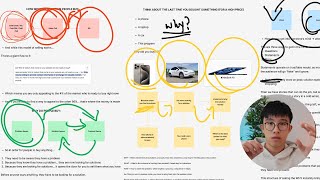
Jimmy Fung breaks down how to sell to people who don't know they have a problem yet. Most prospects aren't ready to buy, so you move them through three stages: problem-aware, solution-aware, product-aware. Use questions to make them introspect, then statements and stories to sell the outcome, then present your offer.
Questions this video answers
4%
But pretty much in today's kind of car, I wanted to kind of do a bit of a training on why people buy. And this is something that I personally started learning more and started focusing more on over the last few months. Because when I first started my business, I just looked at everything kind of like I'm going to send some emails, some cold emails, redirect into a sales asset or get them onto a car, and basically sell people on the actual call. Right? And that's kind of how I looked at it. But as I started growing my business, right. I started realizing that especially in business, it doesn't matter what it is. Right. It's not necessarily just strictly about selling stuff. It's about looking at everything as a whole. So the marketing and the sales. Right. And in a lot of cases, actually marketing comes before the sale. And if the marketing aspect is dialed in, so your messaging, in terms of who you're selling to, why they want to buy, is going to make everything a lot easier. And actually, you don't actually have to be that great at selling the actual thing if the marketing is dialed. So I'm just going to share my screen. I put together kind of like a little bit of a, like a diagram or flowchart, whatever you want to call it. And it's kind of called why people buy. So I'm just going to jump into it then let me just pull up my zoom as well in case some other people join. Okay, cool. So basically why people actually buy stuff, right? And this will be relevant if you're selling Legion Services, which I think everyone on this call is, or even down the line when you, if you decide to sell something else, whether it's a product or another type of service, just understanding how this works will make everything a lot easier. Right. So I'm just going to start with why you guys need to pay attention to this. Right? So most people on this call, including myself, is looking at this entire business game as a way to make money in a short period of time, which is. Which is fine, right? Because that's kind of the draw of business versus some of the other things, right. Is the potential to make money in, you know, without spending 10 years to actually make six figures, whatever the case is.
Right.
And as a result, because of that draw, it's very easy to just go online and look at someone else who is a couple of steps ahead and just kind of copy what they're doing. Right. So, for example, in this specific case, right. Copy cold emails or copy a sales call or copy of vsl, it's very easy to do that, but it's kind of the incorrect way to, to look at it, as stupid as that sounds, right? Because what we should be looking at is the goal is how do we become more skilled, right? How do we become a better entrepreneur, a better business person, a better marketer, which is what will be talked about, a better salesperson. And most people, the problem with following that, where you just, let's say you go on YouTube, you find someone who is booking a shit ton of calls on cold emails and just strictly copying the cold email. The problem with that is while it might work, especially in the short term, we're not really stopping to think about why a specific cold email works or why a specific VSL or sales asset works, or why a specific sales script works, right? And as a result, long term, in the short term I'll work, but in the long term actually costs more money because what works today will not work like half a year from now or what worked half a year ago might not work today because things are always changing. So understanding how this works will make sure that you're always competitive in business and not necessarily left behind. So in today's training for the next 20, 30 minutes, I'll be explaining why people buy. And if you're able to really conceptualize this, you're going to become a really, really good marketer and you'll be able to sell basically anything. And this kind of took me two years to figure out. And I'll try my best to condense it and summarize it. And if you guys do have questions, just, you know, like raise your hand or something and I'll, I'll try to tackle that question. So the first thing that I wanted to cover is how most people think that other people buy, right? Most people think that it's just really three things, right? It's the cold email or if someone's running ads, is the ad or cold DMS or cold call to generate that interest, which their goal of that cold email or whatever touchpoint that is is to generate a sales call, where on a sales call it's like a 40 minute conversation to understand the problems. They're doing all these different things and at the end they're like, yeah, by the way, this cost $3,000. Are you ready to get started? That's how most people think of it. And they think after that is to collect money. And while that model of selling does work, that's basically if we're to think about it at a high level, that's kind of how the entire sales process works. There's a pretty massive flaw to that, right? And what that flaw is is statistically, anytime you sell something, you sell your service to 100 people. Only 4% of people are ready to buy at any given moment. And that's the truth, right? So what that means is if you're talking to 100 people, 96% of people, 96 of those 100 people will just not be interested, or if they are interested, they're not in that buying mode, meaning they're just not ready to hand over the credit card or the cash, whatever the case is. Which means that by following that model, where it's just touchpoint sales and collecting money, what we're doing is we're only appealing to the 4% of the market that is ready to buy right now. But if we're able to find another way to appeal to the other 96%, that's where the vast majority of money is being made. So if you look at anyone online or any company that is ultra, ultra successful and making a lot of money, what they figure it out is how to appeal to the other 96%. They're not just selling to a 4%. Like if you look at Apple and they're selling iPhones, right? How Apple became so successful was they. Well, in the beginning, they were strictly selling to people who just wanted an iPhone. But over a long period of time, over the last decade, they found a way to appeal to all the people who don't have iPhones. And as a result, they ended up buying an iPhone over time. Right? And that's kind of where the money is made. So that's kind of what we'll be talking about right now in this training, right? So I want you guys to just kind of pause for a second and think about the last time you guys made a purchase for something expensive, right? And just pause and just like, think about it for a second, right? Whether you guys bought a phone recently, right? I think Apple is releasing a new iPhone, like next week or something, right? Or you bought a new laptop like a Mac, or you bought a car or even this program you're in right now, right? It's pretty high ticket. Think about the last time you bought something for several thousands of dollars, right? What was that process like, right? What. What did you kind of think about in the background that led you to actually buying whatever it is that you bought? Well, the answer is there's really three steps that you took. The first one is you became aware that you had A problem. After that you were looking for a solution. And after that is you figure it out, there's a solution and you wanted to understand how everything works. So as an example, let's use the example of a phone. If you bought a new phone, right? Probably this is a generalization, but this might be how some of you guys bought a new phone, right? The first thing is maybe you're using a phone like a slightly older iPhone as an example. We use iPhones. Maybe the phone was slow or was outdated or you dropped on the floor and it broke, right? That's the problem. My phone is broken, so I need a new phone, right? The what? So the solution you're looking for is I'm going to buy a new phone to replace my broken phone. And then once you became aware that you have a problem and you need a new phone, you are aware that you need a new phone. The third one is what is the best phone for your use case? And you'd be looking at a couple of different things, like maybe the specs or how nice the phone is or how much it costs, right? This is the three steps that you guys took whenever you bought anything, right? Even for this specific program, the Inbox Lab program, right. You became aware you had a problem. So that problem might be something like you wanted to make more money, right. And you didn't know how to. Right? That might have been the problem. The solution is by starting a lead generation agency or starting a business. Right? And a specific solution is maybe working with me to help you start that lead generation agency. So you see how we went through that. We have a problem. What is the solution? Now we know what the solution is. How does this specifically work? Right. So do you guys have any questions about about this so far? We're just going to stop to take some questions right now. Okay. You guys are all good. Okay, awesome. Okay, cool. So the next phase is now that we understand why, like kind of like what that buying process is like, how does this relate to what you guys are selling, whether if you're selling lead generation services, Right. So there's actually three phases that you guys need to be aware of whenever you're selling something. Right. So when we look at the market as a whole, people are always falls within three buckets. The first one are people who are problem aware. The second one is people who are solution aware and people who are product aware. Right. And these three things kind of tie back into that process where I just asked you guys think about the last time you guys bought anything, right? And Understand that in order for people to buy anything, there's three things that need to happen. Number one, again, right, they need to be aware that they have, they actually have a problem. Because people won't buy, they don't have a problem. Number two, because people know they have a problem, they are now looking for a solution. And which leads to number three, which is because people are looking for solutions, it opens the door for you to sell them your service or sell them whatever it is that you're trying to sell. And the most important thing to understand is before people buy anything, they have to be looking for a solution. So what you need to do is figure out a way to create that intention. Because again, at any given moment, only 4% of people are ready to buy. Only 4% of people are in this space, right, in this phase, the solution aware phase, and a product aware phase. Most people actually, as stupid as it sounds, most people don't even realize that they have a problem. But if you're able to create that problem awareness stage inside of, you know, a prospect, then you're opening the door to sell to the other 96% of people. So what you need to do is find a way to create that problem awareness state which just builds you a lot of leads and interest and all of that stuff, right? So what you need to do is create an intention shift, as that is what causes movement in the mind and leads someone to go from just being curious to actually being serious, right? So for example, if you're sending cold emails and let's say, you know, we're going to use generalized numbers, let's say you're getting 100 positive replies, but maybe only two to three book calls, which is a pretty low conversion rate. What's actually happening is people are replying back to you because they're curious. Maybe you said something that piqued their interest and then you sent them your sales asset or your BSL or you sent them your reply and they kind of just lost interest as a whole, right? Because they're just not in that solution awareness. They don't realize that they have a problem. They're just merely curious. So how do you take those people who is curious and turn them into people that are just ready to buy from you guys, right? So the way to do that is there's three steps and these are all questions, right? And it's why what? What's how? And sorry, why what? And how. I actually put this backwards, but is why what and how, right? So what we're doing with these three Questions, right? And this, why should I should be over here. So why what? And how? These three questions will help you get in the mind of people. And if you ask these three questions correctly, your goal is you're going to create a problem awareness stage which leads to the solution awareness stage, right? So there are three ways to get inside someone's mind to shift their intention. The first way is by asking questions, right? Which is why on sales calls, if you watch any like sales training at all, people always say the best way to sell is by asking questions because they're getting into people's mind and getting them to open up, right? So the first one is questions, the second one is statements, and the third one is stories. Those are the three ways to get into people's mind. And the best marketers in the world use all three, right? But to better understand each of these three individual things, right? Statements. So just making generalized yes and no statements, they operate on a true or false. So if you say something, the sky is blue, it's either true or it's false. And as a result it's really, it's beneficial in the sense where, if you're making a statement where you're like, let's say you say cold emails is really effective. If people believe that cold emails is effective, then to move on to the next part of your messaging. But if someone looks at that and they think that cold emails are spamming and you make a generalized statement, it's not going to work, right? So it automatically disqualifies people who, who don't, who don't share that same belief, right? So statements only work on people who are aware that they have a problem. So people who are in the solution state awareness and are aware and they're basically ready to buy. So statements only work on those type of people. But again, right, we're not trying to appeal to those type of people because those are already relatively easy sales if you could prove that you're better than the competitors. As an example, right, after statements, we have stories that really do a good job, which is why a lot of people in marketing, they share a lot about stories, right? They talk a lot about their own background, experience, who I, who am I, what is my journey, all of that stuff, right? Because stories are really, really effective to actually sell people. But the problem with that specifically surrounding, let's say cold emails is, you know, you don't, you just don't have that much space. If you're sending emails, they should be short. You don't have all the time in the world to be like, oh, yeah, my name is Jim Fung. I am, you know, I'm 24 years old, I went to this university. I do this, do that. You don't have time to do that. So stories are really effective, but in a lot of cases, especially when you're trying to generate interest, you just don't have the time for that, Right? You can save that for the VSL or even for parts of the sales car, right? So now that we have statements and stories, that really leaves us with one thing left, which is asking questions. Right? And the most important thing to understand about why questions work so well is because when humans, when all of us, if someone asks us a question, we kind of have to answer it, right? So if we hear someone ask us, what time do you wake up this morning? Right? Even if you don't say it with your own words and you're like, I Woke up at 7am you might think it like, legitimately, right? So because the way the brain works is we have to answer it and it's very hard to actually ignore it. So there are a bunch of different questions that you could play around with. But for the purposes of what we're talking about today, there's only three questions that we want to talk about, right? And that is why, what and how. So the reason this works and. And how this works is by asking a why question. Why is a very reflective word. So if someone asked you, why do you do this? Why do you wake up at 7? It's a reflective word. So you will think of the answer, right? And why also assumes that we're talking about something from the past. It's a reflection of the past, which is for most people, where a lot of problems happen. Right. My business has been struggling for the last two months, right? Why was it struggling? Right. It pulls someone from the back from the past into the present, if that makes sense.
Right?
So asking someone why will also assume that people have a question. So, for example, a question like why are you not losing weight? That assumes that someone is having issues with losing weight. Or we ask another question, which is why you're struggling to sign clients. That is a question that assumes that people are having issues with signing clients. And these are assumptions about problems that people might have. And you're explaining to them why they have this problem, right? So kind of the purpose of the why question is it appeals to people who are not aware that they have a problem, if that makes sense. Right. People aren't just waking up and thinking to themselves, oh, yeah, I have this specific problem. But if you ask a why question, it will. People will realize that they have a problem and you're explaining them why. What is the. What is the cause, the root cause of that problem? So the structure of asking the why instantly brings them into the awareness of the problem. And if you put a why question and into someone's mind, then they'll go in and start generating an emotional state, right? Because if you say, why, why are you not losing weight? And that's an issue that people are actually having. It pulls them into awareness, and now they're actually looking for a solution. They're curious to see what you have to say to explain to them why it's like that, what the reason is. So they're thinking about the problem, and now they are in the problem state. They're aware they have a problem. And once they're in the problem state that was generated by the why question, we have to now move them to the next stage, which is present them the solution, right? Why are you having issues with this? This is what's causing it. This is the solution. But before any solution can be sold or presented, the idea has to be sold first. So, for example, when you're selling cold emails, you can't just jump straight into selling yourself. As to the best cold email provider, you first have to sell people on the idea that cold emails work to achieve whatever goal or outcome that they're trying to achieve, right? To sell them on the idea. So people always buy into the idea of the thing first before the thing itself. Before you buy a phone, you have to be open to the idea of getting a phone before you buy iPhone, right? That's just the way it works. And that is where the what question comes into the structure, right? Which kind of represents the outcome. What are you actually getting from solving this problem that you have? And what that is, is what is the transformational value of what will happen when you're aware of the problem? And at the end of the structure is the how, right? So you are aware that you have a problem, you're aware that there's a solution. How do I actually implement the solution to get this very specific result? And when you ask someone a how question, it implies that there's a process involved. How do you cook that pasta? Right? When someone asks you that, how do you cook that dinner, you assume by default that there's a process involved to cooking that pasta, right? Take the, you know, pasta of the bag, turn on the stove, you know, do all of these different things. There's a very specific step by step process involved that led to the outcome. Right? So that's the why, what and how question. Do you guys have any questions so far about this? Okay, you guys are good. Okay, awesome. So just to recap, right, why as a question is when it is asked, it helps people understand that they have a problem and it pulls them into the awareness. And now they're thinking and realize that they have a problem. What questions is the specific outcome that they need to solve? Right. People buy for outcomes, which is why, what is a very important question. And then finally, how is how to actually solve the problem, which implies a process. What's the specific process to go from where I am right now towards, you know, my end goal and having this entire problem solved? What's the sequence of steps? So the most important thing to understand about everything I just said is if someone is not in the problem state, then you have to create that problem state, right? And that's how you appeal to the other 96% of, you know, buyers or 96% of people who aren't ready to buy, but yet to bring them into the problem state. So people don't seek solutions unless they have a problem, and then people don't buy unless they're seeking a solution. So it's kind of like a little bit of a confusing loop where these two things need to happen. People have to be aware they have a problem and then to be aware of the solution, right? So the questions of why and when they activate a problem, how and what activates a solution. And as a result, people are curious, they're problem aware, and now they're looking for solution which opens the door for you to sell your service, right? So think about your own buyers, right? If you guys have clients right now, some of you guys have clients right now. Now some of you guys are working towards getting your first client. Think about that specific, think about where they are in that specific buying process. Are they in the problem awareness state or are they looking for solutions? So, for example, that's kind of the importance of doing research, because certain niches, they're in different phases of the journey. For example, if you're selling to marketing agencies, right, More likely than not, they are aware of the solution. They're solution aware. They really understand how code emails work. They've probably tried cold emails already. They are aware of it. So the way you have to sell it is to sell the how, how am I different? Why should you work with me? That type of thing, right? But if you're selling to a different type of market, a less sophisticated market. So let's say you're selling to local businesses, to roofers who don't even know what cold emails is, you have to appeal more to the why, right? Why you have this problem. Here's a solution. Sell the idea of cold emails before you sell yourself, right? So there's a little bit of a difference and that's why it's super, super important to actually research the niche that you're selling to, right? And that's, you know, that's probably half of the success. So tying it all together, what does everything I just shared with you guys today, what, how does that tie into your own lead generation agency, into your business? Right? So again, right, take a look at what you currently have right now. Most likely, if you think about your specific cold email, or maybe your VSL or maybe even your sales call, if a sales script, your messaging is centered around the what and the how, right? So the what would be do cold emails to generate more leads. And the how is work with me, work with my agency to implement this entire process, right? But the problem with this is you're missing the why. So you're talking about two of the three questions, but you're missing the most important question, which is why? Why should someone even look into this in the first place? And if you're not getting optimal results, so you're sending emails and you're just not getting that many calls, or you're taking calls but you're not signing clients, there's probably two reasons why. The first reason is you're just not talking about a relevant problem. So the why, the why question is wrong. Or if you do have the right pinpoint question, your messaging is appealing to the wrong type of buyer. You're only talking to solution aware people, right? So people who already know that code emails is a thing, they believe coding must work and they're really actively looking and talking to three different cold email agencies to implement the process, right? That's where it's going wrong. Because you're speaking to such a small segment of the market that it's just really, really hard to get results. And what I'm sharing with you right now also appeals or it also is also relevant to your clients as well for your client's service. If they're just not getting that much results, where what is their messaging and who are they speaking to? Because what this should really look like in practice is if we think about the lead generation agency business, there's three components, right? There's the cold emails, there's the VSL and there's the sales call and using everything we just talked about, the why, what and the how fits in all three. So in an ideal scenario, if you think about like the cold email modules or all the cold email trainings, the most successful cold emails, they talk about why, so they start with a problem, they talk about what, which is going to be your offer. And they talk about your how, which is a call to action, which is more likely than not. You know, a sales asset that you're sending to people, so follows the why, what and how framework in the vsl. It also should follow the why, what and how, right? So if you think about the VSL structure, you start with why at the very top of your bsl. This is for you. If you are struggling with boom, boom, boom, boom, boom, those are why questions, right? Why you're struggling with boom, boom, boom, boom. Then you talk about the what, so what is the solution, the step by step process, the cold emails, whatever, right? And at the end is the how, which you're pitching yourself and your own business to implement everything for business owners. So it follows the why, what and the how. And even on the sales call, it should follow the why, what and the how, right? If you think about the sales call, the most important aspects is, is you're asking questions to understand why someone has a problem, what the problem is and why they're having it. So that's the why. After that you're, you're trying to understand what have they tried before and are they open to cold emails. So that's the what, that's a solution to. And then at the end your pitch is where you talk about yourself. You know, maybe if you have case studies, you're talking about your own case studies or you're talking about what makes you different from everyone else. So all of all three of these things should all follow the why, what and the how and obviously the specific ways to go into each of these questions. But think about your process and think about if you know, your cold emails, your BS on your sales asset has the why, what and the how. And I guarantee that if you implement this into like the process as a whole, you get significantly better results. Right? So that's kind of the training today. Hopefully this gave you guys a little bit better context as to kind of why people buy, right? We were talking about the buyer's journey as a whole. I'm just going to open it up and now we'll just have a conversation. You know, if you guys have questions about this or questions about anything else.
Good man, good. Yeah, I guess when it comes to questions specifically to kind of what you alluded to in your presentation today, this is more of a question in regards to clients and client results rather than kind of acquiring clients for the agency. When it comes to asking questions, I've been doing it a lot of sort of experimenting with different ones. When you sort of tailor the questions, do you tailor it A, to somebody's specific role, B to the company itself, or C to, you know, a more macro problem that them and their team or them and the whole company could be facing? Is there an angle that you've seen kind of work better? I'm sure it varies ICP to ICP about.
Yeah, it's a combination of all three and let me explain that. So if you are. Okay, so the first one is specific job role. So obviously the type of problems that let's say a sales manager will have might be a little bit different than, you know, the CEO, right? So you have to understand that especially if your clients are selling to larger companies, right? If it's just selling like a smaller SaaS, a smaller software company to smaller companies, it's not going to be that relevant, right? So titles do matter. Companies is more so like general industry wide problems that people might have. So as an example, right, let's say recruitment, right? Obviously this is to help yourself get a client, right? But this will give you an example, right? If you're selling to recruitment agencies, a common problem, industry wide problem that literally affects every single recruitment agency is understanding that right now companies just really aren't hiring, right? The hiring market is really, really shit. And as a result, somehow that will impact recruitment as like demand for recruitment, right? If people just aren't hiring and companies are firing people and laying off people, that will definitely impact recruitment agencies who hire these type of roles. So the question would be more for recruitment agencies will be more broad, industry wide, right? A question might be how has the current hiring cycle, how has that impacted your business? Right? And that will create problems for people, right? But it's, it's a combination of, you know, all of those things, right? Industry wide macro things and the titles, it really just comes down to who you're reaching out to for sure.
Yeah.
Okay, appreciate that. I guess the reason I asked that is because I think I'm having a hard time with some specific clients getting the prospect to care enough about the question. You know, somebody for example, is in like an operations role and it's related to increasing company Wide efficiency or maybe company wide output, for example, for a production, food and beverage production company as an example. Sometimes I find certain executives are pretty lazy and they almost don't care enough about the problem. They go, I'm just going to do my job, get a paycheck and walk away where it's trying to make them almost care enough about the problem for them to address it specifically.
For sure, that that makes sense. I think that comes down to, well, I mean a couple factors, right? It could be the type of people, right? At the, at the end of the day, if someone is a kind of like a shit employee and they just really don't care, then like they just don't care that actually just don't give a shit. Right. But I, the type of questions I would ask is are you having issues with xyz? Right. And they have to be really like really broad. Right. Are you having issues with, with costs? Are you having issues with operational efficiency? Right. And obviously you want to try to quantify that if you can, depending on your client's offer. But that's probably how I would go about that.
Awesome. Thanks.
For sure. For sure.
Cool. Cool.
I had a.
Can I comment on that too?
Yeah, absolutely. Travis.
Yeah, so I get that problem and that challenge. I've been there myself. So the biggest thing is reaching out to a list knowing that they likely already have the problem. And yeah, if the operations guys are not, if it seems like they're not interested in what you're throwing down, then probably it's a targeting issue. And so what I would do then is I would niche down by sub, sub niche. So if you're reaching out to just broad manual food and beverage manufacturing, maybe sub niche even further. Like going to chat gpd, say hey, here's my niche, sub niche. This, give me 20 sub niches under this, you know, niche umbrella and then it's hyper target. And then go do some, a little bit more research. Say hey, what do operations. What do what do. Yeah, operations managers, pain points in this particular sub niche and list all of the pain points per sub niche. And so you get more hyper targeted. And then see, see if that makes more sense because it should, it should make more sense then they should care about the, the pain points that are related to their particular job role rather than overall company wide. If you're talking overall company wide solutions, then you're probably talking to the wrong person because ops may not be it. It may be more, you know, CEO, founder, exec, you know, C level execs and stuff like that. So that's my 2 cents on it for sure.
And I think to piggyback off of that as well, right. I think it really comes down to the specific service itself too, Right. Because I think some services are a lot easier to sell than others. So as an example, website, the website design, let's use that, right. The truth is, if you're selling, let's say I run a website development agency, I'm helping people redesign websites. If I reach out to you, Spencer, and you're not like, you just, you have a nice website and you just don't need a better website, kind of no matter what I say is not going to be of interest. And in many cases, actually even if I offer it for free, you might be curious to see what it is. But you're not like a serious buyer because you don't have a problem. So I think depending on the service, you might want to look for intent, right? Which is why even for recruitment, when I was helping my clients with, you know, finding these companies that are hiring, I always looked for companies will open job roles because that's intent, right? Because if a company isn't hiring at all or they have no plans to hire, they're just not going to hire a recruitment agency as a whole because they just don't have that intention, right.






