Control Vs Empowerment
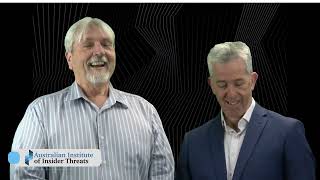
Peter Natra contrasts bonsai management, where control stunts growth, with forest management that empowers people. Excessive control breeds micromanagement and disengagement. The answer is monitored empowerment: clear boundaries, supportive communication, and ethical guardrails that build trust.
Chapters
Welcome. Glad you can make it to the Australian Institute of Insider Threat. And in this video, we explore the balance between control and empowerment in the workplace, examining how leadership styles impact employees, behaviour and risk. With me, we have Peter Natra. Welcome again.
Thank you. Pleasure to be here.
Fantastic. So let's start with the usual typical first question. Let's define what we mean by control and empowerment.
Sure. When we're looking at control and empowerment as a management style, the analogy that springs to my mind is the difference between bonsai management and forest management. Bonsai management, everything looks beautiful, everything looks pretty, but it's so controlled. And it's also very, very small. It's within a small environment. Whereas forest management, you allow the full expression of the plant, let's say the pine forest, to grow and become. Become healthy.
Yeah.
Not to say bonsais aren't healthy, but it's really interesting because if you look at an uncontrolled management environment, there's a couple of key points that come across that are similar to bonsai. You've got to, first of all, select the right plant that will be conducive to that kind of thing. Then you have to prune it and trim it pretty much every day. And here's the interesting thing as well, too. Every so often you have to repot it and cut its roots.
I didn't know that.
So that the root system, as the root system spreads, the tree wants to go higher. And you might find that actually with a lot of organizations where they say, okay, we're now going to take you here and we're going to uproot you and plant you here and. And that's the same sort of thing. Whereas with empowerment, what you allow people to do is to grow, expand, do their thing, grow their roots. That is network or expertise or involvement, and it allows for the organization's growth as well as for the individual's growth.
So why is it important? What's the distinction between having. Yeah, between control and empowerment? From a risk context.
Yeah, from a risk context, when you allow people the ability to expand, your ability to expand your operation becomes much more. The risk with trying to control everything is that you. While everything looks according to the image that people have in their heads, it tends to keep it locked in there. So that you may have like a giant fir tree, but it's yay high.
Yeah, yeah.
And it looks magnificent and it does what a fir tree is supposed to do, but it's this high. Yeah. And that's a big risk as well, too, especially for organizations that Are wanting to expand or wanting to strengthen. Maybe expand is the wrong word. To strengthen what they do.
Okay, so what are the signs that management are exercising too much control?
Micromanagement.
Micromanagement, Pruning. Pruning. So let's take it sort of a step further. What is the risk then to either that employee or the surrounding if too much of micromanagement.
Look, absolutely. If you have too much micromanagement. Look, there's two types of people generally, I'm being very, very general here. Those people who need to have everything prescribed for them and they will be very happy under a micromanagement environment. But then there are people who want to explore avenues that want to take their ideas a bit further. It's a balance between the two. So if you take somebody who wants to explore and constantly shrink them back and prune them on a daily basis, what you might find is that a little bit down the track, they will cease to make decisions in their area of responsibility and come back to you, if you're the micromanager, with every single step. Can I do this? Can I do that? Can I do this? You've made a rod for your own.
Yeah, yeah. So how does empowering rather than controlling sort of contribute to a sort of a stronger level of trust within the organization?
People feel attached to an organization, if at all. If they can feel that they are contributing, if they can feel that they're making a difference now by allowing them to run the game within boundaries and make gains and make successes, they will have a sense of pride about what they do and where they operate from. And also they will have a sense of pride in their management team that whether knowingly or unknowingly, they will credit for that management style so that they can do that again. I'm not saying you should run away and let the. Let the forest go nuts, but certain control and allow the people to make decisions that will allow them and the organisation to move forward.
What behaviours might suggest that the person or the employee might react negatively to someone who's too controlling?
Disdain body language is a very interesting. As a manager, that's probably a very good thing to at least get the rudiments of. But what will happen if people become micromanaged? A couple of things happen. They become disengaged, they can become. Well, they'll become less and less productive, but they can also become vindictive. And that could express itself in all sorts of not so innocent ways.
Yeah. So how do organization, management executives set boundaries around trying to empower their employees without Being too controlling.
The typical example is in a sales team. This salesperson is absolutely fantastic. They get all the wins. We don't ask them how it's done. And there is the key. You just do what you do. We want the bottom line, end of story. That is too much empowerment. But what will happen on that side is that the people that they are riding roughshod over will become disenfranchised. So one of the keys is to have a monitoring going on. That might be a meeting, that might be a how's it going? That might be a how you doing that, how you're feeling about that. All those questions might seem very soft questions, but they allow the management team or the manager to sense how this person is traveling, what their level of enthusiasm is, what their level of engagement is, what their level of forward thinking is.
So in what ways the balance between control and empowerment help prevent something like resentment disengagement?
Yeah, by being able to, by constantly being micromanaged. The answer is always going to be something that almost slightly punitive in an alternate situation. In an empowerment situation, there's a book at one stage called the One Minute Manager which is catch people doing something right.
That's a great book.
As opposed to catch people doing something wrong. And sometimes you have to say hey, that wasn't right. So you catch people doing something and say, hey, this is not how it's done. But that's made much more effective when you can constantly say really like the way you did that, that was really great, nice outcome. Those sorts of things.
What can managers, how do they, how would they recognize when the employee is giving too much empowerment? So they are now using it as, I wouldn't say vindictive, but they've gone beyond the boundaries of what they've been entitled to.
Generally speaking, those people would become self aggrandizing. They will not be backward about lording it over their peers and looking for accolades constantly.
Yeah, because we've seen for example, salespeople, the men generated say 80% of the revenue and then suddenly they can do no wrong.
Yep, yep. And these people consider themselves the king of the mountain. Correct. And here's the kicker. They will disrespect, they will disempower people who are looking to climb up to or external. So I'll keep good people down.
Yeah. So what strategies can organizations then do by helping to empower the organization without doing too much of an oversight or creating feelings of too much of control?
Some control is still needed. So a lot of those over the top scenarios Happen when there is no control or very lax control. Ah, that's alright. You got the sale or you did that or you got this project across the line, we will forgive all sins along the way. Those sorts of conversations need to be, okay, great, you did that. However, really, really not happy with the fact that you stepped on Joe's head when you did that, that you second guessed the client or you shoehorned the client into something else, whatever the case may be. So that those boundaries are always there. Yeah, success is great, advancement is good. Getting the project across the line is good. But it has to be done with some sort of ethics.
Yeah, let's sort of jump to that aside, let's look at a scenario whereby we want to understand the impact of someone that's too controlling. So if you're going to managers too controlling, what's the impact to, to the people that first of all he manages or she manages and then to the rest of the organization? Yeah.
You'll probably find that the enthusiasm, the fire of wanting to be able to get, the fire in the belly of wanting to be able to get something going and do it and show your best will go out very, very quickly. Not even talking months, I'm not talking weeks. The moment that somebody becomes micromanaged, they know it. Yeah. And they lose the steam, they lose the ability to grow. They just become order takers from above and process managers. Whereas you want people to say, okay, yeah, these are the things we have to do, but how can we do that? How can we make it better?
Yeah. One of your favorite words is communication. So how does communication play an important role in either empowerment or control?
Yeah. So communication is a broad term which can be both supportive communication or not supportive communication. So let's be very clear about what kind of communication we're talking about. First of all, no communication is deadly. Communication can take two forms. It can be empowering or it can be controlling, destructive. And either of those types of communication need to be balanced. Sometimes you need to be a little bit with constructive criticism. But if you can, like I said before, you can catch people doing something right, then do that because it gives the clout, it gives you more power to be able to say, this was not right, this needs to be addressed.
And people go, oh, okay, yeah, yeah, yeah, yeah. Final question. What is the key takeaway from this topic?
A balance between control and empowerment. So the control is to keep the boundaries within what the organization wants to provide and the empowerment for people to grow and to expand inside of that environment so that they can expand the business or organization along with them.
Yeah. Great. Well, I really hope you enjoyed this session of the video between control and empowerment. Thank you for watching. Thank you, Peter.
Thanks, guys.
And pay attention to the next one. Thank you.
More from Boaz





The Cross Section Between Insider Threat Awareness And Disaster Recovery And Business Continuity


How Insider Threat Awareness Intersects With Key Areas: Fraud Prevention, Ethics, And Integrity



