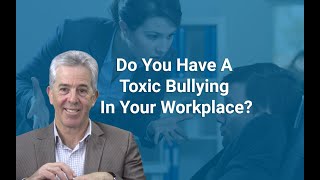
A recorded interview (Speaker A with expert Peter) exploring what bullying is, its forms (cyber, physical, verbal, social), and how it operates as a systematic power structure that enforces hierarchy and control. The conversation details typical bully behaviors (pecking order, chains of bullies), how victims show signs (dreading meetings, absenteeism), organizational drivers (coercive cultures, ignoring incidents), economic impact (large, unsourced cost range mentioned), and how bullying can become an insider-threat risk through both bully concealment and victim retaliation. The video closes by emphasizing that both bullies and victims need help and previews a follow-up on "Bulldozer" personalities.
Chapters
Some people get confused of what bullying is or what it isn't. But in this video we're going to find out. We're going to take a deep dive and understand what bullying is and how damaging it can be for a person and even the organization. Peter, let's talk about it. What is bullying?
Bullying is a systematic entrenchment of power over another person and possibly even over a group of people. It's a predictable pattern of behavior. And some people do not know how to operate without that structure.
Exactly. Now we know that there are different types of bullying. Some of them are, for example, cyber bullying, physical bullying, verbal bullying, social bullying. Can you sort of explain what they are and then how they actually work together?
Yeah. So each of those is a, is a potential element of a toolkit of a bully. If you can extend the bullying as a bully to beyond the realms of when you have that person in your presence, whether that's cyber, whether that's through innuendo, whether that's through by proxy with other people, then the bullying process. Process is felt to be effective.
Correct. But we also know that the bullying is not just in a single domain. So for example, if you go to a school, for example, and bullying might be in a physical format, but when they get back home, it might transform into a cyber context.
Absolutely. And that's the most insidious part because you get no respite from it as a victim of it, you get no respect from it, which is in itself bullying as well.
What are the typical behaviors that you see from a person that engages in bullying activities?
There is a. You can almost see it as an enforcement of a hierarchy that you're keeping people inside, that you're making people understand that they are less than you are if you're the bully. So you're creating a hierarchy and basically you're pushing people and cajoling people into a position where they completely become subservient to the role that you're making them play. And that role, that role can be as low down on your ladder as you possibly want to make them, depending on how much you are invested in that. And often there's a chain of bullies below that principal person as well too. So not only does the victim of bullying have to contend with the original bully or with the chinchin bully, they now have to find their way where on the ladder of other bullies they are going to sit. And obviously that chain is itself a continuation of the bullying pattern. It's kind of a self replicating pattern.
Yeah, I love what you said early on when we were talking about it, you said it's like a pecking order.
Yeah, it is. It's a pecking order. It's a hierarchical structure.
Yeah. Does bullying have to be aggressive? I mean, it's known or you see scenarios of it being aggressive, but does it have to be aggressive?
It doesn't have to be aggressive, but it can be just as devastating. I mean, if you've ever watched any of the political thrillers on tv, the smiling suit with the urbane attitude and the devastating impact of what it is that they say do or otherwise, it lands with a thud. That itself can also be a bullying effect.
Does bullying have some form of a purpose?
So there's a lot of thought, there's a lot of theory out there that the bully themselves have a low self esteem problem and that their method of coping with that is to keep everybody below them.
Yes.
That they can control people. And it's that sense of power and control that they use to validate their esteem rather than using their internal resources and their internal capacities. The gems that they have themselves to rise to the occasion, they push everybody down. And in certain instances, you know, in Australia we have a thing called the tall poppy syndrome.
Yeah.
If anybody starts to shine, then there are a crowd of people who are quite happy to mow down the tall poppies, keep them in a box so that the people who are doing the mowing can keep their status.
That's a good way of saying it. And obviously I wanted you to talk about from a context of sort of the power imbalance within bullying.
So the bully perceives to have all of the power and the victim is essentially feeling powerless. Most people who are victims of bullying are quite normal people, actually exceptional people, but they don't want to engage in that kind of combative behavior. And I guess in a certain way that that's the standoff, that the bully knows this person won't ever retaliate, they won't ever jump out of the box and confront me. And oftentimes that's not an advisable thing to do either.
Correct, correct, Correct. So bringing into context, how serious is it for organizations in the context of bullying?
There are various statistics about that, but there's consensus of opinion that there's a lot of people take sick days simply because of the stress and anxiety that the workplace imposes on them. And you can couch it in all sorts of flowery terms and put all sorts of interesting definitions around it, but at the end of the day, bullying does account for A lot of sick days and a lot of absenteeism.
Yeah. Because, you know, I read some statistics that it's around 6 to 36 billion dollars. Really looks like insane, insane numbers. And this is a yearly cost to Australian gdp, businesses and so forth like that. What are sort of the key behaviors, underlying behaviors of the cause of bullying in the workplace? So why does it potentially flourish in certain organizations? And some it doesn't.
It comes down to the culture of the organization. If the culture of the organization is around hard control, around coercive control, then bullying will flourish there. Also, blind eye. There are some organizations that really, I'll be kind. Don't actually see it happening.
The.
And the bully will find a niche inside of that in which they can operate under the radar while being very chummy. Chummy with the powers that can do something about it.
Yeah, correct. I mean, a lot of instances where people are aware of it and they just completely say, it's not my problem.
Yeah. Or even what can I do about it? You know, throw up their hands and say, well, how do I address that?
Correct.
I'm a manager. I'm a manager that knows about my speciality. I don't understand about bullying. So, I mean, way back in the bad old days, there were schools that actually didn't even have programs yet in place. And it took a lot of pressure from the parental groups to actually start a program happening inside of schools. They were very happy to just stuck and leave.
Yeah. That seems to be the normal. Yeah. How does a person know when or whether they're being bullied?
Well, if you don't like to come to work, and it's not because you.
Don'T want to do the work, it's.
Because you don't want to confront Billy Boggs or whatever your name is, then you've definitely got a bullying problem. You're definitely in the presence of a bully. If you go to a meeting and you know that a certain person will be there and you dread that meeting, there's a bit of sign there. Yes, correct. Yeah. It is very subjective, but that's a really good indicator that things are happening.
Now, let's talk about from a context of insider threat, how does bullying manifest into a potential risk that someone within could actually potentially harm the organization?
So there's two aspects to that, looking at the bully themselves and also the victim. So let's start with. Let's start with the bully themselves. They could actually be creating an aura of untouchableness to cover over an activity. Let's call it that, that they don't ever want anybody to talk about, you know, taking the USB home or whatever the case may be. On the recipient end, on the victim end, there is a feeling of, there's definitely a sense of powerlessness.
Correct.
That can translate itself into, well, if I can't do that, I'm going to do this.
Correct.
So these are the two vectors of risk.
Correct. They could be so dissatisfied or disgruntled that they could seek revenge.
Absolutely disempowered. And you know, the justifications in that can. Even though the organization may be blameless in all of that, but, but they could be perceiving it to say, well, I'm just going to do it because I'm now in an environment that's allowing this to happen, so I'm just going to take it out on the environment.
Correct. Do you ever see that because one person is doing it and it's not being handled, that others say, well, if that is okay, I might as well do it as well?
Yes. Especially if it's seen as a way to advance. So if you see a person advancing or appearing to advance or moving ahead because of that behavior, there is the, there is the risk of somebody taking stock and saying, you know what, maybe this is, maybe that's the way to get ahead in this organization.
Yeah, yeah. When is it not bullying? So when, when is a behavior not considered as bullying?
Yeah, when it comes as a surprise that person is doing it. So uncharacteristic is probably the word that springs to mind if the behavior is uncharacteristic. I didn't expect that from you. Implies that generally speaking, this person has a non bullying methodology. And if some time we all have bad days.
Goodness.
Yeah.
Yeah, we do.
And sometimes somebody can come along and do whatever it is that you think is a bullying and the next day they come back and they say, might not even apologize, they just are back to normal. So it's a consistency, it's an occurrence. It's every time you see that person and you expect a bullying behavior, then that's bullying.
Yeah. Okay, so let's wrap it up with last question. What is the takeaway from this discussion?
Because it's quite sombre, it is quite somber. Both of them, both the bully and the victim need help.
Yeah, that's true.
There's two parties that are both in need of some sort of assistance. As I mentioned before, a lot of times the bully is a person crying out for help. It could also be that that person is. We talked about toxic personalities in which case for assessment needs to be made is that somebody that we need in the organization, they're better off suited somewhere else, and the victim of bullying is not living up to their potential. So what, as an organization, are you missing out? What gifts of this person that this person can bring to you?
Correct.
Are you missing out?
Correct. That's the whole purpose of hiring a person.
Correct.
Yep. So is that. Thank you for watching. Thank you, Peter. Much appreciated. The next video will be about Bulldozer, a Bulldozer personality. Thank you very much.