Do You Have A Toxic Mistrust Employee In Your Workplace?
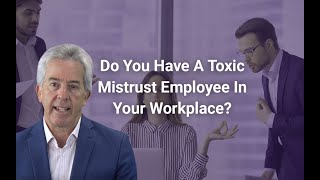
Peter Natra explains toxic mistrust: a tendency to second-guess and default to suspicion. It damages collaboration, creativity, and decision-making, excludes people from teams, and harms external relationships. These employees can still contribute but need careful management.
Chapters
Alrighty. Have you ever noticed within an organization a person that is always trying to second guess you? Let me ask you this question. Do you trust that person? With me we have Peter Natra who's going to demystify the toxic behavior of mistrust. So let's define it. What is it, Peter?
So it's a personality that constantly second guesses you, that's constantly filtering what, what is coming towards them and mistrusting as their first preference rather than trusting as their first preference. And that can be interesting to say the least.
Yeah. How does it affect them personally? Their self esteem and so forth?
There's a lot going on inside. So everything that comes towards them, they're filtering for. How does it affect me? How does it hurt me? What box do I put this in? What, what, what, you know, what, what compartments do I put this in? And they're very busy in themselves trying to figure out is this person trying to take lend of me? Is this person a black guy or a white guy or whatever it is?
Yeah.
You know, and I'm talking chess pieces there. So it becomes a lot of hard work for them to try and decide whether you're working in their favor or not. And that makes them very unresponsive at times while they figure that out. And they've got a lot going on. I call them submarine personalities.
Submarine personalities? Yeah. Okay, why is the question, what is the root cause of it? Why would they behave that way?
That's an interesting question. And I guess it could be summed up either it's nature or it's nurture. So some people are just hardwired that way from birth and some people have been trained that way through circumstance. But either way that's the way that they've found that they operate through the world.
Yes.
And the reason why they operate through the world is that this way has worked for them in the past for whatever reason.
Yeah. You mentioned in a previous discussion you talked about self preservation or self protection.
Absolutely. Okay, so there is a self protection going on. Does it hurt me, does it harm me or does it, am I okay with this? And this is essentially how they filter the world because they're very always looking for how can this hurt me?
Yes.
And as you know from, from the nlp, what we filter for is what we tend to find.
Yes.
So if we're looking for something that can be potentially affecting us, we'll always put that spin on it.
Yep.
Whereas if we're always filtering for something. So what's, is this a great idea or Is this something I can get on board with that? That's how we see that as well too.
Yeah. Now, we also talked about mental health, but not in any previous videos. This is just a casual conversation, so I wanted to actually bring it in into this video.
Yes.
What do you think is going on from a perspective of mental health with someone who's displaying this type of behavior?
To constantly have a process or series of processes going on places a lot of stress on the individual. So there would be a high level of stress. And funnily enough, when you're highly stressed, you also become highly skeptical and highly mistrustful as well too. And that just feeds that cycle completely. A lot of people who are chronically mistrusting don't even realize it because their baseline is this is my level of stress. And perhaps they're functioning more nicely inside of that level, but it takes a little bit of a jolt and they're past the normal stress threshold.
Are there specific triggers that make it worse or specific events that make it worse?
Look, every event is judged and according to. How does. Is this person negative towards me or is this person positive towards me? If it's perceived that a person is negative, it just amps that up.
Yes.
And yeah, it really does make it very hard for that individual. And the other thing is that individuals that have been hurt once, and by hurt I mean perceive the hurt, find it really hard to forgive. So once you're in on that side of the ledger, it takes a lot of work to get back on the other side of their ledger.
Yeah, I can see that. So that brings me to the following point, which is around team dynamics. How does a person with mistrust behaviour affect team dynamics?
There's a. A lot of people will recognize straight away that when they're dealing with a mistruster that they put a barrier around them. They put a. They tend to go around people like this, which closes them out of the loop, which makes them even more paranoid.
Correct. It's a cycle.
But at the end of the day, if that individual is an integral part of the team and they need that, they perform a function inside of that team that's critical, that can have a very, very serious effect on the team itself.
Yeah. What about from a perspective of collaboration? Because obviously someone who's maybe on the Altair side won't be included in part of their sort of collaboration, so.
A lot of their input would be missed as well. And even if you were to include people inside of collaborative element, you would find that they would not Contribute immediately. There's a lot that goes on. There's a lot of mental horsepower required to actually filter and process what's coming towards them. How do they feel about it, how are they going to respond to it? So that that role of creative inspirational ideas that we all want to have in a really good meeting will be blocked, will be stoppered by somebody who's constantly filtering.
Yes, what happens? Or actually the question is slightly different. How does it hinder decision making process within an organization or even within a group?
You don't know what's going on with that particular person. And look, there's two ways of looking at it. Some people can actually get on board and say, okay, well I wonder what Harry's going to say about this. Or Harry being the toxic mistruster will just get completely iced out and, and the situation or the dynamics of the team will move forward. But again, the biggest impact is actually on the individual who's doing the mistrusting.
I know I've asked it before, but I sort of want to sort of dive in a bit more around how such behavior also hinders around creativity and productivity of an organization. What could go wrong? What's the worst outcome for an organisation? Having someone who's having this behaviour but is sort of left unchecked.
A lot of what goes on inside of a person with toxic mistrust is that there's a lot of COVID thinking going on. They have the ability to have conversations and decisions that they feel completely justified in making in their own mind. And it's the actions that spawn out from that that can be a big problem for an organisation. Now whether that can be on an interpersonal relationship point of view, they may put the team members completely off correct odds with each other. Or it could be an organisational or structural or even a. Yeah, security thing.
Yeah, because I was even thinking from an external perspective, if you can't get the internal right, then what's chance do they have this organization moving forward with establishing support, collaboration, creativity, innovations with existing clients and partners and so forth when you have that mistrust coming out.
Yeah. So internally the mistrust will probably be. Because everybody knows that. Let's call them Harry again.
Correct.
Harry. Look, you know Harry is. That's just Harry. Right. And internally everybody says, yeah, that's fine, we'll deal with that.
Correct.
You know, Harry's good at darts, so we'll keep him on the team. The moment you start going outside of the organization and you need to take this individual with them with you, you are now introducing a mistrust in energy into a. Into a meeting that should go collaboratively.
Yes, Correct.
And that can have. That can have the other team, shall I say, probably won't take kindly to it.
No, no, no, not at all. It sounds like a boat that's trying to row forwards while the anchor is still down. Exactly.
Very good analogy.
So, completing our conversation here. So what are the key takeaways that we get from such a behavior?
So the key takeaway is that everybody has the ability to be useful in the function that they produce. As a toxic mistruster, the repercussions are majorly for the individual. It's the response of those of those repercussions in the individual that the team needs to look at. And I guess there's a little bit of support and understanding that may be required from the team because if the toxic mistruster suddenly has a meltdown, then that affects the whole team.
Oh, it certainly will. Yeah. Like any behavior that is toxic, it can have a significant impact on an organization.
Correct? Absolutely. Yeah.
All right. So with that, I hope you enjoyed this video. I was going to say click on subscribe or like, but obviously we'd love your feedback evermore the next video. And the last video of this series is called the Toxic Behavior Disengaged. So I look forward to seeing you then. Thanks, Peter. Thanks, palace, and thank you.
More from Boaz





The Cross Section Between Insider Threat Awareness And Disaster Recovery And Business Continuity


How Insider Threat Awareness Intersects With Key Areas: Fraud Prevention, Ethics, And Integrity



