Engagement Vs Detachment
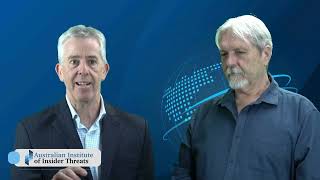
Boaz Fischer and Peter from the Australian Institute of Insider Threat discuss how workplace detachment differs from disengagement and why managers miss it. Only 23% of workers globally are engaged, and detachment often precedes costly mistakes like 15,000 mislabelled boxes at one organization. Emotional intelligence and job redesign can pull people back.
Chapters
Welcome back to the Australian Institute of Insider Threat. And in this video, we're going to discuss the dynamics between engagement and detachment in the workplace. We're going to examine how these opposing states impact employee behavior in an organization. And we're going to explore how these employees contribute to positive work environment compared to a disengaged or detached who can lead to what we call is sloppy, even risky behavior. So before we start, welcome, Peter.
Thank you.
And hi, my name is Boss Fisher. And what we're going to start is let's define what we actually mean by state.
Yes, absolutely. So a state is a way of looking at the world. And when we talk about states, we can talk about excited, we can talk about happy, we can talk about sad, all of which are biological expressions, all which is driven by our biology. So a lot of the times we will be in an excited state or a euphoric state that can be slightly fear driven. So that's your adrenaline kicking in. So a lot of our states are driven by the biology of it, of the human body.
Yeah. But it also can be driven by beliefs and values.
Absolutely. We interpret the world, we see the world through a filter. That filter then affects us. How we perceive that filter or that world through that filter is then how we react to it biologically.
Cool. So now let's kick in and let's define what we mean by detachment and engagement.
Yeah, absolutely. So engagement is actively participating in a thought or activity. Or basically a thought or activity. Disengagement means you're distancing yourself from it. You're basically just a passenger. So engagement means you're part of the crew. You've got the oars in your hand and you're rowing like as part of the team. Disengagement means you're just sitting there and pretending.
Boredom.
Boredom sets in.
Yeah. So, moving to the next question then. So what are some of the key traits that we could see? Someone who may be engaged, but moving over to detachment.
So intensity more than anything else, if somebody is engaged. Normally you'll find that if people who are engaged, especially in team exercises, you can see they're actively listening. They may not be yet contributing, but they're nodding, they're reacting to the conversations that are being taken place. Also, if you've got somebody who's being engaged but they're operating solo, for instance, they might be working on a project or something on their computer, you'll notice that they are so absorbed in what they're doing, it's sometimes you have to talk to them twice. To get their attention because they are so absorbed. That's absolutely. Engagement disengagement is exactly the opposite. If you've got a team group going, they're the ones sitting in the background. You sometimes feel that they're looking at you judgmentally. So there is a certain amount of disengagement with that. And, you know, if they're doing a solo task, it's very obvious that they're not paying attention to what it is that they're supposed to be doing.
So how does sort of the detachment in the workforce or by a specific person increase the likelihood of introducing more risk within the organization?
So the best way to view it is between engagement and disengagement is a middle state called attachment. And detachment can come about from a couple of ways. It can come about through becoming a master of something. So, for instance, if you started off engaged in a new activity or in a new process, then you master that process. Then you can become detached. You can almost sort of do it with one hand behind your back. That is a fork in the road right there. That fork in the road means that you can either have some person that is detached but is still applying. They can stay in that particular. Or they can then become so disengaged that they become totally. They really do not care anymore.
So, yeah, I had a sort of an idea what you were talking about. Fork in the road. So let's look at, for example, driving a car. So driving a car, you stop being engage. You know, you learn how to change gears, indicators and all that. But it gets to a stage where you become exceedingly comfortable.
Yes.
And then suddenly you sort of drive and say, well, how the hell did I get here?
Yes.
You don't even remember your. Your trip. Now, would you say that is detached or. Or just completely in a sort of a different state?
So you are detached, but it's not sloppy detached.
No, no.
You mentioned the word sloppy before. One of the negative side effects of being detached is becoming sloppy. And an example is a company recently put out 15,000 boxes of a product labeled as one thing. When that box was opened, it was something completely different.
Yeah, yeah.
So that's 15,000. Was somebody being detached doing next, next, next. Doing everything by road, but not sanity checking what they were doing. So that's what I mean by slow.
So I just wanted again, another side question, because I love side questions. So in the recent. I'll just read it out in the latest Gallup, State of the Global Workplace 2024 shows that the average engagement, which is globally is around 23%. That is really a very good. Yeah. So first of all I just wondered what do you think about it? Because given what they're saying is around 60% are disengaged and about 15% are highly disengaged. Now these facts or these figures have, haven't changed much over the years and, and you could say, well obviously Australia might be different, they are different, but they are very minute differences. In Australia we have roughly around what are we? 25% engagement. That's compared to 23. So. So first of all, what, what are your thoughts regarding to that? And then the next question is what role do organizations and leadership have in fostering engagement in order to help people?
So to set that up, I'd like to introduce the idea of an engagement life cycle. Like everything, everything goes through highs and low to judge where somebody is on their engagement lifecycle at this point in time is not so much. Everybody has bad days.
Yes.
Everybody has days where you go to work, the fogs just set in, you have no idea how you're going to get through the day. You can still have an engaged person with one of those days. It becomes an accumulation of how many of those days do you have that move somebody from the scale of engaged to detached.
Yes.
Okay, correct. And when I'm talking about life cycle, I guess to your second part of your question, what can organisations do about it? Recognize that this is not a linear progression.
No, no.
A lot of organisations will say, okay, we put this person on to do this job, they're going to do that forever.
Correct.
It doesn't work that way. There is a life cycle that goes around between engaged and detached and then potentially even worst case scenario, disengaged. And that life cycle is basically a bell curve. So people will reach a peak of their engagement and at one point in time that bell curve is going to get. It's only got one more way to go. So it's at what you do at that point, at the peak point of there that makes a difference between. That's the key point where organisations can do something.
Other employees are more prone to becoming the attachment. Because you can't say everyone is on the same boat. Correct. What makes someone more pro?
It's personality. So to be black and white about it, you can have people that are glass half empty and glass half full. So if you have the optimist, the glass half full, they will always find ways to create an enthusiastic engagement. They will ramp themselves up every morning to generate that engagement, to generate the energy of that engagement that they can take take with them through the day. There are other people and look, that has a life limit as well too. But there are also other people that wake up every morning looking for things that will block them. And the old saying is what you look for is what you tend to find.
One thing I was going to also add, so for those who are interested about that report, I will list it in the information below. The next question is how do managers or leaders differentiate between environmental boundaries or safe boundaries between the two, between engagement and disengagement.
One of the things that's really important for managers to understand is the importance of emotional intelligence. And that doesn't just necessarily mean one needs to get all gushy with people, but it's people reading skills and something that I've written about on the AIT site. As part of your manager's role, you now move out of the technical competency and you start now moving into people management roles. Part of people management roles is I understanding where your people are at. And to look at the person who's moving from engaged to detached to, you know, worst case scenario, disengaged requires a certain amount of this emotional intelligence and it also requires a certain amount of curiosity. So as managers, people can get bogged down in the day to day. I've got to sign this off, I've got to meet that appointment. There is a layer of employee emotional gauging that is required in that as well too. Now you can devolve that down to team leaders and that sort of thing, but generally speaking, a good manager will also have an emotional check on the pulse of their organization.
Yeah, okay, so what is then the long term impact from a person who feels disengaged or so sorry, should I say detached to then for the team and then the organization.
So a person who's detached and is left there, there's only one way to go and that is to become more and more jaded with what's going on in their environment that has the impact on the team. You'll find that there is a, a level of detachment that becomes the norm in a team. So for instance, if you have a team that's high energy, high engagement, they will model a way of behaving that does not tolerate too much detachment. They'll pull people up to a level. But just as they can pull people up to a level of detachment, they can also pull people down to a level of attachment. So it's a cultural thing. And in Australia we call it the tall poppy syndrome. So anybody who's too engaged will certainly get knocked down to the common level.
Yeah. So how can organisations then re. Engage those people who might be going.
Through a detachment phase by reinventing their tasks or what their duties are. So it was mentioned before about the life cycle. It's like a bell curve. You actually create a, you actually come to a peak of engagement. And part of what is a good management strategy is to find somebody at their peak when they're feeling the most powerful, when they're feeling the most enabled to say, okay, your next challenge is now.
Yes, correct.
Could it be you've been pushing the red button, there's a green button now. I mean it becomes really, really different if you've got the same function, but you need the person to do the same function, perhaps do it in a different environment. I've seen people that have been moved to office in another city, even just changing desks. We've talked about this before under workplace.
Situation, what ways to maybe overwhelming the employee or over engaging contributes to their sort of slide down to detachment.
It's an interesting one and I suppose.
The other, the next. Well, the side question that goes with it is managers, supervisors or the people above, are they aware of the. This thing taking place?
There is a saying, if you want something done, give it to a busy person. So this is a, this is, I don't know, given wisdom in some ways, but there we are human.
Yes.
There comes a point, I use the analogy of a plate. If somebody has their plate so full at one point in time, things are going to fall off the plate. Now most people who, who have a sense of pride in what they do will not. Their ego prevents them from saying, I need a hand. This is falling off my plate. There are some people, I guess more and more nowadays we're making that safe for people to do. But in general, most people will say, oh well, let that be so again. It becomes how much is accumulated off plate.
Yeah, yeah, yeah, yeah.
At one point in time there's going to be so much that you have to tidy up that you just throw your hands up and say I'm going to move some straight away to disengage. Washing my hands of this.
Yes, correct, correct. What are then the strategies that organizations have to create and foster sort of a healthy environment?
Yeah. So there's two scenarios. One scenario is that you've got a bunch of people who are doing their job and they're going to be doing that job forever. Look at the workload. Maybe that person is so overloaded that they might need a second person to do, but more likely find something that they can step into that they something new that will bring them back into the engaged and excited and slightly, oh my gosh, how am I going to handle this? And stretch themselves a bit further. The other thing you can do too is if you have somebody that really needs to stay there. You know, I use the analogy of pushing the red button. Give them the responsibility to say, okay, I'm going to become trainer now to a crop of new people coming through.
Yeah.
I'm going to train them how and give them that level of responsibility. But that also allows them to be re engaged in what it is they actually do.
Yep. Now here's a side question. I like the side questions. Yeah. And I'm sure you've come across these type of people where they're overly engaged but they are masking their detachment.
Yes, absolutely.
So what is the situation here? What's actually happening?
So they're masquerading and not only are they fooling everybody else, but they're fooling themselves most of the time as well too. It gets back to what I was talking about with emotional intelligence. If you've been traveling the journey with this person, you know what real engagement with looks like for them. You know what it's like when they're on fire, when they're bright eyed, when they're so into the concept, you can see that the wheels are turning to when they're faking it.
Yep.
And at that point in time you need to decide where are we going? You know, you can say, hey, I use Billy all the time. Poor Billy.
Hey, Billy.
When I have a chat with you about what you really think now, you know, you seem to, you're doing all the dudes. I'm not feeling it.
Yeah, yeah. So, you know, cool. What is the key message from this discussion that we have had so far?
So the journey from engaged to disengaged via detached is a life cycle. I think that's the first thing that we need to look at.
Yeah.
Once somebody achieves a level of competence about something they're in, they're on the threshold of being detached. So find something that can extend them or stretch them a little bit. Maybe put them in a supervisory position, whatever the case may be, and look at their output so that they're constantly back in that. Because it's also a favor to the person that you're doing this with.
Correct.
People like to go to work feeling engaged.
Yeah, correct. Yeah. For sure.
People who, you know, if it becomes like brushing teeth. Then nobody's served by that.
No, no, no. And with that, I hope you got Quarrel out of it, as I have.
Always a pleasure.
Always a pleasure. Thank you for that. And stay tuned for the next video. Cheers.
More from Boaz





The Cross Section Between Insider Threat Awareness And Disaster Recovery And Business Continuity


How Insider Threat Awareness Intersects With Key Areas: Fraud Prevention, Ethics, And Integrity



