Trust vs Suspicion
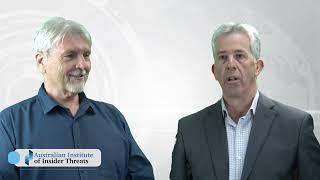
Buz Fischer and Peter Natra explore what tips people from trust into suspicion: broken expectations, repeated delays, micromanagement. They discuss how to rebuild it through honesty and calling out the stories we tell ourselves, and why trust is hard-earned and easily broken.
Chapters
Thank you for joining us at the Australian Institute of Insider Strait, where we're going to explore human behaviour, diving to the shades of grey and examining the fine line between right and wrong. Hi, I'm Buz Fischer and we have Peter Natra again.
Hi.
In this video, we'll explore the delicate balance between trust and suspicion, examining how these two powerful forces shape our decision making. We'll discuss how trust is built, what causes suspicions, and how we navigate the fine line between being trusted and protecting ourselves from risk. So let's get started.
Absolutely.
Define trust and also suspicion.
So with an element of trust, you have a certain element of peace of mind so that you're not constantly second guessing, guessing what might be happening and usually there is a basis for that. Trust in one way, shape form. Whereas with suspicion there are certain circumstances where suspicion is the default place to go. Yep. And in some instances suspicion is built up after a series of events, encounters, whatever you want to call them. So. But they are, they are very much opposite polarities at times.
Yeah, they are indeed. What causes, from a psychological point of view, to go from someone who is trustful to being suspicious?
So there's a couple of ways of looking at it. It depends on what your framework is. So if you are now employing somebody for the first time they've gone through the process, most people end up from, or end up betting on the balance of trust. Whereas if somebody walks up cold and says, hey, have I got a deal for you? Yeah, yeah, immediately your suspicion level is that's your baseline. You've got two different baselines to work from in those two different scenarios. So what causes a person to move from trust to suspicion is when they, when they feel they've been let down or when they feel that what they have been trusting that person to say, do or whatever to bring about is not happening. Might not be happening.
Yeah. Can. Can they both coexist together?
Absolutely, absolutely. Suspicion is also a really good way of being able to say we need to monitor what's going on. There is, for want of a better word, there's a difference between interest and suspicion. To be interested in what's going on is like, okay, so what is going on as opposed to suspicion going, there's something going on, I don't know what it is.
Yeah. And so how does someone, what are the sort of trigger or warning signs that maybe trust is broken?
Micromanagement. Yeah. So when you're finding that people are looking at you more and more on an experience of, you know, as a person inside of an organization, all of a sudden the attention is focused more on you. You go, okay, what's going on here?
Yeah. I look at from a perspective of the outcome. So if someone promises an expectation and that expectation isn't derived or achieved, let's say you hire a person to develop some software.
Yeah.
And that software has been delayed and continuously gets delayed, but the result is not there. And so that's where it puts you in a sort of suspicious mind.
Yeah. It's interesting because that kind of, that kind of I can't deliver is actually a potential for building trust. That is where somebody turns around and sticks their hand up and says, hey, I goofed. Yes. Or hey, I'm not going to be able to deliver. Now all of a sudden that it's all on the table, there's nobody having to second guess what's going on. So that's that. Actually that situation is a really great way of building trust because people go, okay, fine, people have limitations.
What's sort of the long term impact from someone who's sort of non trustful from a relationship perspective? I suppose.
Yeah. Okay, let's take it down to the bare basic relationship. Your spouse is always asking you, what are you doing? Where have you been doing that? Then you're only going to tolerate that for a certain period of time before either that gets ironed out or other things start happening. Same thing in an organization. After a while people will go, you know, I don't need this.
Yeah, yeah. Is there a way for an organization or even a person to foster a culture of trust without being too naive about the risks associated? So you know, we early on spoke about a story that you've experienced where a salesperson. Yes, yes. Was, was, was able, wouldn't say to manipulate, but was able to tell your story. And then you found out. Yeah.
So look, the salesperson did really good deals.
Correct.
Okay, so that was the original trust. But as the deals became more and more skinny on the ground, the excuses became what? The excuses? The stories.
Yes.
Became more and more flamboyant. Yes. And more and more ridiculous. Yes. To the point where you go, wait a minute, reality and story.
Yes.
Have a wide gap between them.
Yes. So how do you balance the. How do you foster then a culture of trust? So how do you get into situation where you're not sort of naive to.
Those situations from a managing the person, in this instance, the person. The best way to do that is to just call it for what it is. Hey, that's a story. Tell me what's really going on.
Yeah. Yeah.
And you can do that in a very confrontational way. Or, hey, listen, safe. Tell me what's going on. I'd rather know the reality. Just give me. Just give me the straight.
How does communication, body language or style impact the tipping between trust and suspicion?
Yeah. When in body language, when somebody is telling you something that's true, that they absolutely 110% believe in, their body sings. Yes. You know, I can really tell you about this. Whereas if you've got somebody who's like. Yeah, yes. Okay.
Yes.
Personally, I judge how people look in the eye.
Yes.
You mentioned, however, there are some cultures that look to the side or look away.
Yes.
They will not look you in the eye. And that actually, in that culture is a sign of respect. Okay. So knowing that as a calibration point.
Yes.
Should there be a deviation from that? Should they start looking around?
Yeah.
People who look around and dart are actually looking for the exit.
Yeah. And they've been. Look, I've been to communication workshops where, for example, even crossing one's arms was deemed as person who doesn't listen or person who may be perceived as suspicious. I find it quite interesting. I'm not sure that it's true or not. It's just, you know, different people have different patterns of communication or comfort levels and so forth.
And it's also body type. You know, the bigger people will tend to cross their arms because it's actually a really great way to just relax.
Correct.
Whereas somebody who's a lot more skinny than, say, for instance, me will.
Yeah.
Their arms are not really worried where they are.
Correct.
So there's a lot more of an open posture there going that way.
So how does suspicion develop over time? Are there sort of like early warning signs or something like that that sort of could identify that this person is not going on the right path?
Yeah. Gut feel. Look, anybody who's invested in a communal outcome knows when something's not quite working. Like going back to the salesperson that you referenced. In hindsight, I should have picked something up because my gut was going nuts. Flashing lights. But I chose to focus on other things because they were more pressing. But at the end of the day, what happened was that this became a real big issue that I should have addressed probably a month earlier.
What are the psychological and emotional impacts being with someone that is consistently or regularly being suspicious or just. Yeah, yeah, sorry, I should say they feel suspicious about other people. Yeah.
So I've had.
It's a good way that maybe others think. I'll ask you as a second part so what is the impact being in an organization where you feel that you've got suspicious feeling to a colleague or to a manager and so forth. So that's the first part, but also what is the impact and the factors surrounding when their or his or her colleagues repay that suspicions against the person themselves? Yeah.
There'S so much dynamics inside of that. I was in a situation where once before where somebody in a position, authority literally said to me, I'm running about 15 tests on you at the moment.
I'm going, what? Hello?
So the impact of that on me was I'm construct. Where do I move? What do I do?
Yes.
What am I doing wrong?
What am I doing wrong?
My goodness, will this be second guessed? Is this, that and the other? And the paralysis that sets in in is absolutely staggering. It really is. The other side of it is if you start looking at other people with suspicion, you need to clear that. You really need to sit down and say, hey, hey, wait a minute, what's going on?
We did talk early on about cognitive biases. So you know, maybe you've got a new manager. And then your instant reaction is so tight, I don't trust this person. And so how do you go about it in a way that, do you go and approach the new manager or the executive?
Yeah, look, you do need to recognize first of all that that's what's going on.
Yes.
And I mentioned bow ties because that was a particular peeve of mine. No issues with bow ties, just putting that out there. But it was one of those things that had built up over time. And there was bias.
Yes.
A bias that was probably unreasonable on all the other people that wore their ties before.
Yes. Yeah. Okay.
But at the end of, at the end of it, it was that I needed to be in this environment, I needed to work with this person. So a really good dialogue. And all of a sudden I found out, hey, there's a reasonableness here that I can work with or that we can both work with.
Is there a way to regain or rebuild trust once it's broken? It is maybe for my context of organization is this. And that probably really comes down to depend on.
Yeah, it does.
I mean, for example, Edward Snowden. I don't think someone is going to hire him. No, no. He's done irreparable damage.
To put it really black and white. It's really, really hard to rebuild trust. And the trust will never be as solid as it was before that. Before that incident or whatever it was that happened. What I said before is really important. A really powerful way to actually crank up the trust to say, I goofed.
Yes.
This is what's happened. I don't know what to do about it. Can we talk about this? And all of a sudden it's like, oh, wow, we've got something going here. So I would really suggest that if you're looking at something that will breach trust, especially in a major way internally, just front it, put your hand up and say, this is what's happening. And maybe you need some wear some.
Consequences out of that.
That's short term against a long term trust loss.
Yes. Great. So one more question. What is the key takeaway from this discussion when we sort of compare between trust and suspicion and so forth?
So trust is really hard earned. You're putting a lot of hard yards into trust and it's consistent.
Sorry, I was going to. You know what they say is that it takes years to build up trust, but you can break it in a second.
Exactly. Yeah, yeah, absolutely. That's a really, that's a really good way of doing it. Yeah. And the thing too is that that lingers with you because you might even move out of that organization.
Oh, yes, that's true.
But there's always going to be cross pollination going on.
Yes.
So, yeah, trust is really big.
Trust is really big with that. Thank you. Thank you for watching and stay tuned for the next video. Thanks, Peter.
Thanks, Bryce.
Cheers.
More from Boaz





The Cross Section Between Insider Threat Awareness And Disaster Recovery And Business Continuity


How Insider Threat Awareness Intersects With Key Areas: Fraud Prevention, Ethics, And Integrity



