Whose Responsibility Is It To Deal With Employee Anxiety?
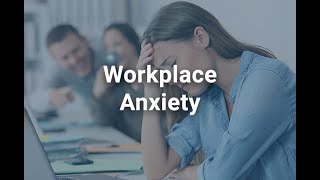
Boaz Fischer and Peter Natterer discuss anxiety at work: what it is, how to spot it, and who should handle it. Anxiety can be useful or harmful. Many people don't recognize it in themselves. Organizations need both programs and emotionally intelligent managers to help.
Chapters
And we're back to the naked entire YouTube channel. And my name is Boss Fisher and.
We have Peter Natterer.
Today's discussion is quite interesting, and what we're going to try and do is answer a really good question, which is who's responsible for your organization to identify whether your employees are anxious or not?
Good question.
Good question. So what is anxiety?
Anxiety is a state of heightened awareness, bridging almost into a slight to higher level of fear, which is very similar to excitement, but it's slightly more than that. It's what keeps us on track for most of the time and keeps us safe in many instances as well, too.
Yeah, I often heard. I'm not sure if this is the right saying, but you actually are worrying about a fear or something that's going to happen, but it hasn't happened.
Correct, Correct. You're worrying about what you're worrying about, what you're worrying about.
Yes.
And that creates a stress which then creates the anxiety.
Yeah. So we all worry to some extent as such. So, I mean, anxiety or fear has placed many parts.
Yeah.
It can protect us.
Yes.
From, you know, from.
Well, I mean, the classic example is you're, you're. As a driver, it is a responsibility to stay on the correct side of the road.
Yes.
There is an anxiety that keeps us from wandering over into the incorrect side of the road. This is an anxiety that keeps us safe, that keeps everything running smoothly. And I would imagine it's a. I would imagine of describing it as a productive anxiety.
You just jumped in. But it's great. But the question is, is why do our bodies and brains take it as an imminent threat?
That has to do with our reptilian brain, basically. And I mean, if you want to get into the biology of it, the amygdala is responsible for assessing instantaneously whether we are under threat, whether we run, whether we fight, or whether everything's all right. And it is a highly tuned computer with those three outcomes in mind. And oftentimes, especially in our modern society, if you can't identify one or the other, it defaults to this could. This is a threat. And then our heart starts to race, where the blood pulses, our breathing accelerates, and we're just about ready to either have a fight or flight response there.
Correct. Correct. What are the. I mean, you mentioned some of the symptoms. Anything else, or. Actually, what I was going to say is what are sort of the types of typical disorders, anxiety disorders, you see around?
So, I mean, we're not talking clinical here, but just anecdotally actually maybe we.
Should have this disclaimer saying no way are we actually discussing about ways or recommendations. So this is not a clinical discussion and if you do have anxieties, best to seek professional advice.
Yeah, absolutely. So a lot of the kinds of things are routines, our routines are what keep us on track. But there is an anxiety. If you've ever misplaced your mobile phone, there is an anxiety that happens which goes, oh, what's going on? And I mean, you know, comedians make, make light of that. But it is a real anxiety and the stress is really, the stress is relieved once we find our phone. There are people that have patterns. So for instance, keys in the left hand pocket, phone in the right hand pocket, wallet in the back. And there's a pat down sequence that most guys do this. Yes, let's be real. I've got, you know, I've got. Yeah, okay, fine, I can walk out the door.
Yes.
So this is a routine, this is, this is driven by an an moment that we don't have the conforming signals coming back. Oh my gosh, my house keys aren't in there.
Yes.
We go into a mild form of panic, which is a fear response.
But we also have a different type of sort of anxiety. For example, being in public. Yes. Or you know, a gray one is doing a presentation.
Yes.
You know, but talk about in terms of the different volumes of anxiety because there's some that are pretty acute but some people, as you mentioned, just feel that.
Yeah. So an anxiety could be looked at as a form of fear. And sometimes you can have just a minor fear and sometimes you can have a major. Oh my gosh, this is life threatening time fear. And the category is specific and unique to every individual. So what might appear to be life threatening to one person could be just trivial to another person. Spiders, for instance.
Yes, correct.
In our household, I'm the one that takes the spiders out because I have a slight anxiety but not as massive as the rest of the family.
Likewise.
The gradients and the triggers for the anxieties are unique to everybody.
So someone who's experiencing anxiety at the workplace, what are some of the typical symptoms that one sees?
Fear of not being able to perform. Fear of not being able to meet the deadline. Fear of the boss's crankiness. Fear of stuffing it up. Yeah, that's a technical term. Yes.
So constant worrying is another one.
Wondering whether the output is going to be good enough. And again, that's a. Fear is my. I'm making this up as I'm going along where I'm making this up and I'm making it happen as I always have done. But will it be good enough this time around?
Correct. And will the. Or can the environment, a different environment that organizations happen to be, be a catalyst, Catalyst for anxieties?
If, for instance, you are living in a high pressure, supercritical environment at work where every syllable of what you say counts, then the anxiety level would be through the roof. They will go down as you become more used to operating in that environment. In other words, you know the road rules of how to operate in that environment. But it will still be there. And that's not always a productive environment to get the outcome that the organization needs. Conversely, you can't have such a lax environment that there's not a little bit.
Of.
Anxiety, I suppose, if you want to call it that, allows people to pay that attention.
Yes.
It's like we're sticking to this side of the road, not the other side of the road. Because bad things happen on the other side of the road.
Correct.
So that's a nice balance in between.
It sure is. So just coming to the critical part of this video session. Can employees or the people actually recognize that they might have some form of anxiety challenges?
I think to a certain extent the individual realizes there is something wrong, whether that is a subconscious or an unconscious realization or whether it's a conscious realization. But they don't want to appear ineffective. Weakness. Apply your own adjective there. They probably won't stick their hand up and say, I'm anxious about it. Yes.
So should an employee, if they do know that they have some form of anxiety challenges, should they tell their boss?
Well, question is, would they? Should they? Absolutely. There's a couple of things at play. If you know that you are going to not do well in this, then there is a should in there. I should be able to say, this is something I can't handle for whatever reason, whether it's skills or time or whatever it is, and that will give the task or the project it's due. But most of the time people who are gradually ramping into an anxiety don't recognize it. It's a bit like, yeah, I've got all these trees around me, but I don't realize I'm in the forest.
Yes, yes.
So ultimately the responsibility doesn't lie with the individual unless they are really, really clever at identifying and are really genuine to themselves about it.
Yeah. And conversely, should the organization have some form of program to identify whether the mental well being or the anxiety or whether the employees are going to going through Some challenges.
Absolutely. And it's, it's, it's, it sounds like a program is, is a, is a formal. And it is, there is some formal training that we can do. It gets down to also pure human emotional intelligence.
Yeah.
It's thinking outside of one's own bubble. And I suppose in a managerial situation that's a really good skill to have.
Yes, correct. So wrapping this, what is the key takeaway?
The key takeaway is that everybody has anxiety. And it's actually a really curious fact that the body interprets excitement and anxiety in exactly the same way. The same responses come out. It's just that anxiety becomes a self, a self feeding element as doubts and other things because there's so many unknowns in there that feed the other unknown.
Yeah, yeah, yeah.
So the takeaway is that some anxiety or some, some form of, I guess you might call it a little bit of fear is always a good thing. And I keep coming back to the road analogy.
Well, I'll give you another, another term that too much of it.
Yes.
In terms of fear, it's false evidence that appears real, Correct? Yes, exactly.
Yes, exactly.
So everything is real, but it's your own interpretation.
Correct. And the reality is that if you experience something vividly, your brain can't differentiate between a really vivid imagination or a real situation happening. So. Yeah. So when you relive things, you're reliving them literally.
Correct. With that we end.
Lovely.
Peter, many thanks again. It's great. Your expertise is wonderful.
Thank you.
And next video we're going to be talking about depression. Thank you. Cheers.
More from Boaz





The Cross Section Between Insider Threat Awareness And Disaster Recovery And Business Continuity


How Insider Threat Awareness Intersects With Key Areas: Fraud Prevention, Ethics, And Integrity



