Workplace Depression - Is It You, The Job Or Both?
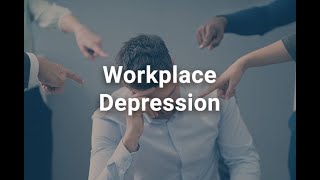
Buzz Fisher and Peter Natterer discuss workplace depression, how it differs from stress, and its signs like lost energy and motivation. They explain how remote work can worsen it and warn that whole organizations can slip into depression after failed goals. Both individuals and organizations need outside help to recover.
Chapters
Welcome everybody. My name is Buzz Fisher and I have Peter Natterer. Welcome.
Thank you.
Today's topic. What is today's topic? So we're going to answer the question whether organizations suffer from depression or is it just people?
Very, very interesting question.
Yeah. But before we start answering and asking questions or we're going to put a disclaimer. So we're not clinical, we're not providing any advice or recommendations. It's really important and secondly that if you are seeking advice or recommendations, please seek professional support.
Absolutely.
And the second, I want to drive the really important point. The real reason we're talking about depression is it's critical in terms of organization behaviour, in terms of identifying it because it can be quite a risk for organisations.
Yeah. Both an insider risk and a risk to the performance of the organization.
Correct. Okay, so with that being said, housekeeping done. Housekeeping done. What we want to do is actually start from the. Right from the beginning. What is depression?
Depression is a feeling of helplessness. Essentially. One way of describing it, and that's been described to me is being stuck with no way out, which can be a really devastating place to be.
Yes, I heard that depression is a perpetual being in a state of sadness.
And that's a very valid description as well too. Yes.
Okay, so what are the signs of depression?
Lack of energy or lack of motivation. Lack of productivity. Careless attitudes. Personality changes. People change personality and attention to details like not turning up on time or just random days. Good old Aussie sickie. So there are a lot of indicators that this is what's going on for individuals.
Can depression be turned on and off? So it's not like that. One day it's not there, one day it's there.
It's a gradual build up which means that it can't be turned off even at home. So when an employee assuming that the depression is created by what's happening in the workplace, they bring that home with them, that affects their home environment and all the circle of people that come in contact with them. So no, it can't be turned off.
So I know we had an early video where we talked about stress but sometimes there's some confusion between stress and depression.
Yeah, stress is. When we talked about stress we said that one of the symptoms of stress could also be looked at as excitement. And the hallmark of an excitement is that you've got to way forward, you can see your way clear to do something, you're excited to go ahead about doing it. You possibly a little nerve wracked about, you know, actually achieving It. But you've got a way forward. Where we're at now with the depression side of the discussion. It is absolutely stuck. No way forward. I have no vision of where my future is going to be or the future is going to be.
Yes.
And yeah, that's pretty much where it's at.
So here's a question. Working from home, given that we're going through a situation of the pandemic, so the idea of working from home, working remotely, has that increased depression or not?
Absolutely. So we as human beings thrive on human interaction. As we sit here right now, we are picking up on each other's cues. And it's not just necessarily the voice or the words that we speak, but it's also the body cues. It's the slight nod of the head. When you conduct a remote session, for instance, with zoom, all you see is a person appearing to possibly emote. Interestingly, if you look at the way that actors are trained, actors are trained so that they project everything. They over project what it is that they're trying to portray. And this is why acting on screen is such an art. And it also becomes so believable. We're not trained like that.
So yeah, we're definitely not trained like that. Yeah. Yes. So what are some of the common risk factors within an organization that, you know, people who have depression could potentially bestow?
So people who, or organizations that don't recognize it, I think that's probably the best way of saying, starting with it. Run the risk that they're. The tasks that the individuals are assigned to do will be done or not, possibly even not done. They could just be in a holding pattern, going round and round around. If you take back to the, to the definition that I like to use, stuck, no way out. It's also a holding pattern. You're just looping, looping, looping. So part of the problem for the organization is that whatever it is that they're working on is looping, looping, looping. That has productivity implications, has monetary implications, that has customer service implications. And I mean that's only just some of them.
I wanted you to talk about a very sensitive topic which is part of depression, but it's called self harm.
Yes. So most people think of self harm as some kind of physical self harm. And that is a concern and it is in some cases valid. What is not recognized is the emotional and mental self harm that we do. We as humans have an incredible capacity to beat ourselves up.
Yeah, we're very good at it.
Which demotivates us, which causes us to Beat ourselves up even more and we'll be it up on ourselves. This is a mental form of self harm and it is a downward spiral and it literally can take you down with it.
Yes. And then from a perspective of if you take it from a macro lens and look at it at organization, what is a wristed organization, that this could.
Actually spill out from the bubble of the individual to the tasks that they perform. They could then become almost sabotage. I think that's one word that you could say, you know, the consequences are, well, I'm here, it's not going anywhere anyway, so who cares if I press this button or if I send this email?
Correct. But they could even take it a step further because not only could they cause harm to oneself, but also harm to others.
Correct. Yeah.
And that's where it gets really serious.
And that doesn't again, have to be a physical harm. That can be some very intense mental and verbal harm.
Yeah. So you could have, in effect, violence or workplace violence.
Potentially.
Yes, potentially. Tell me, what can people who do go through depression challenges?
I think the first thing is that you, as an individual, you need to recognize it. I mean, the first step in halting this cycle, and it is a cycle, is to recognize that there's something going on. You might not recognize exactly what it is, but stick your hand up, find a professional that you feel comfortable with. Maybe that could be your gp. I'm just making suggestions here, but the field is wide open. But absolutely, if you feel that you are in that kind of cycle and what we're discussing is resonating with you, now would be a good time to pick up the phone and make an appointment with someone.
And we've got to stress again that we are not clinical psychologists or something like that. So we're not making recommendations. I think the best thing is for you to seek outside help.
Correct? Correct.
All right, so coming back to it, how well do organizations are able to identify their own employees who are going.
Through these challenges just from observation? Not well.
Yes, not well.
Oftentimes organizations have, or individuals inside of that organisation have their own issues to deal with and they are so busy dealing with their own bushfires that they don't actually lift their head up out of the, out of their desk horizon and look at what's happening right next to them.
That's so true. So true. And so all of these situations just go unreported.
Yeah, unreported, out of hand, escalate. And all of a sudden somebody storms out in a huff and says, I've had it down his tools, walks out, makes a storm and everybody looks up and goes, what just happened?
Yes, exactly, exactly, exactly. Here's an interesting question. Can organizations suffer depression?
Absolutely, absolutely. Organisations fall or rise on their achievement. And there's a number of different examples that we could quote. But essentially what happens is that the whole organization is focused on a particular bhag. Big, hairy, audacious goal. And everybody's working feverishly and furiously towards that goal. And the goal does not eventuate. Somebody else gets the contract. So there's a flaw in the design, there is an unintended consequence and all of a sudden all that work has gone out the window.
Correct.
That organization is absolutely ready to be depressed.
Yes. And there have been countless examples where such a situation, that team, that organization is split, people have left.
Absolutely.
Yes. And finger pointing and. Great. So what is the key takeaway about this topic?
So whether we're talking now about individual or whether we're also talking about organizational depression, there is help available and we talked about for the individual, pick up the phone, talk to, make an appointment with your GP or somebody who is qualified and is able to help. And as an organization, let's say this has happened. Okay, well, let's just pick ourselves up, dust ourselves down and grab some outside influence, Grab some outside in insight. That's what I'm looking for.
Correct.
Because we tend, even in organizations, whether we're now an individual, whether we're now an organization, we tend to limit our creative thinking to the options that we've already tried.
Correct.
An external view allows us to have a fresh pair of eyes looking at it with a different approach and potentially the way out, way up.
That's us.
That's us.
Good. Well, there you have it. A very interesting topic, very sensitive topic as well. And with that, thank you very much, Peter.
Thank you.
Much appreciated and we will see you again.
More from Boaz





The Cross Section Between Insider Threat Awareness And Disaster Recovery And Business Continuity


How Insider Threat Awareness Intersects With Key Areas: Fraud Prevention, Ethics, And Integrity



