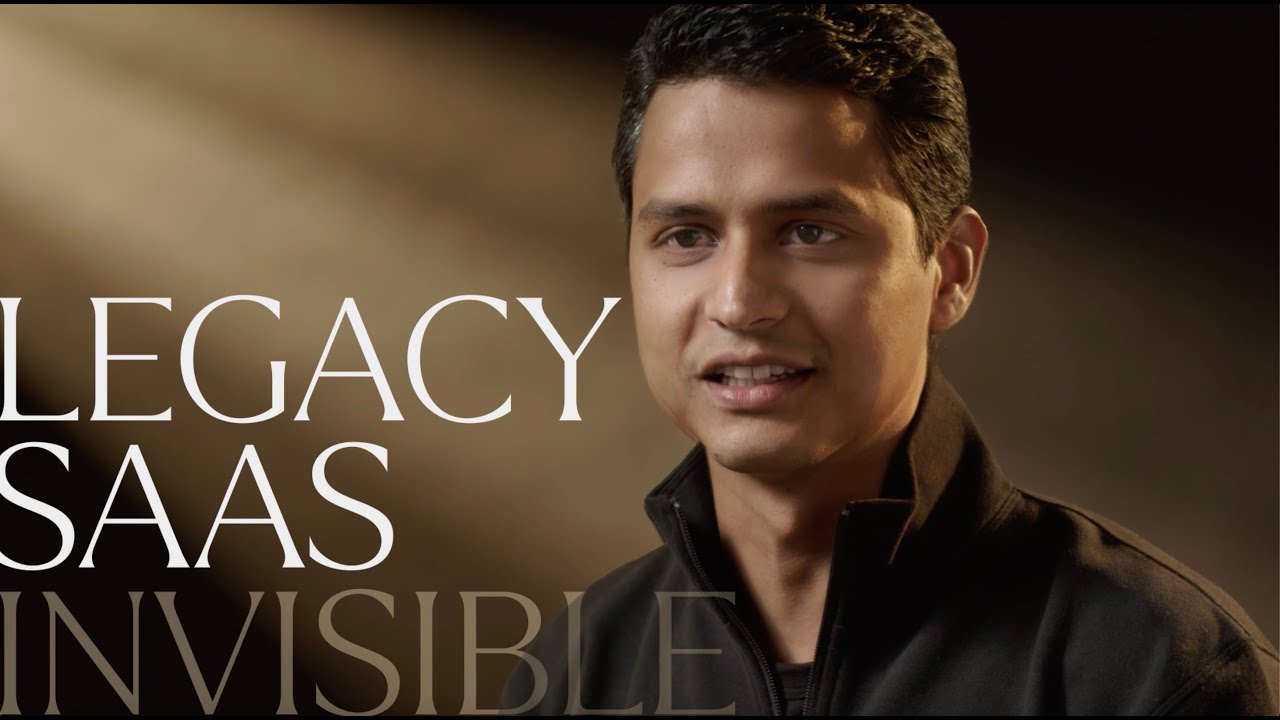
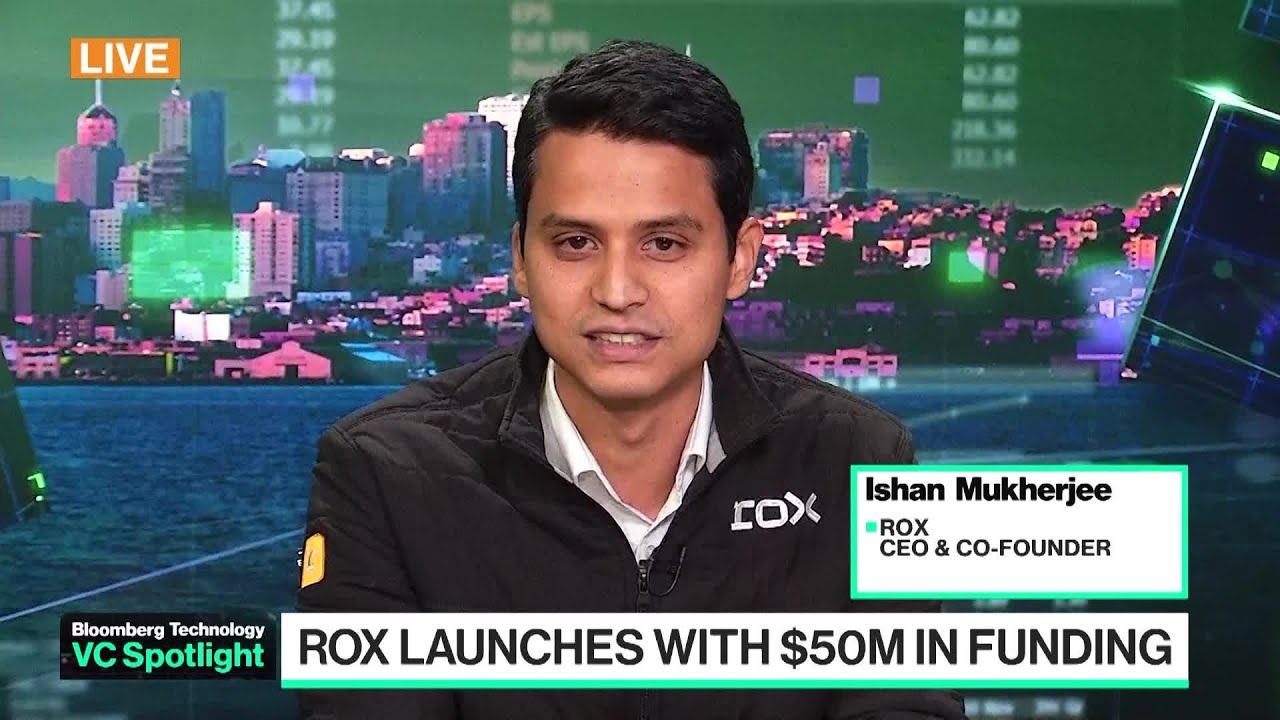
From Outsider to Building a Hot AI Startup in Silicon Valley: Ishan Mukherjee's Story

In this podcast episode of the Aati & Sri Ram Show, founder and CEO Ishan Mukherjee shares his journey from a modest upbringing in a mining town in Ranchi, India, through a quizzing‑focused school life, to studying robotics at Manipal and advanced manufacturing at MIT. He recounts his early career at Kiva, where he helped build warehouse‑automation robots, and his subsequent role at Amazon after Kiva’s acquisition, highlighting the operational insights he gained. Mukherjee discusses the challenges of U.S. immigration—H‑1B, OPT, and the EB‑1/O‑1 pathways—criticizing the H‑1B system and advocating for a more efficient EB‑1 process. He then describes his serial‑founder mindset, emphasizing a “fuzzy but high‑conviction north star” and relentless work ethic. The core of the conversation centers on his newest venture, ROCS (Revenue Operating System), an agentic CRM that combines a data‑of‑record layer with AI‑driven agents to automate planning, research, and engagement tasks for enterprise sellers, aiming to save 20‑30 hours per week per user and double productivity. Mukherjee contrasts two AI strategies—full automation versus intelligent augmentation—and explains why data ownership is the primary source of value. He announces the public launch of ROCS, backed by OpenAI, Ramp, and other early adopters, and shares a fun metric: 10,000 top sellers already have their ROCS agent swarms ready. The episode closes with Mukherjee’s advice to founders: maintain a high‑conviction north star, work insanely hard, and set an example for the next generation.
Chapters
When we publish this episode, we are going to be covering this hot new exciting company that you're working on.
So when I came to the States, like the idea was I'm gonna learn like modern manufacturing. The definition of entrepreneurship was to literally go back to India and be an industrialist. Took the risk, started the business on H-1B, and we start the company, raise an A, my H-1B transfer got declined twice. I think the one thing that I've learned Have like a fuzzy but high conviction north star, stick to that north star, and then work insanely hard.
Ladies and gentlemen, welcome to another exciting episode of the Aati and Sri Ram Show. We have with us somebody who I think is fascinating for one, their backstory, what they've accomplished so far, and we're going to really dig into that. And what they're working on right now. So we have the founder and CEO of Brock's, Ishan Mukherjee. And Ishan is one of the most good-looking people we ever had on the podcast. So he asked us to say this. So please, if you're in the comments, please vouch for this. I think he's a really good-looking guy and we want to make sure we get that to his his family, right? Like, so I want to get that off the record. But no, seriously though, we've gotten to know Ishan a little bit, and I think he's one of the most interesting founders and builders out today. But Ishan, thank you so much for coming on the show.
Yeah, thank you for having me, and it's been amazing to get to know you, Sriram, and Aarthi. We've been spending a lot of time, so excited to spend the time with you.
You know, I think, Kishan, one of the reasons I'm really excited to have you here, for a couple reasons. One, You know, the classic, you are our perfect guest, right? You are multi-time founder, builder, operator, entrepreneur.
Good looking. Yes.
And I've sort of been through the journey and this is like, it speaks to our audience because a lot of our audience are builders themselves, they're operators working in different tech companies, aspiring to be founders. So just excited to have you there. I think too, you know, you've come from India, sort of similar as the immigration story. Has come from a small town and you're now here in the heart of Silicon Valley doing these amazing things. And, you know, we're gonna talk about your hot new startup and, you know, the origin story and all of that. And I'm just very excited. And finally, you just don't do these interviews. You're like a hard person to get to. Yeah. It's very under the radar. And, you know, this is like one of the first public appearances you've like done. So I feel like we just achieved something of a record here to have you here on the show. So because of all of that, welcome and very excited to have you.
Thank you for having me, Aarthi. Huge respect to both of you. I've seen some of your podcasts. Everybody respects you. So first off, it's an honor. I think what you've done for the community is huge. So excited.
Yeah. Tell us who you are, Ishan Mukherjee. Just let's start there. Who are you? Where are you from? What's your story?
Yeah, absolutely. It's a good question. I guess I'll dive into kind of a chronological description based on both of your questions. So yeah, grew up in India, the eastern part. My amazing childhood, just like both of you, when we were growing up, hindsight, we can make kind of framings around, hey, it was not the most luxurious or things like that, but it was an amazing childhood. My parents were kind of middle class, very well educated, both went to IIT. In the '70s. My dad worked in the public sector for Coal India, which is the PSU kind of coal kind of organization. And my mom, I would have to say that she's extremely smart, but to kind of afford the family, she decided to move to Ranchi, which is a place in Jharkhand, which is not the biggest town in the world. And she was a professor at BITS Ranchi. So she was an amazing academic. So both of them gave my brother and I an amazing childhood. We mostly grew up in kind of these mining— in India, you call them colonies. So it's kind of the self-contained township where it was kind of people from all across kind of India who came in and it was a pretty kind of multicultural community. And we kind of went through the Catholic school system. So I grew up in Ranchi and I was one, an anomaly in the sense that my parents were from IIT. My brother was a surgeon in New York. He got into IIT not even trying it.
You're the black swan.
Yes. I'm the black swan.
So maybe for the folks who are not from India, could you paint the picture of how hard it is to get into one of the IITs and maybe what it means in the cultural context?
Yeah, absolutely. So this is probably something where kind of framing as to why I was always kind of the outsider or the underdog, whether that's the small kind of colony or the town. And the culture is at that point there were about 5 to 7 kind of premier engineering institutions, which are the IITs. The competitive kind of competition, I think close to 100,000 people applied to the JEE, and the treadmill was such that you would start preparing for it in the 7th or 8th grade. And even in my time, so I was born in '88, so I was growing up '96, '97, and a lot of folks used to leave town. They used to go into like to prep, either Hyderabad or Kota. And Shreyaam, to your point, kind of that bubble, both in my small community, in my school, the town was basically that's the only path to success. This kind of competitive pressure cooker to kind of prepare and kind of go from there. So yeah, that's kind of the environment. And going back to my story, one of the advantages was my parents went through that process and they were phenomenal, but they did not want me to go to IIT. Like my dad wanted me to be a lawyer. My mom was pretty much saying, "You're super sharp. Our elder son is a superstar. You'll figure out your way." So although I was on the track, I was what you would call like an all-rounder, right? So like I did a bunch of stuff, like I did debates and MUNs. I was a competitive sports trivia person. So I was on Harsha Bhogle's ESPN thing. That was my high school.
Wait, wait, wait, wait, wait. When Aarti and I were preparing for this, Aarti was like, hey, you got to ask him about the quizzing. And I think so Sometimes when you do the show in beyond Indian context, I try and translate into American terms. I would say what a lot of people think of trivia, but quizzing, I grew up in this, you grew up in this, is a serious, serious thing, right? Names like Derek O'Brien, shows like Mastermind, there's a lot of good stuff out there. So talk to us a little bit about how quizzing played a, what it is and how it played a part in your upbringing.
Exactly. So it's similar to the spelling bee kind of culture here, but mostly for high school. You would have a group of people in a school who would be kind of professional quizzers, and it's usually general knowledge or domain-specific. Domains are mostly sports or civics or politics. And you would get into that in the 5th grade, 6th grade. And once you're in that, that's pretty much all-consuming. Interschool competition, town, state, national. And there were the upper echelon was these broadcasted shows. So there was a show that Derek O'Brien did, and then there was Harsha Bhutani, the sports beat. So that was kind of my life.
Yeah, does that show still go on? The Bonvita Quiz Contest.
Bonvita Quiz Contest. Yeah.
Oh my goodness. It just popped into my brain. Okay. I'm going to Google.
Yeah.
I used to come home from school and watch it just so that I could just answer everything. It was such an obsession at that time.
Yeah, I was on it. Yeah. So like, there's no internet trace. I always said that was my only— yeah, no, I did a bunch of stuff, but that was my highlight.
So—
Oh, I think it got canceled or it's in some YouTube format. So I don't think it's around anymore, but okay. We're going to do some research later.
It got canceled, but in a weird art, Derek Brown became a politician. And I think he's a big kind of politician now in West Bengal. But yeah, that got canceled and then that same crew moved to Arshabh Bhogle and the ESPN Sports Quiz circuit. And so for my 5th and 6th grade was Bonhuda Quiz Comp, BQ, BQZ, I guess, BQC. And then all the way up to 10th grade, that's what I was doing. And I think it speaks to where the internet and the kind of actually amplified, I guess, what I was good at. Like growing up because of the parenting I had, like we were just information consumers. I would keep going back. I watched so much TV, read as much as possible, and just had a broad range of things happening outside. So when it got to quizzing, that just got super honed. I never read a book, never memorized anything. It was just a broader understanding of what's happening in the universe. It was always pretty up there in our family and in my bubble. So I remember one of the good friends of mine, one of my prime motivations, my quiz partner, Anurag, RIP. Unfortunately, he passed away. Him and I spent 5, 6 years, just both of us learning about everything, like Liverpool, United, Maradona's history. And that was more so through kind of 6th to 10th grade. That was kind of mostly what I was doing. And I kept good grades. I could prep overnight and being in India, you'd have 50, 60 people in a grade. I would be top 5, but I was never like, I wouldn't, I wasn't be the first ranker. That was not my lane. And I have to give my mom credit in the sense that they never forced the lane on me. They said, hey, there's multiple options. You keep doing you and you choose the lane. And it gave us the confidence to just kind of stick to my lane. And that's kind of persisted throughout, which is like, as things have processed, really built the muscle where I just did not care what the world thought of me. So I just stuck to my lane and and that kind of that.
I think before we move on further, I think I wanted to reflect a bit on the picture you portrayed because I think it's a very sort of interesting slice of Indian society and culture and upbringing because, and I think in some ways tells you a lot about your art sense because you have a family which is obviously incredibly accomplished. Folks have gone to the top schools, other family members have done really well, but also you're kind of a part of this culture where, I know if you kind of think of that quiz circuit culture, you are just, you're competing against some really, really smart people. It's competitive and you're in a format where you're kind of getting exposed to all these things which are, you probably wouldn't be studying in school. So it's such an interesting slice of, I guess, the Indian middle class experience that all of us really grew up in. I think it's, and honestly, I like to portray it, I think, and you just portrayed a very interesting version of it. Okay, so you had this fantastic upbringing, it's a launchpad. What happens next? Where do you go to college? How do you show up in the United States?
Yeah, exactly. I think the short story is, I guess till the 9th, 10th grade, I wasn't really into the competitive, like, engineering or medical field. Like my brother did it, I felt like I could wing it, but it was hard. Like I think my 10th grade was pretty good, but not some outlier outcome. And the 11th, 12th grade, I was probably pretty lost, right? My dad moved to Bombay for work reasons. I think they invested everything that they had in us. And at some point they wanted, like in the public sector, it's not the most affluent lifestyle. He moved to the private sector or kind of the non-government jobs to Bombay. And it was my mom and I, she was super busy. 11th, 12th, I kind of messed around. Like it was never my thing. So coming out of my 12th grade, I didn't get into the IITs. I joined what is now a famous private school, but that point it was mostly a party school, Manipal, which Satya Nadella went to. So now that Satya has gone there, Manipal has completely changed its branding, but It was a really good school.
Wait, did you call it a party school?
Yeah, it definitely had the reputation of not being very serious about academics.
When I look at you and when I look at Satya, the thing that comes to my mind is just party people.
That's right. Thankfully, that's not the image was. And it kind of speaks to the echo chamber. I think my mom and—
by the way, I will bet that the YouTube algorithm is going to show this to a bunch of people who are either from that school or not, and they're going to fight it out in the comments. Like, I will just bet a lot of money that it's going to happen right beneath us in the comments right now about what exactly goes on in Manipur. But anyway, sorry, go on.
Yeah, absolutely. I think the modern India is so much different. Like, it's a decade and a half since, and these schools are amazing at that point. Manipal was great. I think I went to undergrad and my mom had a pretty good idea. She kind of knew me the best. She still knows me the best. And her point was just do something that's interdisciplinary. I enjoy range. So I did robotics, which is mechanical, EE, CS, a bunch of things. I could build hardware. I understood software. I did code. But I also was in the machine shop, so that part I really enjoyed. Again, through my 4 years, I would say being the first in academics was not my primary objective. It was learning stuff, being exposed. I definitely, my quiz partner, Anurag, both of us went to Manipal, so we had that core friendship. And I would say by the 3rd year, my mom really got to me like, hey, now you got to decide. What do you want to do? And I wanted to do graduate studies. So I moved to the States to MIT for— in the mechanical department. So I came here for advanced kind of manufacturing and design. Kind of the core thread which probably we skipped is I grew up in small industrial towns. So Ranchi, Jamshedpur, these were towns which were built by and thrived because the decision of very singular industrialists. The old town of Jamshedpur was created because of JRD Tata. And I grew up with this visceral kind of understanding that these small towns, which are literally villages, were transformed into these massive industrial towns where every morning I would see hundreds of thousands of people going into these factories and then leaving. That always had a very strong impression on me. And so when I came to the States, the idea was I'm going to learn modern manufacturing. The definition of entrepreneurship was to literally go back to India and be an industrialist. And that's how I came to MIT, joined Advanced Manufacturing, and that's where my process in the US started.
Well, it's a great description, I think, on some of those stars. My uncle worked in Ranchi, by the way, and he was an engineer. This is many, many decades ago. And it's interesting because we just had Ratan Tata passed away recently and it's kind of hard to overstate the impact the Tatas or some of the Ambani families have had where you can kind of shape entire industries. And a lot of these are obviously kind of refineries and petrochemicals and textiles, and that's where a lot of that work was. It just kind of shaped entire cities and districts. But okay, so you're into robotics, you're off to the races.
Yeah, absolutely. I'd actually love to kind of dive into that because a lot of, for me, I can go, go and meet my parents, I guess. You'll see like I'm pretty much like my dad did a lot of work in really instilling the real value of these industry titans, as they would say, like the singular impact that one person's vision and quality of execution can have in the global economy. They grew up in a generation where they were coming out of IIT. There was no private sector. They were amazing, I would say, stewards for the government's initiatives. And they kind of really saw India go from nothing to this kind of initially public sector-driven industrial economy to now private sector. So what you just said, like the Amanis, even Nehru and these humans, that was my definition of entrepreneurship. Like I had a visceral feeling in my bone that my existence on this planet is to build companies, and that's what I will do. And that kind of drove me to kind of constantly kind of filter my information flow to look, look at folks who were, who had this kind of opinionated impact in the world. And, and I kind of obviously used to read about Vinod Khosla and Subir Pathya then, these magazines. And, and I do feel like people underestimate kind of the amount of impact those individuals continue to have and the sheer scale of impact.
Yes. And by the way, for folks who don't know, I think everyone in the US, in our world, is very familiar with Kusler. Sabir Bhatia, you know, is an inspiration because he was a founder of Hotmail. And funny story, I want to mention this because I want to have Google index this. Adi knows what I'm going to say, right? Sameer Bhatia is the reason for the first time in my life I ever used google.com, right? And I looked up the story recently, but it was not online, but I want to say it to get it in depth because I remember it as clear as day. There was a newspaper article, I think this was like '98, '99, and it talked about an interview with Sameer Bhatia. And it said, "Hey Sameer, by the way, what about this rumor of you dating Aishwarya Rai.
Right, right, right.
And in that interview, it said, "Sabeed Bhatia opens up his laptop and goes to google.com and searches." And I remember reading that, I was like, "What is this google.com?" And went up and looked it up and we were off to the races. Now, many years later, I did tell Sabeed this story, but I'm not sure he totally appreciated it. But there you go. I just want to have it on the record.
Absolutely. Yeah, you're right. I think that was, he had a huge impact for some reason. He was this kind of first success story of an Indian engineer moving to the States and really having impact in their kind of early part of their career and that trickling back to India. I think those stories ended up being kind of those exemplars. This is pre-iPhone obviously, and even pre-internet. So my internet was similar. I used to go to my, my dad's office to kind of— I remember the first website was AltaVista at that point. So yeah, that's great.
Ishan Mukherjee, tell us about Kiva. And, you know, my contact with Kiva, and I first saw videos, it blew me away. Again, I was very— I still am to some extent. I love e-commerce. I just love the whole idea of logistics, you know, fulfillment centers. How they worked, all of it. And so for me, Kiva was like science fiction at that point. How did this whole thing start? How did you get involved in the whole project as such?
Yeah, absolutely. A good bridge would be I've always, because of that kind of focus, tried to find and follow those kinds of humans. I think right now in Silicon Valley, you say, hey, follow great people. And when I was at MIT, I had negative interest in going through the career fair and interviewing and never did that and it wasn't my thing. My only thing was, hey, I'm here, I wanna get enough experience to go back to India and build an industry. So what I was looking for was Meraki then, they were MIT alums that moved here, Kiva, there was only 3 or 4 companies. I would literally call them, call from the alumni book, hey, can I come to this? To the Bay Area and just design your routers. And they said, no kid, just stay there and get experience. So Kiva was that, like I saw him big speak. He was this dual threat MIT, HBS kind of combination founder. He came from a massive loss. He was the head of supply chain at Webvan. Kiva came from this idea that the fundamental unit economics to enable e-commerce is that it has to start in the warehouse. Where you have to fundamentally change how these nodes in your logistics kind of network perform. And that's where it started off with. So I remember I literally just cold restart from the alumni book and said, hey, I just want to be part of this company. At that time, Kiva was private. They've been around for a fair bit. I joined a crew of MIT, Cornell engineers who could be full-time engineers, or we were all between the technology and the company. So you may call them forward-deployed engineers today or PMs or SEs. That was kind of my role. So that was my first job out of MIT. The idea was we get this OPT, I'm gonna work here, get experience, go back to India. While I was there, I think my definition of entrepreneurship changed for sure. Like up until that point, my definition of entrepreneurship was a Ratan Tata or an Ambani, right? Like that's what I saw. There I got to see day in, day out, like the sheer kind of will of Mick and the team and Amy and folks, who's the CEO, and the quality of execution. I was just blown away.
And what specifically, what did you see?
Yeah, so like I'm an operator, so I live, breathe execution. And because of just the way I'm pretty singularly obsessive, so it's I have my blinders on, I just can execute. So like in Kiva, like whatever I do, I got fully immersed. Kiva was a vertically integrated solution to automate the entire warehouse, right? So at the, at the surface level, you would say, okay, Zappos before— where I was the CFO— the Zappos before Kiva, you had humans kind of getting an order, walking down the aisle, picking up the orders, putting in a box and shipping it. With Kiva, okay, instead of 20 people, you probably need 10 people. That's kind of surface level value. But the true value is actually not that. What it is, is in a Zappos warehouse, because of Kiva, you can just store 30% more stuff, which means for every 3 warehouses, you don't need the 4th one.
Yeah.
And like those fundamental changes in the— there's micro unit economics which change an industry that allowed every e-com company, then eventually Amazon to really kind of scale out the network. So, so because of the vertically integrated solution, we from first principle, we just took data in of what your order delivery was and designed the whole thing. And that team was able to build the hardware, the firmware, the systems, the application, and all the forward deployed engineering as a pretty small lean team out of Boston. So, so, so that was both great learning but also quite addictive. Like once I went through that process, you just strive for that greatness, right? And that becomes the game.
Wow. Okay. And so Kiva gets acquired by Amazon. So, you know, it's probably like a big deal, like total game changer, right? What do you decide to do next? Like, what do you— are you like, now I got to go do more startups because I've now been bitten by the startup bug? Or are you like, no, I'm sort of burnt out. I got to go the big company route, go do something else that's more stable.
Yeah.
And I think, by the way, one of the reasons I think we really want to go through your story is that I think often when you're not totally a part of Silicon Valley or when you are outside, it's kind of hard to know the kind of the life experiences and the stories which lead to somebody having the hot startup of the moment or something which they're building. So just as you're kind of talking, you kind of see how all of these stack one on top of the other, bringing you to where you are, which is why I think it's really interesting. So anyway, so getting back to this, so you're kind of done with the key word section and then—
Amazon acquires us. I'm on an H-1B, I think I'm on OPT. So I get acquired, I can't leave. Just to be very transparent, I'm next group are gonna listen to it, I was pretty, I was a good employee. I didn't know what stock options were. So I am the prototypical case of somebody who was just so micro kind of locally optimizing. I never asked what an RSU was, how much it is. I had literally no understanding of the game as you're saying. So we get acquired, it's a great outcome, but for me it was just learning. So I got into Amazon, a bunch of folks, Gavin, John Schechter, these folks we were this kind of young bunch who were in the room with Dave Clark as they were kind of dreaming up the full rollout. And it was just the best time of my career. Like even this, just the sheer scale of Amazon Retail's logistics rollout. So this is 2012, '13, '14, right? So they were really kind of growing. So I stayed at Amazon. I was for about 2 years, 2.5 years on the road warehouse to warehouse designing, helping the team design the rollouts. Going back to Seattle. So I was essentially the integration lead for the back half. And I just learned a lot at Amazon. I'll go back, like throughout my journey, not once, like it was always, I will start a company. Like that never changed. Like this is 4th grade, 6th grade, 10th grade, not getting into IIT. It just never changed. So it was, The only argument at that point, my dad being an amazing Indian dad, was like, you should get an MBA. So I applied to HBS. You go through that. Hey, get an MBA and come back. That would be great. Got through the waitlist process. I interviewed. So yeah, so after Amazon, that was the only piece where it was always like the plan. So Arty, a quick question. I think you had a great episode on immigration. I, as you can see, like my decision-making process, I always had a pretty high conviction but fuzzy north star. But I only made decisions every 2 or 3 years because once I decide to do something, I go super deep. I don't really care about anything else. So I'd only come up at that point of a decision. And so at that point, I technically could not start a company because I was on, I think, just on an H-1B. But it was not really the deterrent, like a get-starting company, especially where you ask company in the team, the product in the market. But since I was in an H-1B, like Mick, who's in Kiva, said, Motorola used to have this program where you work in different departments in a company. So why don't you work in smaller and smaller companies until you figure out your idea and get your green card? So that's kind of what I did. So after Amazon, I used to fly through San Francisco, I think some of the great people like Chamath was an investor in the company I joined. All these folks convinced me like, hey, you can start something now or just work in small Silicon Valley companies and learn like both the art and science of product building, team building, company building. So after that, I joined an early-stage company called Premise Data, which wasn't a huge success. I joined as a product leader, kind of left, ran product there. And growth as well. So that was my next decision.
Got it. You mentioned immigration, right? And I think about for Sriram and I, this was like, it was a process. It was sort of tough for us. We came to the US and then it was very uncertain. The big challenge for us was not knowing what could happen, right? And at any point you could sort of get like, kicked out, the process is just long and cumbersome. So we did that whole episode and we've gotten so much reaction and feedback from people. And, you know, like tens of our friends have been through similar stories, way worse stories of like struggles, just like having to be leaving the country, no notice, short notice. And in your case, you know, I think it was strategic to be like, I'll bounce around and learn from small companies. But if that wasn't sort of an obstacle, Started companies a lot sooner, right?
Yeah.
I think about just the opportunity cost of like not having skilled immigrants here sooner to be able to start companies when they wanted to.
Yeah, absolutely. I'm just so happy that the EB-1 options opened up. I actually got my green card only 2 years back. Yeah. This is my 5th early-stage company apart from one. So, and Yeah, it was not an option. But on the flip side, the conviction was absolute in terms of wanting to start a company. And yeah, it's kind of just kind of really interesting. I just hope like the O-1 EB-1 process gets a lot more refined and scaled out. And yeah, I think so you move to Silicon Valley, I would say if I just, it's so easy for people like us to say, hey, we had a tough upbringing and the immigration didn't allow it, allow me to start a company. But to be intellectually honest, What I ended up learning was that to build an outlier company, especially in Silicon Valley, there's a lot of art that you can only acquire by doing it. You all been in great companies and I know you were at Twitter and stuff. Once you actually work in these companies, you understand the physics of them, like the ability to hire talent, building product, working with customers. I could have started a company. I came here to pitch companies and that's how I got convinced to join. I think hindsight, I got no regrets though. I think O-1 EB-1 is probably the strongest asset America has in terms of acquiring and empowering talent. The process right now has got a lot more seamless. I think it's kind of a two-vector approach where you really expand the program but also drive precision in the eval criteria. Right. So if you look at my case, this is it. This— I am on this planet to break out knees and I'm an entrepreneur and I had put a decade in. I had 3 successes, I paid substantial taxes by that point, and we take all in bets, right? Like, hey, I'm gonna bet my whole family on like starting this company. I think if you had to look at the facts and make a decision, that should be on an O-1, EB-1, and I believe there's, and America's opportunity is to attract, I'm not special. Like I think there's hundreds, thousands, hundreds of thousands, of tens of thousands of people like me. And that just becomes this kind of talent sum, like I kind of a mechanical engineer, so like it just attracts that talent. So I would scale out the 181, drive precision in the eval criteria, and hopefully keep the process as efficient as it is today. Like if you have a really good lawyer, you could, they should take time to prepare the application, but reviewing the applications is done in weeks now, which is amazing. Which is impressive. Then on the H-1B, as you learn, I'm doing this, I'm a little direct. So I get like, hey, I think the H-1B program is such that it gives false hope to the people that you want to invest in. It's because in that pool, there's literally hundreds of thousands of people, again, like me, who are on that 7 to 10 year treadmill to get an approval. And I think it's a dead end road. Like in the 7 to 10 years, as you all appreciate, like the risk profile changes to start businesses, to build companies. I've seen so many of my folks who are on, like I'm the only one surviving the people who came on the same boat.
What happened to the rest?
They moved back. You move back to like, how long are you going to wait? Right? Like I only stumbled into O1 because I lost my own company, right? So I could not join the company that I started with a good friend of mine.
Okay, you're saying it's giving false hope in the sense it's like it's just not likely to happen for a lot of people. And that's like that time that you're spending here, you know, it's this huge opportunity cost, you know, the best parts of your career, best parts of your life. You're just waiting for the situation to go change. I thought of the other side of it is like, and they're spending this time working at these, like, you know, probably some big tech company, mid-sized company, you know, in many cases, jobs that they're not really fond of, managers that they don't really like, that kind of thing, right? So it is opportunity cost. But for me, I think about it as like, you know, how companies also have holdover, you know, these are the H-1B candidates where, you know, you're just there and it's not easy to have movement. And so companies also sort of like have this stronghold over people there. So it's unfortunate always in all directions.
Yeah, yeah, absolutely. I think, yeah, I 100% agree with that because I definitely in kind of the zero to one early stage, like for what frustrates me the most is kind of unrealized potential. Very high slope, maybe low y-intercept individuals who are not on the right framework. And then the H-1B program, that's it. I do think just on the flip side, there are people who are just— I think you have to— the O-1, EB-1, you should really seek out top, top talent. Right now, I think a lot of folks are deciding to not move to the US, which is probably not in America's interest, yeah.
Right, wow, yeah. You know, we have so much to cover on the immigration side, but you know, it's when we publish this episode, we are going to be covering this hot new exciting company that you're working on building on its launch day. Tell us about ROCS. What is ROCS? And you know, just tell us about it.
Yeah, yeah, excited to share. So when this comes out, we would be publicly available for any business in the world. ROX is an acronym for Revenue Operating System. We didn't want to be Ross from Friends, so it's ROX.com. We are building an agentic CRM that kind of strives to help every business in the world acquire, protect, and grow customers. And the core thesis is based on me being part of a public company where I ran gonna go to market, a big chunk of it. It was a billion dollars of revenue and having some success, but also having a lot of failures that drove to this realization that we are at a point in time where every business in the world has to transform themselves to thrive in this kind of AI-native era or risk failure. Like I lost the business, right? So us as competitive operators who build companies, A lot of our motivation is driven by not wanting to lose. And obviously it kind of is marketed around like the fame and glory of success, but it's mostly that. So, so going one level deeper, it's an agentic CRM which helps at-scale businesses manage their customers and is different from the prior era because it attempts to do the work. So our customers range from ramp or all the way up to kind of high-end customers like MongoDB. And in those customers, they're the most well-compensated strategic enterprise sellers use Rocks day in, day out to kind of manage their customers. And then the ethos is to supercharge them and not to replace them.
Now you mentioned the word agentique, right? And I'm kind of curious about if you had to sum up the state of the union of all things agentique, and where we are in November 2024, what would you say that as a state of the art is given where LLMs are? Where, where do you see capabilities lacking and where do you see capabilities headed or say over the next 8 to 12 months?
Yeah, absolutely. I think there's two schools of thought. If you look at applied AI projects, whether they're kind of projects in large companies or startups like ours, there's two approaches. One is driving for automation, right? So really look at specific types of work in the economy and try to automate that away. The second would be augmentation, like Michael Jordan calls it, like intelligent augmentation. There's two approaches. So the first one is to take classes or workflows where you can completely automate that away. So if you look at the coding side or the building side of enterprises, That would be idea of kind of automating database migrations in the selling side. It could be automating kind of the long tail SDR or email outreach. So that's one direction of application. The other is supercharging and augmenting existing folks like Cursor for top engineers or Rocks Hope for enterprise sellers. There, the idea is to decompose the job that these individuals are doing into kind of basically kind of some modules or many jobs and automating those away. So when you look at applied AI companies, there's kind of single-shot automation approaches and then there's the augmentation approaches. Behind that, to kind of answer your question, what's the state of the union? What we are learning is the alpha is in data. Being the system of record and earning the right to manage the data where we can work with the underlying base models to either augment or automate a certain job is where we're seeing value, immediate value for customers. The second is being extremely customer-centric, and I share like where I made a mistake. So I was Chief Growth Officer for a public company, Neuralink. I got obsessed about this problem because we won and we lost and I kind of had a visceral understanding that the CRM system is no longer the essential system that businesses run on. And there's a generational enterprise software platform to be built. And last year we put in our own money, kind of did the pre-seed. And that point we build the system of record. And then when we started the business in February on the system of intelligence, our agents, we took this kind of the build and they will come approach. We tried to build an agent, we tried to do all the work. And what we realized that the base models are getting better,, but we just didn't have the data to actually kind of complete the work. And so we decomposed our agent down into these submodules where we kind of took the different approach, which is, hey, let's just break it down into many jobs to be done and try to kind of automate that away. And so that's kind of, my state of the union is base models will improve over time. Applied AI companies can't wait for the base models to get to singularity. If you're applying today, try to build a system that earns the right to manage the data layer and then in the interaction layer, just proactively engage with customers and build with them and pedal downhill. And that's the approach we had. We broke all of our Silicon Valley systems muscles and said, okay, we're gonna switch it, switch to shipping multiple times a day, only weekly targets, no monthly, quarterly targets, and we're just going to work with customers. So we're about 7 months in. We work with some of the best companies, we try to make them better. And it's a very pragmatic approach to build a true kind of application kind of in this agent era. Is that helpful?
Yes, I think if you can just go to the details a little bit, when you mention agent-led CRMs, When you mention, say, Cursor, one of the things I think about what makes a Cursor, Devin, one of these products work is there's such a clear feedback loop on what is right and what is wrong, which makes it better. Coding is deterministic. You're in the REPL and the model can learn and just gets better and better. And when you look at other use cases which have really taken off, for example, say support, And with folks like what Brett Taylor and others are doing, there are some elements of that. I'm curious about when you talk about CRMs, how does it play out into these discrete tasks and how do you basically know when you're doing a good job, when you're not doing a good job and converging on accuracy or whatever the metric might be?
Yeah, that's a great question. So in our domain, the traditional CRM system was such where the human did all the work. They got all the data in. Once the data is in there, they would drive analytics workflows up on top of it. And then in, in this kind of new world, there's going to be a class of software which tries to do the work. And the work, very pragmatically, Shriram, is if you're a customer-facing professional and there's literally tens of millions of them out there, the 3 jobs that you do is you plan, you figure out, okay, of all of my customers, who should I work on? Second is you research or prospect, hey, for these customers, what's going on? Who should I reach out to? And then you engage, which is, okay, I'm gonna reach out to them, I'm gonna do a call, and then you gotta loop that. So if you look at a calendar, Sunday night to Monday morning is essentially planning. Tuesdays are for research, is called like pipeline generation. The rest is mostly engaging with customers. That's kind of an abstraction. So in terms, and then this whole game is not a 100% precision domain. So the idea is how can we help you gain time, 20 to 30 hours a week so that you can support more customers. So in our domain, our primary optimization kind of target is time saved. And the way to save time is you decompose the planning, research, and engagement down where we can give you— we can do 80 to 90% of the work and we do those actions where you don't have to complete the complete work, right? So when we started off, because we're close to Scott and we also built an agent which tried to do the whole work, but in our domain that model did not apply. In our domain. So we kind of decompose it down. So going one level deeper, what does a Rocks agent do? So let's say you are a kind of enterprise account executive at Ramp. Let's say you have 50 customers, you get a swarm of 50 agents. There's one per customer. That agent every Sunday night will essentially give you a note, hey, here are the customers you should work on. And this is because of all of your internal and external context. So that saves about 3 to about 8 hours of work. Next is you're going to sit down and do research. The agent queues up that work for them, but the human does trigger that. Like we have taken this approach where there's immense brand risk if you kind of spray and pray today in our domain, like it has to be thoughtful. You're going to represent the band, so we'll do that work for you. That's already saving about 200 hours a week and that's kind of what's converted. The next is, okay, now we're in a meeting, we prep all your calls. We support kind of live transcription and we do the follow-ups and we can do multimodal. So in the morning you get a rundown on audio. Hey, here's how the day looks like. At the end you get a recap and a look forward. So that's kind of our domain where the customer support, like some people like Decagon, which is amazing, or like Devin and Cursor, that didn't apply. That model broke and we kind of took on this.
Yeah, I think, yeah, what I was going to say is sort of similar is If you are a sales professional, right, like working at an enterprise company at different parts of the funnel, the work that you do is very different and the data source for each one of these is very different, like what you get to go work with, right? And so for like the job of a sales professional at very high level is to be able to get as much sales done, right? Like you want to basically be able to be responsible for hitting your quota in revenue in some way. And if that is the goal, if you work backwards from that, the enablement process is sort of very different and sort of bifurcated with respect to data sources. And so the beauty for me for where Rocks comes in is it doesn't sort of punt the work to the, to the sales professional, which is what sort of happens today. The status quo is like disparate data sources. You have a CRM tracker that sort of tracks things, but the work is ultimately done by this person who has to like do different pieces of work at different parts of the pipeline. Instead, it's like, I'll take on the work on your behalf and try and make your life as easy as possible, thereby saving you time. And that you can quantify as a clear delta, as opposed to being like, is it qualitatively better or not? Which is not probably the right way to go look at it.
Yeah, absolutely. And just to build on this seemingly unglamorous or boring at the surface level, but like, just like founders and operators, enterprise sellers, they eat what they hunt. Literally, time is money and it's a pure information arbitrage job. It is. They were the first people to bring in pagers and email, like the best kind of legend, like, like people like people who work for Slootman, like, so they, they are always looking for information edge to come across knowledgeable and proactive, just like founders. Ultimately, when you hold the book, when you're an owner in life and in general, like you own the business, you kind of hold the number. Like our approach is we fundamentally believe because I've had numbers is the legacy software systems are not doing you a service for you to be successful. What is the next generation of an essential software system that is there to help you win? Right. So, so when we— so today at Rocks, a lot of time we get pulled in is actually by the founder, the CEO, like, hey, I am— I need to grow my business. Or I need to contact my customers. I just don't feel like I'm working with the right tools. And then we get pulled in by usually like their best, best people. And that's the pursuit that we've taken. Can we over time automate all the mundane tasks? Absolutely. Like, and Sri Ram, it goes to your point, like I have a very visceral understanding of the impact of automation on the broader economy. I will We build robots in warehouses.
Right, right.
And I think, I think what us as technology builders strive for is these fundamental changes in kind of unit economics of your customer and the broader market. And so what we're driving towards is how can we enable these businesses to be a lot more efficient, right? The way to get there, there's many paths. Like we've taken the approach of just going for your most skilled people and going to make them more productive.
Now I want to maybe zoom out on that scenario you painted slightly a little bit because one of the things I've been spending a lot of time thinking about is AI transforming, you know, traditional industries, right? Like AI transformation is I think what a lot of people call it. So you outlined how it's going to transform sales, for example, and time is money, etc. And you're helping salespeople meet their quota better. Make more money. But if you get to zoom out, give us a prediction for how you see AI, that could be agentic, it could be broad use of LLMs, a combination where it attacks traditional industries, manufacturing, services industries. There are a lot of companies trying to slice up this area. What do you think is interesting? What do you think is going to happen?
Yeah, absolutely. Until like we do kind of attain singularity, kind of my fundamental belief is that in every vertical, the winning businesses across, across industries, manufacturing, industrials, logistics, the winning businesses will win because their fundamental unit economics are different, i.e., they're just dramatically more efficient. I know, Shyam, you're part of the journey. I think what Elon showed at Twitter, that's actually panned out in every leading business. If you look at every vertical, whether it's Mongo or Datadog, any of these businesses, they're just dramatically more disciplined, more efficient than anybody else. And my core belief is every business has to transform that way. If not, it's going to be hard for them to win. So what? And then so one ladder down is to make it super simple. Like I do kind of believe that in a business there are builders and sellers, people who build the thing, the product or service, engineers, designers, product managers, and then sellers. Presales, post-sales, marketers. Until the enterprise runs on itself, there will be supercharged builders and sellers. People who are helping them will have to evolve to become builders and sellers. That's kind of my, my mindset. And this is across, across every vertical. So even when we build Rocks, we built it as a system that hopefully powers every business in the world. And we spend a ton of time with oil and gas companies and healthcare companies and publishing houses. And so in our domain, any kind of professional or consumer, kind of a knowledge worker interfacing with a customer, I think in quarters they will be close to 2x of their productivity. They should be able to support 2 times more customers than they do today. It's just because where we're at over time, that probably kind of increases more and kind of secret without naming names is that these best companies which are growing at the fastest rate are also growing the most efficiently. They might be doubling revenue, but they're actually not doubling their teams. And that's actually what's happening already in the economy. It's happened in the last 2 to 3 years. It's just most people don't know it.
Yeah, I think so. I think you're right. It's like productivity goes up. A lot of this value is accruing to companies like you, companies like Rocks, right? And I see this whole narrative about AI taking away jobs. I actually think it's the opposite, right, that happens where companies are gonna get more productive. You're going to hire, have to hire more people. Everything goes a lot faster, better, bigger, scales, you know, much more furiously than before. So I don't see this as like replacing jobs. If anything, I think we're gonna have to hire more people to be able to— just keep up with the scale and this productivity gain that we are seeing now?
Yeah, absolutely. I always go back to my experience at Kiva, even growing up in mining towns in India. In Kiva, we were young engineers on a road going to Chambersburg, Pennsylvania, Kentucky, MIT engineers getting drop shipped to deploy robots in warehouses. Trust me, I was an Indian not from there. We had to deploy robots. We dealt with very human conversations about talking about automation and their impact. I think there's lots of pros and cons about Amazon's success and their impact on kind of, for lack of a better word, like the logistics industry or blue-collar work. I also saw the pros of it. Like we're immigrants and we look at the pros of America like far outweigh the cons. I saw hundreds of kind of people directly interfacing with me, thousands who went on to get college degrees or moved up in the Amazon chain. This is sheer prosperity that it drove. For me personally, I might be completely wrong. This kind of is a good encapsulation of what kind of technological progress drives. In the micro, it feels like it's automation and people losing jobs, but in the macro, it really rises mass sorts of people. And I obviously benefited from it. I've seen so many people in the US benefit from it. And that's the hope. I think when I look at software, everybody asks me, Ishan, what are you doing in enterprise software? I think the visceral piece is I'm obsessed about owners. I'm obsessed about this idea of owning your destiny and kind of how do you build amazing software and products which unleashes kind of creativity and productivity so that you can go on and do kind of better things. It kind of seems warm and fuzzy, but for us as product builders, that's actually what motivates us.
Oh, we sort of missed the headline here. So what are you announcing, right? When this goes out, what is the launch?
Thanks for the plug, Aarthi. Thank you. My team would be disappointed if I didn't do it. So we're launching the publicly available version of Rocks. Any company in the world can use Rocks to acquire, kind of grow and kind of protect their customers. Our promise to them is it's not perfect, but it's the most real application of free agents that you can use today. Our ambition is to make the best better. We have— we're launching with OpenAI, RAMP, and a bunch of amazing companies. And our currency is that it's real. Like our kind of commitment to our customers is we will build the best engineering team and go to market. We'll make the best better and we're backed by amazing people like you and who are supporting us. And it's— this is it for me and for the team. This is an attempt to build an enduring company. So we're launching it. A fun, fun fact is about 10,000 of the world's best sellers probably have an email in their inbox right now which says their Raux Agent Swarm is ready so they can actually use it without reaching out to us.
Wow, that's awesome. Very cool. You know, you've seen a demo of Raux, right? And This is a problem I've had working at enterprise companies. I've been— I'm on a board of another company. So I look at this and when I saw the demos, just blown away, right? Because for me, the comparison is like, I see it less about like what an agenting system can do. I see it as like a practical problem that, you know, my sales folks will have. And what is it? What tools are we giving them? What are we equipping them with to be able to get their work done faster, right? So when you showed me the demo, I was like, wait, this can't be real. This is amazing, right? And, and so I'm really excited. I'm excited for— as boring as people think enterprise software is, I think there is a lot of value there and there is a lot of, you know, just low-hanging fruit and just like driving just better sort of quality of software and just getting people to go deploy it and leverage it. So congrats on the launch and getting it out the door. I think this is like the beginning. We're going to hear a ton more about Rocks in the future days.
Yeah, appreciate the support and hopefully we are on the right to kind of keep supporting a bunch of customers for a long time.
It's going to be fantastic. And also I think it's just kind of amazing, you know, sometimes when you kind of do these launch events, they're fantastic. It's a huge day. But I love the fact that we got to cover your entire story all the way from small town, small industrial town in India and all the way through quizzing through here, because I think it kind of paints a story of not just, you know, a company building something really interesting using AI, but also why America needs to bring people like you here and make it easy for people like you to do what you do, which is create innovative companies and add value. It's just a fantastic story. So this was so much fun.
Yeah, appreciate it and thanks for taking the time. If I may add, like on the last point, like just like you all, I'm a dad, my son's American. I'm obviously, I'm Indian based in the US, very, very, very pro both India and the US. I think the one thing that I've learned that hopefully folks don't make the same mistakes is have like a, fuzzy but high conviction north star. Don't care about anybody else, just stick to that north star and then work insanely hard. I think people underestimate how much you have to work hard to put wins on the board. I am not world-class by any means. If it's your career-long pursuit, just work very, very hard. And that's kind of what I kind of think of myself as we're raising kids is like, how can we be good examples to my kids? It's like, just work very hard, forget about everything else, nobody cares, just work.
Yeah, just tell your kids, you'll be like, hey, do you know how much it was hard was to try and get into IITs? You folks have it so easy.
Yeah, I mean, I was going to ask this. Usually we end the episode on like, what advice, especially if you're a founder, multi-time founder like yourself, what advice do you have for other founders? And it's funny because there is such big overlap. I think Arvind from Perplexity, we asked him the same thing and he said the exact same thing. He's like, run like hell, work really hard, work like crazy until you just cannot absolutely work. It's like, it literally is about how much effort that you can put in.
Awesome. To wrap, I'm gonna throw you, give you a total curveball question. Aarti does not know this. She's like, what? Every quizzer has a story a memory of pulling out an answer to a question nobody expected you to? I have one, right? So what is yours?
That's a great, great, great, great question. I think this is way back. Actually, this is not even one of those glamorous— I went to the finals of those things. This was a regional quiz contest. I remember I was in the 5th grade. And somebody had asked me like, who invented the sewing machine or something like that? And then the answer was, at least a specific type of sewing machine, it was an odd question. The answer was Singer, E.W. Singer. The way I knew that was because my grandmom used to come from Calgary to spend summers with us. She was an avid like, we didn't have a lot, like they used to make our clothes and stuff. I remember I saw the machine, I read the brochure, I saw like that brochure and the lady asked the question. I said, "Whoa, I just, I know this answer." And I said that and honestly nobody else got, I was like quietly like, "Wow, that was good." Oh my gosh, that's great.
But that is fantastic. Well, I'm gonna give you mine because I have such a fond memory of this, which is, you know, when I was in, actually, because it's kind of good to think like when I was in, I think like 8th or 9th grade, but somebody had gotten me a core Python programming book just accidentally, and I was flipping through it. And in Python, one thing it said was that, I'm not even sure people do it anymore, but when you pick sort of temporary variables in Python, you pick spam and eggs because Python had a lot sort of association with Monty Python and they were doing that. And the next day, Literally the next day, right, I'm at this quiz contest, it's super heated. We are up against this college who are full of jerks. We hate them, right? And the first question is literally which programming language uses power with x. And man, it's one of those things where, you know, on Instagram these days, you're like that kid who hits that buzzer beater. Like that was that for me. I was like, I was that kid who hit the buzzer beater. I was the talk of the school. It was all downhill for me from that because I cannot speak at that moment.
Yeah, Ishan Mukherjee, that's a good example. I don't want to add here because Scott at Cognition, they're good friends of ours and these folks were competitive programmers and they're going to answer questions in like 3 seconds. I said I could answer trivia questions about sports, sitcoms, all the random stuff that had no value back in India, but great to find somebody like you who also had the same skillset.
There we go. Okay. Well, after that, the YouTube comments for this are going to be split. We are going to have the people who are hating and defending Manipal. We're going to have the quiz people. It's going to be great. But Ishan, so much fun. Your story is fascinating. What you're working on is fascinating. All the best with everything. Rocks. And thank you so much. You should come back on the show. It's so much fun. Yeah, absolutely.
This is fun. Thank you.
All right.
Bye.
More from Ishan

Ishan Mukherjee, CEO of Rox: On AI Agents Replacing Sales Tools | End of Limits Podcast by HUMAIN