Brad Lea’s Blueprint for Building Success Against All Odds // The Jacqueline Elliott Show - EP03
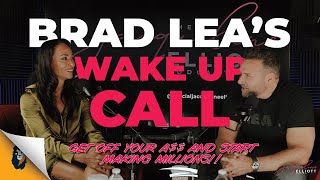
This content was created by Jacqueline Elliott. This content was uploaded by Jacqueline Elliott. This is a YouTube video titled "Brad Lea’s Blueprint for Building Success Against All Odds // The Jacqueline Elliott Show - EP03" featuring a conversation between Brad Lea and Jacqueline Elliott. The discussion covers Brad's personal and professional journey, his views on leadership, family dynamics, and his entrepreneurial ventures, including his podcast and books.
Chapters
My ex wife, she wanted to be the boss. Well, guess what? There can only be one.
There's different roles because Andy and I are kind of like, you know, we're. We're more equal, I guess, in that sense. And we both work together, run a company together.
You're just being nice, and then you. You're not equal. You're the boss.
Why would you say that?
Because you're the boss. Andy's not the boss. You're the boss.
But people see Andy like Andy.
They see him as the boss, but he's not the boss. You're the boss.
How did you come up with that? Do you mean? How did you come up with that? Like, what do you. What?
It's obvious.
Why? What do you see? You.
You already know. You know you're the boss.
Welcome to the Jacqueline Elliott Show. Today we have a very special guest. What? As Brad says, a very. What is it a real treat for you guys? Now we have Mr. Bradley. So, Brad, you are an entrepreneur. You have several businesses, real businesses. You're also the CEO of Lightspeed vt, the virtual training platform, correct?
Yes.
Also, you're an author. You have two books.
I am an author. I have one book.
They had two.
Nope.
The Hard Way, which is a really, really good book. We'll get into that.
Lessons I learned the Hard Way. Yep.
Lessons you learn the hard way.
A lot of people think because I authored the Real Deal lease presentation that was wildly famous in the car business, that it was a book, but it wasn't a book. It was a lease presentation. Then I wrote the Hard Way for people to learn from so they don't have to learn it the hard way like I did. And then my next book is once Lightspeed hits a billion dollar valuation, I'll write Zero to Lightspeed. And then my third and final book, once I'm a billionaire myself, will be Inches to Spare.
Okay, what is that about?
Think about it.
Okay. Is that one of the Brad jokes?
Nope. Truth. I'll come out with a book called Inches to Spare. It's about walking around like you, you know, have a pair and you have inches to spare. Like, you got to own it. You got to be it before you can become it.
I like that. Well, I am a fan of the Hard Way. I did read your book, and it's a very amazing book. Now also, you have a very well known podcast. You're a podcaster. It's one of the best podcasts in the world.
Thank you.
Dropping bombs. When did you start dropping bombs?
I think five years ago.
Five years ago. And what made gave you the idea to start?
Well, my mission is to get the knowledge from the people who have it to the people who need it. That's how I believe I'm going to contribute to the world. And I had so many experts and subject matter gurus coming through my studios, I said I might as well get their knowledge on a podcast so I can drop those as well. It's just off the cuff conversational, not necessarily courses that they were making.
Right.
But let's pick their brain and basically shoot the shit with them while they're here. Anyway, so I just got a couple microphones and started it.
Kind of by accident, I guess you should say.
Well, there was intention, but I didn't know it was going to be so popular. But what's funny is a lot of people told me not to do it because everyone has a podcast, you know, and they still say that. Like, tell someone you're going to start a podcast. You know what they say? Yeah, dude, everybody's got one.
Yeah.
First of all, everyone doesn't have one. Number two, you're not everybody.
Yeah. And what makes you unique? I mean, you talk about being real. Okay, why don't you talk about your real companies and why you decided on real. You have a real shirt in your real companies. Why did you decide on that?
Well, I like the brand Real.
I like that.
I remember when I was younger, if you read my book, you'll know that I kind of was a little bit of a fibber when I was younger to try to look cool and fit in, and it didn't work. It actually backfired. So I started being real a long time ago and my name was taken on social media. So I. So I said, okay, I'll just try the real Bradley. And it stuck. And then because all of my training originally was virtual, when I walk into car dealerships or sales teams would say, bradley's here. And then you could hear whoever on the phone that they were telling that I was there to see him, they go, no, the real Brad Lee is here. So. So I just adopted it. But it just sounds cool. Not only that, I believe people should be real.
Yeah.
And the real companies are called real because that's obviously my. My main brand. But more importantly, because I'm looking, I want to provide real opportunities for real people. Real people, to me, means they're willing to do the work. They just don't have the right information.
Right. Why are you so passionate about that? What's your story like? What made you like Want to target those people.
I think it's because my dad, all my family, blue collar, hardworking, good people, just didn't really have the right information, right, you know, or the right coaching and counseling and stuff like that. So we had, you know, mainly blue collar fame. You know, we had some great blue collar people, but nobody rich and famous and, you know, successful financially.
So you decided to be the one in your family?
Well, I am, I am definitely the one. But that's why I want to help regular people. Because again, you know, looking at my family, they're good people, they work hard and they're not becoming successful. Why? Well, because they don't have the right information. So I start these companies because I was giving the right information, but people still weren't doing it. And it's like, dude, what do I got to do to make you successful? Start the company and give you the damn job. And they're like, yeah. So I'm like, okay, well let me start these companies where I can put these people and give them jobs to where now I can teach them, I can train them, I can coach them, I can bring in all the network of experts that I have that I, that I know and even give them the job.
That's awesome. That's really cool. Now why the rhino? I know you're like, have rhinos all over your office and there's the story behind the rhino. What is it that resonated with Brad?
Well, I believe, you know, ultimately it's because I see them and they're unstoppable. Now some people have pointed out that, you know, you can stop one if you really need to. There's poachers stopping them, but I'm talking about, you know, everyday life. A rhino is not something you want to get in front of. It's not something that, you know, you want to challenge. A rhino usually pulls its way through. So ultimately I just identified it as unstoppable.
And you talk about the rhino skin as well. What do you need it? And as far as business goes, how does that relate with having rhino skin or what? What have you had to develop?
Well, like you, I was kind of cut from the car business. So in the car business you have to develop thick skin.
Oh, yeah.
So I developed the thickest of skin in the car business. And a rhino has thick skin. You know, it's like a tank, right? Very difficult to penetrate the, the skin. So ultimately, if you look at it, it's almost like the closest thing to something prehistoric. And tank like, like just look at a Rhino. And then what other animals like that?
Yeah, you're right.
None. Closest thing might be an elephant. Those are pretty badass animals too, you know, they have sex hormones in their feet, elephants.
I did not know that.
They do.
Wow. On their feet, huh?
Yeah. If they step on you, you're.
That's one of the things that we love about you, Brad. You have that. That charisma. Going to charisma. So you have a lot of young people, like in their 20s or young 30s now. You're not in your 20s or young 30s anymore, but you do have that char charm that has. You have that audience. Most of your audience, from what I see, are these young guys. Why do you think you have that, like, what is it that. That's about your. Your charisma that keeps these people engaged, especially the younger ones?
I don't know. I think it might be authenticity, the fact that I'm willing to tell the truth and not sugarcoat. You know, people nowadays are craving real people.
Okay.
No pun intended.
Can I ask you some. Some deep questions? You okay with that?
Love it.
Okay, so here.
Get it.
With your charisma. With your charisma. Obviously, you know, you've been married before, you have children, and now you're married to Melissa and you have beautiful children. You know, we're. We're really close to my kids. Play with them and all that. But because of that charisma and that way that you were. Is that a way that you were able to attract a young girl like Melissa when you did, or what do you think it was?
No, no. Melissa likes older men, first of all.
Okay.
And I attract young girls, probably. I mean, I don't know that. I do, do I?
I don't know.
Melissa happens to be young, but quite frankly, mentally, she's old.
I can see that. I can see that.
Yeah. She's like an old soul. Don't you think?
She is an old soul.
You don't. You don't like, when I met her, she was young. Now she's not young. She's 36. She's getting like.
She's still young.
For a woman, 35 and up is, you know, pretty much ancient.
No, it's not. I'm very old then.
Yeah, but you and Melissa are ancient now. But at the end of the day, you don't look ancient. That's good. But the point is, is when I met her, she was 21, and I wouldn't. And I was 40, and I wouldn't be dating a 21 year old at 40 years old. I might be doing a 21 year old, but I wouldn't be dating one. Meaning actually taking it seriously. So I had already been married. I didn't want to get married. I was just thinking, listen, I'm just going to go have fun. And. And we had mutual friends and they kind of told me to stop by at a restaurant and they told her to stop by at a restaurant. And we didn't know we were meeting each other. And I met her and she was like, not young, although she was young.
Right.
And I just said, you know, man, this girl's cool. And so I started hanging out with her.
She's pretty freaking cool.
She's cool and she was laid back and she was chill and she didn't argue and she, you know. You know, it was like refreshing.
So you weren't used to that?
Well, definitely not from a young one.
Okay.
So usually they have to be a little more mature and start to, you know, grow up a little before they start, you know, acting normal, you know.
Right.
Like, you know, girls nights out and crazy fights and drama and.
Yeah, especially. She was 21, right.
She wasn't doing any of it. Yeah, she didn't, she didn't do any of that.
She had good parents too, right?
She had great parents. So I didn't want to get married. But you know, since she was so cool and she was so great, I said, okay, I'll get married one more time. Worst case scenario, I get divorced. No biggie. I've already done that once. Yeah. So I can't say, you know, I've only been married once. So now I might as well be married a hundred times for that matter. But it's either once or who cares, right? So to me I thought, you know, I'll give it a shot. And you know, she's cool, but the fact that she was young is my point. If she would have been a normal 21 year old girl.
Yeah.
I wouldn't have done that because she wouldn't have acted the same. She acts older than I do.
Yeah, I see that.
So why, how do I attract young girls? I think I attract mature girls. I don't think I attract young ones. Do you know of other young ones that are attracted to me?
I know I haven't really paid attention.
So where are you coming up with? I try.
I don't know. I saw like you're 19 years. Yeah. It sounds kind of like you're pervert. I'm just kidding. Well, you attracted a young girl, you know. Okay, so. So you were married before and you wrote a book. And I learned a lot about your. Your previous marriage from your book and your wife and certain, you know, things that happen there. You know, I haven't really asked you any of these questions, but you have children. You have children obviously from your previous marriage. Now I'm interested in this because obviously I came from a family from divorced. My parents were divorced, and then my dad got remarried to a younger woman, 14 years younger than him. And she hated me. Like, hated me with a passion. And she actually used to make up stories about me to my dad to try to put me against my dad. My dad and I are really close now, but when I was growing up, it was hell. It was hell growing up. So learning from your experience and being a parent to starting family again, you know, obviously, how has that kind of developed and what have you learned? Maybe you've become like more lenient with your, your second set of kids or how has that, like, played in a role and does everybody get along or how has that changed you?
I'm actually less lenient with my third set of kids. So I had one kid from a high school sweetheart, one kid from a one night stand, two kids from a previous marriage, and then three kids from this marriage.
Okay.
So seven kids, four women.
All right.
And three sets. But I didn't really raise the first two, you know, mothers, their mothers did. I got them when they were about 14.
Okay.
So I didn't really raise them. I kind of finished them off, if you will.
Okay.
But I was their best friend, or trying to be. I wasn't a disciplinarian, I was a buddy. I introduced them to rap music and whatever I thought was cool that they would think was cool, and that wasn't too bright.
You're trying to win them over.
Yep. And then my first marriage, kids, everything I tried to do, the mother kind of tried to do it her way. So we were at odds. So I kind of let her be the boss when they were with her, and I was the boss when they were with me. And we kind of did a mixture of less lenient but not quite parenting.
Right.
More. More friendish. And thankfully they turned out good. And then the three, now I'm less friendish.
How? Explain to me what that means.
Because you got to be a parent. You got to be a parent. You know, they want their iPad. You know, you want them to have their iPad, but the iPads not good for them. So you, you try to make them eat well and, you know, do things that are going to turn them into Productive, kind individuals, not little brats.
Right.
And again, I mean, it's tough because Melissa's new as a parent, and she wants to do what. What I used to do, which is give them everything they want and everything they need. Why? Because we love them and we want them happy. But the problem is, is you can turn your kids into little entitled brats, and then society doesn't like them, and they don't get along well with others, and they cry and they get depressed, and then the next thing you know, they're talking about suicide and crap. Like, you're like, what the hell is wrong with you? And you can't handle them, and ultimately you don't like them, and you don't want to do that. You want to be a parent and not allow your children to do that would cause you not to like them. Does that make sense?
Yeah. Yeah. I mean, you have to be that person. I tell my kids all the time, like, I tell them, hey, I love you, and I kind of want you to be happy, but I don't care that you're not happy. I need you to be safe, and I need you to be a good, good person. And sometimes you're gonna hate me, and that's totally cool, because my job is not to be your best friend. Like, I want you to be able to confide in me and tell me your problems, and I'm gonna correct you because I'm your mother above all things. And keeping you safe is more important. Making sure that you turn into good human being is important. So, yeah, it does make sense to me.
But, yeah, and challenge helps them. Yeah, it helps them develop and grow and figure things out on their own. You know, my dad was like, too much the other way. It was almost too much. I was just kind of. They made sure I didn't die. They made sure I had food and clothes and, you know, but that was kind of it. There was no parenting. There was no, let me teach you something, son. And if it was, it was a belt that was teaching me not to do whatever I did.
But do you feel like those experiences of them being very hard on you then made you more adaptable?
I think. I think them caught allowing me to figure it out for myself made me a survivor and resourceful, and I think that's the true attribute that makes one successful.
Well, I see you, and I'm like, hey, you know, obviously you're a cool dude. You have that charisma. You're. You're actually really humble. You know, you like nice things. We know That, I mean, shoot, look at. Look at your watch, look at your shoes. Look at the way you carry yourself. You have that style. And that's. That's really cool. So you do like that. But you're also very humble. You care about people. But you've. You've had a story. Like, you've been through some stuff that I know about. Obviously, I don't know everything about you, but I know that you were homeless for a while, right? And all of that. How. And you say, dude, I love that. I was having more fun than. Than ever. Like, do you think that your experience made you, like, gave you another set of, like, lenses where perspective changed for you? Or what was it that made you look at things, like, you know, on the bright side? Because that's what you do.
Yeah, well, I mean, again, that's because you have a choice. You can look at it with the eyes of a complainer or the eyes of an appreciator, and what do you think is the best way to do it?
But most people don't get that. Like, how did you develop that? Because most of society doesn't really understand. You can tell everybody that. You can tell them until you turn blue. Like, hey, you know, look at the bright side. You're healthy. Like, you have, you know, you have your healthy kids, you have a job, you have a roof over your head, you have food, you have everything. And you still are looking at negative things. Why do you think people do that? Like, what is it?
Because they were taught to, you know, they. They model what they see. So at the end of the day, they kind of learn to do that by. By their parents and, and people that they watch and look at. I didn't really have anyone to look at, so I had to use common sense. You know, to me, if you have two choices, you know, pick the smartest one. You know what I mean?
Yeah.
To me, like, when someone said, you know, you were homeless, like, you make it sound like, you know, oh, man, I chose not to. To go to a home because I didn't want to look like a freaking, you know, wuss. You know, I set out to do something, ran out of money. Well, I can go back home or I can freaking tough it out and sleep on a beach for a couple of weeks, which I did. And by the way, it's a beach, man. There's like, how tough is it to sleep on a beach at night?
It's true.
And then. And then you get up, you're on the beach. You know, sometimes I'd get Up and just act like I was there early, you know, lay out and hang out at the beach all day and try to meet girls. And people would say, well, how did you get out of that situation? I knew that I. I didn't have a home, so I needed someone with one. So I just kept meeting people until one of them was willing to let me go to theirs.
Yeah, and then you were the charmer. So you found some ladies to kind of.
Not ladies, but a lady. Yeah.
Okay, well, good, good, good.
Yeah. So, I mean. And I didn't have to go home, so. So when people say, oh, poor guy. He was homeless, how did you handle guys? Number one, it was a choice. And most homelessness is a choice, number one. Number two, it was a beach. It wasn't that bad. And if it got that bad, I could have just went home. So in reality, when you look at it like that, you're like, oh, well, shit, that ain't that spectacular. Right? That's called perspective.
It is.
So my perspective is. Is based in gratitude, because I realize that it's more valuable to be alive, just alive, than anything I'm trying to acquire. So it's like, you know, oh, I didn't make 100 grand today, but I got to try to make 100 grand today. I got to be alive today. I got to experience you. And, you know, I got to see my kids this morning. I'll get to see them tonight, hopefully. And to me, that's worth more than a month, the money, anyway. So I woke up with the gift more valuable than anything I'm looking to attain. So I'm literally being gifted every single morning with life. And that not, like, resonate.
Yeah, but most people don't get that. That's the thing. That's what we try to beat into people, like, all the time. And some people have to wait and hit rock bottom and have something bad. I would say don't wait for something bad to happen before you show your family love, before you have that. That gratitude, before you apprec. I like talking about my back. I hurt my back one time, and I'm like, man, my back is, like, constantly hurting. And I'm just like, dude, I didn't realize that I should have been grateful before I hurt my back. I shouldn't have been thinking about that. But, no, we. We take our health for granted. There's so many people and so many couples that they get used to each other and they treat each other like shit because they don't appreciate each other anymore when they have Everything in life that they could need. But that's just a beautiful thing about you that I've noticed since I've known you that you, you have a way that you have those lenses that persp.
That's.
That's really, really cool. And I wish that more people could borrow those lenses. So that's why I was wondering, how did you get those lenses? You know?
Well, you know, if you said, I'll give you a million to tell me, I don't know if I could because I don't know, you know, I don't know when, I don't know how. I just know that.
So you were, you're from Oregon, you were born in Oregon, Correct. So what. Tell me a little bit about your story and how you actually. Because maybe we can discover it. But you were in Oregon. You. I don't know too much about your family. I don't know if you're close to your family or what made you feel different, because I have noticed a pattern with successful people. Like, they, if they don't feel like they fit in with their family, they almost kind of separate and they kind of try to find their own way of life and kind of figure it out. But tell me about, like, what, what was that? You were born in Oregon and then you moved and what happened there?
Man, you're going way back.
Yeah.
Well, again, my family, first of all, my mom, my real mom and my dad got divorced when I was like one and a half or two. So my dad took me, my two older brothers, my older sister, and threw us in a foster home. My mom kept the brand new baby, which is my younger brother, with her. So four of us went to a foster home and one of us stayed with my mom. Well, my grandmother, thankfully was Spanish or Latino and she said, that's how I like you. Yeah, she said, go get your damn kids or you got an issue. So he came and got us out of the foster home right before we were getting shipped out and, you know, adopted or whatever. And so now we were with my dad. And my dad was just this hard working, blue collar family man. Not even really a family man, but just a blue collar, hard working dude. That's all. So we grew up with him. Now my older brothers were a little too old, so is my older sister. So they didn't really hang out with me. So technically I was the youngest and I grew up and what I would consider to be. I think it's a great childhood, like reality. Yeah, I had fun. Like we went outside and didn't have to come home till dark, you know, and literally left the house in the morning like my kids would never be allowed to do.
Oh, yeah, mine either. Yeah, but I get it.
But we'd leave the house and we had to be home.
Rules.
Oh, tons of rules. But I mean, as long as we were home by dark, everything was cool. If we weren't home by dark, ooh, we were gonna be in trouble when we got home. And the trouble was a belt.
Yeah. I was gonna ask you, how many times did you get your ass beat as a kid?
Oh, a thousand times.
Thousand times. Any close calls, like close to death calls when you were growing up?
Death? Like I almost drowned once. Yeah. When I was two years old, supposedly I drank turpentine and almost died. And actually did die.
How did you get that?
Underneath the sink.
Oh, my gosh.
I almost drowned once.
Well, thanks. Thank God that nothing happened.
Yeah, thank God.
Yeah. I like a story from your book that you talk about, you know, there when an accident happened, like with your son, with your ex wife. Can you tell me a little bit about that story? That was a really, really good story of like, basically like using your gut. Because sometimes in life, like sometimes we see opportunity or we know that we need to do the right thing, and then people get in your way or thoughts get in your way and you kind of stop. Can you share that story with everyone? Just to kind of like when people like have something's telling them to do something in society or something gets along the way, it could be life and death situation like the one in your story. But like, I think a lot of times we go through that.
Well, fortunately, that credit goes to my ex wife because I wasn't there. So ironically, when I drank turpentine, my dad rushed me to the hospital and apparently was already dead or looked that way anyway. And they told him to have patients, they'll get a doctor and you know, just sit down, you know, they thought he was holding a dead little kid and. Or dead baby. And so he got pissed and, you know, started yelling and throwing a fit to have someone be seen right now. And so they came out to see what the big fuss was about and found this guy holding his baby and, you know, ended up bringing me back to life. Well, my son was dropped from a. From a faulty baby carrier, you know, like a car seat slash baby carrier. And so my wife at the time dropped him on his head. Well, there was no cut, he wasn't crying. Ironically, he was about the same age, maybe even younger. There was no Cut. He wasn't crying. She picked him up, and he was. He was fine. And she realized, hey, I just dropped this kid on his head. Maybe I should go get him checked out. So she went into the hospital, and the nurse said, you see all these babies crying? Do you see all these injuries? Your son's fine. Just sit down and have patience. And she said ironically, which was technically her personality, no, I want him seen now. And she kicked in the door and started screaming and making a fuss as if he was, you know, literally dying when he wasn't even crying. There wasn't even a bump on his head. It was the craziest thing. But she threw a fit and said, no, I want him seen right now. You know, And. And so they came out, and a doctor somehow grabbed the baby, asked what happened, and he stuck him in a. In a CAT scan or whatever and realized that if he wasn't in brain surgery immediately, that he would die. So his brain was swelling inside of his head, and they performed immediate eight hours worth of brain surgery and didn't know if he was going to make it. Yada, yada, yada. But that's her acting that way that saved him. But ironically, it's. It is. It's. She had, you know, I call it, you know, different than intuition, but she definitely is the one that takes or deserves credit for that. I wasn't even there.
Right. But what do you think? Like, most people, like, you would think that your dad, in your case, when you drank that, like, he. They would be like, okay, I need to wait. You know, and my turn in Marcus, that would have been like, hey, you know, I got it. I don't want to make a scene. I don't want to be that woman that creates this scene.
Well, in those circumstances, I think it's. It's understandable. The difference is, is like, you know, a lot of people will listen to authority and not question authority. And if a doctor or a nurse or somebody with authority tells you to sit down while they go get something done, you know, I could see a lot of people sitting down and following instructions. You know, fortunately, my dad didn't have any patients. Literally, you know, he wasn't a doctor.
Yeah. So things we hate about certain people are things that actually could save your life. Like, you probably didn't like that your wife spoke up, but in that case, it saved your son's life for sure.
And I didn't mind that she spoke up, but she just wanted to be the boss, and I'm the boss.
Why don't you elaborate on that? How does that. Does that work? Because, you know, like, obviously, like, we're very good friends with you and Melissa.
More from Jacqueline
It’s your responsibility as a parent to be their hero! #nurturingdreams #happychildren #earlylearn


The beast leader is and always will be Jesus #faith #love #leader #leadership #jesus
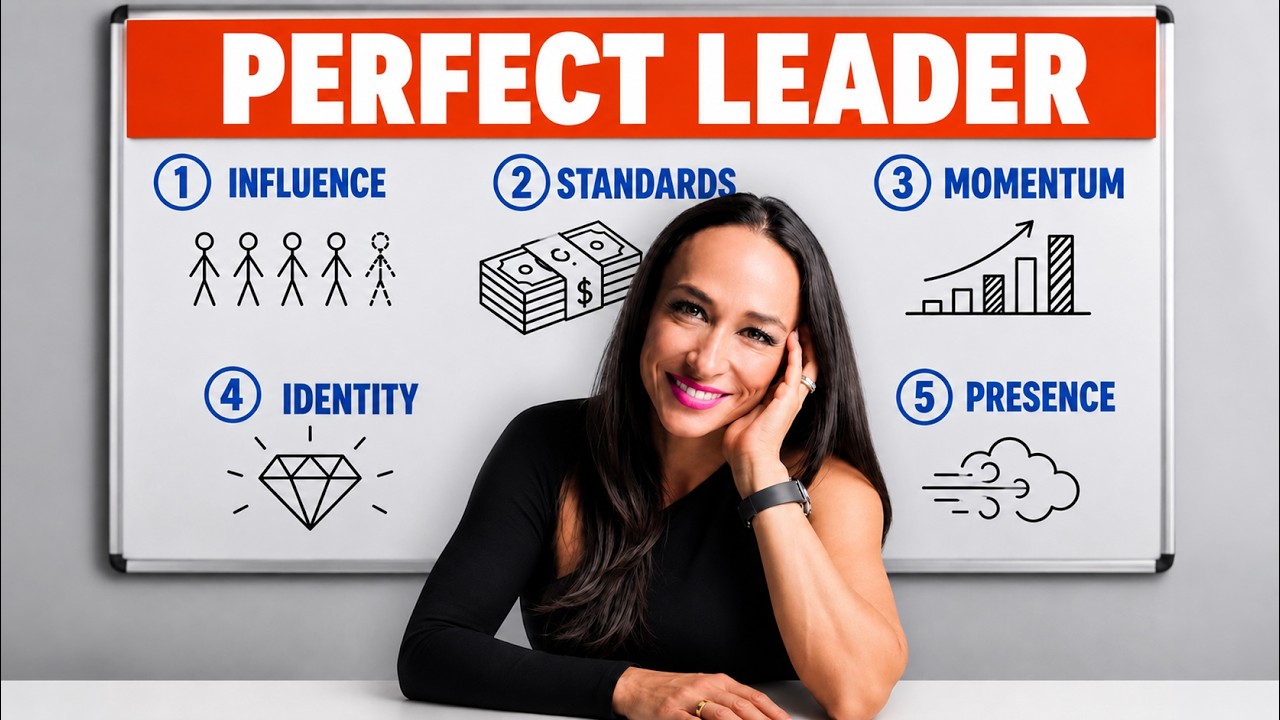

You can have it all. Stop believing limiting beliefs. It’ll fix everything in your life.

Your dreams lie in the trust your team has for you. You haven’t paid attention to it.

Your words become your marriage’s weather. Choose friends who protect your home
