How Heidy Seoenz Went From Homelessness to the Airbnb Queen! // The Jacqueline Elliott Show - EP09
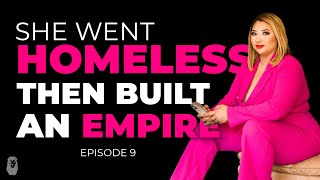
YouTube interview (Jacqueline Elliott Show, EP09) featuring Heidy Seoenz. Heidy recounts a strict multicultural upbringing (Mexican mother, Korean father), experiences as a middle child, and the moment she left home at 17. Faced with her father's ultimatum about college and unwilling to follow a prescribed path, she declared herself homeless (a formal status) rather than be forced into choices she didn’t want. The segment covers family tensions (quinceañera denial, strict rules), her decision-making (rebellion, mentors, counseling), and how early hardship shaped her willingness to take business risks that later led to success in real estate and Airbnbs.
Chapters
Hello, and welcome to the Jaclyn Elliott Show. Today we have a very special guest, Heidi. Now, Heidi is a badass in real estate and Airbnbs, but she also has an incredible, incredible story, and she is a Latina. Today we're going to talk about all of her struggles, all of the things that got her to be that 1 percenter at the top, and she's going to share how she got out of the rat race. And now she's inspired to move thousands of people to do the same, especially women that she talks to, obviously. So, Heidi, welcome to the show.
Thank you so much, Jacqueline, for having me. It's a pleasure to be here today and to share my story and to inspire other people to do the same thing that I've been doing for the past seven years.
Yes. Now, today we were talking, you know, obviously behind, behind the scenes, a little bit about your incredible story, and I think you and I are very similar in a lot of different ways, which is really cool. Now, before you kind of got into this journey and everything, you have an incredible, incredible journey. You were telling me about your childhood. You're, you know, a middle child, and, you know, you have a. You're Hispanic, and then you also have a Korean father, and how that kind of meshed together. You were kind of like the rebel in the family a little bit, and how that, I mean, it's crazy how a lot of successful people have different journeys that they go through and a lot of pain and struggles, but in your case, you kind of rebelled against your family to kind of build your dreams. Tell us a little bit about that.
Wow. I mean, just thinking back, I was 17 when I left my house, and I've never been more scared in my life than the day that I left. And that actually just made me lose fear of fear itself. So, I mean, now when I'm doing a new business or I'm going out and just doing, like, the leap of faith, like, I always think back that it's like, I mean, it's not gonna be as scary as when I left my house at 17, so it can't be that bad, you know? And so that has really pushed me to just do whatever I want to pursue if there's something new that I want to do. And so growing up with a multicultural family with was also really hard because we just. We had so many things at the same time happening. And, you know, my parents, my mom's Mexican, my dad's Korean. And so we had to figure out, like, who are we following? And, you know, when it comes to religion, like that's also something that, you know, what is the culture that we are following? What is the religion that we're following? And so I think at the end of the day, what was really wonderful was that my parents, because they both were so different in that way, they let us choose our own. And it wasn't like we're gonna go to church or we're gonna do this. It was like, alright, we can call it whatever you want. You can call it whatever you want. And as long as you believe and you have faith or you know your way and that, that also gave us that flexibility and really what am I following and how it is? So I started doing a lot of like, you know, the universe and okay. Like I know there's a higher being, I know there's something. I don't know what it's called, but.
You have the ability to think.
Yes, exactly. And so that gave me a lot of self awareness. And you know, when we, when we were growing up, it was just really just difficult. You know, you have your older brother, but you have your younger sister and.
You'Re the middle child.
Yes. And being the middle child, it's always like I remember growing up and saying like, it's not fair. It's not fair because you know my brother will get away with anything because he was a guy and he was some older and then my sister was a baby and so she would get along with a lot of things.
Yeah.
And even like in school, I mean, were you scared of your mother? No, I was not scared. The only person I was scared of it was my dad.
Your dad?
Because again, Korean. So if anyone out there is Korean, they know like they're, they're really strict in everything.
Okay.
And in school, in relationships and friendships, like everything. I wasn't allowed to have friends over at my house. And so my mom will let us because she's Mexican. Right. And so she's like, okay, you can have them. But before we would get home, like, like when your dad and I get home, you have to, they have to leave.
Yeah. You know, she would bend the rules a little.
Yes. And so she would try and like give us a little leeway because my dad was just so strict, like no and no and no. And so I remember one time I had my friend and like my parents got home a little bit earlier and she hadn't left and I just told her, you gotta wait outside for, for your, your, your ride. And then my, like I told. And then once my mom gets, and she's like, don't do that. Like. And so she gets, like, the girl back inside the house. And I was like, well, you told me that they had to leave before. I mean, I was just following the rules, right? And so I remember I didn't even go to my prom because, again, my dad was like, no, you know, as a Mexican, we have quinceaneras. And it's like, nope, you're not having one. Because in his way of seeing things, it's like, well, when you have a quinceanera, it means that you're ready to get married. And that's what. Literally the definition of what it is. But it's not what we do because it's just a party. It's just a party for us to have.
So did you get anything besides the quinceanera or you didn't get the option to do it?
I did not get.
My parents asked me, do you want a quinceanera or do you want a car?
And I said, I want a car.
And I didn't get shit.
Exactly.
Anything.
Well, that was pretty much. I didn't get the option. I just didn't get anything. They took me to Texas rental house for my 15th birthday, and, like, that's it. Like, that was it. And my mom struggled a lot because she wanted to give me that. You know, she didn't have a quinceanera, but she wanted to give me everything that she didn't have. And so the fact that I didn't have it either, it was really, like, hard for her. So she bought me a dress. Oh, my God. So she bought me a dress, and then she bought me just, like, the whole set, and that was it. You know, I had my.
You took pictures?
No, because we. We couldn't go.
Oh, okay.
Can I get a cleanup?
Yeah.
So it's too early for me to start crying.
No, it's good. It's good. But, you know, it's crazy how you learn from these things. And you had this fear, like, of your dad, but also, like, so you're. You're the middle child, and. Oh, let me see. I'm gonna touch your face and you're gonna kill me. I'm not. It didn't do anything. I just.
Okay. My makeup.
No, you're good. You're good. That's what I'm like. But okay, so you had your dad, and you guys were kind of afraid of your dad, but your mom, like, was trying, you know, obviously have the Hispanic traditions that you're kind of fighting against, and all these different things. Now you're the middle child. You're used to your brother getting away with everything because he's a man. And you have your little sister who was a spoiled one. And then you had your own opinions of life. Yes. You had your own opinions of life. And those opinions of life, where did those lead you to? Because you said you left your house when you. You were 17. So what. What was going on? Through hiding.
They didn't want to give me a quinceanera, so I left.
I'm just kidding. You started using your brain in different ways. Right?
I was just. I started. I started hanging out with older people, like my friend's parents. And I remember, like, they had just. I've always. Well, let me. Let me just think a little bit. Okay? So I remember I didn't want to make the mistakes in order to learn from them. So that was my thinking at 15, 16 years old. Because I would hear my friends, that they would go out and. I mean, yes, I come from, like, a very strict, you know, household. But then I would hear their stories, and I would hear, oh, my God, you know, I went and I got drunk. I did this.
I dream I'm pregnant or something.
Oh, yes. And then. So I. I understood that in my house, it was too much, like, too strict. But then you had the other side, right, where it's too liberal. It's like, do whatever you want. And then. And then bad things happen. And so. And so that. That was really thinking, that's a good hubby right there.
That's a good hubby. Yes.
And so. So that was really the. I remember, like, thinking that and like, seeing that difference. Right? Like, okay, I can't do anything. But then I see my friends, that they're doing whatever they want, and then. And then they would tell their stories, and I would just think, like, oh, my God, Like, I would never want to be in that situation. Like, I don't want to go through that. And so listening to their horrible stories, I learned from their mistakes.
So you had your conscious. Like, you were able to leave at 17, but it's not like you went and did bad things.
No.
You had that upbringing, and you knew that if you did things the wrong way, you were going to fall into that trap. So you had your own conscience. So you were able to leave at 17 and do something good with it. Now it takes a lot of guts to leave your house at 17. And you were saying that your mom kept calling you to come back, come back, come back, come back. So what is the reason why you left, and what is the reason why you decided to stay out?
So I left because it was very strict, right? And so it came to a point where I've always been, you know, an AP college student and senior. I took calculus, too, when I was a senior. So I was always doing a really hard thing about being a senior or being in high school, but taking all these hard classes. And so I always wanted to go to college, and I didn't know what I was going to pursue, but I wanted to go to college. I wanted to do all these things, and it was for my mom's side. I am the first generation to have a college degree. And. And so I. I wanted to pursue that. But then my dad, he's like, you're gonna go to UT Austin, and you're gonna study what I'm telling you to study. And if you're not gonna do that, I'm not gonna pay your college, so you gotta figure out on your own. So it's either this or nothing. And me being the way I am, it was like, all right, I'll take nothing, because I don't want someone to choose my life. I want to be able to take those choices. I want to be able to do what I want to do. And yes, I might make mistakes, and I might, but I want to learn, and I want to be able to live the life that I'm choosing, not the life that someone else is telling me to leave live. And so, yeah, so that was me at 17. You know, my dad's telling me these things, and I had already been. You know, I had already done, like, my college, my college letters and applications. And I was starting to do all those things when I was a junior. And so when that. That was when he started telling me, right, I'm A Junior, I'm 16. He's telling me, like, you're gonna have to do this, this, this, and that. And me being a very rebellious at that moment in my life as a woman, and, you know, just going against.
And you're Hispanic, too, which doesn't help when you're rebellious in that moment.
Yeah, I was, you know, talking back, and. And so I remember I didn't apply for UT Austin, like, and I would have been accepted because I was top 5% of my class. And so you could get accepted anywhere, and I will probably have gotten a scholarship, but I was like, I just didn't apply. And so the fact that I didn't apply meant that I was rebelling against my dad, and I was going against what he was asking me to do, because if I didn't apply, I can't get in. And so even if he sends me to Utah, Austin, like, I don't have where to go because I didn't get in, I didn't apply. And so did he know that.
That you didn't apply, or you never told him?
No, I never told him. I left my house. I was so scared.
Hey there, sales warriors. Are you tired of facing objections left and right, struggling to close deals, and watching your competitors snatch away your prospects? Well, you're not alone. Recent surveys indicate that a whopping 72% of sales professionals struggle with handling objections leading to missed opportunities and lost revenue. But fear not. There's a solution to this all too common problem. Enter Andy Elliott Sales playbook. Your ultimate guide to mastering sales strategies and objection handling like a pro. Andy Elliott sales playbook isn't just a collection of tips and tricks. It's a comprehensive roadmap to success, packed with actionable insights and real world examples that you can start implementing right away. And here's the best part. Andy's playbook isn't just for seasoned sales veterans. Whether you're a rookie looking to kickstart your career or a seasoned pro aiming to sharpen your skills, there's something for everyone in this playbook. So if you're ready to arm yourself with the knowledge and confidence you need to crush objections, close more deals, and skyrocket your sales career, don't hesitate. Click the link below to grab your copy of Andy Elliott sales Playbook today. Remember, success favors the prepared. Equip yourself with the tools you need to outshine the competition and become a sales powerhouse. The time to elevate your game is now. Now, let's make this your best year yet. Now, let's get back to the video.
And so I was just like, well. And I told my mom, I'm like, well, I didn't apply. And I started getting all of this acceptance letters from Baylor and Texas Tech and, you know, and Syracuse. And I was just getting accepted. Everywhere I applied, I was getting accepted, and my dad would just throw away my acceptance letters because he was like, that's not where you're gonna go. You're gonna go to UT Austin and you're gonna study international business. And I was like, no. Like, I don't want to do that. And so that was. That was why I left. I left being rebellious and not wanting someone to tell me what to do with my life. I wanted to form my own path. I want to take. I Wanted to own my life. And the fact that my parents had to pay for my college because I didn't have any other option, that's when I was like, what are my options? Like, if. If he's not going to pay for my college because I'm not listening, and I'm not going to where he's telling me to go, then what can I do? And so I started. I went to counseling. I had. You know, I've always been like, a teacher's pet, so people wanted to take me under their wing. People wanted to help me, and I had. I've always had a lot of mentors in my life, and I'm so grateful for all of them. They helped me so much when I was going through all of my really hard times. And so. But that was the solution. They were like, you know what? You have to declare yourself homeless, but you can.
So you forced yourself to go homeless. Okay, People don't just do this. Okay? No, because you're trying to escape the destiny that your dad had set out for you, right? And you went and you said, hey, the only way that I'm going to be able to get through to my next level is by going homeless. The real homeless.
Yes. I couldn't fake it, because if you fake it, then you get in trouble. You know, like, you could get, like, fraud, and you can't. And so my teachers told me, really, like, you have to declare yourself. Hell, you have to declare yourself homeless, or you have to emancipate yourself. And so, you know, emancipating yourself, it's like you're divorcing your parents, and you're doing, like, this whole legal thing and, like, going to court and everything else. Like, I don't want to do that.
Because you're 17, right?
I'm 17, yes. And so in Texas, once you're 17, you are trialed as an adult. So therefore, you're considered an adult. So you. They cannot force you to go back because you're already an adult. And so finally I was like, all right. So that's when I was like, okay, I had to declare myself homeless, and. And that was my only option. And. Or I could join the army. And I'm like, no, I'm not joining the army. So that was my two options. Either declare myself homeless or join the army, because the army would help you pay for your college and all that stuff. And so it's just like, no, like, that's not what I want to do. So I decided to leave my house at 17 and declare myself homeless, so it's awesome.
You really fought for what you wanted at a very young age, and the outcome was great because you learned a lot from being homeless and fighting for what you believe in. It's so crazy how sometimes your parents have a predetermined idea of what they want you to become, Right? And the thing is that.
More from Jacqueline
It’s your responsibility as a parent to be their hero! #nurturingdreams #happychildren #earlylearn


The beast leader is and always will be Jesus #faith #love #leader #leadership #jesus

You can have it all. Stop believing limiting beliefs. It’ll fix everything in your life.

Your dreams lie in the trust your team has for you. You haven’t paid attention to it.

Your words become your marriage’s weather. Choose friends who protect your home
