How to Build a Successful Influence & Company with Andy Elliott // The 1%er Podcast
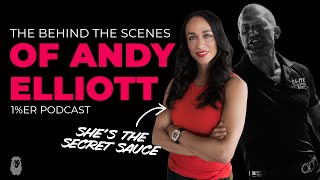
Jacqueline and Andy Elliott discuss building company culture through vulnerability and directness, hiring for heart over credentials, and using intentional hardship as a growth tool. Jacqueline sparked Andy's transformation by calling out his "love handles," which led him to rebuild his identity over long days at Starbucks.
Chapters
Hey, guys, what's going on? It's Andy Elliott. Welcome to the One Percenter podcast. By the way, I got a special guest today, my smoking hot wife, Jacqueline Elliott. By the way, listen, just. Just because I know she's about to. I'm going to interview her today. By the way, she's the CEO of our company. We would not have our business if it wasn't without her. I wouldn't have changed my life if she wouldn't have told me the cold hard truth, been direct to me, and literally said, get your shit together. And I want to tell you guys, as I talk to her, like, she built everything that we have. And I know that I'm the face, and I know that people see me all the time, but truly, the person that mentors me and pushes me and the person that I look up to is sitting over here. All right? So I asked her, I said, hey, babe, stop what you're doing, right? Come over here for a minute, and I want to share you with the world.
So, Jacqueline Elliott, thank you so much for having me.
Okay, so we're going to talk first and foremost, since obviously I just told you or told everybody that she runs our company, she leads it, she does everything. I don't have a meeting without her. Let's talk about leadership, because that's my. That's my main goal. What would you say are the values that the world's missing with leadership? Why are there so many companies that can't scale grow? Why are we growing so damn fast? I know it. It is. But why? What are. What are most industries missing? What is missing in the world with leadership? What do you see missing? Like, if we were going to run a leadership.
Are you going to let me talk or you're going to keep asking me the same question over and over? Just kidding. Just kidding. So I think that a lot of people preach the same thing, and it's mostly words. Like, a lot of people say leadership. It's the culture. We need to make sure we have good culture. We need to make sure we have our core values. All that stuff is all great. I think that what is missing in leadership is basically leading by example, putting in that hard work, and really showing your team that you're not too good to keep doing that. By going, we. We still do that. We still go pick up the trash. We still work harder than anybody else. So as leaders, we make sure that everybody else, you know, wants to, because we are their mentors. We've worked hard to be their mentors and earn the right to be their mentors that they're always constantly chasing and trying to prove themselves all the time. We're constantly trying to prove ourselves to still. It's like in marriage, I'm constantly trying to prove myself as a wife to you, and that's why we keep it new. Oh, he's smiling now.
She show does.
But I always have to prove myself to our team. I always have to prove myself to the kids. I always have to prove myself in everything I do. And I think that's basically the first act of leadership, is making sure that you can continue to do that and continue to push and grow and not show that you're too good to do it anymore.
So step one is going to be.
Work harder than everybody else.
Yeah. Work harder than everybody else and reprove. Which means on a daily basis, while you're. Why you're capable of being the leader, to lead these people.
Yeah. Show them that you care.
So you're saying. So you think in the world right now, a lot of people get a position, they get a title when it's new. They try their hardest. They're proving, but once the newness wears off, then they fall apart.
Yeah. Most of the reasons, when we start something and we see the good in it, it fades away and it becomes something that we despise or hate because it's just. You lose that edge. You lose that want of trying to keep it new and prove yourself. So it just kind of turns into a job, and we don't see it as a job. We're constantly creating new ideas and things on how we can push ourselves to that next level. And in turn, it shows. It's like, you know, if we lead by example, it shows our team to want to do the same.
Feed me more leadership. What else do we do that you would say, anybody watching this, if they want to really build an empire, something special.
Well, something that's very unique, I think, is a lot of times, you know, a lot of business owners try to keep, you know, business in their personal life, or they're not allowed to talk certain things or share certain things with their employees. I believe that there is some type of line, I guess you should say, but it shouldn't really be what most people say. Like, we are. We show. If you are a good leader and you show that you're pushing your people, but you also have that vulnerable side where they feel you have a heart, then you can do so much more because it makes your employees or your team be open to show that side of them their weaknesses. And all of that so that they can make sure that you can empower them to grow and you're not just using that against them.
Hey, guys, what's going on? It's Andy. A lot of you leave comments telling me that you need help. Do me a favor. I'm going to tell you the best way to get a hold of me. Shoot me a text message right now. And 918-2100-2549-1821-0254. I'll help you with whatever you need. I got your back for life. Let's get back to the video.
So we can be very direct with our people as long as we show heart. You know, I think that's very, very important, being able to be direct and open with your team where they see that if you tell them something or you might be criticizing, that's probably the wrong word. Or you might be critiquing something that they're doing that you know they can be better at. But if they know that you're telling them and it comes from a level of care in that you really see another version of them that you know that they're capable of doing that they might not actually see themselves. And you give them those eyes and that vision to see that, the same thing you see, then they believe in themselves. Because without that, if I'm just criticizing them or telling them or nitpicking at them, I would just be the bitch and we bring that heart in it. So I think it's very important. You can talk about everything with your team. If you do it right, you can have your team to come up with you with problems in every single way and not feel like they're complaining because you can also go in the opposite direction and they can feel like they're complaining to you and you become, you know, a pillow for them to cry in. And then it go. Goes on and leads in other ways. But if you can show them and you can basically tell them, hey, you know what, this is what you're good at, and I foresee you being this leader or whatever it is, then they'll fight to the end of the world for you because they know you believe in them.
I love that with. With being there with people. This is something that I don't really hear any leaders talk about, but something that we do and I want you to explain is being there with people on your. In your team or on your. In your company when things are hard. Right. Because most people want to cheer people on when it's good When a top producers breaking records. But what about when it's. When it's hard when our people struggle.
Right.
Most leaders back off. We seem more to lean in.
We do, we do lean in. Because I think that a lot of times, I mean we always talk about this all the time. Like we don't know what you really have until the shit hits rock bottom or hard or you get tested in so many different ways. You know, we have such a good team and such good culture and everybody looks at us from the outside like you guys are perfect. You don't have any problems. We run into things and we're very adaptable and we just kind of grow and we don't hit take things so like hard in the sense that most people do when things crumble or you might have a bad day and instead of us going being like hey you know, this person's lazy or this person doesn't care anymore because leaders, we can make that mistake in doing that. And that's what most people do. They see somebody that's going through. Yeah. That you misdiagnosed because you're not digging in. You haven't earned the right to get that information in the first place. And that goes back to the last thing I was talking about. If you were to talk and keep an open relationship where they don't have to walk on eggshells with you. They'll open up when there's a problem and almost no, the thing that makes us so unique is I know how everybody is and I can sense just by looking at them and I don't even necessarily need to talk to them. I can sense there's a problem in the room and I go directly and I'm like hey, what's going on? And then they just melt and then we can talk about it and then that it's always going to come out to be better because they know that, you know, we are going to stick with them no matter what and that's the reason why they're so loyal and there's, they fight so hard for us because they know it's a two way street. It's not just going to be one sided. We're going to fight for them and they're going to fight for us and it just goes in that way.
So yeah, so Jackie's talking about like a circle of safety as in like hey, most companies they'll be cool with you as long as you're hitting the numbers right. As long as you're hitting the results. And then when something isn't Right. They're going to be like, dude, what's your problem? Or get your together or else. Right? And then it's a threat. And we've never threatened anybody. Our company, we've always kept a circle of safety that says, look, if we hired you, it's because we believe in you. And if we believe in you, we're going to push you to your max potential. We understand that you're going to have great days, we understand that you're going to get your ass kicked.
But include us in all of that and all that so we don't misdiagnose, so we don't think something about you that's not actually true. And most of the time we can help you through anything. Or at least we'll have it. We'll have a talk about it. Because all of the people that came to our company, I mean, 90% of them come from out of state. They don't have any family around. And we've become that family. We've built our own family with our team. And so we need to have that. There's not really an actor switch or there's not. There's no boundaries. Like, we talk to the kids, we talk to the wives, we talk to everybody in the group and we take them in as our family. And that's why we can do that.
Yeah. What about like family being included?
Right?
Like, in the work. Right? Because, like, listen, we've broken like every rule to what we were taught, right? You know, keep your family out of here. But we've allowed families to come into our job and they perform like 20x higher when they take their family with them.
Right, Right. So I mean, I can just tell.
You by, like, we're breaking every rule. So understand this. Everybody always asks, like, how did you grow your business so quick? That's why I'm having my wife explain some things today. Like, it's stuff that we haven't really.
Shared and I just forgot what I was going to say because you just interrupted.
No, I was talking about family. Yeah, last time about family. Like, like every day are the wives and the husbands of the people that work here, like, come up to work and have lunch and.
Well, what I think I was going to say was, like, I think that we learned the hard way. We were taught, like, you know, when we had our normal jobs, we were taught that, you know, you go to work and you keep your wife happy and, you know, keep a queen of the castle, give her what she needs, give buyer the cars, give her the house, give her Everything she needs to buy for the kids and, you know, everything is okay. That's what success looks like. That's what we were taught. So naturally, a lot of times we see in families, we see that the business and the relationship is almost like they're combative toward each other. It's like, hey, you're spending your time at work, you're not giving us time at home, and all these different things. So what we had to discover before we even started our business is if we were. Were both on the same mission, we had the same dreams together, and we grew together, you know, then we had to really identify what success really looked like to us. And then we decided to grow in that way. So before we actually built the business, we kind of became those marriage millionaires where I wanted to be, you know, the battle mate in that sense, and grow together. And that's why we were allowed to push. But now that we have a team, like we have the wives come in and they just, like, they're so in love with the culture and what we. What we have because we push our guys and our women, obviously, to be better versions of themselves. And we're not. Like, we have core values that we have in our company, and we're like, hey, these are the core values. You pick up your stuff, you do this, you. You're. You're a good person. You take care of people, you treat them the right way, you trust God. You do all of these different things that make you an outstanding human while you're here. But we talk to the wives and we're like, okay, this is. This is what this looks like at work. But when this person gets home and he's not fulfilling these core values, that means he's a fraud. So you need to take that home, and he needs to be good to you, and he needs to give you the attention that you're there, and you're going to help us push you. Push him, you know, when he's there, don't let him complain when he comes home, you know, make sure he has the energy that he needs to for you and the kids. Make sure he's spending quality time. We had to kick the people out of the office on Valentine's Day and tell them, hey, go spend time with your families. Go do this stuff. We empower them to bring their family along on this journey. Until typically, it's not. It's not like that. That's not what we were taught. We had to learn the hard way. We had to go against each other and fight and Learn all these things, different things.
Valentine's Day most times. Because we're both working.
Yeah, we're both working. We had sales jobs and it was.
Like nobody was telling us to go home.
Nobody was. And the thing is that when you do that with your team, when you tell them, hey, the alarms are going to be set at 9 o', clock, you better get your asses out of here because we need you to go get some rest. We don't need you here. Then they're like, oh, shoot, I gotta go home. Like, they're having so much fun and they love what they do so much that they don't even want to leave. Sometimes we have to push them out and it's, it's a whole different thing. But when you have the whole family involved, when we celebrate the wives birthdays, the kids birthdays, and we do pinatas here at the office and cake flips and all these different things, and we include everybody, it makes it more of a family. And they feel like, man, nobody does that. So, you know, it's not about, you know, just money. It's not about a job. It's a lifestyle. It's being a better person altogether.
Okay? So everybody I talk to, I mean, everybody's like, dude, I want to build a team like yours. Like, I want a culture like yours. Like, we want a team like Elliot Army. However, let's talk. 99% of the people in our company were all underdogs. And we're all lost, right? So let's talk about that. Why do you feel like that we can take a hundred of these great people with their shit together and put them against one of our people that were broken and lost. And when we develop these people, they're just so much more dangerous.
Well, I'm gonna, I'm gonna flip it on you a little bit, okay? Building what we have has taken a lot of work, okay. It's not an easy thing. But I think a lot of people when they're hiring, they try to find qualified people that really know, like, they're, they're very skilled and they have, like, they're, they're like the best. They've done something else, you know, or whatever that, that kind of compliments them and they're trying to get that incorporated. What we do is we actually go to the underdogs because we're the underdogs. We go to the products of our training. The one that started from rock bottom, the one that had to prove himself, the one that needed to go through the grind that probably Had a bad childhood when they were small, you know, or something like that. You know, something that they had that impacted them, that they're like, man, you know what? I am ready to do good and change somebody' life. Somebody that somebody's going to be on the phone with them, and the other person on the line could be going through hell, and this person's going to really understand them and really take that to heart and be like, you know what? I was in your shoes, and I can help you, because I learned with Andy or Jacqueline or the Elliot group that I can be better. And I am this and this. I'm the example now. And that's what we want. We want that success story. Nobody wants to watch a Hollywood film of somebody that had everything handed to them and they didn't have to fight for it. No, everybody loves Rocky, you know, because Rocky got his ass beat. You know, he's an overcomer, and that's why they love him, and that's us. But most businesses, they want to take the shortcuts. They want to find the qualified people. Well, guess what happens? They're thinking, oh, the qualified person is always like, hey, you know what? I can do better somewhere else, or, if I were in this position, I deserve to make more money. Or I. I could do so much better doing this, this and that. They're always thinking outside of there, here with our people. What we really do is we tell them, like. And they don't really feel like they deserve to be here. In the very beginning, they're like, oh, my gosh, like, I don't know. And it's almost like a battle that they have inside that they're like, man, I don't know. Like, they're almost intimidated. They feel like they. They're not worthy of the position, and we have to basically beat it in them and be like, hey, you know what? You're great. This is part of the process. We're gonna mold you. We're gonna train you. We're gonna get you to be that, because you're gonna be the best success story the world has ever seen. And that's what we're attracted to, and that's how you build loyalty and people that will stick with you. Because we're not just hiring the perfect candidate. We're hiring the broken candidate that really just wants to prove themselves.
Well, you screen people by their heart.
Right? Right, right.
So explain that. When we screen people, most people screen for, like, what did you do at your last job?
Right, yeah. They're looking for the. You Know the qualifying candidates they're looking for, the people that know all of the information they're looking for the person that basically interviews perfectly questions that basically try to talk them out of working with us. And I tell them basically, like, hey, you know, what is it that. That you did at your last job that you don't like? And all these different. Different things to see how much they complain about it or whatever it is. And I tell them how hard it is to be a part of our team, how much we demand, you know, all of these different things that they need to do. So I almost basically talk them out of it. But I also look for how coachable are they, how much are they listening to what I'm telling them, and does this person really have a shot? Just by me looking at them, I can tell if they have a heart and they really care about people. So if they have a heart and if they're coachable, shoot, we can work wonders with those people. And those are the people that we really want in our group.
Love that. All right, so I always talk about, like, when I was 39, right. And, like, I was just going through life.
Yeah.
And we. We were just going through life, baby.
In many, many instances in our life, we had a lot of recreation moments, but 39 was the biggest. And thank God, because we have Andy Elliott.
Well, let's talk about that real quick. Right. Okay. Let's go back to the minute. Let's go back to the minute that you grabbed my love handle and you. You squeezed it.
Yeah. And the minute.
Let's go to that.
Very pretty.
Because a lot of people are gonna. They're. They're not gonna. They don't understand this. But since it was just me and you in the room and. Right, right. And I got my shirt off and I'm just getting ready for work, and it's just a normal day, and then all of a sudden, you grab my love handle.
Well, you. Out of the kind of. You were kind of walking around in the kitchen. And I remember exactly where it was is right next to the island. And I remember, you know, just. Just the days over and over of you coming home and just being kind of like, call it one dimensional, because you were just kind of just thinking about work, you know, and you were just kind of just going like. But there was another level even at work, that I was like, he's missing. He's missing that spark that I knew that you had when you come home with the kids. They're also. You're missing that newness from when we first had our kids and when we would get excited about doing stuff, you weren't really there. Like, I had, like, shown you some pictures of the kids, I remember before that. And you were kind of like, you know, like, you couldn't really remember those moments in those pictures that had happened that same week. I don't know if you remember that, but I was going over these pictures and telling you, hey, do you remember when, you know, this happened and this happened and you were, you were just lost, you were just not there. So then I was like, you know, I saw you and I was like, man, you know, like, what is our life becoming? You know, like. And I know how important fitness was to you because when I met you, you were in shape. You know, you weren't the healthiest because you were just too big and bulky. You know, we worked on that later, but then all of a sudden I noticed that in. In your work, you weren't passionate. You know, I noticed that with the kids, you weren't passionate. I noticed that you weren't really, like, looking at me with the same love eyes that you would look at me in the past, like, okay, so I'm just like, okay, you were always a good husband. You're always there for us. You're always, you know, you took care of us, but I just didn't want the normal life. I was just like, what's going on? So I knew that I needed to trigger you in one way, shape or form. So I went and I grabbed you by the love handle and I was like, sounds like we're getting a little comfortable. And I remember you just went like, you just like my hand just like. And you're like, what did you tell me? And I was like, sounds like we're getting a little comfortable. And I just saw you, your face was just like, so like you were pissed. And I remember you slammed the door, you walked into the garage, you didn't even go to work, you didn't do anything. You canceled everything. And you started just. You went in there, you turn on the radio for full blast and you just started working out like crazy. And it was like, man, like, what did I just do? Like this. I've never seen you that pissed off. But I felt like I needed to do something to get you triggered to realize that that normality was not us. Like, I did not sign up for a life that we were going to feel like there was more potential in you and me in that matter, that I needed to do something to just shake you and, and that's what happened. You got shaken up. You went into the garage, you freaking came back, and it's like, you know, I don't know what it is about that medicine with you in the gym, but, like, when you come back, like, there's times when just, like, something could be happening. I'm like, you need to go to the gym. Go to the gym right now and come back, and you show up with this freaking energy, and it's freaking amazing. And after that day, I remember you came back, you reset, and it was a very hard reset. Like, the kids, like, you started to really. I mean, you were playing Barbies with the girls, playing basketball with Ian outside our sun. You were showing more love. You were. You were being more sexual. You were. And then all of a sudden, I noticed your phone calls with work, like, you weren't. You had this new level. Like, you just needed that reset. And that's what it. That's what it was. And that's why I think a lot of times, like, we do need to get pissed off to realize what that is. But that was my way to trigger you. And now you're taking it out on everybody, pulling on their love handles and taking their shirts off everywhere. And I'm just like, sorry, that was me. Like, I started that so well.
I needed to change so bad. And honestly, like, I'm not sure if it triggered somewhere, like, along the way, like, maybe when I was a kid or something, but it just triggered me. And I was like, dude, like, this is my wife, and she's gonna do this to me. And at first, there was this ego that I was like, I can't believe you just disrespected me like that. So I understand. When I grab someone else, I know that they're thinking, I can't believe you did that. You just disrespected me.
I don't. I don't know how anybody hasn't punched you in the face for that, honestly. But.
But then. But then I thought, she's right.
I'm like, can you say that again?
Yeah, but no, I said, she's right one more time. Yeah, she's right. That I was capable of more. I was getting soft. I was conforming. I was having mediocrity crawl over me. I was doing better than most, and I was living in the box that the world put on me, and I decided to break that wide open. And I needed to get pissed. I needed anger.
No, I get it. And the thing is that I didn't do it to hurt you. I Mean, I wasn't being malicious. I just knew that there was something inside of you that needed to be woken up, something that had fallen asleep, that needed to be shaken up to the point where you needed something to be to trigger you. And sometimes as wives, I mean, we're really good at that. But it just depends. Sometimes, like some, we have to take the emotion out of a lot of things that people tell us and be like, hey, is this good for me or bad for me? And that's, that's how things work, you know, and, and I think that, that you, you realize that's what you had to do. And you said, hey, you know what? Maybe I am getting comfortable. Maybe I do need to change. Maybe I do deserve to have a better life. And you're like, if I were to change this, is this going to be better for our family? And you thought about those things and it was a yes. And I think a lot of times people don't change because they get defensive or because they take it the wrong way or they. From the people they love. Like, they might tell them that they need to change something and they won't do it because they don't sit back and take that emotion out and think, hey, is this good for me or not good for me? If they were to be asking you to do something bad, then I get it. But they're typically positive peer pressure. Yes, it's that. Positive peer pressure. But society teaches you, like, hey, you know what? Like, this is me. I'm the man. I shouldn't have to put up this shit. Like, I can do this and you shouldn't be telling me what to do.
Yeah, well, I was gonna say also, this is important to every leader that's watching this. The reason why I think we have one of the biggest leadership self development programs on planet Earth is because I was an entitled leader, okay? I worked really hard. I busted my ass. Everybody, yes sir'd me all day long.
You were a professional babysitter.
Yeah, well, my point is, is that. So when I got home, I was so used to people saying yes to me. Yes to me, yes to me, yes to me, yes to me. And then, you know, here I got Jackie saying no, and I'm like. Or like even triggering me and telling me I need to do better, I need to get in better shape, I need to be a better dad, you know, I need to be better to you. And I'm like, hold on. And I'm like, all these other people see all this value in me, and then I'm like, you don't freaking see value in me. And like, so I was, that's entitlement. Like I was getting so entitled when actually you knew that there was like so many levels to me that most people would never believe in me to go to any of these new levels. But you did. And that was so hard for me to be. To kill my ego. And once I did, I started to become open minded to the fact that if you're right and I can really do this shit better, we can 20x our family life and dude, and we did it. And like, the crazy thing is, is I think a lot of people, when I tell them that they're capable of more now, which is why I just trigger people constantly, is because I'm hoping that someone will get pissed off, take the path that I took 20x their family's life, and then they'll sit back and say, dude, the best thing that ever happened to me was you were direct with me. Me, I needed that.
And interestingly enough, the biggest transformations in what we've had going on had to do with some type of fitness first. And then they became better, you know, in their marriages and business just skyrocketed. And it's insane how, how people like we get criticized so much by that and they don't really understand, but it's, it's a whole. It's a whole.
Everybody does it understands.
Everybody who does it, they have to go through it. Well, it's like the reason why we talk about fitness so much, you know, is because, you know, it's something that everybody has given up on in one time or another in their life and more than once. So it's like if you can combat that and you can really do that, then it makes it easier to do a lot of hard things that happen. And that's that. For me, that's my biggest driver when it comes to fitness. If I can get up in the morning and if I can do that, that I know that I can do all these other things that are hard because we deal with a lot of hard stuff at any given time, you know, with our business and everything that comes our way. I mean, every. There's always a challenge. We have to become very adaptable and we love what we do. There's always something that doesn't work out perfectly though, every single time. And that's why we've become so adaptable. But we had to go through that first.
Yeah, well, intentionally doing hard stuff, when hard stuff happens, it's just pretty easy to handle, right? But when you don't intentionally do hard stuff, like, you don't go on long runs, you don't do hard workouts, you don't do those things, then when something hard comes along, you actually think that that's hard.
Right.
And that's why I think that we intentionally, like, try to press ourself every morning. Plus, how many times have you went and you were going to speak on stage or you were going to do anything, you were going to lead a sales meeting or do anything. Like, when you exercise, like, your brain is really operating at a really high level.
You think a lot faster.
Your mental clarity is, like, super sharp. That's why you'll notice, like, we're on the road traveling. Like, no matter what we're doing, we do work out. But before I ever speak or anything, or we do, like, we have to hit that gym because it activates my brain, you know? And so let's talk about one more thing. What's possible, okay? Because this is super important, because you've lived this life with me for the last 18 years. Yeah, we have a life right now that you may say, I already knew we were going to live that life one day. I didn't know that we were going to live that life. Like, I'm truthful, Like, I want you to talk about how I was deeply rooted into my identity of who I was, and how you kept trying to tell me that you saw more in me. And it was really hard for me to understand that because of my upbringing or the way I was programmed.
Yeah, well, a lot of it. In the beginning, you know, I was the one that was the ballsy one. You know, when I. When I moved, you know, to your city, I was a ballsy one. I was like, hey, why are you still doing in the same position? You've been here for 10 years. You know, we had very similar lives. And, you know, I was like, I've been promoted the last, you know, two years. I've been through all of these things, been promoted so many times. And you're still doing the same thing in your position for 10 years. Like, what are you talking about? I do better than any everybody in my family. You know, I make more money than anybody in the family.
Who are you justifying?
You were justifying it. And it's just like, man, you're so good at what you do. What if you just did this or you grew in this way and it caused a lot of fights in the beginning, and until you finally understood, like, man, like, there is something else to Me that that's not just the life that I have. And I think you find that you had the golden handcuff syndrome for a long time. And I think a lot of people get that, but you were almost like, to the point. Like, you. A lot of people, you know, come like. Like us. I mean, there's a lot of people that have bad upbringings that don't have the best examples, and they want to prove themselves in different ways, and they're like, you know, hey, you know what? I'm gonna go and be the first in my family. I think you found out that you could be the first in your family, but you were still limited in where you were. It's like, not just the best in your family. You got to be the best in your city, the best in your state, the best in the world at everything you do. And I think it happened because I was just really ballsy, and because I grew up with, you know, a dad that was a failed entrepreneur that kept failing over and over and over and over and over. And I saw it as a. As. As a young woman, you know, I started working, and I was like, man, what's the worst that could happen? I've already failed my entire life. I come from a family. Failure. And then you grew wings, and you're like men. So when you started believing in yourself, though, is when the magic happened. Because before it was a fight, and until you realize that you were capable and you really saw what I saw, you know, then you were like, oh, my gosh, we can go take over the world. But to tell you that, hey, I knew this was going to happen, and you didn't know this was going to happen. You're like, oh, my gosh, I didn't know this was going to happen. I knew we had big dreams, and I knew that we were going to be okay. And I knew that we're going to work harder than everybody else to chase whatever we needed. But God had a lot to do with what we have, honestly, like, I can plan something. God will make it 50 times better than what I even imagined. And that's just it. So I think we kept God as a center of our family, of our business, and everything that we do that, yes, I did not know how far we were going to go. I knew we're going to go far because we had to move. God's not just going to tell you, hey, this is going to happen on its own. You have to put in the hard work. But I think that if you're doing the right Thing. If you have the right mindset, if you have the right people around you, you know, you have all the resources to do it. You know, I'm Mexican, so I'm like, man, this country gives you so many more resources than you get anywhere else in the world. So I'm just like, man, you know, I'm gonna freaking run with it. And you're gonna run with it, too. And you're gonna have, like, you know, the. The work ethic, and you're talented, and we're going to build this stuff together and we're gonna grow. And God has multiplied that, and I believe that's what he does.
Yeah, God's definitely. His plans are way crazier in ours. Yeah, we just gotta trust him. Okay, One last thing.
Okay.
All right. And this is something that we've never talked about.
Okay.
Okay. No, do you remember when I changed? I never really talked about this, but I was just thinking about this the other day. Do you remember how I never was on the Internet my whole life? Like, I never was on it. I mean, I stole your Facebook account.
Because I didn't know you stole my Facebook.
Yes, I did see your Facebook account.
But I want to say it went from Jacqueline. And then everybody was like, does Andy have a Facebook? So I added the corny little Jacqueline, Andy Elliott type of thing. And then all of a sudden, my name disappeared. I was like, what happened to my Facebook?
But I want to talk about the. The importance of this. New people, right? New information, new experiences. You become a new person, right? And. And, and we hear that, and everybody knows that. But I want you to go back specifically to when I made the decision to start self developing, right? Really think about this. I would wake up in the morning and I would go to Starbucks. Do you remember? And you wouldn't even let me buy Starbucks because you wouldn't let me spend money.
We went psycho. If you think you made some sacrifices, I mean, you need to talk to us because.
Yeah, but. But I want you to remember I went to Starbucks and I couldn't buy Starbucks because you wouldn't let me. So. But you told me.
No, no, no, it wasn't that. We had big goals.
We had big goals. But you told me I would. You would say, I'd wake up and I'd say, I'm going to study today. I'm going to train today. Does that make sense? And you were like, okay, cool. And I would leave the house and I would go to Starbucks and not buy a Starbucks. And I would sit at Starbucks for probably eight to 10 hours. Do you remember? I'd be gone all day. Like, I went to work and I didn't go to work. I went to work.
You didn't. There wasn't any money going into the bank account.
No, I know you didn't work, but I went and worked on me. Do you remember?
Yes.
When I say the term work harder on yourself than you do on your job, a lot of people think that that's like a quote. I actually did it when I heard Jim Rohn say, work harder on yourself than you do on your job, I thought, I've worked hard on my job for 22 years and this is where we are.
But I think a lot of people misunderstand that. And then just lazy people just don't work.
No, no. But I had always worked. But now I went and I remember I put headphones on and all I did was take in information for 10 hours a day, for weeks at a time. And basically. And I. I know you remember this, I was brainwashing myself. I literally took everything I learned my whole life.
Building your library in your head.
Yeah. And I. I was like, the world's your library if you know what you're looking for. To give you what you're looking for. I started writing down everything that I heard, and I literally reprogrammed my mind. And I just. We never really talk about that, but, like, I disappeared.
Yeah.
And I literally.
Well, first of all, I kicked you out of the house because you started recording videos and you were stacking, like, all of my file boxes over and over, and you'd try to record yourself. You couldn't even say, hi, hey, guys, it's Andy Elliot. I, like, had to tell you how to say, hey, guys, it's Andy Elliott. Like, it was, like, awkward, and it took.
It was like training a newborn baby.
It was training a newborn baby. But. But, you know, it was like, you need to get out of the house and you need to go. And, you know, you need to, you know, train and get better. Because in the very beginning, when we started our company, like, you would go out, nobody knew who you were.
Nobody.
Nobody. And it was like, you know, we were, like, calling these different places dealerships, like, oh, Andy Elliot, this is like, who the hell is that? You know? And I was calling these places, too, and nobody knew. So I was just calling. We had these, like, little DVDs that we would sell in training and all this other stuff we'd mail out. So I was. It was. It was all this stuff, and it was, you know, I think we charged like 37 bucks. And then we had to pay shipping. And by the time you did all the other stuff and I had this.
DVD burner, Jackie was burning DVDs, I.
Was burning DVDs that you couldn't duplicate and all this other stuff, I was just like, we're just trying to make ends meet. So as I'm selling these DVDs, you're self investing and trying to build your library in your head so you can learn what to talk to people about. And then we didn't even have a product to sell, so we started. You started creating all these videos on YouTube. And then people would call at like 2 o' clock in the morning and we would answer. And then you'd be like, I'm going to the bathroom. In the bathroom. I hear you going to the bathroom and talking to these people. And we're like, we gotta lead. Oh, my gosh, we gotta lead. But we had nothing to sell them.
Yeah.
And it was the craziest, craziest thing. But just that hard work and investing in yourself and learning that obviously all of Those hours, the eight to 10 hours at Starbucks, not buying the coffee, but going there just to invest in yourself is paying off right now. Yeah, tenfold, A hundredfold. A million fold. Now. It's just all of that stuff, all that work that's done in the dark, a lot of people.
More from Jacqueline

It’s your responsibility as a parent to be their hero! #nurturingdreams #happychildren #earlylearn


The beast leader is and always will be Jesus #faith #love #leader #leadership #jesus



You can have it all. Stop believing limiting beliefs. It’ll fix everything in your life.

Your dreams lie in the trust your team has for you. You haven’t paid attention to it.

Your words become your marriage’s weather. Choose friends who protect your home
