$0-200,000 in His First Year: Direct to Agent Deep Dive
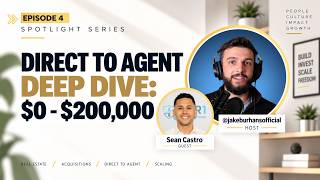
In this Spotlight Series interview, host Jake Burhans talks with 20‑year‑old Tampa‑based wholesaler Sean about how he built a $0‑to‑$200k direct‑to‑agent (D2A) wholesale business in his first year. Sean explains his background in direct‑to‑seller wholesaling, why he switched to D2A, and how he leveraged sales tactics from seller outreach to win deals from real‑estate agents. He details the structure of his eight‑person team (four virtual assistants, three acquisition managers, and himself), the hiring sequence, and the importance of leadership, culture, and motivation. The conversation covers specific offer‑enhancement strategies (high earnest‑money deposits, short inspection periods, urgency), the lead‑to‑close workflow, and the low‑cost tech stack (GoHighLevel white‑label Astro Blaster, Trello, Zillow for comps, SMS fees). Sean shares his biggest challenge—maintaining consistency and doing repetitive dialer work—and how he overcame it through delegation. They discuss the business’s financials, scalability, and long‑term vision, including potential exit strategies, diversification into flips and rentals, and the goal of reducing his weekly involvement to 5‑10 hours. Finally, Sean offers actionable advice for newcomers: study free YouTube resources, understand assignment contracts, and start calling agents within a week or two.
Chapters
What is going on, folks? Welcome to Spotlight Series number episode number 4. Excited to have Sean on, the man in the house. Um, Sean is— what's going on, man?
I'm good, bro. How are you?
I am doing phenomenal. I appreciate you coming on. Um, I first met Sean at real estate meetup, I think, uh, a few months into myself being down here in Tampa. Um, but Sean's been crushing it in direct agent. I mean, scaled over a 6-figure business before he could drink. Like, come on. Freaking ridiculous. Can't even get a legal drink and he's just crushing it in business. So excited to have him on. As many of you know, I kind of run a direct-to-seller business. So I thought it'd be good to kind of dive into the direct-to-agent side that Sean does and the success he's found. I know he's kind of followed a lot of Jamil Damji's stuff and some other people, but what's going on, man? Welcome.
Thank you. Yeah, thank you for having me, Jake. I'm super excited. Um, and yeah, I think the first time we met was at, uh, James's meetup actually in, in, uh, or in Hyde House, but I don't remember how long ago it was.
That's right, it was at that. That's a killer meetup, by the way. Anyone in Tampa, I think the next one's May 15th. Probably the best public real estate meetup there is in terms of people that show up, I would say.
Yeah, I agree, I agree.
Um, cool. Give us kind of the one-two real quick. I'm excited to get into direct agent stuff. Give us the one-two on how you got to where you are today.
Yeah. The quick story is, like Jake said, I'm 20 years old. I live in Tampa, Florida. That is also the market that I work out of. I got into wholesaling pretty much right after high school. I worked for a team for a little bit, for about 8 months. I left them and then started my own thing, which was the direct-to-agent. Moved out to Tampa kind of on a limb, taking a chance on myself, doing the direct-to-agent route. Doing the direct-to-agent route, it worked for me. I got multiple, multiple deals under my belt, started scaling, built a team, currently have a team. Our team is 8 people right now. And we're anywhere at 3 to 5 deals per month, pretty consistently now.
That is phenomenal. Yeah, scaling the team. There's so many aspects to building the business. It's not only the marketing and the data and getting the deals, but the team is honestly a huge part of it. Yeah. When you say you were part of a team, were you like a realtor or what was going on there?
No, it was another wholesale team. It was a smaller team out of Sub2 actually. It wasn't like a big New Western or anything like that. You know, it was a team. There was 3 business partners and, you know, I was a lead manager/closer for them for direct-to-seller.
Okay, nice. You were setting some appointments and then getting some acquisitions experience direct-to-seller.
Exactly, exactly. Which actually really— it really helped me transition into agents because, you know, any good direct-to-seller operator knows that sales is like the biggest component to running a successful business. And that's one thing that's lacking in a lot of the direct-to-agent training and like information that's out there is like you can apply a lot of the same sales tactics in direct-to-agent. And that's honestly, I feel like what's given me probably the biggest advantage over a lot of people.
Got it. That's an interesting point. So there is still sales involved on the direct-to-agent side if you're doing it good, if you're doing it well.
Yeah, 100%. 100%.
It's really good. That's a really good point. Yeah, I think that is a big thing. I think a lot of people will just look on the MLS, do a quick calculation, give an offer to the agent, and they're not implementing. Now, it's— it is definitely probably a little bit different because you're speaking to the agent, not directly to the seller. So it's kind of the middleman, but a lot of the things are the same. Like, I imagine, like, creating urgency, right? Here's our offer, let us know by this date.
Um, trying to get that, that information Yeah, exactly. You know, getting the timeline, the motivation, how many offers we're competing against, you know, what it might take to get the job done, right? Like, other than price, what are some other things that your seller may value, right? Is that a quick close? Is that a short inspection period? Is that a high amount of EMD? You know, trying to figure out how we can maybe beat the other offers besides just price, right? Hey, you know, what's the offer that we have to beat? Or what's the highest number that your seller has declined?
Right?
One big thing that I really teach my team is you want to treat the offer like your golden egg, right? You don't want to just be so quick to give up your golden egg because the reality is you lose a lot of your leverage, right? So for some of these sellers and listings or leads that we're dealing with that may be overpriced right now, if they've already declined one or multiple buyers that are significantly higher than ours, then in my opinion, there's really no point in submitting the offer, right? Just ask them, hey, you know, What's the highest offer your sellers declined? Most of the times they'll tell you or give you a ballpark. Or, hey, you know, would your seller entertain a number in the $150s, right? Or would they just tell me to kick rocks, you know? And kind of getting an idea of where they're at. If it's something that we can entertain, then obviously we'll go towards presenting the offer. If not, then we'll just follow up with them.
Yeah, that's super good. Price is your biggest leverage point, you know? Um, same thing, same thing with direct-to-seller. It's like, that's the reason they're hanging on the phone with you the whole time. They want to hear your price. As soon as you give the price up, you know, you're just chasing them down. So yeah, and I like that, being selective with your offers. But that's part of sales, right? It's like understanding the wants and the needs of the other party and seeing if you can even be the solution. If you can't be the solution, then there's no point in, you know, shooting your shot in a sense. Um, but that— it's a little bit more of a strategic approach with that, which, which which I, I agree with. Yeah, exactly. And then one more thing before we get into the, uh, we already kind of went to the— got to the details, but what does your business look like as of today? I know you said as a team, um, you have a team, but what does it look like? The, the size of your team? What are the positions? What's your involvement in the day-to-day? And yeah, and then secondly, what would you say your, your single biggest challenge has been in getting to where you are right now?
Great questions. My team right now, it's 8 of us. So I've got 4 VAs, I've got 3 Americans, and then myself. I've got 2 VAs that are cold calling realtors. Their English is phenomenal. They also come from a direct-to-seller background, so like they understand the sales process and extracting motivation and those types of things. So I've got 2 cold callers calling agents. I've got an administrative VA, and then I've got a dispo VA that kind of handles buyer intake. And that's also, in a sense, managing some of the buyer relationships and working on sending out deals and doing follow-up, things like that. And then I've got the 3 Americans, 2 of them are actually local in the area, and they're working on lead gen, right? So they're calling MLS listings. We're doing a lot of campaigns via text messages to realtors. So we're just managing a lot of the inbound stuff that gets, that comes in. Um, and then that was, that was to answer your first question. Your second question was, um, what was my biggest challenge getting here? My biggest challenge getting here, it— hmm, that's a, that's a good question. I don't know. Um, I would probably say a challenge for somebody would be the consistency, right? If I wasn't as consistent as I was, I don't see myself being in the same position I'm in now. If I, you know, wasn't putting in the hours, wasn't putting in the calls, the KPIs, things like that, I don't think I'd be at where I am at now. And yeah, I think, but my, the biggest challenge getting here, it's, it was probably just, Going like doing the sucky work, right? Sitting on the dialer, making the calls. I spent hours and hours and hours on the dialer, like bored out of my mind, sounding like a robot and just pushing through, right? And that's really what helped me get consistent leads, get deals under my belt, kind of build up a little bit of momentum and cash to be able to do a few other things as well. So, um, as far as a challenge, I guess, you know, just being consistent even though it's a lot, a lot of it is repetitive work. And just seeing the bigger picture. I actually can't hear you, Jake.
Sorry, I had my thing muted. Yeah, I agree with that. I think one of the hardest things about real estate is that the business is so simple, but it's not easy. The volume of effort that's required is, I think, the most misunderstood thing across the board, right? People understand if you want to start cold calling, how many cold calls you actually have to make. Like, how many conversations with agents do you actually have to make? You know, you're sitting there having 30, 40, 50 conversations a day. You probably have people come to you that are like, you know, Sean, man, I've made, I've made 30 dials, man. I haven't got a deal yet. And you're like, 30 dials? Like, you should be having 30 conversations a day and do that for, you know, 2 months. Right. So that, that, that volume is definitely a big thing. But I'd say consistency doesn't seem like mindset's really an issue for you. Definitely have confidence. You're not arrogant, but like, you're confident. You seem like you're confident in your ability to get things done. Um, so it seems like if any sort of challenges, maybe it was like tactically, maybe making strict hires, things like that, getting the right people.
Yeah. Um, honestly, you know, building my team, one thing I definitely learned is, um, leadership is huge in building a team, right? And I'm, I'm a big believer in like, and you know, a lot of people are as well, um, I, I can't remember the word right now, um, but when you're building a team, it's like the team culture, That's what it was. It's not just, here's your task, here's what you have to do and go do it. It's like actually pouring into your people, right? No matter what fires are going on in the background or who's calling you, if you're with your team, spend time with them. Don't just rudely, hey, I'll be right back, right? Pour into them, answer their questions. You don't want them, you want to have that level of authority, right? Because you're the leader, you don't want them to be walking over you, but at the same time, if there's a question or a concern, you want them to come to you, right? If they have any questions, you don't want them to feel, oh, Sean is too busy, or I don't want to bother him right now. It's like, no, if you have a question, let me know so that we can make sure you're doing it properly so that in the future we don't run into more issues. And I think building a really good team culture is the thing that's helped me the most, without a doubt, having good team culture.
Yeah, the team is so important across the board because once you figure out the systems, like essentially how a lead comes in and you can get it all the way to the closing table and you have those systems in place, it's just about the execution, just about the people actually doing it. So the more capable that your team is, you know, and the more loyal they are to you and they want to work hard for you and they feel important and valued, the better everything's going to operate. Um, right. It's, it's so important, the leadership aspect of it. And it's a completely different suite of skills than it is to go close deals. You know, like it's a completely different thing. Um, the, my, my business partner Isaiah had mentioned, there's like, it's just so good. He read this in a book, but there's a dichotomy in leadership between, um, which is like a spectrum between micromanagement and like autonomy or delegation. Ideally in a perfect world, you just delegate. You'd never have to check in on, right? They would always be doing things. And maybe you can do that with like really, really good people. But in reality, it's like this spectrum of like you micromanage a little bit on them, right? To make sure that you have to check in to make sure they're actually doing the thing. As you see they're doing the right thing, you kind of back off a little bit, you let them do it, but then you inspect every so often and make sure everything's going okay. It's kind of interesting, the spectrum. It's like the higher quality of the person, the less you have to do that micromanagement.
Right. And also one thing that comes with the team culture, Jake, is obviously in the beginning you do want to watch over their work, make sure they're doing things correctly. But as time passes, as things go down the line, and you have that good personal and also like, you know, business— well, yeah, business relationship with your VAs or Americans, whoever it is you have on your team, you also build that trust, right? It's like, hey, I'm taking care of you, I know that you're going to take care of me, right? I've already had a bunch of my VAs like close deals, get paid on commissions, and like for them I get— like with VAs it's tough, right? Because a lot of them are work— I— two of my VAs I hired for a team that they worked for two and a half months. And I know one of them for sure, they told him that he closed like one deal in 2.5 years or something like that. And with me, in the first 6 months, he closed like 5 or 6 deals. And he was getting commissions on it. And he was so happy. He was like, man, like Sean, I want to make you more money. And him just saying that was just like an eye-opener. Like when you take care of your people, you're not hiding anything, you're honest. You have good intentions and again, you take care of your people, you pour into them, they really will take care of you back.
That's a phenomenal point. So you kind of spoke about this, but how do you keep your team motivated? Because I've seen that's such a big thing. How do you do that?
Well, one way we do that is we have a team meeting, team huddle every single morning at 9:00 AM. And me, right, as the leader, you got to bring the energy, right? Like, hey, good morning everybody, happy Wednesday, how's everybody going, how's everybody doing, right? Did anybody have anything exciting happen yesterday? Um, you know, whatever, start a little bit of conversation. Um, and you as the leader, it's kind of your responsibility to bring that, to bring that level of, of excitement and, um, urgency and I'm like forgetting the word that— what was the exact word that you said? How do I bring what to the team?
Oh, how do you just keep them motivated?
Right. Keep them motivated. Right. So you bring that motivation, you bring that energy, and in the morning is really kind of where it all starts, in my opinion, along with the good team culture and pouring into them. It kind of all mixes together and it's just worked for me. And we've definitely seen a drop in performance. For example, when I was at the Squad Up Summit, right, where we last connected, I wasn't able to run the morning meeting. So I had one of my VAs run it. And I had a few people on my team say, hey, the meetings just aren't the same. They're not the same. And you can definitely see it in everybody's progress as well. Everybody's progress kind of dipped down a little bit. So—
Dude, same thing, man. We went away to the Squad Up Summit. I was like, we're going to be locking up deals when I'm gone. KPIs were down, everything was down. I was like, oh my God. So yeah, had to get back and, you know, I'm not out of the business yet, but I feel you on that. So energy and that ties into culture. So every single day, accountability, actually caring about them. Hey, what's going on in your life? Anything exciting? Keeping it positive, especially when it might be kind of a rocky week or you haven't done a ton of business lately. It's keeping those spirits up.
So, and I also, to finish off on that, one thing that just popped in my mind is Also sharing with them the vision, right? Like, hey, once we get these systems and processes dialed in place and this and that, and I take you to this level and I train you up to here, or I show you these things, we can map out 5 deals consistently per month, right? I was having this conversation with my dispo guy. I was like, once I get my wholesale relationships dialed in and our ACT process gets a little bit more dialed in, you're going to be having deals sent to you like there's no tomorrow. Right? Like, we're going to be at 5 to 6 plus deals per month, right? And just kind of sharing with them that vision and, hey, this is what I have in plan for you. This is, this is the vision that I have for you and your role and maybe how you can progress, right? And this is what's possible. Showing them that also gives them some motivation as well.
I agree. That, that is awesome. It's interesting, right? We're talking about direct agent, but a big component of this is just team building. It doesn't matter what your tactic or strategy is in real estate, any, any aspect of the real estate industry, having a good team is ultimately what propels you to success because no one gets there alone. You know, it's tough to get to that if you were just by yourself. It would be tough to do that.
Yeah, I know. I wouldn't be able to do what I do without my team for sure.
So yeah, 100%. So why, why'd you pick direct to agent in the first place over direct to seller?
So that kind of goes back to when I was working for that smaller team company that I was on. Um, you know, like I said, around the 7 to 8 month mark, there was just some things that we weren't really seeing eye to eye on. And so, you know, I had parted ways with them. And I had come from the sub-2 background and working on a direct-to-seller team. So all I knew was direct-to-seller, right? But, you know, you know, it's very costly to start that up, right? You've got to pull data, you've got to skip trace it. You know, you can get VAs or do it on your own. And then also it takes a few months to build the pipeline, right? Probably 2 or 3 months before you can build the pipeline. And I did that, right? I tried it and I don't want to blame it on the market, but I did it in my hometown, which is Fort Myers, Florida, which is not the best market in my opinion. I definitely think there's better markets than that, but I tried it, didn't really work. I met a guy, one of my boys, his name is Eric, at another real estate conference in Orlando. And it was actually a multifamily conference. We were both there. We were similar in age. We were in the wholesale world. So we clicked really well because everybody else obviously was in the bigger multifamily. And he was putting me on. I had obviously heard about Jamil and the agent outreach, but I never seriously considered it. And he was like, yeah, dude, I'm 6 months in the game. I've already done 3 deals. I made, I don't know, $10K, $12K, $8K, something like that. It's like no money in marketing, very straightforward. And I was like, huh, I want to give this a shot. And so I gave it a shot. I took a lot of the sales tactics and training that I had got from Direct to Seller. I implemented it into to direct-to-agent and kind of the MLS offers that I was doing. And within 5 weeks, I got 3 deals under contract and all of them ended up closing. I netted $12K, $4K, and $10K in, by the time it closed, probably 60 days or so. And I was hooked. I was hooked.
So that's— You're like, holy crap.
Yeah. And also another thing, Jake, I'm sure you can understand this, A lot of people don't really talk about this, but when you're doing direct to seller, it's very emotional, right? You really start to build that emotional connection with the seller. You call them, you're like, hey, how's the kids doing? Or how's the dog? Or how's this? Or how's that? And you have these 30, 45 minute conversations with the seller. Again, you get very emotionally involved. And I was never really a big fan of that, to be honest with you, because I always felt like I was being kind of fake. 'Cause in a way, you do have to kind of put on that mask to get the job done, I guess, for a lack of better terms. And with direct-to-agent, there's not really much of that, right? Obviously, you're going to have rapport with the agent, but you don't have to hear the seller rant about all these different things and about their life struggles and those types of things. So that's honestly one thing that I also personally really like. It's very kind of direct to the point.
Yeah, that is great. So initially it was— you kind of had the luxury of understanding everything it takes to get a direct-to-seller business up and running. So like, hey, if I'm a one-man band and I want to see the quickest results to try to get some traction, I'm thinking direct agent.
Furthermore, I didn't have the funds to do— to start a direct-to-seller, you know, company. It was really what it was. And so with direct-to-agent, everything was pretty much free, and I was like, all right, well, this is the route we're going to take. So that— it was, it was a lack of funds, really.
Lack of funds. Yeah. So for someone just getting started who has $0, direct agent could be, you know, a more attractive approach than direct to seller. That's what you're saying?
Yeah, I, I agree. I agree. That's what I'm saying. Yeah.
So, and then furthermore, the kind of— it's more business to business when you think about that, right? It's more B2B versus B2C when you're talking to an agent, right? They're another business professional. Versus when you're talking to a seller, it's kind of business to consumer. So you like the more business to business, right? It's logical, to the point.
That's a good way to put it. Yeah, exactly.
That is, that is great. Yeah, it can be tough, right? It's like the calls are long on direct-to-sale. You got to get involved, you have to care, you have to do these things. Um, and, um, it's a little bit more—
the deals are sweeter though, you know? Yeah. So it's— you got to pick Pick, uh, I don't want to say pick your poison, but it's kind of one of those things.
Yeah. So going back to your team real quick, could you just again name all those positions, the different roles and the positions? And then how did you scale that team? What was your first hire and your second? And how did you get it to where it is now?
So I've got 4 VAs. I've got 2 of them are cold calling realtors. I've got an admin VA, and then I've got a buyer intake /dispo VA. Okay, so I've got 2 cold callers on the act side, an admin, and then a buyer intake for the dispo. I've got 3 Americans, uh, 2 of them right now are focused on, um, MLS offers. So everything that's on the MLS in the Tampa area, kind of an hour and a half driving distance, they're calling. If it's visually distressed and there's motivation, things like that, it's a cash-only sale, we're calling them. And then I have another guy who's on my team who's helping me replicate the texting campaign workflows, everything we've done in Tampa, and he's helping me replicate that in Bradenton, Sarasota, um, to tap into that market. Because this year actually we've done more deals in Manatee and Sarasota County than Tampa, actually. So it's, it's worked really well for us.
Okay, got it. Um, so you got the 4 VAs and you got the 3, um Americans, kind of acquisition managers, uh, who are doing 2 on market and 2— and one is kind of help with the texting campaigns.
Yeah, which I guess you consider off market. And then, um, what was my first hire, to answer your original question? My first hire was, uh, one of the things that I wanted to delegate first, right? Because kind of going back to the very, very beginning of our conversation, I was spending hours and hours and hours on the dialer, right? And whenever I would have to dispo a deal, what I really didn't like is my foot was off the gas on the dialer, on the acquisition, because I was working on selling the deal, right? Getting the deal under contract is half the battle. Now you got to finish it out and connect the buyer for it. So the first hire that I made was a cold caller for agents, right? I trained him up. His English is phenomenal. He used to live in the US for over 20 years. So his English is really good. He comes from direct-to-seller background. He's still a cold caller for me today and he crushes, right? So now I had like kind of that first position delegated. I still cold called on my own, but that allowed me to focus a little bit more on texting, which helped us like do more volume and then, you know, build out slightly the dispo side and some other processes in the business.
That is great. Yeah. So that, that is a hard thing, right? And it's the same thing on direct-to-seller side. It almost makes more sense to have someone just else dispo your deals and you can focus on keeping that pipeline full. So I think that was definitely a smart move, getting that, uh, kind of disposition side of it done, done first. Um, that is awesome. Can you take me through what does it look like from the time that a lead enters your system to the time that that gets closed? Can you walk me through kind of the life cycle of that lead, what that looks like, your process?
Yeah, so Obviously, as you know, there's a couple of different factors that come into play. And this is something that recently we've kind of been struggling on, to be honest with you, because I'm kind of the one that ties everything together. I'm like the main lead manager, if you will. And I handle almost everything that's inbound. And, you know, with the JV deals that we're handling, with the comping that I have to help everybody review, You know, I'm going to be honest with you, Jake. Recently we've had— we've been having a few things slip through the cracks. But what the life cycle of a lead essentially— like, let's say we get a text message from an agent, hey, I have a junker house in this zip code, uh, you know, do you want to see it? Yeah, sure, send us over the info. Okay, great. Um, we get on the phone with the agent, preferably obviously the listing agent, the one that's dealing directly with the seller. We try not to involve a buyer's agent if we don't have to. We get timeline, motivation, condition, pictures, asking price, things like that, right? And we really just try to find out what we have to do to get the deal immediately, right? Because a lot of times when some— most of the time when somebody's working with an agent, they're ready to go, right? Mainly because the realtor has maybe helped them through the probate process or divorce or whatever it may be. But when they go— that's another thing with direct to agent is you don't commonly run into sellers that need to go through the probate process or need to wait an extensive amount of time before they sell the deal. 7 to 8 times out of 10, when the realtor gets it, they send it to me, they're ready to roll. They're ready. So again, I get on the phone with them, I get all the information. And if it's off market, the biggest thing we ask is, hey, would they consider taking an offer before hitting the MLS? Because a lot of times if they work with an agent, they're bound to hit the MLS. And so if they say yes, then we make an offer. If they accept it, great. If they don't, then they probably hit the MLS. But if they do accept it, right, we, we locked up a deal, sold it within 24 hours. That one was sent to us, um, and within 2 or 3 days from like starting from when we got the address to when we signed the contract, it was like, I want to say 2 or 3 days, right? So it's, it's very quick, right? Very— how often if you're going direct to seller can you get a seller under contract in 72 hours from first contact, right?
It's quick.
That's very quick.
I mean, PPC, baby.
Yeah, PPC is— yeah, PPC is a little bit different, but yeah, yeah, exactly. So we got her under contract, we sold that deal within 24 hours, and we retraded down, and our fee on that is $30,000, you know. So it just goes to show that, you know, agent outreach, although the deals are a little bit slimmer, that doesn't mean that every deal is like sub-5K, right? Like, this is a great deal. And even for a direct-to-seller, this would be considered a great deal. And your marketing costs maybe $10,000 to $15,000 per deal, per contract, you know. So I'm kind of going on a tangent here, but the life cycle of a deal, I guess that kind of answers your question. That, that active deal that we're working on right now, by the time we got it, the time we contracted, within 72 hours, assigned it within 24 hours after that, we close on it next Friday.
Yeah. 100%. So you're getting the lead, that lead's generated, whether it's off market or on market, and you essentially got to get the 4 pillars. A lot of times the price is given, but you got to get the timeline, motivation, condition pictures. So why is it important to get the motivation though, if you're not even talking to the seller?
It's important to get the motivation because it helps you, number 1, structure your offer properly. It kind of ties down also to, you know, besides price, what's important to your seller. "Hey, we've been under contract with 5 other wholesalers before. We're not doing longer than a 7-day inspection period." Okay, great. A lot of times my inspection periods are really 3 to 5 days. If I don't sell it by then, it's probably not a deal, to be honest with you. Or high EMD. I'm very, very aggressive on the EMD. I've got close to $30,000 out in earnest money right now on some of our deals. The highest I've done on a deal was $20,000. For a deal, you know, which helps separate me from the other wholesalers in the— that I'm competing against, and it shows my seriousness, you know. So that's really good.
So EMD, high EMD, is one of the ways to get them or create a more competitive offer, especially when things are on market. What are some other ways that you kind of enhance your offer, or you have in the past? Some examples.
High EMD for sure, short inspection period, right? Anywhere from 3 to 5 days. You know, since I'm local, I definitely take advantage of walking only if I have to. You know, if the agent says something like, hey, we're not looking at any offers until you go see it, okay, great. You know, this is my ballpark offer, is the seller going to entertain it, yes or no? No, I'm not even going to bother going to go walk it. If it's yes, then I go see it, and that gives me, you know, a huge advantage over a lot of, you people that are not in the area. And the other thing is, Jake, you could have all of these things, but if you're not good on the phone, if you're stuttering, if you're tripping over your words, if what you're saying is kind of not connecting, if you don't have confidence, then all of that really doesn't matter. So I could still get deals, maybe not as much, but I could still get deals with maybe only $1,000 escrow, 10-day inspection, 30-day close, because of, you know, the sales experience that I have and my experience on the phone, you know. Again, I wouldn't be able to get as much, but would I still be able to get a deal? I think so. You know, those, those things kind of just add gasoline to the fire.
Absolutely. I couldn't agree more. I, and I always tell my team too, it's like, it's not what you say, it's how you say it. Sometimes you could say the most ridiculous things, but if you come in with the right tone, the right confidence, the right authority, they don't even bat an eye at it. They're like, all right, whatever, you know. So exactly, yeah, I agree.
And how, how you're saying the things, um, yeah, so that, that is a very, very big component, which again kind of ties to the sales experience that, that's helped me, that I see a lot of people lacking in the kind of agent outreach world. So yeah.
I love that, that you're teaching sales in the agent outreach world because I don't think that's a big thing. So it's not definitely something that people can come to you about, right, is having that expertise if they're trying to— even if, you know, they're already in the direct agent space, taking it to the next level by being able to add the sales into it is, um, I think it's great, right? A couple of things I want to touch on here. One was systems-wise, what are you using for systems, CRMs, calling softwares, and like how much do they cost?
Yeah, so for systems right now, we use a white label of GoHighLevel, which is called Astro Blaster, which is specifically designed for agent outreach, which is great. Um, what do I pay for? I'm on the yearly plan, so I pay like $600 for the year, which is like, what, $50 a month? And then SMS fees, I would say we're at, um, we're doing a lot of volume and it's 8 of us, so I think we're at like $400 to $500 a month for like texting and calling fees. And then my VAs obviously are a different expense. But as far as systems, call, like a dialer is built in the system. You call, text within the system, and that's pretty much it. We have a Trello board. Trello's like $10, $15 a month. And that's mainly it, right? We don't have a million different softwares and things that we use. Even for like comping, for example, there's a lot of you know, high big name softwares out there. And to be honest with you, Jake, I've used all of these fancy softwares. My favorite thing to comp on is Zillow.
Yeah.
And I teach my team the same thing, right? You know, some people have— I've never comped on the MLS. I never liked the interface of it. And Zillow is linked to the MLS. It has the same data, even better data than some of these other companies that have these comping softwares. But I like the interface of it. It's very user-friendly. It's very up to date and I have no issue with it and it's free, right? So, you know, as far as comping and stuff, Zillow is free. Outside of the VAs, the biggest expense is the CRM and everything, you know, altogether I would say $500 maybe.
Yeah, very inexpensive, right? You don't have to pay for data, there's no marketing costs. You just got payroll, right? Payroll and then about $500 a month in systems and, you know, It's not very high expenses. I mean, it's not over a few grand a month.
That's what I love about it. And to really show you what you can do, before I made my first hire, I was paying for my— at that time, I was paying $100 a month because I wasn't on the yearly plan. My SMS fees were probably $30 a month. And again, before my first hire, the most I'd ever done in a month was $54 grand. And my expenses, my expenses were next to nothing. It's crazy, you know. So it just shows you like the possibility, you know. Now I'm sure you can see, and maybe some of the people listening can see, why I'm so hooked to this method.
So I mean, what other business can you do that, you know? I was texting you before, or like the other day, I was like, what are the business can you do multiple 6 figures, you know, or even just 6 figures in your first year? Like, it's hard, man, to get a business to 6 figures, you know. You're doing a whatever, it's a detailing business or whatever, 6 figures, like a big mark. We can get there in one deal. You get there in one deal, you know, um, which is just absolutely crazy. But, um, that is awesome, man. I appreciate you coming on. It's been a ton of gold, um, on this episode. I'm definitely going to refer people to this who are looking to get an indirect agent. Uh, one last thing I want to ask here is kind of high level, what's your exit strategy with the business? Do you, um, Do you want to stay in? Do you enjoy that stuff, or do you want to, uh, kind of buy your time back and get out and focus on some other things?
Um, yeah, I mean, as far as long-term exiting, I don't— I'm not sure if— correct me if I'm wrong, um, I'm not sure if anybody has actually exited a wholesale business. Do you, do you know anybody that has?
No, not exactly. That's a bad term, but I mean, what's your, your end goal? Like, do you want to kind of stay managing it, or do you want to try to hire out so you know you're only like 5 to 10 hours a week in it? Right.
Um, well, again, my end goal is I don't necessarily plan to take it like a Keegly or a New Western. You know, everybody's kind of goal is to take it to $100 grand a month and they're not really involved, um, which is kind of— I feel like I'm getting close to there. I just, I have to replace myself, which is one of the most difficult things. Um, but what is my goal? I don't know, kind of like what you said, maybe dedicating 5 to 10 hours per week on it. Um, Netting over $50,000 a month would be great. Do I see myself doing this long-term? With a team, I don't know. On the side, maybe. If the deals pop up, once a wholesaler, kind of always a wholesaler type of thing. But I kind of want to maybe dive into flips a little bit. I want to get into rentals as well, pick up some rentals, build up some cash flow, and I've seen a lot of other aspects of real estate like multifamily, Section 8, Airbnb, flipping, all these different types of things. I'm really not closed-minded to any of them. I just want to build up some capital, get some cash flow to cover myself, and then I just can explore, I guess.
That's it. Similar goals for us. It's build it up, have it be some cash flow. Look at the business like an asset in a sense where you can have minimal time. Right. But I think we're learning so much, so many skills that we can transfer to other aspects of real estate and just business in general. I think that's the most valuable thing we get out of doing all this and scaling a business. Right. You know David Ramirez?
I recognize that profile picture.
Yeah. He has a wholesale business here. He does direct-to-seller. He says, "I can't relate to that overhead." Yeah. Neither can I. It's crazy. But yeah, I definitely recommend connecting with him. He has a good meetup, actually. He'll probably be at the Hyde House. I'll connect you guys. Okay. Yeah, they're crushing it as well, him and Bernie. Cool, man. Where can people find out more about you?
Yeah, I'm pretty active on Instagram, so if you guys want to shoot me a follow on Instagram, my Instagram is @seanthecloser. If you guys have any deals you want to JV on or need a buyer for in the Tampa area, Tampa, St. Pete, Bradenton, Sarasota, you can shoot it over to me on Instagram or you can email it to me deals@topshelfacquisitions.com. You know, pretty active on Instagram, so shoot me a message and whatever you need, I'll try my best to help you out.
Top shelf, I love it. I used to play hockey, so that's a good term there. Last bit of advice, I guess, For someone who wants to get started in direct-to-agent today and they have no idea where to begin, what is their first action step?
I definitely think educating yourself to a certain degree is very important, right? Because obviously analysis paralysis is a real thing, but at the same time, you don't want to call an agent and not even know what an assignment contract is. I definitely think that educating yourself to a certain degree is very, very important. Not saying that you have to sign up for these coaching programs or mentorships, right? YouTube University is an extremely valuable asset to those people with limited resources. You've got Pace, you've got Jamil, you've got Jerry Norton, you've got tons and tons of people on YouTube that can show you the process through and through, can give you real deal case studies, analysis, show you the best tactics. You know, there's a bunch of sales training on YouTube as well from other people. And just kind of get familiar with the process, get familiar with real estate, get familiar with wholesaling. You know, good practices, bad practices, what to do, what not to do. And then, you know, eventually, obviously, you've got to hit the phones. But I would say, you know, depending on if you're jumping in full-time or part-time, I think probably about a week or two— two is kind of pushing it a little bit— a week or two of really studying the, the industry. Again, the ins, the outs, what to do, what not to do, good practices, bad practices, things like that. Who to connect with. You know, you might run into other videos very similar like this interview style with somebody in your market that you can connect with that can help you with EMD, that can help you with a closing company, writing up a contract, finding a buyer for your deal. Um, and there's just so many resources out on social media and YouTube to get you started. But not to say to watch YouTube videos and stuff for 5 months and not make a single call, right? That is analysis paralysis. But educate yourself and then take, you know, the next steps, which would be calling or figuring out what, what strategy you want to take.
Couldn't agree more. Educate yourself, folks. Sean, you're the man. Thank you. Till next time, uh, we'll see you guys.










