15 at 5 #13: Scaling to Seven Figures using this Sales Process
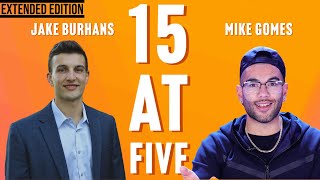
Real-estate investor Mike Gomes spent $100k and seven months without closing a deal before realizing his problem wasn't leads but sales skills. He built an 8-step sales process that scaled his business to seven figures, now teaching it through his Blueprint program with daily role-plays and call reviews.
Chapters
Let's go, baby! 15 at 5, we got the extended edition, um, this month. As I told everyone, we're gonna start bringing on a special guest first week of the month, going away from our typical 15 minutes, um, at 5. We're gonna do a little bit of an extended edition. Um, very special guest, Mike Gomes, on today. How you doing, Mike?
Extended edition, bro.
Special, man. You got the special treatment. You're the VIP.
I'm doing great, dog. I'm on the extended edition. How could I, um, how could I not be living life, bro?
You couldn't be. You couldn't be. Um, but no, I'm excited to have Mike on. I met Mike through, uh, Sub 2. Um, we did kind of a few deals, or we were working on a few deals together last year. I didn't know much about Mike. I knew he was crushing it, uh, but I never really had talked to him. But we really got connected when I joined his sales training, more of a community called Blueprint. Yeah, it was crazy. I remember seeing that story in March. I was really just honestly bashing my head against the wall with my business back in March. I saw that story, it's on the edge, I joined and kind of my whole business changed. But I'm excited to get into that today. But just a quick backstory on you. You've told your story a lot, obviously. Um, but just kind of for the people who have not, um, heard kind of where you came from and what you got, how you got started, I guess kind of what even led you into real estate in the first place, right? Um, obviously there's your story of getting started out in real estate, but how did you even come across real estate?
That's a really good question. So this— so I've been in real estate, bro, my whole life. My grandmother was a realtor. I used to hang out with my grandmother, my my parents would drop me off to my grandmother's house and I would just hang out with her. I'd go to her appointments and stuff. So I always have like been involved. Not only that, but my grandfather had a drywall business. My father started his own drywall business. They always worked with like builders and rehabbers and stuff like that. So I always been around the business, but I never really knew what the heck real estate was. I always just was like, oh yeah, being a realtor or something, you know. Um, or being a, being a developer or something. I didn't really understand what the heck, what it could do for you. And it was about— this is right around when I was changing my life around, bro. I used to— the old Mike, bro, the old Mike is— he was a bonehead, put it that way. The old Mike would have a whole entire podcast on, on the old Mike. But put it this way, I started changing my life around, and around that time, this is probably We're in 2003 now. This is probably around like 2016, maybe something like that. I started changing my life around, and, um, I'm listening to the radio. I'm driving home from work one day. I was helping my father out. He used to— like I said, he's a drywaller, so I was just laboring for him. I was doing like— I was just mixing the mud, doing all the things, dude. I freaking hated it, but it was great. I made— I made money doing it. I was helping my pops out. I was hustling. It was cool. Anyways, on my way home from work one day, I hear a radio ad that says, yo, you can get into real estate and change your life with zero money out of your pocket. And I'm like, this is some BS, ain't no way, I gotta go check this out. So this is back in 2016. I go to this 2-hour seminar in my city. I lived in Worcester, Massachusetts at the time. Um, I went, I went to this 2-hour seminar. They sell you one like the 3-day seminar, which is like a couple months out. You pay $100 for that. The first one was free, then the 3-day thing, the 3-day workshop was like $100. I get into that and I don't know, do you know who Cole Hatter is?
No, I haven't heard of him. Actually, maybe I have, but—
so I'm a part of the Avengers Mastermind. He's one of the Avengers over there. Like, he's a big investor out of Cali. That was a— he actually spoke the whole entire weekend. So he used to work for, um, this company called— oh dang, what the heck is that company called? Um, Fortune Builders. Fortune Builders is like a big mentorship. You might have heard of them before. They're like one of the big fix and flipper mentorships and all that type of stuff. A lot of money. Anyways, I go to this 3-day workshop, he's the speaker, and he's just like telling his whole entire story. He's showing us his family and how he is able to live off of real estate and pretty much provide for his family, and he's making all his money and da da da da da. And that's when I start getting introduced to all three of the big things in real estate: wholesaling, flipping, and investing and being a buy-and-hold investor, right? So once I got the concept of that, I was like, yo, this is what I probably want to do for the rest of my life. That's back in 2016. Now I'm like trying to— I'm changing my life at this point, right? Um, so there's a lot of different things going on. Ultimately, I didn't take any action, dude, on, on real estate until probably about 2000. Like, fast forward like 4 or 5 years, probably like 4 years, I didn't really take any action on real estate at all. And I was, I was doing a bunch of different side hustles. I've never really had a job before in my whole entire life. I always just been a straight-up hustler. So I was just in the trenches, bro, hustling. Doing the thing for like probably about 4 years, hustling, hustling, hustling, making money, doing all my side hustles, doing all the things. And then finally I got sick of it. I'm just like, dude, all these things I'm doing, I'm never gonna actually do for the rest of my life. I gotta get into real estate. I know I want to do real estate full-time. So I know my father did drywall, and I know that he did a lot of jobs for Fix 'Em Flippers. And that's just like the thing that I always had on my mind. It's the thing that everybody sees, right? They see people flipping houses on HGTV and they see that that's like the big and sexy thing. So that's what I was attracted to. I'm like, I want to flip houses. So I contact this guy named Bill who my dad did a lot of work for, and I just got really close with him, bro. I'm like, yo, this is my homie. I hit him up one day, I'm like, hey bro, I don't know if you remember me, but I labored on some of your projects, you know, um I'd love to help you out on any of your projects. I'm here to labor if you need a laborer for a demo or whatever. He's like, yeah, you know what, I actually have a house I'm doing right now. Come, come demo for me. So I'm in his freaking house demoing for probably like 3 hours. That was the last time I think I picked up a hammer. And from there, dude, we just made really good friends. Bill's like an older guy, much older than I am, but it was just like we made a really good connection. I, um, it really was just like the value-to-value type of relationship that we were giving each other. It wasn't just like, hey, I'm here to pick your brain, I'm here to learn from you, or something. I was like really trying to provide value to him. I was trying to get him deals and everything.
Like, I was—
yeah, I was getting a lot of information from him, but he knew every single time I contacted him it was a potential opportunity because I was like, yo, I'm hustling. He saw the hustle in me and he's just like, I know he's gonna get me a deal. So I was learning from him for a while, bro. Um, here's the deal though, he, he fix and flip properties, like that, that's his main thing. He buys houses, he renovates them, puts them back up on the market. So he doesn't really have a wholesaling business essentially. He has a lot of people just sending him deals, right, because he's known in the marketplace. So I go out and I market to properties like directly to seller because I think that that's how I'm supposed to get my first fix and flip deal. And then what happens is, as I'm doing that, I end up building a wholesaling business, not realizing that both of them are different. I didn't really have any guidance from him as far as like going out and talking to sellers and doing all the things and stuff like that, because he didn't have a wholesale business, he had a fix-and-flip business. So I learned a lot about fixing and flipping, right? But I was kind of on my own when it came to the wholesaling thing and marketing directly to sellers, generating leads, closing deals, and all that type of stuff. So I start trying this thing, and I'm learning from YouTube on how to wholesale and all this type of stuff. And dude, I'm just spending a ton of money, bashing my head against the wall. Like, this business is fake. This is not working. I spent— it was like 7 months before I got my first deal. In those 7 months, I probably spent like $100 grand. Like, absolutely crap in my pants, about to go freaking bankrupt. Like, I spent tens of thousands of dollars in those 7 months. Um, finally month 4 comes in of me starting that business, and I finally get some traction on lead generation. It took me 4 freaking months to figure out lead gen. Lead gen right now is the easiest thing, as you know. Yeah, there's two sides to wholesaling, right? There's generating leads, meaning like marketing, and then there's converting, which is closing, like, which is the sales part. So it boils down to very two simple things. It's simple but not easy. Marketing and sales. Marketing— all marketing is, is finding people that are interested in your products, whether you are, um, wholesaling, whether you're selling shoes, whatever. Marketing is just getting the eyeballs on you. I had a tough time with that in the beginning, but then I finally figured out— and as I figured that out, I'm like, okay, cool, now I'm gonna crush it. Now I found out this, this thing called marketing, and I got virtual assistants generating me a bunch of leads. Dude, 3— like 3 months goes by and I make no money. I don't get any contracts. I'm like, bro, I don't know what the heck is going on. This business just got to be fake. There ain't no way people are really making money. They must be lying on YouTube. Finally, my last shot in the dark, I'm like, all right, I got— I need some guidance or something like this, some paid guidance. So I end up seeing Pace on YouTube, who's now one of my good homies, Pace Morby. I see him on YouTube and he has this course and I'm like, oh hell yeah, I'm gonna take this course. Come to find out it's much bigger than just a course. But anyways, I hop on a Q&A with him the first day that I get into the course and this is what he says, Jake. He's like, yo Mike, you have a good lead generation business, like you're generating leads, this is really dope. And I'm like, yeah bro, but I'm not making any damn money. And he's like, all right, after, after pulling back the curtains on my business, he's like, dude, I think you have a conversion problem. You got to go learn sales. I'm like, yo, Pace, I can talk myself out of handcuffs, dog. Like, I'm a, I'm a sale— I'm a hustler, bro. I can convert. What are you talking about? He's like, I don't know, bro, you're generating all these leads, you're not getting any deals. It ain't the leads. Put it this way, so if you're generating leads right now, if anybody, one of your listeners is listening, they're like, dang, I'm actually generating leads and I'm not making any money, it's not the leads. I promise you, in the beginning, dude, I was generating— I had my virtual assistant generate me leads from day one. Yes, a lot, especially when you're cold calling and texting, those aren't super hot leads like, uh, inbound lead, like somebody seeing your ad on Facebook or seeing your ad on Google or something like that. Those are super hot. Somebody seeing your mailer or something, those are hot, but they, they're motivated sellers, right? It just takes a little bit more to convert, convert them. So it's not the leads. It wasn't the leads. Finally, once I figured out, once I put my ego aside and I was like, oh, okay, let me listen to the guy that is actually doing the thing and has built a whole entire business let me just go learn this thing called sales. So I do any and everything, bro, for 6 months straight. I dedicate all my time and energy. Luckily, my lead gen was pretty much already taken care of, so I didn't have to worry about that. So I didn't spend too, too much time in my lead gen at that point because I already did that. So now take all my time and energy on talking to sellers and learning how to convert these sellers into contracts. And I took 6 months, bro, and got fully obsessed with sales, built out a badass process. Dude, in the, the 7th month, which is probably like, I think it was 2 or 3 weeks into me getting to understand sales and Pace telling me, bro, you need to go learn sales, I finally got my first deal. I was literally 2 days away from quitting the business, bro. You guys, you guys remember what I said earlier? The old Mike was a bonehead. Yeah, if I quit the business, but it would not have been good. I would be not— I would not be on this podcast right now.
I think that's such a good point. A lot to unpack there. I mean, that's amazing though, like such a long journey. Everyone has their own journey, right? Everyone has their own journey. Takes different people different lengths of time to find success, but I— the only way you've— you fail in this business is if you quit. It's the only way you fail, right? So, um, you were right on the brink of that, but you kept going. Um, and further on that, kind of a— I can already see this is going to go off somewhere else that I didn't plan. But, um, you said the old Mike was a bonehead. I truly think that this whole business is— being an entrepreneur, building a business is one of the greatest self-development tools any human being could have. Like, everything that you have to develop in order to grow a business And even, well, even sales skills, right? Becoming a better salesperson, you have to have empathy and you have to have good tone. You have to have understanding and you have to be able to think quick. So that's just going to improve your skills as a person in general. But I think the whole aspect of running a business really just propels you to be the best version of yourself.
Dude, oh my gosh. We can go a whole nother 2 hours on this topic.
Getting a lot of love in the comments right now. Real quick. Yeah, we could answer that first, I guess, though.
Respond to that. One of the coolest things, right? This is probably a week of Jake being into the Blueprint training, and we do role plays every single morning. Jake's on one of the role plays, and he's going through the sales process and all that type of stuff, and I give him this feedback, and I'm like, Jake, I think if you unlock this one thing you are going to take over this industry. And he's like, all right. I'm like, empathize with the seller. Like, we've been, we've been talking about this the past couple weeks. Be the call, right? Like, get into it, get engaged with the seller. And this is what Jake said. I was so proud of Jake when he said this. This is so dope. He was like, you know what, Mike, I think you're right. To be honest, you just pointed something out where it doesn't even have to do with me talking to sellers. It has to do with me as a person. I just think I have to become a better person. And I was like, no, no, Jake, you're a freaking great guy. Like, you are the man. You care about people. That's not what I was saying. But he was like, no, Mike, like, honestly, that's something that I struggle with, is like truly walking in situations and empathizing. And sometimes I have to, um, get engaged in the conversation and get engaged with what environment that I'm in so that I can go do that. And I was like, yo, Jake, I've never seen somebody in such a shorter period amount of time be so self-aware and grow like that. It was insane. It was literally in the first couple weeks that you were in the training, bro. And that's what, that's what growing is all about. So what you're saying, like, as you're going through this business, bro, this business is, is cool. Like, I, I like real estate. I like doing wholesale deals. I like fixing it, fixing and flipping. I like seeing the end products and all that type of stuff, but I don't love it. Like, I'll be fully honest with you, bro, I do not love real estate. I do not love seeing the end product of a fix and flip. To be completely honest with you, bro, I could care less. Like, it has nothing to do with that for me, but what it has done for me as a person that's growing me. Like, um, all the self-development that came from it, bro, and all the relationships that I got from it, and the community that I've gotten from it, and the people that we've been able to help. That is what this is about, and that's what makes you a better person. So that's what's so cool about this business, is like, if you do not stop— yes, like I told you, I, you— I used to be a bonehead. I'm not gonna go into the whole thing. But dude, this business is what ultimately like changed me as a human being. Once I— dude, you can ask some of my, some of my homies. Once I started getting into real estate, once I started getting into other communities and I started building my business and stuff, dude, I, I like completely did a 360 of who I was as a person as far as like morals, ethics, and all that stuff.
I couldn't really— I couldn't relate more. Yeah, 100%. Just because it requires the, the most of you. It requires every single ounce of you to be able to put a business together like that. Like, it's absurd. Um, I think it's amazing. I think this comment right here is going to transition as well into the next thing I want to touch on. But Mike, what the heck did you do to learn sales so well? Ask Drew.
My guy Drew. Actually, you know what, I called Drew earlier. Me and Drew have this deal going on right now, and Drew sends me this lead and, um, we lock it up. Supposed to be a novation agreement, dude. We list this property on the market. It was going to be a decent deal. We're both going to make some money on it. Realtor was going to make some money on it. It was cool, bro. And not to change the subject, I just want to tell the story really quick. We list the property. So Drew, if you're listening to this, give me a shout after this.
Yeah, he said— he goes, he goes, oh boy.
It's all good, bro. You've been out knocking doors all day, but I wanted to give you an update on what was going on with this freaking disaster. So we list the property on the market, get under contract with a buyer. We're all like excited. We're like, yes, close date is like 2 weeks out. We're gonna close on this thing. We're gonna make money. It's gonna be great, dude. The freaking pipes burst on a very cold day, and now we're in the process of dealing with the insurance company. And it was— it's— I think we got this property under contract like probably like 4 months ago or something crazy like that. We've been under contract with the buyer for like 3 months. It's ridiculous. But anyways, um, to answer Drew's question, what I did to learn sales is like pretty much 5 major things. First thing is I got a coach. I figured out— I found somebody who was a closer and had a process and had— and knew exactly what sales was about, okay? Next thing, I practiced every single morning. I was doing role plays, okay? Every single morning I would hop on a call with other investors. I would pretend to be a buyer, somebody else would pretend to be a seller, there'd be somebody giving feedback, vice versa, and would go off and off. That's every single day, non-negotiable. Okay, so got a coach, did role plays. Third thing I did is I recorded myself, right? So I was listening to the recordings of myself. Not only would I like voice record in my CRM, but I would physically like film myself. As you guys see, I talk with my hands a lot. I do a lot of hand moving and stuff. I didn't used to do a lot of that until I started watching myself. Once I recorded my calls with a phone, like literally like this, me and my girl— my girlfriend at the time, my wife now— would literally sit there at night watching my seller calls, and she'd be like, babe, you just look like you are not having a good time. Like, like, and you sound like it too. Like, get your energy up. And you can see that in the, in the video, right? So I was listening to every single one of my calls, watching every single one of my calls, really being in tune with, um, with what I, what I was doing on a day-to-day basis. So those three. So go back: coach, practice, listening to my calls, diving deep onto other people's calls. So, uh, not, not just like listening to other people's calls. This isn't just like, you know, let me hear the stories people are telling and let me see how somebody gives a cash offer or something. I'm literally dissecting other people's calls. There's a big difference. So I put a ton of calls on my YouTube channel. If you guys, um, aren't subscribed to my YouTube channel, you can go to my YouTube channel and see all the seller calls that I have on there. I would do that with other investors that were, that, that were closers. I would listen to their calls from start to finish. And dude, I would pick them apart. Like, why the heck did he just pause right there? Why did he just tell that story? How did he just tell that story, right? I'm analyzing exactly what they were doing on their calls. And then the last thing is all the sales books. And I can list off a bunch of different sales books that I've read, but I just got obsessed with those every single time in the car. Like, like, for now, right, I'm really big, um, I'm really getting into um, my relationship with God and everything. And every single time I'm in the car, I'm listening to the Bible or I'm listening to a sermon. I'm like obsessed, right? I'm seeking. Okay, back then when I was learning sales, I was seeking to be the best closer as possible. So during— instead of me listening to the Bible or something like I'm doing now in the car, I'm listening to a sales book. I'm doing— listening to some sort of education on sales. So I was doing those 5 things And I'm telling you, if there's one word that I can give you, it's obsessed. Like, I was obsessed with those 5 things, and that's all I was doing.
Obsessed. I love it. I think you 100% have to be obsessed. I think trying to do a couple of those things every single day— I think consistency over the long period versus like trying to do all 5 for a week and then burning yourself out, not doing anymore— I think the consistency is a huge factor in it. Um, but I think the— where you get the most is just freaking calling sellers, like live, like actual calls, right? So the other stuff is really good preparation, but if you're not doing the actual thing every day, all of that is for nothing. You know what I mean? So I think making sure you're taking the calls, but in addition, you're stacking up these skills that you're building and refining your skills, obviously.
If I could replace one of them, I would probably replace— if I had to do top 5, I'd probably replace the books. With talking. Books are very important, but if I had to do a top 5, like, most unimportant, I would definitely have to put talking to sellers in there. Because dude, you do— like, think about Tom Brady would have never got better at football if he never played in the game. If you were just sitting there and every day— like, dude, you gotta be in the trenches doing the thing to get better. And I see it, dude. We have people on our team right now that just came on the team maybe 3, 4 weeks ago, absolutely like change night and day just because they're taking so much action on talking to sellers. Like, dude, go out and do the thing. But here's the thing, bro, you need an environment, you need leads to call, right? You need all these things. You need guidance on how to go find those, those— yeah, right.
I know I can speak for my business. The biggest— I think this is the best analogy for having a, a blueprint, right? And I love the name Blueprint. I think it's so fitting for what it is, right? It's the sales process, that's the blueprint. It's the community, that's the blueprint. It's the behind the scenes lead gen and all that. I think blueprint's a really good name, but this is a perfect analogy, right? Before I had it, before the sales process, when I was trying to talk to a lead, it was like I had a Rubik's Cube and I had no idea how to do a Rubik's Cube, right? All the colors are all mix-mashed. I'm just like turning the things, but I'm not getting all the colors on one side. And then once I had the sales process, it's like, boom, I, I— then I knew how to do the Rubik's Cube. Like, okay, there's the green side, boom, let's keep turning it, keep turning it. There's the blue side, there's the yellow side, there's the red side. And then when the lead's done, I got a fully completed Rubik's Cube, you know what I mean? So I just kind of, it kind of became clear.
That's really good. Yeah, dude, here's what happened. Once I started getting deals, like, so I dove deep on sales, did all those 5 or 6 things consistently, got obsessed. I could just go out and naturally do the thing. I didn't really have a step-by-step, like, process that I could give somebody on what I was doing. I just knew that I would go out and I had a better chance at getting a deal than everybody else because it was just, like, in my brain, right? It was hard to put on paper. And then I started growing the team, so then I started having acquisitions people on the team and everything like that. And I'm like, dude, How don't you guys just get it? Just listen to my call. Just watch me do the thing. I don't know what to tell you. How can you not just go talk to people, right? It's not responsible as a business owner. You need some sort of process. So I had to come up with a process. So I just took everything that I learned and I analyzed myself and how I took sellers through a process, because I was taking them through a process, I just wasn't realizing it. And I put it on paper and I bundled it up and I gave it to my acquisitions people. Now I have 8 steps, right, in my sales process. So whenever I hop on a call with my team, here's how— it's very simple. Hey, what are the buckets? I call each step a bucket. You gotta fill up every single one of the buckets in order for you to fulfill the sale, right? So now when I hop on a call with my team as the sales manager, when they ask me about a lead or they ask me for help on something, I'm like, okay, What's step number 2? What's step number 3? What's step number 4? What's step number 5? Tell me, what are the— what are the, uh, what information did you get in those steps and how did you pitch or whatever, right? Yeah, it's much more simple and they have an understanding. They're like, wait, I know exactly what to ask on the calls now and how to ask.
Yeah, no, I love it. And that's going to bring me right into kind of the meat and potatoes here. I do want to go through the sales process, um, a fall, uh a kind of a question before we actually go through the steps. How did you find this sales process, um, and how did you kind of tweak it to your liking, and why did you tweak it that way? And then what are the steps?
Okay, um, a couple different parts. One, everything that I— everybody that I was learning from, right, I was taking a lot of their stuff in and I was making it my own. So Everybody that I was learning from, I pretty much, like I said, when I was analyzing people and I was listening to people's calls, I wasn't just listening to what they were saying, I was analyzing to what they were, what they were doing, right? And then I would go implement that. So it took me to literally go back and listen to my calls and analyze myself just like I was analyzing everybody else and figure out what the heck was my process, how was I doing this, because I wasn't doing the same exact thing as everybody else. I was just taking bits and pieces from everybody else and making a lot of it my own. So I literally had to sit down, bro. I remember it was— I think it was for a whole entire weekend. I was in my office and I'm like, all right, I need to hire acquisitions people because at this point, Jake, I was freaking like bashing my head off the wall going on a bunch of appointments, following up with people, doing all the things. And I was like, dude, I, I can't do everything no more, right? So I took a weekend and I was like, I am building out a process. I'm figuring out exactly what it is that I do on appointments and on seller calls, and I'm bundling it so that I can teach somebody. And that's what I did for a whole entire weekend straight. Got on the whiteboard in my office and just started going, wrote down the process, and boom, that's how it— that's how it came to life.
Love it. Now, what is the process? What's the secret sauce, Mike? What's the secret?
Well, first things first is you have to have a killer intro. As you know, we get right into the call, we make the seller feel like they're at home. Like they know us, right? Then we get right into it. Once we figure out that we introduce ourselves, we bond with somebody, we might make them smile, then we get into the, into the actual thing and start asking, like, tell me, like, what's going on here? And you get the rapport, right? You get the situation. I teach rapport as, like, getting the situation and listening to exactly what their problem is. Once you figure that out, you then got to get into the numbers. You got to figure out what are the numbers here. How much money do you need? I'm gonna break this down, okay, so your, your listeners can internalize this. This is not just like, how much do you want for your property? Oh, I want $400,000. Okay, it's not just that. It's how much do you need in your pocket, and then why. Why do you think— why do you think that would be the case? Why would we do that, Jake, rather than just asking, hey, what do you want for your property?
Yeah, because we have a lot of— if we want to use the analogy, we have a lot of products in our store, right? We don't know which one is best for the patient, right?
So that is very true. So we got to really figure out what the seller needs for sure. But here's the thing about price. A phys— a physical house— let's just say this is a house over here. This house, they might look at it as just a physical thing. Yeah, this thing is worth $400 grand. That's very easy to say, right? It's very easy to make sense in your brain. But dude, you're not really thinking about— when you're about to go sell a house, you're not thinking about the actual— the house and how much money the house is worth. You're thinking about over here: what am I going to get in my pocket at the end of the sale, and what the heck am I going to do with it? So it's like if Jake had a car, right? Jake has a car, he has a $5,000 car note on it, and he wants to sell the car on Craigslist for $10,000. Yeah, cool. Jake might look on Kelley Blue Book and say, oh yeah, $10,000 is a good price point, let me throw it on there for $10,000. As he's doing that, Jake isn't really caught up on the $10,000. Jake is more thinking about, hey, I have a car note of $5,000, I'm— so that means I'm gonna get $5,000 once I sell the thing. What am I gonna do with the 5 grand? Oh, I'm gonna take the 5 grand, I'm gonna go put this on for my first last in security on my rent. And, um, yeah, dang, I get to sell my, my car. I have a new car that's already coming in, and I'm gonna get a new apartment. This is amazing. My life is great. So Jake is caught up on the $5,000 that he's gonna get in his pocket rather than the actual $10,000, right? So now when I talk to Jake, let's just say in that situation Jake was like, oh yeah, once I sell my, once I sell my car, I'm gonna get $5,000. With that $5,000, I only really need $3,000 for the first, last, and security, and then I'm gonna have $2,000 to kind of just play with. That $2,000 is, is your negotiating money. So now when I go to give an offer of $8,000 on Jake's car, I get to explain to him, well dude, you're going to end up hitting your goals. You're going to have enough money to go over here, you're gonna have a brand new car, you're gonna have a brand new apartment, it's gonna be great. Because I'm not giving the offer of like $8,000, I'm going in there and I'm saying, hey Jake, So I got great news, brother. You remember you was— you were talking about you needed $3,000 for first, last, and security, and then you already have a new car, and then you have a new apartment, and your whole life would be changed? Dude, we're gonna be able to accomplish that for you. So I got my lender to approve to get you $3,000 in your pocket at the end of the day. Oh, that's great! Now Jake's on board with selling his property. See how that's a little bit different than saying, hey Jake, great news brother, I, um, talked to the— talk to the boss, we got approved for $8,000. Ah, Kelley Blue Book said $10,000. Nope, I'm good. See how that's different? So now 100%, it's a little good to the weeds now, and I know we gotta run here.
No, we don't, we're good, we're getting through this. So just— I love it. Forget about the time, we'll be good.
That's the budget bucket. Okay, so that's figuring out what the numbers are. The second— the fourth thing is the decision, right? And this is— I'm gonna bang through these really quick. The decision is who is making the decisions and what is justifying them making the decision. So who— these, like, decision makers— do you have to run this by an attorney? Do you have a partner on the deal? Do you have a wife? Do you have this, that, the other? Who do you have to go run this by? What is justifying you making a decision? Is like, what are the top 3 things that are going to be solved, the problems that are going to be solved here while you complete this sale? What's most important to you in the sale? And that's the thing that's going to move the needle for them in actually selling their property. Okay, the 5th thing is pain. This is getting somebody to really feel the pain, right? Because once— if Jake goes to— let's say, let's just say Jake has a toothache and Jake's like, ah, toothache is fine, like, I'm good. Then all of a sudden, one day, the toothache really freaking hurts, and Jake can't even talk to sellers anymore because his tooth hurts so bad. That day that Jake is in pain is the day that he's going to end up going to the dentist. Let's just say it was a piece of candy that you ate the night before that caused that. The piece of candy is what caused the pain. If the pain was going to stay the same, dude, you would have prolonged going to the dentist for another 3 months. But because the piece of candy came in and you felt it, you were like, dang, yeah, this cavity actually really hurts now, I gotta go. That's essentially what step number 5 is. It's getting somebody to realize that they are in pain. Okay, step number 6 is presenting the solution on a silver platter. Everything that we just went over, right, every single step that we just went over, wrapping it up and presenting them a solution on a silver platter so that they're like, oh yeah, I gotta take that. Okay, and we have so many different ways that we go about this for each different type of personality type, for each different type of seller. And we have all these different types of things that get us through the whole entire process. I'm not going to dive deep in all that, but once you present the solution, then you got to create some urgency. Then you got to get somebody to be like, oh crap, I gotta sign this deal now. So we call step number 7 urgency. You gotta be careful though, because you don't want to sound like you're too hungry for the deal or anything like that. You want to make sure that you're doing it in a way that is, one, professional, but that is also letting the seller know that, hey dude, I don't need to do this deal, okay, but you need to sign today. We have some secret sauce on how to do that. Step number 8 is simply negotiating, closing, and getting them to sign the, sign the documents. And there's a way that we go about this. I call it never live negotiating, never negotiating in real time. Meaning like, if Jake says no to my $100,000 offer and I'm like, uh, well, what if we come up to like $110,000, or can we meet in the middle? I'm not doing that live, right? We're not like— I say this all the time— we're not like a bartering system. We're not back in the old days bartering in real time with somebody. We're professionals, so we got to go back to our, our team and figure some things out and get approved. And that's the 8-step sales process in a nutshell.
It's killer, works, I'll tell you that, tell you that firsthand. Um, I think the biggest thing though that's different about other processes is that you don't present the solution until 6, right? You got to get all that information in steps 1 through 5, which is Intro, rapport, which is the story, the motivation, budget, how much do they need and why, right? How much in their pocket and why? Decision, how are they making the decision? Who's making the decision? And then pain. Once you have all those things, then you're presenting the solution, right? Versus just, um, calling them up. Yeah, what's the condition of the property? How soon are you looking to sell it? Oh, you're— oh, you're moving out of Florida? Okay, how about, uh, $300,000? You know what I mean? It's like there's no— there's no rapport built up, there's no trust built up. You don't even know You're just assuming that a quick cash sale is going to solve the problem. What if, what if they don't care about that? What if they, what if they really just want no landlord responsibilities and a monthly check in their pocket every month? Then you're not even presenting the right solution, you know what I mean?
100%, bro. And that's why we built out this process, so that we can beat out all the boneheads that are going on market or going to these sellers directly and just giving offers without actually having the right conversation. Here's the thing though, Jake, you can get deals done if that's all you did. If you just called sellers all day and said, hey, uh, we can get you $300,000, or if you just went on market, hey, here's my offer, here's my offer, you'll probably do deals. But the amount of opportunities that you're missing would make you want to puke.
Hmm, I know it is. You can, right? You can be— because I think the biggest thing in sales is consistency. Like, you can be the worst salesperson ever, but if you're just consistent and you call every day, you will get deals. It's a matter of do you want to get 5 deals a month or do you want to get 1 deal a month? But, um, anyways, phenomenal stuff. So just a quick recap, we should get a quick recap of just the steps, just like what are they, the 8 steps, just so people can write them down.
Okay, so first one's intro, second one is rapport, third one is budget, Fourth one is decision. Fifth one is pain. Sixth one is, um, presenting the solution is what we call fulfillment. That's the title of it, fulfillment. Seven is urgency. Eight is negotiating and closing. Love it, love it. Joints down, have those joints up in front of you as you're talking to sellers. Actually, you know what would be cool, Jake? I have a PDF of, um, the 8-step sales process and a couple of questions that you can ask in each, um, step. If your people want that, tell them to shoot me a DM on Instagram. This is my Instagram right here. So if you guys— for free? Yeah, I don't want anything for that.
I'll send you over that PDF right there. Will— is, is insane. It's great. It condenses everything. That's how I first learned the process. I took that PDF and I just write it down every morning, write it down, and then whatever I didn't remember, I'd study it the next morning, try to write everything down. Um, but I love it. So, and real quick, before we get out here, I want you to touch on Blueprint. You created Blueprint. What is Blueprint? How can people sign up if they want to see if they can get qualified for Blueprint, if it's a good fit for them? Give me the— give me the one-two on that.
Yeah, it's kind of an in-depth answer. Blueprint is a whole mastery program. Okay, so we're creating Blueprint in, in real time. Like, it's gonna— it's actually forever gonna be built up. Like, we're gonna always keep adding on to Blueprint. But what the Blueprint Mastery Sales Program is, it's the 8-step sales process all bundled up. Every single— there's 3 really main things in, in the modules. At least you get more than just modules, but you get modules of how to, um, get into the 8-step sales process, like mindset stuff, everything that gets you to actually start taking action and stuff. And then you get the 8-step sales process in depth, every single step, what you need to ask, how you need to lay it out, all that. And then at the end, you get how to get through that. You get all the tools in order to get you through the 8-step sales process. So you get all the modules that pretty much anything and everything that you need for sales is in there. Okay, then you get role plays every morning. Jake is actually in there teaching role plays. Like, Tuesday is one of Jake's days where he comes in and the students in the Blueprint community do role plays back and forth. One person is a seller, one person's the buyer, and Jake is giving feedback. Um, I'm in there part of the time, usually like 3/4 of the week. Every Mondays we're in there, every Monday through Friday we're in there. Um, then you get a vault of my seller calls. But that's pretty much what Blue— the Blueprint Mastery Sales Program is. But we're going much bigger than that. So like right now we have a special going on that if you get in that Sales Mastery program, you get into the, into the big build out. But the big build out, I'm not going to go too, too in depth with that. It's just going to be anything and everything that you need for real estate. But we're building that out in real time, like, and you are a part of, like, you see this being built out.
Hmm, 100%, love it. Um, yeah, I think it's, for me personally, I liked it because obviously you have the sales process in there you have all the videos, but you also have the support of the community every morning getting in there. And you guys are all practicing the same sales process, which is huge. Because one thing is to go role play with other people, but when everyone knows the same process and we're all practicing the same things, you can just get so much better. But I think having the advice of you and other people and just bouncing things off is a huge component of it. Because it's one thing to have the information, but I feel like there's always questions. Like whenever I take a course, I always have a ton of questions about it. It's great to be able to ask your questions and really work through everything.
But, um, yeah, 100%. It's really cool to have everybody in tune. It's almost like going to a country and everybody's speaking the same language.
Yeah, 100%. How can anyone who's interested in Blueprint get in touch with you about it, or where, where do they go for that?
You can go to joinbprei.com. So I'll put it in the chat right here.
If you put it in, can I—
let me see, actually, um, maybe I can go to comp.
You type it on YouTube, I can put it up. I wonder if I can do it. What is it?
Joinbp, as in Blueprint, rei.com.
Joinbprei.com. I think this Is this it?
You got it, bro.
Joinvprei.com. Go on there, you can find Mike @themikegomes on Instagram and all that. YouTube, he's got a really active YouTube. Like he said, he's got live seller calls on there. He has his own podcast on Wednesdays with Darrell Ellison called Wholesale Hard Knocks. They've been doing that for a minute. So definitely check him out there. Real quick, we went over, but it's definitely worth this. So much value on this, um, for people. So definitely something they can go back to watch. Um, a couple questions I ask every guest, which I think are just fun and interesting for other people. Uh, who has influenced your personal professional development the most? Like someone you follow, look up to, that just provides like a ton of value to people? Do you think?
Jesus.
Jesus.
Jesus.
Love it. Jesus. I love it.
Out of my life. Yeah, honestly, this is, this is literally how I operate, Jake, throughout everything. I, I was just going through something earlier on today, just a bunch of BS was happening in the business, and I think to myself, what would Jesus do? Hmm. You just think about that every single time something is going on, or how you go operate a relationship, or how you about to go do this deal or whatever. Just think about what would Jesus do, and that's your answer.
Love it. And then on social media, on social media, who has influenced you the most? If you could tell someone to follow one person on social media that's just blasting out a ton of great content, whether it's real estate related or business or life or philosophy, who do you think it would be? Who's a good one?
Pace Morby.
Pace Morby, love it. He has a ton of content.
If you're not following Pace Morby, it's like you probably live under a rock. Yeah, dude, what Pace has done for my life, bro, like, I, I cannot talk enough about him. Like, dude, he's literally changed the whole entire trajectory of my life. Um, that's one person that you would— if you're gonna follow one person, you gotta be following him.
Love it. Two more. What is the single most important thing you do every day that helps you stay on track and stay productive?
Um, praying and worshiping.
Love it. It's like guidance, right? Definitely, definitely helps out. Um, and then what do you need in your business right now? How can, how can this audience help you progress forward?
Um, here's what I need. Anybody that's listening that might not be in Blueprint, I know we got a lot, and I see some people in the chat, I see some of the students in the chat, but If you are not in Blueprint, I need you to connect with people like Jake and the students in the community and just do deals together. Because I just see all the people that Jake's helping and I'm like, holy crap, I, I, I gotta get this guy to help more people because it's just, it's insane, bro. It's insane the amount of people that you've helped just here in the lasts like 6 weeks. Um, so that's what I would do. I would get in the free Facebook group, and there's a Blueprint free, free Facebook group. I would get in there and I would connect with people like Jake, and I would try to get him to, um, I would squad up with him and do deals with him.
100%. Yeah, we do live seller calls on Wednesday, so you can always hop onto that. And then Mike occasionally will throw in a link from our, um, like whatever we're doing in Blueprint. Maybe on the weekly call you might get lucky one day and could hop in one of those, but Awesome, man. Any last, uh, any last comments? This is amazing, dude.
I appreciate you. I'm so excited. We, we should do this. Actually, you know what? We're gonna get you on Wholesale Hard Knocks. Let's go. Not yet. We're gonna get you on Wholesale Hard Knocks in like 2 or 3 months. And yeah, words, bro. The trajectory of your life is going to go through the moon in this— in the next 2 or 3 months. Like, dude, the, the work that you've been doing is— it's, um, it's very impressive. I remember going to a couple meetups and meeting you for the first time, and I've said this to you before, but I remember going to these meetups, seeing you, and I'm like, yo, when you, when you, when you're in a crowd like that, I freaking love everybody. All these meetups that I go to and everybody that we hang out with, like, we love them to death. But there's a top, like, 10% of people that, that you can tell like, yo, they're an action taker. They're really— they're gonna— if, if they have the right, like, guidance and the right path, they are going to really crush it. They're going to take this thing super serious, and they're actually going to build a badass business. And dude, even in just the first couple times that I talked to you and your partner, I was like, dang, these guys are legit. These guys want to get better. And I literally see it, like, in real time right before my eyes. So I'm so I'm so excited to see where you go with, with your business and helping other people and all that. It's really cool to see.
Ditto, brother, ditto. I think it's a lot of opportunity. It's great when you squad up though. It's like you can just— there's a— what's the saying? It's like, if you want to go fast, go alone. If you want to go far, go together. It's a good one right there.
Yeah, that's gold.
Alrighty guys, that's it. Um, yeah, I definitely give that one, um, a rewatch for sure, especially going through those steps. You can reach out to Mike to get that condensed PDF of the 8-step sales process. And then, yeah, if you get that, maybe I'll open up the roleplay on Saturday with the blueprint to the Facebook group if people are actually— I really only want to let people in who are looking at the sales process though, because it's tough to roleplay with people who don't follow the sales process because they're doing something else. But if you actually want to learn it on your own time and you want to get in and do roleplays, then maybe that's something we do if people are interested. But anyways, that's it, guys. Hope everyone has a great week. We'll see you next week. Isaiah and I are back on, um, our normal 15 at 5. Peace.
Peace.










