Building a Massive Community: Mike Cardascia's Success with Life in the 727 (SS #7)
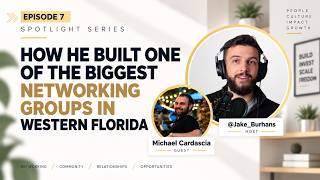
In this Spotlight Series interview, host Jake Burhans talks with Mike Kardeshe, founder of the Life in the 727 meetup in St. Petersburg, FL. Mike explains that community building is often mistaken for being easy, but it requires the same discipline as running a business—consistent marketing, a clear brand, and a team. He recounts how the group started in 2020 after he and his friend Josue discovered Meetup.com, and how a deliberate welcoming process (name tags, introductions, icebreakers) set the group apart. The conversation covers the volunteer‑host model that powers a diverse event calendar (beach happy hours, coffee talks, women’s wine nights, karaoke, real‑estate meetups), lead‑generation tactics (personal network/database, cold outreach, social media, paid ads, Meetup), and operational details such as capturing group photos, posting to a Facebook community, and soliciting feedback. Mike stresses the importance of consistency—regular weekly events—to fuel growth and algorithmic visibility. He also shares upcoming charity initiatives and offers concrete advice for anyone wanting to launch a similar community, emphasizing the low‑cost start on Meetup and the need to align events with personal passions. The interview provides a practical, step‑by‑step blueprint for building, scaling, and sustaining a vibrant local community.
Chapters
What is going on, everybody? Welcome to Spotlight Series Episode 7 with my man Mark, uh, Mike Kardashian, the community building king down here in St. Pete, Florida. Some of the best energy that you will be around if you get the pleasure to connect with Mike in person at one of his events. How you doing, dude?
I'm doing awesome. I am honored to be here for your Spotlight Series, man. Thanks for the invite.
I love it. Yeah, I was like, I was thinking of who else I could bring on, and I was like, this is, this is a great one right here. Um, because I personally have loved the event, such a wide array and variety of them, and the consistency with it. It's just there's a lot to dig into there. Um, but to start it off kind of, kind of hot here, what would you say is the biggest misconception that people have about starting and building a community?
I think one of the biggest misconceptions is that it is going to be easy, because it's certainly just like building a business and building relationships. Um, it could be simple, but simple is different than easy, right? Just like eating the right foods, doing the right exercises, making your phone calls, posting online, right? If you're a business owner, you know those things that are so simple to do but not necessarily easy, right? At the same time, I think it goes the same for building a community, man. It takes a lot of consistency, strategy, even takes a, like, a group of people. Like, I have a great team of people that have helped me now. So I think that's one of the misconceptions is that it's going to be easy, right? Because there's some simple things that we have to do, but it takes a lot of work to make it happen.
Yeah, that's great. That was one of my questions. I guess I'll ask it now. But how has treating this like a business and not like a side hustle or a hobby led to the success of where it is now?
Immensely. So I have a strong marketing background, business coaching. I've been in business coaching for 6 years now. I'm a mortgage loan originator. So I was able to take a lot of what I've learned and what I've taught others in business to grow our group, even though that wasn't initially the intention. We definitely started Life in the 727 as a very social group, something I'm passionate about, brought a lot of personal value to me. So by taking the same like marketing strategies of my personal network, social media, right, branding, building a team, by taking those business practices and combining that with like proper branding and marketing, That really helped us build a significant group over the years.
Yes, that experience was definitely crucial. And it's like the same thing with our wholesale business, right? It's, it's not even really real estate. It's just a business, man. It's like, it's marketing, it's sales, it's operations. And once you have those foundational skills, which it sounds like you already did, it's so easy to go and apply it to all those other things.
100%. Yeah, you could take it to build a group, you can build a business, you could build a brand just with like those core fundamentals, which I'd be happy to share. There's a lot of like key components to why I feel like Life in the 17 7 has been so successful. And personally, it just started as like a passion project, man, something that we did purely for fun. So taking that business acumen to other areas of your life, take it to the community to help other people, right? To like raise money for charity like we do now, to bring the community together, to build personal relationships. All that can very much be supported and backed by great salesmanship, marketing, and business acumen as well.
Yeah, dive into that a little bit.
So how did it start?
What was like the evolution from the moment you had the idea? How did you get things together? How did you get the team together? What did that look like to now where it's, you know, a fully operational, multiple meetings a week, you know, hundreds of people at some of these events?
Yeah. Yeah. It's kind of crazy how it all unfolded, right? So yeah, I'll share the story. I'll walk you back in time a little bit. I had moved to St. Petersburg back in 2020. I bought a house here. Moved with my brother, didn't know anybody, right? Like, we love St. Pete but didn't really have a great friend group out here yet. Most of our friends are back in Tampa. So my buddy Joe Sway, who I started Life in the 727 with, he was online looking for things to do in St. Petersburg on Google and came across Meetup. I'd never been to one before. Had you heard of Meetup before you joined ours, Jake?
Meetup.com? Yeah, yeah, yep.
Okay, so not a lot of people I find, especially our age, have like heard of Meetup. It's an incredible app. There's tons of free things to do online. There's free groups like ours, paid groups that you can join to be a part of, but there's thousands of people looking for fun things to do in your local area on meetup.com, or at least here in Tampa Bay. So he approached me about attending a meetup and I was like, sure, why don't we try it out, like see how it goes, right? And as we pulled up, I think we were both feeling a little nervous. Like he looked at me, he was like, hey man, if this is lame, can we just bounce in 10 minutes? Sure thing, man. So he went one way, I went the other. We're both hitting it off, talking with big groups of people. We looked at each other, gave each other big thumbs up, like our first meetup, it was going well. We made a good group of friends that came to my birthday party the next week. And we were sold. All right, let's keep going to more meetups. Well, quickly started to realize that, like one of the meetups we went to early on, somebody thanked us for putting together such a great event. And we're like, what do you mean? This is our third one. Oh, well, you guys were so welcoming and friendly and talking to everybody. I thought that who Wait, who's running this thing? Did you know what, Jake? I had no idea who the host was. They never introduced themselves. I don't even know if they were there. But it really went to show both of us, hey, maybe we should start our own group. Maybe that would be fun. Maybe we could do it better and bigger. Let's try it out. So that's when Life in the 727 began. I'd say it was around October 2020. Josue and I came together and we started Life in the 727 and predicated the group on happy hours and beach, especially the beach events. Really made us famous out here in St. Pete. Like, uh, even early on we were having events with 50, 100 people that would show up to the beach. So that's how it began, like something that we did for fun to make new friends, kind of saw that there was an opportunity to do things better than they were being done currently, or at least in the groups that we were a part of. So we started Life in the 727 with that in mind, that we want to be welcoming, we want to make everybody feel like we're great friends as we become friends, right? Because that's why they're coming to a meetup, is to make new connections, relationships, new buddies and pals. And, you know, it can be awkward, right? You know that, like, going to events. You're such a social, friendly guy. Like, it's so natural, I feel like, for you. And I know that's something you've worked on over the years, but man, there's so many, like, incredibly, like, timid, shy, introverted people that come to these events. And we really, just like we've been in the past, we really wanted to create a group that made people feel welcome upon showing up. And that's part of the process. Josué, myself, our co-hosts, like we have a great gang of volunteers to help us run these events. We have a process in place that as we see, like if I saw you approaching the event, hey man, you here for the meetup? Dude, that's great. Have you been to one before? This is your first one? What brought you out to this? What were you hoping to get out of it? Right? Oh my gosh, what do you do? Like we've got a process down that we know how to welcome somebody to the group, get them that name tag, make them feel like they're part of this. And then introduce them to other awesome people that we already know, like people that we think that they'd hit it off with. There's a welcoming process to really solve that problem that we experienced early on in our meetup experience. So that's a bit about how it started. You know, I could share like how it unfolded since then, but yeah, man, that's really how it began, was just us going to meetup, feeling like maybe we could do better.
That is awesome. That is absolutely hilarious. I can just see you guys out there just being so welcome and the life of the party. Everyone's like, yes, great meetup you got going on here. I'm like, what are you talking about? Let's move to St. Pete. A couple of things I wanted to touch on there. One is that you're kind of— how you're different from other meetups, right? It's very process-focused in the sense of this is the welcoming process and focusing on that. Because I think that's a big thing, especially in the real estate space. Meetups are kind of like, I don't want to go to the meetup, all these things. And on your point about me being social, I was deathly afraid when I did my first meetup. Oh yeah, I went to a real estate meetup. There's like 4 people there, 5 people there. I had a notebook. I was literally shaking in my boots walking in there. But you know, it's just like anything, you get used to it and then it's like, it's like nothing. Um, but I think focusing on that welcoming aspect, I think that is part of why you've been so successful, because people— it's a different experience that you give people when they come for that first time, right? Because that is probably the biggest thing. People are timid, they don't, you know, they're, they're nervous to go to these things. So when you're so welcoming and open like that, probably gives them a good experience and makes them want to come back, gives you the referrals, all those things. So I think that's unique point from a business perspective of giving people that different experience?
100%. You know, as we started the group, I think that welcoming people and being friendly just because of that experience we had was always top of mind. But as we continued growing the group, that was the feedback we got. Actually, the input was— I mean, I can't even tell you how many times people have thanked us, you shared their experience at other meetups, and there's other great meetups to be a part of, right? Like, I definitely— I'm a part of other meetups. I encourage all of our members to, to be a part of other groups and share what I feel like they would really enjoy. But, um, many people have expressed to us, man, I was part of some other things and, you know, people were kind of like cliquey, nobody welcomed us, I don't know who the host was, it was a really different experience going to your meetups, and it's one of the reasons why I keep coming back. So dude, it's huge.
Yeah, absolutely. And then one thing I want to preface, I should have said at the beginning, we talked about it before we started recording, but Uh, this kind of show, I wanted to highlight 727 obviously, but I also wanted to give some tactical information about building a community, which we've already kind of gone into from a business perspective. Because I think more people should be building communities. I think we need more leaders in the world. So, uh, you know, certain people, a lot of people around here, uh, love Mike and love going to his meetups. But I'm sure there's people who, you know, may not connect with him for whatever reason. So if other people are building their own things, it's going to get people involved, and it's going to be greater for, for everything, whether it's real estate specific or if it's just a life meetup like Mike's is, or, you know, if it's about realtors or it could be about anything. I don't know what it's about, but, um, getting that sense of community. Um, so could you go into kind of some of the tactics behind it, like, um, this— the systems you've touched on, your team, your operations of actually hosting the meetups? What does that whole behind the scenes look like to like now?
Yeah, that's a great question. It is an awesome point because you're absolutely right, man. Not everyone's going to jive with myself or the type of events that we do, and that's a big point of why it's important to have a team, right? So over the years, um, I've developed a small group of volunteer hosts that all love this group. They love the community, um, and they enjoy hosting events themselves, either because they just— it's a personal hobby of theirs and/or maybe they have a business that they want to promote as well. But we're all different, right? Like Laura Castleberry, that is one of our lead hosts, does Women's Wine Wednesday every other week. That's an event I've never been to and I never will go to, right? It's just for the ladies. So there's many ladies that are attracted to that idea of showing up to a smaller, tight-knit group just to hang out with other gals, right? That's something I feel like is really powerful behind Life in the 727. Is that not only do we have different leaders and hosts, which is probably why we have close to 4,000 members now, right? 'Cause they're not just excited to hang out with Mike and Sway, but this great gang like Taylor and Phil and Rob and Sabrina, we got this great gang of people. So I think one, it is important to get other people involved 'cause people will be attracted to different people for different reasons. And two is doing things that you're aligned with, right? Like the stuff that I host, I personally really enjoy doing. I would do it if I wasn't hosting an event. Like a few weeks ago, you went to my early morning coffee and conversations event at Intermezzo, right? Dude, that's something I do every Saturday at 8 AM anyway. I love doing that, right? So naturally I'm attracting people that like the activities that I enjoy as well. When we meet each other, it's already natural and organic that we're going to hit it off, just like the karaoke events that Sabrina hosts for us. Right, or Taylor Peters is doing his outdoor workouts, you attract like-minded people based off of the type of event or meetup that it is and even the location, right? Like, you— like, whether that's at the beach or out here, if you're at like a really bougie rooftop bar, that might attract a different crowd. And that's one way that you foster community, is that you find, um, alignment in the type of people, the activities, the venues that you decide to host. That way you can foster people that just naturally will get along. Does that make sense?
Yeah, absolutely. And I will say you'd be crazy not to love 727 and Mike. So, um, especially, I guess this is more, you know, advice for people that are in other parts of the country too, looking to start a community. How can they do it? Uh, because you guys have such a wide array of events, like you said, and that's probably what's led to a lot of your success. You have different hosts, right? Different people connecting with the different hosts. It brings in more people. Different types of stuff. You have the business networking, you have the, the morning coffee, you have the beach, you have the Women's Wine Wednesday. So it's really hitting all those aspects. And, and one thing I like about your meetup is that it's not like business-focused. I feel like a lot of the meetups on Meetup are business-focused. It's really just like life. It's like, especially in a place like St. Pete or Tampa or any other area in the country where people are moving to, people don't have a lot of connections. It's like, hey, I can just go to the beach. I would go to the beach anyways, might as well, you know, hit this group up and see what's going on there.
Absolutely. You know, I almost look at— and because of that, because it doesn't have like a professional focus, and now we are doing, um, business events every other Wednesday, like specific events. I'm starting to host real estate meetups, right? So those are niche and specific. But the group as a whole, I don't even necessarily look at it as much of like a networking group, although it is, as much of a social club. It's like a lifestyle, right? We're one big awesome family community of people from all over, all ages. In fact, initially, you might think this is funny. When we started the group, we actually originally named it Young, Fun, and in the 727, and we started getting questions from people all the time. Hey, man, I'm 32. Am I too old? Hey, man, I'm 45. Am I too old? Hey, man, I'm 66. Am I too old? And we got— Sway and I got together. We're like, dude, screw that. All the people that show up, no matter where they're from or how old they are, how young, We're all clicking, like we all love coffee, we all love the rooftop, we all love the beach. So we changed it to Life in the 727 because it is very much like a lifestyle social club. And I think that that's helped as well. And of course it helps you support your business because you build so many connections and relationships. You're able to cast a much wider net than making it too specific and niche. So that's been successful for Life in the 727 is making it a very general community-focused group.. But then having more niche-targeted events— karaoke, Women's Wine Wednesday, business, real estate, right— or smaller events that then help formalize even stronger community. When it comes to like what I would share with other folks that are interested in starting your own community, and going back to how we started off about treating it like a business, right, even if it's not, there's a few different ways that you market or generate leads in business, right? Like, let's go over the main pillars that we can use to build your group as well. We have one which is your database, right? So you can quickly invite the people you already know. That's one of the major advantages of getting it up on social media. We get a lot of people that come from my Facebook or Instagram that I know from just knowing personally, or people I've worked with here in Tampa Bay. So one way to generate leads for your group or your community, of of course, is already your personal network and making sure that you're inviting those people and that they're welcome to invite their friends and family as well and their clients. One is your database. The other one is cold prospecting, right, where you're reaching out to people. Um, I know you and I met like online. We're part of a business group, right? And one of us reached out to the other and said, hey, let's chat, you know, I'm doing all these things, you might enjoy it too. But reaching out to your ideal client or your ideal, um, member of your community sharing what you're doing. That's called cold prospecting, right? Like, I know you do a lot in wholesaling where you reach out to somebody that doesn't know you but could really benefit from what you're doing. This is a great way to utilize cold prospecting because I commonly invite real estate agents, investors like yourself, um, you know, CPAs, attorneys. I'm reaching out to people in the community that I want to connect with, meet, provide value to, but kill a lot of birds with one stone, right, by inviting them all to one event. So it's a great way to cold prospect. Hey, man, social media, that's another pillar of lead generation, is building up your online presence and brand. So you can totally use your profiles— Facebook, LinkedIn, Instagram, right? You can use your profiles to build up your community as well, to get even more people there. And then you have paid ads. This isn't one that we've laid so much into. We're really blessed that our group is built so strongly organically, but like sponsorships, Facebook ads, Google. These are other great ways to get extra attention that I know have worked for other groups. And if we felt like we could handle more, maybe we would have run some ads. But like, you know, like some of our events have like 150 people at them and it's grown so fast organically. But those would be the ways, Jake, that you get people to your meetup, right? It's going to be from your personal network, from cold prospecting, from online platforms. I couldn't recommend Meetup.com enough. I mean, that's been the real game changer. That ignited all of this for us. So get on meetup.com, and then you could even run yourself some ads to get more people there. But, um, we use all of these methods, right? Cold referrals, our network, social media— we use them all to generate traffic. And dude, we're sitting at close to 4,000 members now. We're almost at 3,900.
It's crazy. Absolutely wild in a few years. I mean, and to have the engagement that you do, right? It's one thing to have that, but to get the numbers that you do showing up— I mean, you had, you know, 150 people at 120, 150 at the beach day the other couple weeks ago. So that's great in terms of, okay, so we've gone over the experience, right? The experience of welcoming them in, that's kind of a difference maker between you and other people. Giving people that different experience, especially when they're timid, makes them feel good and allows them to kind of open up, right? Then you have, well, I guess first is the marketing, right? That's the second thing is the experience. How do you nail it home on the actual meetup? How do you get people engaged and things like that?
You know, that, that, that's definitely a skill set that comes over time. I can give you some great insights to help any of your listeners get a giant head start on this because there's some subtle, simple things. It's not rocket science. It's nothing crazy. Might even sound like common sense. But man, I'm telling you, this is the stuff most groups are missing indefinitely, right? So that welcoming process, I mean, it's genuine, man. We really do want— of course, right? Like, we do this because It's a passion of ours. So we do want to make everybody feel welcome and be incredibly friendly, introduce them to other members. So it's not like, oh, nice to meet you, Jake. All right, man. You know, on to the next person. You're hanging out there like a, like a loner, right? I'm gonna say, hey, Jake, man, I think you'd be good friends with Phil. He's been an OG. I always hype them up, man. He's an OG in the group, man. You got to talk with Phil. He's the boss around here. You know, now it makes Phil feel good, right? I'm going to connect you guys. That's part of the process is to introduce new members to existing members. Now the existing members are going to say, man, you're in great hands. I met some of my best friends from this group. I met my girlfriend from this group. Dude, I've grown my business doing this thing, man. Welcome. So now it takes some of the pressure off of me to connect them with other people that can really connect with them as well. So welcoming process is so important. Other things that are really important, guys, would be the name tags. When Sway and I first started the group, because it was more of a social thing rather than like a professional business networker, we were actually against the name tags. We thought it might come across as like a little bit too, you know, professional for us. And we quickly found out, man, the name tags are really, really frickin' important, right? So like, for example, people would sometimes struggle for a big restaurant or bar to like find where is the group. Hey, when everybody's a name tag, you can identify those are my people. That must be the meetup. I'd see people that like, hey, you see them several times, they kind of don't remember your name and it's hard to remember theirs. When we started doing the meetups, people would be like, oh, hey, Mike. Oh, Mike, man, it was great meeting you last time. Like, I started to realize, man, the name tags are actually fundamental. It's a requirement in life in the 727 for myself, Sway, or other hosts that if we're hosting an event, you have to bring the name tags. That's an absolute requirement. So that's huge. Other pieces of this that go a really long way is capturing great content. One of those things is getting a group photo. Take a pro tip here. Halfway through the event, we'll usually find ourselves at max capacity before people start to leave. Usually the first 30 minutes to an hour, like, you know, you've been to some of our events, you know, people are just showing up. It's not like we're teaching a class or a workshop. So people kind of stroll on in whenever they see fit, right? So the first hour is just ramping up. Halfway through the event. So if I do an event from 7 to 9, around 8 o'clock, Jake, I'm taking a group photo. That group photo establishes community, right? I have several people that ask me for the photo. They share it on their profiles. They tag themselves in it. That's a really strong part of community, right? Is, is like feeling connected to the group. So the group photo goes a huge way, man. Outside of that, I mean, just having like rapport building skills of just focusing on other people. There's been plenty of times I've been at a meetup and felt the responsibility as a host, you know, just depending on how the vibe is. I mean, usually our events are really poppin' and busy and active, but rest assured, I've definitely had some events with like a smaller turnout, even like the Coffee and Conversations that you went to a few weeks ago. Sometimes I find myself as the host having that responsibility. To like spark engagement, right? So I'll share some things, um, that I'll do. Like at my last real estate meetup, I, I said, hey guys, let's go around the room. I know we're all just meeting each other for the first time. Hey, I would love to know like what's something that you're really excited about going on in your life, and what's something that you're grateful for? You know, big, small, whatever. Let's just like share. Dude, people— I love it. It's one of my favorite things to do. People love it, and I'll get great feedback around that. Like, hey man, you asked some great questions. Thanks for those icebreakers, right? So Take that responsibility, guys, that if you are going to like host and be a leader, like Jake said, sometimes you got to step on in and create the interaction and the engagement in a cool way by focusing the spotlight on other people. And that's rapport building 101. We know that from business and sales, but like, let's make sure that we're focusing on those other people there. And lastly, at least on this topic, man, I would say something I'm really crucial to is making sure that I am connecting with people, especially people I really get along with. I could see myself becoming better friends with, maybe like outside of the group. I always personally try to connect with people. And as common sense as this is, it is a big mistake a lot of people make is that they don't get the other person's contact information. So I like to ask people, hey, Jake, man, it was great hanging out with you at the event today. Are you on social media or like not so much? You might be surprised. I know you and I use social media a lot. You might be surprised that almost half of the people I ask that question to tell me they don't really use social media. So I'll tell you what I do in either case. If they say, yeah, I do. Okay, cool. What do you use the most? Facebook, Instagram, LinkedIn? And whatever they tell me they use the most, I pull out my phone and have them add themselves. Facebook, Instagram, LinkedIn, whatever it is. If they say no, you know, not really. Well, cool. Why don't I get your phone number? Let's stay connected. I'd love to chat with you some more and invite you to some more events coming up. And I get their phone number. Now they walked away making a friend. In fact, that friend is the host and the lead organizer of the group, right? Which probably makes them feel really cool and special. And all of my hosts, I instruct them to do the same. Hey, we're not just going to get anybody's contact information. That's not like a requirement, right? But when you vibe with somebody, we definitely want to extend that invitation to connect with us personally. Now, anybody that joins We do, of course, promote our Facebook group. That's a great way to build community. Our Instagram page, make sure they're following us on Meetup so everybody will get that offer, but especially the people that we vibe and connect with. We all, all of our hosts make sure that we do connect with them personally. All of those things, man, the welcoming process, the name tags, the content, the group photo, the icebreakers, the interaction, the engagement, and the way you say goodbye. Thank you, you are awesome. We're looking for people just like you in the group. Please invite your friends. Hey, in fact, do you use social media? Like, that is crucial to really, really building connection and community.
That is phenomenal. I mean, that's the blueprint right there, right? So we've gone over how to generate the leads starting with your sphere and through cold outreach. And then also, you know, when you're thinking about the event, picking events that you align with, things that you naturally enjoy doing. So you can be genuine and bring the energy of that event because you actually like it. And then we're talking about the welcoming process, right? And the welcoming process parlays into the experience of the actual event because by welcoming people in, you're connecting them to existing members. There's a testimonial, right? Third-party testimonial. They're gonna— that's gonna resonate with that new person much more than you saying anything, right? Because it's that third party. And they're gonna network. They have the name tags, right? All those things. Uh, the group photo. Crucial because you want— it's almost credibility too. Like, hey, this is not just no one showing up. Like, we got people here having a good time doing the things. Um, all phenomenal. And social media, that's great. I never do that. I always just ask for the number, but I should start doing that. Like, hey, you social media, which one do you use the most? Great question, because you know what, if they are a LinkedIn person, I'm giving their, their Instagram, they don't care about Instagram. And also, you know, you get on social media, you follow each other then you're constantly on top of mind if you're posting on LinkedIn, Facebook, Instagram. So great way to stay top of mind. To follow it up, is there anything that you do post-meetup that's important, post-meetup, for this kind of the success of everything, or not really?
Dude, what a great question, man. I love the way that you're thinking about this. So there is, uh, we've, we've developed this over time. This is something we're also refining for sure. But, uh, now that we have a Facebook community, we, we thank everybody, we post the videos, pictures, content. That way people can swipe it, share it, tag themselves. Like, they really enjoy— they really enjoy the content, man, right? Like, that's really special to everybody, is to capture those moments and have some cool stuff on their social profiles, right? Because we're getting nice shots. So afterwards, we'll do a big thank you in the Facebook community. We'll post the picture up there. Um, we look for feedback, right? That's always something that we'll message people about, or after they're leaving, we'll ask if there's anything that they'd like to see us doing in the future, anything different or better that we could be doing. But, um, I'd say the most important— this might sound funny— the most important thing you could do after the event is do another one. Okay, the consistency is one of the most important things. And I'm not sure if it's just human nature, I don't know if it is the algorithm on Meetup, but when we post more events in advance, our group grows faster. We see new— more new members enrolling and registering for the group. The attendance for the groups will actually increase. So if you go to Life in the 727 on Meetup, you'll never find, uh, like a past event and now it's closed out, like for a pending one to be posted soon. You'll find events posted throughout the end of June if you were to check out our page right now. There's something about that where I think it's the algorithm, just by the way I see the numbers shoot up on new members, but at the same time it creates creates a strong trust, if you will, that, man, I'm gonna— like, this group is growing. It's not uncommon for meetups, networking events— I'm sure you've been to a bunch— that did a good event, but there wasn't like a, um, a consistent second one. And when we started Life in the 727, it was a bit more sporadic, and we did not see the enormous growth that we, we have now until we started doing recurring events. You know, someone asked me once, um, hey Mike, what's that, uh, church that meets once a month? I was like, I don't know, what are you talking about? They're like, yeah, that's right, because they all meet every week. Ah, it's the consistency in meeting every single week that builds a bond, builds the reputation, has people talking about what you're doing because they know there's gonna be another banger soon. So one of the best things that you can do outside of creating a Facebook community, thanking everybody that comes, posting up the photo, looking for feedback it's gonna be make sure you got the next one coming.
So good. Consistency, consistency. It's like one of my favorite things I say is consistency over intensity. It's not about having 5 meetups a week for 2 months. It's about having 1 meetup a week for the whole year, you know? So super important. That's, that's great. I really appreciate all that tactical stuff. I know it's kind of behind the scenes. Um, kind of just finishing it off here. What's exciting on the horizon for 727? What do people, what can people look forward to if they're in the St. Pete area, Tampa area? What types of events you host, just kind of give it all, man.
Dude, thank you. It's, it's a great question, man, because it's evolved so much. And that's some of the value, of course, of having a great team of other people that, that are passionate about this as well. Because now we're doing all different types of events. Our happy hours and the beach event are still our biggest. Like, you could look at those as like top of the funnel, right? They bring in like the most, the highest attendance. They bring in the most new members. That's kind of what draws people in. Are these really big, fantastic events with huge turnouts. But now that we have additional hosts, uh, we're doing smaller, more niche, unique events, which I find— I mean, just to piggyback on our conversation today, man— fosters much stronger community than just these mega events. And you and I talked about that, right? Like, you can build a more meaningful relationship sometimes at a smaller, tight-knit event. So we're doing things like early morning coffee and conversations Uh, we'll, we'll start doing more walks, like walk and talks downtown by Vinoy or on the beach. We're doing karaoke events by Sabrina all the time. Women's Wine Wednesday hosted by Laura Castleberry and my mom Joanie just did the last one over the canopy, uh, the rooftop in downtown St. Pete by the pier. So what you could expect from us is more of what we've been doing, right? Like all different types of events, um, whether they're going to be like at the brewery or the bar or on the beach or yoga, outdoor workouts. We really do have like a nice diverse event schedule coming up. But man, the thing I'm personally most excited about is the charity that we're doing now. One of the major focuses Swain and I have had for years is how can we use this group to make an even bigger impact? We're making great connections, experiences, memories. We've seen people become best friends. We've seen people like Alex and Ashley that have been dating for 3 years. They met at our group. You know, we've seen people come together and do big business deals or hire somebody in the group. It's been amazing. And something that we've wrapped our heads around for a while is how can we use this to volunteer, to do more charity, to give back? And now we're in the place with what we've built and the team that we have that we're doing it. So this beach event actually coming up tomorrow, man, it's, um, it's a, uh, a charity event for cancer. My buddy Joe wrote a book about his battle with cancer. We're raising money for cancer awareness. Um, that's one of the first charity that we're doing. We've done volunteering downtown St. Pete. We, we've opened up our group to see who wanted to fill up certain volunteering spots. And we do plan on doing like a really nice charity gala sometime by the end of the year. That's something that we've been working on for a while, like a black tie formal. And that's gonna be a great way to bring awareness to a good cause, raise a ton of money to donate, and just have like a really nice night together, right, where everybody's dressed up. So personally That's what I'm most excited for is, man, we've done a lot of business from the group. We've made some great— all of my best friends here in St. Pete have pretty much come from the group besides you, Jake, right? I met you somewhere else, man. But, um, the charity, man, I'm really looking forward to like paying it forward and giving back.
Phenomenal. Just making an impact, right? It's like the greater purpose of the business, just like any business, is to provide value to the marketplace. So you're providing value to the community members, to the charities, all those things. That's like the ultimate goal, right? It's not really about like making a lot of money or doing all those things, right? It's about providing the value. So it seems like that's really at the forefront, and that's going to allow you guys to be sustainable over a long period of time, in my opinion. Yes. Mike, where can people, people find you?
Well, you can definitely find me online if you look up my name, Mike Kardesha. I have it tagged right here on the screen, so definitely connect with me online. Check out our meetup group, Life in the 727. It would be cool for you to join, be a part of it, if you just want peep what we're doing, you know, and build it in your own community, you're welcome to do that. But definitely check us out on Meetup, on Facebook, Instagram, um, you'll find us all over the place. So yeah, look me up in Life in the 727.
Love it. Then to finish it off here, what would you say the number one action step is that someone needs to take today? Say they live in California and they want to start building a community like the Life in the 727, where do they even start?
What a great question, man. So first place to get started would be create a Meetup account as an organizer. It barely costs any money. Like, my group is a free group to be a part of. Some people do charge to be part of their Meetup group. We don't. To be an organizer, I have to check. I think it costs $200 or $300 a year. Like, we pay like a small fee to be an organizer, to be able to do what we do, which is incredible, man. Absolutely incredible. So one is make an account on Meetup. Think about what type of community would you like to build, what type of activity, what type of, um, uh, crowd audience would you like to attract. I would think about what that is and I would put it in two places. I'd put it up on Meetup and I would put on Facebook events. Now we're starting to use Facebook more to attract even more people. It's something I'm kind of kicking myself for not doing more in the beginning. Right, because we really just heavily relied on Meetup. I would put it on Facebook Events, I would put it on meetup.com, and I would invite the people that you know and anybody that they feel like would get value from doing the type of event that you're hosting. So let's say maybe it's like a brewery thing like us, maybe it's a walk and talk around the area, um, maybe, hey, maybe you live by the beach and you want to do something like beach, maybe you want to do an outdoor workout. Find something that you would enjoy to do, that it's a hobby or a passion of yours. That way you can attract like-minded people. Put it up on Meetup, put it on Facebook, invite people, and just keep it going, guys. You know, like, we started our first event, probably had, you know, around 15 people, you know, and here we are now, we're doing events with 150 people. Our beach event had close to 250 people. So number one action item is get it on Facebook and Meetup and just start inviting people.
I love it, I love it. Absolutely. I appreciate you coming on, Mike. Till next time, guys. Peace.










