BUILT for Impact Ep. 22: Regulating Stress and Anxiety: The Two Ways to Calm Your Nervous System
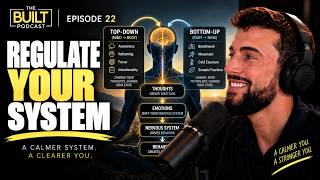
Jake Burhans argues nervous-system dysregulation, not lack of discipline, blocks high performance. He breaks down two ways to calm down: top-down regulation using conscious awareness, and bottom-up regulation through breath control and muscle relaxation. Both are trainable skills that expand emotional bandwidth and improve decision-making.
Chapters
Most people think their biggest problem is discipline. They think that they need to be more focused, more motivated, more consistent, but the real problem usually isn't discipline. It's dysregulation. When your nervous system is stuck in survival mode, everything feels urgent. Your mind speeds up, your body tightens. You start reacting to everything instead of actually thinking and responding. And from that state, Even really smart people make bad decisions. You overthink things that don't even matter. You snap in conversations you normally handle well. You push harder when what you actually need is just a little bit of space. So today I want to talk about something that changed the way I understand performance completely. There are actually two ways to regulate your nervous system: top-down regulation and bottom-up regulation. Once you understand these two levers, you start realizing something very powerful. You can actually influence your internal state instead of being run by it. Welcome back to Built for Impact. My name is Jake Burhans, and this is the podcast where inner peace meets high performance and where building your dream life starts from the inside out. Inside the Built Framework, we talk a lot about the nervous system and, and a lot of the pillars are built on the nervous system. It's one of the biggest foundations of the whole framework, right? Nervous system conditioning and identity conditioning basically drives everything. But understanding that state drives everything is super important for us as high performers or entrepreneurs or even anyone, parents, friends, people, just showing up as the best version of ourself. Your state is dictating everything. It's, it's driving your perception, which drives your thoughts and your decisions and ultimately your behaviors and your results. If your system is dysregulated, meaning you're in a constant, what I call survival mode or fight or flight, insight and discipline are much more difficult, right? Your body is just running the show. You're in survival mode. You don't have access to your prefrontal cortex. You don't have access to that as much willpower. You're running on subcortical systems. So today I wanna break down something that's really simple but very powerful is the two ways we can regulate ourselves. So we have top-down regulation, which is something I'm learning about in The Body Keeps the Score by Bessel van der Kolk and bottom-up regulation. So once you understand these, you'll start realizing you're not actually stuck in stress. You just need to know which lever to pull. And there's two ways we can go about this. So the first one I wanna talk about is top-down regulation. So top-down regulation. Is basically using your awareness to recognize a feeling of survival mode in your body and basically signal to your body that, hey, we're not actually in fight or flight. Now I'm gonna hit you with a little bit of anatomy of the brain here. So just to give you some context, so there's a part of the brain called the thalamus, and the thalamus is, you can think about like the cook, okay? They're responsible for taking in all of the sensory information from your sight, from sound, from taste, from touch, from feeling. And determining if you are safe or not. Because as we talk about a lot, your brain and your system, all it cares about is am I safe or not? That's all it's trying to do. Your nervous system is hundreds of millions of years old, hasn't evolved as quickly as society has, so it's still in that very primitive state of am I safe or not? The thalamus is responsible for taking in those signals. Okay, so it's gonna take, it's taking in signals at all given times, trying to determine if we are safe or not. If it perceives— this is all happening below the conscious mind, obviously, right? Subconsciously. If it perceives a threat, it's gonna send out a signal. Now that signal goes to two places in your brain. This is very important to understand. It goes down to your amygdala, which is like the fear center, and it goes up to your prefrontal cortex. Joseph LeDoux, who is a neuroscientist, calls the low road, or calls the, the path to the amygdala, the low road, and the path to the prefrontal cortex, the high road. Now the low road to the fear center is much shorter than the high road. So subconsciously, when your body detects threat and danger, that signal is sent to your amygdala first, meaning that you're gonna react and start to feel fight or flight, feel your heart race, feel the pit in your stomach. You're gonna tense up before your conscious mind is even online. Okay? Now the example of this is you're walking down a pathway and you jump back because your body thinks you see a snake. But then as soon as this, right, because that was the signal getting to your amygdala first, you're jumping back before you're even, your mind is online., but once the signal gets to your conscious mind and you have a second to think about it, you're like, oh, that's just a rope. It's not actually a snake. So that is an example of how, of top-down regulation, right? Your body perceived a threat, the amygdala fired, but you were able to use your awareness, your medial, specifically the medial prefrontal cortex, that part of your, your prefrontal cortex to regulate, right? So you say, you tell your body, oh no, it's fine. Almost like the little kid, right? It's okay. Just a rope. So that's how we can regulate ourselves in our day to day. And it's super important to, we We want to develop two sorts of skills here with our awareness and top-down regulation. There's metacognition, which is basically thinking about how we think. It's changing our relationship to thought. And we've talked about this a lot before. It is understanding you are not your thoughts, letting those, you know, negative kind of attack thoughts go. The secondary skill to develop is called interoception. And interoception is for you to consciously be aware of feelings in your body. And this is super important for regulation because when your amygdala is firing because it thinks you're in danger because your boss sent you an email or someone said something to you or something triggered you, you can feel that in your body, but you can separate from it. Ah, I see the body's in fight or flight. Okay. That's okay. We're actually not in danger. And that can literally regulate yourself. So that ability to recognize when your body is in a certain state, in a dysregulated state, is a very powerful tool for regulation. So that's top-down regulation and it does work. Most often I would say it works though if you catch it early, like if you are too dysregulated, thinking about it, you know, you, you're so far into survival mode that, you know, your prefrontal cortex is kind of offline. You're really in that survival mode. It's gonna be tough to think, but if you can catch it early, if you really develop that skill of interoception and the ability to be aware of how your body feels, you can catch that and regulate early. The flip side of the coin is bottom-up regulation. So this is oftentimes when we're already triggered, we're in a survival state, thinking doesn't do anything but make the, you know, pour fuel on the fire. We use things like the breath. Okay? The breath is one of the easiest ways to and most simple ways to regulate your nervous system. Now, the breath is super powerful because it is one of the only things in the body that is run by the autonomic nervous system, but is also under your conscious control. So if you wanna think about visually, like you have your autonomic nervous system on the right, right? And there's like a little lever, there's a little connecting bar that goes to your breath, right? And there's another connecting bar, which is like your conscious control. So as that autonomic nervous system gets pumping, because there's a lever connected to your breath, your breath starts getting really shallow. Right, and, and going quickly. Now on the other end of that breath is your conscious control. So if you consciously start to slow your breath down, what is that gonna do to your autonomic nervous system? Because those two things are linked. As you slow your breath down, you're slowing your autonomic nervous system down, right? And particularly having an exhale that is longer than your inhale. So every time you exhale, you're signaling the parasympathetic. Every time you inhale, you're signaling the sympathetic nervous system or the fight or flight. So we wanna make our exhale slightly longer than our inhale. Okay? So maybe you inhale, right? Control for 4 seconds, exhale for 6 seconds. Or you can box breathe, which is 4 seconds in, 4 seconds hold, 4 seconds out, 4 seconds hold. Whatever you need to do to regulate. Some other bottom-up regulation techniques that work really well are just relaxing, right? Cuz a lot of times when we're in, we're in survival, our body's tight. So that's sending a signal of survival to our body. So literally just, again, interoception, being aware of Your body, is your heart racing? Are your shoulders tense? Let's just relax our muscles, right? Relax our jaw, our shoulders. Just take some deep breaths in and, and literally relax. And the other thing is like the pace of our movement. Are we rushing around doing this, doing that? Like, let's slow our walk down. So relax our muscles, slow our breath down. This is a physiological lever that can take you out of survival mode, out of fight or flight. So regulation is so important because If you're gonna operate at the highest level, whether you're in sales or you're an athlete or you're a musician or you're an entrepreneur or you're an executive, when we are in a dysregulated survival state, we don't have access to all, all of our higher order thinking. We don't have the ability to, to think creatively and problem solve and detect nuance. Our perception is literally narrowed and distorted. So to show up as your best self, to be the, the highest performer you can, to be the best leader you can. To be the best parent, the best friend, the best whatever, we need to be in a regulated state so that we have the emotional bandwidth to deal with situations so we can make the best decisions so we can execute at our highest capacity. So these are things that you can use in real time. I'm not talking about going and meditating and, you know, if you're in a cave all day long or you're in your room all day long, yeah, it's easy to be regulated, but how do you be regulated in the heat of battle? You use top-down regulation. Or bottom-up regulation. And these are muscles you develop, just like you go to the gym and lift weights to get your biceps bigger or your legs bigger, or, you know, your chest bigger, whatever it is. Every time that you are, you are being aware of your thoughts or you're being aware of a feeling in your body, interoception, right? Or you are using your awareness to regulate, or you're using your breath to regulate. That's a skill. And the more you do it, the more that becomes an ingrained pattern neurologically in your brain and the easier to become to do it going forward. So we want to begin to fire new neurons in new ways, build these new synaptic connections of being aware of our body when it's in survival and learning to regulate, understand it. Well, Jake, I don't have time to regulate. I gotta do this, that, and the other. It's like, you don't have time not to regulate. What's gonna happen when you, you know, you show up to a conversation, you blow up and you kill a relationship, then you gotta spend 3 weeks cleaning up the pieces, or you send an email that you didn't wanna send, or you take sloppy action. You just do the wrong thing because you were in a survival state. It is your responsibility to be regulated at all given times, especially if you are an entrepreneur or a leader. You have a responsibility to your team to understand these tools, learn these things so you can show up as the most regulated, highest version of yourself. So going into this week, integration-wise, I want you to be aware of this. I want you to be aware of top-down regulation and bottom-up regulation. Where are you noticing yourself slipping into survival mode? And how can you let your body know, hey, it's fine. It's almost like the little kid. It's like, hey, it's okay. It's just an email. We're not getting chased by a lion right now. We don't need the heart racing. We don't need to activate adrenaline and cortisol and go into full-on panic mode. It's literally an email. It's fine. Or it's like you catch yourself in that state. Maybe the top-down regulation doesn't work as well. We can use our breath and relax our muscles, right? And get ourselves out of that state before we're acting. So you need to install a decision gate and it's like, am I regulated enough to do X, Y, or Z right now to think, to decide? To act. If you're not regulated enough, you need to regulate first. All right. And this can just take you a minute, 2 minutes, whatever. If you got any value out of this episode, please share it with someone who could benefit from learning how to regulate themselves and operate at the highest level. And if you are not in the school community, definitely get in there. It's free to join. Built for Impact School Community. That's where we are going deeper on all this stuff. You could begin to train the tools of awareness. Regulation, visualization, emotional release, so that you can stabilize that new 2.0 identity that is laser focused, that is a killer, that is regulated, that is executing at a high level, and it's just absolutely crushing life. Until next time, all the peace, all the power.










