Built for Impact Ep. 31: Why High Performers Burn Out
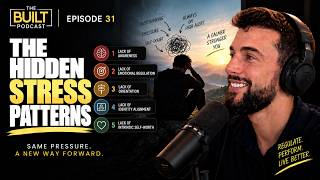
Jake Burhans breaks down why high performers burn out: dysregulation, a constant-pressure state most mistake for their personality. He identifies five dysregulators (lack of awareness, nervous-system regulation, orientation, emotional regulation, and intrinsic self-worth) and the BUILD Framework practices to counter each one and make inner peace the default.
Chapters
Most of the high performers and entrepreneurs I know, they aren't stressed out because something's wrong with their life necessarily. They're stressed out because of the state that they're operating from. And here's the wild part. Most of them don't even know that they're in that state. They think that's just who they are. That's just the way things are. To be an entrepreneur, I have to operate in pressure and stress. They think it's just the price of being driven, right? The cost of caring. It's a thing you have to trade for success, but the reality is it's just not. What you're feeling has a name. It's called dysregulation, and there are 5 specific things that put you there and keep you there. Once you can see them, you can actually do something about them. And the goal isn't to feel a little bit better for an afternoon. The goal is to make peace your default, your new baseline, the thing you return to without even trying. That is what this episode is about. Welcome back to Built for Impact. I am Jake Burhans, and this is the podcast where inner peace meets high performance and where building your dream life starts from the inside out. So today I'm going to walk you through the 5 dysregulators. So these are like the villains of the 5 pillars of the BUILD Framework. The BUILD Framework was put in place to solve these 5 villains. So I'm going to walk through these 5 pillars of dysregulation, what each one does, and how the BUILD Framework counteracts it. If you're new here, this is like a map. If you've been with me for a while, this is kind of like a zoom out, right? A chance to see how all the pieces fit together and where you might need the most attention right now. So first thing is understand about what dysregulation is. Dysregulation isn't some full-blown panic attack. Like you're still able to operate every single day, but you're running from, you have like a tight chest, you're scanning all the time. You can't relax, right? Right. Like nothing is even wrong, but we can't just sit down and relax. We're wired. But tired. Okay. Most high performers, they think that this is them. They think, you know, you're so used to operating in pressure and stress that that's just become your baseline. And you don't really know any other way to operate. Like you don't even know that it's a problem. Think about this. It's like when you have a fridge running in the background, right? Maybe you're in your, your finished basement. You got a fridge down there. You're on the couch and the fridge was running and then it stops running. You're like, oh my gosh, it's so quiet. Right? You didn't even realize how loud it was until it was off. And it's the same thing with our dysregulated state. We don't notice it until we get out of that state and find some peace. And we're like, oh my gosh, I was operating like that for that long? So the whole BUILD Framework is built on one premise, that this state is a default state that you've trained. And because it's a default state that's been trained, it can be retrained. Because we've talked about this before, your system wants to stay in the familiar. So if what you've familiarized your system with is stress and pressure and urgency and anxiety, you can consciously know that you want to be at peace and all these things, but your system wants to revert back to that familiar baseline. So we have to begin to retrain our system to a new baseline of peace regulation and XYZ. And then our system will always try to pull us back there to that peaceful state. So when we get stressed or anxious, subconsciously our system pulls us back to that regulated baseline. That's what we're working towards. So the first dysregulator is a lack of awareness. So a lack of awareness leads to dysregulation because you are associated with your thoughts, your emotions, all of this mental, you know, your inner, your inner mental content. You're associated with it. Oh my gosh, what if I can't do it? What if this happens? What are they going to think about me? What if I run out of money? Those thoughts in there that are just thoughts, they're things, they don't mean anything. You take them as the truth of reality and that puts you into a dysregulated state. And when you can't observe your thoughts and let them go and separate from them, it just feels like an onslaught, right? It's like you were in the middle of the tornado and they are just circling you, right? And there's no way to get out of it. The only way to get out of it is to become aware, become aware of your thoughts when they come in, the negative thoughts, and then let them go. Become aware of your emotions when they come into your field. You feel angry, you feel sad, you feel anxious, you feel stressed. Be aware of them and let them go. I just literally watched a clip from Novak Djokovic, the tennis player, talking about his ability to return to focus is one of the most important things that's allowed him to be successful. Because he's got to be in the present moment, right? And then he talked about how he would have thoughts about what if I lose XYZ. He's like, the quicker you can let go of those thoughts and return to the present moment, the better that you're going to do. It's impossible to not let those thoughts come in, right? They're going to come in and you're going to get pulled out of the present, but how quickly can you get back to baseline? So that's what awareness does. It allows us to get our hands back on the wheel. I think I've used this analogy before, but when an event comes into our life, a negative thought, an emotion, a trigger, it's like someone's flooring the gas on a Ferrari and you lose control the wheel. You got to put your hands back on the wheel. That's just being aware. So you, so you don't get into a worse state. But before you're trying to, to figure out your direction, you got to regulate yourself, right? That's why it's regulation and then orientation. Because you put your hands on the wheel of that car without slowing the car down, you try to make a right turn going 100 miles an hour, the car is toast. You know, you're flipping the car. Same thing with you. You got to be aware, then you have to regulate your nervous system, then orient. But the first dysregulator is lack of awareness. So separating yourself from your thoughts, your beliefs, and your emotions. So those things do not run your life. You create a little bit of space between you and those things so you can observe them and let them go. See, this is something I could never do because I'd have a thought about a deal falling through one morning or a call that I had to make the next day, and I couldn't get it outta my head. That thought would just swirl around in my head, you know, keep me in a stressed out state all day long instead of letting it go. The second dysregulator is a lack of nervous system regulation. Okay. Lack of nervous system regulation. Now this is kind of the underlying thing, but The biggest thing here is understanding that our state is what drives everything. Self-development, most of it teaches us that it's okay, insight, strategy, behavior change. That works if you are regulated, if you are calm and your prefrontal cortex is on, your brain is on. But when you are dysregulated, you're in a survival state. The prefrontal cortex is like the first thing that goes offline, and that's where all that knowledge that you've stored lives. So that's the, the, you know, The crux of, oh, I knew better, but I did it, but I knew better. Why didn't I do it? Well, because you didn't have access to that part of your brain. You were in a dysregulated state. So you have to understand that state before strategy. We need to be in the correct physiological state to do anything, to do anything. So you have a lack of nervous system regulation. So again, regulation of our nervous system is the antidote there, using the physiological levers that calm our nervous system down. Relaxing our muscles, reducing muscle tension, speaking slowly, breathing. That's the most powerful tool, right? 4-second inhale, 6-second exhale. We have to be in the right state before we make any decisions or act at any given moment, or we're not gonna be making the best decision. In fight or flight mode, our perception is narrowed. We're just focused on threats, urgency, and speed. We're not focused on the best option. Third dysregulator, lack of orientation. So what ends up happening is we put so much pressure and stress and anxiety on ourselves to reach our goals. We're chasing our goals, right? We're chasing, chasing, chasing, and that creates a lot of pressure and stress. And a lot of times, why are you chasing that goal so much? Because you feel like you need it, and that's a whole nother discussion, but you feel like you need the goal to build yourself up, to be enough. You need the money, the status, the title, the achievement, the accolade to be enough. And what happens is when you're like, I need this outcome, I need it right now, it creates an identity gap. Your system goes, oh crap, I'm here and I need to get all the way over there right now. I'm not enough. So it goes into panic mode, stress, anxiety, pressure, right? To try to get to this future outcome. What happens when you get to that goal? It doesn't really give you that feeling inside that you want, then you create another goal. So we have to begin to look at our goals as a north star. Like the point of the goal isn't to get there. The point of the goal is just to orient our thoughts, our behaviors, and our actions. So we get up every single day. And if we are moving the ball down the field towards that North Star, towards that goal, then we are winning in the moment because the goal stops being about getting there and the goal just starts being about doing the thing every day. So we have to change how we look at our goals. That's the third cause of dysregulation is we are, instead of orienting ourselves there, we're using the goal as a destination and it can't be a destination. What's a destination? We gotta get there. Creates this identity gap. So start to look at your goals as orientation instead of a destination. This was another major thing for me. I was like, every time that we had a business coach come in and they told us, hey, we gotta reach this goal or that goal. And I knew it was gonna take, you know, 9, 10 months to get there. Immediately I felt all the pressure and the overwhelm. I'm like, oh my God, what do I need to do? And I started like trying to do everything right away and I'm rushing to get there cuz we gotta get there. We gotta get there. We gotta get there. It's like, no, you don't have to get there. I think a lot of my identity too is tied up in accomplishing things. For whatever reason, now that I think about it, it's something I need to dig deeper into, but yeah, so my identity was caught up in accomplishing things. I always had to rush to get there. I could never focus on the process, but now focusing on the process more, it's so much more relaxing. Like you, you enjoy the process. Like you love just getting 1% better and you just kind of detach from the outcome. And when you detach from the outcome, there's so much less stress and pressure and anxiety. The fourth dysregulator is a lack of emotional regulation. So, so thus far we have a lack of awareness, a lack of nervous system regulation, or just state regulation. Third dysregulator is lack of orientation, right? Using our goals as a destination instead of just orienting that way. So point 3 is really about detachment, detaching from outcome, focusing on process. Fourth dysregulator is lack of emotional regulation, understanding how to let go. And this is the let go pillar in Built, but you have to understand how to feel your emotions without flying off the handle or losing control. Understand how to feel anger in your body, how to feel stress, anxiety, sadness, guilt. You have to be able to feel these emotions in your body and not, and not react. Right? So you feel them. And for me, it's like my mind is calm, but I feel that anger in my chest, but I just relax my shoulder, relax my body. And I just observe it again with that awareness. I just observe that emotion and I, and I feel the separation, even though it's a strong feeling in my body. I know I'm not that emotion. It's just an experience I'm having.. And that allows me to control my emotions. I still feel my emotions, but when we resist and we tighten up and we don't feel our emotions, it traps them in the body and we have all these triggers. So we have to understand how to get comfortable feeling different emotions. So the antidote to that is letting go. Just gotta let go, release, surrender to the thing. Don't try to fight it. Don't try to push the feeling away. Welcome it. Oh, this is anxiety. Interesting. Interesting feeling here. Oh yeah, this is anger. Yep. This is anger in the body. Sometimes I'll even give a little chuckle, like my body's reacting and I feel super angry, or if I do feel anxious or whatever, I'm like, sometimes I laugh, especially with the anger. I'm like, yep, body is angry right now, huh? And I just kind of laughed to myself. And, and then the anger kind of, when you relax, the emotion will eventually just kind of pass on like a cloud, but you can't resist it. You got to feel it. And the fifth dysregulator, right? Because Pillar 5 is all about transcending into your 2.0 identity. The fifth dysregulator is a lack of intrinsic self-worth, meaning that you are constantly just chasing results to try to fill an internal void because you don't feel enough on the inside. And as long as you're chasing external things to fill an internal void, you'll forever be stressed out, anxious, and hating your life because nothing external will ever fix an internal void. And a lot of times we're scared. We're so scared to fail. Why? Because we think that people aren't going to accept us or love us, or we're not going to be important or all these things. We are tying our self-worth to external outcomes. And then failing in the outcome isn't just about failing on the sales call or failing the test. It's about you're a failure as a person and you're not going to get love. That's why you feel so much fear and stress stress and anxiety. So we need to begin to cultivate a solid internal sense of self-worth. I am enough just because I'm alive. It doesn't matter what happens externally. I am enough. So understanding how to cultivate that, and that's what it means to act from abundance. Like, I only say we should always be acting out of inspiration instead of desperation. So act inspired, right? You're not doing it because you need to do it and I gotta get to the goal. No, you're doing it because you want to, because you want to contribute, because you want to build things up, because you want to create. So understanding how to operate from sufficiency. So all those go together. The 5 dysregulators: lack of awareness, lack of nervous system regulation, lack of orientation, lack of emotional regulation, and lack of intrinsic self-worth. I actually have this full doc— is a doc I'm reading right now— in the Built for Impact community. It's in there under the orientation section. Free to join. Link will be below this episode. Um, you can get in there and start working on the internal work. So this week, I just want you to think about, of the 5— awareness, nervous system, orientation, emotional regulation, identity— which one do you need to do the most work in? What are you avoiding? What do we need to work on? Because, because they were, we're constantly working on all 5, 5 of these areas our whole life, right? But what is the one that we're, we're skipping? And put a little more time and energy there. Reflect on that. We don't need to fix it either, right? We're just kind of noticing it, naming it, letting it be visible. Because awareness is the start of, of every shift, right? So the whole framework, 5 dysregulators, 5 pillars, 1 regulated baseline, right? Peace as the default, not as the reward. If this episode gave you a clearer map, uh, you can get into the Built for Impact community. Like I said, it is free to join. Link will be below. Weekly calls Tuesday at 5:30. They are free for now, which is great. Get in there, ask your questions, go through some of the modules and the coursework. Um, and let's rock and roll. If you haven't already hit subscribe, go ahead and do so. New episodes drop every Monday, and I'd love to keep showing up in your week. Until next time, all the peace, all the power.










