Fix and Flip Mastery with Gordon Thornton (SS #9)
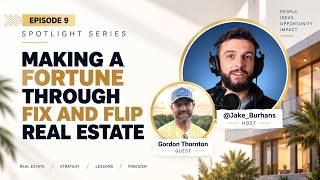
Real-estate investor Gordon Thornton spent six years learning before his first deal, then went through personal bankruptcy that changed how he thinks about money and failure. He now targets 2-to-4-unit properties with at least 10% profit margins and says relationships matter more than anything else for finding capital and deals.
Chapters
Welcome everybody, Spotlight Series Episode 9. I got my man Gordon Thornton on. Gordon is down in South Carolina. He's a New Hampshire native like myself, so I already like him because of that. And, uh, he actually helped us do one of our very first wholesale deals, one of the biggest nightmare deals we've ever had on Franklin Street. Not sure if you remember that, in Somersworth, New Hampshire. Crazy story. We had to like We had to— back then we took a U-Haul, helped the tenant move all this stuff up to Maine. The house was a disaster. The tenant was like threatening us, all this stuff. But anyways, what do you mean, Jordan?
It's difficult. Wholesaling is difficult. I thought it was easy. I thought you just had to talk to a seller and get it under contract to sign it and it's all set, right? And that isn't it what the gurus say? It's a piece of cake.
That's, that's why I got started. So I was like, hey man, easy, quick $60K, quick $80K, let's do it, let's go.
Absolutely, man. Good for you.
No, I appreciate it. How you doing?
I'm doing great, man. How you been?
I've been phenomenal.
I've been— Florida's treating you well?
Yeah, Florida's good. It's, uh, we're at an interesting point in the business right now where it's, you know, it's been one of the most grueling years for sure, just in terms of trying to hire the right people. And it's really pushing us, pushing me to my limits, but helping me definitely. I'm definitely growing as a person as well. So it's, it's interesting.
That's what it's all about. The— yeah, it's interesting you mentioned that though. I've had a lot of conversations just the past few weeks with people that have been in the, for quite some time, and they're just, you know, it's, it's a tough time in the real estate market with a lot of conversations, a lot of people that, um, are struggling right now. And it's cool. I mean, like, it's— this is growing season, right? Like, this is the season where it's like, all right, let's see it. Let's see how good I am. Let's see— I'm getting tested every single day. Let's see what, uh, barriers and limiting beliefs I can break through and just keep on showing up and pushing forward. So it's great.
100%. I was thinking about this the other day. I'm 26, Isaiah's 24. I was like Man, entrepreneurship, it'll make a man out of boys. Like, it's there. Entrepreneurship is not messing around. Like, it doesn't care. It'll push you to the brink, I'll tell you that. Um, it does. But anyways, getting into this right off the bat here, how is your perspective on the real estate business, fix and flip, all that, how has that changed since you started in 2002?
Oh my goodness, how's it changed? It's changed really in just my own way that how I look at things, right? And now I realize that, like, so when I first started in 2002, I just, I signed up for every single course that I could get, right? Like, I was like, hey, I'm gonna get education, education, education, education. I felt like I needed to know everything before I started moving forward, you know? So like, it took from 2002, I started my education journey It took me until 2008, so 6 years until I actually pulled my trigger. Now, mind you, in 2002, like, I was like, I want to go into this full time. So I was like, you know, the quickest way I could do it is leave my W-2 job and start being a real estate agent. So I was like, I'm gonna go do this, go get licensed, get in there. I quickly realized that being a real estate agent was not what I wanted to do, right? Like, great profession for people that want to do it, um, just not my cup of tea. Okay, just not what I wanted to do. So, but then I, and so after failing really at that miserably because I didn't realize actually the amount of work that it took to build a real estate business, I thought that all I had to go do is get educated. Hey, I know all this stuff. I saw people having success and then it's just gonna miraculously happen for me because hey, I spent $75,000, $100,000 on education. So like obviously it's just gonna happen, right? And I really didn't build the proper foundation within myself to actually go out there. I had a lot of limiting beliefs in myself and really just, just would only go half in. And I would continue whenever I came up against a roadblock, I would kind of retract and I wouldn't move forward. I wouldn't move past it. And so it took me a really long time to actually do my first deal. Now, mind you, this was in 2002 and all the way to 2008, which probably was one of the best growth times in the real estate industry at that time. Like if, you know, there was like these no-doc loans going on. They were giving— this is before the crash that happened, where just getting money from banks was no big deal at all. All the subprime lending, all this stuff was happening, and yet I still wouldn't move forward with it. So then of course I decided 2008 was going to be the time that I was going to go do it, and that's when the economy just decided to crash. Um, lesson learned, right? But the good thing that I did learn in that process was that like 2008, I actually hired a mentor And that was the turning point for me. So actually, guy's name was Kevin Lacasse. I don't know if you know him or not, but he's in the Lakes region up in New England. And he— I met him at a New Hampshire REIA event, right? And he was one of the board members and he was talking and all this stuff. And I was like, I like this dude. And he put out an offer out there that he was looking to bring in some mentees and everything. And I just had a conversation with him and we hit it off. Everything went good. And we just started doing some fix and flips together and really Having that person to hold my hand through that process, um, and helped me get through my first 4 or 5 fix and flips together, where really my only thing I had to do was go out there, find a project, and then he was the one that was able to get the capital for me because he already had the hard money and the private money connections, all that stuff. He already had the contractor connections, everything. I just had to go out there and really go on the MLS, talk with sellers, wherever I could find the deals, pre-foreclosures, find the deals and go forward and do that. So that went really well. And then after that, you know, 2008, 2009, 2010, everything kind of hit the fan. Of course, at that point in time, I thought I knew everything after doing 4 or 5 for myself. Went out on my— went on on my own and lost everything, man. Just lost everything. Lost it like a lot of people did that was doing real estate back in that time. And, um, you know, had to file personal bankruptcy, personal foreclosure, and really just pick up the pieces and start all over again. And so that's what I did. Uh, it was a difficult time, but then, you know, I went back to a W-2 job, and then I, um, got back into it full-time again in 2016. I always had this burning desire for it, and I really, really wanted to get back into it, but I was holding myself back again because of this fear of moving forward and losing everything. And thankfully, I have a fantastic wife, um, who was like, listen, like, go do it. This is what you want to do. You're miserable doing this W-2 job, I can tell. Go do it. And I had found another mentor at that time who really was mostly just business, um, and personal development, and really guided me into becoming the person that I needed to become to actually be an entrepreneur and to build a business. So That's a long way of answering your question of the difference is just the work that we do on ourselves and us continually to show up every single day on ourselves, because this is not for everyone and this is not get-rich-quick business at all. Um, so yeah, that's where I'm at with that one.
Yeah, that is phenomenal. I think a couple key points to touch on there. One is that 6 years in the beginning educating, right before you, you took action, you said.
Mhm.
Mhm. Now here's the thing, people, I, I would really like to replace the word fail with the word test. Failing is really testing. You're testing different avenues to try to get to a desired end result or success. I think the problem arises when people are trying to figure everything out so they do not fail. Like, here, let me learn all the information so I can prevent any failures, which is ridiculous nonsense because you have to, like I said, test, not fail. You have to test different paths until you figure out what works. You will never be able to read any book, any podcast, anything that will prevent you from making any errors. That is impossible. So you might as well just start taking action now and learn along the way, right? Because nature is the best teacher, and that's just the bottom line. So I think that's a really important point, is like people just need to get started and embrace kind of that failure. Um, fall forward, right?
Stumble forward. 100%. And that's what I try and help people do nowadays. Like, that's, that's literally my life mission, is to get— help people get out of their own way and understand. Like, we've done hundreds of deals at this point, right? Like, at multifamilies, as a real estate agent, fix and flippers, short-term rentals, midterm rentals, Airbnbs. Like, whatever it is, we've done, we've done these deals, right? So Every single one's different, and I learned something new on every single transaction, right? And that's the good thing about real estate, is that it really doesn't ever get boring because it continually evolves, and you'll never know everything. You'll always come up against something that's different. Um, of course there's some similar nuances throughout the deals, but I, I don't know about you, man, but I learned something new on every single deal that I've ever done. Um, and that's what I appreciate about it, is that You know, I'm 48. I'm a little bit older than you now. Right. But I would just say, like, I don't like to use the word old. I say I'd like to use the word— words of like, I just have more life experience, you know what I mean? And so take my— if I can help someone shrink their time timeline like yourself, like I started my journey when I was 26, 25, 26, just like you guys did, right? The problem was, is that it took me 6 years to actually move forward. You know, like, I'm super impressed by people like yourself and a lot of the people that are running them in this real estate space now that are just out there, and you guys are just balling and crushing it. And I'm like, fuck yeah, go, go do it. Like, I'm super— I love seeing you guys do it, man. Oh yeah, that's all we're doing. We gotta keep trying. That's all. It's amazing.
No, I appreciate that. Yeah, that's, that's a great perspective. One thing I wanted to touch on is And you know, not to get too, too personal on it, but I know you said you lost it all in 2012, 2013. And you know, you had— this was 10 years ago, so I don't know if you had kids or anything or if you were married then, but I did.
My son was 18 months old.
Yeah. So, because I would say that's probably the biggest fear, right? When everyone talks about they don't want to get started, they're afraid of like, you know, worst case scenario, losing everything. So I guess that experience for people out there who that's kind of their biggest fear, What did that teach you and how did you handle that? And you didn't die, which everyone thinks they're gonna die pretty much. It's gonna be that fast, right? So what kind of lessons you learn from that and how— what advice do you give to people who are, who are really just so scared about losing everything and what that's going to do to them?
You will live, like you said. You will not die. And looking back at it now, I will say it is the greatest thing that's ever happened to me. Now, it's not fun when you're going through it, right? But man, now, like, like, I look at it this way. It's not about the money that you make along the way. Now, money is very important to have in the world in 2024. Money is always very important. We need it, right? It's not the most important thing, but it's obviously a very important tool that we need to be able to navigate the world. Right? But here's the thing, it's not about like— it's about who I became along that journey and the lessons that I learned along that journey that have made me like— I'm probably one of the most dangerous people that's out there right now because I don't care. I can lose it all again and it doesn't matter because I've gone through it and I've rised right up back through it, you know what I mean? And so like I don't have those fears. I'm more willing to take risks than a lot of other people are. That's worked out very well for me in some situations. It's also not worked out well in some situations, and that's okay. Like, literally, the last 2 years of my life have been the most challenging 2 years of my life. Moving from New Hampshire, right, down to South Carolina 2 years ago took— it took me so long to actually build a business, a successful business that I wanted to build my whole entire life as a real estate investor up in New Hampshire, and then moving down here and really trying to start all over again down here. People thought I was crazy. They're like, I think sometimes I'm crazy for doing it too, right? Like, why would you? You built this business, successful business, looks like you have everything you ever wanted. You're going to shut this down. You're going to move your operations down here to South Carolina. And you're going to restart everything. Like, what are you doing? You've— right, like, I don't know what I was doing. Honestly, I don't know what I was doing, but I was listening to my heart, and my heart was telling me this is where I needed to go, right? And so it's been very challenging being down here. I've lost hundreds of thousands of dollars in the last 2 years, right? And but it's still okay because I know I'm right where I'm supposed to be, and I know that there's bigger and better and unbelievable opportunities that are ahead of me. And so that's what losing everything has done for me. It's given me a perspective of what truly matters and what I'm truly here to do, and that is just continue to be the best version of myself every single day, no matter what, no matter what, like keep— we, we especially as men have a very bad habit of defining our self-worth by the amount of zeros we have in our bank account. And it took me a very long time to realize that that isn't how we define ourselves or how we shouldn't be defining ourselves, you know. And I put a good amount of content out on social media and things, and I talk about— I'm a very, I'm a very spiritual person. Right? I'm a very spiritual person. I'm not a very religious person, but I'm a very spiritual person, right? And I believe that we are all here for a reason, and I believe that we are here to leave the world a better place than when we got here. And the only way that we can do that is if we continue to make ourselves uncomfortable and continue to grow ourselves so that we can teach other people and our children how to operate in the world today and in today's society. Um, because the world's different even from when our parents were growing up. It's a lot different today than it was back then, right? Um, so that's really the, the biggest thing is just go— well, I, I actually, I had a meetup last night up here. We just bought, we just bought a really amazing, um, sub-2 creative finance hybrid deal up here in Travelers Rest, down here in South Carolina, Travelers Rest, South Carolina., and we're making it into a retreat center to bring people together, transformational space, right? So we had our— we just bought it this month, um, had our first meetup there. And I was like telling people, I'm like, listen, don't be afraid to just go screw up. Just continue to screw up. You're going to learn all about yourself as you continue to screw up. You're going to lose money in this business. If you're in this business long enough, you're going to lose money. It's okay. You're gonna learn. You're either going to pay for education by giving it to a mentor, or you're going to go and, and pay for your education by losing a lot of money. Doesn't matter, you choose. Pick, pick which way you want to go.
100%. That's just phenomenal stuff that you're, that you're talking about there. One important point I wanted to bring up that you touched on earlier is, I don't need anything, I'm dangerous. I was literally thinking about this the other week. I was like, When you don't need anything, you have all the power and the control in the world. When you don't need the money, you don't need the house, you don't need the big house or the fancy apartment, you don't need the nice car, right? You don't— I don't need this business. I don't need the money that comes from this business. You are in such a place of control, right? When your self-worth and self-identity is strong enough where you don't need all these things, you're chasing less, you're grabbing less, you're letting go, you're relaxing, you're in control. So That type of mindset is absolutely pivotal. And I will say it's not about the money because I mean, my success obviously is, is pebbles compared to so many people's success out there. But coming from a place where money was an issue to now where money is not even close to being an issue, money is not the answer. It's just not the answer to, you know, whatever you want, fulfillment, all those things. Um, so just something to keep in mind. I think the journey is going to develop you and, uh, those are, that's the real gold you get from all of this. So my journey from, you know, starting 3 and a half years ago. It's been crazy. Starts out being about, oh, I want to be rich and all these things, and you kind of realize what it is about. I still love the business, but you know, it's those perspective shifts.
Um, yeah, yeah. I mean, like, it's, it's not— yeah, I mean, everybody gets into real estate because they want to make more money. Totally. And right, like, that's why I got it. And of course makes much more sense. I mean, I can go flip a house and make more than most people can make in a year, right? Like, of course, that's— I'd much rather do that, right? The thing, um It's very interesting though, because it's really— I'm— I don't have a passion for real estate anymore. Like, real estate for me is simple. Like, I used to love it, but now what I love doing is meeting the people that are involved in it. I love the people that are attracted to real estate. Those are my people, you know what I mean? Because they're the ones that— they, they see themselves, they, they know that there's a better way. And so that's what I love about the real estate industry the most, is the people that are involved in it and the people that are going out there and making it happen. Those are my kind of people I want to hang out with, that they've literally ripped themselves out of the Matrix, right? They're like, I'm out of the Matrix. I'm not doing this whole W-2 thing. I'm not doing this whole thing. I'm not going to hold on to these golden handcuffs and this, and I'm not going to play this whole thing of like, oh, I can't leave my job because what about my, what about my health insurance? You know how many people I have conversation with that won't leave their job over health insurance? I mean, it's insane, ludicrous. Like you're talking about health insurance. Listen, I have to pay a lot of money for health insurance. It's expensive. I get it. But I'm a business owner. I need write-offs. Just go make more money. Learn how to make money. You know what I mean? And you can do that inside of real estate and you can do it by serving people. All we do is solve— all we do is solve problems. That's all you and me do every single day. Just go solve the problem.
That's it. Yeah. The people who come to real estate, that's— and we're the same. I had Nick Alaruda on last week and he's kind of the same thing, you know.
Business partner.
You guys are titans of the mindset thing. It's funny because you both were very heavy in real estate, similar things, and then you move over to now being more on the spiritual side, or just the whole mindset part of— that's what both of you love to do. And that's kind of where I'm at too. Real estate, whatever, you know, it's great, it'll bring in money. I enjoy building the business in terms of all that. That's a journey. But what I'm really passionate about is talking about this. Um, yeah, but anyways, yeah, let's shift gears here a second. Because I could talk about this forever. This is great. I could tell I could do an hour of this easy and it'd be super valuable. I do want to touch on though, uh, fix and flip specifically. So we're going to shift gears into that. Um, so kind of tactically, I'm a tactical person. What do you look for in a good deal? Minimum profit, location, the style of the house?
Yes, yes. Okay, so that's an interesting question. That's a loaded question. I could never answer that part properly, right? Um, but What I'll say is this, what I look for currently in today's marketplace, okay, I'm just going to talk about today's marketplace because we're in a different market than we were 2 or 3 years ago, obviously, right? So what I'm looking for in today's marketplace is I want to be, I want to be under— so I'm in South Carolina, I don't know where you're at, no matter what it is, figure out whatever your median house price is wherever you live, wherever you're watching this, wherever your median house price is, Stay within plus or minus 20% of that number. Okay. 20% of that number. So say if the median house price here is about $400,000, I'm going to say somewhere in that area. So I'm looking to buy something that's going to be like, you know, plus or minus 20% of that. I don't really want to go higher. Now, especially in my marketplace, this is very, why it's very important to understand your market and where you are and what you're flipping. Now if I go over that, like $450, $500, then I'm just competing against new construction guys out here, right? And a new— and a buyer that's moving down in this area is going to always go after the new construction than they are over— even if I'm taking a brand new, like, a house and I'm making it all nice, they just— they— people are attracted to that new construction lifestyle. So I'm like, all right, how— what pocket can I fit into here? Where can I be? Also, interest rates, they're not going down anytime soon. If they do, it's going to be only just a little bit. But ideally, like, especially if you're looking at everything affordability, the way things are, they're only going to continue to rise. If you stay below $500,000, much more people can actually afford that type of a life, can afford a house there, than if you start and go over $500,000, right? So we want to stay in the medium house price point area. And I would say you want— so, so if I'm at $500,000 home, I I want to be at least be walking away with like a 10% of that. So meaning I'd like to walk away with $50,000 after I sell that, after all our expenses are off. Does that make sense? Somewhere in that area? Yeah, that's good. That's what I would go with. Yeah, sorry, go ahead.
No, you're good. I was just— that is, I agree. And what you were saying about the, uh, the ARV, so what Gordon's saying there is essentially, yeah, say the ARV is $400,000. You would want your ARV to be between essentially $320,000 and whatever, you know, $580,000, right? 20%— or not $580,000, $480,000— 20% of that $400,000. Because otherwise, you, like you said, you're competing against those new builds. I didn't even think about— and furthermore, if you stay at that affordable price range, you're going to get all those buyers who are using FHA financing, first-time home buyers who can come and compete at that price range as well. So you're trying to keep your buyer pool as big as possible to increase the chances that you can sell your fix and flip, right?
Yeah, absolutely. And I— and you know, the, the best fix and flips in the market right now, what I really love is the 2 to 4 units. Gold mines, gold mines. Fix and flip 2 to 4 units all day long, right? Because what you can do is you can go in there, buy a 4-unit, buy a 3-unit, buy a duplex. You can have one unit that's fully rented out, right? That's helping you pay for your carrying cost as that's rented out. Then you have one unit where you have— maybe you, hopefully you acquire it while it's vacant. If not, you do have to work with getting a tenant out possibly, right? But then you just have to take that one unit, make that into the owner's unit, and then you turn around and sell that to a house hacker end buyer who is going to be able to qualify for an FHA, and they're going to pay top dollar for it. So those right there are like bread and butter deals all day long. Use the BiggerPockets model. BiggerPockets has talked about house hacking for use what people are talking about and go after and be the hunter and find those opportunities for people. Because there's a lot of people that want to get into it, especially younger people that want to buy it, go into house hacking, but they just don't even want to deal really with a property and like get it all nice and ready, right? And also, excuse me, just generationally speaking, you know, people that are in their 20s like yourself or in their 30s A lot of people aren't looking to buy that 3,000-square-foot colonial anymore, right? Like, what do you need that for? People, people are having— getting married later, having children later. They don't need a 3,000-square-foot colonial that they like. Like in New England, there's a million of them, right? So it's like, what— who's buying? What are they buying? What is the affordability? Target that. Don't just go after what you might want or what you think people want. Go after like what the market is telling you they want. And that all just comes down to continually keeping your eye on the— on everything that's going on and just learning along the way.
Yeah. Understanding your, your buyer, right? Whether you're wholesaling or fix and flipping. So that's phenomenal. So 3 things there. One, when you're purchasing properties, whatever market you're in, you want the after-repair value or the fixed-up value of that property to be within 20% plus or minus the median home price. That's going to maximize your pool of buyers. Number 2, you want at least 10% minimum profit. I've heard that across the board from most people, at least 10%. So, you know, $400,000, $1,000,000 you sell for, you want to make $40K, $500,000, $50K. Thirdly, type of house. Multifamily is great asset class, you're saying, uh, to, to go after as well.
Yeah, absolutely. And, and multifamily, but specifically the 2 to 4 doors, because if you go over the 4, then you talk about commercial lending. So then you're getting into a whole different ballpark, right? Like FHA, I don't think FHA still does 5 units, 5 units and up still, right? I don't know if that's changed yet or not, but typically they'll do 1 to 4 first-time homebuyers. So that's— it's bread and butter all day long. We've done a ton of those over the last like 3 years. They're great. Yep.
Yeah, that makes a ton of sense. What would you say that— what are the top 3 things to be aware of as a new fix and flipper that could just tank your deal quickly?
Tank your deal. So really, again, this Depends on how much of a tolerance you really have, right? But, um, so like in New England, there's a lot of different things that we have to deal with than I have to deal with down here in South Carolina. So, you know, if I'm in New England, we're dealing with houses that could be built in 1890 or less, right? 1910 and things like that. Like, that's a popular date there. So knowing that, and depending on how much work you have to do So if you have to do, depending on your town in the city that you're working into, certain things, be very careful of the towns that you go into and the building departments and the code that you have to, that you have to keep, right? So permitting is a very big issue. Ideally, you go into something where you don't have to do a lot of permitting and do additions and do all this stuff, especially when you're first starting out. You want to make this as simple as possible for you. Kitchens, baths, heating, roofing, windows, all that basic stuff. Totally cool when you're first starting off. Don't, don't tackle your first couple of fix and flips where there's going to be foundational issues and structural issues that you're going to have to repair. That could be a major issue, right? That's going to cost you way more than you anticipate. Also, you know, like septic, town water, town sewer, wells, all these things that you are going to want to make sure are in good working order that can really jump up your price quickly on you if you're not paying attention to these things. If you're first starting out on fixing and flipping, fix and flip with someone that has experience and learn along the way. Don't go in there and thinking that— take it, take it as this way: the first like 2, 3, 4, 5 fix and flips you're going to do, it's all just a learning experience. It's not about the money that you're going to make. So you're better off going out there, partnering with someone that has the experience, that has done it, learn with them along the way. You're going to save money. You're not really going to need money to get into it anyways, because that person's going to have the, the, have access to be able to get that capital. If they're using private money or hard money, that it's going to be cheaper for them to do it. When you first start going out there, like you can, you can flip all the time using none of your own money. I know people don't believe this at all, but you can do this. You do have to have money, but you don't have to have your money to do it. Right? Um, but the more time that you have invested into it, you— so you can like literally partner with people that do this, piggyback off of their experience, and it's only going to help you along the road. Very simple. Those would be the biggest things I would, I would think of. Um, stay away from structural issues. Don't go in this by yourself. Partner with someone and learn and understand. It's not about hitting a home run right out of the, out of the gate. Hit a couple of singles, build up your tolerance, learn some lessons along the way, and then go out there and, and try and hit that home run. But don't try and swing for the fences right out of the gate because you're probably gonna strike out.
Yeah, and you can learn while you earn, right? So yeah, I 100% agree. Those first 3 to 5, you're gonna be learning along the way, uh, and that's, that's invaluable too because you're, you would, you're not gonna be losing money. That's the biggest thing. Okay, you go out and try to go for the home run and then you're $50K in the hole, then you're in a real bad position. You'd rather, you know, hit the base hit, make a little bit of money, and learn those skills. Because think about what those skills are going to make you over the lifetime of your real estate career. Yeah, you make a little bit on the first, you know, 1 to 5, but, um, you're gonna make money over time. Then you also mentioned how people use other people's money to, you know, you don't have to use any of your money to flip. What you need though is experience and a track record. People are not going to give you your money, so that's why it's important to do some flips with partners, you know, 3, 5, even 10, to build a track record. Because I think that's a huge misconception. People are always preaching, yeah, I don't use any of my own money, you don't need any money to do these things. It's like, well, you need a track record or credibility, or people aren't just going to give you their money if you've never done it. That would be a terrible— correct— you know, financial decision for them. So something to keep in mind, I think.
Absolutely, absolutely.
Yep. But yeah, I think those are great. So foundational issues, permitting, nothing big nothing, um, you know, that could run you anything. And relationships play a big part of it too, right? Depending on the town, you know, if you have a really good relationship with the town and the building inspectors and all those things, that could probably, uh, go a long way for you.
This whole business is relationships. That's all this relation— this, this, this, this real estate game, it's all relationships. It's— I know that, like, I call it the REI, um, I've been thinking about this recently, so I call it like this, the REI bro marketing, the REI bro gurus, right? And they're like like, hey, go out there and SMS, cold calling, texting. I'm a closer, I'm gonna do this, wow, go, I'll do all this stuff. Cool, I love it, go do it, sounds good. Not, not my role, not my thing anymore, right? Like, I totally get it, that's not my thing, right? But like, what you're gonna realize is that this business is all about relationships. That's it, that's it. Now, when you're first starting out and you don't have those relationships, you're gonna have to get out there, you're gonna have to get comfortable, you're gonna have to go to all these meetups, you're going to want I mean, it's easier now than ever to get started with all the information, all the education that's online, all the Facebook groups, all the real estate communities that's out there, all the meetups that are happening, all the, all the REIA events that are happening all over the place. It's why you can go to any city, any state, and, and really start, start building a business right away. Not a big deal at all, right? But you have to put yourself out there and build relationships. Now, if you are not someone that wants to put yourself out there and build relationships, that's okay too. You can still be inside this business. You're just gonna have to find the person that is willing to put themselves out there and build those relationships. And you can be the person behind the scenes that takes care of all that other stuff as well. And that's totally fine. Whatever your strength is, whatever your strength or weaknesses are, It does not matter. Just do the opposite. If you— if like my strength was I knew how to find deals and I knew how to run project, but I didn't have any capital. So what did I do? I went and found deals and I could run projects, and then I brought those to the people that had the capital, and then it was easy. There's plenty of people that are out there that have the capital but don't have the time or know how to find the deals. So become that person for them if that's what you are.
1000%. Couldn't agree more. I want to wrap up the kind of the tactical questions here with Uh, any advice on contractors, finding good contractors? How do you identify good contractors?
I mean, that might have been answered with that previous, uh, response, but yeah, I mean, so that definitely can be the trickiest one out there, uh, to find. Um, for me, I've always found the best ones I found was going and building relationships through, through RIA, through groups, and getting referrals for people from people that have used them before, and, and then trying them out. Um, so you're going to run across contractors that are going to be tough to deal with sometimes. The biggest thing about contractors is making sure that you protect yourself along the way. The biggest mistake I always see people do is they have a contractor and say there's a hundred— say there's a $75,000 rehab budget and they end up giving that contractor $50,000 up front to start the project. And then the contractor takes the $50K and then they just do a couple of things and then you never hear from them again. Right? The biggest thing is that make sure you set up a proper draw schedule for that contractor. Well, yeah, they're gonna need some money to get, get going and to buy some supplies. I understand that to get going upfront, but you can't give them a big chunk of money because they can just walk away with that capital. So make sure you're doing the right thing and protect yourself. Now, a lot of the contractors that we use nowadays, which is great, is that we don't even have to pay them to get them running because they know us. We have a relationship. Relationship with them, right? Again, this relationship word where they're just going to go and they'll just start it up. They'll go buy all the material, they'll start the job, they'll get the dumpsters pulled in, then they'll just send us an invoice when that work is completed. And then we just pay that invoice for that. Right? So the biggest mistake, like I said, that I bet most newbies do is they're afraid with the contractor and they think the contractor is the one that's, that's in charge. The contractor is not the one that's in charge. You're the customer. You're in charge. You're the one with the pocketbook. You're the one that gives checks. You're the one that signs invoices. Make sure that the work is done before you start paying people. And contractors love to send invoices when the work is 90% done, not 100% done. So even if they tell you it's done, make sure you have boots on the ground or you're going and looking at it yourself to make sure it's actually done. Because contractors don't know what a finished product really looks like. Especially when you're putting it on the market. And one more thing I'll talk about on this is that sellers— I mean, not sellers, sorry, buyers— are very particular when they're buying a property that they know is being fixed and flipped. It's not the same as when, if you're selling your own personal home and you put it up on the market, they don't go and go through it and nitpick it nearly as much as if it's going to be a fixed flip. Understand, if you're fixing and flipping a home, it's going to be nitpicked through and through, every little thing. They're expecting a beautiful product. It's different than if you're selling your own personal home, where if— I know, like, I could sell my own personal home and no one— they don't really care if, like, I take— when I move out, if the walls aren't perfect, because they're going to come in and paint, you know what I mean? But if I'm fixing and flipping it They want those walls to be perfect. They want— they don't, they don't want to have to worry about anything. They want the roof to be all in great shape. They want to, you know, all the, all the services are in great shape. All the HVAC, it's in great shape. Um, obviously a good thing to obviously to give them too, and it's only going to cost you like $700, is a home warranty for the mechanicals at closing. Offer that to people as well. It's an easy thing to make them feel more comfortable too.
Yeah, that is great. Absolutely. I— the whole draw thing is one of the biggest things I hear come up in terms of the contractors. And this is also why partnering with someone who's experienced— they would tell you this stuff, they'd know how to handle it, you'd see how they handle it. So I think that partnership is— even on the wholesaling side, that's what I say, listen, go partner up with someone, go generate leads, bring it to people who can close the deals. Or if you do lock it up, bring to someone who can sell the deal. That's how we got our first deal. But you don't need to do the whole thing. Stop trying to do the whole thing.
Yeah, but 100%.
Awesome, man. Well, I appreciate you. Where can people find out more about you? Where are you active?
Yeah, man, I mean, right here you can put me— I got my Instagram handle right, right below my name right here. I am Gordon Thornton. That's going to be the easiest way to get a hold of me without a doubt. Um, like you said, um, you know, Nick Alarude, my partner as well, we have our own Real Estate Accelerated program that we have going on. And I actually— we had bought a retreat center. If you don't mind, I'm going to mention this really quickly. Yeah, but like, we actually have our— we have our first event that we're having, a live event here in South Carolina, July 25th through 28th. Um, it's gonna be myself, Nick, and a few other people, um, and it's really gonna get down to it because what I'm seeing now in today's space of real estate is this: it's the real estate burnout that's happening with a lot of people. Okay. And the reason why it's out there, I mean, I lived it, I live it, you live it, everybody lives this, man, I'm telling you. And so it's one of these things that's a real thing of where we, we, we get into real estate because we want to create this freedom in our life, right? And we want to make money, we want to create freedom. But what ends up happening is, is we end up like grinding and hustling so hard and we get in this entrepreneur life that we actually forget to actually live and why we got into this business in the first place. And all we've really done is created a new prison for ourselves, right? And so I'm really much more particular about my time. I have no problem saying no to people anymore. And so what we have done is we've developed this program which is called the REI Evolutions, and it's so that you can again continue to use real estate as a tool, but using it also to generate your own personal power your own, your own, and can live in your own purpose as well and make sure you're still making the profit that you need to make every single day so that you can survive and provide for your family, because that's what we're here for. So I just want to mention that if anybody wants any more information about anything like that, reach out to me via IG. I'd love to talk about it further with y'all. It's going to be awesome.
Yep, that is awesome. What is it called? It's July 25th.
Maybe we'll have Jake— maybe— yeah, July 25th through 28th down here. So it's going to be in Travelers Rest, South Carolina. It's going to be cool. Maybe Jake will even be joining us. Who knows?
We'll talk. I'm really just thinking about it right now. I got definitely traveling a lot, but I love this stuff. Never met you in person either.
So that would be— We've never met in person. 28th.
If you want to send me the link, I'll put it in the link in the description of the YouTube notes for it.
Awesome, dude. Awesome.
That is awesome. Yeah. So if anyone else wants to reach out, Gordon's got REI. You guys have a mentorship as well, Accelerated?
Yeah, so it's REI Accelerated Mentorship. So we have, we have that, and then we have, um, a bunch of different little things. But REI Accelerated is, uh, we have a monthly, monthly program with that. Is, you know, that's a monthly program. We also have a yearly program, and then we have REI Evolutions, which is for people that is more of a retreat in-person space where we can get together and build a community of people together that are really trying to take that next step forward in the evolution of their own life. So yeah, absolutely. Reach out to me via, you know, DM me, whatever it would be, and we'll definitely connect further about that.
Yeah, Instagram, @iamgordonthorton. Uh, and then he's probably active on Facebook as well. Um, awesome. Last question: what is the number one action step someone needs to take today if they have zero experience fix and flipping and they want to get started?
The number one action step they need to do— zero experience? They need to go find someone that has experience. That simple. Go, go make— we talked about relationships earlier. Listen, you can go and YouTube has every single thing you ever want to learn your whole entire life, right? YouTube has everything, every single thing that you want. We do not suffer from lack of information here. In this world at all. We have, we have too much information. So one thing I talk about that everybody should be doing, and I call this the 8% method. This is something that I do every single day and anybody can implement this into your life. And it's 8%, 8% method is taking 8% of your day, right? So we have 24 hours in a day. 8% of that is 2 hours. So you take 2 hours of your day in the morning, right? And you, you develop a workout routine in your fitness and movement. You develop a mindset spirituality routine. You develop— you, you connect with people in your family, and you show gratitude to people in your family, and you work on your money-making activities. So a half hour in each, in each one of those quadrants a day equals 2 hours. You just focus on that every single day that you wake up, your life will be completely different in 90 days. It's that simple. But we like to overcomplicate everything because that's who we are, right? But literally, the investment in yourself can never be taken away from you. It can never be taken away from you. Like, Jake, you obviously work out, right? It's just like working out. You go work out every day, you get a good workout routine. You can stop working out. Say if you get hurt, you have an injury, and you have to stop working out for 2 months, 3 months, 4 months, whatever it would be depending on the injury that happened. Jake Burhans. Now, obviously you lose a little bit of something, but you go back in that gym again, you know how quickly, like this, you gain all your muscle back? You know how quickly, boom, everything clicks back into place? It like takes a week, right? You get— you're sore, you're working things, but all of a sudden you're like, wow, okay, all that work you did before, it comes back, right? And that's like anything else in our life. All that work we do on ourselves even if we have— even if something bad happens and we got to take a step back, because life is all about different seasons that we go through in life. There's always something that comes up, right? There's always things that distract us. There's always— I call it like debits and credits. We're always taking debits and credits in our life in some area. And but it's okay because as long as you're investing in yourself a little bit every single day, it's like compounding interest. It's the best investment you can make. We are our number one asset. It's that simple. So just invest in yourself every day. Do one small step forward every single day, and you'll, you'll, you're going to change your whole— generationally, you will change everything for not only yourself but for your children and their children as well.
So I love it.
That's where I would start.
I would start with working on you, working on you, focusing on yourself, not making business money, entrepreneurship, the top value in your life. I think that's the biggest, biggest takeaway. There's far more things that are going to leave you more fulfilled. Um, but I appreciate it, Gordon. Thank you so much for coming on. For everyone else, I will see you next time.
Have a good week. Take care, guys. Thank you, man.










