From College Students to Full Time Investors: Our Story
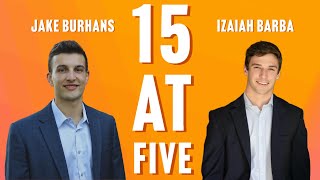
In this 15‑at‑5 livestream, host Jake Burhans interviews his partner Isaiah to recount how two college students transformed into full‑time real‑estate investors. They describe early influences like reading Rich Dad Poor Dad and the desire to buy property through a corporate entity. Isaiah secured his first mentor, Axel, via the UNH Entrepreneurship Center, learning off‑market lead generation and email marketing. A second mentor, Shane, introduced large‑scale multifamily underwriting, culminating in exposure to a 552‑unit, $77 million acquisition. The duo formed a mastermind group in junior year, sharing stock‑trading insights and real‑estate ideas, which led to their partnership. They split responsibilities: Isaiah focuses on multifamily acquisitions, while Jake handles single‑family wholesaling. Their business model uses the high‑volume, low‑margin single‑family wholesale “cash machine” to fund multifamily buy‑and‑hold investments, reinvesting cash flow rather than taking passive income early on. Key themes include leveraging college entrepreneurship clubs for mentorship, the importance of consistent cold‑calling (90 days of 3‑4 hour daily calls before the first deal), choosing between a realtor career and investing, and tailoring strategies to personal life “season.” They conclude with advice: find mentors, stay consistent, and scale by reinvesting active income, while acknowledging that older investors may prefer a W‑2 path.
Chapters
What's going on, folks? We are— meet Isaiah there, get a little feedback. We're back on 15 at 5 original version. We had an extended version with Oscar last week. If you haven't watched that, I highly recommend it. He's an entrepreneur out of Nashville. He has a media business where he promotes people's companies and he creates logos and stuff, does a lot of diversity initiatives, but super, super cool guy. I'd recommend watching that. It was 30 minutes long, a little bit longer than our normal 15-minute. I'm gonna start doing that once a month. So first Monday of the month, I'm going to bring someone in to talk. Next, uh, next week or next month, it's going to be Kyle Curtin. He's going to come in and talk about medium-term rentals. It'll be the extended edition, so it'll be 30 minutes long. Uh, but we're going to start including some, some special guests, but it'll be good. But for the, for the other versions, it'll either just be me or it'll be Isaiah and I. Uh, but today we're just going to talk about our journey. So how we got started in school, how Isaiah got started. Isaiah He's really the catalyst for all of this. So, be interested to hear from his point of view. But yeah, so Isaiah, how did you get started way back in the day? I know you've read Rich Dad Poor Dad, but how did you even get introduced to— I think Axel was your first connection, then you met Shane in a meetup, started doing some work. So, just run us through that whole story.
Yeah. So, I guess before meeting Axel, read Rich Dad Poor Dad, tried to buy a property myself, between 16 and 18. And my kind of idea was create a company first, and then the company doesn't have an age associated with it. So my idea was to apply or be pre-approved and try to buy a property with the company name, because there's no age associated with it. So that was kind of my game plan. Didn't work out. Learned a lot during that process. Yeah, didn't work out, and then I realized freshman year of college that I should probably get a mentor and kind of learn the process. So that's where I met Axel. I was part of the Entrepreneurship Center there at UNH, and he— yeah, I just reached out, obviously connections kind of thing, and then one guy was like, yeah, like this guy Axel is doing exactly what you're trying to do, and I'm like, oh, super cool. So I reached out, I think it was through— LinkedIn. And yeah, basically got connected with him, met with him, and then from there, basically I worked for him. And yeah, basically worked for him in the sense of he kind of taught me a lot of the off-market lead generation. So I was doing a lot of email marketing for him, a lot of consolidation of data for him, and then also a lot of newsletters. So really good, really good first experience, learned a lot. From there, which really helps our business today, what we're doing now.
But yeah. And I think quick, real quick, I'm gonna jump in. Quick key takeaway there is if you are in college, leveraging your entrepreneurship club or program if you have one, right? 'Cause they have a lot of connections with alumni. So I think leveraging that is a key point real quick. Sorry to cut you off.
Yeah, no, all good. But yeah, yeah, I 100% agree. 'Cause I just basically just surrounded myself with people, similar like-minded people, and was able to make something out of it. But yeah, basically learned from him. I think I did it up to junior year. But I guess sophomore year though, Axel mentioned you should just go to a lot of meetups, meet a lot of people in the industry. And sophomore year of college, I met this other guy, his name's Shane, and he's a big multifamily guy. But he was buying like 100+ units across the nation, which was like a whole different animal. And I guess preface it, Axel was buying 2 units to like 50 units in our local market in New Hampshire. So it was totally kind of two different beasts, but it was cool to see both sides of the coin. And it was cool because I connected Shane and Axel at some point. So that's kind of cool too. But yeah, so with Shane, I really learned all the underwriting when it comes to the bigger multis. So that was super beneficial for what we're doing today, just being able to run the numbers. But it's kind of a different beast though when it's like 100 units or more. But yeah, I ended up helping him acquire a 552-unit property. I think he bought it for like $77 million, which was pretty insane. At the time, just me being like 20, I didn't even know you could buy property with that much money. I don't know. I was kind of blew my mind. But yeah, basically taught me that, kind of really saw the process for that. And then I'd say it was like junior fall, I met you. And then yes, basically for how me and Jake got connected, it was me, Jake, and another buddy. We were pretty big in the stocks, so we were like, during COVID a lot of stock stuff happened. But we basically had like a, um, Jake, what was it called? It was like a money mastermind. I don't know, I forgot what our group was called. What do we call ourselves?
Yeah, I was like, no, I think it was called Mastermind. We did that for like 4, 4 times. That thing died real quick, but it was good. Um, we, uh, yeah, I guess it was, um, end of junior year, right? Because it was 2021, or it was, yeah, it was end of 2021 for junior year. Yeah, we had a mastermind.
Yeah. So basically with that, met you. Well, we met each other before, but doing some of my stuff. I was always kind of bringing to the group real estate related stuff. And I think that's what got you kind of interested in it. And then I think it was just junior, winter, it was around January. I just basically told Jake all about it. I was like, hey, you want to partner up and make this thing? Happened kind of with the mindset of 1 1 3. And taught Jake a lot of stuff, learned a lot for first time managing somebody. So learned a lot during that process. But basically tried to teach Jake everything I knew. And then kind of long story short, Jake got really good at the whole single family wholesaling side. And then I just kind of stuck with the multis to kind of have a interesting setup now where we both, uh, you really, I guess, do responsibilities tailored towards our strengths and try to reach our vision and goals as well. Um, but yeah, I don't know if you want to add anything on that, Jake, if that's kind of accurate to our story.
I know it's good, similar. Yeah, so I know what I want to do. I was like accounting, finance, because I played hockey my whole life, right? So after that, I didn't really know what I wanted to do. It's kind of freshman year of college, didn't know what to do. And I was like, oh, I want to make money, so I'm going to invest in stocks. I started reading stock books and doing that whole deal. Then I'm like, that doesn't really make sense. Like, I'm going to invest and then finally make money when I'm 70? I was like, that doesn't really like add up. Like, I'm trying to be wealthy in the next 10 years. Like, just investing $1,000 a year in stocks is not going to get it done for me. So then I read Rich Dad Poor Dad, and that kind of opened my mind, right? Rich Dad Poor Dad either clicks or it doesn't click. So it clicked for me. That was 'cause I read Rich Dad Poor Dad in the spring of 2021. So like I met you in November, or not met you, but we started in November. It was like May before that summer that I read it and it started to click. So I think I must have been asking you a bunch of questions about it or something. And then you're like, oh, do you wanna learn? But it's funny 'cause when I started, it was more like I was an intern. Like I didn't know anything. Like someone would respond on email and I'd have to like, email Isaiah to ask what to respond. I don't even know what to respond. And it's funny, like, someone respond and say like, yeah, I'm interested in selling. And I thought it was like a deal, like every time. Like, I didn't know that was like 5% of the way to getting a deal, which is funny. I'd be like, because they were saying like, yeah, we can get a referral fee, like 1%, make like $7K. I was like, $7K? Like, no way. Like, that's so much freaking money. Um, so I was just like fired up for that. But, uh, no, No, it's definitely a lot of work. But yeah, so then it was just like learn under Isaiah, and then I started cold calling that summer of 2022, like 6 months in. And that's when I kind of started the whole single-family side because we found out about wholesaling. Like, this business is phenomenal, a good way to get capital. So now we're kind of ironing it out today of like, uh, responsibilities and figuring out what we're going to do. But I think one of the key points of Switching from the story of how do we go from college kids to full-time in the real estate investment business, I think it's been consistency for a long period of time. So starting cold calling going into senior year, and we were consistently— Isaiah's emailing, I'm cold calling, right? All the way throughout senior year. So the whole time we're building, building, building, building, building, and just being consistent with it. Because we didn't get our first wholesale deal Until— took us 3 months of cold calling to get our first wholesale deal. So 90 days of calling for 3, 4 hours a day, 90 straight days, 3, 4 hours a day of calling, no results, no money, right? So that consistency, um, and then it slowly build, build, build. Then we kind of got distracted going off on 2 different routes. We were doing a little bit with Compass because it was a shiny object, and it was like, it was a good opportunity, but in the end we needed to pick one, right? It's either either realtor route, just could make a lot of money, or it's the investing side. And we were kind of given that ultimatum. It was like, well, investing was kind of the goal from the beginning, so we kind of— we have to go that way. So then we, um, yeah, and then we kind of went full-time. We got a few deals in our— luckily, at kind of a fortunate time that put some money in our pockets that allowed us to be okay for a number of months. And we've kind of just taken it from there. So And since then we've been able to, because of those few big deals, we've been able to just put all of our time and effort into going full-time. So I think ultimately the formula is meet people in school, right? If you're in college, go to meetups, meet like-minded people, get a mentor that's going to fast-track you the quickest, right? Don't make the mistakes and waste the money. You should just go find a mentor, make a little bit less money now, and then fast-track your route, right? And then just be consistent with it for a long period of time. Hopefully you get If you are consistent, you will get some deals and get some money. And once you're in a position where you feel like you want to go full-time, that's when you make the leap. But it's essentially the formula. I feel like it's pretty straightforward.
Yeah, I agree. Yeah, I was muted. I couldn't add myself in there. I need a lot of power right now with this mute.
Oh, you can't unmute it?
I don't know. Anyways, we'll figure it out after. But yeah, with the whole the realtor route. Yeah, we were in the same boat because initially I wanted to learn everything about real estate, so I wanted to do the realtor route. And I did. We did it for 6 months, but then I was just like, it wasn't really for me personally. You can make a lot of money in it, a ton of people do. But given I saw both sides of the coin in the sense that investing side, I saw it's the money with that. I see what these other guys are doing and they're killing it. And then I saw people doing really well with realtor. I'd be a realtor. And I was just like, okay, kind of my lifestyle, what I want to do, went the investing side. So I made the leap, Jake made the leap as well, because it seems like we're in a similar situation with that. And then I guess talking about— I don't know, Jake, I don't know if you want to talk about what we're doing today, what it looks like today. Basically now, You'll learn going into real estate, there's so many shiny objects. Me and Jake always kind of fall in that, but kind of refocusing. So my, or our plan is, so I'm focused on multifamily side, Jake does the single family side. And we're kind of ironing this out today, which is kind of funny. But basically the idea is acquisitions for multis, because the multifamily is where we see the wealth is, buy and hold those types of properties. And then with the single-family side, kind of do a lot more wholesaling flips of where the capital comes in. And the idea, very high-level idea, is the single-family side basically create a machine where it's like a wholesaling business with single families, and that would fund the multifamily side. And just another— what other people do as well is rather than doing single families wholesaling, people do a do the capital side by being a realtor. So you could do it that way. We just found it for ourselves, like, being pretty entrepreneurial. We just wanted to kind of create the business of— and there's a lot of competition too. There's a lot of reasons why we weren't the best fit for being a realtor. But I'm still licensed, but doing that as a full-time thing to get the capital to fund the other side, yeah, there's just a lot of reasons. But I don't know if you want to dive into that more.
Yeah, I agree with the capital side because you need the— I feel like a misconception too is with the whole Rich Dad Poor Dad passive income and the cash flow from the multifamilies, but it's like you don't necessarily want to take that cash flow because you want, at least for the first year, obviously you want to put that in an account for any capital expenditures like roof goes out, anything like that. You want to have some war chest for anything that goes wrong. But even if we could just have a cash machine like wholesaling and flipping and stuff like that on the side, that's our active income, then all of our cash flow we could essentially just reinvest in the multi-families and just scale the portfolio even faster versus trying to live off that passive cash flow. Even, even though it is, I think, our goal to, to live off the passive cash flow at a certain point. But I think starting out, we'd get to that point where we could live off of it quicker if we just didn't take the cash flow, we just reinvested it. But it would be hard to do that if we didn't have any active income. So that's kind of where it's like The cash flow machine of wholesaling and flipping, which can be easily automated. We can work our way out to being like— one of my buddies right now is like, he's like 2 hours a day in the business. He's about to be completely scaled out of it. Completely scaled out of it. So it's just literally a cash machine for him. Then he's going to focus on more other stuff like multifamilies. But yeah, I mean, I think that's it. 15 to 5, we're keeping it tight. But yeah, you can unmute yourself, can't you?
Yeah, now I can. Yeah. I guess one last thing I wanted to add was my initial idea was people become very successful as well just having a W-2 job and make money on that. That's their capital side. And then also invest in real estate and then that offsets and they become financially free. But my mindset was to fast-track that of my day job being us doing wholesaling on the single-family side and also being multis, they overlap. So just to really skyrocket the success of it because we're learning all day rather than half and half. But just a quick idea I want to throw out there. Yeah.
Just being consumed by real estate, being in it all the time so you learn more and ideally be able to make more happen. And there is overlap. So it's the age-old battle of there is overlap, but you want to focus on the one thing, right? Building one bridge is going to get you there the fastest versus trying to build multiple bridges. But Whole other thing. And the whole thing with the W-2 is like, there are some advantages in that as well though, because then you can qualify for loans easier when you're trying to buy properties and stuff. So that's not a bad route at all either. Really just depends on this, the season you are at in your life, right? Like, we're two young single guys, like, it's easy for us to go do this and like work all the time. But someone who's in their 30s or 40s, maybe has a family or kids, it's probably better for them just to stay in their W-2. And build it out that way. So it really depends on your situation, your season. But appreciate you watching. Um, I couldn't get the Facebook stream to work. I, I, I upgraded my StreamYard account, so it's supposed to be streaming on Facebook, but I couldn't get it to work. So, um, I'll get it to work for next week and we'll be live on Facebook. So, uh, you can catch us on Facebook as well and Twitter. But I hope everyone has a great week.
Cool.










