From First Generation American to Winning Best in Business: How this Entrepreneur did it!
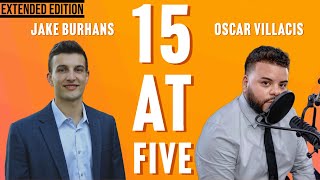
In this 30‑minute interview, host Jake Burhans talks with Oscar, founder of First Gen Multimedia (formerly First Gen American), about his path from a first‑generation immigrant background to building a community‑focused media company. The conversation begins with a catalyst incident during the COVID‑19 pandemic when a local radio host shamed Spanish‑speaking landscapers, prompting Oscar to mobilize his community, gather 48,000 petition signatures, and secure a radio time slot for his pilot podcast. This experience sparked the creation of First Gen American, a platform that amplifies diverse first‑gen stories. Oscar recounts his earlier entrepreneurial foray into a barbershop, describing how he learned business fundamentals through trial‑and‑error, partnerships, and hands‑on involvement. He emphasizes the need to understand every weak link in a venture, stay data‑driven, and know when to pivot versus persisting. The dialogue explores limiting beliefs tied to being a first‑gen entrepreneur, the importance of a clear vision, and the role of supportive networks and mastermind groups. Oscar shares practical advice: write down ideas, develop a protected plan, formalize the business entity, and keep personal affairs in order. He also highlights daily habits—listening to his own shows and staying connected with guests—as sources of motivation. The interview closes with Oscar’s request for audience support and a plug for his website (fgmshows.com).
Chapters
What is going on, y'all? 15 at 5, we got our first extended edition. Here with my man Oscar. I met Oscar back at Aria last year, actually went on his radio show. So now I'm giving him a chance to come on, what he's kind of done with his whole company. Pretty incredible. But what's going on, Oscar?
Thank you for having me, man. Sorry about that. No worries. Thank you for having me.
Business, man. Business doesn't shut off.
Yeah, yeah. I'm excited to be on the show and You know, I appreciate the opportunity and obviously to highlight a lot of, uh, the struggles and the triumphs of being an entrepreneur that not a lot of people, uh, like to express, especially, you know, when we have social media right at our fingertips, you know, and we're, and we're looking at all these inspiring videos of becoming entrepreneur and you can make it. But it's that, it's the, uh, it's the behind the scenes that really people don't really get to see. And I want to share my story and I want to. And I appreciate you letting me, uh, see your platform.
100%, man. I really couldn't agree more. Uh, I mean, I think it's good to have that flashy stuff on Instagram because it gets people engaged and interested in doing it, but I think that doesn't get you through the tough times that it requires sometimes to actually make it and sustain yourself in the, in the business. Um, we'll definitely get into that. So first, just like quick background on you, on the quick one too, how you got to where, to where you are and where you're sitting right now.
Yeah, so this all started about 3 years ago in the middle of the— at the beginning of the pandemic, actually. This opportunity came about, I don't know if anybody remembers, here in Nashua, New Hampshire, there was a racist rant that happened in front of a radio station. There was this lady that saw some landscapers that were helping businesses, restaurant businesses, social distance and stay open with outside seating and and helping prevent the spread of the virus, etc., etc. So they contracted, the city contracted local, a local landscaping company to come into the city and set up these 6-foot distance chairs outside and make it look nice with the barriers, etc., etc. So this lady was doing a radio, had a radio show here in our local radio station here in Oshawa, and she just had a completely different point of view. She was upset that she couldn't park right up front because these buildings these businesses were taking up parking spots. And long story short, she overheard the landscapers that were here legally and had working visas. She overheard them speaking Spanish, so she decided to take out her phone and go live within our platform and shun them for not speaking English in America. And they were speaking Spanish, and they were communicating with their foreman in the best way that they know how. He was an American foreman that was speaking Spanish, and she just shunned him, and she just completely, you know, with a lot of hatred and bigotry, what was being broadcast in that day, she felt the right to express that, that she was upset. And from that moment, I was starting to get tagged on social media from this live that happened within my community. A lot of people started tagging me about this video, and I was baffled. I couldn't understand that this was happening here in Nashua in these times, you know, where people are dying and we're noticing, you know, the world coming together in solidarity, and this woman decided to shun these gentlemen down. So I decided to come down with a friend of mine, an artist, a friend of mine who's a local artist, and talk to these gentlemen and empathize with them and In a situation where we know that this is a normal everyday for us because we get this, believe it or not, we get this on a normal basis. And some of us have grown up with this, but we totally empathize with them understanding that this is not the way it should be. That we as Latinos are essential workers. We're your landscapers, we're your construction workers, we're your electricians, we're your plumbers, we're your nannies, we're your cleaners. In all aspects, we were keeping the economy alive in situations where people were afraid to work. So how dare she come in with this manner to shut down individuals that had the right to speak in any language that they wanted, because this is what America stands for, the welcoming of the freedom and the diversity that it truly deserves. So from that moment, he said, hey, she's actually at a local radio station right across the street. We should go talk to the owners of the radio station and see if they can do anything about it. They decided not to because this happened outside, freedom of speech, et cetera, et cetera. If it would have happened in the radio station, they would have gone another route. Long story short, we decided to take further action. And within 48 hours, we decided to get 48,000 signatures. This happened on a Friday. By Monday morning, we delivered those signatures We delivered those petitions, electronic petitions, handed it to the radio station owners. They had no other choice but to get it removed. I had a pilot podcast called First Gen American. And what First Gen American is, is the swinging pendulum between the countries that our parents have left behind and the countries that we were born into but not fully accepted in, in this manner of situations like this. So what I wanted to do is I wanted to talk about the diversity within our community. Yes, there's a lot of first gen Americans here that are happening every single day in America, but not all stories, not all journeys are alike. So by grabbing that perspective and educating the community from different perspective of different walks of life, we can educate and also inspire a lot of other individuals from that moment and those shows and giving it the platform and the opportunities of individuals and communities that don't really get the highlight that they deserve, right? So from that moment, I went to the radio station, we got it removed, there was a slot available, I fundraised enough money to buy that time slot, and now from her audience members that were listening to all this rhetoric about hatred, about bigotry, now we're educating them with first-gen American stories and the inspiration between the American dream and how it is that each individual obtains it. From the first-hand perspective, right? Because we all are either first-gen American or fifth-generation American, right? But we have to pay homage to the individuals that took that stride and got us here to obtain that American dream. And from those shows, we were able to develop so many more, like Asking for a Friend, to be able to give you the opportunity to come on our show, but to be educated on entrepreneurs like yourself, man, and how to obtain that American dream. By investing and buying homes and getting into that real estate market.
Incredible, man. It's absolutely incredible. When I first heard that story, I was just dumbfounded. But the fact to even say something, right, to have the courage to say something is one thing, right? It's another thing to just change the whole landscape of that radio station, right? And people listening to the radio in Nashua and creating a business. But you must have had some sort of entrepreneurial drive before that, right? Because how do you just, how do you just get up and start a business out of nowhere? Like, how do you have that that mental fortitude, that attitude, that drive? Like, had you wanted to start something entrepreneurial before, and this is kind of like the perfect opportunity, or explain that?
I actually, um, you know what, like, before I turned— I said to myself, before I turned 30, you know, um, I wanted to— I wanted to give entrepreneurship a shot. And, and, you know, and it was presented to me by my first business was actually a a barbershop, a hair studio. Never cut hair, never lifted a clipper in my life, you know, but the individual that I got involved with at the time, um, he was a master barber and he had already a little bit of experience in, in the industry. You know, he had the clientele, so it made sense that I can bring the operational aspect of it while he brings the creative side of it. Right. Um, and you know, from trial and error, I never went to school for business. You know, I just gathered my resources from around, from around the community. Like who's, what, what, what does it entail to open a business? You know, do you need, okay, you need an accountant, uh, you need a bookkeeper, um, et cetera, et cetera. And you need a lawyer, you need to register and, and the, and, and trial and error. That's what business is all about. That's what entrepreneurship is all about. You can, you, you know, I was talking to somebody about this the other day. Um, you can be. You can be great at what you're doing right now, and you're only as good as your last project. But come tomorrow, you can have a completely new, different perspective on business, and you have to pivot. Now, the individuals that are successful will roll with those punches and say, I gotta reinvent myself. And then within my lifetime and, and in my journey as a first gen, I had to reinvent myself constantly over and over because the opportunities weren't presented to me. I had to go out there and get them, and I had to go out there and get them. And it wasn't a blueprint that was handed to me. I just had to learn through trial and error. Some, some ventures cost me more money than others. And, and like partnerships, and like with any other business, you know, it's like a marriage. And some businesses, some business ideas are good, some partnerships are bad, and vice versa. And I learned, and I knew that whatever didn't work on this business, I wouldn't— I would make sure that I won't commit that same mistake on the next business moving forward.
Absolutely. I think that's one of the biggest challenges for people in entrepreneurship is the, um, fear of failure. It's one of the biggest fears, I think, for anyone doing anything. Um, and I don't know if it's because we're trained in school to get A's and you're, you're afraid to get bad, bad grades. That kind of translates to other aspects of life, right? You don't want to fail. Uh, but it's such an integral part of being successful is failing, right? Because you have to try different things and see what works. And you're going to say you fail 9 times out of 10, but the 10th business idea takes off and that's what kind of catapults you to the next stage. You had mentioned that you are— you've constantly had to adapt. What are some of the ways that you've had to adapt as an entrepreneur, whether it's starting from that barbershop and going to the multimedia business or even just within the multimedia business? How have you adapted?
The way that I have adapted— and I appreciate this question— You know, because I've adapted in situations where I know that there was a need, but there was an internal need within myself to get involved in that area of opportunity within the business and not panned it off because it was convenient. Right. Um, getting, getting involved, literally learning the layout of what type of projects come in and out of your business to familiarize yourself. Those are successful business owners. And for me, for the, for the longest, for the longest time, I thought that entrepreneurship, the misconception was entrepreneurship is about delegating. Right. And the true aspect about it is you're only as strong as your weak link. I think you're only as strong as the— I think that the— you're only as strong as, as how much input you have within your business. Right. And that comes in within knowing the logistics of in and out. And I did at the first, at the first grasp of my first business, I didn't have that. I, I should have picked up a clipper and familiarized myself within that so I can have that strength so that I'm not weak in that aspect, right? And, and vice versa within my partner. But because of those— because we were so focused, laser focused on those strengths instead of looking at the layout, um, that, that made some challenges. And that's where some heads, um, were, you know, that's where the headbutting kids, you know, and, and learning the layout. Um, reinventing yourself. Reinventing yourself is knowing the difference between you're something— you're good at something or you're great at something. Are you willing to sacrifice the good to become great? And when you're by yourself at nighttime and you're, you're resting your, your head in that pillow, on that soft pillow, and the world is crumbling, you need to find that strength and that motivation within yourself to get up and say This is not working. I want to cut my ties. I want to reinvent myself, and I want to continue moving forward. I want to— regardless of the whole world being against you, whether your partners are not agreeing with you, whether, whether you're not seeing eye to eye, or whether you're a sole proprietor, you're by yourself, you have to pick yourself up and say, and be, and, and be completely honest with yourself and say, this is not working. Forget about the noise, forget about the validation, forget about the praises that you get. If you're praise-driven especially within small communities in New Hampshire that we live in. If you're praise-driven because you're brand new, you're exciting, you're something new, and all of a sudden that noise goes away, you have to be true to yourself and say, well, thank you for the praise. I know who I am and I know what I have that it takes to make this business keep thriving and successful. This is what I'm gonna do.
100%. That— and that's just phenomenal stuff. I think one of the big things with that is 'Cause obviously things take time, right? So what point do you realize that this is not working, I need to pivot versus I need to last this out? Because it's like for us in real estate, when we're lead generating, we're marketing, we gotta do a marketing strategy for at least 6 months, right? So it's not like, say after a month doesn't work, oh, this doesn't work, I'm gonna pivot, right? You just haven't done it long enough, right? You have to do it for 6, 7 months. It's kind of a similar situation to what you're saying, right? But on a larger scale, you have a business endeavor at what point do you realize like this isn't working versus I just haven't done it long enough?
Yeah, for some people, for every, every, um, every timeline is different for every business, you know. It's not an all-size, one-size-fits-all, but I would say, you know, really look at your— be, be consistent on how you manage your business. And, um, most importantly, look at your data. Look at your, look at your spreadsheets, you know, look at, look at your invoices. What made, what made this client come back? In, in small communities like this and in, in towns like this, especially in New England and New Hampshire, uh, the most successful businesses have the longest rapport. The consistency is what will make you successful. It doesn't matter what project you did last. That was an amazing project. What's next? And keep, and keep pivoting and keep, how can I improve this? How can I structure this? How can I multiply this? And for me to be able to look at that, um, was through, through my invoices, through what, okay, from, from what quarter to what quarter did I become stagnant that nothing was coming in, right? What was, what, what quarter was successful within the last, I'm only I'm only 3 years young in this business, right? So I'm looking at all the data from before. Now that I have the consistency, I'm looking at all the data of what wasted my time and my energy and my, and my money. How was that sufficient enough and what made, what produced the most? Okay. This is successful. And what you're passionate about doing, because if you're not passionate about what you're doing, right. And you can make some, and the money is the plus. Right. The money's a plus that you, you, you're hoping that you're generating some money somewhere somehow. But if you're still consistent with your creativity and what truly sparks some on, on what keeps you going, everything else is an add-on. You can, you can be super successful.
I agree. Especially if you're playing the long game, right? The infinite game. If you ever read the book, um, The Infinite Game by Simon Sinek, it's a great book. Uh, but It's about the long game, right? And if you're just chasing money, and I've kind of realized this as well, if you're just chasing money, you're not gonna last. You'll never last. So it's gotta be something you're passionate about. And then yeah, like you said, the money is gravy and that comes as a byproduct of what you're trying to do, but the money can't be the focus. And then obviously your KPIs are absolutely vital, even for us, right? Those are metrics, right? That's when you can actually make business decisions, right? For us, it's like, where's our marketing dollars going? Where are we getting the most deals? Okay, let's double down on that. Same thing for you, right? Where are the majority of my clients coming from? Maybe they're coming from a certain sector of Nashua or a certain demographic, right? Let's double or triple down on that demographic because that's where we're getting the highest ROI. So that's super important. One thing I want to shift to real quick is on the belief side, what were some limiting beliefs you've had throughout this journey and how have you overcome those?
Limiting beliefs. You know, as a first gen myself, you know, starting this company and starting this media company, you know, from the opportunity of the radio and finding a need within my community and engaging with these individuals from the BIPOC community, the limited beliefs is it can't be done because there's other marketing agencies, there's other advertising agencies, that are doing it, you know, at a bigger scale than you. Why you with minimum resource, minimum funding? Why would you think that you're going to be successful at something? I think that it's important. I think that it's important to not take for granted that motivation. And cut the noise of those limited beliefs, because a lot of people within your own community will say they're projecting, they're projecting their own fears. Uh, limited beliefs is crucial within, you know, your loved ones, your family members, you know, especially being a father for the first time, you know, how are you going to provide? Those, those limited beliefs are— it's, uh, it's tough, especially when you hear from mentors that, that you look up to that will sometimes push their own doubt again. It's tough. But, um, if I'm answering the question—
no, that's great, that's great. I think, and I think part of it you alluded to is, um, I think, I think your vision plays into this. What is your overall vision for the company, for yourself? Um, and that's got to be stronger than everything else, right? That has to be stronger than every— all that other noise for for you to keep pushing forward, right? Um, because if one little criticism or one person doubting you knocks you off, then you probably weren't that serious about in the beginning, or you didn't have a big enough, big enough why, right? So, so I agree. And I think, uh, also being around the right people is vital.
Absolutely.
So being around people who are like-minded, uh, because you guys will feed off each other. Um, there's a certain energy when you're around people. It's like the idea of this mastermind. Just people with similar energy, similar mindset in the same area, and everything just multiplies. Um, it's just absolutely phenomenal.
If I may, one thing that I would like to, um, add to that is, um, a lot of entrepreneurs will have the capital to start a business but won't have the mindset, won't have the grit to follow through. But I say for the viewers and anybody that's listening, I would say that if you're gonna start a business, if you're gonna take that significant leap, I would say have your personal affairs in order. Have your personal affairs in order. And for young— and, and, and for young males like, like, like ourselves, right, in an aspect where I'm— the reason I've been so successful is because I haven't had distractions around my, my, my surroundings, whether I'm, I'm in and out of the business. I'm laser focused. You become your business, you consume your business, right? But you have to have a perfect balance, and that perfect balance has to be aligned with your per— your personal, uh, perspectives too. You know, your personal— if, if you don't have a, a well-balanced home, you're not going to have a well-balanced business. If you don't have your personal relationships in order, you're not going to have your professional relationships in order. That has to sync and align That's where the marriage comes from within entrepreneurship. That's where all this component— the components make sense. And for a lot of people, they feel like they got it, they— until it's time to understand that they don't. And then that's a hard pill to swallow.
Yeah, it's kind of all— it's all interconnected, you know, personal, professional. And that's why it's important to— it's interesting when you're a different season of your life, right? You may have been in the— I might have been in the college season, now I'm in the business season. It's like kind of gotta adjust and figure out kind of the people you want around you, right? Because they're going to influence you. And it's one of the truest things ever. Jim Rohn, I think, said it, but you are the sum of the 5 people that you spend the most time with.
It's just a fact.
And you will either elevate to them or you will, you'll succumb to them. So you gotta be hyper aware of, of who's around you.
Absolutely. Yeah, you know, your net worth Your network is your net worth.
It is, it is. It's the most cliché thing ever, but it is so true. It's insane, it's insane. You can literally know everyone and literally make money from just, for one thing, just connecting people. You can be a connector, right? And then two, you'd be astonished how many doors get open from networking and knowing people, right? How many people do you hear that just get jobs because they know someone? Literally didn't have anything to do with the resume or what they did, but they knew like whoever they knew John and John knew Jim and Jim gave you the job, right? It's incredible what network will do for you. Couple of things I wanna hit on before we're over here is advice. So what do you, what kind of advice do you have for maybe someone who's looking to start a side hustle or start a business and really wants to get into it but may have some obviously limiting beliefs or something like that, or maybe someone who's just getting started trying to scale it up and make it full-time?
Yeah.
What do you say for that?
That's a good question. Um, my recommendation for, for anybody that's starting a business or to think that they're starting a business, right? Or just the idea, the notion of starting a business would be write everything down, write everything down. I don't care if it's that first initial thought that might look like it's unobtainable, it's unreachable, write it down. And the reason why is because no matter where you are in life, you're always going to come back to that piece of paper, that thought, that note that inspired you from the first place. And it's going to re— and it's going to re-spark that energy and that vision. And you're going to look at yourself maybe 6 months from that initial thought, maybe a year, 2 years, 3 years, maybe 10 years. And you're going to look at yourself and you're going to be like, that's why I started. That's why I became passionate. That's why that's the idea that sparked, that innovated and changed everything. Right. And the second is after that idea, start a plan, start a plan, keep it to yourself. Don't advertise. Don't premature celebrate. Remember nobody, no, everybody has a great idea. Nobody wants to put in the work. Right. And every individual that is, that is excited for you won't pick in the housing industry or wherever industry you're in. Nobody will pick up a pen, a phone, or a hammer for you because you're not there yet. That glorifying validation, it all happens in waves, right? Write that idea down, make a plan. And protect that plan. Those are the 3 crucial steps on becoming an entrepreneur. Simplify it. Don't overthink it. As in, we're in a generation that is constantly on, on social media and we're looking at self-help books and somebody's running an ad and all of a sudden, do you want to become an entrepreneur? These are the 5 steps on how to do it. Forget all that. Some way, somehow there's a schmuck that's going to take your money and it's going to be like, well, I got you to this point and then, uh, see you later. Good luck. And it's not a one size fits all, like I said earlier, but I would say write it down, make a plan, protect that plan regardless of who it is, who you are inviting to the table. Spark that idea and keep that close to your chest and run with it. Run. Don't be afraid. Don't be afraid to fail. So what, you got a secure job right now. You're, you're, you're surviving. You see, I like to call people that are half entrepreneurs, half self-employed, I like to call those survival jobs. Those jobs that are going to get you through to the idea of the initial key entry to getting that business off the ground and turning the lights on, on that brick and mortar e-commerce, right? Those ideas, those ideas are crucial. Those plans are impeccable. They have to be bulletproof because regardless of your sole proprietor or partner, it keeps— if you're a partner, it keeps everybody honest. This is why you came into business. This is what is expected from you. This is why I come to the business. This is what is expected of me. Right. And stay true to that. Stay true to that plan. Right. And then protecting it, protecting it, how is becoming an LLC or whatever, whatever the entity you want to start off with. Right, and getting a business lawyer to overlook it. The situation, you go 50/50 with your partners. If they don't have initial costs to come to even protect your plan, then you know where, you know where it's at.
Love that. That is awesome. That is some great tactical tips right there. Um, I think that's both kind of, uh, that's like tactical and it kind of helps with your vision, right? It's like your vision, write it down, protect it. Um, and stay true to that. And I think integrated into that plan's got to be some sort of big why, like mission, right? Um, but I, I love that.
Yeah, that all comes into the, you know, the inspiration. Why is, is, is the crucial note, the beginning. You want to start this? Why am I passionate about this? Is there a need? Is there, is there competition within a 25-mile radius? Is there competition right next door? What's up? What separates me from them? What separates them from me, you know, vice versa. You know, for me, when I wanted to start in Full Circle, I did the radio show. I interviewed people from my community. I saw that they were inspired after the show. Instead of saying, thank you very much for your story, see you later, I got content, they came back and said, you know what, I love what you're doing. I actually have ideas to start a business. From that moment, I said, well, let me teach you the ways from my mistakes to protect you. And let me open the doors on avenues of connections that I have to make your dream possible, right? Let me fast-track this for you. And then, you know what, when you're ready, let me advertise and let me, and let me do a marketing strategy for you. And we can do it in areas that we've never been approached before with news collaboratives. This New Hampshire Business Magazine started a whole new article called 603 Diversity because of First Gen American. They saw that there was a lot of individuals that were getting interviewed and they wanted to piggyback off of that.
That's real change. I mean, that's real change. I feel like that's the whole goal of what you're trying to do. So that must be very satisfying to see that kind of, that change in, in best of business. Um, real quick, 3 questions I ask, I ask every guest here. Who has influenced your personal and professional development the most, right? And what I mean by this is either someone you follow, look up to, or either like provides a ton of value to people. So it could be someone you follow on social media or some sort of business person, or it could be not a business person, but who's kind of influenced you and kept your drive going, would you say? Someone you followed. You don't have to know them. It could just be someone you follow.
Oh, obviously within my timeline in life, a lot of it But the first individual that comes to mind is without a doubt my dad. My dad came into this country, you know, you hear stories about first gen. My dad came into this country with $2 in his pocket. You know, I was born and raised in New York. He landed in New York City, you know, for the first time. Still doesn't know English that well, knows how to defend himself here and there. You know, he came here real young and didn't know the language and decided to become a plumber and jumped into the trade by helping other individuals and learning how. And from there, he decided to become a handyman in Brooklyn in the '80s and '90s and was really successful. He didn't have a marketing strategy. His success was all by word of mouth. So that— he keeps me honest. That story keeps me inspired. Inspired, and it keeps me honest of how to build relationships, how to obtain those relationships, and how to stay true to yourself, you know. A word of mouth goes a long way than $3,000 to $10,000 advertising that you have, that you'll do throughout your quarter, you know. So, um, that keeps me honest. I mean, my wife, my wife is my backbone, man. Like, you know, when I'm, when I feel defeated and I feel like, like life is, is crumbling. She's the, she's the one that reminds me of a lot of accomplishments. And it's, and it's hard for us to forget because we're in the now right now. What's happening right now? What's, what's going on? Are we succeeding? We have revenue coming in, and sometimes we can be stagnant for a couple of weeks with, with no, with no sight of the future. But if you have those individuals around you that, that, that means something, that know who you are in your darkest and in your lightest moments, and they constantly remind you you've accomplished a lot of things. Get you together and let's go.
Get up.
I love it.
I love it. That's so good. That's so good. Um, what is the single most important thing you do every day that helps you stay on track and stay productive?
Back to that note, I listen to some of my shows. I hear— I stay engaged with some of my guests. You know, from my community, from first— from first-gen American, and I follow them on social media and I see how they're progressing. And, and that inspiration from them telling me that story and telling the audience that story and comparing where they are from the first time that they had that interview, just like yourself, to where they are now. Every single person that I've had in each individual show Those individuals inspire me. First Gen Multimedia, First Gen American is not about me. It's about us and how we're collectively coming together and connecting with the BIPOC community and bridging that gap with individuals like yourself to teach us the way, to inspire us.
That's absolutely— absolutely. I love it. I love it. And last one, what do you need in your business right now? Where are you like— what do you— is there anything you need from the audience? Um, how can our audience help you progress forward?
You know, I, I think that, um, I think that education is big right now, especially in so many areas that we're consuming it, right? But I would, I would, I would invite your audience members and, and anybody that's watching or listening to this to, to, to see it from a first-gen's perspective, somebody that has a whole lot of weight on their shoulders, right, that feels that pressure of achieving the American dream because of the sacrifices that their parents have made to come here and to become something, right? And to see how they get up regardless of not knowing and educating themselves in every single aspect of life with the world against us in situations of opportunities that haven't been presented and the ways that we're navigating through these networks and still becoming something, creating something amazing, and then going back into our community and inspiring, right? That's something that I would love, and I do love to share every single day. No different than the person that opened the food truck, no different than the artist, the first-gen artist that opened their art gallery. That have nonprofits, that have, you know, that, that are construction workers. Those individuals, those stories— everybody always, everybody's so intrigued about the finished product. I'm more intrigued about the journey, and I invite everybody to listen.
I love it. So many different avenues we could go down and talk about this for hours, but, um, I think that's a really good point you bring up because I think entrepreneurship The goal of entrepreneurship is to develop, right? Create businesses and better the community around you, right? Better the economy, whether it's the economy or the community or whatever your mission is. I think that's the goal of entrepreneurship ultimately is to make things around you better. And I think you're doing that. You're making an impact and I respect everything you're doing. I appreciate you coming on today, man. We keep it tight here, just over the 30-minute mark, but I appreciate you coming. Where can people, uh, find more about you? I'll make sure to put that in the, in the show notes.
Yeah, sure. Fgmshows.com.
FGM Shows, you heard it here first, folks. Um, well, yeah, I appreciate everyone watching, um, and everyone who will watch us in the future. But, um, yeah, for now, that is it. Peace.










