How Leveraging Partnerships has Built our Business
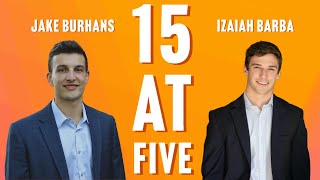
Jake Burhans and Isaiah explain how partnering transformed their real estate business from solo operations to multi-state scaling. They share deals with Axel and Mike Gomes that wouldn't have happened alone, and map their partnership roles using CliftonStrengths to keep responsibilities distinct and complementary.
Chapters
What is going on, people? We are back, 15 at 5, the original edition. Quick 15 minutes. We're a little bit late here to the rip, which is very uncharacteristic of us as we like to be efficient. But, um, I wanted to get back and talk about a really important topic, I think, which is partnerships. And not necessarily partnerships like Isaiah and I are partners, but how you can squad up with people in your, in your marketplace and do more deals, right? The whole mindset behind being a partner and what it means to operate with partners on deals and how it really just can blow up your business. Because I feel like a lot of people have this limiting mindset of, "I don't want to share the profits. I don't want to give up part of the deal to this partner." I think it really holds people back because you could be doing so many more deals if you just partnered up. Yeah, you might not get as much each deal, but think about the lifetime of that relationship and what it could give you. But how's it going, Isaiah?
Yeah, no, that's super true. Doing well, though. Doing well. Excited for this conversation today.
Out in the woods, looking good.
Yeah. In nature. Yeah, outside.
Outside today. Okay, perfect. First question I want to ask, I guess, both of us is, how has your view on partnerships changed from when you first got into real estate? To now, right? I know we've done a few deals, we've acquired multifamily properties through partnerships, right? Um, we're working on a few, um, wholesale transactions right now that we use partners on. How is your view of partners? How did it start, if you can think back of 4 or 5 years ago, and where is it at today?
I think it's definitely a big switch in the sense that initially Read Rich Dad Poor Dad and I was like, "I want to do all this stuff myself." I don't know. I guess a very independent mindset. I just thought I could do everything myself. And then I think it's totally flip-flopped now where basically it's like, "You go fast, go alone. Go far, go together." I don't know where that quote came from. But I guess that kind of relates to me and you kind of thing. But in general, for so many deals, I realize in real estate, it's such a collaboration business where you can just go so much farther if you kind of bring people in rather than think you're just by yourself and compete against everybody. Because what's really cool about the whole real estate industry is the amount of win-win situations that you can create, which is like so awesome. Like everybody could win. A seller could win by getting the price that they want, the buyer could win. And I guess to kind of go into the partnerships, of what we go into is a lot of the deals, they kind of fell into our lap in the sense that, not necessarily deals, but for them to be able to get to the closing table because we needed the money. That was our kind of biggest hurdle. So having partners where they could bring in the money, we still get equity in the deal. That was a massive mindset shift. And even though, yeah, it's a small percentage of equity that we get into some of these deals when we do do that model, it's very beneficial because we learn that whole process and we still get some ownership without any of our money. That's just one obviously example. But yeah, it's been a massive change. Yeah.
No, I agree. I think there's different things partners can bring, right? You can partner up on multifamily deals, right? For our multi-deals, we needed capital, right? We brought in someone who could do capital and even some of the management. But I think another aspect of partnerships are someone bringing a certain set of skills, right? Maybe if you're in the beginning stages of your real estate career, it's the best thing to do is to squad up with people, right? You can go do the legwork and have them close the deal, right? You can still get a cut of it. Um, I think a lot of people like, I don't want to do that in the beginning. I want all the money. Like, I want my $10,000 assignment fee. I'm not going to cut that up to anyone else, right? Um, but I think it's just a very limiting mindset in that Uh, looking at the lifetime of the relationship, if you could build that relationship, think about all the money you're going to make over 5, 10, 15, 20 years versus on one deal. Um, and the other thing about squatting up, especially in the beginning with people who are experienced, you can avoid so many mistakes. Like, think about, okay, maybe I'm not making the full $10K if that's like an assignment fee for wholesale, but think about the potential downside. Like, what if you screwed up on something You put way too much EMD down and it went hard, meaning that you couldn't get it back after the inspection period because you didn't know what you were doing. Having people who know what they're doing, bringing them in, can play a huge role, much more than just the money aspect, right? And they can teach you valuable skills. There's a couple of different scenarios. I mentioned the multifamily, right? That's when we brought Axel in. There's another deal with our buddy, Mike Gomes, He's squatted up with us on a couple deals. One of them was a subject-to deal. No way. I don't even know subject-to. I've never done a subject-to transaction. We were able to get in there and help the seller who was having trouble paying their mortgage, but on a subject-to transaction. If we didn't squat up with Mike on that, we wouldn't have made no money on that. And another deal was over near Concord, and it was just straight sales skills. It's just negotiation. And Mike's just a killer on the phone, so he was able to get the price down to a thing that made sense when no one else could. So it's kind of cool being able to do deals that you otherwise wouldn't.
Yeah. No, and going off of that, I think it really helps the— I don't know, it makes your learning curve that much faster. I don't know, when you partner with somebody, yeah, you're not making as much, but you can literally learn the whole transaction and make it You just see him do it. Yeah, it's your deal. You might get a little bit something. I think it's just benefit to get anything out of it, just to learn the transaction, to not make those mistakes moving forward, like you said, and be able to be confident when you come across that opportunity again, to be able to take it down yourself. It's insane because people, I don't know, the mindset of people pay for that education. You would pay for that, but you can just bring somebody in, get maybe a little bit of money, and then also learn exactly how to do it. You're there, like a real-life example is, I don't know, pretty insane game changer, that whole thing.
Yeah. There's so many different components of the partnership too. It's like, even for us, we're trying to implement the virtual model. It's like, we got to have partners in every state. Got to partner partners down in Florida and South Carolina. It's like, you literally can do deals anywhere if you have partners. If you want to try to do everything yourself, it's impossible. You literally cannot implement a virtual model if you don't partner up. It's the only way.
Finding partners though, it's not necessarily like you split it 50/50 every time. I think when we say partners, it's like somebody just to help you. And it could be a different structure every time. It could be like 10/90, 50/50, 40/60. And I think just having a conversation with the person that you're basically helping or they're helping you or vice versa, or both happening, um, it's just, it's just huge. Uh, yeah, and just gets you that much farther and you do so much more, like what we're trying to do, the whole virtual model.
Yeah, I think the term— I like the term squatting up because it's just like, I think maybe partner even has kind of a negative connotation. Like maybe it rubs people the wrong way, like partner, because everyone always hears about partnerships gone wrong and partnerships gone awry, you know what I mean? So I think thinking about it as just squatting up with people in your place. And it's like the whole collaboration over competition mindset, right? Uh, just, just doing a lot of deals with people in the area. And it's so much easier to, to work like that, just to have good relationships with everyone instead of always trying to compete. Um, you have their best interest in mind, they have your best interest in mind. You guys are just trying to, to, to— you guys are competing, but, um, you're also collaborating. That's pretty Pretty interesting mindset, but that's just the whole like on a deal basis partnership, right? And then there's our partnership, right? So partnership in a business, which is interesting. Because we should probably definitely touch on that, but there's definitely different things, different makeups of partnerships, right? There's the whole integrator-visionary model, which is made popular by Rocket Fuel, a Gino Wickman book, I believe. A lot of entrepreneurs in the real estate investment space follow, which is good. Um, but I think different personalities have different makeups of that. Um, and we actually both just took a personality test from, um, CliftonStrengths. CliftonStrengths, which is— which was incredible, honestly. It was great. Like, it's, um, one of my close family friends, she's an executive coach, uh, and she, uh, that's what she does. She coaches executives on like leadership and like putting teaches people how to put people in the right roles, assessing what their role is. Um, so it was interesting to take this because like the DISC test is like the most basic. She says, says there's 4 types of people. The Myers-Briggs test is like a little better, still pretty basic, says there's only 16 types of people in the world. The CliftonStrengths, in order to get the top 5 themes, which is like what you are— are you a Discipline Achiever, are you a Connector, or Relator, whatever you are— to get those top 5 themes with the same level of each theme. You can get like a— so if I'm an Achiever as my number 1, I have a certain level, right? Like maybe I'm like 40% Achiever. To get those same 5 as someone else, like 1 in 7 million. So it's a very like specific test, um, but we were able to take that test and we actually kind of realized what the roles were, right? So we're kind of trying to define these now, but, um, me is more of like the action taker, the doer. Like I'm like the bull in the china shop, right? And Isaiah's kind of the, the overlooker, right? He's steering, he's steering a little bit.
It's kind of like, all right, I'll see my analogy, my analogy that I used the other day. Um, so the train, right? And you are the person like working in the train, like making the train move. And then I'm the, um, so that's the integrator basically. But like not necessarily integrator, we have our own kind of definitions. But basically like your position is a lot of doing the sales, and then mine's steering, making sure we're at the rights. I'm driving the train, making sure we go through our vision, like our end goal. Um, I don't know, it's kind of a huge digress. But then going— then we have a repairman. I realize that's kind of our third person that we need, which kind of shows, I guess, it does bring in, uh, partners. We do need another partner where we need somebody to kind of— when our system breaks, we need somebody to kind of come in and fix that. And right now we're doing that, which is kind of taking away from our, our main roles of, um, care and you're the doer, but probably better terms.
I think the biggest part of the partner, the point of a partner is so that they can do stuff that you don't want to do or that you're not good at, right? Like, that's the whole point of— we are talking about partnerships in a, like, in a business sense, right? And if, like, a 50/50, like, you want to be part of a business together for a long period of time, it's like you want partners with different strengths, obviously. So, like, me, it's like I feel good and I just, like, get on the phones, I pound the phones, I just want to call people all day and close deals. Like, that's how I feel productive. Isaiah is more of like visionary. He wants to kind of sit back, make sure everything's working properly, look at the vision and stuff, right? So we have different, different ways we gauge our productivity and you need both of those in the business, right? So that's good. And the CliftonStrengths really helped us realize that, right? Realize where we should be and where we're going to feel like fulfilled. And that's not to say that I only do the phones and I don't do systems or visionary work, but that's like my dominant feature. As we were saying yesterday, it's kind of like those are our dominant features. Features. The one thing we're missing is like the systems person on the back end is going to do all the nitty-gritty when stuff breaks, like the CRM's not working or the Notion's not working or something like that. We need someone to go in there, which is kind of not really a high dollar an hour task, but we need someone to go in there and fix that. So it's like those three roles, right? It's like the steerer, the visionary, and then it's like the doer who's in there like pounding the phones, doing the sales, driving revenue in the door, right? And then there's like the fixer. There's like terrible terms I made up. We have figure out better terms for them, but the steerer who steers the vision, the doer who does the work, and the fixer when things go wrong, they're just like running around like trying to repair stuff, right? Not necessarily what we wanna be doing, but just kind of interesting. So I think it works, right? Visionary Integrator from Gina Wickman, it's a great model. I don't think it's, it definitely works, but I think some things can be tweaked depending on the people, right? Um, so I don't think that's just like the end-all be-all for partnerships. But, um, I think the biggest takeaway is in partnerships, whether it's a business or a deal, you want partners that are bringing different strengths to the table, right?
Different—
or playing different responsibilities, um, so you're not stepping on each other's toes, uh, and that's just like the most effective thing, right? 1 1 4, that's like the goal, right? But you need people with different strengths.
Yeah. And going off of that, one thing I forgot to mention was just squatting up with people, bringing in people for deals and stuff. A huge benefit is leveraging their network, which is like pretty vital. Like say you're, you should have like a whole team, like property manager, contractor, all this stuff. Say you just find the deal and you have the money, but you don't have the whole team in place and you can get the deal done, just squatting up somebody with somebody. They get equity or they could just get a return on their money. And it's a huge benefit because you can just borrow their network, which is pretty cool. And I'm kind of learning a lot about this right now, reading Raising Private Capital by Matt Orloff or something like that. But it's interesting. It's a great book. I recommend if you're looking to raise private capital, but it kind of explains a lot on partners and how you can bring them as an equity partner and the value that they should provide. And then also, if you bring them in as just a cash, it basically is a cash provider in the sense that you give them a fixed return and basically helps your velocity of money so you can buy more deals without putting your own money in. But yeah, pretty cool though, pretty cool. I think partnerships are the move because you can just go so much farther.
100%, all about relationships, right? Everything comes from relationships, money, Everything stems from people, right? So might as well build the relationships. Um, that's it. That's 15 to 5. This is really just a show for food for thought, right? Just 15 minutes. Um, and if there's anything specifically in here that you're curious about, leave a comment either on YouTube or Facebook and give us some ideas for topics in the future. If you want us to explain anything further, we can make that a topic going forward. Uh, like I said, this is just food for thought. I wanted to give you our quick 1, 2 on partnerships and get you thinking about it. I think it could be really beneficial to your business, whether it's a business or I don't know, anything else. But yeah, appreciate y'all. Any last words, Isaiah?
No. Yeah, sounds good. See you guys.
Good stuff. All right. See you next week.
Bye.










