How to Rewire Your Identity | Alter Ego Strategy to Unlock Your Full Potential
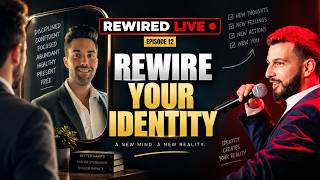
In this live Rewired episode recorded in Guatemala, host Jake Burhans welcomes guest Keegan Youngkin to discuss the Alter Ego Strategy—a practical framework for rewiring one’s identity to unlock higher performance. The conversation begins with Jake’s broader mission to help people master their inner world, emphasizing that true external success (wealth, status) is a by‑product of inner work that includes physiology, nervous system regulation, subconscious conditioning, and identity patterns. Keegan shares his personal journey from Ohio to Florida, his early exposure to subconscious‑mind teachings, and the moment he discovered the alter‑ego concept, which shifted his approach from “improving Keegan” to “becoming a new version of myself.” The core of the strategy is broken down into several actionable steps: (1) study a role model or character whose traits you wish to embody (e.g., Andy Elliott, David Goggins, Batman), (2) extract observable behaviors, habits, and physical cues, (3) design a tangible “switch” – a physical trigger such as wearing glasses, tying shoes, or dressing a certain way – that signals the brain to adopt the new persona, and (4) use daily awareness or decision‑filter questions to stay aligned with the chosen identity. Keegan introduces the “camera effect,” an accountability tool where one imagines a constant recording device monitoring actions, reinforcing commitment. They discuss the importance of focusing on a single identity change at a time, the need for emotional resonance with the switch, and the reality that the process is iterative, likened to learning to ride a bike with training wheels. Technical glitches during the live stream are noted, but the core message remains: identity work, not sheer willpower, is the most efficient lever for lasting behavior change, and multiple alter egos can be cultivated for different life domains. The episode ends with a recommendation to read Todd Herman’s The Alter Ego Effect for deeper insight and a promise to return for a longer, higher‑quality session.
Chapters
What is going on, people? Welcome back to Rewired Live from Guatemala. At least I am in. Um, excited to be back. I love the show because I get to bring people on, whereas, you know, Built for Impact podcast is me talking. And, um, I just enjoy being able to bring other people on, obviously. And the, the main goal here with this live show is to help people rewire their inner world, basically master their inner world, right? There's a lot to the inner world. It's not just mindset, right? There's a lot more to that. Your physiology, your nervous system, your subconscious conditioning, your identity patterns. There's so much to that. Um, and I think that if, if we can normalize the inner work and, um, teach people how to master their inner world, you could live such a more incredible life, right? Um, and you can still have all the external success that you want, have all the money in the cars, but you know, it's just a byproduct of the inner work that you've done. So, um, Build for Impact School Community is live. If you're not in there, get in there, um, and start being active and engaging. And the community is so important, right? Like, you need to, uh, your environment is so important, right? Um, so being in an environment where people talk about that and that's normal is really going to help you change at the end of the day. Um, so today I got my good friend Keegan Youngkin really honestly got me into a lot of this stuff. So shout out to Keegan, um, back in like, you know, 2023 when I first met him. Like, got me deep down the rabbit hole of the subconscious mind, which is absolutely great. Um, but yeah, he gets help me, definitely helped me grow a lot. And, um, now he really has to focus on, um, this thing called you know, alter ego strategy, which you'll learn more about in this, in this, um, in the show, I think can help a lot of people. Really, really tactical, practical tool you can use. It's very simple to help yourself switch into the state of being that's going to enhance your success, um, and really unlock the, your, your full potential. So, um, without further ado, Mr. Keegan Youngkin.
What's going on, guys? How we doing today? Everyone hear me okay?
Yeah, I can hear you.
Perfect.
Thanks, Jake.
Thanks for having me on today. Long overdue here.
Um, you should have been the first one.
What's up?
You should have been the first one on.
I know, I know. This is cool, man. Nice little live here. Yeah, it's, uh, I'm out here in Arizona, so nice and sunny where I'm at. So, um, But yeah, we're going to be talking about alter ego today. Um, really big thing. Um, you know, just flipping into these states because at the end of the day, we're just battling with our old self. You know, we call this the ego mind. Um, so there's a lot of tactics that we can utilize to just really get into these states. Um, so really, the alter ego, if you look at some of the greats, um, you know, like a Michael—
hold on, actually, let me stop you. Let me stop you. This is good. I want to get into it first. Before we get into that— just lighting is just terrible, huh? My face. Um, that's what you deal sometimes. Um, before we get into that, can you talk just a little bit about like your kind of story? Like, how'd you even get into this field, right? And like, what were you dealing with before, and how did you even get here to where you are? Like, how— what did that path look like for you?
Yeah, so, um, I really first learned about all this stuff, um, from a buddy Jacob, um, back in like 2021. Um, so I was living in Ohio at the time, different Jake, um, in college, doing the golf, living it up in college. I decided— so after COVID hit, kind of just changed the world, right? I decided to move down to Florida, room with some buddies, and I hear these things about subconscious mind and these programs and it's effortless work, just switching into this framework. And for the longest time, I just battled this external force of you gotta try, you gotta do all these hard things. And it just took me down this rabbit hole, like the Joe Dispenzas, the Tony Robbins, just really going down deep into it. And at the end of the day, there's a lot of techniques that you can utilize to just really enhance your life. But if you don't believe in the technique, then it's never going to work for you. So, um, you know, or even coaches too, right? Like, it's like, this coach, you know, I really resonate with him, I want to work with him. Um, but I came across the alter ego not too long ago, and it's just like, boom, something switched in my mind, and I'm like, wow, so you're telling me I can just be someone else? As opposed to, okay, I'm Keegan now, I have to transform into a better Keegan. I was always fighting my inner thoughts and all these things, as opposed to, boom, okay, I'm selecting this, this is a whole new person, boom, let's flip into that switch. Um, oh my bad, Siri here.
She wants to get it, she wants to get in the conversation, she's got some, she's so ready.
Um, But yeah, I guess that's what we're going to talk about today, is this alter ego.
So that's great. No, that's great. So you, you start in Ohio, you come down to Florida, and I think you and me both, like, we're very, you know, driven people. So we start out trying to change by using all this force and this discipline and this willpower and just pushing, pushing, pushing, right? And what we, what we come to find out through subconscious conditioning and really this identity work, because I think that's the root of this alter ego thing, it's like it's changing at the identity level and everything really flows downstream from identity. Why is it that just using your willpower and your motivation, pushing harder, why is that so difficult? Why doesn't that work?
It's, it's more just like you're, you're consciously trying to change something. So these, these inner beliefs in the subconscious are so deep down, like so instilled in us. It's like a computer, right? Like you have to continually like bit by bit try to break it down. And it's a process, right? Like this whole journey is a process. But if you have these like techniques to just continuously do on a daily basis, you can start like breaking those neuro conditions. So that's just the biggest thing. Like you have to understand it's a journey. You know, a lot of people like this instant boom, I'm here. You know, everything's changed now, right?
Yeah.
I'll talk about this later, but it's like, I call my, old self, Keegan, the enemy, right? Versus this new self, which I'm not going to disclose because it's my personal identity. Um, you know, I have to flip into that on a daily basis. Am I being that person now? Um, but yeah, it's just these programs are just instilled from us from birth, you know. Um, the parents, the friends they hung around, school, right? Breaking our dreams, crushing our dreams. Oh, I want to be an astronaut, and then it's just like, oh, you can't do that. And then they're just instilled in us, and we have to break those patterns. And that's why we have these techniques and, and mindset coaches and all these types of people. Um, but yeah, I mean, the journey.
So it is a journey. It's absolutely a journey. That's why I have to remind myself constantly, like, it's not about getting anywhere. Like, and you got to be careful not to use this work as just another performance metric of like, oh, I got to get to some point, right? It's like not about it, it's just about doing the thing every day. Um, so you talk about— we'll get into the alter ego stuff— you talk about, you know, a lot of these programs that were conditioned into us, especially at an early age. Talk a little bit more about like that, and like, do you have any examples of maybe some things that you had dealt with or programs that you had to change? Or like, for the person that doesn't really know what you're talking about, what do you mean like it's a pattern that was instilled in me? What does that even mean?
Yeah, like, um, I can just do like, uh, eating, for example. Um, I would say I grew up in a household that really didn't value like eating healthy. Um, you know, go to dinners, desserts. Um, so Like, for my mom, for an example, like, she's always struggled with, like, diabetes. And for her, that was, you know, you have to have the sugars and the chocolate or whatever, right, to just level things out. Um, and I've always kind of struggled with that eating until I, like we're going to talk about, transformed into this new self, right? I asked those questions: is this the type of way that my identity would be eating? Right? The awareness questions. Um, so like things like that, or even the gym, right?
Someone—
your family never really went to the gym. You look at these, these people that just go to the gym religiously, like it's just unconscious, it's non-stop, it's easy, it's effortless. And it's a struggle for you, you know? You set your intention to go to the gym the next day and then you choose not to, right? These, these thoughts come into the head like, oh, just do it tomorrow. Right? That's the— those thoughts that are instilled in us that we have to, I guess, transform into new self to do those things. Um, and it's just uncovering the layers, right? You got to ask those simple questions, you got to be in that version of you and just go for it and just do it.
Yeah, so, so, so good. It's like the— because everything flows downstream of your identity, right? Like self-image, like even like all that it talks about, right?
It's like all it is is that foundation.
Exactly. Okay, so alter ego, let's get into it. Give me the rundown.
Um, so fantastic read. Jake will probably— I mean, you can link it if you want to. It's called The Alter Ego Effect, um, by Todd Herman. Fantastic read. So like, for example, um, like a David Goggins he transformed into this Goggins mode, right? Where he was this 300-pound person, donuts, spraying for cockroaches, and then boom, entered Navy SEALs or Hell Week, right? 3 times at Hell Week, just really just getting after it.
Is that what he was doing, spraying for cockroaches, just eating donuts all day?
And then, and then he just watched this commercial and he's just like, boom, flip the switch, here we go. Right? Just put himself into that suffering— suffering, quote unquote— but, um, that was his identity, right? Do hard things. Um, or even, um, let's see, the Joker, Heath Ledger, right? He literally didn't break character. Um, you know, the Bruce Wayne, the Batman, um, the Clark Kent, the Superman, right? Um, another tactic, or I guess way to phrase this, is like a phone booth, right? When Superman was When Clark Kent went into that phone booth, boom, he turned into Superman, right? That's that transformation that we're talking about. So when it comes to alter ego, first off, you have to understand, or I guess ask yourself the question is, who do I want to become, right? If it's trading, if it's sales, like for sales, for example, um, Jake, give me someone that's like just a beast in the sales world. Just crushing it? Andy Elliott. Exactly. Okay, so first tactic or first step would be let's study Andy Elliott. Let's watch some of his videos.
Let's take a—
let's take a notepad out, grab a pen, and study him. What does he do? How does he handle himself? How does he walk? How does he talk? Who does he surround himself with, right? Is he going to the gym every day? All those things, you study him. And then you write it out, you accept it, right? You continue to embody that, um, and then you have to come up with this switch, is what we call it. So for an Andy Elliott, I mean, everyone's switch is different, right? He always has his shoelaces untied, it seems like. You know, you could do that, whatever gets you into character. This, this game is really just an acting game. Act as if, right? Like Neville talks about, you have to be that version first. Um, and at first, you know, there's going to be some ups and downs, right? That old enemy is going to be fighting you with those thoughts. I don't want to go to the gym. But that's why that switch comes into, into play, right? You, once you flip that switch, you have to commit, right? Lock in, and then you go from that identity, you You know, that Andy Elliot. And the big thing about it too is you have to name that identity. You have to name the old self and name the new self.
So that's good. So for example, so the first step is studying because you're basically trying to determine like what characteristics do I want to have? Do you wanna be, you know, successful in some area or change into some version of yourself? You wanna study people who are the way that you wanna be. Maybe they're not like 100% the way you want to be, but they have a lot of characteristics that you want. And you're going to study those things and you're going to associate those new things with this new identity.
It's basically correct. Exactly.
And then you have a switch. Now talk about the switch more. What does that mean? Can you give an example of what a switch might be for someone, um, and how that— and when do you use it? Like, talk more about the switch.
Yeah, so Um, and I do want to cover like this alter ego. It's not like a daily thing. I mean, you can make it a daily thing, right? But it's when you need it the most, right? If you're hopping on a sales call that's very important, there's a switch for that. If you're, um, like a David Goggins and you need to go to the gym and just get after it and push yourself, switch for that. Um, so the— this alter ego is not something that you utilize on a daily basis. And you can have multiple alter egos, right? You can have one for sales, you can have one for going to the gym, you can have one for going on dates with, with, um, with women or men or whatever. Um, but the switch— for example, Todd Herman in the book, um, you know, he didn't look at himself as like a smart individual. So, um, he had 20/20 vision. He, um didn't really need to wear glasses, but he resonated wearing glasses, um, with being smart. So he'd wear these glasses when he needed it. So when he put those glasses on, he turned into this new person, Richard. And when he wore those glasses, he just transformed into this sophisticated, confident individual, right? When he put those glasses on. So that's the switch. It's like this physical thing that you can do right? If it's like wearing a hat or wearing a specific shirt or tying your shoes, um, you know, whatever works for you. You know, this is a game, guys. Like, this is something fun. You know, make it fun. Don't, don't make it serious, right? This is like— it's like you're, um, going to acting school.
Yeah.
You know, you're, you're trying out for a movie, right? This is fun. Let's make this all fun. Um, so that's, that's essentially what the switch is. Um, you know, something physical that you can just do to get you into character.
Yeah, so it's gonna be different for everyone. Everyone— like, my switch, maybe it's like getting dressed up and like looking nice for the day, and that switches me into this mode where I'm like JB or something, you know? I'm like some alter ego, JB. Like, I got dressed up, I got my hair done, like I'm a freaking killer, right? Maybe that's my switch. So It's— you can't— you're not just going to copy someone else's switch. It's got to be something that truly resonates with you and like actually physiologically shifts you into a different state of being. Exactly.
I have to have that emotional connection with that switch. You know, if it's, um, like if you've always tied your shoes and that could be a switch for someone, like, that doesn't work because you've always done that. It has to be something different. You have to, um, you know, like, resonate it with, with emotional connection, but it also has to relate to that alter ego that you're selecting, right? If it's, um, Andy Elliott, right, you have to do something that he does. Yeah, that flips you into his character, but also it resonates with you. So it's just a creative game, right? That creative switch that just boom Okay, committing. This is my switch. Once I'm in this switch, right, you ask those— so you ask those questions, those awareness questions, which I can— we'll share later. Um, but it's just really important to study that character though, right? This is a fun game, guys. You really have to be that character.
So study that character. Do you mean like study the character, the person you want to be? Like you would study—
yeah, like Andy Elliott, like an Andy Elliott or Goggins, or, uh, a lot of people like to use Batman. Or Bruce Wayne. Yeah, right. Bruce Wayne went through, through those struggles of his parents, his parents dying.
How we doing?
Sorry, a little interruption here. Um, but Bruce Wayne, right, family died, um, and he just transformed into this superhero. So pretty cool.
No, it is great. So the switch, the switch is the concept, right? So it's study the character And again, just to boil this down for people, why—
connection issues.
Is my video cutting in and out?
Yeah, it's that Guatemala Wi-Fi, man.
It's all right. Um, turn this off.
Your, your screen's frozen. I don't know if I'm frozen on your end, but it's frozen.
Yeah, it's still frozen.
Still frozen.
Oh, we got a comment on YouTube. Hold on, wait. That's right, we're gonna, we're gonna make do with it. Hopefully you can hear me though.
I can still hear you. Yeah.
Okay, so do you have a comment on YouTube? But how to switch in the character, right?
So maybe Can anyone hear me?
Yeah, can you hear me?
I can hear you. Okay, so how does he switch in the character?
Yes, I think just maybe—
yeah, I can answer that. Um, can we just keep these down? You don't mind? I'm on a Zoom. Yeah, yeah, I put them down. Where's the switch?
It's right here.
You will not be denied. I have a low connection. Keep it interrupted. Thanks.
We will not be that, guys. Um, but yeah, how to switch into character. So that just goes back to studying that person that you want to become, right? If it's in trading, if it's in sales, um, like, like an Andy Elliott, right? He holds that confidence, he's got that six-pack, he goes to the gym. You know, you have to study that person and really embody that. Like, hey, I'm committing to be an Andy Elliott. And then that switch is, you know, like we talked about, some physical thing that you can turn into. And then you're putting aside your old self, this enemy version of you, and you're transforming, right, like a Superman, into this new character, right? And that's where, when it, when it comes to being in character, you have to ask yourself those questions throughout the day, at least at the very at the very beginning just to keep you like aligned, to keep you on track throughout the day. You know, when it comes to a meal, um, you know, when it comes to lunchtime, does Andy Elliott go and eat dessert? You know, he's not doing that. That's not that character, right? You have to hold yourself accountable. You got to ask those questions.
Yeah, 100%.
Wait, let me You're kind of laggy, Jake.
Yeah, I know.
Hold on.
We're not gonna let a little laggy Wi-Fi get us down here.
Nothing better. A little international travel.
Keep it going, baby. All right, I'm, I'm outside, bro. Look at, look at this spot though, dude. I haven't— there's literally like a courtyard and you can't actually see it.
There's a course I can see it, bro. I still see you're frozen in your, uh, your little dining room there.
That's all right. Well, that's good. Can you, can you get into those awareness questions then?
Yeah, so I wrote, I wrote them down. I mean, there's a lot, and everyone's questions can be different. Um, I like to call— well, first off, a tactic that I use is called the camera effect. So what I like to do is I like to imagine a camera's recording me at all times, and I live my day through that camera, right? You can even, you can even, you right? This is the creative stuff that we talk about. But you can even have it so that, um, you know, my family has to watch that camera at the end of the day. You know, if it's like going to the gym and you committed to someone like, hey, I'm going to go to the gym, or I'm going to do 100 push-ups, and you have to replay that camera and you didn't go to the gym, that's like an overall awareness. But like awareness questions that we could talk about. You know, this is called the state check. If someone described my energy right now, would it match the identity I claim? Would a high-level operator move at this speed? Am I calm or stimulated? Am I decisive or hesitating? Or hesitated, hesitant. Let's go into—
So you're basically asking these questions like these are questions to reflect on if you're in this, in this, in this personality, basically in this version of yourself.
Correct. And at the end of the day, all you're doing is you're just— it's an inner journey, right? So it's you versus you, right? It's the old self versus the new self. It's going to be a tug of war. And that's why these questions are so key. This is called the decision filter. Would my chosen identity need external validation here? Am I protecting comfort or protecting standards? Does this action increase my self-respect? And then lastly here, we're going to get into the emotional ownership. What emotion is driving me right now? Is this emotion aligned with power or whatever character or characteristic you want to embody? What would grounded certainty feel like instead? And then lastly, if I fully trusted myself, what would I do?
Can everyone hear me? Emotional thing you said, is this in alignment with the character?
A lot of obstacles here. Let me turn this down, guys.
No, I can't hear anything on your end though, dude. I might need to plug in my Wi-Fi for these future lives.
This is— this guy's coming in just changing all the things today, huh?
I can't hear anything though on your end.
Is this your first live stream, uh, out of the States, Jake?
Yep.
Okay, maybe we're gonna have to adjust, huh?
I'm gonna need like a wired connection or something.
Yeah, we're trying to plug it into like the Ethernet.
Yeah, that's what I'm saying.
Um, what were you talking about though, like that emotional trigger question?
Hold on. Yeah, am I not coming through over there? I can hear you working. All my TikTok lives worked. I don't know why it's like lagging.
Yeah, I can hear you loud and clear on my end.
Is my screen still frozen?
Screen is frozen.
Uh, Jesus. Um, what if we—
and guys, really, these questions can be different for everyone. At the end of the day, it's what questions help me the most to stay in this new identity? Because you have to remind yourself throughout the day, or else you just go on autopilot for your new— for your old self. Because it's those conditions, those, those hard— those hardwired programs. Um, so that's why those questions are, um, so important throughout the day.
Yeah. So I think it's like, again, we're, we're talking about how to shift identity. I think it's a really interesting theory though, because it's like If identity— if changing our behavior really comes down to changing our identity, and we can have multiple identities, that's probably the most efficient way to actually change our behaviors consistently, you know what I mean? And in different circumstances. So if you have, you know, 2, 3, 4 different alter egos, you just snap into those things and it's just natural to be that person. It's pretty phenomenal concept, to be honest.
Um, and an important I guess concept here is focus on one first. Like, what's the biggest change you want to have in your life? Like, if it's for money or a confidence, right? You really find that person that you resonate with that has those things. Study them, jot the notes down, continue to study them, and then come up with that switch, right? If that— like, go back to Andy Elliott. He's jacked, right? He goes to the gym every day. That's who you have to be. So flip the switch. If it's tying your shoes, boom, gets you triggered. You go to the gym, right? And you ask those questions throughout the day. First thing in the morning, boom, am I being the identity, right, the Andy Elliott, whatever you want to call it, right now? Boom, that person gets up out of bed, goes to the gym, gets their day started, right? And you ask those questions throughout the day, and then boom, okay. Now Andy Elliott's done. Now it's time to flip into, okay, I have a girlfriend, now it's time to go to dinner. Boom, that person, right? But it's, it's important to focus on the one thing that you want to change and then work from there because it's a process, right? So you want to stick to one thing and then move to the next.
Hello?
I'll keep— we'll keep this one a little bit short. I'll have you on again when I have better Wi-Fi, but this is good. At least good starter alter ego session. Can you hear me?
Yeah, I can hear you.
What about the person that says, hey, I know who I want to be, I know what my switch is, but it's hard for me to stay in the switch? I keep like falling out, like I can't do it.
Yeah, and that happens, you know. It's not going to be perfect from the jump. Um, you know, it's, it's, it's like riding a bicycle for the first time, right? You're gonna do the training wheels, and then you're gonna do this, um, and then, you know, Mom and Dad aren't going to push you anymore. So it's a journey, but you have to stay committed. You have to stay, um, focused on that version, right? You have to have your attention on that. So, you know, your energy has to be focused on moving forward as opposed to, um, you know, where you're, where you're at right now. So, um, and that's where those questions come into play. That's a tactic, um, you know, the camera effect. I love the camera effect because you just have to imagine that camera is on you at all times. And you have to replay it, right, for your family, for yourself. Um, you know, like eating healthy, like, like that's such a big thing because I think the food you put into your body controls you, um, your energy levels and all those things. So if you want to be a high-performing individual, they eat healthy, they go to the gym, they do those things. So that camera's on you at all times. It's like an accountability partner with that camera, you know, that, that camera is like literally watching you at all times, like you're on a live version at all times. The world's watching you. So those are just things, right? And the questions, those are so big throughout the day. And it's all— it's a process, guys. You know, this isn't something that it's just like an overnight fix. So you just got to continue to work on yourself. And this is— this alter ego is so big because you're separating yourself from this new person, as opposed to I'm Keegan and I want to be a better version of Keegan. You're going to continue to fight that because you're not—
okay.
I'm reborn right now. I am Bruce Wayne. Yep, I am the Batman.
Yeah, it's a conscious choice every day. It's like, you know, you fall off the horse, you just get back on the horse. Then over time, you're able to ride the horse longer without falling off. But you don't— exactly, you know, you don't say, I'm a failure because I fell off the horse. No, you just fell off the horse. It's fine, you just get back on.
Exactly.
It's been 6 months since we started on this house. I'm actually sad to give it back to the gallery.
At some point, there's no difference between, you know, you, you actually are this person, you know what I mean? If you do it enough, like, right, like you said, the Joker, he did it so much that he didn't even— he thought he was the Joker.
Exactly. Literally couldn't get out of character. And that's commitment, guys, you know, you have to commit to this new version of you. You have to go all in, because if you're just not going all in, then you're just doing yourself a disservice. You're selling yourself short. Um, you're not being the best version of you. And that's what it really— what it really boils down to is looking back at life, and it's just like, hey, if I died today, would I look back and be like, hey, did I accomplish everything?
Yeah.
And that's the commitment aspect.
Yep.
Um, yeah, I like the— I like the camera lens thing.
So you're looking, you're imagining— you're cutting out, Jake. All right, I think we'll keep this one at— 30 minutes.
So talk about the camera, the camera lens though again.
You're cutting out, Jake.
All right, I heard it.
Cut this third camera lens.
Yeah, we'll cut it. I got, I gotta get a better connection. This is good though. 30 minutes. Um, we can come back on here again though. I need to—
yeah, no, absolutely. I really want to uncover this because this really is what flipped the switch for me. Um, and it's like effortless, right? You ask those commitment questions throughout the day, those awareness questions, you flip into that switch, and then you just go, right? And it's not something that you do 24/7. This is 2 hours a day, or at first it may be 30 minutes just to get that workout in, and then you move it to 3 hours, and then it's 5 hours. Right? So this is a journey, and it's literally like you're just coming up with a film for yourself and you're being that character. Yeah. Um, and then like I said, study, study, study that character, really embody that character. Um, and then just go all in, right? Like, that's the most important thing, is looking back at life as, as this game, and did I really give it all I had? Um, you know, did I do my purpose on this earth? Yeah, you know, your, your core value, your core feelings of who you want to be. So that's it, right? Study, become, switch into it. Questions, 30 minutes, go to an hour, go to 2 hours, 3 hours, and then boom. You no longer need that time clock. You no longer need that camera effect. You're just that character now.
Yeah.
You are that person.
But yeah, if everyone's never read that book, please read it. It's called The Alter Ego Effect. Goes into more detail about it. Huge technique. A lot of the greats used it.
So dial it in, baby.
Alfredo, let's do it.
You guys got a little taste. We'll come back for the full hour episode when I can figure my life out. Um, but until then, all the peace, all the power, folks. Um, and, uh, keep on rocking this week.
Thanks for having me on, Jake.
Yep.










