How to Succeed in Commercial Real Estate Without Living in Survival Mode
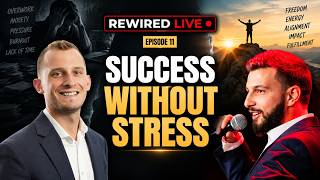
Commercial real estate broker Thomas Marshall describes burning out in a windowless coworking space in 2022 and rebuilding his career around daily routines, breath work, and solitude instead of chasing the next commission. He and host Jake Burhans argue that external success doesn't guarantee fulfillment, and that detachment from results, not relentless hustle, creates real freedom.
Chapters
What is going on everybody? We are live at a new time here, Fridays, uh, probably usually at 11 AM. Thomas was busy, so popular he couldn't do 11 AM, so we're gonna do 1 PM. Um, but I'm switching it from Saturday. I'm going to Guatemala, um, on Sunday and I'll be doing cool stuff on the weekend, so I don't have time for these lives on the weekends, but we're gonna move them to Friday. Still doing 11 AM, bringing you the people who have rewired themselves. Real quick, if you haven't joined the Built for Impact community, that was— it's been live for about a month. We're getting a ton of people joining, which is great. I think we're up to like 70 members now, but still growing, right? We're on a mission to help people realize that entrepreneurs specifically, or high performers, that they can build their careers and lives from a state of place of peace instead of pressure. What does that mean? Like a regulated state of being. You don't have to, you know, doesn't have to be this suffering experience trying to get to some outcome in your career, right? So we want to teach you how to regulate your internal state of being and actually enjoy your success. That's really the mission of all this is to redefine how we look at success in the US and for entrepreneurs in general. All right. So check that out. If you're on YouTube, the link is in my bio. Facebook link is in my bio, and LinkedIn, it's a featured post. Um, so my good friend Thomas Marshall, um, so he's a— he's in the commercial space, um, specializes in retail tenant representation in the West Florida area, advising private and corporate clients on site selection, lease negotiation, market analysis, and strategic growth. So he's a commercial broker, um, you know, helping out tenants um, in West Florida. But this conversation isn't about real estate, really, not about tactics, about the internal work. So without further ado, Thomas Marshall.
Yeah, thanks for having me. Appreciate it. Appreciate you, uh, pushing back the time a little bit too. I, I know.
Yeah, no worries, no worries. What'd you have this morning?
I had a— it was like a corporate all-hands call with the entire retail division, so had to be present for that one.
It's good, man. Tough bid for the Pats last weekend.
Yeah, man, I, uh, I ended up going to bed after halftime. It felt like 2018 all over again against Philly where we just couldn't get anything going. Um, but, uh, you know, it's a good season otherwise.
That Sunset Rodeo is like crazy place though. Yeah, what is it called?
Yeah, Sunset Rodeo.
Yeah, yeah, dude, it was packed there, dude. There's so many Pats fans. We left at halftime too because we were just like, whatever, I'll just watch it from my my place. But yeah, there was like— must have been like 3,000 people there. Really? Yeah, they had half the parking lot, uh, you know, blocked off. It was absolutely ridiculous.
Yeah, that's cool. It's a good spot. I remember it was Bar Howard before that, and I think the new ownership came in and wanted to be a little bit more of a lively, uh, place.
And definitely that was Bar Howard before. Yeah. Oh wow, it's, it's a sweet spot now though.
Yeah, I mean, the live music factor of it, um, Tampa needs that. Just feels a little bit more lively, enjoyable.
Yeah, I agree. It was good. It's good for me to get out, get out of my hermit shell.
There you go.
All right, cool. So I want to go back.
You have—
I think you have a great perspective on all this stuff, and you've, you know, you've read some, some books, and I know you're reading Inner Excellence right now. I want to talk about— because this show is really about how we've like rewired ourselves Yeah. Right? Especially us as people who are ambitious or entrepreneurs or high performers, we get out of college and we're just— and even in college, we're just always chasing that thing, right? So I want you to talk about what was your default way of operating when you first got into the work world, even maybe in wholesaling and even into commercial real estate before your mind started to shift? What was that like?
It was just a grind. I think I was so used to the education system where it was very task-oriented. And I learned pretty quickly through the first couple of years in real estate that there's always another task. And even if it means getting to a signed contract, now it's like, when am I going to get the next one? You're constantly trying to keep that pipeline moving. And so I was always in this hamster wheel of just looking for the next deal, trying to do the next thing. It never felt like enough. Couldn't have enough calls, enough conversations, enough offers, enough contracts. So it's just a spinning wheel and it's hard to sustain that, as you know. And I think I just hit this— I remember it was probably around 2022, I sort of hit this wall. I was wholesaling for a group out of California and I was doing it remotely here in Florida. And I was literally in this coworking office that had 4 walls and no windows. And I was dialing, making a bunch of calls. And that's when it really hit me that that space wasn't the long-term goal or wasn't what I wanted. I think it was a lot of the nervous system. It was hard to regulate it in that sort of environment where I was just locked, what felt like in a cage and nowhere to go and having pretty tough conversations on a daily basis. Quickly realized it required a lot of reflection on who I was and what I really wanted and what I wanted my day-to-day look like. And once— and what that reflection led to was, okay, this is who I am right now, and then this is who I want to be in the future. How do I want to feel on a day-to-day basis? And that allowed my mind to open up a little bit, allowed for some more creativity. And think big picture. Stop thinking about the next deal and start thinking about the big picture of what I want my future to look like, who I want in my life, and what I want my routines to look like on a day-to-day basis.
Mm, that's a profound— I see you working in that nervous system regulation. I'm wearing off on you a little bit. Yeah, that terminology is good. It's true though, it is tough to be in that state. So I like what you said there though about, you know, you were wholesaling, but then you started to look at like, how am I operating on a day-to-day basis? How do I want to be every day? Yeah. Versus what do I want to get or what do I want to achieve? So I think that's a very important shift. So explain that to me more for someone who might understand like what that means. Like, what do you mean how I operate every day or how I need to be?
Yeah, I think it came down to I'm a big routine guy, always have been. Played sports growing up, right? So I felt like preparation was always the most important thing in my life. How can I be the most prepared? And so it's the same thing when I got into the work world was how do I transition all this, all these habits that I've accumulated over time through playing sports and being in the school system to the professional world? And what that came down to was, what does my morning routine look like when I wake up? Am I reading? Am I going to the gym right away? Like, those are two different modes of self-regulation. You're either, you know, sitting down to be present and read a book, or you're going to the gym and you're probably having techno music in your earphones and you're, you know, it's just a different mode. Um, and so I really just had to think about, again, how I wanted to feel on a day-to-day basis from when I woke up to when I went to bed. And what I found was the place I was in was just one state of regulation throughout the whole day of stress, anxiety, and fight mode, you know, like me versus you, every phone call, and kind of looking at everything as competition when it's not the case.
Yeah, man, that's, that's so powerful because being in that survival mode, that like fight mode where it's like, oh my gosh, What am I going to do? We're so trained to be in that state. Everyone just thinks that's, that's just part of it. That's what you need to be in to be a successful realtor or to be an investor, to be an entrepreneur, to be a salesperson. That's just part of it, man. Like, there's no way you can avoid that. I think that is the root of what we're seeking to address here, is that that is not the only way to operate. And as a matter of fact, it is a less effective way to get things done. Because you're so drained all the time. And when you are in that survival state, we know that, you know, your brain— part of your brain isn't online, so you're not even open to all the possibilities of what could even be out there, right? So you're limiting your capacity.
Yeah, to avoid limit, uh, living in a constant state of hurry. It's either in Inner Excellence or Think Like a Monk, uh, one of those two books talks about that concept. And when I read it, it hit home. Wow. Like, that is to a T how I lived for those first— really, probably you could argue for the first 22, 23 years of my life. Like, it was a state of hurry, trying to get to the next thing or the next place. And once I sort of let go of that, my perspective just widely changed as to how I viewed things and what was possible for me.
Yeah, it's like, where are you going? Where are we going? We're going here, we're going there. Where it's like, we never get there. And the funny part about it is you never arrive. You're always just going here and going there. I was in the car the other day, I was just like, we're always rushing around. Like, sometimes I'll be in the car and I'll just like see someone, people. I just kind of observe other people as people ripping around, you know, ripping around me. They're going here, they're going there. It's like, where you going? Where are you going? And then they get there and then they're ripping around to the next place. Then you do that for 10 years. It's like you're always going somewhere. It's like life is—
Yeah. If you're on a walk, right? How many times have you been on a walk and you see people and maybe they're doing it for exercise purposes, but they've got the AirPods in and they're either they're walking really fast or you can just kind of see it in their eyes that they're in their subconscious. They're not aware and present. So it's something I've been working on. I'm guilty of it. Like, I went on a walk this morning, had my AirPods in with some music. And at the end of the walk, I had to be conscious enough to like take, take the AirPods out and just observe the natural noise around me and just be present. Um, because it's so easy in this world to be distracted by your phone, by music, um, by a host of other things going on.
Yeah, I'm curious how you look at that because, because I'll look at that and be like, I think what's most important about it is like being aware that you have your AirPods in. It's not that you can't have your AirPods in on a walk. It's just the fact of like unconsciously doing that every single time where it's like sometimes, hey, just don't use your AirPods just because, right? And then sometimes you can use them. But how do you look at that, I guess?
Yeah, it just all comes down to where are you directing your attention, right? Um, and so I just try to be very aware of if I do have my AirPods in and listen to music, there's not a problem with that, but I want there to be at some point during that walk where I can sort of, whether the music is still on or not, I catch myself just to bring it back to my consciousness and say, I'm where my feet are right now. Yeah, because there are plenty of times where I'm walking, whatever I'm doing, I'm thinking about work or whatever else is going on in my life. I'm not very present or conscious. And that's the whole point of it, is to get out and become present and disconnect from everything else. But it's just as easy to kind of ruminate on all things going on in your life, um, and using walking or exercising or, you know, whatever else it may be as an excuse, saying you're getting away from it, but you're thinking about it the entire time.
Yeah, man. See, I catch myself doing that all the time too. It's like I take a break from work, I go on a walk, but if I'm just freaking up here in my head for the whole 20-minute walk, I never even took a break from work. I never even got a chance to recharge because I'm just, you know, I'm walking, but my mind's a million miles away.
Yeah, you and I were talking the other day, we were like, it's almost like you have to put time in your calendar, like stare at wall. Yeah, literally, truly, like disassociate from everything else that's going on.
Yeah, we need that. 1:30 to 2:00, stare at wall. Yeah, reminder. But just to be like, just to train our— because our bodies are so trained to always— we're always doing something, right? We're doing it.
It's like, yeah, that's, um, you know, kind of bringing it back to real estate and work. That was something that I really had a hard time with learning not to do, because the other part of it is like you're so wired towards the end result, which, you know, in our world is getting a check, right? Yeah, it's in everyone's world. But everyone always talks about the process and focusing on the process and enjoying the process, but they're still fixated on the end result. And it's hard to disassociate yourself from that end result of money, especially early in your career when you're trying to pay bills and even the checks that are coming in aren't the largest. But I think it comes back to understanding what's most important to you and what, what the mission is, right? Like, in my world now, I represent clients, and at the end of the day, whether a deal gets done or not, I just want to— I want them to be able to speak on my behalf that I did everything I could, that I communicated with them the whole process of what was going on, and that I vouched for them as much as I could. If it doesn't work out, it doesn't work out. But I'd rather that than, you know, maybe do some stuff that I shouldn't have just because I was so fixated on the— on getting a check, on getting the deal done and getting commission.
Yeah, I think, you know, looking at this from a high-performance lens, because that's what I'm— what I'm like, I'm wrapping this whole message and everything I'm talking about into like being a high performer. It's not about like removing yourself from these places where you, where you accomplish things. It's about operating at a higher level, a more efficient level. So, you know, I bet you feel that when you do operate from that place of not needing the outcome, right? Detachment. Detachment doesn't mean you don't care, right? Just mean it just takes away that desperate clingy energy of trying to get it right. You can probably think clearer, you probably communicate with the seller better or the, the tenant better. Um, would you say, like, how would you say that improves your performance? So operating from that state versus the neediness?
Yeah, it just makes it more enjoyable, right? I found one of the reflections I had a couple years ago when I decided to switch into commercial real estate was one of the things I enjoy most about this business is the people aspect of it. That's what it all comes back to. I think I hear it all the time from business owners, like it's all about the people.
Yeah.
And once you have that realization, you operate a little bit differently because you just wanna, you wanna do right by your client and you wanna represent yourself to the highest, your highest ability and think long-term as opposed to just short-term. Again, it's harder to do early in your career when you're just trying to pay some bills and gain experience and get deals done. But again, everyone at some point has that reality check where it's like, "Okay, I've done hundreds of deals and I've made money, but I don't feel fulfilled." Well, why is that? Because it's possible that you forgot about the people aspect of it. That's really the most important.
Yeah, I like that. It's about the people, relationships. That's so important. It makes everything so much more fulfilling when you can focus on that. And I think your, your viewpoint on success has shifted a little bit here because you're not so focused on outcome success, right? Which I would call compensation-based success. Basically, I'm chasing this deal XYZ because I don't feel enough on the inside, so I'm using it to make myself feel okay. And that's a never-ending rabbit hole. You'll never get it right. I say it takes people different amounts of time to realize that one truth, that nothing externally will ever make you feel okay on the inside, right? So it might take you 10 years to figure that out, 15 years to figure that out, whatever it is. But once you realize, you know, it's a shift you need to make internally. But you're operating from the expressive-based mode of success, where you're doing it because it aligns with what you like, it aligns with your values as a human being, which is to connect with people and help people. And it's genuinely how you want to contribute. You want to help people grow and get into spaces. So that's a much more sustainable way to build your career versus that, you know, constant outcome chasing.
Yeah, it's that, that word you just said, sustainability. It's so true. Um, the hamster wheel of just trying to find that next check, that'll burn you out quick. Um, and I felt it. I know you have too. And you've got to start understanding what's really driving you on a day-to-day basis. Really take a second to go inward and understand, is it really the check, or is it what I think others are thinking of me?
100%. And like, I think the, the biggest thing with people— like you had mentioned earlier, people are chasing these outcomes. They say it's about the process, but what are they doing? They're really still chasing the thing. Why is that? Because I think at a subconscious level they still believe that that's what they want. Consciously they're like, yeah, it's about the process, but subconsciously they're like, no, I need this to be complete, right? So they're still chasing that thing. Um, and, and I think a big thing too is like when you don't have money in the— you know, maybe you are low on money, you really believe that money is going to make you feel at peace. Now Obviously, you know, you need money to live. That's the biggest objection I get. Well, Jake, I need money to pay rent and do all this stuff. And like, yes, I get that. But if you have a deep, like, you know, belief around money and that, you know, that's really going to give you that internal feeling, even if you get a lot of money, you're still going to have that limiting belief because you're going to be like, what if I lose the money, right?
Money solves money problems.
Yeah. So how do people get past that?
I think it comes with— it's funny, man. I feel like for me, it's like, I think I told you recently, maybe last time you were here, that a few weeks ago I remember like had a really good week, saw some commission checks come in. I was driving home, I just felt so empty. And I remember before that money came in thinking like, once that money comes in, I'll feel better. And then I had this realization that that was not the case because it it did not happen, that was a true reflection point. And I think, um, to an extent, you have to have that happen to you to understand how it feels inside. Um, but again, it goes back to understanding your inner mission. What is it? Are you just doing this for the money, or do you want to feel okay inside? Yeah, once you can truly be honest with yourself about that, that's where I believe that detachment can occur.
Yeah, it's, it's a much more fulfilling way to pursue because I think the— it's almost like the Trojan horse, or it's, you know, it's the carrot dangling in front of your head. You can never quite reach it when you're chasing that feeling in something external. Like, it's in the money and you're like, oh no, and then you get the money and it didn't do it. So you're like, okay, well, this amount of money will do it, or this amount of money will do it, or this relationship will do it, or this job this career path will do it, or this— it's like you're always doing something, whereas like, that's not the point. The point— this has like been a huge mental shift for me— is like, the point isn't to get anywhere. That's not the point. The point is just to orient yourself, like we're saying, and just walk in that direction. That's it, right? It's like, okay, I want to, you know, walk in this direction because it's just what I want to do. I like doing it. It aligns with my values, and it's how I want to contribute to the world. But the, the goal is just the everyday doing. Like, that's life. Every day, like, this is life right now, being on this live, right? It's not about me getting to 100,000 YouTube subscribers. Like, that's just some— that's really just a direction for me. It's a North Star to orient my everyday thoughts, behaviors, and actions, right? Of going on live, doing the things. Because when I get 200,000 subscribers, guess what? I'm gonna be like, oh, 200,000, 500,000, a million, 5 million. It's just never gonna stop, right? Um, so it's just not the point.
Yeah, I mean, it's a good point you make about people are always thinking that next place, uh, that next person maybe in their life is gonna provide that missing piece that they feel is not there right now.
Yeah.
But then they get it and they still feel the same. Yeah. Why is that? Because it's not external.
Yep. It's huge. Now, What, um, what are some of your favorite books, I guess? Because I know you're reading Inner Excellence. Talk about like what you've pulled from that, I guess, that book Inner Excellence and what it's about.
Yeah, um, gosh, I'm a big book guy. I've— reading changed my life, honestly. Um, before I get into Inner Excellence, I would— I always tell the young kids that I meet with now that are looking to get into commercial real estate, they're like, well, what like, what articles can I read to learn about, like, interest rates and what the Treasury is doing and cap rates and all these crazy real estate terms? Um, I'm like, forget about all that stuff. Like, find out who you are. So go pick up some self-development books and find out who you are, um, because then you can bring that into any profession you go into. And, um, at least on a day-to-day basis, you can be honest with yourself that You're, you're staying true, or, you know, are you trying to, do you have like imposter syndrome, which happens to a lot of us. So my point of that is like picking up a personal development book, well, is usually the first stepping stone. I know it was for me of the awareness, the awareness of who I was and how I was feeling as opposed to just Because it's hard to do that reflection, even meditation, right? You and I both talk about meditation a lot, and I know I hear it with other people as well. But even in meditation, it takes a while before you truly find that stillness. For a lot of people, there's still all these thoughts going on in your head, and you don't really know how to organize it or what to think of it. What is cool about reading is like all those thoughts and ideas are on the page in front of you, and so you're able to like connect with them a little bit better. So you're reading all these ideas and thoughts that someone else wrote a long time ago, and you're like, yeah, I get that, I feel that way, or I want, I want to feel that way. So allows you to Maybe get all the thoughts that you're having in your head and see them on paper. Uh, someone else did it instead of you journaling, because I know journaling is a big thing too, but it can be hard, uh, for some people, including myself. I've struggled with it in the past of like figuring out how to put all my thoughts on paper through journaling, but I find that through reading, it's just instant connection. Like someone else already did that for me, which is kind of cool.
That's great. I never thought about that. So reading is like, you know, sometimes it's easy to get lost in our thoughts and our ideas, but reading, you know, takes those ideas about a certain subject or concept, maybe awareness, and it's all like organized, formatted on the paper and just kind of grounds it for you so you can kind of digest it.
Yeah, like someone else did that work for you. Um, yeah, which maybe we should all learn to do that ourselves too, but I think at least when you're first getting into it, what a great way to like open your eyes to this, this world. But to talk about inner excellence, as you know, the whole concept of that is living your life through a perspective of love, wisdom, and courage. And that is how you should approach your day-to-day activities and what goes on in your life. It's coming first off, like love, coming from a place of love instead of a place of maybe it's anxiety or envy or fear. You should approach everything with love. And I think within love comes compassion and empathy and a lot of those other characteristics. And wisdom, that comes through life experiences and being aware. I believe that's part of wisdom. People don't give themselves enough credit. They are always— we're always comparing ourselves against other people. Uh, maybe that person has a master's degree and you don't, or that person has gotten to a certain place, uh, through the formal corporate world and you haven't. But, um, we all— all of our lives are unique to us. And, you know, your life and my life look a little bit different, but there's similarities in there. And through those life experiences that we've had we now have this wisdom that you and I are both trying to share with everybody else. So that's the wisdom part of it. And then courage is courage, right? Like, you have to put yourself out there. You have to be willing to get uncomfortable. And it took me a while to understand the value in that. Everyone always says, like, just get out of your comfort zone. What does that really mean? Maybe it's just sitting by yourself for 30 minutes in your own house. Isn't that crazy? Like, you don't have to go anywhere to get out of your comfort zone. You could sit right on your bed 30 minutes alone in silence. Let me know how it goes.
One second. Like, sick, dude. Absolutely brutal. You know, I think it's from that party, dude.
Oh really?
Yeah, my head feels like it's like freaking a balloon, dude.
It's been going around the office I was working.
That's what it feels like, really. Um, but that's life. Anyway, we're gonna get up, we're gonna attack it. Um, no, I think that's good though, the inner excellence. It's very interesting too, like, I Yeah, that book blew up because I think AJ Brown of the Eagles was like reading it on the sidelines of a game. Yeah, it just goes to show how that's sort of like inner work, right? From— because I read the book too, it's like Inner Excellence is just about, yeah, what you're seeking isn't outside of you, it's really inside of you. And people at the highest level are reading that book and using it in their, in their day-to-day. Um, that's why I think it's like doing that inner work is a— is like the foundation. It's like creating a foundation. Like, you want to go do stuff in your life, you want to build this— think about your life as a building, a skyscraper. You're trying to build this massive skyscraper. Okay, great. If you don't do the inner work, you're building it on sand and it's just going to come tumbling down, right? So you might as well just take a little bit to start to learn the concepts, do the inner work, so you have a solid foundation so you're not just thrown about by life. You can actually handle life You understand you're not your thoughts or emotions. You know how to regulate yourself. You know how to, to grow and let go of, you know, old emotions and old patterns. That's what you need to do. It's like, I use this analogy, people especially— I've been doing TikTok lives and people like are trying to start businesses and going to entrepreneurship, like, hey, what should I do, this or that? You don't need to do any strategies, okay? You need to do the inner work because you just jumping into entrepreneurship without getting that foundation is like trying to swim across the English Channel, okay, with some cinder blocks on your feet, mind you. And then you wonder why you drown like 1,000 yards into that swim. It's like, why don't you just take a couple weeks, build the boat, and then you can just glide right across the river? That'd be super easy, right? So especially as people come in, like brokers come in, it's like, bro, you gotta go do the inner work first, okay? And then you go look at the tactics and the strategies because all those tactics and strategies are going to be so much more difficult if you don't do the inner work, right? And I think we got to normalize the inner work, normalize nervous system regulation, normalize, you know, meditation, talking about our thoughts and our emotions. Like, all this stuff that's just kind of like, you know, maybe isn't as used in the world. Like, as a high performer, I want other people— and yourself as well— I want us to normalize this stuff for people to— so it's cool, you know?
Yeah, make it cool. And yeah, I'll tell you, and you know this, like entrepreneurship in general is a very spontaneous space to be in. Things just happen and it's not always organized. You don't always get the— you're not always fortunate enough to have like that 2 o'clock call on the calendar that like, you know, this is gonna happen. And then you might get a call at 3 o'clock in the afternoon and you're out on a walk or at the grocery store. You better be ready to go, whatever it is. Maybe it's a In your instance, maybe it's a seller saying that they're ready to sell their house for 60 cents on the dollar. Or for me, maybe it's one of my clients like, hey, I need this now. I need the answer to this now. What's going on here? That's like the nervous system part of it is like your body naturally is like a lion is chasing me, right? Like, that's the thing that your body feels. But can you kind of deregulate, take a breath and bring your attention to where it really needs to be? And just really give that person like the proper focus and awareness as opposed to just, okay, here's what we're gonna blah blah blah.
Like, yeah, because you're not giving that person your best either, right? Because like, as we know, when we're in a dysregulated state, we're not seeing all the options, we're not able to talk as clearly because we're in— our physiology is in threat mode. So for you to get on and have the best conversation, you need to, one, as you said, have the awareness to realize you're in that state You don't have the awareness, you can't get out of it. And then two, have the ability to regulate, whether that's through your breath, so you can show up as the best version of yourself. Jake, I don't have time to regulate, dude. I gotta get on the calls. Like, listen, you don't have time not to regulate, because what happens when you get on that call and you're all freaked out and you blow the sale? And then, or you say something you didn't want to say, and then you're trying to fix that relationship for 3 weeks because you said something emotionally. That's the true waste of time. Yeah.
It's very true.
And the other thing too, with you, you know, you say as an entrepreneur there's a lot of unknowns, and that's why people go into, um, dysregulated— it's so much because our nervous system is designed to keep us in the familiar. It associates familiarity with safety. That's how it reads things. So think about entrepreneurship by definition, like everything is unknown. There's like literally no knowns of being an entrepreneur. You go in, you have no idea what's going on. Don't know if you're going to make money. Don't know if this deal is going to go through. Don't know if the people are going to stand you. So it's like this completely unknown situation, which is why I think it's so overwhelmingly pressure. But you made a great point where it's like you can't just set something on your calendar too and just know it's going to happen, right? There's— it's a world of unknowns. So I think a lot of suffering comes from trying to create certainty in an inherently uncertain world. That's the problem. You're trying to create certainty in your external environment but it's just impossible. You can't control what's happening in the world. So that's where I feel like we have to shift. And that's like inner excellence is create certainty on the inside so that nothing externally has control over your internal state of being. In my opinion, that's true freedom. True freedom is not money. It's not this. It's not that. Freedom is the ability to maintain your internal state of being happy, peace, love, gratitude, joy, no matter what happens out here. No matter what happens, right, it might knock you out, but you always revert back to that baseline. And if we can practice that and develop that skill, you'll be fucking unshakable. Like, it'll be a game over.
Yeah, it's well said. Um, it's so well said. And it's interesting how you look, you can see some high performers who there's, you know, they do really well, they make a lot of money, but they're miserable, uh, on the inside. And I think that's some, you know, probably a turning point that you and I both had and and have seen is like, I don't want to be like that, you know. I, I could be broke, um, I'd rather be broken and have peace inside versus, you know, maybe at this person's level of success but feel like they do on a day-to-day basis.
Yeah, it's like, what's the point? Like, what's the point? That's like, that's what I got to the point where I was like, oh yeah, I'm doing all this stuff in the business and okay, we got all this success, but I'm freaking miserable. Like, what am I even doing, dude? Yeah, like, what am I doing? That's why I was like, there has to be a better way. There's got to be a better way. I was like, I will find the better way. That's where you start learning and developing stuff. That's why I'm so passionate about it, because people don't even know there's another option. I don't think, like, they just think this is the way life is. You have to, um, you know, operate in the state XYZ.
Yeah, it's, you know, people, um, again, sort of what I said earlier, not willing to get uncomfortable with themselves. Yeah, they're like, I'll go to the networking events and I'll, you know, start meeting more people. But really, like, what you should be doing maybe is just like spending time with yourself. Like, I know people who can't even go to the grocery store by themselves without calling mom, dad, or a friend to talk to. That's man at the grocery store. Or even like they're at home and they're cooking by themselves, like they have to be talking to someone. Like, there are a lot of people out there and it's not, you know, me pointing fingers or anything like that. It's more about being aware that, like, shoot, I don't feel comfortable being by myself. And I think once you find that awareness and you start to take the steps to, quote unquote, fix that, you will see that impact every area of your life, from professionally to personally.
Yeah.
I also feel like you'll see it, like, your, like, your physical well-being will acknowledge that. Because it's all your nervous system, right? Like, it's not just here, it's, it's everything. It's all connected.
Yeah. So how do you think that— because I know you've mentioned that a few times and it's a good point— of learning to be alone? Like, what does that do for you? I guess, what did it do for you? Like, because I was the same way. I could never be alone. I would be like, in high school, sleeping over my friend's houses, could never be alone. And then I lived alone for like 3 years. Now it's a completely different story, but What did it do for you when you finally were able to sit in silence? How did that help, help you evolve?
It was, um, it was acceptance. Like, you know, it finally allowed me to accept that it's okay to be alone and to have time with yourself. And it also opened up doors for reflection that I didn't really realize I needed until it happened. Um, because again, it's so easy in this world to stay distracted. You can, you can go to the bar, you can go play a sport, you can scroll on social media on your phone for hours. It's always in your, our hands. Um, so there's so much intention that comes with being able to put that stuff away and sit with yourself. And through that repetition, there's no choice but just like to build that consciousness and awareness up to a level where all of a sudden you're like, wow, like it was always just in here. It was never out there.
Yeah, I agree. Do you think it—
um, one more point to that because, oh yeah, I just popped in my head, but Tony Robbins talks about like how much— how many of us are so caught up in this story that we tell ourselves, the story of our lives. Like, you know, well, it all started back in like Little League or like I was always undersized. You always hear that, right?
Everyone's got a story.
Everyone underestimated me. You're just speaking that story into your own head. So again, I think that's— and I was guilty of it for a long time. And I realized through that spending alone time that I had to dissociate myself from the story. The story that you have told yourself doesn't have to be The story, like, every day is different. You have an opportunity every day to, to change your life and to live it how you want to and to feel how you want to feel. Yeah.
What do you think your old story was and how has that changed now?
Um, you know, I think I was constantly looking for like, like some form of attention, like almost feeling like underappreciated maybe. And like, I was always— what's the word I'm looking for— catching the short end of things.
Yeah, almost like kind of like a victim a little bit. Victim.
Yeah, very, very, very much so. Victim mindset. So letting go of that and letting go of that allowed me to just be myself a little bit more and just live with like this sense of autonomy. Like you said it, like true independence and freedom is feeling okay and having that inner peace.
It's not—
no matter what, it's not how many dollars are in my bank account. I can tell you that. Like, you know, like I said, I, I hit that point where like I'm okay now financially, but there are still days where I don't feel okay inside because it's, it's not the money.
Exactly. Exactly, man. And don't get us wrong, like, we all want to have a lot of money. We all should have a lot of money. You should be filthy freaking rich and buy all the Ferraris you want to buy. Like, that's great. I'm gonna do that too. I'm just saying that's not the point. Like, I'm just saying that that is not going to fix an internal lack if you have one. That's the main point we're trying— because I don't want you to— I don't want people out here wasting decades of their life chasing this thing only to get there and realize it's not it. And they've burned all their relationships, they burned all their bridges, they have nothing left because they thought this was the this was the thing that was supposed to give it to them all or give them everything they wanted, and it didn't. And now here they are, just freaking— they have nothing. That's why, you know, read about these people who are depressed of millions of dollars.
And, and the cool thing about it is once you come to that full circle realization is now all of a sudden you're looking at like a whole different way of utilizing those dollars you've earned, right? What I used to think I wanted to purchase or use my money for is totally different from like what I want to use it for now. Yeah, like, you know, I— for me personally, I'm not a big material items guy. Like, I'd rather go take a trip somewhere because I know that like, you know, I live— I love experiences. Yeah, less than things, because again, things are just things.
Yeah, I think it's important, like when you're buying things, it's like the problem isn't buying things, it's like why you're buying it. Like if I want to buy an Aston Martin DB12, you know, personally I love cars. I just love driving. Driving is my favorite thing in the world to do. So I would love to have like a super high-end car to be able to rip around the roads. That's why I want the car. I don't want the car to be driving down the road and I'd be like, oh my God, look at his Aston Martin, right? So but if I had bought that Aston Martin thinking like, if I finally get this, people show me some more appreciation. That's the wrong reason to buy an Aston Martin versus buying it because you like, like the car. I think that goes for, for anything, right? Totally. With that, um, love it, bro. We're gonna keep it tight around 40, 40 today. Um, I guess last thing here for the audience, um See, actually, I had a few questions here. Okay, it's a good question. And on— before I ask you the final one, but if someone watching feels successful, but they're just internally exhausted, what would you tell them they need to do?
If they're— say that one more time.
If someone watching this feels successful, right, they feel sick. Feel successful, but internally they're just exhausted. What would you tell them?
Give yourself a break. We're so hard on ourselves all the time. Um, and I, I did it this week, Jake. Like, today I'm doing it. I'm disconnecting myself a little bit from work and kind of ignoring certain things, um, because I know I need that. You have to be— it's almost like just be nicer to yourself.
I know, dude.
And it took me a while. Like, that was one of the big things too, that I could not do early on. I was like, I've gotta get to the gym and suffer in the morning for an hour before getting into cold calls for 8 hours a day because like, mm-hmm, will lead to success. No, no, stop. Like, don't do that to yourself. Give yourself a break. Listen to your own body and how you're feeling. Recovery is a huge, recovery I would argue is more important than, you know, the constant exercise and lifting and everything else.
It's a huge, yeah.
What's going to allow you to feel good on a day-to-day basis and present the way you want to present. Because you can lift every day, but you know, if you're hitting that 2 o'clock time and every afternoon and you're just crashing, how effective are you really?
Yeah, how we— why do we punish ourselves? I was literally just thinking that the other, the other day because I was, I was taking a cold shower, dude, for like 2 months because like I need to have, you know, puts me in a good state, all this stuff. Like ice cold shower when it was like 30 degrees, I'd be in the shower for like 2 minutes, like ice cold, bro. Every morning. And I was like, I don't need to be doing this. Like, why do I need to be like punishing myself every day, right? And I, you know, I tell myself, oh, it's good for your health, this and that, which it is. But like, God forbid I take a hot shower in the morning.
It's like, be easy on yourself, or go buy yourself like a nice meal, or yeah, like, yeah, a little more self-love out in these streets. That's what we need, more self-love.
100%. Self-love in these streets. In these streets. Um, last— any last words? Any last words, Marshall?
Let me ask you, what are a couple of your favorite books?
Well, my favorite book, I would say, is Psycho-Cybernetics. Okay, have you read that one?
I've listened to a little bit of it. A little bit of an audiobook.
Yeah, yeah, Psycho-Cybernetics, Maxwell Maltz. It's just really good. At, um, self-image psychology. That's a lot of what I teach in Built. Is really an identity— it's a nervous system regulation and identity reconditioning framework, right? So it basically takes you from your 1.0 identity to the 2.0 identity by using self-image psychology, regulating your nervous system, and some other stuff. But, um, that's a really foundational book, Psycho-Cybernetics. A lot of books, but I'd say that, that one. It's like anyone asks me, okay, I'm getting entrepreneurship, like, which book should I read? Like, this one about sales. I go, Psycho-Cybernetics. That's the first one. Because if you're not operating from the, the, the version of you that's already successful in this new venture, it's going to feel like a struggle. But if you can embody that version and truly believe you're that person, sales calls feel easy, social media feels easy, everything is just a natural extension of who you are, right? Yeah.
Have you read The Slight Edge? No, Slight Edge is a great book too. I'd recommend anyone reading that.
That was—
I've read it probably— I've read it multiple times in different phases of my life because it's just about the fundamentals of like how to get started and just stack things together. I think everyone— it's easy to get overwhelmed by like, I have all this going on, I need to do all these things, but like, how do you start? Yeah, it doesn't have to be you know, 20 minutes of meditation, it could be 5. So, um, just going back to the fundamentals that life doesn't have to be complicated. Simple. Keep things simple.
Yeah, consistency. Consistency over intensity. All right, folks, till next time. Thomas, appreciate you. Uh, next Friday I'm gonna see if I can get Keegan on here. There you go. See what he says.
That'll be a good one.
All right, see you guys. Have a good weekend.
Thanks, Jake. See ya.










