Mastering Short Term Rentals with Justin C. Mosley (SS#6)
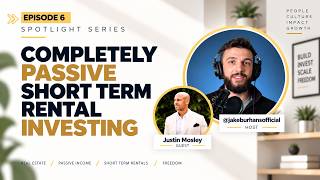
Justin C. Mosley, a former military member turned STR entrepreneur, explains that short-term rentals go far beyond Airbnb and include any property rented under a year. He targets high-value niches like traveling nurses and doctors, emphasizes treating STRs as a business, and argues we're at the bottom of a 10-year real estate cycle, making cash-flow-positive rentals especially attractive now.
Chapters
Welcome! What is going on? Spotlight Series episode 6. I am excited for this. So we got my man Justin C. Mosley out of Jupiter, Florida, I believe, um, on with us today to talk about some short-term rentals. Justin's crushing it. Well, for one, he's a fitness guy, so I already love him. Um, so he's posting about a bunch of that stuff on, on Instagram, but, um, ex-military, and now he's, he's heavily into short-term rental. He's got his own mastermind and doing a lot of investing, but we're excited to get into that. Justin, how you doing?
Awesome, man. Always, brother. Appreciate you having me on.
Absolutely, absolutely. So I'm gonna start it off hot here, but, um, what is the biggest misconception about short-term rentals today?
Oh yeah, I mean, I think the biggest thing— one, most people don't really understand it or recognize it truly as a business. The first thing I think— I mean, I've even talked to real estate guys. When I say short-term rentals, STRs, they either don't know what I'm talking about sometimes, or they automatically think Airbnb, right? And say even, uh, Zoom understands what's going on, right? Thumbs up. Um, and I think most people just think it's Airbnb is pretty much what it's about. And but the reality is like there, there's just so much more. And really I classify as anything where you're occupying a property in any way, shape, or form really less than, you know, 30 days, but even 6 months, right? Like anytime you're not locked into a long-term lease, to me that is kind of the short-term rental world, and that's the space that I play in, and I love it, man.
Got it. So you kind of, you mix in what they might call a medium-term rental, you know, 30 days.
The principles are exactly the same, right? So whether you're, you're capturing that traveling nurse that needs this place to stay for 3 weeks or 6 months or, you know, somebody just needs a place to stay overnight. At the end of the day, like, they're paying a premium to stay in a property for, you know, less than a year, less than 6 months. And to me, that's all the short-term rental space. It's, it's more about flexibility than anything else, and that's why I like it.
100%. When you say that people don't look at it like a business, what do you mean by that?
Well, I mean that they just generally associate short-term rentals with kind of the Airbnb platform So I think there's just kind of a connotation. It's not necessarily negative, it's just that, okay, in order to play in the space, I need to have a vacation property in Florida, right? Or in California or something, right? But, um, when you actually look at the fundamentals of the business or how you can operate it, it's, it's so much more. And I always give the example, the easiest one is traveling nurses, right? So you can be in rural Ohio right? And, and when you start understanding the economics of just the medical profession, right? So let's even take a doctor, for example. You know, loads of doctors want to go and work at, let's say, you know, UC Berkeley's whatever hospital, right? And they may go for an extent, a short period of time there. They actually get paid lower than a nurse or a doctor that is going to go visit and travel somewhere in, you know, Montana or Ohio. They actually pay them more there because less people want to go to supply and demand game, right? So when you're talking about the different ways to attract a guest or somebody to come into your property and the amount of money you can make based off where it is, it no longer is an equation of, oh, I need to have a vacation property. It's just a matter of like, what is the strategy I'm using for the location that makes the most sense?
100%. So when you say they're not looking at it in terms of business, they're too narrowly focused. They're just focused on Airbnb. They're not looking at market demographics and different types of properties you could make out of short-term rentals. So they need to kind of open their eyes and, and really, you know, analyze it like a business so they can see all these different levels and opportunities they could potentially have.
Yeah, 100%, right? And then also too, when you talk about the narrative— and I'm not the hammer on Airbnb, but that's the one everybody knows, right? Like, people tend to look at whatever news you see, uh, as kind of like gospel, right? When you hear, you know, people are no longer making this much money in the business, There's a lot of other factors, we can get into that later, for that. But when you actually look at the company as a whole, its revenue is at an all-time high because more people are using it, for one. And then the other piece is there are, you know, 15, 20 other very valuable platforms that exist that has nothing to do with Airbnb that you can put your properties on there and then make money that way as well.
That's phenomenal. Like, that's a misconception for me. I'm just— when I think short-term rental, all I think is Airbnb. So it's really good to begin to open my mind to all that. I think that's important.
Yeah, and it's not a bad thing. It's just that's why I'm so passionate about getting that information out. I mean, you know me, I'm passionate about stuff anyway, man. But like, it's just that, look, look, especially if you want to invest or do it yourself, there's, there's so much opportunity. And in an environment like today where you have to pivot, right, and figure out if I'm going to make money, especially in real estate, what's the best way to do it? And it doesn't have to be forever, but right now it's such a valuable time to get in because the return that you can get justifies the interest rates. So it allows you to buy where a lot of people are kind of on pause, and they've been on pause for the last couple years. And, and this is a massive opportunity in this space.
That's good, that's good. We're going to get to that. I was going to touch on that, so that's good. Um, real quick, give us a quick one-two on how you go from, you know, um, the military to where you are now in real estate.
Yeah, man. Uh, so the super high level is got out of the military, went to college, went to grad school, did what everybody else was doing, and then, you know, realized very quickly, goddamn it, I'm never going to make any real money doing it this way, bro. And that's just the plain hard truth about it, right? My wife got into entrepreneurship, I started dabbling in investing, and I just saw a clear path in this space where I just saw opportunity. And like everything else, bro, I went all in, and that got me to where I am today.
Yeah, she had to make that leap. I mean, you're not a guy who really has that challenge. And kind of leading into my next question, um, what do you think the biggest mental hurdles you had to, to get past to get to where you are today? Some, some mindset challenges. I don't know if you had many, but if you had to pick one, what do you think it would be?
Nah, man, I think I was missing— like, everybody's got shit they bro. That's just the reality, man. Like, I don't care who you are, um, some people like to make it harder on themselves, uh, than it needs to be. But I think it's just really one, opening your mind up to the idea of actually making a lot of money. And I'm not even saying it from a superficial level. I mean, my why is driven primarily by my family, right? Like, I got 4 kids, I got a wife who likes really nice stuff, right? And I like to give to her. And, and, but like, that drives me. So when I started thinking about like, okay, what does— what do I want my life to look like? How can I design it in a way that makes a lot of sense for me, but also, you know, do the things that I want to do and have time freedom?
It's—
for me, it was more just an exercise of like reverse engineering, right? Like, what, what's the outcome that I want? And then how— what's the path to get there? So it's like, until you kind of do that exercise with yourself you don't really know, right? Like, I mean, I come from Baltimore. I'm not a trust fund kid, right? Like, nobody in my family ever made anything materially with that— like, you know, the common world would say, oh yeah, you've made it, right? So just going to college and living in a nice area, like, for me, for a long time I was like, oh, this is good, until I kind of challenged myself and say, hey, you know, what do I want my kids to see from work ethic standpoint? You know, how do I want to What environment do I truly want them to grow up in? And then how involved do I want to be, which is very involved. So it's like I had to push myself for, for more stuff in order to, to bring that into fruition. Does that make sense?
Yeah, absolutely. So when you say, uh, open your mind to making more money, kind of talk up— talk about that.
Yeah, yeah, I think it's just kind of the limiting belief stuff, right? Like, um, I don't think anyone is like immune to the idea of like when you start thinking, okay, like how much, you know, net worth or how much income can I bring in on, you know, a weekly basis, a monthly basis, hell, a daily basis, right? Like there's some number that everybody can come up with and say, oh yeah, that's not possible, right? Until you start breaking it down and realizing like, oh well, if I do these things and I keep on this path and I believe in myself, I can actually get there. And I think it starts from the self-belief piece, right? I'm really big on that because if you believe in yourself— and it sounds really corny and cliché, but it's the truth, man— like, if you actually keep promises to yourself, you, you know, keep the commitments to yourself, then it becomes a matter of like, all right, well, how long will it take? Rather than like, if I can do it or not, right? And I think anytime you tell yourself— and that's why fitness is such an easy kind of analogy— you know, that I'm gonna get up in the morning and go work out. And every time you don't do that, you're subconsciously— your subconscious is saying like, you know, you're not going to keep that commitment. So that's how most people kind of operate. So when you start thinking about like, you know, the type of things you can do, the life you can have, and stuff like that, even if you're trying to force yourself, if your subconscious knows that you haven't kept those commitments to yourself, um, it will kind of put you in a, almost a default like failure space. Um, and I think that's the over— the challenge you have to overcome. And that starts with keeping those commitments and having that self-belief and then proving to yourself and building that confidence that you can get whatever it is you want in this world.
Yeah, the mindset's a huge thing. I mean, it's really like 80% mindset. It's got to be, you know.
It's— yeah, I think it's like higher than that, bro. Like, I remember going to my first mastermind and I was sitting there, and when I got into real estate and I paid the $20K to go see some guru talk and stuff. And like, I was sitting there and he spent like almost an hour doing like these exercises, the mindset stuff. And I'm like, bro, get to the content, I want to understand the information. But like, now I realize like how important that piece is, because it is, man. Like, you know, the technical stuff is out there, right? Like, you can ChatGPT most stuff out there, right? Like, it's not— there's no lack of information. But with the mindset stuff is actually going to help you get up, do the work, and put in the action every single day.
Yeah, yeah, the, the, the numbers and all that's pretty elementary, like, when you think about it. I mean, it can be explained pretty easily. The mindset, I think a big part of that is community, right? I mean, I'm not sure about you, but being around people who are operating at a higher level to just open your mind and getting away from your old friends, family, whoever, who are just in a completely different headspace and are just pulling you down like cinder blocks tied to your ankles. Um, so talk about the role that community has played in your life and in your own development, and then kind of a little bit about your community, um, the short-term, uh, yeah, yeah, yeah, no, no, I, I think that's 100% the truth, right?
And every individual has to kind of figure out like what pieces or people in your life that you need to either completely remove from, or like, you know, move away from a bit and create some distance. And that's for every individual to make, man. Um, I think I have been really fortunate as that, like, my wife is really my partner in everything, not only in marriage but like we do business together. Um, that has really been important. I think somebody said, I think it was like Zig Ziglar or somebody, it's like, you know, who you choose in life to you get married to, it's like has one of the most biggest impacts on kind of like your outcome. I don't know who actually said it, but I, I now I truly deeply believe that. So that was kind of foundational for me because my wife, she's an absolute monster, bro. Um, you know, she's a hustler. She's built— she's building her business and stuff, and that is something that we both kind of thrive off of. And then for me, it was about creating the community, right? Like, if I want— what is the community that I want to be a part of? And if it doesn't actually exist, which it didn't, I went out and created it. And that's kind of what I did. So really, you know, it's like-minded people. I like different people, and that's the thing, like, I don't mind being around people that have different views than I do, but there has to be some consistent level of values, right? Like working hard, um, holding yourself to commitments, like accountability, discipline. Like, you need to at least have those because those are the people that will actually challenge you to where if you're not doing what you should be doing, they aren't going to pat you on the back and say, it's okay, that's all right. They're going to say, no, get your shit together, and because your family is counting on you. And those are the kind of people I like to be around. So if you're not around those folks, you know, I think it makes it much more harder, uh, or much more challenging to, to get to where you want to go in life.
So was the lack in other communities people who didn't have similar values, and that's what you're trying to create with your community?
I mean, yes and no. I mean, I think those communities definitely exist, right? But I just, for me, I wanted to create a community that was of those values, but also was moving in the direction of, you know, kind of what I was doing. And I can provide value in a way, not only from a mindset side, but actually to the technical side that I truly understand. And it goes back to the education point before about the STR space, right? There really isn't anyone out there that's really risen to the top in this space. And as far as like kind of a face or marketable person. So I thought there was real value in like, hey, if you have these types of values and you want to do this type of business, like come join this community and let's grow together. So that was kind of the impetus for that.
Yeah, that makes sense. And we'll get to the tactics of short-term rentals just for the people. In a second. But in terms of the community, people who are a good fit or a good fit for the community, what are they looking for? What are they getting out of the community? Are they trying to do short-term rentals, passive short-term rentals, active investors? What does that look like?
Yeah, I mean, it could be a variety of things. I mean, it's generally going to be based around like understanding how to utilize short-term rentals to better your life, right? I think I have a lot of people in my community that make really great money, and I tend to attract a lot of people that have really strong family values. That's something I post a lot about because it's, it's very much a core of kind of what I'm about. Um, and I think the same way that I kind of arrived in this, where it's you get to a certain age where you start realizing like, okay, like, what does the rest of my life look like and how do I want that to look? And it generally goes, especially for me, I only speak for myself, but like, do I need to buy a nice car or put a pool in my backyard? Or should I be like buying assets so that when it's time for retirement, not only can I have financial freedom and not worried about, you know, the rest of that time, but I can also pass on something to my children., and not necessarily just to give them everything, but like to give them the advantage or the ability to say, hey, if I want to start a business or something like that, that there's something additional there to pass on to them. So that, that, that's truly what was important to me and what I'm trying to do.
Yeah, that's awesome. It seems like everyone's together kind of on the same journey. Um, I, I talk about like a successful relationship, whether it's business or whatever, has 3 things, right? It has value alignment, like you said. It has vision alignment going in the same direction. You have role alignment, like you're doing separate things. But I think the value and vision alignment is something that everyone in the community has. And also accountability being a big thing too, right? Holding everyone accountable is probably a major component of that.
Yeah, yeah. Although I will say we're slightly different because, like, and you can call it a character flaw, but it also helps me, right? I guess it's situational, but I deeply believe in like, bro, you got to hold yourself accountable. I don't believe anyone else can hold you accountable. That shit needs to come from internal. Because at the end of the day, man, like we all know what we need to do. So you need to have enough courage and strength and discipline to force yourself to do it, whether you feel like it or not. And no other grown man can hold me accountable for what I need to do, right? Like I need to do that for myself. So I think I'm slightly different in that way. And I like people to really cultivate that level of discipline because I think that is the secret sauce, man. Talent will take you far, but for people that actually can wake up every day and regardless of whether they feel like doing something or not, attack the things they need to do, those are the people in my opinion will make it so much farther than somebody that's just really good at something that does it when they feel like it.
That's a really good point actually. The self-accountability, right? It's like if you can't even motivate yourself enough to do it and stick to it, It's going to be tough. It's going to be a long road, you know, because it is a long road. So if you need someone there the whole time, it's tough. It is very tough.
It is, man. And it's like, I don't knock folks that like kind of want to build that in their community because there's definitely some value there, right? Like if you're showing up and you know you didn't do it, like maybe that motivates you to do it. But I think that's only temporary, right? It's almost like motivation, right? Like there's some days you wake up excited and other days you don't, right? But like regardless, things need to be done, right? So I think it always comes from internal. I just deeply believe that like most of the stuff that we deal with is internal and it has to be sorted out inside, and that's what's going to push you further versus trying to look for these external things to kind of move the needle in your life for, you know, for the betterment of you.
Yeah, 100%. I couldn't agree more. All right, let me get into the tactics kind of here behind short-term rentals and some, some market things. So you, you touched briefly earlier on the market, um, what are you seeing right now in regards to the market and how, how do you excel as an operator right now with short-term rentals?
Yeah, so right now I see massive opportunity, right? And this is the really cool thing about where we're at in this market cycle. Um, I think a lot of people are trying to make comparisons to what's going on in 2008 And it's almost the exact opposite, right? Like, that was very much a mortgage crisis because of, uh, you know, you know, 108, 110% LTV loans being given out, the ninja loans, right? Like, no, no income, no job, no assets. Um, that doesn't exist, right? Like, especially on the investment side, like, uh, you're gonna put 20% down every time. Like, that's just the nature of the beast. Um, mortgage rates are, are much higher, but a lot of the distress is on the commercial side, right? Um, and there's still a massive undersupply because of 2008 in residential homes. So you, you should have seen like a proportional decrease in values, uh, when interest rates shot up the way they did. But especially in desirable areas, you almost saw no value decreases, or you even saw some value increases in some markets, right? Um, and I say all that to say, I think we're at the bottom of these kind of 10-year cycles that we get into. So even in those markets where you did see some decreases, right, the Austins that were really super hot, the, uh, Phoenixes and stuff, I think we're now at the bottom. So if you start investing now, operate short-term rentals like the right way, and we can get into some of the tactics, this next 10 years I think we're going to see another upward kind of trend of appreciation that people will be able to take advantage of, and they won't be looking back like myself and a lot of other folks from 2008 saying, damn, I wish I would have, you know, invested then, right? I tell people all the time, we all have the, uh, the, uh, look back and, and wish we would have done something. That's great, right? That's information. The goal is like, okay, now what is that thing that I should be doing that in 10 years I'll be like, I'm glad I did what I was supposed to Yeah, I agree.
It's tough waiting around for the bottom to drop out. Is it? Is it not? I mean, we're just— we're guessing at that point. Might as well just get in, you know, and play the long-term game, and then you'll always win.
And no one knows, bro. And this is the thing, right? I got a master's in financial economics, and like, you know, literally all that stuff is, is gypsy magic, bro. Like, even the economics— there's so many variables that go into play. It's really hard to really know what the macroeconomy is going to do because we're so interconnected, right? The wars in other countries, you know, prices, inflation, um, all the different things. If you have a strategy that isn't built on the idea of appreciation— and this is why I love short-term rentals, because I focus in on cash flow— then it's just an execution of like, okay, does this property make work from a cash flow perspective? If it does, then it's a good buy. And then everything else that comes in the future, if I'm not looking to, you know, flip it or something like that, like you're going to win because over the long run, even if you buy a crappy deal, like you're probably going to win on the appreciation plus all the other benefits you get on the single-family home side.
Yeah, that is, that is phenomenal. So you mentioned, you just mentioned it about 5 minutes ago. What are the different ways that you like to operate your short-term rentals? Obviously Airbnb is one method. You kind of talked about midterm rentals. What are your favorite strategies How do you implement those, and are they market dependent? Different strategies in different markets?
Yeah, yeah, very market dependent. Depends on where you're at, what your demographics are. I always like in short-term rentals is, you know, you're operating almost like a retail store, right? Like, where is it? Who's coming in to shop, right? Like, stay in your properties. What do they want? So we look at, you know, not only in markets Uh, like from an optimization standpoint. So this is something a lot of people overlook, is when you go into whatever market, you can look at what the top 10, uh, percent producing, you know, short-term rentals are doing and see what the amenities are, see how they're positioning the property, what the pictures look like, right? Like, we live in an Instagram world now, right? Like, that stuff matters. And when you aren't catering to the people that are actually coming into your property that's where you're going to suffer. So that's a big one. I also like the very much the hybrid approach, right? Like, so in some of our higher-end properties, not only will you, um, I like bigger properties that are, in my opinion, I call them kind of recession-proof. Um, no matter what's going on in the economy, like we're up or we're down, people still travel, and people tend to travel to vacation-esque places. So that doesn't necessarily mean Florida. That could be— I love Pas Christian Mississippi, right? Like, uh, you know, Gulfport, you know, Gulf Shores, Alabama. Um, I might not go there, but if you live in that surrounding area, that's where they go to have a good time, right? So if you buy a property that can hold 10, 12, 20 people, you're in a spot where if two families are traveling together, they have two options. I can go spend X amount of dollars on 5 hotel rooms, or we can all stay together, have two kitchens, get our groceries, spend time, go out to the water. So you're almost building a, a model or this certain kind of like product where there's always going to be a demand for it, especially in markets that don't have a whole lot of inventory. Um, and then the last one, because this is— I can be super long-winded— um, is kind of like the hybrid approach, right? So if you have a higher-end property, there's this really great, uh, platform called Peerspace where you can put it on and you can allow people to host events there, um, do photo shoots. And when you're talking about if you put your property on the market for, let's say, even a higher-end one like $1,500 a night, it's really that top end. Um, if you let someone take pictures there for 4 hours, 6 hours, and they pay you $3,000, and you're filling that in on the times it's not being occupied, now you're talking about printing money. And these are kind of the strategies that, like, people have no idea, um, that you can do. But once you understand the market, understand what the demand is, you can start putting those pieces together and really start making a well-oiled machine.
Yeah, so it kind of goes back to your earlier point about looking at it like a business. So you're doing a lot of market research and seeing, hey, what in this market, whether it's Louisiana or Florida or Texas, what do people need, right? Are there a lot of big families traveling here because of X, Y, or C attraction in the town? Okay, there's a demand for this. You know, people are buying 4 or 5 hotel rooms, this is a better option for them, and you create that product. So that's where it's not really pinning yourself into Airbnb, but looking at the market, what does the market need?
Yeah, 100%, man. And I tell people like, that is the most important piece. Um, start with the market. Like, what does the market say? What does this support? What does it need? And then you kind of whittle down to, you know, where's the best area in that market, what's the best property type, and then how to position. And if you do it from that perspective, you have a much higher probability of like hitting a home run versus just trying to find a property anywhere and then trying to, to make it work somehow.
Yeah, yeah, yeah, I agree. Okay, last thing I want to touch on real quick here is, uh, how can you get involved in short-term rentals? Is there a way to do it completely passively if you didn't have the time, maybe you just wanted some returns, or you could be an active? What do those options look like?
Yeah, 100%. So this was what my kind of education and community platform was like kind of built off of, right? It's very symbiotic. Um, so Less More Capital is where we syndicate short-term rental properties, and that is kind of an alternative to the other types of like multifamily, you know, self-storage. So we have investors that come in and invest with us, and then they participate in that cash flow, and they can— we give them a really great return, especially even in this market. And then if you want to learn to do it yourself, this is where we have the STR Millionaires program, and we will teach you step by step like how to go through this whole process so that you can directly buy and manage your property and put in the automation so that like you're not managing your property, you're being the CEO of your own business. And that allows you to have the time freedom and do the things that you want that's important to you in your life, like spending time with family.
Yeah, awesome. So two approaches there. You're, you're less or more capital is more the passive approach where you can still get all the benefits of the short-term rental. And but if you're busy and maybe don't put time into it, you can go that route or can join the mastermind and learn how to do it yourself, scale up the business, buy your time back. That one's going to give you more return, obviously. It's obviously more work, more time.
Um, yeah, right, exactly. And it's just about what's important to you, right? Like, um, some people, uh, there's massive value in direct ownership, right? Like, at the end of the day, that is always the best way to go because especially if you're a high-income person, um, short-term rentals and the way the IRS code has been written, um, just gives you massive benefits on the depreciation, bonus appreciation side and obviously the cash flow and all this kind of stuff. But if you just want to participate in that and you're like, hey, I just want somebody that knows what they're doing, already has the process and system set up, then yeah, we would love to partner with those folks as well.
I appreciate you coming on. Got some love. I'm not sure, I'm not sure what perspective this was, but you had a lot of good perspectives.
But Austin said perspective, so yeah, everything, bro. Yeah, man, I'm just trying to get the good gospel out there, man. That's I love this thing.
So, um, where can people find you?
Everywhere, bro. I mean, I went from anti-social media to— I'm on LinkedIn, Instagram, Facebook, TikTok. You know, you see me doing the dance now, I'm sure. But, uh, yeah, man, probably the best way to reach out is, uh, Instagram, probably Justin C. Mosley underscore. I think it's like LMC. Or LinkedIn's a good one as well, so just my name.
Okay, awesome. And lastly, last thing here, what is the number one action step someone needs to take today if they have no experience with STRs and they want to get started?
Just take action. That's it. That's it, bro. Just do it. Like, what's the worst that's going to happen? It's not that bad.
I agree. Imperfect action, folks. That is the absolute key. Austin Scott also said, what's your name on Facebook? I believe it's just Justin. C. Mosley, right?
Yeah, Justin C. Mosley. Yes, sir.
Love it. All right, man, I appreciate you coming on. Everyone, till next time, peace. Awesome, bro.










