Mindset & My Journey - KIE Podcast (2-2-23)
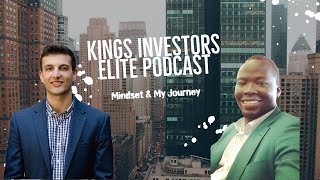
In this KIE Podcast episode, host Gianluca interviews real‑estate entrepreneur Jake Burhans. Jake shares his personal backstory—from a hockey‑driven work ethic and a pivotal reading of Rich Dad Poor Dad to his decision to leave a realtor position and become a full‑time investor. He explains his "why not" mindset, the importance of self‑development, and how he builds his personal brand across Instagram, TikTok, and YouTube. The conversation covers his first wholesale deal, current multi‑family wholesale challenges, and the distinction between wholesaling, fix‑and‑flip, and buy‑and‑hold strategies. Jake and Gianluca discuss licensing, the value of a real‑estate license, and why it’s more about MLS access than education. They explore funding alternatives such as seller financing, subject‑to, private and hard‑money lenders, and the goal of generating $4,000 + monthly cash flow. The episode emphasizes community, mentorship, meet‑ups, and resources like TTPinsider.com and Pace Morby’s mentorship. Finally, they field questions from participants Winnie and Joe about wholesaling basics, LLC formation, and how newcomers can get started without a mentor, stressing education, free online content, and joining supportive networks.
Chapters
All right, all right, uh, let's get it, man. Uh, Jake, oh man, this is, uh, amazing. I'm excited to have you back once again. And, uh, this time around, uh, you know, I've seen— I've been following you, I've been seeing a lot of things that you're doing, and I can say, man, a lot has changed in your life. And, uh, you know, just kind of wanted to, uh, get to know a little bit of, uh you know, what's happening in your life. But before we get going, uh, everybody, this is Jake, and, uh, Jake is an entrepreneur who's doing amazing things at his age. Uh, former realtor, I believe, right?
Yeah, yep. Now we're full-time investor.
Now full-time, full-time investor. A great friend and, uh, such a servant. I can't be— I can't imagine how many times I've called you and ask you for, uh, you know, to, to help me with my deals and just to look it up and things like that. And I just want to, I just want to say, man, that I really appreciate you, and I'm glad that we're in this journey together. And I know you got tons of, tons of value to give to this, uh, to our community. And, uh, yeah, uh, you know, let's, let's get this going. My name is Gianluca, uh, and, uh, guys, welcome as you're watching this. If this is your very first time, uh, you know, seeing this or coming to my channel, please don't forget to subscribe to my YouTube channel and so that, uh, you don't miss out on great people that are coming on the show like Jake. And so, and also, uh, Jake has been building great content, great, great content. So, you know, Jake, first of all, you know, just tell us a little bit about you and where people can find you. Where can people find you?
Yeah, I appreciate it, John. It's great to have— have— or I appreciate you having me on here. It's always good to see you, man. You got such good energy, you and all your— even all your, your homies. Um, it's always good to see you guys, puts me in a good mood. Um, so I'm excited to get back up there. And, uh, in February, I think, uh, Tim might be doing another meetup. But you can find me Jake_Burhans, probably put that in the description how to spell that. But you can find me Instagram, TikTok, uh, Twitter, and YouTube at that handle, Jake_Burhans. But yeah, Just trying to put out some content about my journey, what I've done, lessons I'm learning along the way, and just trying to share. And hopefully we can all level up together.
Yeah, let's— before we even go further, you know, why are you doing this at a young age? You know, you're doing really good, successful guy. You know, I can't even tell you when I was 24, I can't even tell you where I was. So tell us why. What drives you? You know, you know what? Why did you choose real estate? Uh, in the first place, or how did you realize that you were an entrepreneur?
Yeah, it's interesting because I always played hockey my whole life. So when I played hockey and we would do training and all that stuff, I was always the guy that would— I would like never miss a workout. I always try to hold myself accountable. So even if it was like a Sunday or Saturday workout, or say I missed it on Wednesday, I'd have to make it up on Sunday. So I kind of took that work ethic from hockey. And after I was done hockey, I went into college, and for my first year of college, didn't really know what I wanted to do, you know. I was kind of a little bit loss, I was just like, I was used to the grind every day, right? Because when I was in high school, I worked construction all day and then I'd do hockey as well. So I did the training for hockey, construction, and I had like hockey practice at night. Um, so I guess I'm kind of a busybody, which I guess is kind of a bad thing. But, um, so I kind of, once I read Rich Dad Poor Dad, it kind of switched my mindset. And ever since then, I've just put all of that effort and energy and focus into building a real estate business. Um, but I think a good thing is— I love this question, and I know you said what drives you, and, um, I like the question, what's your big why? Why not? Why not? That's my answer. What's my big why? Why not? Why would not— would I try to build something incredibly impactful in the one life I have here on Earth? I feel like it's— you're almost doing a disservice not trying to do that. Like, why would I not do that? Like, I'm gonna look back when I'm 80 and be like, why didn't I go start the business? Why didn't I do that?
You know?
So my big why is why not.
Now, do you have a family? Are you married? Single? You know, you know, those are some— for me, that's what drives me now because things have changed. Uh, this year started out different for me, so I have those kind of whys. You know, obviously you have a lot of, you know, energy to just go after what you want. Yeah. So those are, those are big stuff.
Yeah, no, I, I'm, um, yeah, I'm not married. Family, family is never entrepreneurial either. I just, I don't know, I like, I like working towards something. I like progressing and growing and learning, right? And that's— yeah, I heard someone say it, but being an entrepreneur is the greatest self-development tool that you could have because of the things you have to be, right? It's like my— if my goal is to be a billionaire, for example, I wrote this down in one of my business philosophies, but like the goal to be a billionaire, it's not about becoming a billionaire, it's about the process of becoming a billionaire, right? What do you have to do in order to become a billionaire? You're You're gonna have to have great relationships, right? People that support you, build you up, get in the right circles. You have to have good health, right? You're not gonna have the energy all day if you're, um, out of shape and not eating right and not drinking water and stuff like that, right? In your mental state, you got to be learning, you got to be growing, you got to be in touch spiritually. So all of that has to come into play for you to become a billionaire. So it's not about becoming a billionaire, like, oh, what do you want? Why do you want to become a billionaire? Like, you don't need that much money. It's like, it's not about the money at all. It's really just about who you have to become in order to get to that spot, which I think makes you a better person.
The process.
The process, yeah, exactly.
Wow, wow, wow. Thank you, man. Uh, you know, let's talk about, you know, you started building a brand and you said that people can find you on Instagram, YouTube. You just started a YouTube channel. Yeah, you've been doing great doing real estate with your partner. Uh, you know, talk about the branding, man.
Uh, I see that you started maybe around last year Uh, yeah, I really probably started, um, I created the accounts, but I wasn't all in until I watched some of Pace's stuff. Pace Morby, on, um, in this, within the Sub 2 Mentorship, he had like a social media course, and I kind of went through it and really opened my mind to the benefits of it. Um, but yeah, it's really, really, it's just simple, man. I just post a few videos. I record a few videos on Sunday, and I just post them throughout the week. And then on my Instagram, I'm just posting stories about what I do. But I'm I'm just trying to have people better understand me and like me as for the person, like, kind of that I am, you know, what I like. Like, I like going to the gym, I like sports, I like listening to music, I like being active, I like reading, right? So, um, and I'm always trying to attract my tribe in that sense too, right? Get the people around me that I want to hang out with. So people naturally follow me that like those things as well.
Wow. So, uh, that's, that's amazing, right? And also when you build a brand a brand, you know, your, your brand is actually, uh, it's almost like you're building, you're building a brand and people are getting to know you and you're building a network, network that becomes your net worth, right? Somebody once told me that your network, uh, is your net worth. And so I think that's really powerful, you know. Let's talk about, you know, you being a realtor a year ago. Yeah. And also, you know, for anybody that's, you know, that didn't catch you for the last time, you were a realtor doing both investing and being a realtor. Let's talk about that shift just for a second before we go on.
On— yeah, so that was a, a crucial shift I had to make too. It's like, it's almost like serving two masters, you know. I'm trying to go the realty route while I'm also trying to do the investor route. And it's, it's like the analogy of if you're trying to build a bridge to an island, you want to just build one bridge to get to the island. You don't want to start four bridges. It's going to take you forever to get over to the island. You might as well just put all your time and effort into one bridge and you'll get there. So my bridge was trying to be full-time in real estate. Right. So I'm trying to build two bridges. It's just much harder. Um, and ultimately the position I was in at the realtor company, like it was a great company and everything, great opportunity to be a realtor, but I really needed to be full in, all in on being a realtor for, to be a part of that team. And it's kind of like, do you want to do that? Or do you want to go off and just do your own investing thing? And I was like, tough decision, man. Cause I, it was almost like a security blanket being on the team because I felt like they were going to help me out. But it got to a certain point, I was like, I'm not even really getting any business from this. Like, what? Like, they're— it's like a, it's like an imaginary safety blanket. And I'm like, I should just— I can make way more money being an investor. I should just go do that. That's what I've wanted to do the entire time. So I was like, you know what, screw it. And right before I made the decision, it was kind of like, it was spiritual. I was like about to go out to Montana for a week, and I had to make this big decision on my way out to Montana. I was like, you know, screw it, like, I'm just going full-time into investing. And then I had like a week just of um, like peace and serenity out in Montana. I was fly fishing with one of my good friends out there, and it kind of just let me think about it for the week. And I came back, it's like, yeah, this is definitely the move. And it has been the move because we have— we've done some big things since that happened back in October. So I couldn't be happier about it.
That's amazing because you and I had that chat, uh, I think Saturday, just briefly, and I didn't get a chance to talk to you much. But, um, you know, I actually was looking to get my license as a realtor But then I don't want to be the person that's just, you know, looking to list properties, but I wanted to have the MLS access. As a wholesaler, we're going to go into this just for a second. As a wholesaler, some states require you to have a license, some states don't. And, you know, that's why I kind of wanted to have my license as a backup so that if ever the state decides to say, you know what, you can't do any kind of real estate, uh, business like wholesaling, um, you know, or fixing and flipping until you have like a license. Some states do, I don't have those restrictions. And so when I spoke to you a little bit, uh, you kind of enlightened me. But my goal is to still maybe get the license but not to focus on the listings and things like that.
Yep, I agree. I think that's good. I think it is great to get your license, and honestly, I hope that they make everyone get licensed to wholesale and do all this stuff because it's going to weed out a ton of competition, right? Because I think the biggest issue with wholesaling and a lot of investing is that people see these checks and it's so easy on social media, yada yada yada. So then you have everyone going out and doing it. There's no barrier to entry and you have all these people locking up contracts that don't know what they're doing. People are getting pissed, right? It's almost is because of a lack of regulation. So if you, if you make people get licenses, that's great. There's going to be way less competition. With, with, with sellers out there, right? So people who are legitimate about it actually go get their license and there won't be any issues. Um, I think it's a good move regardless. I— mine's just inactive right now technically, so all I got to do is just pay like $100 a year, keep it inactive. But then say I did need my license, I could just reactivate it because Isaiah is active. So if we want to do— because we need— we want one active license on the team so that we can start like a referral business and get that stream going as well, try to capitalize on those. Um, I think for you, great move. And anyone else who wants to get their license, never a bad move. Never a bad move. The only thing I, um, try to, uh, warn is that like some people, there's a misconception that you're going to learn a lot about real estate by going and getting your real estate license, which is a misconception. Obviously you don't think that, but other people will be like, oh, I'm trying to get into real estate. I'm going to get my license. It's like getting your license teaches you the rules and regulations of like the nitty-gritty, but it doesn't really tell you anything about how to operate real estate or how to real estate invest or do anything like that. Right. If you're trying learn that knowledge, you should go to a meetup and talk to people who are actually doing it, listen to podcasts, or read books. Those are the 3 options if you want to get into real estate. And then you can decide if getting a license is the right move for you. If you want to be a realtor, obviously get a license. If you want to have MLS access, which almost all investors do, then get a license. But make sure you know why you're getting it, and make sure the reason isn't to learn about real estate, because you won't learn much in real estate school.
Absolutely, absolutely. So for anybody that's going to be watching this, uh, we are going to be uploading this video into our YouTube channels, uh, sometimes between today and tomorrow. Uh, maybe, maybe it's the first time. I don't know if there's, uh, somebody here. I think there's— okay, I see Winnie on the line. Uh, Winnie, welcome.
Uh, hello.
Yes.
Hey, hey, welcome.
We are doing great. How are you?
I'm well.
Wonderful. So maybe you might have some questions at the end. Uh, for me, I started real estate as a wholesaler And, uh, you know, for the past 3 years, uh, done well as, uh, as wholesalers, right? And, um, but the, the biggest thing is now we've gone into buying properties, fixing and flipping. You know, everybody has a different, you know, different place where they got started. I think Wynn is probably started with buying multi-units, and I'm so glad and proud of her. Uh, but you know, Jake, tell us just a little bit. Yeah, absolutely.
Tell us. Yeah, no, go ahead.
Sorry. Yeah, definitely, uh, tell us a little bit about, you know, your first deal, how you guys started, uh, and, you know, any challenges that you may have had.
Yeah, so First deal, I started cold calling when I was going into my senior year of college. Cold called for 3 months before I got my first deal. That's the consistency that you need to do this. Just kind of tough. You got to have that blind faith that it works, which for me was just consistently listening to Brent Daniels and Wholesale Highline and these people's success stories. I was like, "I know this works. I just got to keep doing it, keep doing it." Just got to be fully committed. But 3 months, and I squatted up with a big wholesaler in the area, and they dispositioned the deal for me. So they sold the deal for me. So I got it under contract for $500. It was a trailer, it's mobile home. Got under contract for $500, and I squatted up with this guy. We sold it for like 7 grand after we paid the realtor and stuff.
We each made like $2,500, and I was like, oh my God, like, wow, this is crazy. You got it from online? It was on the MLS, it sounds like.
No, no, no, no, no, no, it was, it was prospecting. So we, um, another guy in our area who used to wholesale— he didn't wholesale anymore— he had an old list. It was like 37,000 records. So it was a ton of records, but it was from like 5 years ago. So they're mad old, but they had phone numbers and everything. It's like, here, you can just call this list. So we were calling that list. It was literally like records from 5 years ago. I was just calling them and we got it off that. But, uh, yeah, I made $2,500 and I was like, this is crazy because Back when I worked construction, it was like I'd work all summer for like $3,000. So I was like, $2,500 is great. But now I'm like, $2,500, like that is like literally pennies.
Yeah, very small now, right?
Yeah, it's crazy. Like once you start to get some like bigger checks, like your brain chemistry just switches and you're just like, you get a $50,000 check and you're just like, you just expect that from now on. Now you look at like $10,000, $15,000, $20,000 as like, uh, even though it's still a great amount of money, I take that all day long, but I'm now just like, my, my, um, I don't even know the word for it. Aptitude maybe is just like higher.
And I'm just expecting— you expect bigger checks.
Exactly, exactly.
And because of that expectation, you actually— your mindset is set right. Yeah, now you begin to attract that. Yeah. So maybe you can tell us what you did with your first check, because I— for me, when I got my first check, $15,000, and you know, very excited. You know, I wish I put it all into the businesses, you know, from to kickstart my business in a big way, but I didn't, you know. Tell us what you did and how did it improve your business from the get-go.
Yeah, I didn't improve anything. I, um, because I, when I was starting, I, when I was starting, and honestly until like a couple deals ago, past 2 deals, I was like, um, I would run out of— I ran out of money probably 4 or 5 times, like where I was It was literally by the grace of God. I have no idea how, how I survived, but I would get down to literally no money in my bank account and then a deal would be hitting in like a few days or something. It would replenish it. I was just living like that for like a year and a half, bro. It was brutal. Um, but yeah, so that one, I was in college, I had no money. I was like, I need this deal right now.
And, um, so you were doing this in college?
Exactly. Yeah, I was in college, senior year. That was senior year. So I mean, I just needed money for like— my mom was still paying my rent, which was great there, but I just needed money for like groceries and all that type of, type of stuff, like paying for my car, stuff like that. Yeah, yeah.
Wow, that's, that's, that's, that's, uh, you know, I, I can relate because when you have expenses now, things that are going on, you're on a company, you got to pay employees and things like that. Yeah, you know, you're, you're hiring your people right now, some, some VAs right now. But I can relate because there's times where you have money into projects and, you know, you just want the next deal to close so you can put maybe more money into the project or put it back into employees and things like that. But that's awesome, man. Um, you know, before we talk about the deal that you're doing now, well, let's just talk about the deal you're doing now. You know, from the first deal to now, what are you doing now and what, what is your latest deal like? Is it a fix and flip deal, wholesale deal, you know, seller finance or anything like that?
Yeah. So right now we're just trying to, we're trying to assign a 9-unit, it's a multifamily in Derry, New Hampshire right now, trying to get it figured out. We're having some issues. We were set to go and sign the assignment the other day. Like we were good to go. And then we got the actual lease information and it was false. It was wrong from what the owner said. So leases were actually way lower and He locked everyone in for a year, a year-long lease starting on January 1st, which—
oh, this January?
Yeah, dude, screws the buyer because like if they're trying to do a value add, they got to keep those people in there for a year and the rents are like half what they should be. So it's like there's going to be losing money the whole time, the whole year. Um, so that absolutely like screwed us. We're gonna see if it's still gonna go through or not, but, um, so yeah, that's what we're dealing with now, multifamily.
Uh, so you're wholesaling, you're wholesaling a multi-family.
Exactly.
Yep. Wow.
Wow.
Yeah. But that can be tough, uh, because you definitely, uh, it's kind of hard to have to buy a property that people are already living in and they already have. Like right now, uh, we are working on a property right now. Uh, we gave, well, we, we talked to the seller and he is actually, he has tenants in his building and they have, you know, month to month. Which happens to be a good thing for us.
Oh, very good.
And so we said that we are not gonna close on that property until he actually, either he finds a new place or put them into his other properties, or just, we don't wanna deal with the tenants that are already in there. Why? Because he had them in there for so long and they're paying very low. So for a new person to come in and try to lift that rent up, it's going to be a battle. But absolutely, I know where you guys are coming from.
That's the toughest. That's what you see the most, honestly, is with these multifamilies, is the tenants have lived in there for literally anywhere from 5 to 20 years, and they've lived in that same unit, and the rents are half of what they should be. And it's just like, I don't know, it's a tough position because you don't want to kick the people out, but also what is the landlord doing? I get you want to be nice to them, but you're just putting them in for a rude awakening when you end up selling this down the road because you're not increasing the rent. So they're living in some fantasy land that rent is $600, not $600 like anywhere.
Yeah.
Um, but I get what he's trying to do. So it's definitely a tough thing to, to try to balance.
Yeah. Yeah. Yeah, absolutely, man. Yeah. So that's the deal. I mean, 99 units, it sounds like a really good deal though. I mean, um, for me, I'm focusing on building more cash flow now, you know, doing what Winnie is doing. Uh, you know, we bought properties basically under for seller financing and things like that. So as for me, I'm looking to buy more properties this year and keep them for rentals and, you know, more cash flow.
Yeah.
Uh, while doing wholesaling, we're looking— we're looking to close at least 5 deals, uh, a month. At least out of that, one can be a fix and flip, one or two can be a fix and flip. 2 can be like a wholesale, but at least hold 1, at least hold 1 property so you can do some cash flow. You know, where are you going with your business? Uh, what are you looking to build, uh, for your legacy and things like that?
Yeah, so this year we're, um, yeah, I think we're trying to hold, buy more as well, right? It's easy to get caught up in the, in the wholesale game of like chasing the big checks because it is nice, but in the end, that's not what is like you're— you have nothing to show for at the end of the year, you know. It's like, but you have— but if you hold the properties, you buy and hold, then you have whatever. So we're trying to build cash flow. Um, we want to acquire— I'm looking at— I want to try to get like $4,000 a month in cash flow by the end of the year. So that could be— and that could be one deal, could be one deal. If you get like a 36-unit seller finance, like you put a little bit of money down, that could be one deal. Could be 5 deals we need. But that's the metric. I like to look at the metric of like, what do I actually want? Like, if I can get $4,000 of cash flow a month, I'll get level 1 financial freedom, which is all of my expenses and like a little bit of discretionary covered for each month. So ideally I would get that $4,000. I don't care how many doors it is, how many buildings, just get that amount.
Yeah. Wow. I mean, you're definitely on the right journey because I think people that get started like us, as whether you are wholesaling, I think you have a ground because you find your own deals and you cherry-pick them.
Exactly.
You choose what you want to keep and what you don't want to keep. And so people that are fixing and flipping, people that are buying and holding, that— guess what? They're all coming. Most of them are coming to you to see what you have to give out. And I think that's why what we do is also, as people that are wholesaling, it's very important because we are out there, we are finding deals, those kind of deals. That people want. But now if we can actually cherry-pick it and keep some of them, I think we are at a really great place to be. And so I'm glad that, uh, you're looking that way as well, because I went to an event, uh, about a year ago in Phoenix, Arizona, to learn about real estate. There was a guy there that told us, uh, anybody that's watching the— watching this, you know, that's gonna be watching this, maybe you have been focusing just wholesaling And this is something that changed my mind, and this is why we started to buy and hold. It was more, uh, the— it was a guy that was a wholesaler for about, you know, 10 years. And yes, he had, you know, a lot of good things, and, you know, financially, uh, things are going great. But when he looks back as wealth, as building wealth, you don't have much. And so he shared his story about how he's now building wealth and cash flow and building a legacy. And so long-term-wise, you want to be in what Jake is trying to do. You want to be, um, yes, get the quick cash, the $10,000, the $15,000, the $20,000, the $50,000 cash, uh, when you have to, when you want to wholesale those properties. But in the long term, you know, I really like what Jake is doing and even what Winnie is doing. Uh, which is building long-term, building long-term wealth, leaving a legacy for your family. And so I think that's important. Uh, but yeah, you know, I'm really, uh, excited and I'm glad that you're in this journey. Uh, just tell us, you know, you know, to get to the mindset that you're in right now, you know, obviously you have a lot of drive, you have a why, you have a reason to do, to do what you do. But, you know, tell us the mindset and the people that you surround yourself with and the, the importance of, of having a community that can support you and just pull you through. You know, just tell us a little bit about that.
Yeah, having the community is everything. It's absolutely everything. I mean, you need the people around you to, to support you, right? It's not an easy journey. It's very, it's very tough to go out on your own and do these, these types of things. But when you have people around you that are doing the exact same thing, going through the same struggles, they're supporting you, they're pushing you through, it's much easier. But I can imagine if you're— I mean, I've been lucky to have a supportive family through it. I mean, they don't really— they're just supporting whatever I do. They don't really care what I do. Um, but people whose family are like, go get a real job, or do this and do that, you shouldn't be doing this— I can see that being very tough, especially if you're living in the house and you're trying to make these calls and do these things, and your family and friends are like, what are you doing? They don't understand it. That can be tough. So getting in the right communities is everything. It's absolutely everything. I'd say the number one thing you have to do if you want to get started being a real estate entrepreneur or starting your own business is being around like-minded people because they're gonna, gonna push you through it.
Absolutely, absolutely. And I see that you're rocking that Sub2 hat. Exactly, yeah, community.
Sub2's been good. I got a Maple Birch hat coming on the way though. We just ordered some, some swag, so I'm gonna start wearing that stuff around everywhere. I'm gonna be a marketing billboard for Maple Birch Properties.
Nice, nice.
Everyone's gonna know what I do.
That's the goal, that's the goal, that's the goal. Everybody should, because your marketing is important. So I think, you know, I don't want to drag, uh, I don't want to take the recording too long. I think we, you and I, have to actually sit here, like, like on here, and have this conversation and more, uh, more in niche. Uh, so I think for that we need to sit down, uh, to talk about Marketing-wise, how you're getting these deals, uh, how to talk to people, uh, how to talk to the sellers. I— you have a lot of information. So if you are following us, if you are on YouTube, on this podcast, whatever, whenever you're going to be watching this, please go and follow, uh, Jake on his social media and go and subscribe to his channel because he's— he has a lot of, uh, great, uh, information And I think, you know, I think anybody can benefit from that, from how to talk to a seller, how to generate leads, to everything. And so I think the next, the next podcast that we do will be you and I physically here. And so I can ask you about some of those things. We can even do a role, um, role play on how to talk to sellers for people that are just getting started. They're looking to learn how to, uh, how to do any kind of deals, whether it's wholesaling, uh, or fix and flipping, whatever you're trying to do in real estate, uh, you know, I think it all starts from you speaking to people and talking to people. And there's a right thing, the right way, and then there's a bad way. And so I think that can be for the next podcast where we talk about, you know, just the niche thing, the details. For me, the most important thing is about the mindset, because that's the 90% of the of the work, you know. That's 90% of the work, is that they're having the right mindset.
It really is, it really is. It's just the mindset. And I still struggle with it, obviously. I just getting better, get a little better every day, you know.
Yeah, yeah, absolutely, man. Uh, I think, you know, I think we should definitely, uh, leave this time for any question. Uh, I, I think I know that Winnie is more into, um buying and holding properties for rentals, uh, and building that cash flow. And I'm, I'm so happy for her. When— is there any question that you have, uh, for, uh, for Jake or for me? Uh, I know we didn't get a chance to chat as much, uh, the last time we tried to, uh, communicate there.
Yeah, that's all right. Um, I'm actually happy to be here and to hear from the both of you guys as young entrepreneurs growing in the real estate business, and, you know, myself as well. I, I just want to know, because sometimes maybe I feel like I'm taking the long route by holding on to properties. And like Jake was saying, that, you know, getting the big check and all of that, you know, that sounds exciting. I haven't gotten to that level yet, so I want to know the difference between wholesaling and, you know, flipping a house. So what is the difference? And then I know that the way that I'm doing it, which is the slow, you know, going to the bank financing, going through the whole, you know, y'all know how stressful that is to go through the process of trying to purchase a property. But like, what is the difference between wholesaling? I never looked into that. So I would just like to know more about that. Maybe could I do something like that on the side as a side thing? Or should I just focus on just the traditional way of purchasing a house? And if there is some kind of a wholesale, you know, what is the process for that and what is the, you know, A through Z steps? You don't have to list it all, but maybe there's a website for this kind of information. I would definitely be interested. So I guess that's the question for the both of you guys, since you guys sound like the gurus for the wholesale, or from it.
That is a great question.
I'll let Jake answer some of that, and then, yeah, so For one, a website, best website you can do is ttpinsider.com.
It's T as in Tom. TTPinsider.com.
You create an account, it's free. Brett Daniels website, hundreds of thousands of dollars of value for free on that website. There is A to Z how to wholesale videos. There's scripts, there's contracts, there's everything. Um, so if you want to learn about wholesaling, ttpinsider.com, 1000%. Create an account, it's free. So that's that. So the difference between wholesaling and fix and flip is all it is is an exit strategy, right? Once you get a property under contract, there's 3 things you can do, right? I could assign— so say I get the property under contract for $100,000, right? I could assign it to another investor for say $120,000. Say I didn't want the deal. I assign it for $120,000. That's wholesaling it or assigning the contract. I could just keep the property, $100,000, right? Maybe it's worth $200,000. It only needs $20,000. Maybe I just want to flip it myself, right? So maybe I might flip that property, or maybe it's a really good property. It's in good shape. I have it under contract at $100,000. I just want to buy and hold it and add it to my portfolio. So that's the difference. The only difference is that it's just an exit strategy. Once you have control of a property, you have something under contract, you can decide if you want to assign it to another investor, right? Give it to another investor, which is wholesale. Fix and flip it yourself or buy and hold it yourself. Um, but I don't, I think you're already at the next level. Like I'm below you in the sense that I'm wholesaling. The only reason I'm wholesaling is because I wanted to be full-time in real estate out of college. So this was a way for me to just make active income after I graduated. But my end goal is to do exactly what you're doing is just to buy and hold property. So I think it comes down to looking at what your goals are, right? Um, and not chasing, like there's a lot of shiny objects in real estate. That's the worst thing about real estate is that there's so many avenues to make money. It's easy just to bop around from thing to thing to thing. And it seems so, like you only see the good things about it, right? Then you're going to get in it and it's not easy going direct to seller, a lot of rejection. You got to build out the sales team and all that. But I think you should look at wholesaling as like an exit strategy, right? Say you get a property under contract and maybe it's not a good fit for you. Maybe another investor in your network might want it. You could assign it to them for a fee. So I would just think about it as like a tool in your tool belt when you have a property under contract.
So it's something that you can get, you make money from giving it out to other people, to other possible investors who may be interested. Exactly. So what's, what's to stop those investors from having the same access as a wholesaler? Do I, as a wholesaler, have some kind of an access to this information that others investors don't?
Or—
Well, you don't have access to information, but you, you have control of the property because you get it under contract.
So, okay, exactly.
You have the property under contract. So That's what I mean. Like I go off market to a seller. I go to Sally, she wants to sell her house to me for $100,000. I write up an agreement. In that agreement, it says Jake Burhans as the buyer, simple language, and/or assigns. And that allows me to assign it to someone else. So I could buy it myself, but say within the closing process, because you're obviously familiar, right? Put the property under contract and there is whatever. I think for a lot of multifamily, it could be, it's like a 60-day close, right? But Say it's a 30-day close. Within that 30-day period, I could go sell that contract, that piece of paper, to another investor if I wanted. And that's wholesaling.
Oh, okay. I got you. So another process I'm kind of stuck at is after the second unit, how do you go ahead and— I don't know if you would know about this— what's the fastest way to keep purchasing multiple properties within one year instead of having to keep every year buying one, which seems like a very slow process? How are investors out there who aren't really starting off being millionaires, right? You're starting off, I work my 9 to 5 and I use my 9 to 5 to build my asset. And I've been doing that, my first property being bought in Auburn, second one in Saco. So, and it's like within 2 years, that seems a little too long and kind of like dragging, you know, like how do you get access to lenders who are willing to be like, okay, we'll work with you if you purchase the prop Is it just any banks, or you can just— or do you have to keep building that equity, keep taking money here, refinance, and doing that, that whole process? It seems like a lot of network, so it's just— are any of you guys familiar with what is the fastest way? What is— because it seems like all three of us are in a different route, and I think you're a wholesaler, both of you guys are wholesaler, but Jake, you are more on the flip side more.
No, so I'm doing wholesale as well, but as well.
Okay.
Yeah. We're also buying multis though. So, cause we have a few units, few units in the Seacoast of New Hampshire, but ultimately our goal is to buy and hold like you.
Okay, great. And as far as when you guys, and you guys flipped before, correct? And you guys will find your own construction workers. Oh, okay. So you don't deal with that at all, Jake. You just wholesale it all the way.
Yep. So I, what happens is I will wholesale it to a fix and flipper. That's what happens. I'm like the first leg of the transaction. I find deals for fix and flippers.
Oh, I think for me, Winnie, I think to answer that, for me, I do both. I do both. Uh, if, uh, if I find a property that is, you know, maybe yes, we do have contractors and things like that, uh, people in place and we use hard money lenders. Private money lenders for those fix and flips. But let's say, and also use the BRRRR— I can also use the BRRRR method, which is, you know, buying— that what you're doing is buying, uh, I think what you did is buying properties that already may be fixed, or maybe you still needed to put some work into it. So buying, you know, you know, repairing it, refinancing it, and all of that. Uh, so As a wholesaler, that's an extra strategy, as Jake mentioned earlier. For me, I started 3 years ago, or 4 years now, just wholesale, just to have some cash, right? Uh, now as you have cash, now you need to invest that cash into something. And so we started putting that money into fix and flips, some deals. But you can easily also use other people's money to be able to, um to be able to do that.
Oh, okay.
Um, and so to answer you easily, uh, we basically buy the properties and some of the ones— so we have properties in the contract. The ones that we don't want, we sell it to other people as a wholesale deal. Let's say you have 2 or 3 properties that are coming in a month. You're not gonna have— you know, you're not gonna have time to be able to fix and flip them all unless you're like rocking, you know, superstar and you have all the right place people in place. But other than that, out of maybe 3 deals, I can wholesale 2 and fix and flip 1. That's what I'm doing now. So I don't know if, if that made sense, right?
Yeah, yep, I'm getting you for sure.
Yeah, so for me, if— for me, I think wholesale right now is becoming more of the last thing to do. The first thing is, how can I buy this property and hold it for cash flow? Uh, the other, the other thing is, how can I fix and flip this property? How much money do I need to put into it? And so when it comes to that, we use a lot of private lenders, we use hard money lenders for that. And also, I think also there's another thing that you are asking is the how can you buy properties without going to the bank all the time? And that is where seller financing and subject to comes in, where you don't need to go to the bank. You don't need to go to, you know, banks to approve you and things like that. I'll just give you an example of my property that I live in now. I bought the property from a seller and didn't really put any money down. We made an agreement for a 5-year balloon, no interest. And so you can also do that with multi-units if you focus on pulling multi-units. I know one of the guys that we have, uh, we follow, who is, uh, mentoring us in our business, and we— I think I invested like $8,000 on that mentorship But he's buying a bunch of multi-units on subject-to, meaning you're taking over somebody's loans instead of you going and getting a new loan under your name. And so when it comes to that, it needs more information, more paperwork. But once you understand that, you wouldn't need to go to the bank to go get new loans and you wouldn't have to wait every 2-year to acquire properties. And so that is the, um, that is the exit strategy of seller financing, whether— where— and sub-2 is, that is where you take over the mortgage for, uh, for the seller instead of you going out and getting a loan under your name. I know I know maybe you're hearing this for the first time and it could be a little bit, you know, just everywhere for you, but that is something that a lot of people, ways of how a lot of people are buying properties. And that's how I want to buy a lot of my properties, especially when it comes to multis and things like that. Now, if I have to buy the property, you know, repair it refinancing because the seller doesn't want to seller finance it to me or subject to take over his payments, then the only thing that I can do is go through the route of buying the property, maybe repairing it. And now that's also a flip to yourself. That's a fix and flip to yourself as well. Refinance it for the appraised price and maybe take, take some money, you gain some money right away. At the same time, you can now invest that money into other properties.
Yeah, so bottom line, it's, uh, it's definitely a loaded question, I'd say. It's— I mean, the good news is there's—
yeah, sorry guys.
No, that's good, that's okay. Um, there's no shortage of ways to do what you're asking, which is how do I not have to go to the bank once a year and just get one property a year? There's so many ways not to do that. I would say the best piece of advice is to go to some meetups, whether it's the, the REIA, go to some, some meetups and just start asking those questions to investors who are already doing it and just start opening your mind to the different— because it's going to take a little bit to understand like all the different things that John just said. So I think going to meetups monthly, right, like one month, one meeting meetup a month could help you kind of open your mind and learn of the different ways that you could be doing that.
And that is actually why Jake and I met, right? Jake, that's how we met, because we, we want to buy properties or hold them without going to the bank. And that's how we end up in the same community, uh, you know, of mentorship. And so because we want to buy more properties avoiding the bank, uh, and also with less, you know, interest Uh, we're also buying properties with no money. And so that is why we're in this mentorship. Uh, now and then when we have those meetings, I think the last one we did was 2 weeks ago here in Maine. Uh, those meetings are really great because you get to meet the people. Um, and we actually in Maine now, we're buying properties without using our own money, uh, and sellers financing us and If I— if somebody told me that you could do that 2 years, 2, 3 years ago, I wouldn't even believe you. But you know, there's so many ways, like Jake said. But you totally— you're in the right place.
Yes, and I would definitely love to join you guys' community. The reason I say is because a lot of webinars nowadays are more focused on first-time multifamily buyers, and they focus too much on that first time, first time. They offer advice, they offer you know, different lenders for first-time homebuyers, first-time multi-homebuyers, and they don't really give out much information on, you know, once you've already acquired your first and your second, you know, you want more. What are those kind of information? It seems like you guys have it right here for free because a lot of webinars are actually asking for these tremendous amount of money to join their— I don't know, some kind of a boot camp class. They're going to teach you all types of like multi-unit stuff. And if you guys have a community that's already kind of doing this, I don't mind joining. I work from home, so, you know. And the reason I got into this to begin with is because I really do not want to work 9 to 5 anymore. It's very tiring, you know. It's, it's inconvenient, you know. I've been working for the same company for 5 years, you know. Change, change is good. And definitely I started reading Kiyosaki. Someone mentioned it earlier, and Definitely everything that he mentions there is already something that I'm either in the process of doing or been thinking about. So it's been like such an eye-opening. So I'm gonna try to, uh, come to as much meetings as possible just to get information, um, whatever I could use, I could use. But I'm just happy to be here and to learn, um, what I'm able to learn from you guys today. So just definitely, whatever you— you have my number. And I'll definitely go and subscribe to y'all videos and like and all of that social media stuff. I am on social media as well, so definitely gonna do that to support you guys. But other than that, I would really love some more information on just how to get in touch with different investors, how to kind of like cut that bank out of the middleman, you know, deal with other people, just because, you know, it's, it's the interest rate is crazy, as you guys know. There's just so much going on, it takes a lot of time, you got to go through so much process. And it will give me that insight into, you know, dealing with different people in the industry and not just the bank, because I've been dealing with banks for the last, uh, for the two properties that I do have now. So I would rather deal with other people who are more hands-on, like you guys, who seem like you guys have the connection. And Jake, you mentioned earlier about, you know, becoming a millionaire and that challenge of becoming a millionaire and establishing yourself. It's that self-development process that you get that excitement from, you know, and not just having the billionaire, but just going through that process and the connection and the network you were able to have. So yeah, that's really great.
Absolutely, absolutely, absolutely. I think when you're on that journey, you're probably going to be the first millionaire in your family, uh, and I'm excited to really, uh, to see that it's actually on a process now. Uh, and so yeah, I'm very glad that we are doing this, and I'm glad that you are doing this. Uh, once again, thank you for joining us. I don't know if there's anybody else that has a question there before we end. I see 4 of us on the line. Um, is there anybody that has a question before we end here?
Yes, Pastor John, it's actually Joe Curtis. Uh, sorry, I just jumped really late. I was driving and I'm still driving, but yeah, I can always ask a question.
Oh, welcome, welcome, Joe. Nice, it's great to have you, brother.
Yes, it's great to, to be online too. Oh my God, thank you for this opportunity. Uh, it's always great to be online, especially for, for these type of topics. Uh, I would say my first question is Uh, what do you— what can you advise? Like, in terms of advices and guidance, like, what can you— how can you advise someone who's still a newbie in the game, uh, who's still trying to figure out? You just mentioned that you just invested, uh, back in days, $8,000 for coaching. And I have been trying to do this on my own, but I just realized it's it's just not easy. Like, someone needs a mentor. Like, someone needs to have someone who can show you certain strategies, kind of guide, like, guide you to prevent some mistakes. Like, especially when it comes to fix and flips and wholesaling, all of those stuff. Like, where to get exactly some funding, or like private money lenders, or like hard money lenders, all of those information, it seems like it's not easy to get at some point without having a mentor. So I don't know what advice do you have for, for someone who's trying to be like, to like go over this part without having a mentor, man?
Yeah, that's, that's a great question, man. Um, I, I think I'll answer you and I'll let Jake also answer you. I think, uh, when it comes to wholesaling Fix and flip, you know, I think yes, there are people that, you know, require, you know, trainings, but for wholesaling is very simple. It's not easy, but it's simple. It's the concept, right? And it's a lot of money, but quick money. And also fix and flip is more because now you're buying properties under your care, you're under your ownership. And so you own their property, and so whatever happens to that property, it's yours. And so it's a lot— it's more now you're jumping more riskier. Now it really, when it comes to your question, it depends on where are you looking to get started in the business— as a wholesaler, as a fix and flip, or are you looking to buy and hold multi-units?
As a wholesaler.
As a wholesaler. Okay, so as a wholesaler You know, I think, uh, for as a wholesaler, I create a lot of videos on my YouTube channel, and a lot of people are giving information for free. Yes, there are people who are charging for that, but if you want to just do wholesaling, I think there's a lot of free internet information. You can get it for absolutely for free. I'm even— I started a group because there's so many people that ask me about wholesaling.. And I said, let me create a small— let me, let me start creating a community of people, people that are joining from YouTube and things like that. That's why we started the King's Investors Elite Group with my partner Billy. Uh, so if you need help with that, we can absolutely help you. I create videos, and also Jake creates videos on how to wholesale every day. And so for that, we can help you When it comes to fix and flip, I can help you as well. Uh, I cannot— I, I'm not saying that I'm, I'm so great that I've got it all because I'm still learning, but I can help you with what I know, uh, from where to— obviously, if you're wholesaling, you already know how to find a lot of good discounted properties because as a wholesaler, you are an expert at finding discount properties. And so Uh, with that you can get a lot of properties that are good deals when you— when it comes to fixing and flipping. And so what we can show you from there is also how to now find the hard money lenders and the private lenders, uh, and so you can be able to bring some money to buy the property with a hard money lender. Maybe 20% usually comes from you You can also raise that 20% from other people that have money sitting around. And so the only thing you would need is also contractors. We have all of those things in place that we're looking to help anybody that wants. If you need a contractor, we can give you a contractor that we're working with. The only thing that is more complicated is the one that Winnie was asking about, which is you know, buying properties with no money or without going to the bank. That is where me and Jake actually invested, uh, me and Jake, my partner Billy, we invested $8,000 to join the community that is led by a guy named Pace Moby. You can also go check out his YouTube channel, uh, at, uh, yeah, just Pace Moby. I will also type it in there, um, or I'll send it to you personally. Pace, P-A-C-E. Last name is Morby, M-O-R-B-Y.
It's Morby.
Yeah, you can, you can find him on YouTube. He does tons of information. The only thing that he's not giving out is the contracts because those contracts are very, very expensive, especially because you have to find lawyers to be able to put it together. But we, we are joining the community so we can start buying properties without a bank. And for me, just because even me buying one property last year, that I bought one property last year without any of my own money, and that alone is like $300,000 that I gained for investing like $8,000.
Wow.
Into that mentorship. And that's just the beginning. That's not without the multi-units that I'm going to be focusing on buying this year with me and my partner, even Jake. And so, when it comes to that mentorship, we have groups here in Maine. Even though if you're not in the mentorship and you don't have the money to invest, people like me who are in the community can help you with that. Can help, you know, help you, coach you. Show you whatever we know, information we know with that. And so that's all I can say. But when it comes to wholesaling, that's where you want to start. I said go watch a lot of my videos, go watch a lot of Jake's video, and it will give you a great place to start from how to talk to the seller, where to find the sellers, how to generate the leads, and things like that.
Okay, but, uh, just a quick question again. Do you recommend us, especially at the Beginning opening your LLC?
You know, I think if you have the money to, if you have the money, go ahead and get it done. And an LLC is probably close to $500. Some people can start it for you for $400. An LLC, when you go and try to get money from the bank or like a private lender, they require you to have an LLC. Now, when you're— when I first got started, it never had an LLC, but I knew I needed one. And I needed one because doing business under your name, okay, it can be good and it can also be bad. Because I did— I closed a lot of deals under my name, my personal name. And if, if there was anything, God forbid, anything was to happen, somebody wanted to sue me they will sue me directly, and that can impact my reputation. But if somebody sues, let's say, sues an LLC, and I see it's a different entity, right? So, uh, I, I always recommend an LLC, but I say that if you have a deal and you're ready to close, go ahead and do it under your name, which is fine. But in the long term, go ahead and get an LLC because there are people that are always looking for a way to get money out of you. And so it's good to have an LLC. If you're buying, you're a first-time home buyer, they actually require you to have it only under your personal name. And so for the wholesaling, I said close at least 1 or 2 deals and invest the money back into the company. And get an LLC. Did that, did that answer your question?
No, that's all. Thank you so much.
Yeah, thank you, brother. Thank you for joining.
Thank you.
I, I think that's it, right? Uh, Jake, is there anything you want to add? Yeah, that's my LLC part.
No, man, I just say getting started, I think you need to do some YouTube University.
It's what they say, if you don't know where you're going, anywhere will get you there.
So I think just getting some education and some clarity on which path you want to take and then just going all in on that path. Absolutely. LLC.
Yeah.
I mean, it's better to have one than not to have one. You don't need it though, but yeah, it's better to have one for sure.
Yeah.
Yeah. Well, thank you guys for coming and also thank you to our special guest, uh, Jake. Thank you so much for coming and giving us some information. Uh, I really appreciate you. Thank you, Winnie. Thank you, Joe. Uh, Jake, I definitely want to have you back here in person at some point. Thank you, brother.
Thank you. Thank you so much.
Thank you, brother. If you need any help, please contact me. Let's meet up here. I want to try to help as many people, uh, do their first deal this year, so I'm here to help as much as I can.
100%. I appreciate you, you having me on, man. It's been great. Like I said, always good to see you. Good energy. That's what I like to be around. So, um, I'll definitely come up in person and I'll see you at another meetup soon too.
Absolutely, Jake. Thank you so much. And, uh, we look forward to doing more business together, brother.
Alrighty, brother. Have a good one.
All right, man. You too.
Bye-bye.










