Reprogram Yourself for Success | Breaking Old Conditioning with Derrick Chappell
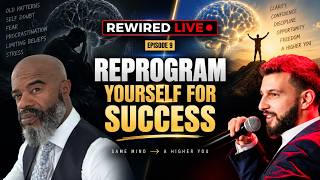
Derrick Chappell, a personal-development coach, explains how to rewire subconscious patterns by shifting from fight-or-flight stress to a calm, grounded state. He covers the vagus nerve and parasympathetic nervous system, NLP techniques, and identity visualization to break limiting beliefs about money and success. Practical steps include noticing triggers, pausing to ground yourself, and reframing thoughts to build new neural pathways.
Chapters
What is going on, everybody? Happy Saturday. Hope everyone is enjoying their weekend here. I'm excited to bring on another guest. I think with Rewired Live, obviously the goal was for me to go live more, um, just so y'all can get to know everyone a little better. Now I really want to start bringing on people who have rewired themselves, right? Maybe they've, they've used to push with pressure and urgency and stress and all these things, and they've done the inner work and they found other strategies to transform how they behave and how they operate. So bringing on those people and having conversations geared around that, I think, is going to add a lot of value to you guys, um, and seeing that, you know, it's not just me that talks about this stuff. There's other people having gone through these transformations and, you know, coming out on the other end much, much better. Um, and really we're talking about building from like a grounded state of being, right? That's what we're talking about. It's like, how do you build from peace instead of pressure? So you can still have all the external stuff that you want, have all the goals, have all the money and all the stuff, but you do it from this grounded state, not because you need anything, right? More because it's more contributive versus compensative, like compensating for an internal lack. But I have an incredible guest coming on today. Um, my friend Derek, actually met him at a meetup the other week, and we just hit it off instantly. We were like, knew the exact same stuff, we're on the exact same path. Um, he's like, we should collaborate. And I said, absolutely, come on to my, my live on Saturday and we'll just talk about what we love to talk about. But, um, Derek is a personal development coach. He's in real estate as well. He's an agent, Air Force veteran. We're a Navy family, but that's okay, at least you're not Army. Um, and, uh, focus on helping people, uh, reframe outdated patterns, reclaiming their personal power. A lot of what I talk about Background in psychology, NLP, and holistic wellness. So really, really bridging logic and self-awareness, guiding people out of autopilot living, right? Which is a lot of what I talk about. So you can live an intentional life, you can be the creator instead of the victim. But without further ado, Derek, welcome.
Hey, what's up, Jake?
How's it going? How you doing?
Good to see you.
Good to see you.
Quite the introduction there. It's almost like somebody wrote that for you.
No, that was just right off, right off the dome, man. How's it going reading, reading the script? And good, good. Um, I am excited to honestly just to hear more about your background because I know we had talked in, uh, at the meetup the other day and we were just kind of talking about the subjects and what, what we enjoyed, which is obviously, you know, conditioning and personal development, all that stuff. But Uh, first thing I'm interested in, I feel like people would be interested in, is how do you get into this space? You know, I'm always curious to understand that, how you— how people arrive at, um, because all the stuff you've been learning, right, the, the NLP and, um, in psychology, what led you to be so interested in that and want to help people with that?
Oh, that's a great question, and, um, I don't know if I have an exact answer for that. I feel like it's something that might just have to be ingrained in you. If, you know, it's like, it's the curiosity, really. I think for me it was more about curiosity, right? Like curiosity on why we do what we do, why we make the decisions we make, um, uh, you know, things like that. And, and, and that was— that's what it started with, just curious about my own self and how my own self was operating. The why I was making the type of decisions I was making, why I was feeling the way I was feeling at the times I was feeling them. I'm just a very curious person. So I got into psychology to learn a little bit more about the mind. I got into NLP to learn a little more about the programming of the mind, the subconscious programming. Um, and then holistic health I got into because I'm really curious about the body and how the body works and what helps the body, because I'm not so certain that we get like the greatest information from the standard medical, uh, association, you know what I mean? I agree. So, um, and then all those things work together, right? You got your body, your mind, you know, and then of course spirit. I'm really into metaphysical, um, as well. So I love the, um you know, going down that rabbit hole of how we work as a spirit, as a soul. So, uh, that's, that's kind of how it started, just a curiosity, honestly.
Love it, love it. A lot of, a lot of verticals there. You're talking about, um, the metaphysical side of it, the holistic side, the body, the mind, the spirit. I think that integration is very important, you know. The— you have the mental side of it, you have the physiological side of it, and then you have the kind of energetic side of that. I think that That triad is, is important. You had mentioned, um, you got into this because you were curious and because of things that you had kind of gone through, you said, right? So, um, for me personally, the reason I had gotten into any of this, because I built this wholesale company, right, this real estate business up, and I did it from this constant pressure and this anxiety and this fear, and I was like in this what I would call survival mode, and pushed me to a breaking point where I was like, I had always been into self-development, but to really dig into, I was like, there's got to be a better way. And it kind of set me on this path of understanding biology and neuroscience and all this stuff. So, you know, what was it about your past or how you used to be that really pushed you into wanting to change?
Uh, well, I mean, kind of similar to you in, in terms of feeling the pressure, putting that pressure on yourself and living in the state of that on a consistent basis, it's not good for your nervous system. And over a course of time, you know, living that way, regardless of what you built up or what you've not built up, if you're just consistently in that chasing mode and you're consistently living that, that high just kind of chaotic type of mindset and constantly, constantly going, um, you know, that's not good in the long run, right? Um, so that was really, you know, what kind of sparked it for me as well.
That's really interesting. See, I've done a lot of research on the nervous system itself. I had no idea how it— how big of a factor the nervous system plays, right? Because we have basically two nervous system states. We got sympathetic and parasympathetic, right? Either fight or flight or creative mode. And when we're in that fight or flight, we're, you know, limited resources. Part of our prefrontal cortex is off. We don't have access to that higher order thinking. There's a lot of research that backs that up. Um, and you talk about this constant low-grade kind of tension of survival mode. Like, survival mode isn't always this like panic attack. It's like this low-grade just tension hum in the background. Can you talk a little bit more about the nervous system and kind of living in that fight or flight state constantly, how that affects— you've seen it affect yourself and other people?
Yeah, absolutely. I mean, just from research, if you do any research on the vagus nerve, it's like the largest nerve system in your body. And when it is in a calm state, when you're more operating in that alpha state, which is like 8 to 12 hertz, then you are able to think more clearly, you're able to think more intently, more in a calm state, right, versus the, the parasympathetic— or sorry, what's the other one?
Yeah, no, the sympathetic. Parasympathetic, when you're talking about—
yeah, yeah, where you're just kind of like, your, your body is borrowing resources from other parts of your body, literally, right? And if you're in that mode for a long period of time, that causes burnout. That causes high anxiety. I mean, a lot of people are operating at a state of anxiety that is just, you know, absolutely, you know, it's just not good for the, for the body. That leads to heart attacks. Why do you think heart attacks is like the number one killer in our country? You know, I mean, besides obesity, right? And I mean, unhealthy eating, but also stress. You know, it's literally killing people to operate in that mode over a long period of time. So, you know, what I like to work with people is just help them like discover what mode they're operating from, and then, you know, how to slowly change that and how to operate from a different mode. And a lot of times that just really comes from awareness. Like, I don't care how successful you are, if you're operating in a mode on that level, I mean, you're— you could be sending yourself to an early grave, you know. So, uh, awareness, it starts with that and finding things that can get you operating from that level of the parasympathetic, that alpha state.
100%. Yeah, people are in this tension. I— there's this good example, I think Joe Dispenza uses it in one of his books. I think it might be the Breaking the Habit book, but he's like You know, a deer is in homeostasis in a field, right? They're in— they're in that alpha calm state. They get chased by coyote, okay, they go into fight or flight for like 30 minutes because they need to escape the coyote. But then 45 minutes later, they're back into homeostasis. They're not in survival anymore, right? And they're not thinking about the coyote that chased them a day ago or 5 days ago or 8 months ago, right? But we as human beings, we relive these states, you know what I mean? Like something happened on Friday that triggered us and we're upset about it, but then we relive that on Saturday, on Sunday, the next day. We're like reliving things over in our head from years ago, and our body doesn't know the difference. It goes into survival mode. We're just living in this constant low-grade survival. And I think a big part of it is what you said, awareness. Like, people don't understand that this is just a pattern. They think it's like the reality. They don't have the awareness to separate So talk about how— why awareness is powerful and how that creates more freedom for people to be like creators instead of victims.
I mean, it allows you to make better decisions for yourself when you're aware. When you're in that state of unawareness, or, you know, you're, you're operating from that subconscious level of programming, that it's not your fault, you know, it's not— it's just programmed into your subconscious, right? So when you start becoming aware of these patterns patterns that are keeping you in a certain loop, a certain cycle where you're experiencing the same things, or maybe you're hitting the same wall, then you can make better decisions and you can make decisions that, that change the outcome. It's like you said, your— our body, our mind, our body doesn't know the difference between living in the past, living in the future. Right? So if you're constantly worried about something that happened in the past, then you're just causing more of that, essentially, because that is what you're focused on. Um, where attention goes, where focus goes, attention flows, energy flows, right? I think that's, um, uh, can't think of his name. I see his face. Tony Robbins.
Yeah, Tony Robbins.
So, um, yeah, operating, living more in that present mode is, is so important, and that really comes with the awareness. And I think, you know, you're talking about reprogramming, uh, a big term in NLP is reframing, and it's kind of essentially the same thing. But I think once you start reframing these past situations that happen to you, if they're coming up, then you start taking a different outlook on them, getting a different perspective on them. Now you're creating a different feeling in yourself about them. And feeling is what causes the— is really the catalyst of making change, right? So I think reframing, reprogramming is such an underutilized, such a underrated skill, uh, just to even be aware of. Because once you start the awareness of it, then you can't close the door. You can't put the toothpaste back in the tube. Uh, that awareness is going to continue to grow, and the more that grows, then the more you start living life in a more lightful, just freer way, right? A lot of us are just in prison here in our mind. You know, there's a meme with like a donkey that has like a rope around his neck and it's tied to a plastic chair, you know. And it's like the donkey could easily just walk away, but he's stuck there because he thinks he's, he's stuck, you know, instead of looking at it from the limits of our mind.
Yeah, it's like we create, we create these barriers in our mind. We think it's like I think there's a similar meme where it's like an elephant who's like— they like drew a circle around the elephant in the dirt, and the elephant's like not moving out of the circle because it thinks there's like a barrier, but it's just a line in the dirt. It's not actually anything. Um, yeah, I think that's a really important point you talk about though, being aware of these things and really looking at this thing kind of mechanistically. Like, this is an old program, right? It's an old program I'm running because it takes the self-blame out of it. Right, in the judgment. Because as long as, like, we're aware but then we're judging ourselves for these old patterns, that's putting us right back into that kind of fight or flight. It's not putting us into a state that makes us open for change, right? Because as long as we're in that survival state, our body's not open to learning, right? So I think looking at things as, like, almost like your subconscious conditioning, like a computer program. It's like, oh yeah, I reacted right there. It's not like you don't take responsibility for it, but you kind of separate it. Reacted right there. That's great. How can I rewire that pattern? And you made a good point. How do we rewire those things, right? Repetition. So thoughts with emotion— you said emotion is very important. Emotion is like the highlighter for the brain. It's like thought and then emotion over time. You're, you're repeating it. Um, so on that concept of like, you know, looking at subconscious conditioning as a computer program How do you think that sort of frame helps people change more effectively?
Well, I mean, if you can look at yourself like a computer, you know, you have software uploaded that started uploading from the time you're like ages, you know, from the time you were born, essentially, right? You got teachers, inputting programming into you, parents inputting programming in you, you know, everyone that you're— you come in contact with at that age, you're, you're able to take on the software so easily, and that becomes your program. So regardless of your background, you're getting these subconscious programs put into you. So if that's the case, if you look at it like that, and You know, there's a lot of studies out there that says that's— that pretty much is the case. Um, then that means you can also reprogram, right? You can install new software that overrides the old software, just like our computers that we're on right now. You know, if your computer has a virus in it and it's not acting— you know, it's not running efficiently, it's bogged down with too much memory. Why is it bogged down with too much memory? Because you have all these, these things, these programs you're playing in the back, all these, you know, things that you're concerned happened to you, that no longer should be affecting anymore, but you're running the same program. So it is affecting you, right? That's the virus. Now you got to clean that out. And the way you clean that out is the awareness that you have a virus, first of all. And then, you know, then you can start reprogramming it by changing your thought, changing your perspective on it, finding whatever that reframe is for you to help you emotionally overcome it and think about it differently and feel differently about it.
Yeah. So what would be some examples? I'm not, you know, I think people understand like subconscious conditioning, but like what are some examples maybe from your own life or things that you've seen, or what are some examples of some, some patterns, some subconscious patterns, and, and how do— what are some steps people can take to change? I know awareness and reframing, but kind of dig into that a little bit more.
Um, some examples of subconscious patterns people are running, uh, I mean, probably a big one I would say is, is relationships, you know, um, and not just necessarily, uh, relationships with a mate, a partner, but business relationships, um, you know, just how you deal with, with people in general, right? Um, you know, some people have high anxiety about that. Some people can do it very easily. Some people take on other people's, um, their, their energy, so to speak, very easily, like almost empathic-like. So I think some of this, the, the subconscious patterns people are running, could— that they might want to reframe, or just things, it really, things that are, that they're unhappy with. If there's things that are happening that you're unhappy with, that means you're, you're probably running a certain loop there. So it's hard to say what one specific subconscious pattern one may be running, because there's literally infinity.
Yeah, I know, there is infinity. Is there, is there one that maybe you had, like, early on that you had, that you had to work to overcome?
Like, when you recognized that you had, um, yeah, one for me, and, and it's still something that I, I continue to work on, um, is just those patterns revolved around money. And I think that's something that a lot of people really kind of struggle with, right? And depending on, you know, the programming that was input in you at an early stage really gives you a perspective on how you deal with money, how you treat money. There are people that can very easily attract money to them and, you know, create businesses and have a lot of success financially because they've had some great programming on dealing with money. I unfortunately did not have that type of input, and I know a lot of people that haven't, right? And so, you know, you run into these different struggles on, you know, maybe you do make a lot of money, but then maybe you lose money, and maybe you make a lot of money, maybe you lose money. But there's, there's patterns here that were— that you have to recognize that are causing that effect, right? So I think for me, that was really one, is, is how I perceive, how I look at money. And, um, that's, that's a big one for a lot of people, I think.
Absolutely, probably the biggest one. Um, and when you talk about that, like, how you, you look at money, you know, how are— how is that being worked through in real time? Because I know that's a big one for a lot of people. It's like, yeah, okay.
Yeah. So actually, take it— let's take it back a little bit. Um, you know, your— the show, I believe, is Reprogram Yourself for Success. So let's actually— let's start there because—
all right, let's do it.
First of all, you got to define what success is to you, right? And I think we all have this diluted idea on what success is. So I think most people, um, think success is making a lot of money. So if you're chasing down this rabbit hole of just focused on making money, then you could potentially put yourself in a lot of situations to where maybe you are making money, but you're just absolutely unhappy with, you know, you're not having a fulfilled life. So To me, that's not successful. If you have a lot of money in your bank account but you're miserable on a daily basis, is that really success? To some people on the outside looking in, it looks like success, right? Got the nice car, got jewelry, whatever that shiny object is that you associate success with, you know, that looks successful.. But you have to really break down, I think, what success is to you personally. And, you know, I think that's, that's where it starts is what is that definition? And then, then you start peeling back the layers and understanding, well, the things that I have been doing aren't really aligning with what I consider success, you know. And the moment you can start tapping into that, I think that's where the real success starts to really happen, right? You start to be fulfilled by the things that you're doing. And then a lot of times, just by the very nature of it, that leads to the financial gains, because now you're, you're living in a state of, of, you know, positiveness, openness, and you're not really getting in your own way and blocking, you know, that success from coming to you. What's, what's your take?
I love that definition of success. I heard a really good quote. My favorite definition of success comes from Earl Nightingale, and it is the progressive realization of a worthy ideal. That is success. The progressive realization of a worthy ideal. So success isn't something to attain. It's basically like you're getting up every day and you're working towards something that is valuable to you, you are a success in that moment, right? More about the journey. Um, I like that. Yeah, yeah, I love it. Uh, something I gotta remind myself constantly, it's not about the destination, it's about right now. And I think one thing I struggled a lot with early on, which I've now switched my viewpoint on, is the nature of— here's the reality of a lot of things, right? A lot of us don't feel okay on the inside, okay? So what do we do? We spend our whole life trying to feel okay on the inside through external things— a job, money, a car, a title, climb the corporate ladder, get married, have kids, travel, do whatever you need to do because you don't feel okay on the inside. That is a compensatory way of success. You're trying to compensate for an internal lack. And as long as we are operating in that nature, we'll always be under pressure, we'll never be satisfied. We're always chasing that thing. And then when we get that thing, guess what? That it triggers a sense of loss aversion, and there's more anxiety and more pressure because you don't want to lose it because your identity is wrapped up in this stuff. So it's, it's a much more, you know, draining way to operate. You don't have that peace, you know, that regulated grounded state. Success to me is, you know, so you have the compensatory model, which you're trying to compensate for internal lack. That's why you do anything. The flip side of the coin is an expressive state or sufficiency or abundant state. Right? We all talk about that. And that's really taking action from genuine interest, because what you're doing aligns with your values and because you want to provide, uh, value to other people, right? You want to contribute. So it's basically genuine interests, aligns with your values, and you want to, you want to contribute, right? But you're not doing it to get anything. That's been a huge reframe for me, and that created so much pressure early on for me in the wholesale business, especially because I was like when your identity is wrapped up in a business, you like— it's not just a deal falling through, it's like your identity is on the line. Like, if this deal goes through, the business, you know, caves, I am nothing, all this stuff, right? So it's like this huge thing in your head.
Yeah, no, that's, that's really powerful. That's really strong right there. I think, um, I think a lot of us are wrapped up in an identity that we're not even aware about. Yeah, right. So what brought you to the awareness of that, though, that that was in fact happening to you? Because I think that's important for people to kind of appreciate the moment that they become aware of it and, and notice that, like, what are the signs?
What? Yeah, no, it's good. I, you know, similar to you, I was driven into this out of curiosity. But at the basis of it, that curiosity came from my internal struggles, struggles and my struggle as a person and feeling that there is a better way. So that's what drove my curiosity into this. And then people always talk about abundance mindset. You got to be abundance. But I could never understand what that meant. I'm like, okay, I get it. I get it from an energetic standpoint. You can say, okay, if you're operating at a certain energy, certain frequency, you'll attract it. But it was still kind of vague for me. But it's only when I started getting into the research of it that I realized this was an actual thing. Like, there's a lot of research on, um, motivation and how people are motivated and how people can stay motivated over a long period of time. And what they call compensatory, um, success, or, you know, a compensatory model of success, is it'll drive you for a short period of time, but it's not sustainable over the long time. Over the long term for those reasons I had stated, because you're going from pressure and fear and anxiety, and it really affects your ability to operate at a high level because you're making decisions based upon your ego and making sure that you look good. So you're in a meeting with the team, you're not even able to see the situation objectively because your identity is wrapped up and you got to make sure you make the right decision so you look good. But when you're in more of an expressive state and you're whole on the inside and you don't really care if this goes up or down, right, you're just here to provide value. You can see it objectively and you're kind of removed. So, um, and I just realized when I look at things like that, like, hey, I don't care how the sales call goes, I'm gonna get on, I'm gonna give it my best, see how I can do to help this person out. And if it goes up, it goes up. If it goes down, it goes down. Oh my gosh. And then you step into it, you got no pressure, and that's ironically when you perform the best.
Oh, definitely. That's, that's when you kind of get in like almost cruise control, almost, but yeah, in a good way. I mean, because we get in cruise control in old programs as well, right? So yeah. Okay. Yeah. But now, did you feel— do you feel like the epiphany came in an instant, though? Or do you feel like there were like signs along the way that you needed to operate from a different, a different mode?
Yeah, no, it doesn't come in an instant. It's a lot of things that build. I mean, the epiphany felt like it was in an instant when I realized that. But it was a lot of things had built up that point that, um, you know, I realized that I think the biggest thing is just operating. When you operate a certain way and it just makes you miserable and you hate it and you're just looking for a better way, um, yeah, I think that's, I think that's what often drives a lot of us to change, right? It's like we hit that point of like so much pain or resistance or whatever that you just say, I'm done with this, there has to be a better way. And it's at that point that you find the better way. You know why? Because you truly believe that there has to be a better way. So all of a sudden, that better way happens.
Well, yeah, I think, uh, Dr. Joe Dispenza too talks about synchronicity, you know, and the way that happens is from, you know, that, that spark. That spark has to start first, right? Yeah, there has to be a better way. So because now you've, you've, you've got that intention— I mean, there are better ways all along, every time, right? There is, there has always been a better way, but you haven't been able to see it because you're on this one kind of like perspective, right? You got the blinders on. And then when you actually want it to be a better way, then all of a sudden, you know, everything kind of your eyesight opens up a little bit more, and you start to see things that you didn't see before. And people— you meet people that maybe you would have never really had a conversation with, but, you know, for whatever reason, you had a conversation with them, which leads to something else, which leads to something else. And then, you know, kind of like that rabbit hole, right?
Yeah, it's crazy how our beliefs— how our beliefs, um, shape our perception, you know, and just make different things available to us. Um, now with, uh, autopilot, right? I think this is like a very— I just want to go back to this point because I think it's very important. Yeah, we're in this constant autopilot, right? And it's really— autopilot can be looked at as like a lack of awareness. Basically, you have no awareness, right? You're just on autopilot. Everything's just happening. So where do— why is— why are we on autopilot? And how do we get out?
Okay, that's, that's a really— yeah, like, I like this topic. Well, I think we're on autopilot, or not we, some that are on autopilot, but I think a lot of us are on autopilot because our society as it exists is designed to keep you that way. Um, it's designed to keep you on autopilot on purpose. So many distractions. There's so many distractions to keep you on the autopilot and just keep you kind of going from one dopamine effect to the next to the next, seeking that next dopamine effect, right? All the— if you're tuning in the news, social media news, and, you know, doomscrolling. There's just so many things that keep you distracted on autopilot. You have to find— start finding moments to quiet your mind and ground yourself And I think that's the only way you escape autopilot and get out of the proverbial matrix, as we call it. But when you're plugged into the matrix, like when your whole being is plugged into the matrix, that's— you're on autopilot. That's just— that's what it is. So I think the way you break it, you know, is You got it. You got to turn— you got to quiet your mind. You got to turn things off. You got to, you know, go to the forest, stick your feet in the ground, hug a tree.
Yeah, you do. You do some more tree hugging.
Yeah, go to the beach, stick your feet in the sand. You know, you got to throw on some headphones, listen to some meditation music, take a walk in the park. You know, I think that's, that's how you get out of autopilot, man.
It's good. I was thinking, I literally just think about the other day how dopamined up we are. Just like, we can't even, you know, I'll talk about a subconscious pattern I had right away, or, um, that I realized the other day, like probably 4 weeks ago. Every single time that I, I stop working, I get out of work block, I grab my phone like this, boom, on my— and then I gotta look at something. Every single time, right? So today, subconscious pattern below my mind, I'm just like, boop, on my phone. And you know what's interesting, I was looking into this too, is a lot of times, you know, I had a whole new perspective actually on people who are overweight. I used to think like, people overweight, I was like, why aren't you just more disciplined? Like, just, just be healthier, right? But the way that the body works is that a lot of times when you're in this constant state of low-grade stress and survival, and that's your physiology. Your body's trying to find any way to get out of that, and a lot of times it does that through dopamine. So trying to get dopamine to like offset that constant grade. So a lot of people do that through eating, right? They're dealing with all these internal problems and struggles, and their body is just freaking— is, is a freaking mess, right? So subconsciously they're just like, we need something to like offset this, right? So they're eating because eating gives us dopamine, right? It's one of the natural ways we get dopamine is eating. So they're eating, right? And I was thinking, I was like, oh, because you get a little dopamine hit when you go on your social media and you're checking your notifications, right? It's like a little hit, you're like, oh, so I used to work so like— I used to be in such a high level of stress when I was working that my body was like so burnt out, um, it was just going for my phone to like get on social media to get some dopamine hit to try to balance it out. I was like, that is wild, that's what I'm doing. So now I'm aware of that though. And every single time I stop— again, the subconscious patterns are so powerful because they happen below our conscious mind, right? That's why it's not enough for me to say, oh, I realize it. I'm just going to change. Like, no. You need to reprogram the pattern because what's happening, I'm grabbing my phone before I can even cognitively think about it. Oh, grab the phone. Boom. But every time that I'm aware of that, and I make the choice, right? I feel my hand go for it, and then I'm like, nope, not doing that. I'm just gonna go walk around. I start to reprogram it, right, through repetition. Um, Hebb's Law in neuroscience— Donald Hebb— is neurons that fire together wire together. So the more that I ingrain those pathways of not reaching for my phone— um, I thought it was very interesting— and subconscious habit and how a lot of times subconsciously we're trying to offset this stress with some sort of dopamine, whether it's, you know, nicotine, or it's, um, could be drinking or eating or social media, you know.
Absolutely, absolutely. And, you know, there again, it kind of goes back to getting back to— in terms of resetting your body, reset— resetting that nervous system, you know, I think is taking those timeouts and getting into nature. Like, we are nature, nature is us. But we live in a society where we're just so out of touch with that now. Everything we do is just based off like technology and, you know, uh, zeros and ones, baby. You know, chasing, chasing zeros and ones, zeros and ones on our screens, zeros and ones and Bitcoin, cryptocurrency, zeros and ones in real estate, um, like zeros and ones in a stock market. What's the stock market doing right now? It was crashing the other day. You know, there's just zeros and ones is what we're really consumed with, right? That's, that's it. But the very nature of our being is nature itself. Like, let's plug into that more. You know, and I think that's where— I think that's probably what I get joy of more than anything, is kind of bringing people's awareness to, to that on, on a more spiritual, energetic level.
Talk about that a little more. Being in nature, I think it's a huge thing where all day long we're in these boxes, right? We're in these boxes all day long. We're looking at a screen all day long, and then we're going to the gym and we're inside. We're like never outside. And you think about the course of human history, it's only been like this maybe the last 100 years, if that. 60 years, 70 years. We're not used to being—
what does that tell you? What does that tell you right there? We've been bamboozled, my friends. We have been hoodwinked, bamboozled, and, and believing that this society in which we're operating in is the only way Right. And it's, you know, we could go down a rabbit hole with that. We can go back to start talking about the Rockefellers and, you know, how our education systems were built up and, um, banking systems. And we can, we can talk about the Federal Reserve. Like, like, where do you want to go, bro? We can talk about all that kind of stuff. These systems are put in place by a very small group of people with their own personal agendas and intentions at the time. We are now living in this model. We are living in this matrix, if you will, right? So you know what life is? 70, 80 years average, right?
Yeah.
Um, it's interesting, I was looking up green zones the other week. Are you familiar with green zones?
Yes.
Okay, so I've been, you know, contemplating moving some different areas in the world, right? Getting out of here full time and being somewhere else where I can just spend more time creating and not, not living in that hustle, uh, state of mind. And I came across this area in Costa Rica— I can't remember the exact country— but there's a green zone in Costa Rica, and people there live to 100 years old on average. And of course, scientists have looked into this and The reason why they're called green zones is because they've researched these areas and the reason why people are living to these ages healthy, mind you, not like all, you know, all jacked up, right? Yeah. Just because they're in and around nature. Yeah, it's really that simple. So And if you look, like you said, we're in boxes all the time. Even energy does not move well in a boxed area. You know that from science and the way that energy moves. So why were older buildings have more dome-shaped buildings, right? Yeah, it's the energy moves better, it moves more cohesively in those type of environments, you know, huge glass windows. I mean, lots of light coming in. Yeah, man.
So how— so I like this, this topic of nature. I think, I think it is important for us to get into nature for a number of different reasons. I think it helps us reconnect energetically, kind of grounds us, clears our head, you know, maybe gives us more energy. How, how do you get into nature, and how do you think that has helped you, you know, live a more grounded, centered, productive life in general?
Well, I think when you are spending more time in that, and you're making an effort, a conscious effort to ground yourself more often than not, then, you know, situations in life that, that happen that maybe don't seem favorable, you react to those situations a little bit differently. Mm-hmm. Versus coming from an ungrounded place, whenever something bad happens, you know, it can, it can take you down some different paths that, you know, because of your reaction to it, not coming from a grounded state, can take you down some paths that maybe you know, are unhealthy for you, whether that be drinking or whether that be some other type of addiction that you were talking about before. Some people, work is an addiction, right? Just burying themselves into work, working 12, 15 hours a day, don't have any real friends, family, don't have any real, like, meaningful connections. Yeah. Um, so For me, it's definitely been an eye-opener to, to like, the more you do that, the more you're able just to handle these, these situations that just happen just from being in life. You know, it helps you deal with those a lot easier, a lot more clear-headed, a lot more fluid.
Yeah. I think it almost— it gives us more capacity. I think that's a good word here. It's like, you know, we're so locked into what we're doing all day, we don't have— we don't ever take time to go like recharge, get out, like put the phone in the car, go on a walk for an hour with no phone, no nothing, right? And really just kind of integrate, right? And that gives you more capacity to deal with other things, to deal with chaos at work, or to deal with the situation. You have more emotional bandwidth. And I think incorporating more of that, especially for people who are high performers, and a lot of our audience are— my audience is high performers, or the people who are like out there doing the thing. It's almost reframing like this is a— is gonna make you more productive, you know, it's gonna help you get more stuff done. And you're gonna be more regulated on the inside. I always like to say you could have your cake and eat it too. Like you can have this regulated centered state of being that's not chaos, and you can go do all the things that you want to do, right? We think that our state of being and our wellness is the sacrifice for the success or the end result. That's what we think we have to sacrifice. I think reframing that is super important. It's absolutely imperative.
Yeah, absolutely, absolutely.
And, um, I think around that too is like this concept of a paradigm. Right? A paradigm basically being a lens in which we see the world. So you talk about a paradigm, you know, of, uh, you know, this is how the— we— this is how the way— this is how the world is, right? And we've only been living here for however long, 30, 40, 50, 60 years, however old we are, and hasn't always been this way. But we believe this is the way that it is, right? It's like a paradigm we're looking through, just like You know, we used to think we couldn't run a 4-minute mile, right? We thought it was physiologically impossible for the human body to run a 4-minute mile. And then this guy Roger Bannister, he ran the 4-minute mile, and everyone's like, whoa, like, we can actually do this now. Everyone's cranking and crushing this for under a 4-minute mile, right? So the paradigm was shifted, right? Or the other paradigms— we used to think the Earth was at the center of the universe. We obviously know that it's not, right? So our paradigm shifted. Uh, so what are some of the biggest limiting paradigms or beliefs or lenses that you see people looking through that are just not the truth of reality?
Well, I think you kind of really nailed it. It's just that there's just only one perspective. There's only one way of looking at how you're doing things. Like, you can't have your cake and eat it too. I mean, that's a limiting perspective right there. Um, so I think that's, that's one that needs to definitely— I think once, once you, you're able to shift that, um, you know, you're going to bring more fulfillment into your life, right? If you're, you're constantly in that mode of like, get her done, You know, it's, it's going to lead to burnout eventually. It just, it just says so. You can actually take time to recharge yourself. It's, it's imperative that you take time to recharge yourself. Like, the body simply isn't meant to operate from that state on a consistent basis.
You know, that was, that was a belief I had that I had to like burn myself out to be productive, or, you know what I mean? I, I had a limiting belief that I had to be that, like, working really, really hard. I had to burn myself to a pulp, and that's how I would be successful. And that was my subconscious, like, program. And then I think back to like, you know, where does that even come from? I think it came from my first job was like construction. I was a teenager. I worked out in the summer for like 5 years. But it's like, you always, you always had to rush around, never had enough time, got to get things done. Right? You get praised when you rush and you do things. Um, also hockey. I played hockey my whole life, only sport I played, played it 24/7, took it very seriously. What do you get rewarded for in sports? Working the hardest, staying at the gym the latest, doing the most reps, doing the most work. You know, you're doing all this stuff. So then I formed these belief patterns around I have to freaking work the hardest and grind, and the harder I work, the more validation I'll get. That's like subconsciously what was going on, and I had to be aware of that that, hey, when I'm in my job, like, like, and I'd even tell myself I need to relax, but that doesn't work because my body's just, we gotta go, we gotta push until you're at the brink of exhaustion and then you can stop. And it was only until I was aware of that and then had to start reprogramming, right? And, um, in The Built Framework, we talk a lot about, um, reprogramming is really— we use visualization as identity rehearsal. So instead of using visualization to picture like the car or the house or the outcome, which can oftentimes be counterproductive. Because a lot of times when we visualize this big dream outcome, there's this like identity gap into our nervous system, into our body, which prioritizes familiarity because familiarity equals safety. It's like, oh, perceived threat, big house, million dollars, all this stuff, and you kind of go into a state of anxiety and panic. So instead, what we try to do is we try to just I'm just trying to orient myself in that direction. So instead of vision being something I have to go get, it's really something I'm just orienting myself in the direction of that. And then I'm going to start to mentally visualize how does that person act, right? How do they act under pressure? How do they show up to a meeting? How do they handle this? How to handle that? And like reprogramming our identity in that way. And it makes vision so much easier, right? Like think about a sunset. It's like when you're trying to get your vision, it's like you're trying to chase the sunset. You think if you sprint towards the sunset you can go catch the sunset. It's like, that's not going to work, right? You're going to burn yourself out. But really what you're doing is just, you want to walk in that direction because it's beautiful, right? Oh, I want to build this business because I like walking in this direction, not because I need to get the business, right? But yeah, it's powerful stuff.
No, I like that take. Um, and so What do you say to the people that aren't sure which direction to walk into?
That's a good point. I'd say, um, so the people who are not sure what direction to walk into need to get comfortable being in silence. That's what they need to do. They got so much noise, so much stuff going on, they're distracting themselves with this, that, and the other that they don't even know what they want. Because if you can just quiet yourself down and just eliminate all this noise, it will be crystal clear. What you should be doing.
Absolutely.
To your point, like, you got to meditate, you gotta— you just got to get away from the stuff, go into nature, do the things.
That's perfect. That's perfect. I mean, that— I think that kind of brings it all back to center. I mean, we kind of— we touched on that earlier, and, um, for I think even a different topic, but it really just comes back down to that, you know. Um, great point.
It's good. Yeah, I think purpose, you know, finding your purpose— I did a podcast about this the other week about like finding your purpose. There's a thing in, um, Sanskrit called dharma. Your dharma, it's basically like your purpose. And I think it's a very accurate representation. I agree with it a lot about what your purpose is. It's basically what, um, what you're naturally good at and what gives you energy, but also what the world finds value in. So it's got to be the combination of those two things. So it's what you've always been naturally good at, what naturally gives you energy, right? You can easily do it. You wouldn't, you know, you'd do it if even if you weren't getting paid. You've always been good at it, plus the world finds it valuable, right? And that's like your purpose in life. So it's not enough just to be good at it. Like, I could be good at darts and it makes— gives me a lot of energy, but if people aren't getting value out of me throwing darts, then that's not necessarily my purpose. But so then purpose becomes not about something you got to go find, it's something you kind of have to just remember. Like, you already know what it is, but we're so distracted with all this stuff that we— we're not— we haven't had a chance to really reflect, right? Reflection is so powerful, give you all the answers you need, all the answers you need.
And, you know, I think a lot of us are on that autopilot chasing somebody else's purpose. You don't— yeah, you know, you don't— you're working hard, busting your tail, you know, being successful by some standards, but, uh, it's not even your vision, it's not even your purpose. Yeah, and huge eventually, you know, like when you come to that realization, you know, then you owe it to yourself. You owe it to yourself to really discover what that is, because it is your life. You should be living life from your, from your own inner purpose, right? Your own inspiration.
Like, do you even really want it? I feel like we're, because we're so unconscious, because we're on such autopilot, We haven't even taken a chance to realize if what we're going after is what we even want.
Boom.
Yeah, right. It's like, and back to the point about, you know, are you doing it to compensate for an internal lack, or are you doing it because of a genuine interest, because it aligns with your values, because you want to contribute, right? A lot of times, if you just went on a walk for an hour a day for a week with no phone and really reflected on why are you doing what you're doing, If it's to do it to fill an internal lack and it doesn't even align with your values and your— what are we doing? What are we doing? We're not even on this earth for that long. You should be, you should be doing what you feel called to be doing. Yeah, we've got all these limiting beliefs about I can't do this, I can't do that. Well, I'm married and I have kids and I can't do it at this point in my life. I can't do— listen, as long as you're fighting for your limiting beliefs, guess what? You get to keep them. Congratulations, you get to keep all those, right? But we just make up this stuff and it's like we need to just take control and understand that we do have the power to change. It all, it all starts there.
100%. 100%. I mean, I think that's where, you know, this— the term law of attraction gets thrown around there a lot, a lot. But, um, I mean, at the very foundation of what law of attraction is, that's— I mean, that's what you just spoke right there. You know, like you said, if you claim that— if you claim XYZ limited belief, then congrats, you— that's exactly what you get. Ask and you shall receive, right? There's all these, these phrases and terms out there that give us the clues on why— I'm kind of on life and, and what we're doing and how we're using it. And one of the big things that I I'm really passionate about, because once it became an awareness of me and how it was operating my life, is our simple verbiage. You know, the words that we use and speak— not just speak, the ones that formulate in your mind because of the programming, even if they— if you don't verbalize them. And a verbalization is just a frequency, a vibration that comes out. Vibrations turn into things, right? Yeah, get where I'm going with this. Yeah. So, um, yeah, if you're constantly running these, these thoughts, these phrases of limiting beliefs, you are essentially just putting up the obstacles for you all the time, right?
Yeah.
That's why people that are successful in their specific things, you know, the reason why you're successful in wholesale real estate is It's like you had a belief that you will be successful, right? That was your core belief in that. You didn't have too many voices, or you didn't use language that said the opposite of that, because if you did, then you wouldn't have been successful in it. So if you go back and you think about what led to the success of your wholesale real estate It is the words that you use, the words that you spoke, the words that you thought, and that's what brought that to you. And just like this, this YouTube channel will be successful is because, you know, like you said, this is, this is what you desire, this is what you want, and you're speaking, you're speaking that into existence and you're putting the actions behind it as well, which is—
yeah, yeah.
A big part of it too, of course, right?
Yeah, I think I agree. I 100% agree with that too. I'm actually studying a topic right now on this about beliefs and how they shape our perception. Like, our— we are— we think our brains are here to make us happy or chase our goals. Like, our brains are like predictive machines. They're constantly trying to predict reality to keep us safe. And when you look at a belief A belief basically shapes our perception and how we see things. So if I believe that, you know, people can't be trusted, I'm gonna walk into— that belief is the start. I walk into a room, my perception is gonna focus on anyone who's frowning. There might be 3 people that are looking at me and smiling, but I'm gonna focus on the people that are frowning, right? And that perception leads to certain thoughts. Oh, see, I knew it, right? People are judging me, all this stuff, right? And then, um, you come to a conclusion. Right? So, or you have a behavior, right? So then maybe you cross your arms, you're like, right? And then what do people do? They act negatively back to you because you're crossing your arms, and it's like a self-reinforcing loop to confirm your belief. But we think that we like see the world objectively and we see the world as truth, but it's not. Like, we see the world through our beliefs. So if your belief is that I can build a wholesale business, your perception is going to filter to give you data. Your reticular activating system to give you feedback as to how to build a wholesale business. If you believe the wholesale business is going to be difficult to build, and your subconscious believes that you can't really do it, your perception is literally distorted and you can't even see everything. I think it's the wildest thing ever. It's like our beliefs shape our perception. So cultivating and choosing beliefs that support us is paramount to everything, right?
Exactly. And The same thing with one of the beliefs is, you know, I don't have enough time. Oh, yeah. That's one of the biggest ones, right? I don't have enough time. You're right, you probably really don't. But this is a belief that you're putting out there on a daily basis. So no, you're not going to have enough time. We're all granted the same amount of time on a, on a daily basis, right? So why do some people have enough time to spend with their families, to raise their kids, still run a successful business. And some people don't, and their marriage falls apart. The kids don't, don't have a good relationship with them because they were saying they didn't have enough time. So yeah, time wasn't granted for them for those situations. They couldn't see that they there was actually time if they changed some of the ways they did things, you know, maybe automated some things, you know, maybe delegated some things.
100%. Prioritize. Their perception, yeah, their perception was closed off because that was their dominant belief. Their brain was like, okay, great, we're gonna, we're gonna show you, we're gonna support this dominant belief that I don't have enough time. Whereas if they did believe that they had enough time, they would have had the perception to realize like, hey, I could delegate, I can make this a system, I can do this, and then magically they have enough time. So it's a beautiful concept because then we turn into the creators of our experience rather than the victims. It's like we don't have control over anything. Like, we do though, right? I think it's a great point. Make sure you bring that up. Um, awesome, man. This has been great. You know, like, these hours fly by when you talk about this stuff.
Yeah, no doubt.
Last thing, last question here. What would you say to someone who feels capable but internally stuck right now?
That feels capable but internally stuck. Well, I would say, I mean, first of all, you're halfway there, right? If you feel capable, then if you're feeling internally stuck, I guess that's where you have to, again, make the time to quiet the mind, right? Whether that's getting out in nature. You have to ask yourself these questions. I don't know if too many people, like, really take the time to kind of do that. Like, actually ask yourself, your higher self. Some people refer to it as your higher self. These questions internally, and you'd be surprised that you'll find the answer. Maybe not at that moment, but you may find it through other things. Maybe it's a conversation that you hear through synchronicities. Is where you're going to start to kind of get clarity to these answers. So, you know, you got to go down your own, your own rabbit hole and ask yourself and try to figure out, like, what is it that is— is why do I feel internally stuck? Ask yourself that question first and then quiet yourself, right? Get in nature, get into some place that is very, you know, kohi, a very just uplifting environment, but quiet. And then be prepared to look for, to be open to receiving the answers. That's what I would say. You have to be open to receiving it. And that can come, and you have to be open to receiving the answers from a myriad of different ways, right? Like, there's, there's infinite ways you can receive the answer. It could, like I said, it could just be a conversation you overhear of someone speaking of something that you had, that whatever it was that, that you're stuck on, you might hear the answer coming from a conversation that had nothing to do with you. Yeah. Has that ever happened to you before?
Oh yeah.
Right. So, but if you didn't have the awareness of it because you didn't ask yourself that question, you would have never picked up on that particular conversation, just that piece that you were supposed to hear. That now you've taken that and now all of a sudden it's opened you up to something else. I believe we live in this quantum field where the information that we all seek, that we all want, is just floating out there, and then you can tap into it once you you know, start to— yeah, by yourself and have awareness.
Absolutely incredible, Derek. I appreciate it. This has been good. Um, where's the best place for people to find out more about you, follow you?
Um, true, probably— well, I'm just starting some of my social media here, so right now I am um, on Instagram.
I just redid my Instagram account too. I got 150 followers. It's been a— oh, right on— a thing, man. I got a freaking— it's been an absolute grind to try to get anyone to follow me. I'm like, it's hard.
Start— well, let me, let me rephrase that. Um, see, I just did— I just almost did it right there, that program that we just talked about. I was gonna say how difficult it is to grow a following from scratch, but that is not true. Awakened Alphas is my Instagram. That's where I'm gonna start my YouTube channel and kind of advertising it on there. So if you want to pump that one out, that'd be awesome. Awakened Alphas.
Awakened Alphas. Yes. Awakened Alphas. I'm gonna follow you right now. I'll follow you.
You're gonna get me into double digits here.
Let's go, let's go, baby! That's cool. I like that. I like those, like those graphics. You got your own little podcast set up too. Great. Um, all right, man. Well, enjoy your Saturday. Hope you have a good weekend. And, uh, for everyone else, enjoy your weekend. Get outside, get into nature a little bit, uh, and recharge. I challenge you to do that. Till next time, all the peace, all the power.










