The Success Triangle, Utilizing the Right Resources & The Infinite Game (KCRE Podcast)
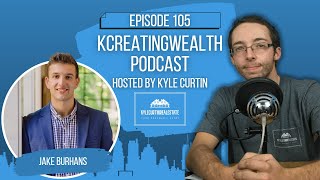
Real-estate investor Jake Burhans went from junior hockey to wholesaling mobile homes, making $2,500 on his first deal. He built a "Success Triangle" framework around finances, relationships, and health, and now aims to scale into multifamily acquisitions and raise private capital.
Chapters
Recording started. Okay, cool. What's up guys, welcome to episode 105 of the Creating Wealth podcast. Today we have the great pleasure of chatting with Jake Burhans. He is an awesome investor with Maple Birch Properties out of Portsmouth, New Hampshire. Jake, what is going on, my man? Super super stoked to have you on here.
How are you? I'm doing great, man. I appreciate you having me on. Um, I know we were meant to do this a few weeks ago. I think I, uh, got lost in the mail or something. I never, I never scheduled on your calendar, but I circled back around the New Year's. I gotta get on that, so here we are.
It's okay, man. I, I totally feel that. I feel you.
It doesn't go on the calendar, it doesn't happen.
Exactly, man.
Of course, it gets completely lost.
Exactly. Yeah. So to kind of jump right in, man, you know, tell us a bit about how you got into real estate, kind of your superhero backstory, if you will, and we'll jump straight in.
Yeah. So I mean, I got kind of started with the way everyone else got started. I feel like the Rich Dad Poor Dad book, I feel like 90% of people get started reading that, reading that little purple book. But I never thought I'd be in real estate. I was a hockey player my whole life, pretty serious about it. I wanted to play in college. I got hurt in junior hockey, which is the stage kind of right after high school. Blew my knee out, so I was kind of just done with hockey and kind of went through the motions freshman year in high school. And then that summer I read Rich Dad Poor Dad and it was just nonstop. I was completely consumed by it and just started out like BiggerPockets, right? And rental properties. Then we got into wholesaling and some other things. But since then it's just been— we went full-time back in October, so like a few months ago. So it's been good though. It's been really exciting. Really, once you're full-time, like obviously you start part-time, but once you get full-time, you really start to build some momentum. Because you got all day to work on it.
That's super cool, man. I definitely feel you on the starting the journey with Rich Dad Poor Dad. I definitely was part of that statistic as well.
Crazy though, that book, I mean, came out in '95 and it's still as relevant in '95 as I feel like as it is today.
100%, man. And like I tell people all the time, literally, like I'm pretty sure I paid like $8 for that book on Amazon. Yeah. And like, that's probably going to be like the most highest returning investment, like of my entire career. You know, like that changed everything. Honestly.
And there's like not a lot of tactics in the book, but it's really just a mindset thing, you know. It's like it shifts the mindset for people. It either clicks or it doesn't. Like some people read it and whatever, it's like, oh, it's a good book. Some people are like, oh my God, read the book. I feel like it's one of those, one of those two reactions.
Yeah, I definitely agree, man. And like, I'm not gonna lie to you, like, pointing once in a while when I kind of hear like the opposite side of the spectrum, like, oh yeah, I read it, it was okay, like, that's it. Like, what do you mean?
Exactly. Yeah, it just doesn't resonate. It either hits or it doesn't.
Exactly, you know. And but yeah, to your point, man, literally, like, once it, it's like I am like, yeah, but, um, but yeah, that's, that's, that's super cool, man. Especially like, you know, kind of jumping in through hockey. That's, that's absolutely nuts, man.
Yeah, it's kind of nice though. I was just like, growing up was a big grind for hockey. It's the only sport I played, so I played it year round. But I kind of just took that like grind mentality and just applied it to real estate. So now I can kind of just do that. But I like to always be progressing towards something, like working towards a goal. Um, just feels good.
That's beautiful, man. I love it. So how was it, I guess, kind of like jumping from Rich Dad Poor Dad? You know, what was kind of like the first aspect of real estate you kind of took action on? You know, like right after being like, all right, like this like real estate thing is really cool, like what's kind of like the first avenue, you know, can I, you know, sort of jump into to start to get my feet wet?
Yeah. So I think I read that book. So my now business partner Isaiah, he was like the roommate across from me freshman year in college. That's how I met him. But we were never that close. I always knew he was the real estate guy. At first I was really into stocks. So that's like all— like I knew I wanted to create wealth and stuff. But so I started with stocks and then he gave me, or he told me to read Rich Dad Poor Dad, or he might've given it to me. And I read it that summer of freshman year. And actually no, it was sophomore year because it was COVID. It was COVID, it was 2020. So, that sophomore year summer, read Rich Dad Poor Dad. Then, I started listening to BiggerPockets. I didn't really take action. I was probably just consuming for maybe 5 months. I was just whatever, sophomore in college. And then, that winter, Isaiah came up to me and he's like, "Yeah, looks like you're really into this real estate thing." I was talking to him a bunch about it. And I kind of started as an intern under him almost. So, I was doing all the little grunt work. I didn't know anything. And he was in turn being mentored by Axel Ragnarsson, who's the big multifamily investor in the country. So it's kind of like a trickle-down effect. Axel's teaching him and he was teaching me. And then eventually after like a year or so, I mean, he still knows more than me, but eventually I caught up to a point where I was kind of as useful as he was. But yeah, so once I started working for him, I would just do emails, like cold emails, basic stuff. It's kind of funny, I remember looking back like when we first started, I would like email a prospect and the prospect would email me back. I'd be like, oh, like what do I say? I would email it over to him. Like I didn't even know how to respond to the email. Um, which is funny now, just like cold calling and closing deals and stuff. It's crazy how far everything's come.
That's beautiful, man. That's nuts. It's funny you say that too, because literally, man, like, I listen to Axel's podcast religiously. Yeah, like, literally, like, all the time. And like, I tell every— absolutely love it, man. And it's funny you say that because like, I remember like listening to some of the episodes and like It might have been the one where Axel was like telling his actual story, um, and he was talking about like Isaiah and like, you know, how he was kind of like training him and stuff like that. Yeah, that's nuts. Like the, the cold emails. Yep, I, I see that, man. Like, that's— they're connected now, you know what I mean? That's crazy.
Yeah, yeah, no, he's a super smart guy. We, um, we just closed our property yesterday with him. It's a 6-unit in, uh, in Pembroke, so we're excited to get that done. But, uh, he's a good one to partner with, uh with for the first few buy and holds we had, just because of his experience and knowledge and kind of learn the ropes.
Of course, man.
Congratulations, by the way.
I remember you mentioning that yesterday.
Great. It's always good to get one to the finish line.
It's always— of course, definitely, man. So take us kind of through that, um, that first project, or like first deal that, that you did.
First deal? Yeah, first deal. So I started Going into senior year, I started cold calling in July. So it took me 3 months of cold calling. As Brent Daniels says, 90 days, get your first deal. 90 days on the dot almost, maybe like 91 days. It's crazy. I was petrified when I first started cold calling. I remember like I started with ringless voicemails, and I remember telling like Isaiah and some other guy, like, yeah, I'm gonna do it. I'm doing ringless voicemails this week, like all like fired up for it. I sent out the first round of ringless voicemails and I was terrified. I remember getting in the shower just being like, oh my God, I cannot talk to these people right now. I started coming in, like everyone was calling me back. I was like, oh my gosh, like— Oh no. Oh my, it's like that first call, I just butchered it so hard. Like didn't know any of the terminology. I was fumbling. It was just crazy. But so I cold called for 3 months, finally got a deal on a property in a mobile home park. So I called the lady in the mobile home park and through my due diligence and trying to figure out if it would be a flip opportunity, right? Because sometimes the mobile homes, they don't let you flip in the park. It depends. This was actually a co-op, so it was like equally owned by all the mobile homes. So in reaching out to the woman who was like on the board of the co-op, she's like, yeah, we actually have this other property if you'd be interested. It's like, we're gonna tear it down, uh, I need like a ton of work, but like I'll give it to you for like $500 or whatever. I was like, all right. So I, I went over there, okay, looked at the property, needed a ton of work, obviously, like everything, like electrical, everything. But I literally I got it under contract for $500. So I got it under contract for $500 and I partnered up with— I really didn't know how to do dispositions at the time, so I partnered up with NH Homebuyers, Jeremy Beeland and Eddie, who was the acquisitions guy over there, and they disposed it for like, I think it was $7,000, but after we paid the agent fees, it was like a $2,500 split. So we made like $2,500, first deal. But yeah, that was the first deal. Just a little bit, but it was cool to get the first one out of the way.
That's nuts, man. Especially to see a proof of concept like that, you know what I mean? Yeah. For half of a first deposit. I know.
I mean, that's nothing. But I mean, up to that point, that was still the most money I'd made at one time, right? Back when I worked construction when I was a teenager, I'd work all summer to make $3,000. You know what I mean? Like, it was— it's crazy. And I was like, that's nothing. Like, $2,100 is like a penny. It's like—
wow, that's incredible, man. That's absolutely awesome. Yeah, I definitely feel you when it comes to the cold calling, man. I cold called a bit last year, and like, I only started off, you know, just hand dialing. Like, I had the skip trace list in front of me, like, on my phone, like, doing everything wrong, right?
Yeah.
And literally, like, I feel like, like, when it came to, like, dialing that first number, like, the woman's name was probably, like, Stacy or something. Yeah, on the list. I'm like, damn, I'm like, I really, really gonna call Stacy. I'm like, oh, I'm gonna do it. And it's like, oh no, I actually, uh, it's time for supper, or like, you know, I gotta go get water, or— oh yeah, you know what I mean?
Yeah, exactly. Just kind of creative avoidance of doing other things. Oh, I gotta do this first. I gotta research this first before I, before I hop on the call. Dude, I was so scared cold calling for like the first month, dude. I was like, I don't even know if I used a single line dialer. I think I just bought Batch Dialer and I just went triple line dialing because I was listening to Brent Daniels. He's like, multi-line dialer. I was like, all right, whatever. Literally for the first month, I just petrified, pit in my stomach for 3 hours while I called. I was just like, pit in my stomach, hoping people didn't answer, but obviously they did. 100%. Funny.
Yeah, no, I definitely feel you on that one, man. I ended up jumping into, um, the Mojo Dial.
Yeah, that was good too.
And I absolutely loved it, man. Absolutely loved it. And like, I tell people about it all the time. I'm like, literally, like, I was sitting right here actually, like, I had my computer set up and I was like, you can literally like upload your list, like, back and like just hit go, you know, and just wait for people to answer.
Yeah. Yeah, it is great in that sense. It's passive. Like, we could— like, we might be doing other things, right, while it's dialing. Like, might be checking on something. When someone clicks on, you'll hear the beep, and then you'll just be like, hey, I'm looking for yada yada. And, um, yeah, it's great. We actually just switched over to CallTools from Batch Dialer. We were on Batch Dialer for a while, and it was— it had its kinks. It was just kind of too many issues. And in that, we're in Sub2, and the Sub2 community was saying, like, no Batch Dialer. Like, if you switch to CallTools, you'll get an increase of 30 to 50%. Connection rate. So we're like, all right, we're just gonna switch over, and it's been great actually, like way higher connection rate. So my first week using CallTools, um, it's a little more complicated, it's not as user-friendly, but it's more robust in what you can do with it. So I think ultimately it's a better, better platform, one for the connectivity rate and two for just the fact that it has more options in it. BatchDialer is nice because it's very simple, um, But it was time to switch it up.
That's beautiful, man. Yeah, no, those kind of platforms are absolutely nuts, man.
Yeah, it's great.
Now, do you— I know obviously, you know, you mentioned like you still cold call and stuff to the— do you have like VAs or anything as well, or do like direct mail campaigns, like anything like that? Or is cold calling kind of like your bread and butter? Like, let's hop on the phone and kill it today.
Yeah, that's bread and butter. It's like, get on the phone and just love your head against the wall till you get some leads. No, but it's not bad anymore. I don't mind it at all, honestly. Like, I kind of like it now, um, because you get to a point where you just, you kind of enjoy the difficult calls. Like, you'll know right off the bat, like, that first word they say, you're like, oh boy, like, this one's gonna be like— there you can tell by the tone of their voice, they're either pissed off or they're just like, it's the 10th call they've had. So you just try to see if you can somehow like calm them down and like work it a little bit. Um, but yeah, cold calls are bread and butter. Um, just because it was super cheap, cheap, right? Like while we were in school, it's like one of the cheapest things to do. So we're like, we're just gonna cold call. And the initial list we got was a list from like 5 years ago and had like 37,000 records on it. So we just put that in the dialer and just started dialing it. Uh, it was like old data too, but I mean, we got, we got a couple deals from it. Um, but yeah, cold calls are bread and butter. We're gonna get into texting at some point. We've toyed with it, uh, but just haven't done it yet. It's just, it's such a process to start a new lead generation channel, you know, because like you gotta figure out the platform, it's gotta set up the platform, right? And then once you start, it's like all the kinks and like figuring out what works, what doesn't work, and it takes like a decent amount of time before you're really just like efficient in like reaching out. Um, so yeah, we haven't done it yet, but we know we need to get into it. So, but cold calling has been working, so we're just sticking with that, right? I, I'd say we've essentially I don't know if like master is the right word, but we've become very proficient in that marketing channel. So we've just been kind of riding that wave.
Of course, man. 100%. One thing that I really enjoy doing when I was cold calling was writing down like basically the rejections and stuff like that that people would say. Yeah. So like, and I noticed it might have been a Brent Daniels thing. I listened to him for a while, like one of my buddies showed me him. And he was saying like, oh, you know, like there's only like 6 different like kinds of categories of like responses that you can get. Yep. You know, there's like yes instantly, like I forget what it is, it's, it's been quite some time. Yeah. But, um, yeah, you know, like, and just it's kind of like being able to write it and then be able to like, you know, on your own time or whatever it is, be able to come up with like how you're going to counter that or like how you're going to transition that into something else and like see the direct, the You know, I'm like, yeah, the cold calling thing.
There's only 6 responses they can tell you, and it's, um, yes, no, maybe in the future, who are you, how'd you get my number, and yeah, 5, just like one more. But, um, or yeah, what's your price, how much? Yeah, there's like, oh yeah, yep, which is classic. I've been toying with this idea of like, I put on my Instagram story the other day is should you say, would you consider selling, or would you consider an offer? Because every time you— every time you say, would you consider an offer, it's always like, what's your offer? Like, that's the biggest objection, right? So I— so then I'm like, oh, so why don't I just say, will you sell your property? But then when you say, will you sell your property, some people think you're an agent and they just hang up on you because you're an agent, right? Because when you say offer, it like, um, insinuates that you're a buyer, right? So it kind of gets past that initial, like, agent, um, whatever. But so I don't know, I'm kind of toying between the two. I kind of like, would you consider selling versus would you consider an offer? Because it just gets rid of all of those, like, well, what's your price? Which the most common one is everything has a price. I'm just like, oh my God, brutal. You know, those people, like, aren't serious.
I don't blame you at all, man. That was definitely— oh yeah, exactly. And like, those are the ones that used to kind of annoy me a little bit. Yeah. Like literally like just, well, what's your number? Like, oh well, you called me.
Like, you know, yeah, but at the end of the day, it's like you're never doing business with that person, you know?
Exactly. Yeah, there was this one that I got, man, because I was calling a Lowell list a while ago, and it— I actually ended up getting an appointment from it to like go out and check it out. This guy wanted like, I think it was like $100,000 over the appraised value for this three-family. Yeah, you know, because of all all these things like, oh, well, it's right next to the coffee shop. This more, you know, like more, I guess, qualitative kind of information. He like thought it was like the most grand like property that there ever was and everything. And I'm like, yeah, no.
Brutal. Like some sellers just don't understand. Like they'll just think because it's next to a river or because it's here, like the potential of it is so great. But it's like you have to find a buyer that would want to do that, right? It's like you come across a person who owns like a piece of commercial land, right? Like you could build a Kmart on it, but it's like, it's only that valuable to someone who's going to build a Kmart on it. Someone's just going to come live in the property, right? Then it's not worth that amount of money. But like, people don't understand that. Um, so it's just kind of, it's interesting. Or they think because it's in some location, it gives it some obscene value. Uh, but I don't know, that's sellers for you.
Pretty much, man. It's, it's always interesting. Jake, what's your drive and your vision for the long term, man?
Drive and vision. I mean, the vision is— I think wholesaling is great. My business philosophy is that wholesaling is like a business starter kit. It's not something that you could go make hundreds of millions of dollars with. It's not a business you could really sell. You can make a lot of money, and I think you can make millions of dollars a year, but I think it's a good business starter kit in the sense that it teaches you how to generate leads. Run and create systems, hire people out, do sales, right, do marketing, do all that stuff, and kind of understand how to run a business so you can go apply to something that can actually create some real value, right? Um, when you think about the term like enterprise value, I heard it from someone the other day, it was a really good explanation of it. It's some— it's a business that can function without you, and not only function without you but can grow without you. So if I go to Florida for 6 months, right, I come back, say I go to Florida and the business was doing a million dollars, right? Not only is it functioning, but I come back in 6 months and now they're doing $2 million, or a year, I come back in a year, now they're doing $2 million, you know, that's like a type of asset that like someone would buy, right? So say it's making $2 million a year, someone might come in and buy it like a 5x equity multiple, right? And then you're cashing out with $8 million, right? They buy for $10 and say you owe however much money on it. Um, but creating a business like that, I think long term is something we want to do, whether it's in real estate, maybe it's like a title company or something else within real estate, or it could be outside of real estate. But I think the long-term— that's kind of a tangent, sorry. But the long-term goal for real estate is just to own apartment buildings. I think it's like wholesaling, right? And then we start to accumulate multis. And that's kind of Isaiah and I's vision, is just to accumulate the multis, but also keep a decent lifestyle, right? It's easy to get sucked in and just kind of going, going, going. And obviously, like right now, I'm in kind of a hustle season of my life, right? So you kind of got to do what you need to do in order to get to that next stage. But once we have the systems and we can hire more people for the business to run acquisitions and all that, the workload will definitely ease up. But I mean, obviously got to do what you need to do in the beginning.
Of course, man, I definitely hear you there. I absolutely— that, um, that enterprise type of concept, man, of like, oh, you know, because you all like— I feel like often You know, you like, we tend to hear like, oh, you know, like make sure your business can run without you. And like, that's kind of the vision. But if you go a level deeper than that, this is the first time I heard it, man. I absolutely love it. Yeah. It's like, can your business, can you, can it survive without you? That's beyond fantastic. But if it can grow without you now, damn, like there's something else there.
Yeah. Well, once it can grow without you, that's when like, just speaking in a general business sense, once it can grow without you, it becomes a product that someone else would buy. Right. Someone with whatever, $10 million, like I'm looking for an asset, that whole business is essentially an asset. So if it's growing at $1 million a year, then someone's gonna buy that and you could cash out big time. Um, but the reason I just brought that up was because I don't think you can do that with the wholesaling business. I think you kind of always have to be in it in some sense, even if it's only for 5 hours a week, which is completely fine. I think I'll always be in it just because I like it, but I don't know if you could ever really truly sell that to someone. Be interesting. But obviously, you can create pretty significant wealth through just owning apartment buildings, raising capital. That's something that Isaiah and I are getting into now is the raising capital side. Right? I feel like the only reason we haven't done in the past is because we thought it was too difficult, too complicated, too over our heads, which in reality, I think we can 100% do it. It's just a limiting belief of like, oh, it seems like it's too much work for us. Because we're getting these deals and we're, I mean, we're doing deals with Axel and all this, which is great. Um, but we're losing out on a lot of the ownership because he's the one bringing the capital and he's doing a lot of the work. So if we were to do that work, we could get more ownership. Um, so I think going forward with some of the multifamilies that we're getting under contract, we're going to seriously consider just trying to take it down ourselves, raise some capital from private investors. Um, right. And then get, give them the return over a couple of years and then try to get them out of the deal. If we refinance or do something like that. That's kind of our strategy there. Because I was having coffee with another couple investors the other day, and they were telling me about these couple partners in Boston. They have a family fund backing them, $500 million at their disposal. So, any deal they get, they have $500 mil to throw at anything. I'm like, that's incredible. Like, we get to that stage, obviously $500 mil's a lot, but I mean, if you have millions of dollars backing you, like $100 million, you can just go out and find the deal, then there's literally no limit on what you could do. No limit. If you have a machine that sources off-market properties and you have like $100 million of capital behind you, you— there's no limit. You just go off, go to every single market in the country, go to Europe.
Yeah, that's incredible, man. I definitely feel you once to the, um, the raising capital. Yeah, like that whole concept is something that like really makes my ears perk up. But like, I feel you, man. Like, there's such like a self-limiting belief of like, oh my God, like, and you know, like you hear on podcasts and stuff all the time and everything like that, you know, that it's like, oh, you know, like you're looking for money, you're instead offering an opportunity. And I've never tried it yet personally, man, but I definitely feel you there.
Yeah, I don't know the nuance. I mean, also, yeah, I don't know the nuance of it. Yeah, because it does seem like you're asking for money, but I think you do it in a way where you're not like asking for money, you know. There's like a way to go about it where it's more like subtle. It's like, here's an opportunity, let me know if you, if you, if you want to invest, you know. And they kind of initiate it with you in a sense.
Exactly, man. Yeah, I like the, um, I like the phrase that, uh, Brandon Turner with BiggerPockets, uh, has set off and, and it was, um, do you happen to know anybody that might be interested in, you know, an opportunity like this? So it's, you know, kind of like indirectly asking them without it being like an awkward conversation, like if they're not into it and like, well, at the same time asking, oh, like, do you genuinely know other people that might be interested in this kind of thing too?
100%.
We, we, uh, that's, um, that's definitely something that I want to use in the future.
Yeah. We just use that in general for other things. We call it like the, I think we must've got it from Brandon then, but we call it the, uh, the side swipe method. Because we just— right, because we're always just— if you want to ask someone anything, ask them like, do you know of anyone else looking to do this? Right? Because it takes the pressure off them. They don't feel like pressure to say yes or no. So then they're like, oh, actually I'm interested in that. I could be interested in doing that.
You're like, oh great, that's awesome, man. That's really cool. I like how you kind of use that for, for other areas as well, you know? Yeah, I never really thought about like how universal something like that could be. Yeah, you know, for A lot of different kinds of opportunities out there. Really good idea. Yeah.
Wow. Isaiah's brother actually got a, um, he's building a business as well. He's creating like an app, it's called, um, Socia, but it's like a kind of like, I don't know what it is, like a social media LinkedIn kind of hybrid. It's a really cool app, but he's building it out. I think it's going to have some huge potential, but he was trying to get this one guy to, um worked for him for so long and I think he asked him like a number of times. And then he finally, like on the fourth follow-up after a few months, he's like, yeah, like, do you know, I was looking for someone for this position. Do you know of anyone looking to do this? And he's like, actually, I'd be interested in it. Finally got him because he didn't ask him directly.
I love it. That's beautiful, man. That's, that's super cool.
No, it's good.
So Jake, one thing that I do love to ask every single guest, and I'm curious what your, what your thoughts are. How do you define wealth?
Well, funny you ask. I just came up with this concept the other week, but I call it the, uh, the success triangle. Essentially 3 aspects, because I was thinking about this, right? I'm always— I'm very like curious. I'm always trying to figure out how things work, right? Like someone tells me, oh, stock market's the best way to gain wealth. So I'm gonna— in my head I'm like, is it the best way? I'm gonna question it and be like, why is it the best way? Are there other ways that are better, better returns, right? And I feel like in this country there's such a stigma around success being only financial, right? It's very— that's what everything is focused around. Like, are you successful? When anyone asks you if you're successful, it means money, right? But no one asks about, are you a successful marriage? Are you a good father? Are you healthy, right? Are you going to the gym? Are you eating the right things? It's like, I don't see so many people that are really wealthy but very out of shape, very unhealthy. Destroyed marriage, don't talk to their kids. Like, is that really like a successful person? And I know you're talking about wealthy, but I think wealth and success are kind of interchangeable. But, um, I think being wealthy is being successful in the 3 areas of the success triangle I call finances, relationships, and health. So finances is composed of your active income, your passive income, and your profit margin, right? So that's going to be my earned income all my passive income to my profit margin being if I make $1,000 a year or $1,000 a month, I want to spend $30 a month, right? So I want my profit margin to be 70% or my expense ratio, right, is only 30%. So I want to keep that low. I think for me personally, I want my expense ratio to be at like 30%. So if I'm making $10,000 a month, I only want to be spending like $3,000, right? So it gives you a lot of disposable income. Uh, one, for me personally, I just want like the safety blanket, like the peace of mind and 2 for just the investments. So the finance, um, point of the triangle is active, passive, and this disposable income, essentially. The rel— then relationships is the other point, right? So that's family, friends, and then your partner or your spouse or whoever is your significant other. Those 3 things, I haven't really gone into the details about yet, that yet, but I think those are equally— being successful in those columns are equally as important as the finance columns. And obviously there's parallels between them, like you need your friends and your family to support you in order to reach your financial goals, but I think having healthy relationships is good as well. Then the last part of the triangle is the, the health portion, right? So that's mental, physical, and spiritual is how I put it. So, um, physical being like, uh, cardio, lifting, stretching, um, getting enough sleep, and then diet, right? And then mental is, I think, like reading, learning, play, right? You need to play. And than taking rest, right? It's like, for me, my goal is to take a week off every quarter, um, just to completely no work and recharge, as hard as that is for me. Um, but yeah, so I think those 3 things make up what it means to be wealthy in life: having healthy finances, healthy, uh, relationships, and healthy, um, health.
Absolutely love that, man. It, it's really crazy how like those different areas blend together and like how you need one and like, you know, you can't let the others, you know, kind of fall. And like you just kind of like need to be, I guess, more wary of keeping a balance between all of those.
And they all complement each other though too, you know, because if you're not healthy, if you're not sharp physically, you can't be sharp mentally. And if you can't be either of those, you're not going to have as much energy, energy to put into your business. You're not going to think as clear. You're not going to be as focused, as attentive. And you're not going to have that as much energy to just go throughout the day. And then same with your relationships. You have negative people like dragging you down, there's no way you can, you can make it.
100%, man. That's definitely a really big one, is, is the negativity. Yeah, you know, and like who you surround yourself with and like the negativity, man. Like it's just, it's such a bad thing.
Like it's, it's one of the biggest things for sure. Um, that's why I think it's important to like pace CreatedSub2 as a community for that exact reason, right? Because if you're just to go do this on your own, like, you're really on an island. No one else is doing this. Like, no one— a lot— not a lot of people are being entrepreneurs, real estate entrepreneurs, right? So you need other people around you doing the same things, having the same struggles, so you can talk about it and kind of keep you in it. Because if you're surrounded, surrounded by everyone who only works jobs, then they're just not going to understand what you're doing and what your goals are.
Exactly. And that's— I'm sorry, that's, um, that's definitely a tough, um, a tough spot, you know what I mean? Especially like, you know, starting off in especially like an industry like, like real estate, you know, wanting to like start some sort of business or project or, or what have you. Um, like the people that are closest to you you know, like your like current like friends at the time, like your immediate family. Yeah, like there's a pretty high probability that like they're not really going to understand like what you're trying to do and like what you're like at the same level that you do. Yeah, and like it's, it's something that I, I definitely have worked through over the past couple years and have a much better grasp on now. Yeah, but starting off, man, like it's like they're not— and like it took a while like to realize that like the negativity, and like, it wasn't necessarily like to keep you down in a certain spot, I guess, but like, it might come actually from a place of fear and like, you know, not wanting anything to happen to you, like, because these people care about you a lot and everything. And it's, it's a really like interesting kind of dynamic, you know, and like being extremely selective on the advice that you listen to. Um, and so that can really kind of be tested if it's like, you know, a parent or like, you know, a buddy that you've known for 15 years or something like that. And it's like, all right, like, I totally like love you and appreciate all the advice and everything. And like, I know, you know, we care a lot about each other, but like, I like, that isn't the kind of advice that I need right now. You know, like go to, to your point, Jake, like, you know, other people that are in that space. That have dealt with that exact thing before that match a similar vision that, that you've gone through to be like, all right dude, like this is the path that you need to take. Yeah. You know, like the other one, like that's great, like it's, it's advice, but probably isn't going to be the most efficient path. Try this one out. You know, it's, there's definitely kind of a, a dynamic.
I think in the most basic sense it's like, yeah, your parents love you and your friends love you and you should obviously respect them and all that, but it's like, at the end of the day, if they're not in the position that you want to be in, why are you going to take advice from them? Like what Alex from Mosey says, it makes absolutely no sense. You're right. You're trying to get to $10 million a year, why are you taking advice from someone who makes $200,000 a year? Makes no sense. They don't even know— they don't even know what's required to get the $10 million a year. So what are they doing telling you how you should manage your money or what job you should do? Like, it doesn't make any sense. But like, I get why they would, right? They're your family, they want what's best for you. Their, their mind hasn't been open to this route, so they just, they're not really understanding it. But it's like, at the end of the day, and whether it's finance or health too, it's like, if you're trying to get a six-pack and get ripped, why are you taking advice from someone who is out of shape? Exactly. It makes no sense.
100%, man. Yeah, no, I totally agree. Like, it's a whole different set of like self-limiting beliefs and doubts and you know, all this kind of stuff. And it can be really tough, you know, starting off. And guys, I mean, like, you know, if there's anybody out there that's, you know, just kind of, you know, learning about real estate or entrepreneur, you know, basically something that's a little bit different from, you know, kind of the traditional path, uh, you know, of going to college, getting a 4-year degree, like all that kind of stuff, like that's, that's cool. Like if you're into that kind of thing, like, like, great. Um, But like, if you're starting to kind of like, you know, look in, in other places, you know, at different choices that you could make, just kind of keep that in mind. Um, you know what Jake just mentioned of like, just be really careful of who you're getting your advice from and like what you're choosing to follow based on the vision that you have, you know, because it's, it's really important, um, especially starting off.
That's why it's important to get in the right environment though, because it's just so much easier to go down this path, you're surrounded by people who are doing the same thing. So hard. It's like, I— you read Atomic Habits, and the first, or one of the components of like forming a habit, is like changing your environment, right? Like, if you want to eat healthy, it's not about discipline, it's about just not having unhealthy things in your, in your kitchen. It just completely eliminates the whole scenario. So it's the same thing with trying to start the business. Completely eliminate those people who are dragging you down. Just eliminate them. And just go into an environment where everyone's thinking the same way, and it's automatically so much easier.
100%, man. I absolutely love that book too. And the, um, there was another— I think it was The Power of Habit, I believe. I don't know if you've read that one.
No, I haven't.
That, um, that one's super good, man. Yeah, I listened to— I listened to it on, um, on audiobook a while back, and like, just the concept of habit, man, like, the more that like you learn about it from books books like that and, and from Atomic Habits, it's like, it's like really insane, you know, like, like just the power of habit and like how it works and like, like subconscious, like just taking actions because like that's what you've done for so long. And, and to your point of like, you know, if you wanted to change those habits, of it might not necessarily come from the discipline within yourself, right? Like, you know, today, like you know, I'm just gonna eat like an apple instead of like a donut or something. I don't know, you know what I mean? But it could actually like come from a different place of like, oh, we'll just take the donuts out of your house, like put a bowl of fruit there, and you know, things might be a little bit different. And like, we could have a whole show about Habit Man, literally. Like, from that book, like, it's, it's nuts. It's crazy. Literally, man, like, like, one of the things in that book that I remember, and there was a couple stories, and I tend to kind of mix them together from that. But there was one story that like really kind of like was a proof of concept for me around the science of habits. And that was, there was, um, some sort of, there was a, a patient like a long time ago that had, I think it was like a form of Alzheimer's or, or, you know, some sort of like um, like, brain— and there it affected brain and stuff like that a ton. And, you know, he wasn't able to, to kind of do a lot of the, the things that he normally was. And I think, like, he was, like, at his house and, like, like, somebody was watching him. I forget what it was or, or whatever, but basically, like, you know, this lady would be like, oh, you know, like, what do you want? And the gentleman was like, you know, really confused and like he, he didn't really understand, you know what I mean? But when she phrased the question differently of like, oh, you know, um, uh, or no, that, that's what it was, man, I'm sorry. She asked him, she's like, oh, you know, like, which, which door is it, like, do you go through to get to the kitchen? He would think about it, think about it, and, and like he wasn't really sure. But she asked him a little bit differently, she's like, oh, you know, like, um, like, oh, like, are you hungry or something like that? And like, he walked right into the kitchen and like, you know, got like a snack or something like that and came back and like, you know, didn't even think about it. It blew my mind, man. I'm like, holy crap. And like, this was like a real story from like years and years ago. Yeah. And just one story, you know, of like, oh, you know, like it's, it's just the whole science of habit, man, is nuts.
It is.
It's wild. It's crazy. It really is, man. So, man, I know we've talked about some of the absolutely awesome books that we've been affected by so far. And I do have a question on here that I like to ask people as well. The question is, do you read and what is your favorite business, investing, or real estate book that you would recommend to anyone? Let's see, it's tough to pick one as well. Multiple schools.
I do read, I read almost strictly nonfiction. I'm trying to get into fiction, some more fiction because I know it's good to read that just for various purposes. I'd say favourite nonfiction book, I like a lot of philosophy stuff honestly. I know favourite business book, I would have to say Let me look. Let me check it out real quick. Yeah, a lot of real estate. Honestly, one of my favorite ones is The Infinite Game by Simon Sinek. It's not really a business book, but it talks about business. I read that recently. It's called The Infinite Game by Simon Sinek, and it essentially talks about the infinite game of business, whereas Wall Street and everyone is focused on, uh, the finite game of business, right? They're just worried about essentially arbitrary metrics over like the quarter, right? We're trying to make our numbers for the quarter. We're going to slash our workforce by 20%, do all this stuff just so we can meet this arbitrary metric of the quarter, right? Like, they're not thinking about the infinite game of business of like 10, 20 years down the line. What is this business trying to accomplish? So I think it's a really important mindset to have as you're creating a business, or even you can think about it in your own life. Like, think about the infinite game of you over your whole lifetime. Don't just think about What's going on today or tomorrow or next year? Like, they really think about the long term and where and how these choices are going to affect the long term, essentially, versus just the short term. And here's a perfect example of that. We had a seller who we just got to Texas, right? And we told him, I told him I'd pay his moving costs. And I was just, I don't know, I was trying to get the deal signed right in the beginning. I don't really know how much it's going to be. I'm like, no way it could be over $5K. Ended up being $10,000, right? $10,000. So I was a little bummed out at first because it's like cutting into our profit a little bit, but then I'm thinking, if I give him the $10K, right, he's satisfied, I can get a video testimonial from the seller, put it on our website. How many, how many leads are we gonna convert in the future because we have this video testimonial on the site, right? So that an additional $5,000— yeah, in the short term I would have just been like, no, I'm not doing it. Sticking to the $5K because I want $5K more in my pocket now. But playing the infinite game, I'm thinking video testimonial on the website could make us tens of thousands of dollars, maybe $100,000 down the line. So that's just thinking of the infinite versus the finite game.
Wow, I love that, man. I'm definitely gonna have to check that one out. I haven't read that book. Yeah, it sounds like a super good one though.
Yeah, he's a, he's a good, um, he writes well. It's easy to understand.
Perfect. I've seen him on like YouTube and stuff a couple times, you know, a couple like motivational videos and stuff like that. Yeah, that's extremely interesting, man.
Yeah, he's great, he's great. And there's some other books, I mean, Rich Dad Poor Dad, um, some, some good books by Brandon Turner, The Multifamily Millionaire. I only read the first volume of that, but, um, Yeah, a lot of good business books. I mean, a lot of the best business books I feel like aren't business books, you know, they're like mindset or philosophy or something that helps you succeed in business. It's not like a tactical business book.
I definitely agree, man. I read The Four Agreements recently. I don't know if you've read that. Oh no, I haven't. That's another one. That's, that's a, that's a really good one. I really liked it. At least it's literally like a wicked small book, man. And, um, it basically just talks about these 4 concepts and it's more like principles to kind of like, you know, pay attention to like day to day, like in your life, like what your relationships and stuff like that. Um, and it's, it's really good. And yeah, to your point, man, literally like it's, it's one of those things that's not a business book technically, but it falls into like, I feel like indirectly, like it definitely is. Yeah. 100%. You know what I mean? It falls into that, you know.
Yeah.
Yep. I forget who it's by, actually. Got my library over there.
Um, it's interesting. Yeah, I can look it up. That'll be—
I can't find it. But, um, man, it's this art, like, kind of COVID It's, it's like this, like, design and stuff. It's, it's a wicked small book.
Yeah.
But Man, like the amount of information and like, like crazy information is, is awesome. I really, really dug that one. But Jake, I want to thank you so, so much for coming, man. This was absolutely awesome. Where on, um, like social media and stuff can you be found? I'll put everything you got.
Yeah, yeah. So it's all just Jake_Burhans on everything. So it's Instagram, TikTok, Twitter, YouTube. Nothing on my YouTube yet, I'm getting it up and going. This is going to be the first video on there probably, the recording of this. And we'll get some other stuff going on. I got a thing I'm starting up called 15 at 5. I go live every Monday, 5 PM to 5:15, just a short little dive into some sort of topic. But I'll be doing that every Monday, just kind of a more digestible thing, it's like 15 minutes long. I'll be getting that up and going, so if you want to catch me live, you can do that.
Love it, man. Of course, love it, man. That's absolutely awesome. Thank you so much, my friend. This, this was absolutely great.
I appreciate it. Like I said, long time coming, but, um, I'll get you on one of my, one of my channels.
Definitely, man. I'll talk to you later, Jake. Have a good one, my man.










