Why Change Is So Hard (And How to Make It Easy)
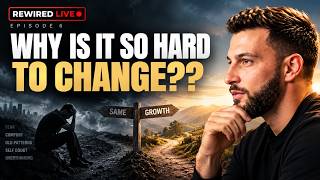
Jake Burhans traces his chronic lateness to a subconscious belief that there's never enough time, then presents the BILT framework for rewiring how your nervous system handles change. The framework cycles through awareness, regulation, visualization, release, and stabilization until a new identity becomes automatic.
Chapters
What's going on, folks? Hope you're having a great Saturday. I am. I started the live at 11 AM. I've been a few minutes late to everything, and I'm changing that pattern. I realized that— let's see if I know— see, that's the wrong thing. I need a ticker. Hold on a second. Um, oh yeah, scroll across bottom. Um, hold on, how do I do this? You have a ticker. Let me just edit this one. Go for Impact School Community, new episode every month. Um, Link in bio. I'll put that link in my— there we go. Okay. Yeah, I, you know, you talk about subconscious patterning, like stuff that happens below your conscious mind. One of the things I realized is that I have— I think I have this subconscious pattern. I never believe there's enough time., right? And we're going to work to undo that, right? How you're always rushing around and urgent and scattered. And I think back to like when I was younger in like high school and stuff, and I've gotten a lot better at this, but I used to always forget things. I'd forget things all the time. And it is because I, I think, um, I was always rushing around and being urgent, right? And I know now the more I look into this stuff, like when you're rushing around, you're in this urgent, frantic state of being You're in, you are kind of in like a fight or flight state and your brain is like more shut off. You're not as observant to things. So you're in more of a, a survival fight or flight state. You're not as observant. So naturally you're gonna forget things. But I realized this because I, I always show up like 3 minutes late to everything. Every time. Like I go to the gym in the morning and I have a trainer and I'm like 3 minutes late every time. And I realized I was like, I need to stop doing this like 3 weeks ago. I was like, I need to stop being late to the gym. And every single day, even though before at like 6, 'cause that's 7:00 AM, be like 6:15 and I'm always like doing something before, right? And that's why I'm like completing something with Built or whatever the case may be. And I'm like, all right, I gotta leave. Like I know it takes, you know, 8 minutes to get to the gym, 10 minutes, whatever. And I know I need to stop early, but I just keep going. I'm like, no, I gotta get this done. I gotta get this done. I gotta get this done. And I always am ending up 3 to 4 minutes late at the gym. I'm like, why is that? How can I consciously want to go to the gym earlier but subconsciously I just can't get to the gym earlier? And I think it's this belief around there's not enough time because I'm pushing before the gym, like I'm pushing to get everything done because I feel like I need to get it done, like it needs to get done right now, I'm not going to have time later, all this stuff. I'm like, yeah, that's what it is. And that— and it really hit me, like, that's how our subconscious behavior drives our lives because consciously we try to change, but our subconscious patterns are driving our real behavior. It's the 95% of our life that is— it governs 95% of our life, our emotions, our emotional reactions, our behaviors, all those things. But anyways, I want to talk about why it's so hard to change today. You see that Built for Impact School Community is now live. Super excited about it, try not to be as excited about it because I think it just pushes people away. It's like the classic sales thing. You think about the Sandler selling method, the classic sales thing is like you never want to be more excited than someone about something because it kind of pushes them away. And that's the whole Sandler sales thing. It's like pendulum theory. You always want to be less excited than the other person because when you're overly excited like that used car salesman, people are kind of just like, "I don't really want to check it out." But it's hard not to be excited because the BILT program is like, uh, I think it's so exciting for me because it's everything that I've used to reprogram my inner world, and it's made like manifest in this great program and acronym and way of life. And I just want everyone else to be able to use it, and I'm just like, this is so incredible. So BILT really started like I I mean, I started reading really heavily back in 2020. That's when I really started researching stuff and just like a voracious reader. Like I would just read so much. Like every day I still am learning so much. Like I'm reading stuff and I'm learning like hours a day, like as much as my brain will allow me to. That's how much I'm learning. And then as soon as my brain kind of shuts off or I can't really think anymore, instead of pushing myself over the limit like I used to, right? Push myself, push, push, push, push, push, because I think there's not enough, whatever time, I relax. I go do something else. I go outside for a walk. I go to the gym and go for a walk. I play pickleball. I walk in the woods. I walk on the beach. And that's pretty much what I'm doing is I'm like learning and building built, you know, or I'm just learning in general, or I'm outside and recovering. So that kind of balance is something I've learned. But I really started reading about all this stuff. And you know, everything has come into, into this community and into this program, like everything I've learned, Even starting back in like 2020, like I was still in college reading books like A Man's Search for Meaning. Like that's a huge concept of the Built Framework because he talks about Viktor Frankl, who was in a Nazi prison camp. He talks about the space between stimulus and response. So something happens, there's a space, and then you can choose to respond instead of just stimulus and reacting. So that's a huge component of it, but that's a component that's been tied in. All the early works like Atomic Habits, even non-spiritual books. Then you have the spiritual books, you have the Michael Singers, right? You have the— let me actually, I'd be curious to pull up on my Notion all the books. You want to see all the books I've been reading? This is what is absolutely ridiculous. Um, actually, I don't think that YouTube would pull this down. Gotta be careful with YouTube because they just, they take stuff down. Um, I'm not even gonna go to my library. I'm gonna go into, let's go into right here. Okay. I think this is fine. I think it'll be fine. That is crazy. A Happy Pocketful of Money. Someone told me about that book the other day, and I just pop up and it's in here. I've never heard about it. Absolutely wild. That is at the top of there. I don't even know how that got there. So all these books, right? I'm just kind of looking through them right now. But right, like Science of Getting Rich, Wallace D. Wattles, right? Psycho-Cybernetics, Maxwell Maltz. That's a huge one. Born Rich series, Bob Proctor. Who Moved My Cheese, Spencer Johnson. A Man's Search for Meaning. Um, the Kybalion, that's more spiritual. A New Earth by Eckhart Tolle. Power Now, Eckhart Tolle. As a Man Thinketh, James Allen, that's kind of a psychology book. Feeling is the Secret, Neville Goddard, that's a good one. Untethered Soul, Surrender Experiment, and Living Untethered, all by Michael Singer, all really, really good books. Um, let me just share my screen. I'll just share it. I'll show you my Notion setup here. Um, I know it kind of lags when I share my screen though. Maybe if I, maybe if I just share the tab, it won't lag. That's what I'm thinking. How do I show it to you? Come on. I don't know if you guys can even see that, but yeah, right. So Science of Getting Rich is where I keep all my books, just in case you're wondering. Born Rich series, Who Moved My Cheese, Man's Search for Meaning. So Kybalion, New Earth, Power Now, As a Man Thinketh. Healing is the Secret, Untethered Soul, Surrender Experiment, Living Untethered, Outwitting the Devil, Napoleon Hill, that's a good one. Breaking the Habit of Being Yourself, I've read that like 3 times. The Power of Your Subconscious Mind, Joseph Murphy, great book. You got the classic Think and Grow Rich. Socrates Express, that's just a kind of a philosophy book. War of Art, Steven Pressfield, that's a good one. Wealthy Way, Epictetus on friendship. Zen in the Martial Arts, Meditations by Marcus Aurelius, Go-Giver, Plutarch on Contentment. So all that stuff, and these are the ones: Change Your Paradigm, Change Your Life, I mostly did that. Law of Divine Compensation, I actually finished that one. Conversations with God, I finished that one. Second Mountain is in progress, but I pretty much finished it. Inner Excellence, pretty much finished that. I'm working on, I'm working on— got a lot of stuff. Becoming Supernatural, I actually just Read that. So for anyone who wants books to read, this is like, this is your deep dive into it. These ones I haven't started. These are all on spirituality, really just like mindset though. These are other stuff I want to read. Yeah. So a lot of stuff pulling from there, right? And let's see what I've read. Leadership, not so much leadership for it. That's more like, that's more like business stuff. Those are good leadership books. So communication, yeah, not really communication. So all those mindset books that I've read, Infinite Game definitely plays a factor by Simon Sinek. That's a good book. Um, $100 Million Money Models, I'm in progress. I got a lot of stuff going on. I need to finish more stuff. But anyways, we're gonna stop sharing. That's, that's what's going on with the book. So all of that though started back in 2020 and it all came together into this framework. And initially I was like, in April of this year, I was like, I want to, I always knew I wanted to like help people and like, that's always what I wanted to do. I didn't know if I wanted to be a, uh, personal, like a fitness trainer, cause I was into fitness. I thought maybe that was it. And then I was like, no, it's like personal development, personal development coach, whatever that is. But I didn't know how to facilitate that. I didn't know how to do that. It was in April when I was in El Salvador, I first came up with the BILT acronym. It's like, hmm, I need to start like growing the brand, BILT acronym. This was in El Salvador. And at first, BILT stands for Break Limiting Beliefs, Upgrade Your Operating System, Integrate New Skills, Leverage Systems, and transform or something, which integrate new skills was good, and then leverage systems because those are important. But it kind of got away from the domain. And it's kind of like Isaiah was telling me too, it's like, as you, um, oh, where I keep these books. Yeah, this is, um, this, this is called Notion. I can— can I respond to that? Can't comment to some destinations. Oh wait, I wonder if all destinations— yes, let's actually see if this works. Software is called Notion. I want to see if that works. If you go to Notion, it's a free software, it's awesome. You can do like— I could go on a whole deep dive, I could, I could nerd out about Notion all day long. You can put like databases in there and do all sorts of things on there. But yeah, that is a great thing there. But anyways, so BILT was— yeah, it was that acronym, right? And then in September when I was in Argentina on the ferry to Uruguay. That's been an incredible benefit, being able to just like travel around the world as we did the wholesale business and stuff. That was just awesome. Very fortunate for that. It just hit me. I was like, no, it's imagine your future, let go of the past. And I don't think of these things. These thoughts just come into my head. It's the greater intelligence. It's the infinite mind, and it's like, boom, this is what it is. So it's break limiting beliefs, upgrade your operating system, imagine your future like the past. And at first I didn't really— I knew what they meant fundamentally. Like, I knew that break limiting beliefs, okay, you have to break limiting beliefs. I did this, right? I was aware of my thoughts. And then, and I like, you know, upgrade your operating system, imagine your future. Um, I knew upgrade your operating system was like your subconscious and stuff. But the deeper I went into it, the more I realized, like, really what it was. Same thing with Imagine Your Future. Like, I understood that it meant visualization and kind of imagination, but at a high level. Let Go of the Past— I knew that was all about letting go, the stuff I learned from Michael Singer, like the art of letting go of your thoughts and your emotions. And then Transcend into Your 2.0 Self was kind of self-explanatory. But yeah, the more I dug into it— so then over the next few months, I started to accumulate all my knowledge of, like, What everything I knew about Breakthrough Beliefs, everything I knew about upgrading my operating system from all those books, right? Like kind of consolidating it. And they would come to me just like at random times. I call it channeling. It's a little mystical, but that's what I just describe it as. It's like an idea would come for Breakthrough Beliefs. I'd be like, yep, this is going to go into the pillar idea. And then I would just have to write it down. You know, sometimes it'd be like 15, 20 minutes. Um, I tell the story, I was in the Uber with Isaiah one time and for like 20 minutes I was just typing on my phone. He's like, you've been texting the whole time? Like, what are you doing? I was like, no, I just had an idea of what needed to go into XYZ pillar. And I just write it all out, right? And that's how, that was like the next phase. Over a couple months, I was kind of consolidating all my thoughts and building it out. And then I had this raw structure of like B, U-I-L-T. And I was like, okay, these are all modules. And then I was like, I had sub-lessons, like 1, 2, 3, 4 sub-lessons for each, right? Like I knew certain components, like you are not your thoughts or emotions, everything is energy, change your paradigm. Um, and, um, self-image psychology was kind of part of the Break Limiting Beliefs. I knew that those were the overarching lessons. And then Upgrade Your Operating System, I knew was like nervous system regulation. Subconscious programming, cultivating the inner state. And I knew imagination was like visualization, neuroscience, how visualization activates the same neural pathways, right? Was— I knew let go is all about letting go of thoughts and emotions. And so I'm putting these different things in there, right? Let go is like Michael Singer, The Art of Letting Go was like one sub lesson. Then I was like, okay, The Power of Now, Eckhart Tolle, that's like a good point to put in there. And then kind of energy transmutation, which sounds a little bit mystical, but it's not that mystical. And then transcend into your 2.0 identity is like acting from wholeness and sufficiency. That's what it is. Not acting because you feel like you need to complete yourself. You're acting from your state of being and everything flows from that. And so I start refining this stuff, right? And then I refined it and I'm, you know, using ChatGPT to like help organize my thoughts. And then I have my shrine, my executive assistant, like put out a whole presentation of it. And then I have the whole presentation out there, like 18 presentations, 19, and I still have them and they'll be good to use. Like 19 presentations. 'Cause I was gonna record myself doing all the presentations. And then I was just like looking at this and I was optimizing each slide, right? I was saying like, how can I, you know, because I'm trying to target people who are burnt out, high performers who are just forcing and struggling for change, right? I was like, how can I optimize what I'm trying to say here for this demographic so it comes across clean and clear? And da da da, doing all this stuff. And then from that presentation, I end up just writing a whole curriculum, straight curriculum on each section, like what's the point of it? What does the student learn? What are the main concepts? What's the transformation in the student after they go through that lesson? And then I have the whole curriculum. And then I used, um, NotebookLM to take the curriculum and make like this animated video. I put together these freaking awesome visuals of what I'm trying to communicate. So it's like a narrated voice. I'm gonna find a way to narrate myself over it so it's like my voice eventually. There's these awesome visuals of exactly what I'm trying to communicate, just perfectly put out. And I was watching these, just mind-blowing. I was like, oh my gosh, I can't believe how good this is and how simple and easy it is. They're these digestible 6, 7-minute clips. So all that to be said, then I finally make the video. And now I'm digging into— because these are all just concepts that I know from lived experience. But now I'm realizing that a lot of these concepts are rooted in like, like these are already well-researched psychological things. All of them, each pillar has very well-researched psychological domains. And I'm just like mind blown, like reprogramming beliefs. A lot of it is what's called metacognition, which is, I'll bring up the slide. Metacognition is a study that just, it's like you're thinking about how you think. It's basically the separation between your thoughts and emotions. That's what Michael Singer talks about, metacognition. I'm like, oh my gosh, this is well-researched. This is great because it even backs up my claims further. It's one thing to put this whole thing together and be like, this is my lived experience. This is what helped me transition out of this place of pressure, write The Built Framework, all this stuff, into a place of grounded peace. Another thing to be able to have this well-grounded research that's already done for each pillar to back up what I'm talking about. So, that's the next layer I'm getting into. Now, I'm looking into all this stuff. Meta— metacognition, right? Metacognition. Neuroscience, I knew a little bit about but digging more into that. Psychophysiology. That's how the brain and body work together and how the body and emotion dictates how the brain automatically thinks. So, all this stuff, affective neuroscience, cognitive neuroscience, I'm just like mind-blown. So, I have a deep rabbit hole to go into, but yeah, each of these pillars is backed by that. And that's what's really unique about BILT. It has each of those domains. So really, when I did the research on it, BILT, the B pillar is really backed by— Let me show you something real quick in the school community. See if I can— Oh, you know what I can do? I think I can go like this. I share my screen. Uh, share screen. Let's do this. Let's go over to it. I wonder if I go like this, if it— oh yeah. See, that makes, that makes it way better. I go like that. Okay. We go to— oh wait, I want to be careful. YouTube's going to cut my thing out, but, um, I don't want to share anyone's information there, but yeah, there's different domains for each of the things. Let me just, let me just pull it up aside, aside from this action. I'll just tell you. YouTube's always getting you like that. You share one thing about— I mean, obviously they got to watch out for people. They don't want you sharing people's information. But if you go to the school community and you click on that link that's there, it kind of, it kind of goes through it, goes build the new standard for transformation. But yeah, so Break Limiting Beliefs, it really— the primary function is training awareness and de-identification of thoughts and emotions. So the primary domains here are metacognition and cognitive psychology. I'm still looking into these things, right? Like the background of it, 'cause I wanna make sure it's true and real and all this stuff. But, um, Upgrade Your Operating System, a lot of it's rooted in neuroscience and psychophysiology. Imagine Your Future, and that, and the Upgrade Your Operating System is really about nervous system regulation. And I'm learning how much the nervous system plays a factor in like your whole life. It's crazy how much it regulates, like all the autonomic stuff. That's why change is so hard, 'cause your nervous system runs the show. So you can't consciously change things a lot of the times unless you change your nervous system. Imagine Your Future, primary function is identity conditioning. So cognitive neuroscience, mental rehearsal research, identity psychology, that's all pretty self-explanatory. That's just like the power of visualization and all the studies they've done on athletes and Olympians and high performers. And how visualization activates the name, same, or similar neural pathways to lived experience. So what we can do is as we begin to rehearse our new identity, right? We're trying to, well, let me back up a little bit. The reason it's so hard to change, this is the crux of it. The reason it's so hard to change is because our nervous system runs our whole life, right? And it's always geared to keep us in what is familiar. It equates familiarity with safety. So, if what you've trained your body and your nervous system over the years, what it's familiar with is stress and fear and anxiety and worry and doubt and anger and all this stuff, that is familiar. So, the nervous system doesn't know that. It doesn't know that— it's not there to make you happy. It's not there to help you reach your goals. It's designed to keep you in what's familiar. So, if that's what's familiar, you consciously say, "Yes, I want to change. I want to do these things." But that is registered as an unfamiliar environment to your nervous system. So, your nervous system sounds the alarms and it drags you back into the familiar like a thermostat. It's like a thermostat set at 65. You're trying to reach your new goals. You've raised the thermostat to 80, but what does it do? Drags you back to 65 because that's dangerous out there. So, the beauty of imagining your future state is you can visualize what it feels like to be that person. How are you responding? How are you reacting to things? How are you operating in these different environments under a calm, regulated state? And learning happens in a regulated state. Learning can't happen in a stressed-out state. So that's why upgrading your operating system and nervous system regulation has to come before visualization. And once you have that calm, regulated system, you can begin to rehearse in your mind your 2.0 identity. And when you do that, you condition your nervous system to make it familiar. Okay, before you've even lived it in your real life. So then when you go do live it in your real life, you're gonna face much less resistance because it's already familiar to your nervous system. How mind-blowing is that? I think it's the most fascinating thing of all time. Like, that is why it's so hard to change, because your nervous system is designed to keep you safe, and whatever you've been is what's familiar, right? So, and a lot of times it's designed to keep you safe, but like Obviously, setting a new goal isn't dangerous, but that's how the body perceives it. So when you understand that, you can begin to change. And that's why awareness is at the front, right? Metacognition, awareness. You have to be aware of your thoughts and your patterns. Understand you're not those things. You're not wrapped up in them. So let go of the past. Primary function is emotional processing and release. Primary domains there are effective neuroscience, memory reconsolidation research, which is really interesting stuff. I've only kind of tapped into the surface level of it. But yeah, how emotion is stored in the body, basically, and how, you know, emotion lives in the body. Basically, a past experience, from what I understand, a past experience happens, you have an emotional response to that, and it gets stored in the body. So what happens is a similar external event happens, and it re-triggers that same emotion that's already stored in the body. So someone yells at you, you respond with anger because that's how you've always responded, and it's a subconscious pattern. So before your conscious mind can even say, I'm gonna stop angrily reacting at everyone who makes a sly comment at me, that's why it's so hard to change, 'cause your body has a programmed response to just boom. Like before you can even consciously think about it, someone says something to you, you just emotionally respond. Because it's a stored pattern in the body. So what we need to do is learn to, as those events trigger us— and this is what Michael Singer called samskaras. I'm like, like, this is what a samskara is. It's actually a real thing. It's not just like— well, I knew it was a real thing, but there's more evidence to it beyond just being spiritual, right? Letting go of thought of emotions is being aware of it. And presence dissolves the emotion. So say someone says something to you that triggers you and pisses you off. You have to, one, have the awareness, metacognition, right? The awareness that this is happening. You have to regulate your system, your nervous system, so you can think from a calm state. So you're not so emotional, you're not in your primitive brain. And then you have to, you know, imagine what your future self would say in the situation. You gotta let go of the emotion. But by letting the emotion like linger, and just letting it be without trying to force it or suppress it. When you suppress the emotion, it tells our system that it's real, basically. It's like telling the system, like, hey, this is dangerous. We need to get rid of this. Let's suppress it. So it makes it real to the system. But when you let the emotion just be and you let it just linger there, it actually just naturally dissolves because there's no resistance. So we have to get comfortable with feeling these uncomfortable emotions, basically, instead of trying to suppress them all the time. Because that's what creates that samskara, right? That's what they call it in Sanskrit. You want to call it an emotional imprint if you want to look at the Western research. It's because something happened, we didn't like the emotion, so we suppress it. We don't want to feel that emotion. So anytime that external event happens and triggers it, it, um, it comes back up and then we suppress it again. And that, and that situation's always going to have power over us as long as we keep suppressing the emotion. As long as we're suppressing the emotion, the situation has power over us. So, the goal becomes to feel the emotion and let it go. And then, P is really like personality psychology, self-regulation research. So, I'm diving into all this stuff and just I want to back this up with the most data and evidence I possibly can, make it as defensible as humanly possible. To make it the best framework in the world for personal transformation and personal change. Because the global movement here that we are starting— we, okay? I want you all on board with this. We are starting a global movement. It already is a global movement. I'm just kind of putting it into a structure here— is to operate from peace instead of pressure. More love, less fear. More stability, less instability. More regulation, less dysregulation. That is what we need more of. We need more of all that stuff. Um, all right, so that's that. What I want to do is pull up a couple, couple image files here I want to talk about. First is this graphic on meta, metacognition that I made. I think is great. There we are. I think you guys can actually see this. Great. Ooh, and I can do that. Look at that. You gotta love it. So metacognition, right? It's thinking about thinking, the capacity to notice thoughts and emotions without automatically identifying with them or acting on them. So it's this main difference from I am anxious to anxiety is present, right? It's like being aware of your thoughts instead of being wrapped up in it. Separation of awareness and content, right? So shifting from I am anxious to anxiety is present creates that leverage point for change. It's the start of everything, right? So from what they would call identity fusion— identity fusion is basically when you are identified with your thoughts and your emotions, you're wrapped up in them. You're saying I am anxiety, I am anger. And when you're fused with it, it's impossible to move on from it because you're identified with it. I am angry. I am anxious. Okay. There's no way to get out of that because it's your identity. When you say, I am experiencing anger, I am experiencing anxiety, it's a different thing, right? It's much easier to get past. So cognitive diffusion in the bottom left, it's kind of cut off there, but seeing thoughts as mental events rather than commands. Reduces the emotional, um, and behavioral authority. So cognitive diffusion, that's what we're trying to do, is separate ourselves. So looking at the bottom middle there, shifting perception, right? Without metacognition, thoughts are perceived as facts, emotions are perceived as identity, beliefs are perceived as permanent. With metacognition, right? These are observable events, temporary states, learned patterns. It gives us power. It gives us agency. It gives us autonomy. That's a beautiful thing. It gives us power to change who we want to be, right? We are not our thoughts and our emotions. It's like we are, you know, our thoughts and emotions are the waves crashing on top of the ocean. Sometimes they're small, sometimes they're big, sometimes they're warm, sometimes they're cold. Sometimes they're aggressive, sometimes they're calm. You don't really control them. You don't control when they break, but your awareness is like the deep, still ocean and it's just surface noise. That's all that is. Those thoughts and emotions are just surface noise. Or you can think about it like the clouds in the sky. That's analogy I like. It's like your sky is the awareness and thoughts and emotion are just passing through like a storm cloud, right? That storm cloud is that anger. Oh, there's the anger. Yep, that made me angry. All right. Instead of trying to push the anger away— no, I don't want to feel this— it's just looking at the anger, and then you're letting the anger go. Okay, awesome, great. Negative thought: well, you're never going to be able to do this. You should really stop posting on social media, you're not getting any likes. Okay, there it is, there's a limiting belief, and you let it go. So it gives you incredible power when you understand that you are not your thoughts and emotions. All right, top right. So looking at the Looking at the brain here. Um, so interrupting automaticity— I'm not even sure if that's a word. I've never heard that word in my life. But metacognition slows the mental system enough to introduce choice where behavior was once automatic. So it turns on the prefrontal cortex, which, from everything I read, the prefrontal cortex shuts off when you're in fight or flight, when you're in survival, right? It kind of dims down. That's where you, you're able to think and have clarity and have ideas., right? So as you jump down and my boy Kyle just liked this, he's coming on next Saturday, boys, boys and girls. Kyle Waz is coming on. We're talking mindset. We're gonna do all the things. It's gonna be great. He's absolutely crushing it. Um, but yeah, so the prefrontal cortex turns on, right? It kind of, it kind of goes, activates. You're able to think more in the limbic system. Um, kind of mutes. The limbic system is like the emotional brain, so that's like where you can be reactive. So the limbic brain kind of, um, goes offline a little bit. Um, we just gotta keep going back and forth here. It's the last time I'm gonna do this. Neuroregulation: increased prefrontal activation decreases limbic activity, like I said, weakening default mode loops. And yeah, then there's the default mode network. I'm like, oh my gosh, there's a default mode network, which is basically like the automatic Oh, and this is what Michael Singer calls the inner roommate. It's the default mode network in your brain. It's that constant thing that's always thinking about the future, thinking about the past. It's doing this, right? It's just constantly going. It's that just default mode. So when you look at the default mode network as just something to observe, like that inner voice in your head that's just constantly going 24/7, like you get off of this live and you're just walking and your head just going crazy talking about stuff and you're lost in your thought. That's the default mode network just going absolutely crazy. So if we can look at that as just something that's happening and our awareness is outside of that, it makes it a lot easier to change. So again, there's a structural identity change when we understand metacognition because identity shifts from being the thoughts themselves to being the awareness that observes them. And that's the key point. Instead of identifying with our thoughts and emotions, we understand that they are just objects to our consciousness. And that's the entry point to change. That is the absolute entry point to change. Because when you are aware of your thoughts and emotions, you can now choose which ones to hold onto and which ones to let go. And you can let go of the ones that don't serve you. And we condition our— we become our 2.0 selves through repetition, okay? Through repeated thoughts thoughts and emotions, we recondition the mind and the body to a new self. So every time you interrupt that old loop and you start the new loop, you are reconditioning your body and your mind and all these things to a new self. So yeah, it takes time, right? You fall off the horse, you get back on. You fall off, you get back on. You do all these things, but you will become a new person over time, right? It's, um, this is what I did with the wholesale business too, kind of just subconsciously is I did it with a lot of force and strain and struggle, and I could have built the business, I think, easier and quicker if I knew this stuff. But if I would have just started understanding my negative thought patterns in the beginning, I would have been so much easier. It would have been so much easier to regulate myself. That's the other thing why this ties in so significantly is because when you understand you're not your thoughts or your emotions, it's easier to stop because before you realize that, you're wrapped up in your thoughts and your emotions. Like, you're, you're dysregulated. Something triggers you, a negative thought, negative emotion, and you're just all of a sudden you're in fight or flight and you're lost. You're in the tornado. But in order to, in order to regulate yourself, being aware that that emotion, that thought is not you immediately reduces the charge. It immediately makes it easier to return to a calm baseline level of being, right? Um, so I think that's just super, super important to understand. We got to be aware first, right? That's the foundation, is being aware of our thoughts and emotions. And then once we're there, then we can regulate ourselves, we can visualize how we actually want to be, we can let go of the old conditioning in that moment. But Bill is like a moment-to-moment flywheel that you can make all your decisions, right? It's like break and be aware of the limiting belief or pattern, regulate your system— sorry, regulate your system when you're in fight or flight, use visualization to embody the new self, and then let go of the old emotional patterning. All right, that's metacognition. Let me show you just a little bit more on the overview of BILT. I'm gonna pull up a different graphic here. I think the graphics are great. Kinda help you better understand. So this one just kind of shows, I think this is good to understand. So the built, let's pull this one up. Yeah. So this one right here, it's a flywheel. Right? So on the way to becoming your 2.0 self, 1.0 to 2.0 self, you start with breaking your limiting beliefs, which is being aware of what's going on and if it's, you know, and how it relates to your 1.0 self versus your 2.0 self. Upgrading that operating system so it's regulating then. So you're aware of what's triggered you, you're regulating back to a good baseline, and then you're using visualization or even like a micro visualization, like in the moment. Okay, just think about how would my future self act in this situation? Awesome. And then let go of that old charge. Let go of the old emotion, the old way of reacting that you want to do. You let go of that, and then you transcend. And each loop is a drop in the bucket of the next identity— or sorry, of the new identity. Each loop is a drop in the bucket of the new identity. And you just keep going, keep going, keep going, keep going. Up, and— but it's never an arrival, right? But this kind of shows you the pattern, how it's a repetitious thing. We're constantly evolving into this new version of ourselves. We just got to remember it's an infinite game. Life is infinite game. I got to remind myself that all the time. I'm always wanting to like rush into things and complete things. It's like, hey, you need to relax, okay? You're never going to get it all done. And that was a big part of, I think, my strain and my struggle Initially, because I do have this intense focus and this intense drive to do stuff, but I just want to get it done. Like, I want it to be done. Oh, you know what, this is a subconscious patterning I'm kind of realizing right now. I think, I think too it's because I wanted it to be— I want things to be done because I think once it's done, I'll feel relaxed. I think that's a program right there. But that's it, right? Like forcing so hard to get things done all the time because, um, yeah, because once it's done, I feel like it's going to be— I'll be able to relax. But it's shifting that patterning. I think that that's literally a program I have that I need to, I need to rework. Um, and it's shifting your subconscious patterning to understand that, um, that you're at peace and you're safe and you're calm now. You don't need to be done to feel that sense of relief. And I think back to even to that belief right there, I gotta think it comes from construction, to be honest. Construction, that could have been it. Construction could have fricking just messed me up on so many levels emotionally, just because like in construction, they're always like, you're always pushing and forcing to like get things done. Like you gotta get it done, get it done. And I'd always be rushing and forcing to get things done 'cause I just wanted to be done with, you know, for the day 'cause it's so hard and grueling when you're doing like site work and stuff. So I just push, push, push. And then once I was done, I was like, oh, I can finally relax. And that's the mindset, right? I think it's like, so I had to reprogram my subconscious mind, my patterning, my emotional responses to associate being in the moment as safe. Like I don't— I need to disassociate from being done with being regulated basically. And I do that on a micro scale through the BUILD Framework. I have to be aware of this first. So, there's B right there right off the bat. I'm aware of it. Then when I get triggered in certain situations, I need to be aware. I need to regulate myself back. So, I feel myself pushing and forcing. No, I got to complete this. I got to complete this so I can finally relax. I need to use the breath. I need to regulate back to a calm state, right? Because change and learning doesn't happen from a survival state. It happens from a calm state. So that's why once you're aware, you have to regulate. You have to upgrade that operating system. And then from there, that's where change can happen. That's where you can start to visualize, okay, now where do I wanna be? How do I wanna respond in this situation? Something just fell. Or it's a ghost. Ghost. I hate ghosts. Um, but, uh, imagine your future, right? Then you— I think it was a towel that fell, actually. That's what it was. Um, so then only then, once you're safe, can you imagine the future, and then you can let go of those old emotional patterns., right? Because something came up, it triggered you. It's an event, right? I associated being done with being at peace. So when I am feeling like I need a rush, that's an old emotional pattern, an old emotional response, and I need to break that cycle. And I break it through repetition. Doesn't happen through once, it happens through repetition. So I have to repeatedly be aware of it, regulate back to a calm state so I can facilitate real change, Imagine the new outcome, and then I gotta let go of the old emotional patterning, let it be, and then I will start to transcend into that new identity. But that's kind of the flywheel there. That's kind of the loop with that. All right, what do I got next? My bag of tricks here. Got a few visuals here. Few visuals. All right, we got the built method visual in and of itself. So kind of revamped, looking at the 5 phases, the 5 pillars. B, so we know it's about awareness, but you learn to recognize thoughts and beliefs as patterns that you've learned. Remember, they're— that we are not our beliefs, they're just patterns we've learned. They're not facts about who you are. As this happens, internal pressure eases and you gain more choice in how you respond. And that is the truth, right? Because when we— these thoughts come up and they just disturb us at such a deep level. They disturb us. So what we're trying— what I'm trying to explain is that when we understand we're not our thoughts or our emotions, it's much easier for us to— I'm not sure if you guys can see that. I think you might be able to, um, hopefully you can, uh, because I'm kind of small in the other view. Yeah, once we can create that disassociation, a lot of the emotional— it just, it's just easier to manage your life when, when you're, when you realize you're not your thoughts or emotions. They don't have so much control over you either because you hear that negative thought, when you think it's truth, it like runs your whole life. When you realize it's not truth, it just makes it easier to manage. Makes it easier to manage. All right, upgrade your operating system is about— I'll actually need it as other things. I can't read it. And then you have that view. Also interesting. Okay. It's very interesting. So you upgrade your operating system. So you learn how your nervous system drives stress and urgency. By regulating your internal state, force gives way to steadiness. We're constantly forcing things when we're in the survival state. So, when we try to change, right, we have a negative thought. So, even if you're aware though, even if you're aware that you have a negative thought, if you're in a dysregulated state, if you're in a fight or flight survival state, you're not going to be able to facilitate real change because your body's not open to that. It's not open to to learning new things because it needs to survive right now. So you have to be able to understand that's how the nervous system works, and you have to regulate. So force gives way to steadiness, making clarity easier to access. Yeah, clarity and thinking becomes easier. I, imagine yourself. So you begin orienting toward a future identity without pushing or forcing change. The keyword there is orienting. You're orienting yourself. You're not— you don't have this big vision that's just like— you feel like there's all this pressure to go chase this vision. That's not what it is. We just want to use visualization not to have this vision board and do all this stuff. Use it to condition your nervous system in your body to feel what it feels like to be this new version of yourself from a calm, regulated state because that's where change happens. So we've regulated our system in you, and now we can facilitate this stuff that actually lands in the body. And when we do that enough times, we begin to be the new person. And then when we actually enter that environment physically, our body's already used to it. We don't face that resistance because remember what I said earlier, your nervous system just wants to keep you in what's safe, in the familiar. It doesn't want to go into the unknown because it perceives it as danger. So yeah, this reduces urgency, creates a calmer, more stable sense of direction. So let go of the past. You release emotional patterns that no longer need to shape how you think or act. As old reactions loosen, attention and capacity becomes available again. So By letting go of all this stored emotion, you free up so much capacity to do other things. It is incredible. Instead of wasting all this energy on the worry and the doubt and suppressing the emotion and being wrapped up in it, you literally free up all that energy, which is capacity. It's like— it is like you free up energy and capacity to use on other things, to use for creative purposes, to build a life that you want, to think, to be, to act, to do. You free up that capacity by letting go of these emotional imprints. Again, what emotional imprints, samskaras, thorns, whatever you wanna call 'em, are stored emotional responses in the body to a past event. Past event happened, you had an emotional response that gets stored in the body. That event happens again, you subconsciously react the same way. Without even consciously thinking about it. So, but when that trigger comes up, we look at it as an opportunity to grow instead of trying to suppress that trigger. We look at it as an opportunity to release. And every time you can release something in the external environment that triggers you, guess what? That's what real freedom is. That is what real freedom is. You now have so much more freedom to live your life. 'Cause things aren't triggering you all the time. And life becomes about undoing this in the L pillar. And then T, you stabilize, right? Transcend into your 2.0 identity. You stabilize a more regulated way of operating. Action comes from alignment instead of pressure, right? You're acting from this ground-regulated state moving towards something instead of this dysregulated chaotic frenzy frantic pressure urgency state of being, which is like 30% of your real capacity. So, it feels like a lot less pressure. It feels natural. It feels like a flow, right? So, this allows consistent contribution over time. Consistent contribution over time. You don't burn out. You're able to accomplish what you want to accomplish, all right? Consistent contribution over time. That's what we want. It's an infinite game. That's what it's about at the end of the day. It's about how can you operate sustainably so you can build something significant, whatever you want to build. I want to build BILT. I want to start this movement. It's already started of operating from peace instead of pressure and teaching people how to use the mechanics of the BILT Framework to change their life, right? To change their life and become whoever they want to become. How freaking amazing is that? So, and maybe you want to help facilitate this, right? In the BILT community, there's a whole thing. You go through the Foundations course, you go through the Core System. Once you do that, you're eligible for the Integrator exercises and teacher training, and you can learn to become a teacher of the concepts, and you can go out and carry on the mission of helping people live from peace instead of pressure and help people go have real positive change and impact on the world because they live in a grounded state. That's what it's about, okay? There's a better way. Like I say, you can have your cake and you can eat it too. And that is what we are talking about. Have your cake and eat it too. How great is that? It's absolutely great. Absolutely great, as Mara would say from our company. It's absolutely great. It's just great. I do have a couple other graphics here. My bag of tricks today. So Built for Impact, it really is the science of sustainable performance. That, that is really what we're talking about— sustainable performance, okay? Not burnout. So when you look at behavior, right, behavior is downstream of identity. That's what I always talk about. Like, everything's going to flow naturally from your identity. Oh, this is the wrong one because I have that error. But change fails when goals exceed what the internal system feels safe sustaining, right? Willpower and strategy are easily hijacked by subconscious threat direction and nervous system dysregulation. So let me just pull this up so I can read it. So yeah, right. So change fails when our goals, again, which are unfamiliar to our nervous system, our internal system, they don't feel safe sustaining those goals. So, it feels difficult, right? So, willpower and strategy are easily hijacked by that subconscious threat detection, that survival state because it's stronger than the thinking mind. So, as you can see from that iceberg, like surface level willpower is willpower and strategy. Right? It's like you're fighting these subconscious patterns. That's why it feels like a struggle all the time because you're fighting these lower-level things that are really governing the show, which is like your identity and your nervous system state. So self-sabotage, when we do things to kind of like subconsciously to sabotage our results, it's really like a system error. And the whole thing around this is to not look at these things like, you know, reactions and self-sabotage as a character flaw. It's really to look at it like a system error. And that takes the self-judgment out of it and the blame and helps us really change. But procrastination and burnout are signs that the internal operating system hasn't been upgraded. So consciously, you want to change, but those root drivers, the identity, the nervous system, all that stuff hasn't changed. It hasn't changed. So we use the built-in the built framework to literally reprogram our subconscious mind. That's what we do. It's literally a framework to reprogram our subconscious mind. So, the framework, the power of sequencing, right? And everything must be in order, but each phase creates the necessary psychological, physiological, and I would say neurological conditions for the next phase to succeed. So, regulation always precedes execution. We have to operate from this regulated state or we're not gonna be able to facilitate change, right? Without a regulated nervous system, behavior remains reactive regardless of any insights. So break and upgrade, the first two pillars, right? Dissolving limiting beliefs and regulating the nervous system. Imagine and let go, so conditioning a new identity and releasing past emotional patterns. Transcend, right? We're stabilizing the 2.0 identity into a consistent baseline. So that is the thing right there. I think that iceberg is a great graphic of what we're doing. That is why change feels so hard. Because look how much of the iceberg is below the waterline. That's what's driving your everyday behaviors. It's like consciously, I wanna change, but like consciously I wanna be happy, but subconsciously you're just responding angrily to everything. So it doesn't matter how much your conscious mind wants to change, Subconsciously, you're just— and then you get down on yourself. Oh, I can't change. I suck, this and that. And then the negative self-talk happens. And then it's just like, it's not your fault. It's your programming. And that's the whole concept of Built. It's like we're looking at our subconscious programming as an operating system. I want us to look at it as an operating system because then it can be reprogrammed. It's not your identity. Subconscious is part of your programming. It's not who you are as a person. We have to create the separation between our subconscious and these things so that we can actually act and perform. We can reprogram. All right. And a couple more graphics here I wanted to share with you all. Again, Build for Impact Community is live. These graphics are in there also. These graphics are in there, and you have the What Is Built for Impact course, which goes into the details. You can read that article I put in there, um, on the about page. And then you have, uh, the Foundations course, which is all everything you need to get started. And then if you feel like you want to dive deeper, you can go ahead and move forward with the Core Systems course as well, which is the full thing. Full program integration exercises, explainer documents, visuals, and even like a podcast overview deep dive into these concepts. But here we are on just kind of a graphic just talking about Built at a high level, what— why traditional self-help fails and how a new approach focuses on internal identity and nervous system regulation for lasting change. So, the old way is like pressure-driven execution, right? This guy carrying all this stuff, everything's so hard. Your identity is tied to external outcomes. You're only validated when you accomplish something, which is just like this terrible way to live. You have these massive swings, right? When things are good, things are good. Things are bad, you're crushed, you're defeated, you're in survival. And because you're going against your subconscious patterning, it relies on this willpower and this motivation, right? These surface-level tools which are fragile and collapse under the stress. Because under stress, where do we default to? Our conditioned baseline nervous system state. That's where we default to. So it doesn't matter how much you wanna change consciously. If your default subconscious programming, your nervous system, your identity is wherever it is to respond in stress and fear, it doesn't matter how much you wanna think and be positive, your default response is gonna be that of stress and fear, right? So then the result is burnout and inconsistency, right? And you're just defeated, right? This guy's just defeated. But it traps you in these exhausting cycles of progress and then regression, progress and regression. So, what's the new way? The Built Way is the identity-based transformation. So, instead of force and willpower, we're talking about changing your identity first so everything flows naturally from there. And again, going back to what I said, your nervous system wants to keep you in what's familiar. So, if you consciously want to change but your nervous system and your identity is that of the old identity, it feels like a struggle because you're going against that programming. So, we want to begin to rewire ourselves, reprogram ourselves through visualization and other things to have our nervous system be familiar with that new version of ourself now. So, it's easier to step into that person in the real world when we get there and there's less resistance. So, that's what it means to be identity because everything flows from your identity, your thoughts, your behaviors, your actions, and ultimately, your results. So, we want to work at the root level. It's like we're trying to— when you're just relying on force and willpower to change things without reprogramming your subconscious mind, it's like just like painting the leaves on a tree green. It doesn't do any— like, the tree's dying, tree's like dead and withered away, and you're like, yeah, I'm gonna paint leaves on the tree and it's gonna be great. It's like, no, it doesn't do anything. You need to change the root if you want to get the real fruit, all right? And that's what operating from the new identity is. So identity is anchored internally. "I don't think I have no audience yet. You've been doing good work." This is a great comment. I appreciate this, brother, because I started like 3 months ago, man. You got to be consistent. You got to be consistent. You got to be persistent. This is actually a great comment right here. And I'm using the BUILD Framework in real time to do this. But I only decided back in September that I was who I was right now., right? It wasn't until September because I had wanted to do all this work for a while, but I had the limiting beliefs and all this stuff and that I couldn't do it. It was in September, I woke up one day, I was like, you know what? I am Jake Burhans, a personal development coach, and I will not accept anything else as a result. And I just started doing things. I started posting on social media. I started going live. I started doing all these different things. And over time, I've gained some traction. Yeah, I don't have the following and stuff, but one of my first lives I did actually, Bernadette asked me to— working within yourself fully. Well, no, I've been working on myself for like 5 years, for like 3, 4 years, but I haven't been public about it. Like, I haven't been on social media for a while about it. Yeah, this is the result of like years of learning and research and a bunch of stuff. But yeah, I've only been on social media for a few months. It just takes time. It just takes time to do stuff. But it was in It was in September I decided, hey, I'm going to be this person. I thought I could be it. I didn't truly believe that I could at first, but then I woke up one day. I was like, I know I can do this. I'm just going to start doing it. So I just start posting social media about the stuff that I know, what's changed my life, how I think I can change other people's life. And I just started taking actions. I came out with the Built For Impact podcast. I'm working on these ideas. And the other thing too is I've really been developing the BUILD Framework over the last I mean, really the result is like a few years, but like, um, specifically developing the curriculum in the videos, like the past 3, 4 months. Um, and I just opened a community, which is like a culmination of all that. So if you are interested, you can check it out. It's free to join. I think the link's in my YouTube. I think you're on YouTube there. Um, but yeah, but one of my first lives, a woman named Bernadette, who, uh, I just did the presentation for, she's like, hey, I really connect with your message. I resonate with your message. And she was the head of a Boston, uh, real estate investor association. She's like, "Hey, can you come speak at our event?" I was like, "Yeah, I'd love to speak." She's like, "Can you talk about your BUILD Framework and all this mindset stuff?" So I would have never got that opportunity if I didn't wake up 4 months ago and say, "This is who I'm going to be," and start taking actions as that person. Now, the reason that most people fall off and fail is because I call it the believe, behave, become framework. First, you got to believe it's possible. Okay? That's me in September. Then you have to behave in accordance with that identity. Long enough for the external world to catch up. So what you're experiencing right now is like external world just hasn't caught up yet. That's what it is. It's beginning to, right? People are catching on. Even you making that comment, I appreciate that. That means it resonates with people. That means like some people resonate with it. So it'd just be a matter of time being consistent enough to let people catch up. But I think people think it's not working because they don't see those immediate results. It's like you just got to be consistent, man. I call it the identity gap. So believe, behave, become. When you're behaving like in your head, you're this identity, right? So think about a graph like this. In your head, you're this identity today, but the external world, it's got to catch up. So you got to keep behaving like this identity for a long time, for months, however long it takes, while the external world catches up. Because as you begin to take actions as this new version of yourself, people start to perceive you as that new thing, right? Like, oh yeah, Jake, he's the personal development coach, or he's talking about BILT or whatever, right? So you just gotta be your own biggest fan for like the first few months. But anyways, so identity is anchored internally. So relying on— this is good, this is great. I'll answer questions all day long. What is my daily routine? What is your daily routine regards work within yourself? Love it. Daily routine. So I always wake up with a little mindfulness, little meditation to start the day. Um, but I'll go back and listen to the beginning part of this video once I end it. Cause I was kind of talking about all this earlier, but, um, the BUILD Framework is really like a process that goes through each of these things here. Let me, let me pull up the, um, other image file I just had up before. It was this one. This one right here. So this explains it, right? So BUILD is like a framework and it helps you do this work. It helps you reprogram your subconscious mind on 5 different levels. All right. So basically what we're doing is break limiting beliefs is all about awareness. And I talked about metacognition earlier in this thing, but metacognition is basically thinking about your thinking. It's like understanding you are not your thoughts or your awareness. So as we try to reprogram and become this new version of ourself, that's the first step. To break limiting beliefs, we have to realize that we are not our beliefs and we're not our thoughts and we're not our emotions. You need to create that separation. And this is what Michael Singer talks about in a more spiritual sense in The Untethered Soul. Eckhart Tolle talks about it. But the psychological component of it is like metacognition. So when we're aware that we're not our thoughts or our emotions, it, it decreases the emotional charge, and you can then begin to let it go. So you're aware, right, on a, on a day-to-day basis of something that triggers you. Then upgrade your operating systems about regulating your state, because the problem is that you— we can't change from this survival state. It's impossible because our body is not open to change. We need to calm our nervous system and be in this safe state physiologically so our mind is open to change. So when we're forcing and pushing and struggling and doing all these things, and we're in the survival state, our body's not actually open to being reprogrammed to how you want to be. So once we're aware of that limiting belief or emotion, we then want to move into nervous system regulation. So the breath is one of the best tools, right? Every, every day when you catch yourself in those states of being you don't want to be in, to calm down. So you inhale. And then longer exhale than an inhale, right? And then imagination. So Imagine Your Future is all about visualization. And in The Built Framework, we don't talk about visualization like a vision board. We're talking about it as future identity rehearsal. What does that mean? The reason that it's so hard to change is because our nervous system is designed to keep us safe, okay? So what's safe is familiar to the nervous system. That's all it knows. It knows, hey, familiar means safe because physiologically, it's better when we're in the woods 2,000 years ago to assume that unknown rustle in the bush is the bear so we can live, right? Versus like, oh, we assume it's just— we'd be positive and assume it's the breeze, right? We could get killed. So we want to regulate ourself down to a safe state, and then we want to start to imagine how would our future self respond in the situation? If we can sit down every morning, I do a lot of visualization in the morning and at nighttime when I am in this calm body state because it rewires my brain. So, there's a lot of research, mental rehearsal studies about how imagination triggers the same neural pathways as actually physically doing it, right? This has been well studied in athletes and Olympians and all these things. So, what we can do is we can regulate ourselves in a calm state. We can begin to visualize, hey, how does my future self act? What do they do? Maybe it's at work. What does this new version of myself do? The promoted guy, the boss, the CEO, the business owner, the musician, whatever you want to be. You start to visualize it from a calm state. And because you're in a calm state, your body begins to reprogram and accept that as truth. It begins to store that reality. But we can't do it from this dysregulated state. So, then what happens is when you actually encounter that situation in real life, your body doesn't perceive it as a threat and you don't self-sabotage because it's familiar to your nervous system because you visualized it, right? And then letting go is about letting go of those old emotional imprints, right? We have these things stored in our body. Emotional imprints are basically like something happened in the past. So, emotions are stored in the body. Like an event happens and we have an emotion, and then that gets stored as a memory, right? So emotions are stored in the body. So what happens is same event happens in the physical, in the external environment, triggers the same emotion. A lot of times we suppress those emotions. Like we are conditioned when someone makes a sly comment to us at work to get angry, right? So that's our subconscious response before we can even consciously think about, hey, I don't wanna get angry in this situation. Boom, you're already reacting, right? So that's why it's, that can be hard to change as well. So awareness, break-limiting beliefs, is you got to be aware of the whole thing first. You got to be aware that you're reacting, that you're doing all this stuff. Then you got to regulate, get into the calm state. Then you got to ask yourself, how would my future self act in the situation? You got to let go of that old programming, and you transcend into the new version of yourself. So it's really like a— and that's what I'm doing on a day-to-day basis all the time. And I'm doing the work all the time. We're all doing the work until the day we die. But this is what we're doing., right? And, um, and that's really the, the work. That's like the, the premise of all my teachings is, and every time you transcend, right, you step into the, um, it's like a drop in the bucket of the new identity. So change, change takes repetition, right? It takes repetition. And the subconscious mind, the nervous system will be, um, it changes through repetition. So you can't just have one super long intense session for like 3 hours and you're gonna change. It's like, no, We got to be patient. We got to do the work, right? You got to do the work. I call it the inner work, but you got to do the inner work. But if you can make a commitment to doing the inner work, you can change. You can have such an incredible life, right? A life free of peace and pressure. And that's what Built For Impact is about. It's about a global movement of teaching people that you can lead lives and build from peace instead of pressure. I went on this whole journey because the reason I created this was because I built a multimillion-dollar business with my business partner, but I did it from stress and fear and urgency and all this stuff. And I was like, this is miserable. And I got to the point I was like, I'd rather just quit the business than even operate this way anymore. I was like, there's got to be a better way to live your life and still get the results you want, right? Still have impact, still achieve things, because we're human beings, we want to grow and we want to impact people, we want to do different things. But, um, this is that better way, right? Because— and you become built for impact, right? You are built for impact. So I think I think also everyone really wants to go impact the world. They want to go do things, um, and we just don't know how to do it. No one taught us this stuff. Imagine if you knew this in high school. Imagine if you knew in high school you weren't your thoughts or your emotions and that you needed to regulate your nervous system so you could actually create real change, and that imagination isn't just for kids, it's actually a tool to embody your new self. It's like, what? You're so much better. But that's that, right? And then you have this as well, which kind of describes each of the pillars. This is all in the— on that as well. Um, but again, check out the community as well. It's free to join. There's tons of information that's free, um, that can get you started and you can dig into it and ton of value in there. Just like, I mean, the reality is like if you, if you even take one of these concepts from this video, from the community, whatever, can change your life if you like take it seriously. So You don't need any of that stuff, but for people that want to go deeper and really understand it and embody it and start to do it, it's like, that is the gateway. It's like the gateway drug, the gateway drug to peace instead of pressure. All right. I got, um, one last visual in here I want to share. Yeah. So this is the essence of it right here. Let's pull this up. Pull this joint up. So again, you got two operating states. You got the survival OS, you got the creation OS. All right, so the survival OS, this is what we've been— so when you're in the survival operating state, this is when you're trying to push and force and pressure. And again, if your subconscious patterning in your body is stuck in this fight-or-flight state, or, or let's just say this, if your subconscious patterning is just of stress and fear and anxiety and worry, and that's what's familiar, your nervous system is doing exactly what it's been trained to do— associate familiarity with safety. So if what's familiar to you is Survival OS, when you try to get out of Survival OS, your mind's like, hell no, this sucks, I don't want to be in Survival OS, I want to be in creation, that looks great, look at that woman, she's meditating, that's how I want to be in my life. Your subconscious mind goes, you know, it's sounding the alarm. When you consciously try to change. So we have to reprogram our underlying patterns to be able to change. So operates on pressure and urgency, right? So the default state is reactive, driven by fear. And the need is to control outcomes, right? Your core belief is life happens to me, right? You're not aware, again, metacognition, you're not aware of things. You think that you are your thoughts, your emotions. You have no control over your life. That's the problem too. When we're in this victimhood, we have no agency. We have no agency for our own self. It's like we don't have control over anything. So you really, you retain control by having awareness, by being able to regulate, choose how you want to respond. And the cost of Survival OS is misery. Okay? I will tell you firsthand, it is not where you want to be. And I think too, it's like we operate in this survival and this pressure state. Because we think that whatever the outcome we attain is going to give us the peace that Creation OS already gives us. Creation OS gives us the peace baseline right from the get-go. It's not a result to be achieved. It's a standard to be embodied from the— it's like the starting line. It's not the finish line. All of us high performers and us entrepreneurs, and we're trying to do these things and we're trying to chase these things in Survival OS, for years because we think when we finally get there, it's going to give us that feeling of, ah, relief. But what happens when you get there? It doesn't. And that's when you panic. That's when you have depressed millionaires. That's when you have a midlife crisis. That's when you have all these things because you realize Survival OS didn't work. All right? What you want is inside you. It just takes people different amounts of time to realize this one truth, that everything that you are seeking externally is a state that you just cultivate internally. And that's it. That's it. It'll never be found externally. You can never solve an external— you can't solve an internal problem with external things. It's absolutely impossible. So we have to reprogram how we operate at a fundamental level. So the key to sustainable success is upgrading to a creation operating system, right? Through intentional awareness, right? Breaking limiting beliefs, being aware, nervous system regulation. Identity alignment. So we're operating from calm and clarity. And calm isn't like— I think calm and peace can probably be misconstrued. Um, yeah, I do play the guitar. I've been playing the guitar. That's what I like to do more too. It's a great way to— for me to regulate as well, learn some more stuff, making some of my own songs actually. Um, but yeah, that's another identity thing. It was easier for me This is actually a very interesting point. It was much easier for me to start playing the guitar when I identified as a musician. When I was just like, ah, you know, 'cause I'd done some guitar here and there, like I knew a few chords, but not much. And it was always like a struggle to do it. Once I identified like, I am a musician, like I'm just a musician, right? Right? It's like, and your old self will say like, you're not a musician, you haven't practiced, like you don't deserve this. Like that's that old programming. But when I said I am a musician, Everything became easy. I was like, okay, what does a musician do? Well, he goes, you know, he has a guitar teacher. So I got a guitar teacher, right? And then I just— because I identified as that, it was much easier for me to practice. And I practice like most days like 30 minutes. I don't even try though. I just pick up the guitar and it's just like natural for me to want to play for like 30 minutes. So that's how identity changes everything. Everything flows downstream from identity. Um, but we think that calm is like a prerequisite for— we think that calm is like is going to kill our ambition or kill our performance. Right? And it's actually a prerequisite for high performance because when we're calm, our mind is open. We're in this creative operating system. Right? Our prefrontal cortex is on. We're not in the fight or flight. We have energy. We can execute. We can think. And, right? Our core belief changes to I influence my experience. Right? The internal state is intentionally cultivated to shape the resources and the outcomes. And the benefit is sustainable impact. So it leads to clear decision-making, consistent growth, and building from a foundation of peace. So that is that, folks. Appreciate you coming on. I'm going live every Saturday at 11 AM. Oh, I forgot to go live on TikTok. That's all right. Forgot to go on TikTok. Anyways, um, going live every Saturday at 11 AM. Um, on video. I go live on TikTok every day at like, I think I'm gonna do like 5 PM. Um, again, school community, get in there, um, and start building life from peace instead of pressure. Love to have you in there. Um, until next time, all the peace, all the power.










