Why we Think Real Estate Investing is 90% Mindset.
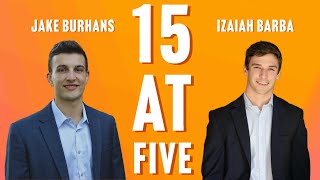
In this 15‑minute conversational episode, Jake Burhans and Isaiah discuss how mindset outweighs tactics in real‑estate investing and entrepreneurship. They begin by examining limiting beliefs—personal examples of doubting their ability to close deals repeatedly and misconceptions about earnings—showing how exposure to successful peers helps dismantle those mental blocks. The dialogue then shifts to the "Infinite Game" versus "Finite Game" framework popularized by Simon Sinek, arguing that business should be approached as a long‑term, ever‑lasting pursuit where staying in the game (i.e., not running out of money or quitting) is the true win. They connect this to personal habits, emphasizing the importance of loving the process, pacing work sustainably, and focusing on lifelong health and relationships rather than short‑term targets. Finally, they champion an abundance mindset: collaboration over competition, sharing deals, and leveraging the reticular activating system to see opportunities everywhere. Throughout, they pepper the conversation with references to Alex Hormozi, John Lucas, and classic quotes about teamwork, urging listeners to adopt these mental models for lasting success in real‑estate and beyond.
Chapters
What's going on, folks? Monday, another 15 at 5, normal version. We're just going 15 minutes. We're just doing a kind of a surface level dive into our topic of choosing today's mindset. I think it's a huge one. Uh, I think, uh, this business is 90% mindset. Um, I've heard people say it's 80%, whatever, but the point being Majority of it is mindset. The tactics are very simple. It's very simple business, but it's not easy, right? Um, so there's a couple things I just wanted to go over, uh, with Isaiah today in regard to mindset, um, and just kind of our evolution of mindset, especially mine. Something I've struggled with all my life, even playing hockey back in the day, right? It was like I had the skills, I did not have the mindset for it at all. Um, and it's funny because after I was done hockey, I come into real estate, it's the same thing. Like, you got to have the proper mindset to be successful. Um, so just something I wanted to dive into. What's going on, Isaiah?
Yeah, nothing much. Yeah, I'm excited to talk about mindset as well. Uh, definitely a huge aspect of this whole entrepreneurial game. So, uh, yeah, I'm excited to get into it.
100%. Okay, first thing I just want to touch on was limiting beliefs. What is the role that limiting beliefs play in this industry and just in general? I mean, this— I mean, mindset, it's about real estate, but it's also just about life in general. So what are your thoughts on limiting beliefs? What limiting beliefs have you had and what other common limiting beliefs do you think there are and how do they hold people back?
Yeah. So limiting beliefs definitely hold you back and I think prevent people from reaching their full potential. And I guess some limiting beliefs that I had initially starting out was when buying property, could I even buy a property at that I was starting like really my younger side, just buying like a few properties in general, was that even possible? I wish that Port Ed really kind of broke that limiting belief, but I still, in the back of my mind, didn't, I didn't feel like it wasn't actually attainable until I saw other people doing it and I was able to do it myself. But yeah, there's been a lot of, I guess, limiting beliefs that I've slowly conquered and I still have some now. And I think just being around people like, I mean, Jake, we're both really trying to be around people that are constantly doing the things that we want to do, just constantly breaking those limiting beliefs. But it's huge because, yeah, I feel you, there's just a lot on that.
Yeah, I think limiting beliefs are huge. I mean, something that I struggled with initially, like, heavily, and even, even still, man, like, I'd say the past 4 months, past few months, I think, since we kind of went full-time in the investing side, the pictures kind of become clear. Like, wow, we can actually do this. We can actually create like a business. Like, I can see the finish line. But for a long time, like, a lot of people say, oh, once I get proof of concept, I'm good. Like, I get proof of concept, I believe it. That was not the case for me. Like, we did a few deals in while we were seniors in college, right? 4 deals. But in my head, I was still like all right, yeah, I got lucky a few times, but like, I didn't think that I could do it on repeatable basis, right? I didn't think I had the skill for it. Um, and another thing is just not thinking that, yeah, I guess that I, we were— I was just good enough to close deals. Um, seeing all these people with huge businesses just cranking things out, um, I just thought there was more to it, like there's some magic thing. But the more I look into businesses and watch people operate and watch people talk to sellers on the phone. It's all the same thing. Everyone's going through the same exact thing. They're just doing it at a much larger scale, so they have more opportunities and they've obviously had more practice. But it's really nothing different. They're getting hung up on, they're getting costat, right? They're messing up on the phones, people are hanging up on them. So, um, yeah, I think it was just a limiting belief that you couldn't do this repeatedly was one of my things. Um, but yeah, limiting beliefs or anything specifically you struggled with?
Say that again, I cut out a little bit right there.
Anything specific you struggled with? Anything else in regard to limiting beliefs?
For limiting beliefs, I'd say like, kind of very similar to your situation. I'd say like right now limiting beliefs, like one thing was how, I guess, like the amount you can make on an assignment fee. I thought initially it would be like $10,000, $15,000, and I never thought it would be more than that. So the amount that you can make on that was just a huge limiting belief that we slowly conquered because we were able to make more than that, which was awesome. I think there's just constantly every day, it's just a constant battle of like, okay, we think this one way and then we just conquer it by other people achieving it. And then, uh, yeah, just us basically just kind of going, getting over those, those doubts that we've, uh, yeah, just kind of put ourselves— I don't know why we limit ourselves, but yeah, it's easy.
Like, we're naturally, like, naturally pessimistic, right? It's like the whole— that's how we were wired when we're like hunting in the wild. Like, we have to be pessimistic or else we're gonna get killed by the tiger in the woods. But obviously we're not getting killed by the tiger, so, um, need to rewire ourselves to be optimistic. But John Lucas said, "Love it, guys." Love John. John's amazing. So yeah, I think the biggest thing to get over limiting beliefs though is to be around other people who are crushing it, right? You can see that they're doing it and then you can be like, "Oh, well, we're kind of like the same people here. So if he's doing it, then I should definitely be able to do it." I think that's one of the biggest things for me. That's limiting beliefs. That's a whole topic. Other thing, The infinite game versus the finite game. This is a particular mindset that I think we've become to adopt, right? It's made popularized by a really well-known book called The Infinite Game by Simon Sinek. But essentially, the infinite game is something where there are no set rule of players, no set rules, no set— there's no like baseball, that's a finite game, right? You have a left, you have a set number of players at the end of 9 innings, you know who wins and who loses, right? That's finite. You have rules, you have an umpire. Infinite game is like, infinite game, there's no set rules. Like business is essentially an infinite game, right? Any number of players could be coming and leaving. There's no set rules really. Like, yes, there's laws here and there, but there's no really set rules on how you go about business. And there's no way to know if you really win business or not. There's no winning. And it's like one of the mindsets we've adopted, which is so good, is like the point of building the business is just to stay in the game. Like the point of the game is to stay in the game. So as long as you don't run out of money, you're winning, right? And I think so many companies, is what Simon Sinek talks about, so many companies are just focused on arbitrary finite metrics. Like, all right, let's, what's, what are our numbers for this quarter? Like this EPS is just picked out of thin air by some analysts, right? But it's really an arbitrary number. So these businesses are making decisions based on a finite game, right? Not based on their mission for their goals, right? But more just based on what they need their EPS to be. So they could cut 10,000 heads out of the company just because the analysts are saying they need to have an EPS of $3. Like, it's just, it's kind of ridiculous. But we're trying to have this view of the infinite game. How can we make infinite decisions, right? How can I build relationships so that I can, have lifelong relationships, right? Forever, right? How can I go to the gym, um, or how can I create a schedule where, um, I can work out every single day without getting tired? Playing the infinite game, right? How can I create a diet for myself that allows me to eat healthy without getting sick of it every single day for the rest of my life, right? So that's kind of the infinite mindset. What are your thoughts on that, Isaiah?
Yeah, no, I 100% agree. And it's like you only lose or or fails if you quit. And if you quit, that means you're not playing, you stop doing what you're doing. So that's just kind of, I guess, a high-level view of that. But yeah, I think the whole infinite game is just being the game is obviously just being the career that you're at and just keep trying to grow and get better at it. That's kind of the whole, I guess, idea of the infinite game. And I learned this pretty recently. Jake Burhans told me about it. I guess it was from Hormozy, that podcast, which is, uh, pretty good. Um, but yeah, and then like the whole thing though, just to bring this to another level, is like the not— the point isn't to get fit, the point is to stay fit. And so true though, like the point isn't to get to the destination, the point is to like maintain the destination. And, uh, not really maintain the destination, but in the sense of be on the journey. Like destination isn't, uh, the goal. And then what was it? Hormozi was saying how like the goal, the person who, the person who is walking to a destination will— this person who walks to a destination and the person that is just walking to just walk in general, that person will always go farther than the person who's just going to a destination. He said it 1,000 times better than me right there. But yeah, I think it's pretty interesting. Just how you can— yeah, basically the game is to, uh, love the journey and be, uh, in the journey, uh, because there's no really ending to it.
Yeah, I think— yeah, it's something like the person who enjoys walking is going to walk much further than the person who's just looking to get to the destination or something like that, right?
Yeah, so it's—
yeah, it's about the journey. But it's like all these cliché sayings, like it's about the— it's about the journey, right? Like it is, it's not about the destination. It's like you hike a mountain, you hike it because yes, the view, but you enjoy the process, right? So if you can fall in love with the process, I think that's something, um, that can help you a lot too. It's like falling in love with the everyday process of building the business, right? Because you can't just sprint there and get there. Like, you'll just— that's what I want to do naturally as a person. I want to sprint. I want to work 18 hours for 6 months and then to be done, have the business built. But in reality, that's just not possible. So it'd be more effective for me just to work 5 hours a day over 3 years than it would be for me to work 18 hours a day for 6 months. Um, I think it's about falling in love with the process is something that helps you play the infinite game. Um, but then yeah, looking at, looking at down the line, right, like making decisions based upon as if you're gonna do this forever or as if you're gonna play this, this game forever, I think is huge.
Exactly. Yeah. And then like, if you were to like do that mindset though, just like 18 hours kind of thing. That's how people get burnt out. So it matters with the industry and stuff like that. But I think in general though, it's like you need to kind of balance it. And if you're in it for the long run, there's no rush to get there, even though like that's the whole— and it's very easy to have that tendency of like trying to go as fast as possible. But if you are in it and you're going to be in it for the long run, then you're already kind of winning, which is a very interesting paradigm.
100%. I think it's the best quote ever that You win the game by just staying in the game. The point of the game is just to keep playing the game. That's the point of business, right? The only way you lose business is you run out of money and you quit. And even then, if you run out of money, you can still start again. The only way you really lose is if you quit. So I think it's just great when you have that mindset of like, the point of the game is just to be in the game. Right now we're in the game, so we're winning, right? Like, yeah, we have revenue goals and we have all these targets, but I mean, we've just picked these out of thin air because we want to push ourselves, right? Ultimately about reaching those targets. It's about the actions that we need to take in order to reach those targets. So not being too hung up on goals, I think, is key too. And one last thing, only 3 minutes left, is we touched on this last week, but I think, again, it's a key mindset thing to talk to consider: collaboration over competition, right? I think that's a Pretty common one, but I think it's a huge one. Collaboration over competition, right? It's an abundance versus a scarcity mindset that there's so many deals out there that you don't need to be selfish. We can share everything. So I think the abundance or the collaboration mindset will take you very, very far. It has taken us pretty far, I think.
Yeah, and going off that, I wish I knew the person who said this quote. It was like, if you want to go fast, go alone. If you want to go far, go together. Um, so that's kind of the goal that we're trying to do. Uh, and like the whole mindset was like 1 1 3 in that sense of collaborating, collaborating. We have like our skills, like I'm good at some stuff, Jake's obviously good at some other stuff, he has his skills that he's better at than me. So we just tried to complement that and really, uh, really go far together, which is the goal.
Yeah, collab— yeah, I think collaboration in that sense, from like a direct partnership stance, is important to take your personality tests and understand what strengths are different and what are the same, obviously. Um, but I think in the marketplace, right, having the abundance mentality— and honestly, like, once you start doing like real estate investing specifically and you like your reticular activating system, right, it's like when you go get a new car, right? Say you go get a Honda Accord, you start seeing Honda Accords everywhere, right? Because of your reticular activating system. It's the same thing with real estate. Like once I'm like focused in on ugly houses, they are freaking everywhere, dude. Everywhere I drive, it's like so much, so much opportunity. It's like there's no way that there's enough investors to even get all these deals right now. There's just no way. So having the mentality of like, there's so much out there, let's share, collaborate, help each other grow. It's just going to be way better that way. It's just good karma. Things come back around, in my opinion. So yeah, collaboration over competition for sure.
Yeah, no, it kind of goes with the— I have so many flies attacking right now. But the abundance mentality though. Well, I guess what you're saying, that Go Giver, that's what I was going to say. How like, I don't know, you give and then I read that book before, but that's a really good book and it really comes down to like the abundance mentality in the sense that when you give, you don't, you shouldn't have the expectation to receive, but in this world, giving without the expectation of receiving kind of all comes around, which is pretty cool. And I think that kind of relates to that abundant mentality.
Yeah, that's another mindset thing. It's literally all mindsets, like how you be successful is, how you become successful is because of your mindset, 1,000%. But awesome. So those are kind of things we went over, limiting beliefs, How our mindsets have changed. Obviously, The Infinite Game Versus the Finite Game. I recommend picking up that book, The Infinite Game by Simon Sinek, if you haven't. No matter what industry you're in, whether you're in the corporate grind, whether you have your own business, whether you're a teacher, pick up that book because it'll help you make decisions in your life for sure. And then Collaboration Over Competition, you can apply that to any industry anywhere. But yeah, appreciate you guys coming out. Next week, I don't know what we're gonna talk about yet, but if you guys want to leave a comment or DM me something that you guys would like to hear us talk about, something you're curious about, um, in real estate or otherwise related. We'd be happy to do it on the next episode.
Peace. See you guys.










