Why Your Brain Loses Half Its Power Under Pressure
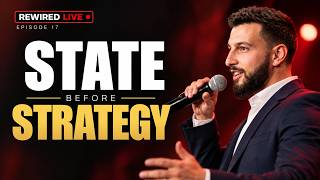
In this live presentation, Jake Burhans introduces the second pillar—Nervous System Regulation—of his BUILT Framework, a research‑backed internal operating system for entrepreneurs and high performers. He explains that human performance is limited when the nervous system is stuck in "survival mode" (sympathetic, fight‑or‑flight) versus the optimal "creative/precision mode" (parasympathetic, regulated). Chronic activation of survival mode drains resources from the prefrontal cortex, immune, digestive, and reproductive systems, leading to mental fog, anxiety, and burnout. Burhans stresses that awareness of one’s state is the first step, then offers concrete regulation tools: breath techniques (the 6‑breaths‑per‑minute yogic breath, the physiological sigh, box breathing), muscle relaxation, and simple top‑down/bottom‑up practices. He describes the neurobiology behind threat detection (thalamus, amygdala, fast “low road” vs slower prefrontal “high road”) and why insight collapses under pressure. A practical decision‑gate is introduced—ask yourself if you are regulated before making strategic choices. The talk concludes with a call to join the BUILT community, previews upcoming modules on identity reconditioning, letting go, and transcendence, and invites viewers to comment and access further resources.
Chapters
What is going on, guys? Welcome, welcome, welcome. I got someone slacking me right now. They don't know that I'm on a live. I gotta tell Isaiah, bro, I'm on a live. Didn't mean to huddle me. It was a, it was a butt huddle, butt dial. Um, Excellent. So today we're going to get into the second pillar of the framework. We're going to get into nervous system regulations. That's what I'm going to talk about today in the Built Framework. Okay, we have 5 pillars of transformation, and as I was saying yesterday, each of these pillars is rooted in decades of peer-reviewed research. So when I set out to create the number one framework The Internal Operating System for Entrepreneurs, I wanted it to be defensible. I, you know, initially I went out to set, to build this framework and it was like kind of wrapped up in some spirituality stuff, which again, I am a spiritual person, but I was like, that is going to, even though the principles make sense, it's going to be met with some resistance because people aren't always open to that stuff. So I'm like, okay, this is what I've been doing to help myself. I've been being aware, I've been regulating, I've been doing this stuff. I basically, just like I learned in college, just started doing a ton of research on awareness and nervous system and how to recondition our identity and how to let go of our traumas and how to operate from a new baseline. And I started putting that all together and figuring out how can I put this into a coherent framework that follows the process of human transformation based on the research, based on the peer-reviewed research. So not only is Built something that works for me, each pillar is rooted, like I said, in decades of peer-reviewed research on how the human body functions and how we actually regulate ourselves, right? Awareness— that is all about metacognition and Acceptance and Commitment Therapy and cognitive diffusion and self-compassion research. That's B. Awareness, meditation research, all that stuff. You is about the nervous system. A lot of it has to do with polyvagal theory, Stephen Porges, Body Keeps the Score, Bessel van der Kolk, other nervous system regulation practices and research on fight or flight physiology. Third pillar, Imagine Your Future, is about identity reconditioning, right? A lot of stuff from Joe Dispenza, if you don't know him, but also just general sports psychology, mental rehearsal research. Because visualization is so powerful, so well documented across so many high performers, I can just pull from that research, boom, put it into the lesson. L, let go of the past. This is all about memory reconsolidation research, somatic experiencing, trauma release research. All that stuff is in L. And then in T, um, this is motivation theory because it's how we operate sustainably. So it's pulled from motivation theory, is a big part of TEA. So all of this stuff, guys, right, put together into one succinct framework so that we can learn how to ultimately build from peace instead of pressure. That's the goal. Build from peace instead of pressure. And listen, this is a global movement. This is— come on, camera. This is a global movement, right? We are burnt out. No one wants to be doing hustle culture anymore. Hustle culture is dead, okay? People are burnt out, they're stressed out, they are exhausted from running around like a chicken with the head cut off. No one wants to do it because what's the point? Let me know what the point is. If you're going to just run yourself into the ground, why are we even doing it? Why are we even doing it? There's no point. Business is what they call an infinite game. What does that mean? There's no— you don't win at business. You win by staying in the game. You don't win by getting to a million or 3 million or 5 million or 6 million. That's not the point. Same thing with health. You don't win at health, you win by staying healthy. Relationships— you don't win at relationships, you don't win at marriage, you win by staying married or by staying in a relationship or by keeping a good friendship. Same thing with— so as we're pursuing our goals, understand, like, it's not about the goal, guys, it's about enjoying the process. And if we can't enjoy the process, why are we doing it? Well, I'll tell you why you're doing it. When— because you are basically saying like, hey, I'll suffer for right now. I'm going to suffer for the next 2 years, you know, a year, 2 years, 3 years, 4 years. Because if I can just get to this level, if I can just get to this position, if I can just make this amount of money, all the suffering will be worth it. No, it won't. Because when you get there, you're still going to feel the same way because of how you're wired internally. Nothing's going to change. Nothing's gonna change. Like, the greatest illusion in the world is thinking that some external thing is gonna fix your internal problems. You have a internal problem. You have an internal operating system problem. You have no idea how to deal with your inner world. It's a chaotic mess. Your thoughts run your life. Your emotions are completely overwhelming. You fly off the handles. You're stressed out all the time. You're burnt out. You're anxious. You are just grasping for anything you can possibly find to make yourself feel better. And that's why, obviously, I mean, just like basic things like drinking and drugs and nicotine, all that stuff, that's why we do that. Coping mechanisms. That's why we just sit out and veg out on the couch for fricking 5 hours on the weekend 'cause we're just trying to recover from how detrimental our week was to our body. That's why we need a vaca— why do we need a vacation so bad? Why don't we just build a life that we don't even need a vacation from? How about that? How about we just enjoy every single day so we don't even need a vacation? That's what we should be doing. But we've learned to live from stress and anxiety. It's just how it is. People don't even know that there's a better option. Oh, it's just how it is. I gotta run around and be stressed out all the time and run myself into the ground. That's just what it is. No, it's not what it is. It's what you've made it. It's what you've conditioned yourself to act like. Your current identity is just a system of patterns. That's all it is. You've been thinking, feeling, and acting in a certain way for so long, your system just goes, it's just who I am. I'm just a warrior. I'm just a perfectionist. I've just never been good at talking to people. I just don't like get in front of the camera. It's just not who I am. It's how you've conditioned yourself. You've acted that way for so long that to your nervous system, like, that's just who you are, right? So it's just so deeply conditioned that it feels like you. Understand that. So the goal is to reframe all of that and rework all of that. But that's what Built is here to do. Like, this is a global movement of teaching high performers. I'm talking to you high performers. I'm not talking to the people that are doing nothing, that are sitting around. I'm talking about the people who are out there moving and shaking and you guys are producing results. Right? You guys are making money, you're doing the things, but it just doesn't feel good on the inside. You're like, it shouldn't still be this difficult. I reached the milestone, I got the success, I got the— and I still feel stressed and anxious on the inside. Why is that? You're like, why, God? There has to be a better solution, right? There is, there is. You just have to learn how to operate your internal system. That's it. You just have to learn how to operate internally, and you will be in a much better spot. Okay? That's what we're here to talk about. So today, yesterday I kinda talked about awareness. Today I wanna talk about nervous system. Got my seltzer. These Waterloo seltzers, these are where they're at. This is where they're at. So nervous system, like what is— you guys, I don't know if you guys have heard of like, oh, you got to regulate your nervous system, this and that. Like what is this hullabaloo? You guys are probably like, this is complete nonsense. What do you mean regulate my nervous system? So for the purposes of this conversation, there's technically 3 branches of the nervous system. There's the ventral vagal, which is like our social engagement. There's the fight or flight, and there's the shutdown. That's from polyvagal theory. But for the purposes of this, there's two states, right? There is what I would call creative mode and survival mode. So I want you to think about these two states. And basically, I want you to be aware— what we're trying to ultimately do is be aware when we're in survival mode and get out of it and get back into creative mode. So survival mode is like the sympathetic nervous system. This is our fight or flight. Creative mode is the parasympathetic. Okay. This is the rest and the digest. Think of creative mode as not like a passive thing, but it's when you're regulated, when you can think, it's when you can problem solve, your perception is wider. Um, you can spot nuance, right? This is the state of being you want to be in to be effective. Like if you're going to be the most effective leader, the most effective entrepreneur or salesperson, you have this regulated state so that you can think clearly. And like I said, you can problem solve, you can get things done, you're focused. Now it's not like a passive thing. I like creative mode, also like precision mode, because that's really what it is. Like you're going from survival to precision. So survival, you're like, you are just frantic, kind of like this, this low hum in the background of urgency and stress and anxiety. And you get things done, which is great, but you're not operating at your full capacity. You're operating at like 50% of your capacity. Creative mode or precision mode is like you are still intense. It's just like your internal world is calm. Like think about like you're trying to get across the lake. I don't know if you guys have ever boated, but if you're trying to get across the lake in the broads, is like the middle of the lake. If it's like super choppy, it takes forever to get across the lake. You're like bang, bang, bang, bang. Like the front of the boat is just smacking on the waves. You can only go like 15 miles an hour maybe. Right? 20 miles an hour. But if you get up on that lake in the morning and it's glass, you can freaking fly across the lake and it's so easy. You can go like 40, 50 miles an hour just freaking because there's no chop. That is like you when you're trying to do something and your internal world's a mess. You're in that survival mode, that sympathetic nervous system state. It's like the lake is super choppy and you're trying to drive your boat through the chop. It's just very difficult. But when you calm yourself down, you get into that regulated state. It's like you're going across the lake in the morning on that glass pond. You're just like flying right across that thing, no resistance. So that's where we want to get to. We want to get to a place of internal clarity and calmness where there's no resistance. And that's what that means. So understand that, am I in survival mode or am I in creative mode? Now, a couple of things. To note about survival mode. How do you— you know, survival mode isn't like a full-blown panic attack. That's not what it is. Like if you're in a dysregulated nervous system state, you're still a high performer. Like you're still going, but it's like this hum in the background. Think about like a fridge, like a fridge running or maybe like an AC, you know, one of those kind of older AC units that you could put in the window. Maybe you still have one in your house. Or you remember from when you were a kid? When that AC is running, it's kind of like, mm, and it, you don't notice it really until it shuts off and you're just like, oh my God. You're like, ah, your system just kind of relaxes. Like you didn't even notice how loud it was until it shuts off. Same thing with our system. It's kind of like running in the background. It's that constant worrying, that constant anxiety, that constant tension. It's like the silent killer. It's like draining us. 'Cause what happens in your body when you go into survival mode, because your body is preparing for a physical threat, like it doesn't know the difference between being chased by an actual lion and just being upset because someone said something to you, because a coworker made a comment, because your boss just put a tight deadline on you, or because someone didn't validate your work, right? We go into that survival response and resources are diverted away from our prefrontal cortex. So think about your prefrontal cortex like the CEO of your life. And that's where all your thinking and your problem solving and your nuance lives, is in your prefrontal cortex. So the second you go into survival mode, you are pulling resources away from you being the most effective person, right? Think about it like the town, right? Like the town, if a hurricane's coming, we don't want— we don't need the library open and the parks open and the pools open, right? And the freaking restaurants, that doesn't matter. Let's pull all those resources, all the electricity, all the stuff from those areas. Let's just stick it right into the emergency services, right? It's not sustainable for the town, but it works for now because of hurricane coming. We need all of our resources here, right, to prevent the hurricane. That's what your body's doing. It's pulling resources away from your prefrontal cortex when you're in survival. It's pulling resources away from your immune system, from your reproductive system, from your digestive system. From your muscles, right, for tissue growth and repair. All that stuff is being pulled away so you can— you can either fight a predator or run away from a predator when you're in survival. Again, your body doesn't know the difference between that state and, you know, you just getting an email that pissed you off. So that's the problem. We're— we're getting triggered from our environment. We're going into survival mode and all, and we're living there. We're we're staying there. That's the problem with survival, is that we're designed to go into survival. Like, yes, you're going to be stressed out. Acute stress is not bad. Acute stress is going to make you stronger. The problem is the sustained being in the survival mode, right? Robert Sapolsky talks about it in Why Zebras Don't Get Ulcers. Why don't zebras get ulcers? Because they get chased by a lion through the Serengeti, okay, for 5, you know, 30 minutes, they go into fight or flight. What happens after they come out of fight or flight, or after the lion goes away and they're safe? Takes them a little bit to calm down, but then they've calmed down, right? They're not in a fight or flight state anymore, right? They're back to regulation, and then they just run away, you know, back to doing their thing. And what are they not doing? They're not thinking about the lion that chased it 2 hours ago and getting stressed out about it, let alone the lion that chased it 4 days ago, a week ago, a month ago. It's not stressing about that, but we do that as human beings because we have this conscious awareness, right? So the thing that makes us human beings, we kind of, it's like a double-edged sword. We use it against ourselves because we replay past events, right? We stay in our head about things and it keeps us in this sustained survival response, this chronic state of survival. And it's zapping your energy and it's, it's making you less effective as an entrepreneur and as a salesperson. Think about it. If you, If you— a thought comes across your mind in the morning at 8 AM about, oh my God, I got that meeting today, and you're just stressing about it all day long, you're in that survival state. You don't have full access to your prefrontal cortex, so you can't think clearly, right? Um, and you're kind of like almost like redlining. Like, think about a car getting on the highway. It's got to go to get on the highway, but you never come back down to idle. You're just all day long. And that's why you're draining your energy so quickly. That's why you can't think clearly. That's why you're like mental fog. That's why you're not healthy because your immune system is down. That's why you have digestive problems because your digestive system isn't working. All that stuff comes from a sustained survival state, fight or flight state. So that's why it's just so important. It's so detrimental. It's like, so it starts with awareness. That's why if you go back to yesterday's video, on awareness, it is understanding that being aware of when you're in either survival or creative is the start. Because people are just completely unconscious. They don't even know when they're in survival. So they're just running around all day doing this thing. And meanwhile, they're training their system to be in a perpetual state of survival. They're training that, they're training that. So awareness is huge. So survival and creative. And I kind of talked about why why insight collapses under pressure. And here's the other thing. It's not enough, guys, to know what to do. You can read about it in a book. Okay, you read about it in a book. Okay, when I'm at work and a coworker makes a comment to me, I need to respond in a certain way. Okay, I learned that in a book, but what happens in the moment when the coworker makes a comment? Or your employee makes a comment, you react, right? Because your brain perceives that as a threat, and your brain is designed to go into fight or flight before your conscious mind comes online because it's a survival adaptation, right? Because if you're walking through the woods and you think you see a snake, you don't want to wait 3 seconds for your conscious mind to come online and, oh, is that a snake? Oh yeah, it is a snake. Yep, it's in your leg, you know, and you're dead. So Your mind, your body has been hardwired over hundreds of millions of years, okay, or your nervous system. Any perceived threat, boom, it just reacts. Any perceived threat. So if that person making a comment to you, that employee is, you know, like a threat to you and it's something that triggers you, your body's gonna react before your mind comes online. So you need to understand how to regulate when you get triggered like that. Learn how to regulate so you can turn your mind back online and make a good decision. Because we're just reactive all day long, guys. We're reacting to this, reacting to that, um, and it's a huge problem for us. So understanding that in order to actually use the information that you've learned— all the stuff you read, the books is great, okay, it works when you're calm, but when you get triggered, like you inevitably will because that's how our bodies are wired, and you get triggered and you go into survival, can you recognize that you're in survival? Can you recognize that you're in a fight-or-flight state? And can you regulate yourself back, right, using the breath, using awareness, using top-down regulation, diffusion practices, using bottom-up regulation practices like the breath and splashing cold water on your face and humming and all the stuff. If you can do that, then you regulate yourself, then you're— you keep your, you know, prefrontal cortex on, and then you're able to use that information that you learned. So that's the fundamental thing. This is the basis of like why, oh, I knew better, but I did it anyways. Well, yeah, because you got triggered, you went into survival, your mind went offline, and your mind is what stored the information that you learned. It's the first thing to go offline. So when you're triggered, boom, and you're in that state, you're not thinking clearly. So you have to be aware of when you're triggered and use the breath. The breath is probably the easiest way to do that, the easiest way to to work on that, okay? Now, breathing. The breath is an interesting thing too. So breathing is one of the quickest and easiest ways to regulate your system, and it's great because it's always with you. You— it works relatively quickly, and you can use it in the middle of the day, right? You can't sit down and meditate. That's also not a great way to calm your nervous system down anyways, meditating. But it's not like yet I'm telling you to go meditate for 30 minutes. I'm saying this is something you can do right now in real time, um, to regulate. Because the breath is one of the only things that is under bi-directional control of both the autonomic nervous system and your conscious awareness. So think about your ANS, your autonomic nervous system. When you get triggered, boom, and you think there's a threat, your body thinks there's a threat, it's instantly your breath is getting more shallow, right? And your heart rate speeds up, right? Blood flow is just coursing through you. So your breath gets shallow. Now consciously, I can choose to slow my breath down. And because my breath is like the middle point, right? It's like if you have conscious awareness, you have your breath and you have your ANS. So ANS gets cranking really fast, but also gets cranking really fast, your breath. But because all these things are connected, when I consciously slow my breath down, what is also going to slow down? This wheel over here of the ANS is also going to slow down, right? So particularly, we want to make our exhales longer than our inhales. So whenever you exhale, you're signaling your parasympathetic nervous system. Whenever you inhale, you're signaling your sympathetic nervous system. So one of the best things you can do, like the most ideal breath I think it's called the yogic breath as well, is what— and this is what the research shows, is like 6 breaths per minute is most optimal for regulation. So how does that break down? 6 breaths per minute is like 4 seconds in, 6 seconds out. So that's kind of like the thing. It's like 4 seconds, 6 seconds out. So it's a much slower breath, right? It's like 1, 2, 3, 4, and then it's 1, 2, 3, 4, 5, 6. You can see like how just breathing like that, right? Because the breath is like a physiological lever. Like, you don't have to believe that it works. That's why it's so effective, because when you are in a state of panic or freaking out, using your mind to try to calm your body down is just going to dig your tires deeper into the mud. You have to use your breath, because right now you're like this, you're like this. Just, hey, just breath. Breathe, breathe, and just slow the breathing down, and you will slow your whole system down, right, to a manageable state. Then, and then your mind will just click back online, and then you'll know what to do. But we have to recognize when we're when we're in survival and use the breath to calm ourselves down. So the breath is huge. Another thing that Huberman talked about, Andrew Huberman, in his lab is the physiological sigh, which is huge. So it's a double inhale combined with an extended exhale. So it's like a— and then a slow exhale. Try it right now though, if you're watching this video. Um, every time, like instantly, the physiological sigh makes me feel better. Just one. If I go and I do that, like whenever I get that second little sip, so it's like that quick, or it's like that just into your head, and then you get that second little sip and then a slow exhale. If you do that 4 to 5 times, boom, you're instantly kicking down your system instantly, right? So all sorts of breath stuff works. You can do the physiological sigh. You could just do box breathing if you want, even though the box breathing is like even breath. It's like 4 seconds in, 4 seconds hold, 4 seconds out. The whole goal is that you're just slowing and lengthening your breath from this short thing. But again, you have to be aware. So go back to yesterday's training, um, and, um, check that out and That'll give you some more insights into awareness, right? Okay, cool. So there's that. Um, so the breath. So we know that insight collapses under pressure. I kind of went through that at the beginning of the video. We know there's survival and creative mode. We know that the physiological levers are what signal safety to our body. So the other thing is like the breath is super important. I also use I also use, um, so like muscle tone is super important too. It's like, how is your muscle tone? Where are you tight? Because if you're tensing your shoulders and you're like this, that is signaling like there's a threat, you're bracing for impact. So like understanding your body and like literally relaxing your muscles. Like when I catch myself in survival or in a state of dysregulation And understand, like, we're always going to be dysregulated. Like, that's just— the body is hardwired. Again, that— so the thal— was it the thalamus? I'm not gonna get into the science behind it, but region of your brain that detects if there's a threat. Pretty sure it's the thalamus, right? It's taking in information at all given times from your senses to determine if you're safe or not. And that thalamus is going to send a signal. So what Joseph Ledoux talked about in, um, The emotional brain, I believe it was. Um, but he discovered the two roads. When your body detects a threat, it's sending a signal at the same time, one to the amygdala, which is kind of the fear center, which is going to activate your, um, activate your adrenaline course, all that stuff. The other is the high road to the prefrontal cortex, which is your awareness. Now that signal, when, oh my God, there's a threat, the signal gets to the amygdala quicker than it gets to the prefrontal cortex. That's why we always react. Our body reacts before our conscious mind comes online, right? It's like you're walking down the road and something jumps out at you. You don't know what it is. Oh my God! Your body reacts because it's designed to do that. But then your conscious mind comes online and goes, oh, it's just a paper bag blowing in the wind. Like, I thought it was like a raccoon or something, you know what I mean? So that's, that's an example of that. Same thing in our life. So we just want to be aware of when our body reacts, understand it's normal, and then just calm it down, relax with the breath, be aware, catch it, regulate yourself. So that's an example of regulating yourself in real time. Like, you're walking down the street and you get triggered by something. You thought it was like an animal running at you, but it was just a paper bag. That's a prime example of your body detecting a threat signal, getting to your fear center, your amygdala, triggering that fight or flight so you can jump back. But then the signal getting to your conscious mind 2 seconds later and being like, oh yeah, it's just a bag in We're good, right? And then your heart's just like racing out of its chest, but you relax because you know everything's good. That's the game. But the problem is like we don't understand that we are kind of in this state all day long, and when we're doing that, we're just like programming ourselves to be in the state of survival, which is the ultimate problem. Okay, so yeah, I think that is good. Um, It's great. So muscle tension, breath and muscle tension. So if you need to go back and watch that, watch that. Last thing is understand uninstalling the decision gate in our mind of state before strategy. So I want you guys to understand, before you're making any decision, you need to ask myself, am I in the right state to decide? Am I in the right state to decide? Am I regulated enough to choose right now? That's the decision gate. Am I regulated enough to choose right now? If you are regulated enough, great, that's awesome. Then decide, act, do whatever you need to do. If you're not regulated, then you need to regulate, even if it's a minute, even if it's 3 physiological sighs, right? And then a slow exhale, right? But you need— if you're going to be an effective leader, guys, men, women, if you're going to be the most effective leader If you're going to be the most effective salesperson, the most effective operator, the most responsible operator, you are a regulated operator. The most responsible leaders and operators in this entire world, whether you're in the military, you're an entrepreneur, you're a manager, you're a leader, you're a parent, you're a friend, you're a performer, you're a speaker, any influence, any influential person in this world needs to be, you know, them at their highest selves, the most effective ones, they're regulated. Right? They are regulated. All right, guys. Hope you got some value out of this. If you have any questions, drop them in the comments below. This is on, again, this is on YouTube, Facebook, and LinkedIn. Feel free to comment on any of those. The saved version will be on YouTube under my lives, under Rewired Live. And until next time, I'll see you all on Monday. So we'll be doing these every day at 10:00 AM. Monday, we're gonna dive into I, pillar I. This is all about visualization. So, so far I've talked about awareness. I'm just doing high-level overview of the BUILD Framework. We've done awareness, we've done nervous system regulation. Now I'm gonna get into identity reconditioning, which is module 3. And yeah, we'll talk about that, how to visualize, how to approach all that stuff. So, and then Tuesday we'll do L, let go, and 5, we'll do T, which is transcend in your 2.0 identity. That's that. Um, then you guys have a nice foundation of all that, and then we'll figure out what we want to get into next. Um, but yeah, until next time, guys, all the peace, all the power. And yeah, if you haven't joined the school community yet either, link is down below. Get in there. Um, I have a deeper orientation on the whole BILT framework, um, and then also a, an operating system assessment you can take right now to get a read on your system and give you some specific tactical insights on, um, what you're dealing with and how to, how to solve it for you. So that's all free. Pop in there and we'll rock and roll. All right, I'll catch you.










