From Hustle to Passive Wealth with James Blakemore
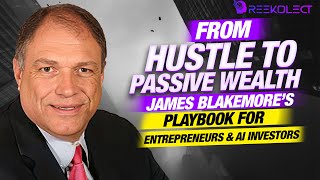
James Blakemore went from getting fired at a TV station to building businesses in oil, mining, media, and real estate. He shares why he chose entrepreneurship, what killed his shipping-container housing project (the weight), and his current bet: a real-estate fund that generates passive income for professionals who don't have time to run their own deals.
Questions this video answers
jamesblakemore.com; IronMountainCapitalGroup.com
Four years
Twenty years
About 12,000 pounds
Chapters
I've been an entrepreneur all my life. Heard the old story, get a good education, get a good job, yada, yada, yada. At that point in time, I made a decision that I was never, ever going to let anybody have that much power over my future again.
How did you evolve that into business.
And channel that so many people say, trace your passion. Passions don't pay bills. Trust me. It used to be really easy to get real estate loans. It's not that easy anymore. Have associations around you that can help keep you up. You can't be up all the time. Foreign.
Welcome back. My name is Daniel, CEO and founder of Recollect. And I'm here today at the Rice estate at Turner Hill. And I have a very special guest with us here today, Jim Blakemore. Jim, how are you today? Thank you so much for joining us.
I'm wonderful and getting better. Dan. Dan or Daniel?
Dan is good. Daniel, as long as it's Dan or Daniel with us.
Okay. And I thank you very much for the opportunity to join you. I'm looking forward to having a little chat here. Yeah. Thank you.
Thank you. Thank you. Yeah. So again, Jim, what, what we do here at the Digital Legacy Podcast, we like to dive into all different types of topics around business and so on. But I think the best place to start off would be give us a little bit of your history. Where did it all start with, with your career?
I've been an entrepreneur all my life. I went to, I grew up in a family of entrepreneurs, went to college, you know, heard the old story, you know, get a education, get a good job, yada, yada, yada. I went to, while I was in college, I went to work for a television station and I was, one day I was called into the manager's office and I was terminated. And whether I was termed, whether I deserved it or not is up, up for debate. But I loved that job. I really, really loved what I was doing. Just exciting, part of the media, yada, yada, yada and all that stuff. And at that point in time, I made a decision that I was never, ever going to let anyone, anybody have that much power over my future again. And ever since then I've been an entrepreneur, haven't been involved, haven't gotten a W2 from any company that I, I wasn't even either a founder or part of the, the senior management of. So since then I've been, I grew up in the oil and gas and ranching businesses, was in direct sales. I've been in, had a, I had a, I Bought a radio station, I had a, a photography studio, done all sorts of different things. Ran a mining company for 20 years. Jack of all trades. Yeah. And master of none, I can assure you of that. So now I've exited my family company and I'm starting a real estate investment fund for, for professionals who are looking for a passive income stream.
Absolutely. Well, that's, they're very impressive. So Jim, let's, let's unpack that a little bit. You know, our audience is, consists of entrepreneurs, business owners, AI enthusiasts, and in common, we all love business. Right. Now take me back when you got fired from that particular job and occupation that you had at the radio station you mentioned.
Right, the TV station. TV station. Okay, perfect.
Absolutely. TV station. So many different entrepreneurs have an origin story like that that they got fired by their job, you know. You know, by a job that they love doing. And then it just triggered some sort of fire and passion in them. Did you experience something similar with that? Like, can you unpack that a little bit? What did you feel and how did you evolve that into business and channel that?
Well, I, I studied communications in college and was a photographer and had a, got my degree in sound engineering and that sort of thing. It was more because I liked equipment, I like gadgets. I'm a gadget guy. So that was kind of how I got into the, into the communications field. I got fired. Like I said, I made up my mind at that point in time. I was never going to ever let somebody have that much power over my life. I'm not going to say I didn't. I haven't dropped the ball a few times in some of my businesses, but that was my, you know, that was my doing. You know, if I, if I could do it, I could do it for myself, but nobody else could tell me yes or no. And I, I don't know where it came from. But I got out of college and was presented with the opportunity to buy radio, a local radio station. And I did. And it was, it was a fascinating experience. I got, I got a lot of business experience, read tax deductions, read failure. But I, I ran the station for four years and I never, I never looked back. It was always. I was going to have to do something for myself, with myself. And we had a family business in the oil and gas business, but I was always looking for something else. Even though I had a very comfortable life and lifestyle in the family business. I got into rental pro real estate, rental properties, got into direct sales, got into bought some land and worked on a Real estate development, Putting a real estate development together. We never got it developed, but I didn't know that. You know, another one of those things. There's, there's forces that are lined against you that you may never know. And I didn't find out until later that the city was never going to let me do that project, no matter what. I was never going to come out of the ground. But you went for it. But I kept put, you know, I'm. My philosophy. One of my guiding lights is Winston Churchill's quote, never give in, never give in. Never, never, never give in. And sometimes I've probably never given in too. Too much. Probably should have cut that one off a long time before we, we put it to bed. But again, I learned a lot. Got a lot of, got a lot of tax deductions from it, and. But I've been in the real estate, in some sort of the real estate business ever since. Wow.
Very powerful. Very powerful. Couple, couple questions there. I want to ask you. First of all, what would your advice be to young entrepreneurs and business owners that are scared to take that leap of faith? Because being an entrepreneur, it's a lifestyle, right? It's, it's, it's never the sense of security and the sense of stability. You've learned very early in the stages of being an entrepreneur to eliminate that, because it's not real stability. Anything can happen. A business can close. But even people that have a 9 to 5, you know, they think that they're secured with their job, but if that job fires you, then it's all over. So what, what would be your recommendation to starting off entrepreneurs that are nervous to make that leap of faith?
W. That's a great question, Daniel. My, my first advice would be to make sure you, you know what it is. Make sure you're comfortable in the endeavor. So many people say, you know, go after your chase, your passion. Right. Passions don't pay bills. Trust me. Yes. Find something that you enjoy, find something that challenges you. Find something that you feel you can make a difference in and that you can bring something to, you know, some sort of an endeavor. One of my endeavors, and I guess let me say this, one of important things you can do is make sure you know what you're getting yourself into. One of my companies was we took shipping containers and we converted them into workforce housing in the oil, for the oil field. And it made great sense to me. Take these steel boxes, cut them up, put miniature houses in them and, and rent them out. The unseen problem that I didn't wasn't aware of. Shipping containers weigh 12,000 pounds. They are heavy. You have to have very specialized equipment to move them around. You can't just tie them to the back of a pickup truck and haul them somewhere. I've got, I still have some that I have to. I can't get rid of because we just can't get them off the land. That was the unseen obstacle. That was the piece of information that I didn't have. Everybody thought it was a great idea. I thought it was a great idea. Everybody was going, oh, wow, that's cool. And then until I found out that you got to move these things around and it's tough.
I see that. I see. That's great advice to always not only look into your passion, but also look into any unforeseen challenges or obstacles like you're mentioning that, that particular business that you're going to inherit. That. That's great advice in there. Absolutely. And Jim, let me ask you for, for the young business owners and entrepreneurs that want to dive into real estate, what advice would you give to them about purchasing your first property? How can they go about it or at least start coming up with the idea, especially when it comes to finances as well.
You know, that's, that's a tough one because it's used to be really easy to get real estate loans. It's not that easy anymore. You've got to have. The first thing I would do is make sure again, you know what the business, you know about the business, maybe partner with somebody. A lot of people get into the business fixing and flipping and you know, they'll get a partner, they'll get a financial partner. Financial partner who's been in the real estate business is a really, really good place to start. The, you know, if, if they've been in the business for a minute, they can give you the guidance that one needs. Study the business. There's a lot of, there's a lot of great resources out there to. To that will educate you on how to get into the. Of business to start. It's such a wide business. There's fix and flips, there's syndications in getting into apartment complexes. The area that I'm working in right now is mobile home parks and RV parks and, and self storage. There's so many different areas of real estate. But the neophyte real estate entrepreneur, probably the best way to get in it is save up enough money to put a down payment on a house and on a rental property and you and have a rental property. Start your business as a Rental. As a rental property owner and you know, my advice is, especially if you're, if you've got a W2, don't get into, into the real estate business expecting that it's going to change your lifestyle immediately. Live like you live on your, on your W2 and buy your, you know, buy your first house and use, then leverage that into another one and another one and another one. I know many people that have done that. That friend of mine out in California, I, I don't know, he's got over 100 rental houses now. You know, he started young and they just kept rolling them and rolling them and rolling them. He worth a ton of money.
There you go. So consistency as well, right?
You have to remain consistent and, and run it like a business. Make sure you run it like a business. Don't, you know, don't, don't take the rental money and buy yourself a boat or something like that. And what so many people do.
Reinvest.
Reinvest. Yeah.
Jim, last question, but before we, we wrap up here, what would you recommend in the sense that high level of energy? Because I see you, I see the vigor in you. I see the, the mindset before the camera turned on. You're like, listen, I can connect to here and there like that. That just shows you're sharp, you got the energy. What would you recommend to the young entrepreneurs that want to have something similar to that?
I keep the fire burning. I mean, I'm, I'm kind of a unique person. My energy level, I, you know, I haven't found anything. I don't like anything I don't like. I was, I, I love the challenge. I love people. I go, this is like one of five ma minds that I'm a member of and I associate with, with great people. I think probably one of the most, one of the most important things you can do is have associations around you that can help keep you up. You can't be up all the time. Everybody's going to have, you know, they're going to, they're going to suffer a defeat, they're going to suffer a, a setback and having. Maybe, maybe it's a spouse, maybe it's a partner, whatever. Have people around you that can help you through those rough spots. And I read. I mean, I'm, I'm, I'm a voracious reader. I'm. My, my level of personal development is astounding. I believe in, you know, once. One of my core beliefs is, is personal development. So I'm always involved in reading, studying, something like those sort of things that help me keep my act sharp, of course, and develop it. Right? Yeah, absolutely.
So phenomenal. Phenomenal. All right. Well, there you go, ladies and gentlemen. You have here James. James, thank you so much for taking the time to be here on the digital legacy podcast. If someone's interested in knowing more about your, your work, where can they see you?
My website is jamesblakemore.com I'm james jamesblakemore.com and if you want to see what we're doing with the real estate fund of funds, they that website is Iron Mountain Capital Group dot com.
Absolutely. And we'll put that in the description. James, thank you so much. Really appreciate it.
Thank you, Daniel. Appreciate it.
To the podcast. All right, until next time. Thank you very much for joining us.
More from James



AI for Real Estate Investors: What Smart Capital Builders Know That Others Don't - Live Q&A

Secure Your Financial Future: Quiet Psychology Moves That Make Your Money Work For You