James Blakemore: The Serial Entrepreneur
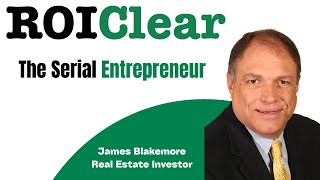
James Blakemore built businesses in oil and gas, rentals, and real estate development. He lost money on stalled projects and difficult multifamily properties, learned to avoid excessive risk, and now plans to launch Iron Mountain Capital Group as a fund-of-funds.
Chapters
Foreign.
Welcome to the ROI Clear podcast. My name is Ray Hightower and today we are fortunate to have as our guest, Mr. Jim Blakemore. He's based in Texas. I have a lot of admiration and respect for this man. We've had a lot of conversations about business and capitalism. You're going to enjoy hearing from Jim Blakemore. Jim is a flag waving, banner carrying, entrepreneurial capitalist and he's going to tell us more about that and what it means. Ladies and gentlemen, please join me in welcoming Mr. Jim Blakemore. Welcome Jim.
Well, thank you, Ray. It is a pleasure and an honor to be here on your podcast.
We're glad to have you here and to kick things off, we're going to ask you to tell us a little bit about you and the way we frame this. You're on an elevator and you know all about the elevator pitches. For those who are new to the ROI Clear podcast, Jim Blakemore is on an elevator with someone he wants to influence. So Jim, what would you say to that person in the course of an elevator ride?
Well, first thing I'd want to know is a little bit more about them. So I'd kind of ask them a quick question about their background. But you know, I am a serial entrepreneur. I've been in entrepreneurialism, I'm a capitalist. I believe in all of that and I, my, I've used come to use my experience to help other people become either entrepreneurs start their own business or, or do, or make, make good investments. I think the question, I think the first thing I would say to them is I'd want to know what, you know, what their interest was in life because I love to talk to people about what they're interested in. It's been, you know, like I told you when we were getting prepped, I've never found a microphone I don't like. So I will be some. Most people have a problem once I get started. They have a problem shutting me up. So. But right now, Ray, you asked me what I, what I'm doing. I started out my entrepreneurial career years ago with rental houses. I had a number of single family rental houses and I, I finally sold them when they got too worth too much money not to sell. I, I've transitioned from that to into real estate development. I bought some land in a nearby town and built a, and started a development company. We had a shovel ready project that me and my team put together and we had everything ready to go except for a couple of, a couple of minor approvals from the town and we never could get those. The town just, you know, the, the city manager and the powers that be in the town kept stalling, running around and I finally found out at, at, at the end of the, you know, towards the end that they were never going to let me do my project. I could, I could do anything. There was nothing in the world that I could do to allow them to allow me to do that project. So I got a lot, I, I got a very expensive education in building a real estate development company and putting projects together. And I know a lot more about it now than I used to and am waiting for the right time to put that back into play. Subsequent to that, I got into the multifamily business. Most people find out most, most people get in the multifamily business by getting into a syndication. They, somebody approaches them to invest as a limited partner in their deal and they put together a number of limited partners and as GP then they put the deal together. Well, I didn't do that. I just bought the complex. I went and bought, bought the buildings myself.
Yes.
And found out, I found out that it's a lot harder to own and run a multi family complex than one thinks. Even when you have professional management involved, there's a lot of, a lot of factors that you don't think about when you buy the building. You know, I, I looked at it from the frame of mind of being a real estate investor. I bought, you know, I bought properties before, allowed them to appreciate, allowed them to develop and develop whatever and then sold them and didn't, you know, I had in. The only ones that had really had hands on one were when I had those, the single family properties and they pretty much ran themselves. Well. I found out that multifamily properties don't run, don't run themselves. There's a whole lot of problems. I was, I was, I was the quintessential slumlord. I had properties in the, in the near northwest part portion of Milwaukee. If you look up slum lord in the dictionary, there's my picture. And so I wound up with pro, you know, understanding that had to deal with some of the seedier sides of society up there. Had some great tenants, had some, some lovely people that, that rented from me and then I had some of the exact opposite. But the benefit of the whole thing, what I came out of that thing, well, because the economy was good to me. I sold the units at a profit, learned a lot. And you know, and you know, I tell you all these three stories to just say and to wrap it up and Say that I have, I've lived the mistakes. I have one of these guys, I kind of jump off the bend. I'm not really a toe dipper and okay, so I've done that my entire career in business and real estate, oil and gas, ranching, all the different things. Broadcast properties, all that. All the different things I've done, I've jumped into and either, you know, and had to sink or swim sometime I sank, sometimes I swam. Right, right. And. But the nice thing about it is in my position now as a, a fund builder, I can help guide people and help them to make, I can, I can give them the benefit of my experience and my mistakes and help them make better decisions. Wow, that was a long elevator ride, wasn't it?
Yeah, yeah, that was. What an elevator ride? What an elevator ride. That's. There's a lot. You have such a rich and eclectic collection of experiences. So we're going to try to unpack some of that. We're not going to get to all of it in the short time that we're here together, but let's dig at some of it. You started off as a single family home investor, did well there. And then you looked around, you saw while some people bought apartment complexes by going into a syndication, you decided to buy the entire apartment community yourself there. You had done well with the single family homes. In a position to do that, you called yourself a slumlord. But what's interesting there, I mean in, in, in jest you said that, but here's what, what I extract from that. You saw the good in many of your tenants. You had some of the best tenants you could ever have there and then some who were not as positive for you. But it sounds like you were trying to build a community where the better tenants wanted to stay. I'd say. Is that a fair statement?
I think yes, that is a very fair statement. And I think the important factor that you just hit upon was that I was trying to provide as good a place to live for the good tenants. And, and unfortunately I had some of the other kind also. But I worked really, really hard. I had a management company that worked for me and it, it turns out that if you've got a property manager, single family homes, it's one thing having a property managed for apartment for multifamily is a completely different world.
Oh yes.
And, but I was, I have been my entire life I've been committed to a win, win or no deal. I mean I have to win. And, but my other, the other people on the other Side of the table have to win also. There's just no other way to do business in my book. And so we spent a lot of money on my buildings, on my complexes, improving them, adding security, updating H Vacs, environmental stuff, environment, updating the, the condition of the units themselves, all of that. I spent quite a bit of money. I, I didn't have to spend the money. I could have just let it, you know, let them be seedy. Yeah, because the value in the, the. When I sold the units, it was not so much a. And I don't know why, because normally apartment complexes are sold on cap rate. I think these sold more on, on, on the real estate value. And the, I think cap rate was a, was in there a little bit. But I think the people who bought it were kind of visionary like me. And they, they looked at them and says, you know, I understand you want out. I see where you're going. We're going to try to, we're, we're going to keep, we're going to keep carrying your vision for these units forward and try to keep them, and try to keep, keep improving them and, and, and, and make them better places. Better places to live for better people.
Right, right. How, how large was the community? How many units?
I had? I had four. I had four. I had at one time five buildings with a total of. It would have been 45 units.
Yeah, that's quite a portfolio. Yes, yes. So you went from single family homes to multifamily, did that. And you've also done other multifamily and oil and gas. Can you take us through the path there? How would you connect the dots?
Well, I grew up in an oil and gas and ranching family. My great granddad actually came to Texas in the late 1800s, went to work in a sawmill. Eventually bought the sawmill from the sawmill owner, turned that into the largest lumber company in Texas. And along the way he got into the oil and gas business. He would buy timberland in East Texas, harvest the timber, sell the surface, keep the minerals and get the oil business. And he got into the ranching business. He was, he was the quintessential entrepreneur and he's kind of the, the model that I like to, to pattern my life after. And but to answer your question, I was in the oil and gas business before I was in the real estate business or any form. My, My family was, was in the oil and gas business. We had an exploration and production company. We owned royalty, the whole, the whole ball of wax. And if after going through a couple of busts out here in the Permian Basin. I decided that there I needed to be in, in a, in a business. You know, I was, I was not getting out of the oil. Oil business, but I needed to be in a business that had some cushion and, and a little bit more of a consistent performance profile. And, and I was. The way I wound up in the, in the, in the single family business was I had a, I was in business with a fella who owned a house. He was a, he was a, a Mexican national, had a green card, and he ran into some problems and had to leave the country. And he gave me, he me, I, I had lent him some money, so he gave me the house as. As collateral and he, we just agreed that, you know, I just take the house back. And so I wound up with what that house. And along the line I came up, came up with a few other ones. And when the price of oil went down, I would pick up real estate properties because of course, here in Midland, everything is tied to the price of oil. If it's, if the price of oil is up, everybody's business is good. If the price of oil is down, not so much. So I got into these properties and was making nice money off of them. But it got to the point we had a, we were going the, the economy, the only the oil economy here was just going crazy and value this.
Just so we have an idea, what, what year are we talking about?
We're talking about the. Probably the mid to late 2000s.
Yes.
Okay, maybe. Yeah, probably in that form. I'd have to go back and look. Exactly. But I probably. That was probably. Maybe. Yeah, probably around 2000. Probably in the, in the mid. Yeah, 2005, 2010. Somewhere in that range. I'd have to go back and look exactly at the years. But I wound up. We, you know, we got to the point where the price of oil was bumping, you know, 80, $90 a barrel. And this. I'm talking about some time ago when that was substantially more money than it is now.
Right.
And my properties, houses got to be so. Worth so much money I couldn't afford not to sell them.
Yes.
And, and what I did was I took the money I was at, at the same time I was working on that real estate development project. And by the time I got out of all of that, that's when I had, I sold some, some royalty and had some other capital income events. And that's when I got into the multifamily business. One of my advisors said, hey, I've got These for sale or I know this guy who's selling these apartments. You need to look at them. The economy's right, yada, yada, yada. It was in Milwaukee and we got into those and again, that was about a five year little expedition that it turned out okay. I mean it could have been, it could have been so much worse. But fortunately the economy was good and I was able to sell them. Right. And come out of them and then come and then figure out what, you know, try to figure out what to do next.
Right, right. And then after the multifamily, that's when you started looking at real estate development?
No, I was, I did the development part before I got into the multifamily, when we got out of the single family and I sold the land that I had invested in for the development project and pulled all that money and that's when I got into the multifamily project properties and I was, I got out of those multifamily properties. I probably sold, sold out of all my multifamily properties four or five years ago. It was, it was a good time because I was having some issues with, with another business I was in. And it was, it was one of my, in the oil side of the business. It was some, one of my primary sources of income. It wasn't providing the income that I needed. And so it was a, it was, you know, it was the right, it was the selling these multifamily properties came at the right time to provide me with enough with, with money to operate on and invest other things and that sort of thing. So it was, it was a, it was an opportunity. It was a good opportunity. It came at the right time. And it was, it was one of those deals that. Thank you Lord. It came at the right time.
Yeah, absolutely. You know what? There's a pattern that I'm seeing in listening to you throughout your life. You're identifying opportunities and building it up. Whatever skillset you need or working with whoever you need in order to make that opportunity happen. And how is it that you developed that skill? Is that an innate skill for you? Did you get it from listening to the stories of your great grandfather and family legends? How did you develop that skill? Skill of seeing an opportunity, spotting an opportunity, putting together the tools to go after it and then going after it?
Well, Ray, the. That's an interesting question because I, I have a pretty well developed sense of self confidence that I can do whatever I need to do. And sometimes that, sometimes that's somewhat misplaced because it's bitten me in the butt a couple of times too.
Okay.
I have, I have never been afraid of jumping in and, and you know, there's, you know, there's a lot of old sayings, there's a lot of memes. The, in the personal development business, you know, feel the fear. The fear. Feel the fear and do it anyway.
Yes.
You know, the Dr. Martin Luther King had, the one, you don't have to see the whole staircase. All you have to have is faith to take the first step.
Sure.
You know, I've been accused of jumping out of the airplane and building the parachute on the way down and must.
Have worked because you're still here, man.
Sometimes I didn't get that pursuit completely built, but anyway, that's another story. But no, I avail myself of whatever resources and it's kind of one of the reasons why I'm in raise masters and associated with you and some of these other amazing people. I decided some time ago that the oil and gas business is a great business. It is highly lucrative. You can make a lot of money in it. But there, the risk profile for most investors is not good. Most investors do not have the wherewithal to take the risk that is involved in getting an oil business. It's a very, very risky proposition, but it can make you tons and tons of money. And I'll be the first to admit, made millions of dollars in the oil and gas business. Yeah, it's been a very, very good business to me. But I'm not going to get on Facebook or approach my friends that are not familiar with oil and gas business, such as you. People such as you and Catherine and Hunter. I wouldn't say, hey, you need to get in this oil deal with me because I would, you know, the, the potential risk is very, very high. Where I can come to you with a, with a multifamily deal or a storage unit deal or a, a mobile home park deal. We can quantify the risks very, very easily. We can analyze those. We can, we can assign a, a risk profile which is usually not very high. Especially if we do. We're very careful about the due diligence we do on our projects, which I am. And that's what I'm one of the things I'm building and. But you know, I've got, you know, the real estate business as a whole is so well developed now, it is so mature. We can look at it and say, you know, if you put a mobile home park right there, we know it will probably fill up within X number of months. The the returns will be consistent over time because people are not going to buy a mobile home and rent a space from me and all of a. And pull up in the, in the dead of night and leave. Kind of hard to move one of those things once you put it on the ground.
Oh, yes, yes.
And so adds everything. Yeah, the, the profile, the risk profiles are much, much, much, much easier to absorb in the real estate business. Same thing with multi family, same thing with self storage. Self storage is a great place to be right now. People are acquiring more and more stuff and they don't have a place to put it. You. Yeah, pick me. Pick me. I didn't. I live out in the country, so I've got, I've got about two acres, so I just built my own storage unit out behind my house. So that works. Yeah, but the, you know, I can, we know the, the. And I don't have numbers off the top of my head. The, you know, we could look at an area and say, okay, the cons. There is a consistent occupancy of, you know, the average occupancy is, you know, 36 months per unit in this area. And so we know, I mean, that's, I mean, you can say, okay, 36 months times we've got, you know, 100 units. So that'd be, you know, over 36 months. So you know, that for. So that's going to be 3600 units average rented per month, I mean, per year. So that way, I think that's right. Anyway, don't, don't get me, don't get me doing math. That's not my good point.
Well, we can go through an update in the show notes or something. But yeah, the point is made, though. The point is like, there's a lot of opportunity there and not everyone has two acres like you where they can just build a shed out back.
No, but more than anything else, it's, you know, I can't, it's, it's, it's much easier for me to approach you and other investors on a real estate deal than it is an oil and gas deal.
Right, right.
Oil and gas is very profitable, but it's also very risky because you still, you know, no matter how much science you do, you know much, how much, you know, how much checking, how much well control you do, you still got to put that hole in the ground. And it's going to cost you x hundreds of thousands of dollars to drill that hole. And it could be dry and the holes be dry.
Even with all of the science we have in 20, 24. Dry holes still happen.
Yes, they do. Wow.
Okay, there we go. There we go. All right. You know, here's. We're coming towards the end of our time together. This has gone really quickly because there's just so much that you have that I want to ask you about. Let me ask you this because you've been in oil and gas, you've been in multifamily, you've been in storage, you've been in other business ventures, you are advising people on business. There are many who look at you as a mentor. What advice would you give to the 21 or 22 year old Jim Blakemore who is starting off and wants to be in business, wants to be an entrepreneur? What advice would you give him?
Find something that you, that, that speaks to you. Find something you have some enjoyment at, some passion in and get into it. Learn everything you can about it. Find a business mentor. Find somebody who can give you some advice in that area of business and follow it. But more than anything else, the biggest mistake I think I've made in my business career is jumping from thing to thing. I know I've got a big, I got a really bad case of shiny object syndrome and I've, I've jumped into a lot of shiny objects that didn't work out. Where, if I had, if I look back on some of the things that I had started, my radio business being one of them and, and, and kept with it and consistently over time, I would probably be, you know, I wouldn't, I probably wouldn't be in the real estate business, but I also would probably be worth a heck of a lot more money. I look at people like Warren Buffett, I look at people like Steve Jobs, I look at people like Bill Gates. Yeah, Bill Gates has one company, he started out with one company called Microsoft and he's still, he's still there. Warren Buffett with his association with Charlie Munger. Yeah, they did, they, you know, they didn't, you know, they invested in good companies, but they invested, they didn't try to start. They didn't say, oh, Geico, that looks like a good company, I'm going to start a competitor. Yes, they bought Geico, Coca Cola, same thing. They didn't look, hey, that little company down there in Atlanta is doing great. I bet we can make a better soft drink. No, they bought the best that there was.
Yeah.
Yeah. So instead of trying to remake the wheel, you know, find a good wheel and stay with it. I'm not saying you have to stay in, stay in Something, you know, past the point of it being a good idea. But, but learn about what you want. Find something that speaks to you. Find something that you're passionate about. Probably the one thing about my, my biz, my being in the oil and gas business was all I knew was I know virtually, I know I knew something about operations. I wasn't a geologist. I wasn't a reservoir engineer. I didn't know the science behind the business. And maybe if I had been more better versed in the science behind the business, I would probably be, you know, I might, I might have stayed focused on that industry more than real estate. Real estate is, has gotten me. The real estate bug bit me because the oil and gas business was too cyclical. It was way up and way down. The real estate business is significantly more stable than oil and gas. It's not as risky. Profits aren't quite as good there, but it's still good stuff. So if I were giving myself advice, I would find, saying find something and stick with it. Don't, don't jump from business to business to business at the slightest will.
Yeah, yeah, understood. Yeah, okay. That's great advice. At the same time, I would argue you are also very good. You mentioned shiny object syndrome. I've got a little bit of that myself. And it is what it is. Right. But one thing that I see in you, when you saw the volatility in the oil and gas business, you didn't just sit there by the side of the road and sulk about it. You spotted other opportunities. You saw multifamily, you saw storage, you saw other opportunities there that you can invest in and your broadcast properties too, that you mentioned. So there's this pluses, there's some upside too. So I admire the way you find opportunities. That's very cool.
Thank you very much, Ray. I appreciate it.
Very cool. Well, we're about ready to wrap up here. I'm going to ask you something. I ask a lot of our entrepreneurs towards the end here. What is it that you're reading or what are you listening to? To sharpen your saw and to make yourself more aware of what's going on there.
I. Ray, I learned, I got involved in the personal development business about 30 years ago. I got associated. First thing, first thing I, I got associated with. I started listening to a guy named Jim Rohn and I still listen to him. But to this day, I spend about 10% of my income on personal development. I work, you know, it's. I'm going to, I'm very fortunate to have a friend who's associated with that. Dennis Waitley. I'm going to be with Dennis Waitley next month. Yes, next month and the following month and with them. It's a small gathering, but I, I believe in masterminds. I'm, I am a, I am a member of four high level masterminds. And you know, there's the. Jim Rohn had these, had the saying that you are the, you, you are the average of the five people you hang around with the most. So the one thing I try to do is put myself in the, in the company of great people, great successful people because I want to become greater and more successful even though, even than I am. I've been very fortunate, very blessed to have a marvelous lifestyle and a fairly successful business career. But I want, I still want to grow.
You still want to grow, you still want to do more, you still want to grow and learn more. You're learning from Jim Rohn and a lot of people recognize Jim Rohn was a mentor to Tony Robbins.
Correct.
And with Dennis Waitley. Yeah, you're, you're, you're in some high end names. And then finally, how can people get in touch with you?
My email is jamesblakemore.com phone number 432687 1408. The website is coming. It's not up yet. I'm working on re, re doing. I'm, as you and I discussed earlier, I'm building a fund to funds company to help other people invest in very highly curated, very, very, very highly curated projects. And the name of that company is the Iron Mountain Capital Group. So. But wait, it's coming? Yes, yes, it's on the horizon. Watch for that. Watch for it. And if you want to find me, I'll be at Raise Masters every year.
Solid. Let's do that. Let's do that. I will absolutely see you there and I'll see you in and around Raise Masters all the events we have every week. So Jim Blakemore, thank you so much for being with us here on the ROI Clear podcast. This has been a pleasure and a true learning experience. We are grateful for you.
Thank you, Ray. It's been a pleasure being with you. I hope you wish everybody a great day.
Thanks and thank you for engaging the roiclear podcast. At ROI Clear, we buy multifamily apartment properties, we improve them and we give people a great place to live. At the same time, we give investors an opportunity to enjoy capital preservation, tax advantages and a solid return on investment. If you'd like to know more, click the link to roiclear.com down below we look forward to speaking with you.
More from James



AI for Real Estate Investors: What Smart Capital Builders Know That Others Don't - Live Q&A

Secure Your Financial Future: Quiet Psychology Moves That Make Your Money Work For You