Live Q&A - From Insight to Action: Map Your ICA & Multiply Your Impact
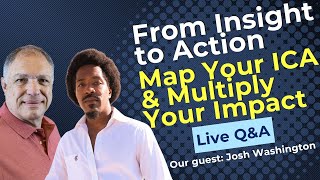
Josh Washington explains how to build an Ideal Client Avatar for capital-raising businesses. Start with five contacts and scale to a hundred. Interview a favorite client, use their language, and focus on depth over breadth rather than spreading yourself thin.
Chapters
Ladies and gentlemen, thank you very much for taking your time to join us for this quick little webinar on developing your ideal client avatar for your investments. We've got avatar expert Josh Washington with us to answer any questions. You know, this is a follow up to the webinar we did day before yesterday. And Josh, as we've had a few questions come in both to me and to Josh. So Josh, as our resident expert in developing your client avatar, is here to answer the questions. So what I'm going to do is I'm going to turn it over to Josh. Josh, take it away.
Awesome. Thank you.
Can you see my screen, Josh?
I can see your screen. Thank you.
Okay, perfect.
Yeah. And thanks for the awesome introduction as well as the chance to answer some of these questions that I know people are burning to get answered. So, yeah, let's. Let's hop right into it.
It's up to you, man. You got the. Okay, I guess I need to hit the next screen. Let's see here. How do we move the screen? There we go. Okay. Yeah, got it.
So, quick reminder, just in case you forgot in the day, my name is Josh. I'm a capital raising coach and an ideal client avatar strategist. I've helped over. Has to be around 300, 350 different people and businesses with really narrowing down to their niche and who it is they're talking to and helping them raise capital. So, yeah, today is a chance for me to answer some of your toughest questions that you've had, and I'm excited to hop right into it. So, yeah, let's hit that next slide. All right, so inevitably, when we all. When we talk.
There we go. There we go. Wrong slide. Sorry.
Oh, There we go. 60 second recap. All right, so some of the things we talked about in our last webinar was how to find your client avatar. Where are they? Who are they? Right. And it always starts with looking within, meaning looking within, who are you? Right. What are the things you like to do? And who are the people around you that can support you, that you can tell about what it is you're doing and lead on their journey? Right. Another question that we often get is like, how do I spark up a conversation with these people? Right. If I'm at my pickleball tournament, how am I going to be able to talk about real estate and the things I'm doing? Curiosity. Right. They say curiosity killed the cat, but curiosity also opens doors. Right. If you lead with curiosity. Hey, I saw that. I saw online that you posted something about Your kid's birthday. Tell me a little bit more about that. How was that? Okay, yeah, 20, turning 20 or whatever it is, right? If you're curious with someone, they're gonna give you that curiosity back, right? And the next thing is consistency. At the end of the day, if you're not consistent with reaching out to people, if I talk to one person in my circle, like once a year, that's not going to help me build my business. But if I'm consistently leading with curiosity, talking to the people around me, going to these events that I already go to or these activities I already do, if you're consistent with that and talking about what you're doing, then you'll see the growth in your business. So quick 60 second recap. Look within, lead with curiosity and be consistent. All right, here's the fun part. The questions, the questions, the questions. The first one is one I've been getting for years. Inevitably, whenever I tell someone, hey, yo, you got to zoom in. You got to niche down. You got to get real specific with who you're talking to. They're like, but, Josh, I don't want to leave people out. If I just target, you know, emergency medical physicians, then what about that dentist that might have $1 million that they want to invest, right. Aren't I excluding them? The answer is no. It's very, very counterintuitive. But what usually happens is when you're very laser focused on helping a certain subgroup of people, whether it's, I use that example, but whether it's doctors, Right. Or maybe it's tech entrepreneurs that have experienced an exit event. Right? Or maybe it's women that want to empower themselves and create general, rational wealth for their families. Whatever your niche is, you need to zoom in and get really specific. You're not going to exclude other people. What they're going to do is they're going to see, oh, wow. You know, Josh has really, really been helping a lot of, you know, medical professionals. Right? Or a lot of. He's been really helping the top 1% of real estate agents. I'm noticing that that's in his messaging. But at the same time, you know, he also talks about things he likes doing in his personal life, Right. Whether that be dancing or going on hikes. And I too, like doing that. I like dancing, I like going on hikes. I'm not a medical professional, but I can still connect with Josh, and he's given me a lot of good information. He's been educating me on real estate. So you know what? I'm actually going to download his ebook and reach out to him and book an appointment to talk more. Even if you're very focused, what ends up happening is people will still be able to cling to something else about you and that's going to lead to them reaching out and that's going to lead to you expanding your circle and building your business. So don't worry. Just like it says right here in the slide, depth beats breath. If you go deep, you're still going to get those people on the, the, the outside. Right. And the peripherals. But that's a question I get often. Okay, on to the second question. Won't I exhaust my circle? That's a good problem to have, actually. Right. I've talked to everybody that I know about what I'm doing and now I don't have anybody else to talk to. That means you've been putting in the work, you've been being consistent, you've been leading with curiosity. So don't think of that as a bad thing. That that's just the first step after you exhaust your circle, so to speak. That's when you can start asking people, hey, do you know anybody else that you know? I might, we might be able to serve help with these investments who have the same goals as you, right? They want to create generational wealth for their family or they want to take their IRA and put it somewhere as a self directed ira, or they're trying to get depreciation so they can save some money on their taxes. Right? If you've helped someone and you've been consistent and you've been communicative and you've given them results, why wouldn't they want to share this great experience with the other people in their life? Right? And that's where you ask for referrals. It's okay to ask for referrals after you've already given someone value, Right? You don't want to write when someone's starting off and they don't really know you. You haven't really done anything with them. Oh yeah. Tell me, do you have friends with money? No, no, no, no, no. There's a, there's a process to this, right? It's just like, it's like planning a, planning a tree, right? There's gonna be a stage where the tree is a sapling and you have to really tend to it, water it, and really make sure that it grows strong, right? And then there's going to be a point where that sapling is a strong tree with fruit. Right? The fruit are the Referrals. So make sure you're watering the relationships before you ask for the fruit, before you ask for the referral. And if you do it in the right order, then you're going to be able to expand your reach even more. Right? So don't forget about referrals. I've talked to hundreds of capital raisers, and what they'll tell you is most of the capital they raise actually comes from referrals. So that's why it's so important to make sure you're taking care of the people who are going along this journey with you, because then they'll grab other people and before you know, you'll have a whole crowd of people following you and it'll be like Forrest Gump when he was running. If you guys have ever seen that movie. One of my favorites. All right, so how do I stay authentic yet strategic? Okay, this is a really good one, actually. So you're leading with authenticity. You're talking about yourself, you're talking about your why, right? What you do, who you help. How do you stay strategic? That is in the follow up, right? If you're able to create a connection in person. Right? The next stage is, hey, let me get your email address. I'll add you to my newsletter so you can learn more. Boom. And then from there on, they're getting really good data from you. You're sending them case studies, you're sending them educational materials. You're showing, sending them the behind the scenes that you're doing in your life, whether that be going to these different masterminds, right? Maybe you went to Ray's Fest and you're like, hey, I'm serious about this real estate thing. Doing the extra work to get educated, to expand my network. Showing people that is going to make them see, oh, he really is the expert. Maybe you're sharing your podcast, or just like this, maybe you're sharing a webinar series where you're adding value to them, right? That is where you get strategic. It's not just the initial conversation, right. It's what you're doing after the follow up. So having a system set up where you're able to follow up with people automatically, it's automated, right? That makes a big difference because then you can just focus on establishing that initial connection. All right, round in the corner. Getting to question number four. Time's tight. Any shortcuts? Who doesn't like shortcuts?
Right.
If you play Mario Kart, you know, the shortcuts are how you win the game. One thing I just Mentioned is automations. That is a huge time saver and a huge shortcut. If you have to meet someone and then you have to send them emails like manually and then send them to your, send your ebook to them or show them your podcast. If you have to do all that thing, all that manually, it's going to suck up your time and before you know it you're not going to have the time of the day to continue to work on your business. Right? That's why you have to have some automations. Another big thing is time blocking. This is getting into a little bit of psychology, but the way our brains work is we don't want to context switch too often. If we keep switching back and forth between different things, it just drains our battery and before you know it, you're tired. At the end of the day you can't generate any great ideas. So what I always recommend is plan ahead. Plan a two hour time block where you're like, all right, this is just where I'm going to reach out to people in my network for that initial contact, right? Trying to get them, maybe just give you a easy yes. Right? So James knows about this. It's a simple text you could send out. Hey, I've been actually getting, hey, it's good to, how would I say the text, hey, this is Josh reaching out. It's been really great talking to you at Pickleball. I'm actually working a lot on something new. Mobile home parks. I've been getting really deep into it, learning a lot and if there's no deals now, but if you're interested, just reply yes and I'll add you to my newsletter and once we have a deal, I'll let you know. It's a simple way for get to get someone to buy in, right? So maybe you spend two hours getting that initial yes. And maybe the next day you spend two hours following up or working on your ebook or setting up your automations. Right. But at the end of the day you want to block time so that way your mind has a chance to get into the groove. Right. It's kind of like if you're running at first, when you're running, you know, you're warming up, your body's warming up, but 30 minutes into the run you're starting to get, starting to get loose and you're starting to go a little bit faster. It's the same thing with any task you're doing. You got to work up, build up that momentum. But these are all great questions. There's a couple other Questions that I really do get pretty often. And it's what, Ooh, something popped up. It's Josh, what social media should I focus on, right? Should I do all of them? Should I do Instagram, TikTok x LinkedIn? Like a lot of times people ask, should I go everywhere, right? Where's my client avatar? Where my ideal client avatar going to be? What I always answer for that question is start with one, right? You don't want to overwhelm yourself, master one. And once you master the first one, right, whether that's Instagram, LinkedIn. LinkedIn is a very good platform for finding your ICP. A lot of serious business professionals are on LinkedIn, right? And it's a little bit of an underutilized resource, even though it's getting more and more popular. But start with one, right? Build up that skill, build up that muscle, right? Get the reps in. And then once you kind of master one, that's when it's easier to go to the next because then you already have first, what is it called? Like you already have a built in knowledge base. You already know what your voice is. So it makes it a little bit easier to go to the next platform and learn that. But yeah, the question of which platform should I start with? Just pick one. Pick the one that you already enjoy going on so it's not like you're learning something completely new. So if you find yourself on Instagram a lot, start talking about your business on Instagram, find yourself on LinkedIn, start there. But as long as you pick one, master that, move to the next, you can't go wrong. James, were there any questions that popped up for you?
One of the things that I wanted you to. I've had a lot of talk to people about and a lot of people think that, you know, it's, they get really, really over, they get kind of burnout, not really burn out. What's the word I'm looking for? They, they, they get so many. They, they, the, the, the phrase escapes me right now, but they've got, they, they get to the point where they're, they, they're overwhelmed. That's right, they get overwhelmed. And you know, I've had people say, but how, you know, I don't know enough people as. That's the big one. I don't know enough people. And you've touched on that a couple of times in here. But one of the most important things I'd like you to discuss is how many people do you really need to do what you want to do to raise the capital and develop the, the type of back of Rolodex that you need. You really don't need that many people. So, you know, talk about that for just a second.
Yeah, so if you're doing real estate, you're raising capital and you're dealing with accredited investors, Some people deal with accredited investors, some people deal with unaccredited. But even if you're dealing with accredited investors, right. It's a smaller subsection of the population. If you do a Google search, there's somewhere over a million accredited investors in America. I think it's a number even higher than a million. I can't say for sure. But you don't need a million people. You don't need a thousand people. If you have a capital raising business with a hundred people that consistently invest with you, you're doing great. You can, you can close deals with a hundred people. How do you get to that hundred number? Start with five, right? If you can write down a list or go into your phone, right, and find five contacts that you can reach out to. If you do that for 30 days, you will have a business. So don't get overwhelmed, right? You don't need a million, you don't need a hundred thousand, and you don't need to start with a hundred. Even if you want to get to that number. Start with five people in your phone. Start with five people in your Bible study or whatever, wherever you're at. Five people in your country club, right? They always, there's this saying, I like, how do you eat an elephant? Just one bite at a time, right? One connection at a time. I always like breaking down these huge goals because I mean, if you're listening to this webinar, it's because you have big goals, you're a visionary, right? And as visionaries, we often sometimes can be overwhelmed by the huge undertakings that we're trying to do. But that's why you need to create micro goals. Cut things up into little bite sized pieces, right? Like if you're eating a steak, you're not going to just get your fork, stick it in the steak and then try to stick it in your mouth, you're going to cut it up. Same thing with this business and reaching out to people. Break it down into small steps.
That's great, Josh. Another question I get a lot is, you know, how do I really identify my ideal client avatar? What information do I really need to know about this person, person before I know, before I know that they're really my ideal avatar?
That is a good question. And the first answer that comes to mind if you're already raising capital, right, or you already have people who are partnering with you on this journey. What I always say is find your favorite client. Find your, the favorite, the person you love working with, the person. When you think of them, you're like, man, if I had 99 other investors like them, I would be so happy. Right? Then what you want to do is you want to interview that person, right? It's not a big ask because people, it's, it's flattering, right? Just tell them the truth. Hey, look, I was looking through like all the people that I help with this business, all the people who have invested in my deals, and, and honestly, you're my favorite. And I want to try to find more people like you. More people who have the same goals, more people who have, you know, the same background. So if I could just, if we could just hop On a quick 15 minute call, ask them what their goals are. Ask them where the gaps in their knowledge are. Ask them, you know, what they're afraid of, right? Ask them what they like, what they don't like, right? That way you can compile a list of characteristics of the person that you want more of. And then once you start creating your content, right, you're going to talk specifically to that type of person. You're going to use the actual words that came out of their mouth, right? If they say they're uncertain with the rising and falling of the stock market, one of your posts or your newsletters should talk about facing uncertainty when it comes to the rising and falling of the stock market. Using real estate, right? You want to use their words because that's going to help you attract more people who think and have the same needs as that person. Cool.
Well, that was, you know, and you hit on a couple of the characteristics of your ideal client avatar. And you know, one of the things, and this was, this one's a hard one for me.
Okay.
And you know, when they ask, you know, when the, the question is, what keeps them up at night? What are they worried about? You know, you want to address their fears because fears are emotions. And most important things that you can do to, to connect with people are connect with their emotions. Talk a little bit about connecting with emotions and, you know, and the positive and the negative.
Yes, yes, that is a huge point. Matter of fact, one of my. Bruce Lee, everybody knows Bruce Lee, the martial artist, right? One thing he always talked about is needing emotional content or. Yeah, that's what the words he used. Emotional content in your Moves. Right. When he punched, he says he would punch with emotion, right? Same thing. When you're creating content or you're talking to someone, you need to include emotion. Because as humans, the way our brain works is the very first thing. Before we make a decision, it goes through the part of our brain that deals with emotion, and then after that, it's the logical part of the brain. So really, people don't make make moves or don't make motion or don't make decisions until you address their emotions. So exactly like you said, what are their fears? Right. What are their hopes and their dreams? Right. That kind of gets into the aspirational part of goals. You definitely need to address that. You need to talk about the emotions that you felt in your own story, Right. Sometimes that could be uncomfortable, talking about ourselves and the things that we've gone through and how we felt. But the way you feel may be the exact same way someone else felt. And that's how people make connections, right? If I'm probably. I'm pretty sure, like, podcasting is really popular, right? And we all have probably a specific podcaster that we like listening to, right. Tuning into their show. And the reason we actually continue to do that is because they've created what they call a. Oh, it's a something. Relationship Sim. Ah, the word escapes me. I haven't had my coffee quite yet. But basically, because we relate to that person, because they've shared so much of their own personal life, and on top of that, they've educated us and helped us learn something, we create an emotional connection with this person we've never even met. And that's the same thing you can do with your ideal client by sharing your story, getting a little bit emotional, right? When you're interviewing them, asking them about their hopes, dreams and fears, that's what's going to make that big difference, establishing that connection. I'll even give you one. One example. One example. I have this guy. I won't say his name, but he's a capital raiser. He does really well, really cool. And he was telling me this story where he was meeting an investor at a coffee shop. It was someone he's never met before, right? But when he wasn't sitting down in front of the coffee shop and he sees this person get out their car, and they hop out their car and they wave and they say, hey, Josh, I'll use my name. Hey, Josh, it's great to see you. How you're doing. He hadn't met this person before, but this person spent two, three Hours just listening to their content, listening to their story, learning from them. So it's almost like that person was already their friend. Right. It felt like I. It felt like I already knew you. It felt like we already met. Right. And that's what you want. You want to be able to give someone so much of yourself through your content that when they do meet you, whether that's through zoom or in person, they feel like they already know you.
Awesome, Josh. Okay, so let's see here. I'm gonna let you share this parting thought, then we'll talk a little bit about how people can get more information.
Yeah, right on. I like this legacy isn't built in isolation. It's echoed through the people already cheering beside you. And that's so true. I feel like in any. In any journey or anything that we try to manifest or make real. Right. Whether that be our business, usually it's business. We're talking about business here, so I'll keep it there. There's already people around you who want you to succeed, who want you to win. Right. Sometimes they're watching from the sidelines. Sometimes it's not who you think it is. Right. Maybe it's somebody who you met years ago and they see you posting on Instagram and they're that person that's always liking, always commenting. But if you don't open up your awareness to see those people and give them the chance to join you on the journey, you know they're not going to be able to do that. So always look around, always see the people who are supporting you, and always be grateful. Right. Because at the end of the day, none of us will be who and where we're at today. If it wasn't for someone who believed in us and gave us a little encouragement or a little nudge or a little help. So, yeah, that's the parting thought. And thanks for this awesome Q and A session.
Yeah, Josh, you did a magnificent job. Thank you so much for your time. And ladies and gentlemen, I want to thank you guys for taking the time to watch our little. Our little webinar here and learn a little bit more about how to develop your ideal client avatar. If you have questions, if I can help you, and don't be afraid to reach out to me. I'm at Iron Mountain Capital Group dot com. There's my office number. My email is James. James Blakemore dot com. You can talk to my clone. Go to James Blakemore AI and check it out. Ask me, ask me questions. Try to stop me. I'd love to, love to love to see what happens. Also, if you want a a copy of my book, Lessons From Thought Leaders, I was collaborator with some amazing people like Brian Tracy, Dennis Waitley, Kyle Wilson, and people just like that. So I'd love to give you a free copy of my book. So send me an email, give me a call, and we'll see what we can do about getting you a copy of the book and helping you create your ideal client avatar. Thank you very much ladies and gentlemen. I hope you all have a wonderful day. Goodbye for now.
More from James






AI for Real Estate Investors: What Smart Capital Builders Know That Others Don't - Live Q&A


Secure Your Financial Future: Quiet Psychology Moves That Make Your Money Work For You