M&A for Legacy Wealth: How to Build Freedom Without Becoming the Bottleneck
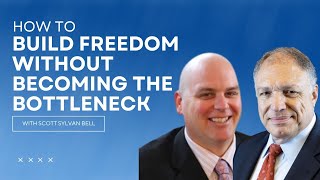
Scott Sylvan Bell explains how to buy service companies and build passive income through acquisitions. He breaks down valuation methods, emphasizes thorough due diligence, and recommends targeting under-managed businesses with recurring revenue. Hiring strong operators keeps deals passive while you build toward a legacy exit.
Questions this video answers
Thursday at 1:30 PM Central Time
Around 2–3 times EBITDA
Can reach about 5 times EBITDA
Approximately $20,000–$40,000 for a $1M deal; around $60,000 for a $5M deal
Service companies with ~15+ years in business and roughly 500 service contracts per $1M revenue
Chapters
Ladies and gentlemen, I want to thank you for taking your time to spend a little bit of time with us this afternoon. And we've got an absolutely incredible speaker with us today, gentleman named Scott Sylvan Bell. Scott is a, as a very, as an incredible business coach. He's a highly sought after consultant for business management, building businesses and, and M and A and mergers and acquisitions in the business, in the buying and selling of businesses world. Scott's been doing this for a long time. He's an associate of the amazing J. Abraham, one of the most highly regarded business builders in the probably in the world today. Scott has been generous enough to come and give us a little bit of his time and tell us a little bit about how, how you can invest money in businesses, have passive income or active income outside of the real estate area or in a probably in conjunction with real estate investments. So Scott, I'm going to turn it over to you.
Sure. Jim, thank you so much for that warm introduction. We've known each other for quite a while so I appreciate the opportunity to share this with your group. Couple things. When you take a look at what the opportunities are in just about any realm of life there, there's always something going on. And let me share with you what I mean by that. When you take a look at retirement coming up, baby boomers, people who want to sell their businesses or are just fed up and want to get out due to economic cycles, there's a huge opportunity. Jim, would you mind going to the next slide for me?
Oops, sorry.
That's okay. And so right now as it sits, there are there, there's millions of businesses that are ready to be acquired and if they're not acquired, they're going to close. And that's a shame. And so there are a couple of hidden problems and acquisitions that we're going to walk through. And then I'm going to share with you some insights of doing some deals and actually coaching some people. So first is overvalued expectations. And so when we take a look at purchasing a company or purchasing a business, it's done by profitability. So if it's a professionally ran company, it's going to be ebitda. If it is ran by a sole proprietor, it's going to be done by SDE sellers, discretionary earnings or there's a third bucket that nobody ever talks about and that's a multiple of revenue. So if the company does a million dollars a year in business, somebody may come in and say I want to do a 1.5 rev multiple or a 2 rev multiple. So that company would sell for 1.5 or $2 million. What really matters in looking at the value of the business is due diligence. And this is the thing that's time consuming. This is the thing that when somebody's selling a business, they don't realize how many details are locked in the company. And so, Jim, if you and I were going to talk about purchasing a business and I was buying one from you, I'd really want to set the expectation. There's going to be a round of me asking for documentation and then there's going to be a couple more rounds and then after that there's going to be a few more rounds. I'm validating that this is the right business. So you're looking at profitability, you're looking at liabilities, you're at looking, you're looking at licensing, you're looking to make sure that the company is, is functioning the way that it's supposed to. And this also gives you the opportunity to say, hey, how would I grow this business? It's doing 2, 3, 5, $7 million year in revenue. What are the yes ands or the opportunities that I could put in place and grow this thing? Now, this doesn't mean that I'm consulting. This means I'm looking for me. And so Jim, do you mind if I share a couple of issues that people have in this process?
That'd be wonderful.
Okay. So one of the things that happens is in due diligence, people think that it's their job to become a consultant. And so share like, hey, here's all the ways that I fixed this business. The problem is people get excited about their business because you just shared with them how you're going to fix everything. So when you do a deal with private equity, they don't come in and tell you how they're going to fix it. They don't tell you what they're going to do to run it. They're looking, I just went through this two months ago on an 18 month sell. Like they didn't come in and say, hey, here's all the things we're going to do. They looked and they said, we need more information, we need more information. And then when the purchase went through, they still didn't say what they were planning on doing. They just said, we're going to take care of the employees. If you. There's urgency and desperation and urgency just says, hey Jim, we got to get this deal done in 90 days or we got to get this deal done in 120 days. Desperation is I want and I need this deal. That's the sign that you're going to make mistakes. That's the sign that you're going to have problems, you're going to have struggles because you're not looking at what's important in real estate. The same mistake is made when somebody is doing a deal and they're not paying attention they to everything they should. And then last on this list is you should have some questions that you want to ask like tell me about the company, tell me why you want to sell it, tell me about the pitfalls. Like I'm looking to purchase. I get to ask as many questions as I want. The seller doesn't have to answer them, but you should have a written list of 10, 15, 20 questions that you want to know about. And as you're going through due diligence, you're going to want to know those things too. So there's a pace and a rhythm. So Jim, if you and I were doing a deal, I would say, you know, the loi has been set, the letter of intent has been set. The way that I want to do this is I want to meet with you on a weekly basis for 15 to 30 minutes. We're going to pre calendar this. That way if I have questions or you have questions, we can get them answered and we can move forward. Are we good so far, Jim?
We're great. Move forward?
Yep. Can you give me the next slide please?
Sure.
So when you go to sell anything, you always want the most amount of money that you can get for whether it's real estate or whether it's a business. And so in the world of business sales there are brokers and they do have a function. They do, they are needed, they are wanted. I will just share with you the best deals that you're going to find are going to be off market. They're not going to be through a broker. Brokers valuations tend to be higher by somewhere between 30, 30% more than what the real value is of the, the company on the market. So you can come back and negotiate. It's a normal thing. It's not something that I look as bad. It's like saying today's Wednesday or today's Tuesday. It is part of what it is. And so what you're looking for is the, the under managed side of the business, what's not being done right. So when you're taking a look at the profitability, you're taking a look at the books, you're looking at the valuation from the broker, they're giving you everything in the way that it sits on the best situation on a Wednesday, on a full moon, when you're stubbing your toe, getting out of bed, so to speak. And when, when you take a look at that, you're saying, okay, this is what you're thinking this business can do. Here's what I'm thinking the business can do. And I found some areas that are, are underperforming. And then the question is, how do we fix what isn't there? So it can be through management, it can be through automation, it could be through hiring different employees, it could be through standard operating procedures. There's, there's a lot of ways that you can get the business running better than what it was. Now we all, including me, have sometimes blinders on for what we see and what we do. And Jim, if you come in from the outside, you may see things a little bit differently than I do and say, hey Scott, you know, if we just tweak three or four things over here, it might double or triple the profit. Those are the type of deals that you're looking for. You're looking for the gems where somebody doesn't necessarily have everything that they need going and they're not utilizing their marketing properly. And so what you're, what you really want is better consistent cash flow. A lot of these companies, they, they struggle because they don't have optimization. And because they don't have optimization, they don't have cash flow. So Jim, questions for me, that's, that's.
Exactly what, what we needed to hear. I think that one of the things you need to, you might want to address a little bit more is why brokers, why the valuation is really not exactly what the broker estimates and why the broker comes in and, and tells you one thing and then the buyer says something else.
Sure. So the brokers have a role and function to try. Their role and responsibility as an agent is to try to get the most amount of money for their client. And so they're painting the rosiest picture possible. They're painting the perfect scenario. And so that's what they were hired to do. And sometimes they use a wrong valuation. There, there are stated valuations per industry, per service that you could look up. And when you look them up, they may say that plumbers right now get a 4.1 times multiple. If they have less than, than 5 million on, on EBITDA, well, you may come back and go, well, they don't really have a plumbing company. They have a handyman service. And handyman service is really trading at 3A, three times multiple of EBITDA. And so sometimes it just may be a wrong classification of what's going on. Sometimes it's just, they go, here's what we're going to charge. And so it's entirely proper for you as an investor to say like, can you show me how you got to this number in your math? In real estate you have comparables. It's the same thing in buying and selling businesses. You have comparables too.
Right.
Like I'm going to look at the comps. If I was going to buy a heating and air plumbing company, I would completely look at the comps on what's going on in the marketplace today. But sometimes they're just flat out ignored by brokers and they may just use their own business valuation. You know what's normal and proper for one industry might be ebitda and they can come in and say we're going to do it as rev, we're going to, we're going to do this, this process is revenue. So Jim, I want to make sure that I explained that correctly and I answered what you were looking for.
You did, you did. And this, you know, the interest, you know, one of the things that, what, one thing that happened to me was a broker approached me with a very, very good looking business, very profitable. It looked like, you know, and in it, it was, it, it looked like something that would be right in the, in the lane of what I was looking for. And it was in, it was a business, it was in the, in my, in the town I live in. I went to this, I went by there and you know, I thought I'd just drop in, chat with the owner. I got a scathing message from the broker saying don't you ever go around me again. And I wasn't going around the broker, but it was, it was almost like he was trying to hide something. And that was, it was an interesting, it was an interesting perspective. I didn't, I eventually did started looking after looking at the company. I didn't buy it more for the reason that it was going to be. It was too big a bite for me and too much to, to handle. But it was an interesting experience. It was one of the first experiences I'd ever had with a business broker.
Yeah. And some of them, some of them are very protective and they only want to talk to you and they want to vet you first and they want to know everything about you and it's, some of it's Backwards. And if nobody ever warns you that, hey, they don't want you to talk to the business owner without them, it's a control situation. It's how do we make sure that this message stays correct based upon the story that we want to tell? And so what they're hoping is that you're not going to try to cut them out. It's a bad idea to say, hey, I'm going to engage you and we're going to agree that there's going to be a deal and then to go in and say, well, I want to cut this person out. The seller a lot of times signs an agreement that says that no matter what happens for the next two years, it's usually a two years exclusion period that they'll pay, they will pay commissions on that company sell whether the broker does it or not. Cool.
You ready to move on?
Yeah, absolutely. So right now is really hot market for plumbing and heating and air. And I'll share with you why a lot of these companies have monthly reoccurring revenue. And so they may have a maintenance plan, a club membership, an agreement where A homeowner pays 1199amonth, 1999amonth, $159 a month. And at the beginning of every month their credit card gets charged. And so what happens is private equity loves monthly reoccurring revenue. Private equity loves seeing that because they know that part of the monthly burn is going to be covered right through the gate that those credit cards are being charged. And so the companies that do the best on the exits that go in the roll ups for about three to four years, they'll focus on monthly reoccurring revenue. And so when you take a look and let's say that I've got a heating and air company and is doing 5 million a year in revenue and I have $500,000 in memberships. And then we start stacking a bunch of these companies together and we create what we refer to as a roll up. We're rolling a bunch of companies together, we're rolling them into one brand, one unified strategy. You can take a 3 million dollar company, combine a couple of other companies with it that may be performing or underperforming, fix them over the next couple of years and then sell at 30, 40, $50 million. It's not unheard of. Dental practices are like the next big thing that are on the market. And I was, I was at my dentist this week getting a cleaning done and I was talking to him and we were talking about how a lot of the dentists are retiring and there is an opportunity to do dental roll ups. There are requirements based upon the state. So I got to tell you, I'm not a doctor, attorney, marriage counselor or therapist. So you do want to ask qualified people, depending upon the state that you're in, you can participate in dental roll ups just like you can participate in heating and air. But in the example of dental, you would need to have a doctor or dentist running the organization so you can buy into it if that makes sense. You would, you would buy units, units of ownership into to the roll up. And then last on this list is there's always the search for underperforming companies. Underperforming companies can be a diamond in the rough for you. The, the problem is you don't want to buy a job. You're after the passive income. You would want to find the ways that you could bring in a manager to run an organization for you. So let's say that I have a company that's underperforming and Jim reaches out and says, hey, are you willing to sell? Well, if it's underperforming, I'm not going to get top valuation. And if you're having that conversation and saying you're not going to get top dollar because you don't have a top running company, it's, it's, it's the conversation you're having any negotiation, it's the ability to tell a story, it's the ability to bring some proof. Jim, I would love to give you $1 million for this company, but based upon the valuation, it's, it's only worth 650,000. So either we're going to have to wait to find a way to bridge the gap of the $350,000 or the best that I got right now is 650. And if you choose not to take it, that's fine. We can always reconvene this conversation later on down the road.
Absolutely, absolutely.
What you really want to ask is the questions about passive income. And when you take a look at an organization, is it being ran to the point that there's, there's already management in place? And if there is management in place, then you could probably say that it's truly passive. If it's a mom and pop shop and it's not doing a lot in revenue, I'm going to share with you, that's probably not the truth. So if you're saying what's my acquisition criteria going to look like? If you're looking for something that's Truly passive, where you can go in for a few hours a month and just make sure that everything's running properly, then something where a general manager or an operations manager in place is going to be something that's more suited to you. And if you're looking at a company and the business owner had that role and is ready and prepared, you could bring somebody in with a track record who's running it, who's got a track record. There are people on the market. I will share with you after being on the inside of a lot of these deals, that if I were personally going to go look for the person who's going to do the best, I'm going to look for the top end person. I'm not going to base this on budget. Jim, do you want to know why?
Please.
Okay, so if I'm after the top person who's got the skills, the talents and the capabilities, that person's motivated and they know what it takes. They're not. I'm going to give them marching orders. They're going to go the direction that I'm going to tell them or they're going to say, that's not possible. Here's how we do it. If I skimp out and I go with somebody who doesn't have the skills, the talents and the capabilities, I'm not going to hit the metrics, I'm not going to hit the numbers, and I'm not going to be able to say it's passive anymore because now I'm going to have to manage them. We good with that?
Yeah, absolutely. Absolutely.
So in tight times, people tend to want to sell their businesses, like right now. I will, I will say that I got three phone calls in the last month from companies in Northern California saying I want to sell my heating. Their company, there was no heat this year, was not hot this summer. So some companies and some industries are driven by weather and demand. And so for them, they. What they hope for is to make as much money as they can in the summer to cover them into the fall so they can get into the winter so they could build up a little bit of money to cover them in the spring. It's money arbitrage. It's a game that they're playing. So sometimes the best time to buy is when times are a little more lean. Times are where things are struggling and that company may not be fully optimized. In good times, you're probably going to pay top dollar for a company, but it's also probably going to be running at a good clip. In A good speed. When you take a look at timelines for returns, they can be pretty quick. You can look at a company, you can acquire companies for no money out of pocket. If you structure the deal properly, if you take a look at how to operate that deal, if you've got the people in place to do it, the returns can be fast. If you have a company that's struggling, they're probably going to take you a little bit longer to get to it. Just it really depends upon what's suitable for you as an investor. Jim, I want to make sure I answered all the questions that you had on this slide. Was there anything that I'm missing?
No, I believe you've done just fine. We're going to move on.
Perfect. So the M and A advantage really comes down to the monthly reoccurring revenue of that business month over month. Especially if it's predictable. If you can find a way to smooth out the, the issues that are companies that are having. If you can bring in a good marketing team, if you have the ability to help whoever's running the vision that you're, you're driving or bringing helps with the decisions, you're going to do much better. If you're looking to roll up companies, most small companies start at a 2 to 3 times EBITDA. So the earnings before interest, tax deductions and going through that, the average company doing less than 5 million is going to be a pretty close to a 2 or 3. So if they made $300,000 in profit and it's a 3 times multiple, you're going to purchase that company for about 900,000. If that company is at the top end of the market and they're, they're considered what's a platform company, you're probably going to pay more. So let me share with you what that means. If I have a service in an industry in I live in Sacramento and I've got the best reviews, I've got a really good long term reputation. What companies may do is they'll say I want to be part of that area, I really want to move into the Sacramento area. I will give you platform status that you pay extra for it because you're not having to fight the marketplace, you're not trying to have to fight the noise. So in that case, something that might sell for a two to three times EBITDA might come out to a five. And if you're going to roll up companies to get to a higher multiple, you're going to pick the company that's got the best name in the industry because it's going to give you the best opportunity, which is going to lead to the best multiple. So in order to keep stable throughout the entire process, you want to find a good company with a good name and a good reputation. So if you're going to build out your acquisition criteria, just like you're going to look at your buy box for a property, you really want to figure out what is it that I'm looking for in this company. Okay, so for me, I'm going to give you my acquisition criteria. I look for service companies that have been around for at least 15 years. And the reason for that is I can go back and say, hey, they've got a reputation. I also want a service company that for every million dollars in revenue, they have 500 service contracts, because then I can keep service employees busy in the shoulder seasons or in the off seasons. I also want to have companies that have stuck with one or two brands and haven't switched to a bunch of them because I don't want to have to do a bunch of warranty work. So when you're talking about stabilizing during economic downturns, there's some key performance indicators that you really want to look at. You want to look at their longevity. You want, you might want to look if they have, at their net promoter score, if they have it. You want to look at what their monthly reoccurring revenue is and that it's increasing over time and not decreasing over time. That's one of the ways that you can help cover some of the market shifts.
Cool. Awesome.
Okay, you want to go to the next slide, Jim, there you are. So the, the first thing that you want to do is to take a look and look at the due diligence fundamentals. So you're going to look at the balance sheet of the company, you're going to look at the financials, you're going to look at some of the key performance indicators like revenue per employee, the RPE in a lot of industries you can find on Google. And what you're looking for is are they in metric or are they out of metric? And I will let you know that some of this you can do via AI and gather the intel that you need. That's fast, but it doesn't give you the skills that you need to look at things. So here's what I say is the better way to do it is try it on your own first, then go to AI and then like what, what was I missing? What did I not see? What what was I not able to, to take a look at? You want to ask really good questions. You know, tell me about your business philosophy. Tell me about share with me why you want to sell. What's the hairiest business situation that you've been in? You know, what are some problems that you feel like the industry is going to face in the next five to 10 years? And what ends up happening is you just become proficient at asking these questions. Just like when you take a look at a property, if you're going to go walk a property, there's probably questions you automatically have, like, what, what am I going to ask? What are we going to do? The same thing happens with, with investing. And you're looking for clues. Some of the questions you let go, some of them you have to peel back the onions like a layer. And some deals, like just from the offset, just from the conversation, you're like this, this is a no go. My belief is this, if you have your buy box figured out or your acquisition criteria figured out, it's like the gutter lanes in a bowling alley. You can look at a deal and go, this is either something I'm interested in or not interested in. Like five or ten minutes. You may, if you are interested, then you go to the next phase, which is I'm going to contact and ask some questions. And then the next phase after that would be letter of intent. Right? I'm going to figure out, hey, is this company something that I want to do? From there I may syndicate this and go, hey, I want to bring in some partners. Jim, I found a company in Louisiana. Do you think that this is something you want to be a part of? I'm going to give you the breakdown of the company and you may decide yes or no to that. The thing is, is you always want to make sure to vet the partners for who they are and then you don't have to start huge. You can start with a smaller company and be okay. And in fact, it's probably a better place to start. I would say this something that is either a professionally managed or on the verge of being professionally managed. That would be the place that I would start and then I would scale from there. It's all about who you have on your team too. I don't go at this alone. It would be crazy. There's too many things to know. I run deals past friends that are in M and A as well and say, hey, what am I not seeing here? So that's part of the trusted alignment of like what, what, what do you See that I don't. What's the question that you're, you're coming up with that I'm not asking? And the value of having people around you like Jim and having people to, to ask the questions to is the difference between you doing a bad deal and between you doing a good deal?
Yeah. I think one of the things that is really important is to align with trusted partners. Scott. You know, I have, I, I, I made some, I, I made some really error, I made some serious errors in judgment back some time ago when I was first getting in business, thinking that I was the end all, be all of a business of investing and business management, etc, found out that, you know, my vision isn't as good as I thought it was.
Yeah.
And asking people to, you know what that question that you asked, you know, what am I missing? What am I not seeing? That is the most important question in the world. And I have long ago learned that my, everything I do, my criteria is to find the best people that I can, the most knowledgeable in that particular area of expertise and ask them, you know, and align myself with them. Are you ready for the next slide?
Yeah. I want to share one thing first though, before we go there. Something like nine out of ten deals that you, you get pulled into that are on deadlines and that are crazy and that has to be done right now in M and A are bad deals. So it's something to be aware of. Sometimes in, in real estate you can find that, hey, here's this amazing thing that just popped up on market in m and a, 9 out of 10 times. That's danger zone. You don't have enough time for due diligence. You don't have enough time for questions. You're hoping that things are going to go right. It's just, it's one of those beacons that I would have you be aware of.
Absolutely, absolutely.
Here, here's the thing. When you're dealing with M and A, you're dealing with businesses, you really want answers. You want people around you who are just going to give you, give you the goods like you want the people who are going to give it to you in black and white. You want the relationships where somebody looks at it and says, I like this deal for these three reasons. I don't like it for these two. I would do this deal under these circumstances and this is how much I would pay for it. And this really brings you to evaluating deals better. I have a rule that I will not do a deal without having two or three friends look at it first. And the reason for that comes back to the I need some scrutiny. I joke around and say I make mistakes on average four times a day because it helps me remember to be humble, that I don't know everything. And it also allows for me to bring people around me and joke and say, hey Scott, here's the two things that you missed. Those are your two mistakes for the morning. You do want to structure the deal to your maximum amount of advantage. So I do have to throw in here once again, I'm not an attorney, so you do want to ask. Everything that I do is through an llc. So I don't own the company myself. The LLC does it for legal protection. And you know, there's, there's applications where you do that. In real estate as well. There are tax implications for the seller. There's also tax implications for you based upon how you structure the deal. Whether it's you're buying stock or you're buying assets, you can write things off differently between the different allocations. And to do that, you would absolutely want to bring somebody who is like an accountant involved. The way that you look at deals is if it's a million dollar deal, you're probably going to have about 20 to $40,000 in due diligence unless you can trade for it. If it's a five million dollar deal, you're probably gonna have about $60,000 in due diligence. And so you, you, you do want to look at the deal and vet it pretty good before you get to the point of putting money into due diligence and looking at the agreement. I recently was looking at a heating and air company and I really didn't want to outlay the cash for the due diligence. So I went to an accountant that I know and I said, if you do this work, I'll give you part of the equity. And then I went to an M and A attorney and said, if you do this work, I will give you part of the equity so you don't always have to pay for services. There are people out there that are willing to trade and you set up what you would get charged up front and you set up a fee schedule and it allows for you to do some, some interesting ways to find some deals. When you sell the business, that's where taxes start becoming interesting. And this is where you want to have qualified individuals who understand what your implications are, just like you would for real estate. There are opportunities to roll money into other businesses or to swap stock. Those are pretty sophisticated ways of getting paid for deals and they usually do acquire an attorney. And then last on this list is, you know, the exit strategies. There are people who say I only want to hold businesses for three to five years. I only want to hold for seven. Private equity tends to hold companies and groups for five to seven years and then they're off to either sell that block of business or they figure out what they're going to do with it. So it comes down to the suitability for you. What are the strategies that you're trying to employ? Are you after just monthly passive income where the cash comes in? Are you looking for that absolute exit where you're getting one lump sum of money? It's really going to determine what the strategies that you put in place. So.
Sounds great Scott. You know, that's been some absolutely incredible information. Want to, want everybody to know that we are going to do a Q and A session day after tomorrow. It'll be on Thursday and it's at 1:30pm Central Standard Time, not 1:00 clock Eastern. They got the wrong time in our slot here. It's 1:30 central time. And we, we will have Scott back for, for, for live Q and A. We, we will provide a due diligence guide. And if you need to, all you need to do is send an email to either@scott infoegacymna.com or james jamesblakemore.com we're always looking for investors in our projects and we're all always looking for projects and we are very, very cautious. As you know. We, we work very closely with Scott and we are very careful about the, about the, about the projects that we invest in and the people that we invest in. That's one of the things I've done is cultivated a very high quality network of, of operators to invest in. I figure if I can invest in a good operator then I don't have to worry about, you know, I have to worry less about how the business is doing. Again, my website is ironmountain capital group.com Scott's is legacy. Legacy man. And what is that?
If I Jim, I got to tell you, I have no idea where this website came from. Legacy M and A Investors is not my site. But that's okay. We can get this figured out.
We'll figure it out. Yeah, but just send me an email or what, what email would you like to the, the people to email you at Scott?
Sure. It's Scottery711.com A R I E S711.com I have the unique ability to be an Aries. And if you know anybody who is under the sign of Aries, we tend to talk about ourselves a lot. So why not create a domain that has the word Aries in it.
There you go. There you go. Ladies and gentlemen, thank you for taking the time to join us and the, and having the, the interest in what we're doing. Again we're going to do a Q A same time, same bat channel on Thursday. That's Thursday. And the link should be, should be sent to you if you registered for this webinar then the link will be sent to you for the webinar for the Quest Acuity Live Q and A on Thursday. Look forward to talking to you guys. Thank you very much. My name is James Latemore. I'm with Iron Mountain Capital Group and our guest has been Scott sylvan bell with aries7eleven.com. Look forward to talking to you again. Take care everybody. Have a marvelous day. Good. Take care. Bye bye for now.
More from James







AI for Real Estate Investors: What Smart Capital Builders Know That Others Don't - Live Q&A

Secure Your Financial Future: Quiet Psychology Moves That Make Your Money Work For You