Your Path to Financial Freedom: Building a Legacy with Passive Income
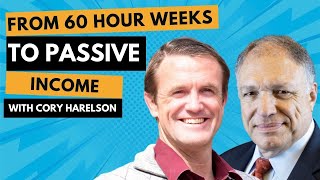
Corey Harrelson left structural engineering to invest in mobile home parks, which he describes as low-maintenance assets with strong cash flow. He explains how operators fill vacant lots and raise rents, then return investor capital through refinancing while keeping the ongoing income.
Questions this video answers
Around 14 parks.
About 2021.
A 12‑unit mobile home park in Garden City, Idaho.
About $550 to $600 per lot for new residents at the most expensive parks he mentioned.
Around $2,000 per month for a three‑bedroom apartment (countrywide average cited).
Chapters
Hey ladies and gentlemen, want to thank you for being with us this afternoon, taking a few minutes of your time to meet one of my good friends, trusted advisors and top operators. Corey Harrelson runs the Freedom Investing Group and one of the top experts on mobile home parks. Corey is probably one of the solitary reasons, one of the strongest reasons that I am focused in the mobile home park arena for investing my money and my investors money Corey has been in. Well, I'll let Corey tell his story in just a second but what we want to do is make sure. Let's talk a little bit about why, you know, why we do these webinars, what are what our investors are looking for and why it's important that we do what we do. Most real estate investors are professionals that aren't real estate professionals. They spend their hours and hours of their time. They trade time for money and, and frequently don't have anything left to, to show for it. Their income depends on their active involvement. They, they, like I said, they trade time for money and when they stop working, the money stops coming in. And because of that particular income strategy, legacy is not a part of what they do. Very rarely do they build an asset that provides them income if they stop working. Yes, they may build a thriving medical or dental practice or legal practice but you know, they're still captive to that practice. So what we're doing is we're finding investments primarily in the real estate area currently in mobile home parks that not only build asset value for the investor but also provide income for them. You know, today we're going to talk to Corey Harrelson. Corey is training his was an engineer, he was working 60 hour weeks owning and now he owns mobile home parks and is one of the top investors in the mobile home park business. I'm going to let him tell you his story, my story. I'm a serial entrepreneur. I've been in business for myself for over 50 years. I've been in in multiple passive income investments from oil and gas business to direct sales to owning apartment apartment complexes. I, I love mailbox money. Mailbox money is the best money in the world. I hate trading time for money. I love working. I love investing my time to make more money. But I'm not somebody who likes to just punch a clock and make money. So now that you've heard a little bit about me, I'm going to turn it over and let you hear a little bit from Corey Harrelson. Corey, back to you.
Hey, thanks Jim. Yeah, I like your, your mailbox money reference there reminds me of the quote by the late, great Lonnie Scruggs, never let the mailman walk by your house without leaving a check. So I think that's good, good, good words to live by. So, so I, I'm excited to be here. Thank you, Jim, for, for having me. So I invest in mobile home parks and a little bit about how Jim. And so Jim is. Jim's business is different than mine in a very cool way. So what he does is he is an expert at finding operators in different areas to invest with. So he's basically an expert at due diligence on operators. Whereas what we do is we laser focus on actually finding good deals and operating those deals. So it's a pretty good symbiotic relationship where, where Jim is hunting out the best operators out there. And I'm happy that we get to be there. So a little bit about me, what I'm going to talk about. I'm going to cover mobile home park investing today. So it's kind of gotten a little more popular lately. When I first got into it, it was people would look at you sideways like you're investing in what, trailer parks. So I'm going to go into why I invest in those, why I like them, why I think they have the best value add potential of any asset class in all of real estate. But first I wanted to dive a little bit into a quick background on me. I think it'll give some context as far as why I the way that I invest. So 10 years ago I was a structural engineer. I was not a mobile home park investor. I was not even a real estate investor. I was not even really an investor. I worked 60 to 80 hour weeks. I had really, really focused on my career and up until that it was about 2015 and I was just working my butt off at my job. I had not really saved very much money, not really thought about investing. I just thought retirement, I'll figure that out when I turn 65 was kind of all I had done. And then. And I was fine with that. My wife was focused on her career, I was focused on mine. So it was fine until we had our first kid. My son in 2015 was one years old and I was still working these crazy hours that I felt like I had to work 60 to 80 per week typically. And I felt like I was missing seeing him grow up. All of a sudden I was like, how did he, how's he already one, how's he already one and a half? And there was a lot of times where I wouldn't even see him awake during the day. I would leave in the morning before he woke up and I would come back and he'd already be asleep. And there was actually a one particular week where I did that for the whole week. I did not see my son awake for the whole week. And finally it was Sunday. I was in the office working on some deadline that felt important at the time. And I said, screw this. I'm going to go put my kid to bed. So I left the office, went home, went to take him away from my wife. And he did that freak out thing that they, you know, the kids do. Like when you hand them to the uncle they haven't met. It's the stranger danger thing where he started screaming, crying, trying to claw, get back to mom. I had basically become a stranger to my son. And it broke my heart. So that's, that was my moment where I realized, like, I can't keep doing this until I'm 65. This, this doesn't work like this. I. I want to be there for my kids now, not when, you know, I've already missed my shot. So I, I didn't know what I was going to do at the time. Somebody gave me a copy of the little purple book that many of you have probably read called Rich Dad, Poor dad that. I don't know why I had to read this when I was, whatever, 34 or 35 years old in a book to learn about assets that pay you. But my mind exploded. I wish I had learned that when I was younger. But 35 from a book is when I was introduced to the concept from Robert Kiyosaki. And that's when I knew, like, I need that. That's what I need to do. I need to go find these assets that pay you so that you can free up your time, so that you divorce your time from your money, so. So that your money comes in whether or not you work, so then you can choose to spend your time on what's meaningful to you. So that was my goal, was to go find some of these magical assets that rich dad poor dad talked about. So me being a nerd, I decided I was going to invest in real estate. And I immediately created a pro forma spreadsheet, which is something where you analyze a deal that's coming out. You look at what the income's going to be, what the expenses are, what the mortgage payment's going to be, and you figure out if it's a good deal or not, if it's going to make money. So I quickly Learned how to do that, built my first pro forma, started analyzing a bunch of deals. At the time, we were not looking for mobile home parks. I didn't know that was a thing. My wife and I were looking for duplex, threeplex, fourplex. That was our buy box that we had set and we wanted it close to our house. So I analyzed a ton of deals. I quickly got discouraged. None of them were going to cash flow. A bunch of them weren't even going to cover the mortgage. And I was kind of like not knowing what I should do because I was just not finding anything that looked good. Even back then, the price to rent ratio ratios were all out of whack. And I stumbled across a mobile home park on Craigslist of all places. And I punched those numbers in my spreadsheet and they looked much, much better. So I got very excited and we ended up sending out a bunch of letters looking for mobile home parks. I found my first park. It was a 10 minute bike ride from my house, a little 12 unit mobile home park in Garden City, Idaho. And we purchased it and it was really scary, you know, but we did it. We bought that mobile home park. At the same time, we also got very intentional with our savings. So we ratcheted back our spending to be much less than we were bringing in. And what we did was we took that cash flow from that mobile home.
Park.
Plus the amount of money we were saving from our savings and we ended up having a 50%. Getting up to a 50% savings rate very, very quickly. We, we ran, I improved the mobile home park, I brought up the occupancy, we raised some rents, we did some things to make it nicer. The income went way up and it was really, really cool. And before we, before I was even fully financially independent just a couple years in, it was really cool. And we had our second kid. My wife was actually able to step away from her job and become a full time mom, which there's no way we would have been able to afford that had we not made these changes. So that was kind of like that first, like, oh, wow, this is already paying dividends. And so fast forward, we bought a few, sold a few over the next five years. We basically became financially independent by about 2021. So that means that the income from the real estate was enough that I could leave my job. And so at that point in time, I kind of had this decision to make. Do I want to leave it and do nothing or do I want to try to scale it and build a business? Around this. And so all my capital was tied up. So I had some friends and family come to me and say, hey, this is really cool what you're doing. Take our money and do it too. So I kind of took that ball and ran with it. So I partnered with my brother in law in 2021, my brother in law, Thomas, and we founded Freedom Investing Group to, to help other investors who are in a similar boat to where we were come along with us on this financial independence journey. So that's, that's kind of where I come from with the mobile home park space. And so then we've, we've bought a bunch of parks since then. We've got around 14 parks in our portfolio right now. Um, so that's, that's a little bit of my history. So, James, you want to click to the next slide? Awesome. Um, so this is. Was one of my original. Not one of my original big motivator was I felt so stuck. I had studied my butt off in college, did everything that everybody told me was right. I got a job. I, you know, I married my college sweetheart, which was awesome. Um, but then this job just became all consuming and I didn't. No one ever taught me to invest. And so I just felt so stuck. I could have changed jobs, but I was a structural engineer. That's a very, very narrow degree. Maybe some of you feel the same way. Maybe you're a dentist. You could go work at a different dental practice or start a new practice, but you're still a dentist or you're still a structural engineer. And it's still kind of the same thing where I felt like I just had no control over my schedule. And that was my big, big thing. So one of the key concepts, and this isn't even really specific to real estate investing, but the whole concept of financial freedom, and what that means is you want passive income that's coming from some kind of a source that is not tied to an hourly wage. It's not tied to your time. You want that money coming in and then what you want to do. If you're aiming for this financial freedom thing, a lot of people say they want to replace their income, and that's a good goal, but you may not even need that much. What you really need to replace is your expenses. And so what's cool is if you, you can control your expenses. So if you, you know, get your recurring expenses dialed to the point where you are living a good life and you are spending the thing on the things that make you happy, but maybe not Letting money bleed onto things that aren't making you happy, then you can calculate what that number is. And that's the passive income that needs to come in to kind of set you free. So that was, that was my original goal. And I've actually got two goals now, says I've. My goal has morphed. It's to help investors reach financial freedom. It's also, and I'll touch on this a little bit in a little bit in a minute on the mobile home park side of things, but it's also to try to help solve the affordable housing crisis. And there is a crisis in this country right now. And one of the things that makes mobile home parks so great is that they are a solution to this crisis. So that's, that's, those are my two motivating factors and kind of the why behind what we do. So you can go ahead one more if you want there, James. So what did my journey look like? I started at 60 to 80 hour weeks. In 2021, I went in to quit my job. My boss convinced me to stay part time. So I stayed part time for another year and a half. So I had scaled my work week down from an average of 60. Average, not like the high week, that was average down to my last year and a half. I was working 30 hours a week and actually doing way better at my career, which is a whole other story. And then finally I left full time. I left that and get to do have fun with my investing business full time starting in 2023. So that's where I'm at right now. My wife, she still gets to spend a whole bunch of her time volunteering. Our kids are older now, not that much older, but older than they were. They're both in elementary school. So my wife gets to spend a ton of time volunteering at the elementary school. She just recently published a children's book. She gets to do a lot of stuff that she really finds rewarding too. So all of this came from this real estate, real estate investing. So happy to share it with you. So let's talk about. I'm in real estate investing. You probably get. Okay, we want passive income that comes in with no time attached to it. But how do we get there? And why did I pick real estate and why did I pick mobile home parks specifically? So there are a few schools of thought in the financial independence community. There's lots of forums and things you can go on. But one of those schools of thoughts is, hey, let's just invest in the stock market. Let's just buy index funds. And it's really, really simple. It's really, really easy, and it's easy to get started. Those are some of the good things about it. Some of the challenges with that are you don't have any control. You can't go meet and talk to the CEO of Apple. If you invest in Apple stocks, you can't go say, hey Tim, Hey Tim Cook, like, what's the plan here? Why aren't you considering this or that you have no control? No. Say you can't even talk to the people who are in control. So there's a lack of control. It's very volatile and there's not very much cash flow at all. The dividends that these stocks kick out, it's less than 2%. Something like, I forget I looked at the other day, the s and P500, the yield is something like one and a half percent. So when you're comparing a stock investment to a real estate investment and you look at the cash on cash return on a real estate investment, you know, they start typically much higher. It might be 5 or 6% year one and then climbing, you know, a few years in, you, you were probably into the double digits. So. So from a cash flow perspective, the real estate investments are much higher and that has a secondary benefit. There's one other big risk that unless you're a nerd like me and dive into these things, a lot of people don't talk about the index fund approach. And that's something called sequence of return risk where because you don't get very much cash flow, if you want to live on a stock portfolio, you actually have to sell the stocks, you have to sell the principal. So this would be like needing to sell your rental properties to live off of instead of living off the cash flow. And I'm not going to dive into all of it, but. But the nuances of it. But because you need to sell the principal, you are subject to this thing where it's called sequence of return risk. And based on stuff that you don't control, there's a chance you could just run out of money. Right. There's 4% rules and things that people try to do to calculate this, but it's enough. It made me anxious enough that I wanted to do something different. So that's why I chose real estate. Now why mobile home parks? The power of renting dirt is on the screen and that's a big part of it. So what a mobile home park is. You may have heard of these things before. You've probably Seen some negative press around them. If you ever watch Trailer Park Boys or Eat Mile or any of those, those, those kind of things, most of that press is, is, it's, it's, it's, it's very, very blown out of proportion and giving you a wrong view of what these are. What these are is that they are affordable housing communities. Right now across our country we're having affordable housing crisis where a normal family that's just, you know, normal working family, a couple parents with some kids cannot afford a place to live, a house is out of reach for them. And the apartment rents across the country, average I looked the other day, was around $2,000 a month for a three bedroom apartment. That's insane. That is not affordable at all. So what these mobile home parks do is they fill this gap so they have an affordable home that people can have with four walls. You don't have neighbors knocking on your wall because you're not sharing a wall. You have a yard you can park by the door. It's actually a very good product. And the way that they're typically set up is as the mobile home park owner, we own the dirt and the resident owns the home. So they own the home and they're paying you rent to keep their home, which is transportable on your lot. So you're basically a parking lot. So what's cool about this, this has a few things. So the part that's most famous with it is that the maintenance is way less than if you were to own a rental house or an apartment building. Because if the toilet leaks, it's not your toilet, it's their toilet. Right. Effectively. So you don't get those ticky tock maintenance calls. But the bigger issue with this is that you are an owner and the resident is an owner. You're both owners in this situation, so you are actually both incentivized to see these communities brought back to life. And so, and we see this all the time, once we start to put some effort into cleaning these things up and improving them, the residents really, really get behind it. And it's really, really cool to see there's a big sense of community. These folks, they have the best deal in town on their housing. And so if you can make it nicer for them, they get very, very excited. They like all the residents all. But most of the residents in our parks love where they live. They have the best deal in town. Mobile home parks because of this have way lower turnover rate than apartments. So apartments, someone will typically stay for 18 to 24 months. A year and a half to two years is how long a typical apartment resident will stay. Mobile home parks the average across the country is 14 years. Basically people don't leave because there is no other deal, no other deal even close to it in town. Our lot rent is typically like we are bringing people in at 550 new residents at 550 to $600 a lot at our most expensive parks. Compare that to a three bedroom apartment, that might be 1500, 1800, $2,000. Even if they, they pay that lot rent and they have still maybe a mortgage on their home, they might be at 1000, 1100 for a three bedroom house with, with a yard you could park by the door. It's way better than an apartment building and it's more affordable. So it's this really cool thing where it's, it's a, it's a win for the residents and as I'll explain in a minute, it's a big win for the investors too. So the, the residents that get this affordable place to live, that and so, and I, I would throw this out there too. It is the most affordable form of housing out there. It's the only form of affordable housing that does not rely on government subsidies. So there is another type of affordable housing that, that is a lot of people say, when they say affordable housing they're referring to apartments and specifically LIHTC or Section 8. So those are just different ways that the government comes in and subsidizes apartments to make them affordable. Because remember, the average apartment rent in the country is $2,000 a month. It's not affordable. So the government has to come in and actually subsidize it to make it affordable, whereas our product is affordable on its own. So the fact that we're in a crisis of affordability in the country, we have the most affordable product out there. And as I'll get into a second, there's no new supply of this product being created. It's like being the hot dog vendor. And outside of a baseball game, when the stadium lets out and there's no other hot dog vendors in the parking lot, everybody's hungry and you're the one with the hot dogs. So it's really, really in demand. So I mentioned that there's no new supply. That goes back to the stigma around mobile home parks which if you're investing with them, kind of helps a little bit in that people don't want new mobile home parks built next to them. So if you try to go build one of these somewhere, you Will typically have a bunch of the kind of NIMBY type people that will show up and say like city council and say fight it. They'll say, no, we don't want this here, we don't want this next to our house. So it's very, very hard to get new mobile home park developments approved. So consequently there's more of them that actually get redeveloped every year than are developed. So it's actually a dwindling supply with crazy high demand. And then to top that off, so many of these things are under managed like you wouldn't believe. There's deferred maintenance. There is empty pads. Empty pads for the most affordable form of housing. In an affordable housing crisis. There are empty lots just sitting there that could have an affordable home for tenant on them. It's insane. Why? Because most of these were built in the 50s, 60s and 70s. The people who built them either still own them or maybe it's second generation. They left them to their kids. They haven't had a mortgage on these things for decades. So even with those empty lots, they still cash flow great for them. And it's kind of a lot of work to fill empty lots and to take care of the deferred maintenance. You know, it takes some money and it takes some effort. And so because the cash flow is good enough, people are generally lazy. So they won't do something they don't need to do. So they just haven't been incentivized to do it. So what this means is there's all these mobile home parks out there that need some love. They could be these great things, but they're falling apart and there's empty lot. So what we look for in a mobile home park is ugly mobile home parks and great locations. So for example, last year we bought one just south of Lexington, right outside of the city limits in Nicholasville, Kentucky. Beautiful area, rolling hills, horse farms. There was literally bulldozers driving in the lot behind it, building a giant McMansion neighborhood as we toured it for the due diligence. That neighborhood's now done. These are like 4000 square foot houses behind it. Beautiful area. And then this ugly, ugly mobile home park. The roads are trashed, it's overgrown with trees. There's lots of empty, lots of it doesn't make sense. So we came in, we repaved the roads we took. We spent over $100,000 on tree work, just clearing all the, clearing all the overgrowth out and turned it back into a nice community, the nice community that it should be. And then what's cool is the way that commercial real estate is valued. The value is proportional to the income. So if you double the net operating income, the noi, which you'll hear a lot if you're in syndications. If you double the noi, you will double the value of the park because it's value based on income. It's not valued like a house where, you know, you get the comp of the one that has the granite countertops. And because of the comps, you know, houses are much more emotional decision. These are value based on income. So what that means is that I think mobile home parks have the biggest value add potential in all of real estate. There's, there's deferred maintenance. They haven't raised the rents, they haven't filled in the empty lots of. So we, we come in and the, the plan is to take advantage of this, this like need for this val, what I'm calling value add in the real estate. And the way we add value, we add value for the residents by making it a nicer place to live and bringing in new homes for people that need them. And we have value for the investors by raising the value. We raise the value by raising the income. So for every home that comes in and you put it on a lot and they start paying lot rent, that income stream raises the value of the property about $90,000. 90,000 for every lot. So for every 11 lots that we fill in, that's a million dollars in equity that we create. Pretty, pretty cool. So if we find a park with, you know, 30 empty lots, that's almost 3 million bucks of equity that we can add to it just by filling in the empty lots. So this, the value add potential in these things is massive. So they're known for their cash flow and the cash flow is good. But I actually think the equity growth from the, from the value add is kind of the bigger, the bigger story there. And so that, that was the thing when I learned, when I figured that out with the noi, that that was when I really decided to kind of try to scale this thing and not just, you know, live off the cash flow and call it quits five years ago. So, so yeah, so that's so.
So.
So that's why mobile home parks are such, such a great investment right now. Because there's so many of them out there that are just. There's this. But it's not going to last. But there's this buying opportunity right now where all these folks that own them are getting old. All the big institutions have not gobbled them all up yet. And there's this chance to come in and really, really add some value. So. Yeah. So here we go. So how wealth gets simplified. So how can you participate in this big buying opportunity with mobile home parks? With Jim and with me. So, and I don't know, Jim, do you want to, do you want to maybe jump in and take this one here? Since what, Iron Mountain? I've got it. Got it. You're coming in a second. Okay, so the first one is the way, like I, like I mentioned, what Jim does is he's going to align with trusted operators. So I, I know Jim and I have known each other for a couple of years now, I think through a mutual mastermind that we're in and both have, you know, spent a lot of time talking and working together and developing a lot of trust. And so that's kind of how we became, we began to work with each other. So the, the, the, the for the mobile home parks like that, you've combined the low maintenance, the high demand, the high value add potential on these things. It really, really has the potential to grow your cash flow. So what, what we do, I guess for, I guess just to kind of wrap it up like how we, how we, how we take advantage of that is you add all this value and then we've got a couple different plans, depending on the deal, where we would either sell it at that point to return multiples of people's equity, or we, or we have deals too where we'll do a cash out refinance, which is a pretty cool trick where you take a bigger loan out, pay the old loan off, and there's money left over that you can return to investors. So what's neat about that is you can return people's capital so you get your money back out, but you still own the deal and it still cash flows. So it's a way to get your equity out that you can reinvest it into another deal and keep it growing even more while not having to sell it and still getting to keep this thing that is still this growing cash flowing asset. So people always say that the only deals they regret are the ones they sell the cash out. Refi is a way you don't have to. So those are kind of the two methods that we've got there. So. And the whole point of all of this circling back is really to help you create passive income so that you can spend more time doing whatever it is that, that is meaningful to you.
So thanks, Corey. Appreciate it. You know, And I'd like to touch base on, touch on a couple things that you said there and just elaborate a little bit what we do. And here at Iron Mountain I look for projects and with Corey and some other people. But right now Corey is one of my, is one of my main guys. I'm just so glad that he was able to come and tell us a little bit about his story. But you know, what's nice about what he just described is where you take that you make an investment. And so we as Iron Mountain invest with Corey, Corey operates. That means we don't. I don't have to worry about, I don't have to worry about making sure the lot runs paid. I don't have to worry about making sure the lots are filled, that sort of thing. That's Corey's job. And you don't have to worry about anything because my job is to watch Corey. And I just make sure Corey gets what he, what gets done, what he's supposed to do, which has always been, which has never been a problem. He's always done it. The, and the fact that the kind of the, the, the, the, the way the, the model is, you know, we invest with Corey in these projects that once Corey adds the value, you know, let, you know, let's say he doubles the value of your investment. Let's say we invest $100,000. Let's say we invest half a million dollars with, with Corey and then he goes and fills the place up. So our, our half a million dollar investment is now worth a million dollars. And along the way we're getting say probably, you know, seventy, a hundred thousand dollars a year in cash flow from the park. Then Corey does that cash out refi then and we give you your money back. We get our money back. We give you your money back. But the neat thing is we still make money off of it. So where I do my job, I do my work is find people like Corey. Then you don't have to get the headaches. I deal with Corey, but that's why I'm very selective about the operators I deal with because I don't want to have any headaches. I don't want to deal with people who don't do what they say they're going to do. And so I only deal with people like Corey who does, who, you know, who does what he says he's going to do. He's an absolutely impeccable operator. I know that Corey's going to make the right decisions because his, he's got skin in the game. I know that he's, you know, from his level of experience, I know that if something happens, you know, we have a, we have a, an unexpected economic downturn. The, the, the, the, the municipality where the park is, gets hit by tornado or something. I know that Corey knows what to do because he's probably already had that problem once or twice, faced it, dealt with it and come out on the other side. So, you know, as far as what you're coming, you're joining a family of investors. You know, our job, my, my. I've been involved in family business all my life. I've been involved in numerous different passive income businesses. I love, like I said before, I love mailbox money. And our job is to create, help you create your legacy. I don't know whether the, whether you're investing for retirement or you're investing for a kid's college or you're just investing for an emergency fund, whatever it is, my job is to make sure that it's, that your money is put to good work. So what is your first step? What do you do now? Well, you don't have to figure it out for yourself. Schedule a call with me. The number will come up here in a minute. If you want to talk to Corey. I'm sure we can get Corey on the phone too. He is one of the most amazing people, the most generous with his time. Right now we're looking at different parts. We don't have any, we don't have any deals right now, but that's a good thing. That means that we are very, very careful about vetting the deals that the operators bring to us. You need to make an informed decision about whether this path of passive income invests with your strategy. I am not an investment advisor. I'm not a registered investment advisor. I'm not a licensed stockbroker. I'm not any of that kind of stuff. I am an entrepreneur. I have built, I have built companies and bought companies. My job is to make sure that the, that you are happy with what we do and you're comfortable with it and total transparency is where I'm at. And just so you know, small deliberate moves create exponential freedom over time. This is not a get rich quick scheme. You're not going to give me a hundred thousand dollars and be able to, you know, buy yourself a jet next week. It just doesn't work that way. We, you know, we, we take baby steps. I learned a long time ago in my business that you don't, you know, you, you very, very rarely swing for the fence. You Always. I mean I've, I've done this before. I've put a, I put a lot of money. I took a big risk and I lost it and I found out, I figured out it's a whole lot better to take a whole bunch of little bites than try to take one big bite. Eat, try to eat that elephant all, all at once. You, you try to, you eat that, you eat the elephant. Like they say, one bite at a time.
Yeah. The I, I, I, I throw in there that, the power of investing, it's so if you just hit singles and doubles, it's still so powerful, there's no reason to put all your eggs in one basket.
So just so you know, we are here to get your questions answered. We will be here same time, same station, same place, next, a week after tomorrow to get your questions answered. We will be live and in person. You can go, you can come on live and, and ask Corey or me any question. We don't care. We're not, you know, you know, we're not a, we're not afraid of your questions. We'll address your concerns. We want to make sure that there's total clarity here, not confusion. And we're going to do this Thursday at 1:30 Central Time. Let me go put up this next slide. And there's the, you can book Your call at 888-433-1190. Visit Iron Mountain Capital. Oh, they've got the wrong thing. It's ironmountaincapitalgroup.com it's ironmountaincapitalgroup dot com freedom and my email is jamesblakemore.com get back to us with your questions. We will answer your questions. The, you know, just to wrap everything up here, you know, we want you to help, we want to help you create freedom without you burning out, without you having to worry about what's going on. We make it easy for you and it doesn't require your daily attention. It doesn't, you know, it gives you the time to pursue your career and your family. I know most of you have successful professional practices and that's where your money comes from. We're just, we're just a place for you to, to place park some of it so that it can grow for you. The assets can be passed down to create generational income. We are here to create your legacy. And our, our investments are 100% aligned with family first values and social impact. Look forward to hearing from you. Thank you for taking the time to be with us this afternoon. Again, if you have any questions, don't be hesitate to reach out to us ironmountain capital group.com freedom or james@jamesblakemore.com thank you very much, ladies and gentlemen. Y' all have a great day. Goodbye for now.
More from James




AI for Real Estate Investors: What Smart Capital Builders Know That Others Don't - Live Q&A

Secure Your Financial Future: Quiet Psychology Moves That Make Your Money Work For You