#141: James Camp - How to Buy, Operate, Grow, and Flip Websites
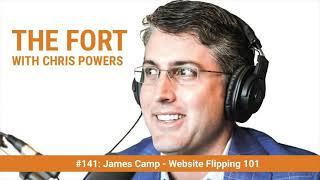
In this episode of the "Acquired" podcast, host Chris Powers interviews digital‑asset investor Jameson Camp about the mechanics of buying, operating, and scaling online businesses. Camp explains how the size of a deal dictates the due‑diligence process—from informal Dropbox folders for sub‑$500 K acquisitions to formal data rooms for multi‑million‑dollar deals. He describes his operational model: acquiring owner‑operated sites, keeping the founding CEO on as COO, and gradually replacing contractors with an in‑house agency to improve margins. Financing varies by tier: sub‑six‑figure deals are usually cash‑or‑credit‑card‑based, six‑figure to low‑million deals often use SBA loans and seller financing, while larger transactions can involve mezzanine or corporate non‑recourse debt. Camp outlines valuation norms (3× net revenue, 30× EBITDA for larger roll‑ups) and stresses the importance of buying below the radar of big PE firms. He warns of the biggest risks—fraudulent traffic, algorithmic shifts, and over‑optimistic sellers—while emphasizing that thorough due‑diligence (multiple traffic sources, stable two‑year trends) mitigates the chance of a site going to zero. For newcomers, he recommends aligning personal strengths (media buying vs SEO), taking free courses (Google Analytics, Facebook Blueprint), following industry Twitter accounts, and subscribing to his newsletter nanoflips.com. He also discusses marketplace pitfalls (Flippa listings can be both good and bad) versus broker deals, and shares personal anecdotes about a failed single‑family‑home investment and his ambition to build a nine‑figure roll‑up. Finally, he provides contact details (Twitter @JamesonCamp, hi@nanoflips.com) and points listeners to the Flippa "The Exit" podcast for further learning.
Chapters
I bought a bad house. I bought a bad house that we ripped down to the studs. We rebuilt the whole thing and added another floor. Well, I almost lost my shirt because that's just a lot of work and there's too many variables in there for someone that's new like me. What I would've been better off doing is sort of buying a home with a tenant in it, painting the walls, making a little bit nicer, repositioning it, so to speak, and raising that rent by 10 or 20%. And that would've been a phenomenal return on my money. And so that's the same thing I tell people with websites. You want to buy businesses or websites that sort of function on their own. Now they are dynamic. I don't believe in passive income unless you're incredibly wealthy. I think that that's sort of a farce. So you do have to maintain them, but you want to buy websites that hypothetically can function pretty much on their own. And one of the key metrics for me is continued growth or sustainability for at least the past 1 to 2 years.
Hello everyone, my name is Chris Powers and I want to thank you for joining me on The Fort Podcast today. This show is an open-ended discussion and journey covering real estate, business, entrepreneurship, and investing. I would love to hear from you by tweeting me @FortWorthChris on Twitter. Hey guys, it's Chris. Thank you so much for joining me today on The Fort. I'm excited to have Jameson Camp with me today, who has built a phenomenal career buying and flipping websites. So today's episode is a website flipping 101. I journey with him into how to source websites, how to underwrite them, how to capitalize them, how to make sure you're covering all your risks, how to perform due diligence. We talk about all things website flipping. And how to improve them and create value. So it was a lot of fun. I did not know a whole lot about this, and I left this episode feeling like I learned a ton about this industry. I'll spoil it a little bit, but James is bullish that there is a lot of opportunity in this space, and it's not something that has been widely invested in yet. So thank you for continuing to join me on this journey, and I hope you enjoy today's episode. Jameson Camp, welcome to the show today. I am really excited about our conversation.
Awesome. Yeah. Thank you so much, Chris. Thank you for having me.
Can we just get started with a little bit about your background and kind of what led you to what you're currently doing today?
Yeah, absolutely. I'm sort of one of those classic unemployable serial entrepreneurs. And I like to say that I've got 2 exits and 1,000 failures, but I think the reality is I've got significantly more than 1,000 failures. And one of those exits is hardly an exit. But I was 16 years old. I wanted to start making money. And that was— my father was an entrepreneur and I saw that that was a path to success. And I started looking into different ways of making money and the internet seemed to be the most accessible. And I'm 33. I just turned 33 last week. So, I happened to be on that exact cusp of, I think, the first generation to have access to the internet. So I remember the AOL CD-ROMs, but that was a big thing for me. And I just started a blog and I started writing about things that I loved and I liked. And I just became a spammer without meaning to. I was just sort of sending every inboxing everyone I could think of in these blogging communities with my content. And a couple articles went viral and I made like $35 on AdSense. That changed the game for me. I stopped cutting school to sell candy and I started working on internet businesses. I was involved in some large internet marketing communities that don't exist much anymore today, but I became a well-respected person in that space and I started what's called an affiliate network or a CPA network. Basically, it's just an ad network where people are getting paid per lead. I sold that when I was pretty young. From there, felt I could play in a more big boy world and I did digital strategy for about a decade and did marketing for tons of companies and big firms like McKinsey and Lionsgate and Tao Group and Butter Group and the whole gamut and also worked with tons of different startups. When I was in my mid-20s, I really wanted to have a change of life, so I ran off to Southeast Asia and did try to do the digital nomad thing for a while. It worked out, but it got incredibly boring. And, uh, I started mentoring at some accelerators and the biggest one I got plugged into is, is called Google Launchpad and it's Google's hyperaccelerator for tech startups. And I started teaching startups in their accelerators about growth hacking and customer acquisition and monetization. I had a friend, I was coming back to visit the States, and I had a friend who had been a commodities trader. He said, "I really believe that cannabis is the next great commodity, and that people just don't see it that way. We need to get to fungible extracts, and we need legalization, and all these different things." We went out and he had had a little blog about marijuana investing. I took that blog and we renamed it and we rebuilt it, and a couple years later, it became the cornerstone, the pillar piece of a holdings company that had a digital strategy consulting firm in it. We often took equity in lieu of cash for believing that these companies would grow VC style, and a couple of them hit, became very large. In 2020, we were lucky enough for some of those pieces to become big enough that a group bought us out. And I discovered Twitter and started talking about website flipping again and getting addicted to Twitter. And that's how we're here today.
So, when you went off to Malaysia, how long did you spend seeking out where you were going to go? How did you pick that spot? And then, what did you do while you were there? You just lived and just worked from your computer just in another part of the world?
Yeah. The year prior, I had felt I was going through this quarter-life crisis, if you will. At the time, I was much more involved with doing a lot of marketing for F&B companies, food and beverage companies, very large nightclub companies. I was out a lot, partying a lot, and I thought, I can't do this anymore. And I went on a 6-week backpacking journey through Southeast Asia. I had one friend who lived in Kuala Lumpur in Malaysia and he convinced me and I ran around for 6 weeks and I came back and I said, "Maybe I got to live there." And, I'm not a religious guy, but I had a sort of moment, an epiphany if you will, where something spoke to me and said, "You got to do this. You got to get out there. This is going to change your life." So, called all my clients and basically sunsetted them except for one that was very serendipitous was very okay with me having a remote contract. And, that was McKinsey. It was a big deal for me at the time and kept that contract. And, I set unseen wired-off money for an apartment in Kuala Lumpur, moved out there. And then, yeah, I would just work. It was very eat, pray, love, work on me, figure out what makes me happy, figure out what is the easiest path of success for me, put myself in that path. And, Yeah, I got pretty healthy instead and I'd go to Bali on the weekends and Thailand on the weekends and run around. And, I had a lot of friends out there who worked for a company called Mindvalley, which is a very, very big direct response info product marketing company. And so, I got much more plugged into that space and got a good understanding of how that all worked. But yeah, it was just a lot of me and my laptop sitting on beaches, sitting in my apartment, having a good time and sort of eventually getting bored of it and realizing that was possible, but I wanted to sort of come back to what I felt was a higher competition playing ground.
Yeah, super cool. I've never, never done anything like that, but, uh, I'm always envious of the people that have had a chance to kind of get out of town for a couple years and just chill and work.
Yeah, yeah, reinvent yourself a bit. I felt, you know, at 33 I couldn't do that. For example, right? I mean, obviously I'm a firm believer that you can do whatever you want, whenever you want, but my life is just infinitely more complex today than it was back then. It was serendipitous timing. What it also taught me is that worst comes to worst, if everything that I ever work on fails, all I need is 5 grand and a plane ticket to Southeast Asia. Uh, and I'll, I'll be all right all over again.
Can you just give a little detail on what do it like, what doing digital strategy for a company like McKinsey, like what are you actually doing, uh, for them? What were you hired to do?
Sure. So to be clear, I know that firm very well. A large part of my family are partners in that firm. But for me, I was actually McKinsey as a client, so as a contractor for them. And so basically, I did digital strategy for them. So instead of them putting me onto their clients, we did a deep dive, built out— you could call it a white paper or a report, But they were looking at the old guard of management consulting. Management consulting at that level has always been a handshake, right? You just sort of— they consult a Fortune 50, then when the Fortune 50 or 500, whatever, needs a new CEO, they end up hiring a consultant, becomes a CEO, and that sort of nepotism goes in a circle forever. And what they realized is that the reality is that management consulting is changing. Orgs are changing, the way that people operate are changing. And so I worked on projects, but the first project we did was for their org health solution. And so basically, it was about like, how do we start to acquire customers at earlier points in their customer journey, so to speak, clients earlier in their journey, and they can graduate to doing a full engagement, right? So how do we find a client that wants to spend $100K, right? We can help them, and then later on, we can do a $20 million engagement with them, because that's, I think, I think for a lot of— some people are incredibly aware of this, but I think a lot of people that I know are wildly unaware that consulting at scale is really 8-figure contracts pretty consistently.
Yup. And then before we dive into websites, it's maybe a loaded question, but given your recent experience in cannabis, I actually made my first investment in the cannabis industry 2 months ago. If you had to say, what's the state of cannabis? How early are we? How big of an opportunity is coming? What did you learn from all that? And just maybe set the stage for folks that might not know where cannabis is, how big of an opportunity is this? And what are we in for maybe over the next decade?
Sure. Yeah. From my perspective, and I remember having playful arguments with my friends at big firms, I specifically remember two conversations with some friends at BlackRock. Where they all were saying, oh, cannabis will never be as big as beer. Well, to make this incredibly clear, cannabis is as big as beer. It already is. It's illegal, so the numbers don't exist today in a way that we can see it. Everyone smokes pot. Everyone has always smoked pot, and people are continuing to smoke more pot. The reality is that I'm a firm believer in other ancillary businesses that come alongside of it. We used to say— I still have equity in some I work with some companies in the space, I'm advisor to some, but when I was really deep in it, everyone always said, we're still in the first inning. I wouldn't say that we're still in the first inning anymore, but I wouldn't say that the game's almost over. We got a long way to go. From investments, you're still looking at a lack of access to capital for most businesses. There are some interesting rules that exist for tax deductions for cannabis companies I think a lot of people aren't aware of. And I believe it's 1080E. But either way, what it means is that a cannabis company is not allowed to write off traditional expenses in the way that you and I are with our businesses today. So if you're running a profitable business without writing off any marketing expenses or anything like that, you're going to be a much more profitable business later on. It'll just change your business. It'll change your net profits pretty astronomically. I think there's major opportunity there. Clearly, we're not at legalization yet. We're going to see more consolidation. I'm very bullish on the industry and bearish on the price of the plant. I do believe this is a commodity. When I put gas in my car, and if you're in Texas, you know the American shale industry probably pretty well. When I put gas in my car, right, when I use refined oil, I don't care whether it comes from Katy, Texas, or Alaska, or Venezuela, or Kuwait. It doesn't matter to me. It all comes together, it gets homogenized, right, refined and homogenized, and then it goes into my car, right? So I think that happens, is gonna happen with the cannabis industry as well. So my point saying that is flower, which is what people smoke a lot, right, is that will, you'll have super high quality flower, low quality flower. But in terms of extracts, the extracts will become fungible, right? They will become homogenized in which they're all the same. And so when I pull CBD or THC oil out of a plant, it doesn't matter whether that grew in Colombia or Uruguay for a dollar, you know, or 8 cents a gram, sorry, or if it grew up in Canada in a medical facility for $1.80 a gram for the cost of goods. It's not gonna matter, right? So industry's got a long way to go. I think that commoditized pricing pressure will eventually bring down some of the price of the plants, but I think there's still massive opportunity there. I'll end it on, if you're interested in public cannabis companies, I never tell anyone to invest in anything, but what I will say is that the moment that this becomes federally legal, we're going to see another bull run in this industry for the big players. There's just not a question about that in my mind.
Do you have any insight of when it might be federally legal, or do you have any predictions of what might happen during the Biden administration?
I would bet on the Biden administration. I would have bet on it if Trump had got a second term, without getting political, that Trump would have made it happen too. I think it's hard to— we live in— we're not a real democracy, we're a republic, but this is all based on capitalism. I really do think it becomes tough to turn down the revenue derived from this. I live in New York City, and so New York, we just legalized it. Now, it's going to take another year or two until we roll out the recreational sale of it, The reality is that we're surrounded by New Jersey and Massachusetts, both which are legal. And so, people just drive up to Massachusetts to go buy their marijuana legally. There's no way that New York City is going to let that happen forever. They're not dumb. Everyone knows that people are buying it and smoking it anyway. We may as well capture the revenue from it ourselves. I think that's only a matter of time until the federal legislation changes, probably in the next— I'd give the next couple of years until the law changes, but I think it'll take another few years after that to have it actually rolled out. There's so much regulation around it in the space.
Yep. You exit these businesses in 2020, or some of them, and you said you got on Twitter and started getting back to your roots of website flipping. So let's just start diving into that. What are you currently doing? Are you consulting? Are you flipping on your own? What's the state of things right now?
Yeah. So I've been flipping websites on and off for 13 years or something, 14 years. And I just love M&A. I love underwriting deals. I love running cases. It's sort of my weird, passion. I've always been looking at this stuff and will continue to look at it. But the reality is that I had been talking to a friend and we were looking through a FlipaList thing and I was like, "Oh man, this website would be great. Do this, this, and this, and this, and you can make it this." He was like, "That's crazy. You should talk about that." So I started tweeting about it. I put one tweet out and I think I had 1,000 followers or 2,000 followers and I got 1,400 new followers in a day. And, I was sort of flabbergasted by that at the time and sort of decided to continue to do that kind of stuff. But, for me personally, my ex who I was with when I started doing this stuff, they always say, "You don't have a job. You're unemployed. Go get a job," which I would say, "No, I'm not. I'm consulting." Ostensibly, she was right. A couple phone calls here and there, a client here or there, a couple hours of work a day is not really a real job. I decided I had been part of some roll-ups before, and I had done— without getting into a longer story about me, I'd been involved in some broker-exempt M&A advisory in the past. And I thought, let's stop thinking about this as flipping. Let's just think bigger and get bigger here. And so my personal projects that I'm currently working on is I've recently started a company called Common Commerce. It is an e-commerce holdings company that seeks to grow through acquisitions, acquiring digitally native consumer packaged goods brands. Now, what that really just means is we buy e-com stores that are direct-to-consumer based. The thesis here, and this is what I try and teach people with website flipping stuff as well, is we want to buy really good businesses. The cash-on-cash returns for this asset class are astronomical and unbelievable. A pretty standard view, most websites in the past, they're starting to go a little higher now, but for a long time, you could buy websites always at like a 36x on monthly net cash flow. That basically means you're getting 33% back cash on cash each year, as long as you're not using debt. If you're using debt, a ton more. But that's just not normal, right? And I think that we're seeing that start to change, and we're seeing a lot of larger players come into the space and make that more difficult because there's more money coming in to buy, so people can sell for more. But our thesis is to buy good businesses that we can grow, but most importantly, to sort of crush OpEx with a shared services model. Because there's a lot of inefficiencies that happen when you're running a singular brand that can sort of disappear when you bring everything in-house. So I just believe there's enough opportunity in the space that we can buy good brands that don't need me to baby them and take care of them in a, in a really time-intensive manner, but that are good and we can grow them a bit, but that they become even more efficient by using a shared services model on the backend.
Got it. So I'm going to treat the series of questions almost like I'm wanting to invest with you, but I know nothing. So we'll just ask some really basic questions, but Because this is your episode, we're going to talk about the things that you're interested in. You say, "I want to buy really good businesses." Can you frame at a high level what does a really good business look like to you? Maybe on paper, how large is it? And we'll just start there.
Yeah. For me, I think that what I look for in a good business specifically— Well, what I tell people for them is different than for me. And that's just because when I give people advice about buying businesses or websites, that I generally want them to remove as much risk as possible. I'm incredibly uncomfortable telling people to buy businesses and websites, so I try and make them be as cautious as possible. I have a little bit more of a risk appetite. But for us, what I'm looking for are businesses $500,000 to $1 million in EBITDA. We're really, for us, that's probably more of an SDE scenario, so seller's discretionary earnings, I like to use the term EBITDA because most of my investors and the people I speak to think in terms of EBITDA, and that's because at scale, most of those letters in EBITDA can be changeable, moved around without too much work. For example, let's say I were a much bigger business and I was a big PE firm, and we also had a debt fund, and I wanted to buy a business, and they were paying 20% interest on the debt that they were carrying, I would happily refinance that debt with our own debt at a much lower rate, and that would change the EBITDA obviously pretty clearly in that scenario. Anyway, so for us, it's trying to buy businesses that are $500,000-plus in EBITDA. I would like to go much bigger, but it just happens to be the check size that I currently get my hands on easily. The reason that I look for that size is because I want to be able to— I don't want to buy myself a job, I want to buy myself businesses. Clearly, there needs to be enough profits to employ people to run this business on its own. The first one, we just closed on our first acquisition about 3 weeks ago. It's tracking for about $3 million this year. I think we'll get it to $5 million. And if we do $5 million, we'll do $1 million in EBITDA. But that business comes fully functioning with employees. So I don't have to go and work on it all day, every day. Now, not to say that I don't help out, But that's the thesis, right? These are big enough businesses that they function on their own, that they don't need me to function. But often, when I talk to people about what to look for, you want to look for stable or increasing— and same for myself— stable or increasing traffic and revenue for the past 12 to 24 months. I'm not a distressed PE shop. I'm not trying to buy things deeply undervalued and rip them apart and make them infinitely better. That's not my investment thesis. My thesis is the cash-on-cash returns are so phenomenal in this asset class, I'd rather slowly overpay for a good business and bring in 25% cash-on-cash year 1 than try and underpay for a business that's more likely to fall apart. The way that I look at it is I recently tried to take a dive into real estate, and I decided to flip a house. I almost lost my shirt with this house. I got incredibly lucky, because the market has been so on fire that the value— forget the improvements I did, just the value of my property has probably gone up 15% or 20% in the past 6 months on its own. So, that's the only way I'm not losing money on this property. But, I bought a bad house. I bought a bad house that we ripped down to the studs. We rebuilt the whole thing and add another floor. Well, I almost lost my shirt because that's just a lot of work and there's too many variables in there for someone that's new like me. What I would've been better off doing is buying a home with a tenant in it, painting the walls, making it a little bit nicer, repositioning it, so to speak, and raising that rent by 10% or 20%. And that would've been a phenomenal return on my money. And so that's the same thing I tell people with websites. You want to buy businesses or websites that function on their own. Now, they are dynamic. I don't believe in passive income unless you're incredibly wealthy. I think that that's sort of a farce. So you do have to maintain them, but you want to buy websites that hypothetically can function pretty much on their own. And one of the key metrics for me is continued growth or sustainability for at least the past 1 to 2 years.
And you said you're focused on e-com stores, so no kind of SaaS businesses or things like job boards. You're purely focused in the e-com world?
Interestingly, my background is much more— in terms of stuff I've flipped is much more content websites, blogs, news websites, et cetera. I know that world really well, but I have been involved with some e-commerce stores and I can tell you that without a super long explanation of it, that the margins and unit economics on e-commerce really work better at scale with this shared services model. Than the content-based websites. If you're a one-man team building and maintaining a blog or Amazon Associates affiliate website, $100,000, $200,000, that's very manageable for you. The problem is that when you want to do— if you're doing $100K a year in e-com, you're probably really working, really working because someone is running ads. That's probably you. You cannot afford to pay someone to run those ads for you. We spend 5 figures a month on a media buying team that doesn't include creative or copy, just for the media buying, for the ads for this one brand we just acquired. So at scale, I thought there was more opportunity with e-commerce brands. I also just look at comps in the space and there was just, it was deal flow I had access to that had very high value comps. Then to answer your question about SaaS, I'd love to play in the SaaS space, but I've really only consulted a couple of SaaS companies, and I'm really a firm believer in doing things outside your comfort zone, but really doing what you think you're great at. We may acquire a SaaS business at some point. I've looked at it a bit. The problem is the multiples that they are valued at make it less cash on cash initially, So it becomes less compelling to us unless it's like an accretive product that fits into our ecosystems and makes our businesses better.
Yep. I'm going to ask the dumbest of dumb questions. So here we go.
Yeah, please.
When you say e-commerce business, are you buying a website that's facilitating e-commerce or are you buying like a t-shirt company that only sells online and therefore it's an e-commerce brand? Can you kind of give a little more detail on what an e-commerce online business looks like to you?
Yeah, absolutely. And I actually love that question, oddly, because people always say to me, "How do I get started in e-commerce?" And my first answer to them is remove the e and think about how dumb that question sounds, right? Because if you just said to me, "How do I get started in commerce?" I'd say that's the vaguest question I've ever heard in my entire life. What do you mean? What do you want to do, right? Like, there's so much deeper you have to go. So that question I don't think is dumb. I think it's actually a great question. For me, I mean consumer packaged goods brands that are built to be sold digitally. I mean actually, in this scenario, a t-shirt company that you said. I'll tell you, part of it for me, and I want to buy unsexy— everyone talks about unsexy businesses. Obviously, e-commerce is a little sexy, but I try and— Common Commerce is the name of our company for one. Part of the reason is that we want to just acquire common boring businesses that have great margins, will always have a place and are not going to just get destroyed by incumbents, because the incumbents are living in brick and mortar, and there's space for us digitally. I had been involved in cannabis. I've been involved in digital strategy for big consulting firms. I've done a bunch of weird esoteric stuff, but the reality is I really wanted to sell widgets. I was itching just to sell widgets. Because on the cannabis side, I wasn't buying pot and selling pot. That's selling widgets. I was doing much more weird stuff. So yeah, for me, this was a great opportunity. How do we buy or build widgets in bulk and then sell them at retail? It's just the oldest business model on the planet.
Yep. And your competitive advantage is you know how to work the online world so you can increase sales, increase efficiency, et cetera, et cetera.
Absolutely. And don't get me wrong, I would love— I'm not— I'm not opposed to going brick and mortar with some of these brands if possible. I just know that that requires us bringing new people onto the team because that's just a different beast. There was a brand that I used to own a piece of that I sold last year that was a consumer packaged goods brand that was made with Manuka honey and CBD and it was a skincare brand. We actually were doing $10 or $11 million a year in brick and mortar, mostly through Ulta and Neiman Marcus and Nordstrom. Ulta is the largest beauty retailer on the planet. I've been trying to get them to be more involved in their e-commerce side, their digital side for a long time. No one on the board had any interest in it. The board was— ultimate respect to them, I love these guys, but a bunch of private equity guys, guys who had taken Build-A-Bear public a long time ago. They just were malls, malls, malls, retail, retail, retail. They spent a ton on their website, all the assets were great, but no one really pushed it online. Well, we got a phone call in March from Ulta Beauty, which we were in 2,000 of their stores. They basically said, in short, "You could hold on to that net 60 contract because I'm not paying you," in a much more polite way. But they said, "Our stores are closed. You're not L'Oréal, you're not some major, major retail brand for us. So we will pay you eventually, but we're not going to pay you till our stores open again. And so what I learned there was that clearly that sales channel was owned by the retailers in the same way that I believe the big incumbent in my world is Thrasio, which buys FBA-based businesses, so Fulfillment by Amazon, Fulfilled by Amazon, so Amazon businesses. The same reason I'm not super interested in that world is because Amazon owns that channel as well. I'm much more interested in us owning our data, and then we can use Amazon as a sales channel, we can use Brick Mortar as a sales channel, but I want to— when I talk about good businesses, this business, I don't need someone else selling for us. We can on our own spit off a million in EBITDA this year, be very profitable. That's the type of business I look for.
Okay. So how do you find a business like this? Do you go either listing websites, you hire a broker, you just kind of reach out to online brands that you like? Like how would you go about finding a company like this to buy?
Well, what I always tell people with all the website flipping stuff I talk about, I really push people, at least in the beginning, is to go to the brokers and marketplaces online. And that's going to be Flippa, Empire Flippers, FE International, Quiet Light. There's a bunch more. Those are just the ones I always rattle off the top of my head. When we're talking about other people, what I tell them is that you want to be either very comfortable with due diligence or going to a broker. And now, I want to be clear, there is no fiduciary obligation from a broker. They're only incentivized to work for the seller, clearly. And for anyone listening, that's the difference when you are buying securities from a broker. They can just sell you anything they want. In that regard, but the broker has already taken the onus of doing due diligence for you a bit, putting it together, putting together a deal room for you, and their reputation is on the line. So I think that's important, but I will tell you that the best deals, and I'm sure this is true with real estate as well, come from networking and off-market stuff. And so this first brand we just acquired was actually a brand that I consulted for last year, and I saw and got to see the inside of their business. I saw it was awesome. I saw the inefficiencies, helped them fix some of them as part of the engagement. They really increased their revenue. And then when I decided really to go full force with this, they were just a clear win because I had the relationships with the owners. We could do an accretive and interesting deal structure that was more complex than just here's a pile of cash and walk away forever because we had that dynamic already. So I would say that for everyone, I would go recommend that you use brokers and marketplaces, and that when you feel more comfortable, you know, you're digging through old Product Hunt listings. What was on Product Hunt and blew up but never really blew up, right? Who are you consulting for? Talk to your friends with the agencies. You know, it's sort of, I think with real estate, people say talk to like tax attorneys and lawyers, right?, and you find people that are looking for 1031 exchanges and stuff like that. Obviously that's more, it's probably a smaller, different world than the one you play in, but, uh, great opportunities off market through networking, but you really have to know how to navigate that space.
Yep. Okay. So you, you find a business. What does a typical contract look like? Like what are the major, is it kind of like a real estate contract? What are the major terms that matter? And how quickly do these, you know, call it $500K to a million EBITDA businesses usually take to close?
So, to be completely candid, the size of businesses I've been involved in before are either smaller than that or bigger than that. This is just the size that I've started to be able to play in on my own. And so, the sale of my last business, which was a bigger business than that, but not necessarily just in revenue, but just for the sale of the business, it was an 8-figure sale. That took 7 or 8 months to close and well into 6 figures of legal fees, which was just mind-blowing. I think that's something that people— when I'm talking to people about acquiring their business, I think people don't understand that I'm going to probably spend $30,000 or $40,000 just on legal fees to get this all done. But this first one for me went quickly in terms of what I think things normally close in. It took us probably 2 months. I think if you were going through a broker, that you could probably get it done in a month or 2. It really depends on so many things, but I've been involved in transactions that went on 7 months and then fell apart at the end. That was just me, teams I've been involved with on 9-figure transactions, but watch people dump $250K into legal, another $150K into audits, and then have everything fall apart at the end. Now, there's like break fees and ways that it gets covered and stuff. For the size I'm looking at now, I'd like things to close in under 3 months, hopefully in a month or 2. One thing I like about our business, Common Commerce, is that we do have this— it's structured in a way that I can really make all the decisions and we can move really quickly in a way that a lot of other businesses are going to have to go— I mean, we have a board, but they're just going to have to go underwrite it on several levels, whereas it's like, We're underwriting it right now. Other people are going through much more complex underwriting processes. But if you're buying a business, if you're buying a website and you're in the couple hundred thousand dollar range for the total purchase or 10 or 20,000, you close in a day. If you're buying something on Flippa, you're just paying right there and it's going into escrow and Hennessy, so under a week. Yep.
Sticking to maybe something a little bit bigger, that would be 60 days. Is there like a hard earnest money or some time that you have a non-refundable deposit or is that not how it works when you're buying a website?
CHRIS SULLIVAN: So it really can. It totally can work that way. It's not a deal that I've worked on. I mean, the way that I've done things, and maybe I'm going to find out in the long run that this is not the way that it gets done at scale, but from my experience, the steps are simple. It's an NDA, right? Let's all get comfortable. That's one of those agreements that everyone signs that really means almost absolutely nothing. Then an LOI, non-binding, That's a letter of intent. This is really just to outline the terms of what we think we're looking at here, and do we all agree that this is what we're going to try and accomplish? And so we do non-binding LOIs there. And then following that— and that's stuff I try and do outside of attorneys, because I would just spend $10,000 on those two things, and I can get those out on my own. And then the next steps are definitive agreements and merger docs, and that's where securities attorneys come into play. And that's where things are longer. My attorneys, and I'm sure everyone's attorneys will tell you that they're making all these documents from scratch. I would bet my bottom dollar that 99% of it's boilerplate anyway, but that's where things get longer because someone puts together, 30 pages get done and then it gets sent to the seller's team. And if they're smart, which at that size they are, they have an attorney looking over it. They've got changes. That's where the back and forth becomes. Done. And then obviously, there's board approval. You have resolutions to articles of organization. We're a C-corp that acquires LLCs, right? So for us, it's that LLC that has to change the articles of organization to say— there's tons of little details there. Pretty much the standard format for us is NDA, LOI, definitive agreement, and closing. And that can be more complex. And inevitably, for me, it is going to get more complex.. But for now, that's sort of, we can move at that rate, uh, with our current deal size.
So once you're under contract, let's just walk through kind of the, if maybe if we focus on the business that you just bought, or we can talk about any of them, but, uh, let's talk about due diligence in real estate. We do, you know, we check the property, the environmental, we go through the financials, the rent, the, the rent roll. What are you looking at? Customer lists, supply or suppliers? Like, what are all the things that you're checking the box on that gets you comfortable to move forward?
Sure. Yeah. I mean, I think for the smaller stuff that I talk about most of the time and that people I try and teach about, you're really looking at traffic and revenue. I mean, the reality is that there's a million other metrics that I look at for these bigger deals, but in general, you're buying a website for $50,000, $100,000, $5,000. There's two things you need to verify, and that's traffic and revenue. And the way that that's done is, is just very luckily these days is it's all digital. You can be added into Google Analytics and you can be added into whatever backend, you know, if it's Shopify, for example, you can add me as view-only access to your Shopify, right? So I can't edit anything around, but I can just dig in and see verifiably this revenue happened. For me, what I started looking at, to your point, is customer lists, GOs, time on site. This part of the due diligence process is what are the improvements that I can make? I don't mind if there's something bad with the business. I mean, as long as I think I can make it better. Time on site, are there opportunities for SEO? Are they running their media buying poorly? What do their ad campaigns look like? Who's their customer? I'm a firm believer, without saying the exact business I just bought, it's in the silver tech space, I really like to look at businesses that follow this all ships rise in high tide scenario. I want to make them better. I want to increase efficiencies. But for us, we just bought a business that is clearly geared towards baby boomers and retirees, and we, over the next 5 years, are going to watch the largest generation of all time retire. We're going to watch something like 70 million people in the United States be over the age of 65. And so just inherently, our TAM, so to speak, is just gonna increase without us trying to, right? So that should make things more easy for us. When you start playing in the consumer packaged goods space at real scale, you're doing real inventory audits. And this is something I was a part of in the past that became really complex. And that means that you auditors, or you and auditors, are actually going to a warehouse and counting products to make sure that that inventory is there and that the sales are going through as they say. But the sort of high-level stuff are email lists, customer lists, traffic, and revenue. And very luckily, all of those can be verified digitally for my business.
And you've mentioned several times just like a $50,000 to $100,000 website, which I wasn't really thinking about, but now it sounds kind of interesting. Are these businesses that whoever's buying them is probably just kind of monitoring them and doing it kind of part-time? They might have a full-time job but can kind of spend an hour or two a day kind of making sure that things are running. Like, what's the— what's— what does a $50,000 website look like?
100%. And this is why I— when we talked about why I do e-commerce for larger sites, right, and the smaller ones are content-based. Because you can have a blog that sits there and just makes money. Now, I wouldn't recommend that. I recommend you work on it a bit, but I always try and comp this out to real estate because my shtick, my angle with everyone is that this is digital real estate. This is the future of real estate in many regards. And so, let's assume to make the numbers easy that you're buying a website that is valued at 3x its yearly net. So, $100K is a website that's making $30,000 of net profit. That's a great cash-on-cash return.
Assuming no labor.
Well, this is why let's comp it out to apartments as an example, like a single-family rental. We can assume and hope, and it's totally possible that we have a great tenant that just pays their rent on time and nothing breaks. Absolutely. So, it is totally possible to buy a website and not touch it and have it just keep making money. I think that we all know that when we get our hands dirty, that that is not the reality. So, when I was— and I'm not really involved in real estate, but when I've looked at underwriting single-family stuff, I've set aside money for CapEx, so these costs of things breaking. I've set aside money for improvements. And so, that exists in the website world as well. So, what I'd say is that, listen, you might spend 100 hours a week working on a website that only makes $100 a month. Or you might spend 1 hour a month working at a website that makes $10,000 a month. This is again going to be the same thing in real estate. So, this is why I'd say to buy good websites. And a lot of what I try and teach is about due diligence and understanding what's going to be most hands-off and fits for you correctly. So, $100,000 website probably is making $30,000 a year. And $30,000 a year, I try and push people to look for websites that they can maintain that with a couple, maybe a few chunks of 5 to 10 hours of work. Maybe you're painting the walls once, so to speak, a couple of basic improvements. But, in general, there's just slight maintenance, an hour or two a week, couple hours a week, nothing insane. And, I've got some case studies where, not that I'm plugging any course or anything, but I've listened to interviews and case studies of people where we break down the hourly return for for their time invested. And you make them $200 now, which I think for most people as a side gig is a great opportunity. So yeah, so that's the idea is to buy things that you maybe write 1 or 2 pieces of content a week for and maintain it, but don't need a gut rehab, so to speak.
But if you were buying something that was like a blog that somebody else had been writing the content, is it— and I don't mean to go off on a tangent, but you just said something that struck a nerve. No, no, no. Is it risky to buy something where then the new buyer has to like write that type of content and sound the same and feel the same and look the same? Or is it the type of content that you're just kind of copy pasting stuff? So the whoever's writing it doesn't really, it doesn't really matter who it is that's writing it.
Yeah. So it's a, it's a mix. What I'd say is that if I had a blog or you had a personal blog, that it probably was way less valuable to someone because it's clearly attached to our personal brands. And our voice and entity. But when I talk about a blog, I mean, I just say blog. I really mean content site. And it's like if you Googled what is the best chair, what's the best backyard barbecue, or where to find— I sold a website last year called Hard Money Lending in Houston, Texas. It doesn't need to be written for someone's voice. This is basically a bridge between an advertiser and a publisher. Or an advertiser and a buyer of an end product. You are the connector there. No one really cares so much about your singular voice. They read an article, they say, here's where I can get a loan, and they click a link and go get a loan. Yes, to answer your question, in the same way that my Twitter is worth 6 figures to me and to a complete stranger, it's worth nothing, data is useless without authority and context. But the idea here when you're buying content sites is that the authority is coming from the website as opposed to from the author, if that makes sense. I don't know if it's a weird comparison. Like a news website, right, has hundreds of authors. You don't know necessarily whose content you're reading on that. You believe in newyorktimes.com, you believe in whatever, right, as opposed to the specific person that that's coming from.
Do you have a dream $100,000 website? What the dream $100,000 website is? Maybe it's not even content. It's maybe selling one widget that little niche can— What does the dream $100,000 website look like?
My dream $100,000 website is a website where someone feels like they've got— It has been a passion for them. So the content's really good, but it's not connected to them specifically. So Let's say that— let's use barbecuing as an example. Sorry, I'm just looking at my backyard at my barbecue. But I love barbecuing, so I want to make a website about barbecues and barbecuing. Great. It's all great passionate content, but it's not directly predicated on Jameson Camp writing it. And I've decided, oh, it's worth $100K because I put AdSense ads on my website and it makes $3,000 a month. So the market decides it's worth $100K. I look at it as a buyer, and I say, okay, AdSense is pretty easy, low-hanging fruit. I know how to make— I know I've got access to higher-paying ad networks and ad ops agencies that literally by switching a line of code will make at least 10% or 20% more on it, possibly double the money. That's like, I try and teach best practices, low-hanging fruit stuff. That's beautiful to me. A website that I can snap my fingers, if someone has built something good and within a day of work, we can double the revenue and make massive amounts more money. So, something where someone has been passionate about it, they do not have it attached specifically to their name, it's great content, they've kept it updated, but the truth is I can come in and by implementing a list of best practices that I have, and I have these worksheets that I keep of best practices, of low-hanging fruit and easy wins, that all of a sudden we can increase revenue by 20%, 30% plus. Because the reality is at that point— Oh, another thing there is that this website has been great, stable or growing traffic for the past 12 to 24 months, not predicated on them putting out new articles. So, it's just that they've got content that Google loves, It stays there all the time, and it survived all the Google algorithm updates. So it survived all the new politicians changing tax code, so to speak, in the real estate scenario. And because it survived that, I will never say that past performance is indicative of future earnings or results, but it's a pretty good indicator. We all believe the S&P is going to continue to go up because it has for the past 100 years. Same, same here with these websites. So it doesn't take much maintenance. It's under-monetized and I can fix it in a day. And there's tons of opportunities like that. Those are going to go away, right? Eventually. But right now there's tons of opportunities like that.
Is there any risk? Like you mentioned that, oh, you might buy this thing and Google AdSense pays at $3K a month. Therefore it's worth $100K. Is there any risk in any of this that Google just like, uh, Facebook's done over time, just eventually says, "Okay, as of today, we're just gonna start paying everybody 10% less now. We're gonna keep more of the lion's share." These kind of contracts you sign with Google, like what is the risk that that revenue changes purely by way of Google just changing their policy?
Yeah, absolutely. I mean, it happened actually with Amazon last year. So a lot of websites are based on Amazon Associates, which is Amazon's affiliate program. And they cut their commissions in half. I mean, in a day, it just changed everyone's business. There's these really corny sayings like scared money don't make no money. I generally believe that. There's always inherent risk. I'm not going to tell you this is a completely risk-free scenario, but we can mitigate that risk. Part of it is, sadly, I'll say there's other ad networks. There are. Most of them really use Google as their backends. The US government would also like to be having conversations with Google about antitrust laws because of this specifically. To answer your question, yeah, Google could change everything, but very luckily, in terms of that, with Amazon, what's happening is, again, Amazon owns that channel. They're saying all the sales are going through us, we take a commission, and they're changing their commission. Google's ads is a marketplace, essentially. Between you who have inventory and buyers of that inventory that are buying ad space for their brands. Google just takes a vig on that. They just take their commission. From my perspective, obviously, Google could increase their commission, but because a market is hypothetically— there is price discovery and efficiency that happens, there shouldn't be actually any change that Google makes necessarily on that for the pricing. Does that make sense? It's just, is the demand there? It is? Great. In fact, if anything, what we saw during COVID was an insane increase in demand. So if you had ads on your website, you were earning more from your ads. And if you were someone like me who's buying ads for our brands, you're paying more for those ads, right? There's more profitability also because more people are buying because everyone's shopping online. But there's price discovery inefficiencies that happen with marketplaces. And Google's model is just to take basically a broker fee on that. So they're fine no matter what. So there is inherent risk, but, uh, you sort of just, there's always inherent risk. Things always change. Nothing is permanent. That's why I say passive income is a farce. Things are always dynamic and moving and changing. And one thing I tell people all the time that these websites, I keep using this term, but are dynamic. They're not static. They don't just sit there and make money. Of course, sometimes they do, but that is not a forever, ever thing. So you do need to be putting in a little bit of work in sort of maintaining this with new content every once in a while or a new backlink, updating old content. It's just maybe, maybe it works perfectly without touching it for 2 or 3 years. Tons of examples like that, but I wouldn't assume that that's going to happen forever.
And on a $100,000 website, you're not really doing a lot of due diligence on like the code or anything. It's not like it's some proprietary code that built it. It's probably on some standardized format. There's, is there anything you do around just looking into the actual tech that's running it, or at $100K, they're all pretty generic?
Honestly, even up to a couple million, they're all pretty generic. I'm sure that's probably not true for SaaSes, and so I don't want to say— It's obviously the opposite, I think, for most SaaSes. In terms of content sites and e-commerce stores, I'm buying sites built on Shopify. The number of websites that I know of consumer packaged goods brands that sell online that are not built on a CMS, so like a content management system that is already existent, I can name on less than two hands. They are multi-hundred million dollar, multi-billion dollar companies. For us, in terms of looking at the tech side, yeah, if you're on WordPress or Shopify, I want to look at what apps you're using. See if there's opportunities to reduce bloat and increase site speed by removing some of those, or maybe, you know, maybe we already pay for an unlimited license of one app, which is a SaaS essentially, right, on the backend that the website uses, and we can just combine it and crush OpEx there. But in general, no. I mean, they're all sort of built on WordPress and Shopify. I mean, it's sort of insane, something like 60% of all websites on the internet today are built on WordPress. And, uh, and if you're on WordPress using WooCommerce, you know, for e-commerce, or you're just using a WordPress template. So there's not— luckily there's not an insane amount of, uh, of due diligence in that regard for us. Yep.
All right, one more on the topic of just small $50K to $100K websites. Um, so when you close, I've always just imagined when you own a website, if you own the domain, you own the website. Is that accurate or is there other things that transfer that you actually own or does somebody just send you the domain and now it's yours and you set up your bank account to start receiving the revenue yourself?
Sure. So there's two ways. Is that sort of the content that exists on the website sits on a server that is connected to the domain essentially, right? So there's two things that get transferred and that's all the contents and that will go to your web host. And then there's the domain. For me, I'm sort of lucky enough to sort of the deals I'm working on these days. I'm not super worried about escrow. We're just— they're big enough deals, we've got enough legal agreements that I know it's going to go through here. On the smaller side, you're buying something from a random stranger on Flippa, for example, you're probably going to use an escrow service like escrow.com, or there's a ton that exists in this space today. And so, they're transferring the domain name ownership to you, and then all of the content that is actually what you see in front of you. Think of the domain as the plot of land, And the website is the property on top of it. And this is actually, I said this to someone just yesterday, because people ask me about buying domains for website flipping or building websites. And you can buy a great domain. It's like buying a great plot of land. And if that domain already has tons of backlinks to it and tons of authority, because there's a different website on it already, well then great. You've already bought it zoned with tax credits, right? It's just going to make it that much easier for when you build on top of it. But buying a cash-flowing website is like buying a cash-flowing property. That's really the closest comp I can think of, um, in certain businesses today.
Okay. I want to flip back to call it a million-dollar EBITDA business that this one is actually coming with people. And then I'm going to go back to maybe a 60 to 90 day timeline. And first thing that comes to my mind, and I know in your situation, you actually had experience with the company that you bought. But when these are being listed, in part of the kind of offering package, is it kind of giving the buyer an update on which employees plan to stay? Is the owner going to stay? Like, when I think of closing something in 60 days, that's a pretty quick way to get comfortable with people, have them all incentivized properly so that they'll keep running the business post-sale. So can we just speak to Maybe the first question is, how do you underwrite the people in a short manner of time, and how do you all come to agreements on everything that's going to happen post-close as it relates to their future?
Sure. The answer is it really changes on the deal size. We're not using Citrix Deal Rooms for deals of this size. You're not— it's not tracking every employment agreement that I download, right? Which I think a lot of people will be familiar with is that like when you really are doing real due diligence, there's these data rooms essentially, these deal rooms, right? Where you're just getting access to every legal document that exists, every contract and everything's being gone through. At this size, it's more like once everyone signed NDAs, you know, you might get access to invited to a Dropbox or Google Drive with all docs in it. In terms of employees, so this business that I just acquired at this size has 2 full-time employees, 2 FTEs, and then 8 contractors, give or take, essentially that work on it. So one thing I taught— when I think you buy a business, I think if you buy a bigger business than what I buy, you can not even really understand the minutiae of the business. And I see that all the time. People that run $500 million companies often don't actually understand how the company runs itself. They're glorified salesmen and understand leadership. If you're buying a $50,000 or $100,000 or $5,000 website, those are for sale too. You really should be having an idea of how everything runs. For me, the deal size that I look at, which is $500,000 to a couple million EBITDA, I just need to have a good knowledge of how everything works so that I can know who to hire and if they're good at what they do. So I'm one of those people, and I think a lot of people in my position, I hate to say this, but I'm really a jack of all trades, master of none. I'm good at delegating. I'm really good at understanding from 30,000 feet up how the pieces get put together, but I've actually built these puzzles before myself, so I can dive in and see how things work. So for this deal, I just sat in Slack for a long time with them. I mean, I was in their Slack channels way before we closed, so we're just becoming involved in the day-to-day of seeing how the team worked, took a look at the SOPs that exist. Then very luckily in this very specific deal, the old owner stayed on board. So they're full-time employee of the business today. So that really allows for me not to worry immensely about the management of the people and that transition. Because for me, I'm looking at acquiring businesses as opposed— like with a parent company, as opposed to I think a lot of people look at buying businesses and running those businesses, if that makes sense. For me, I'm not. My job is to raise capital, underwrite deals, and crush op-eds. That's through our management, MSA, with our parent company. But really, really, my job is making sure there's money and making sure that we're looking at new deals. So I don't have to worry immensely, immensely about how that runs. But I would say that For me, in the digital space with employees, that's being inside Slack channels, that's getting on the phone with people. I really don't know the brick-and-mortar world so well. I would assume that's going on ride-alongs. I'd assume that's going to work in the office for a few days and seeing what that's like. But what a lot of our thesis is that the way that we crush OpEx is by bringing this in-house. So I want good people, and I don't want to sound like a monster here, Eventually, we'll get rid of some of these people. We'll create new jobs internally, but eventually, we'll get rid of some of these people. Some of these contractors that we're using that are taking a fee because they work in an agency and the agency has a ton of overhead from running that agency, that will disappear because we'll basically have an own internal agency of sorts. So I want good people, but only the FTEs are staying around. Only the full-time employees are staying around. All the contractors are The plan is to replace them.
Yep. So in a $500K to $1 million, you're usually probably buying from the founder, but is it really— you kind of just have employees, or do these really have like CEOs and kind of founder-like people in them, or they can kind of be run by just employees that, you know, with given, you know, direction can kind of get the job done?
So the reason that I look at, you know, and if a great deal came across my plate that had $1 million in "EBITDA," which would really be seller discretionary earnings. Well, or sorry, $100,000 in EBITDA on a small amount of revenue. It's not really EBITDA. And that's— one of my board members pointed this out to me about something I was underwriting. He's like, there's no EBITDA here. I don't care what they're saying to you. The owner did not take a salary, and they don't have an office. That money would just be gone immediately once we come into our ecosystem. So the reason that $500K+ is nice to me is because I can actually replace— it doesn't have to be all owner-operated. The businesses that I'm buying today are probably owner-operated. I'd like to graduate in the next few years to ones that are not. And I actually have a couple people in my network that have capital that have said to me, "Hey, I'll give you money to buy businesses doing $2+ million in EBITDA, but I have no interest in putting money into businesses that are making $500K in seller discretionary earnings." And that's just because to that same point, they all function fully on their own already. So to your point about how it works today, the businesses that I'm looking at, most of them are owner-operators, owner-operated businesses. But the idea is that that owner is maybe he made $800 grand last year or $500 or $400, whatever, but he really, really beat himself up to do it. He doesn't understand how to scale without giving himself more work. I hate to say this, but it's a little bit of a game of attrition. They're at the end of it. The reality is that everyone talks a really big game about what they think their business is worth. Until you hand them a couple million dollar check. I recently was talking to someone, I've been underwriting a deal currently where they said, "Well, you know ClearBank?" And for anyone who doesn't know, ClearBank is a lender in this space. It hooks up to the backend of your store or your business so they can just pull their numbers in and they underwrite you basically algorithmically. And he said, "Well, ClearBank gave us an estimated valuation of $5 to $7 million." And I said, "That's cool. Is Clearbank offering to buy you for $5 to $7 million?" And they said, "No." And so this really goes back to the idea of things are worth what people will pay for them. So if you were an owner, this is these two guys who made $700K in profit last year. They each made $350K, but they worked 100 hours a week each to do it. If I wrote them a $3 million check, they'd be probably pretty ecstatic to walk away from it today. So that's part of my thesis about deal size is that in a $2 million+ EBITDA range, you start seeing family offices and private equity firms coming in and being like, "Ooh, we'll buy that. We'll just hold that on the books." For me, I want to buy businesses that are just below that so they're off the big boys' radar, but I know that we can grow into that and then they'll be on everyone's radar.
And being able to maintain your holdco structure while letting the the folks run the business. How do you think about getting your message across to the team of these are the improvements and changes we'd like to see based on your edge and competitive advantage without becoming a day-to-day worker yourself?
Honestly, Chris, something that I'm struggling with, and it's something that is incredibly apropos of the past week of my life because Currently, there's things happening with the first business we acquired where basically the CEO of it, he's an amazing entrepreneur. He's awesome. He's phenomenal, and he's great at operations, which is what I'm not great at. I'd like to essentially replace him eventually and then bring him on to the parent level as a COO so we can set up these operations for all the new subs. I find myself having to jump in every now and then, just because I've seen— it's not my first rodeo. And so I'm seeing mistakes come in here and there. But really, the thesis here is to just hire really good people that are better and smarter than me, and let them do their thing. And I don't mean to sound lazy. I just know that I have an eye for talent. And I just want to hire people and incentivize entrepreneurs even This is a great example with the first acquisition, and probably moving forward, we won't do it like this, but there'll be other opportunities I'm happy to create where there is an alignment of incentives through equity in parent co. There is an interesting way in which people can be incentivized to have control, but also incentivized to let go of a little bit of control. My point in saying this, I want to Hire great people and partner with great entrepreneurs. I want this first business, this business is great, he's great. I want to make his job easier and not get in the minutia and tell him what to do, but like, yeah, you don't have to pay media buyers $13,000 a month anymore. You don't have to pay creatives. We're going to take that in-house. Your margins are going to increase and you can run and you can breathe and you can call us, and we'll step in if something's going wrong, but you can call us at the parent level in the interim when you have questions. And my phone book, and very luckily my phone book has some people in it that have much more vast phone books than me. But so vis-à-vis everyone's phone book becomes accessible to this business that normally would never get access to some of these people.
You kind of mentioned ClearBank, but I had a question just, again, at these sides, are most people financing these with all cash? Are they using debt? Obviously, they're not huge equity checks, so how are these getting financed traditionally?
Sure. The smaller deals, I'd say that the sub-six-figure deals are all getting financed with cash. I wouldn't recommend it, but I could create an interesting capital stack with a zero APR credit card and a little cash, you know what I mean? And a little seller financing. There's a million ways to skin this cat, right? But cash is the way you're doing smaller deals. At the big scale, things get weird with management services agreements and earnouts and clawbacks. We actually structured our first deal— I have a bit of experience in that world, so our first deal had a little bit of creativity that's involved with it that includes unwind provisions if we don't hit certain KPIs from a parent company perspective in terms of the goals that we're trying to do that protect the seller from certain We got a good deal, and the idea is that the seller is protected if we don't hit certain goals as well that we promised the seller. So what's interesting is that in the 6-figure to low million-dollar range, you start opening yourself up to SBA 7 loans, which are acquisition loans. I mean, that's going to be something like 10% down. I think it's normally 7% on a 10-year fixed, which is really beautiful debt. And any of these businesses would cash flow, you would still cash flow after paying off the note, which is pretty crazy. So seller financing happens pretty often, but not for the majority of it, something like you're seller financing 20% of the business. Earnouts don't really make sense unless it's an acquisition by another company. So my deals are a little bit more complicated because I'm trying to You've really massive leverage here with creative deal structure, but in general, this size, you're looking at all cash or seller financing and SBA. Now, what's really interesting is that one of the reasons that I like the deal size that I'm at is I just start tiptoeing into that world of mezz debt, that corporate non-recourse debt, which is nice for someone like me. At the smaller range, that SBA loan is personally guaranteed by you, and you are basically completely liable for everything in that regard. The range that I'm playing in is more like there are debt funds I can talk to, mezz debt lenders. It's not as friendly as SBA. It's more in the 10% range, but it becomes corporate non-recourse debt that I can then refinance later on. I can take it into the parent company, and not encumber the subs with debt. So I can take these consolidated financials that flow up to me and use that from a parent company perspective to take corporate non-recourse debt that is collateralized by— it's non-recourse for me. And then as you get bigger, you're getting a Ziegler to write you a bond. But I'm not in that world yet. One day.
All right, one more on the business side and then we'll ask some personal ones and bring it home. But this is going to be, I think it's a loaded question, but I'm full of loaded questions. So let's say I'm Chris, I'm in Fort Worth, I'm a real estate guy, I'm going to get into this. I see a website that I think is great. It makes sense. I can tell by gut and feel the marketing of it's just been terrible. Maybe it's a similar, um, kind of CPG type business. The question really is like, how can the average person that doesn't know a lot about growth hacking and marketing online, what are the low-hanging fruit things, like maybe questions they should be asking or things they should be doing on social? Like, what's the best way from a, for a non-expert that can identify that it needs to be marketed better? Should they just hire an agency to do it or Are there certain channels you would have them focus on? Like, give me a 101 on how someone can be a really, figure out kind of online marketing, you know, at a very high level.
Sure. I mean, I think that if you, at a really high level, think about what you're good at, what you like, right? You know, I think if you're really good at numbers, you're really analytical, that you really might find media buying to be interesting. So media buying is like running paid ads, right? But if you love writing, you probably are more interested in content marketing and SEO, right? So this is a little amorphous art, but figuring out what you're good at. But in general, I generally believe that anyone can do anything they want if they put in the effort and have the right tools. I try and give people the right tools. I think that really understanding just how traffic works, just taking some free courses about Google Analytics and about SEO and Facebook Blueprint— Facebook Blueprint is Facebook's free course on running Facebook ads. Whatever traffic channels are being run on this website that you're looking at, I would just go take the free courses and content and learn to understand whether your gut is right. They're not going to teach you how to be a master, but they're going to tell you whether your gut is right about this stuff. You're going to see clear inefficiencies with their business. And then, I think— I mean, I'm not trying to plug me, but I write a newsletter where I break down that stuff, nanoflips.com. I'm a college dropout who went to 5 high schools. I learned everything that I can from Google. I mean, it sounds so corny, but it's the great equalizer, right? I mean, I'm very blessed. I don't want to pretend that I don't come from a privileged background. I do, right? Very, very, very well-educated family. I grew up in New York City. A tall white guy. Someone dealt me a royal flush in life, and I'm very lucky in that regard in terms of trying to navigate the business world in America. But I really literally haven't— everything I've learned is from Google and YouTube and forums and Twitter and courses. It's just all accessible to everyone. So I would find people like me. I'd get on Twitter. I'd follow people like me talking about website flipping. I'd follow media buyers and SEO guys, people that are sharing great content. There's great little groups and communities. I think, Chris, you and I are in one together on WhatsApp with some really cool killers in there. My friend Cody Sanchez is the one who put it together and she's a monster in the space of private equity and buying and selling businesses. So, I really would just find people that are generally get their kicks out of sharing information and follow them and learn. And if you really want to learn about flipping websites, yeah, sign up for my newsletter, follow me. Literally, all I try and talk about is tips and tricks about how to do due diligence and how to improve websites and how to make more money from them. Anyone who, in the long run, I'll launch a course off this, but the reality is it's like it could be my course or somebody else's course. Buy some basic knowledge for $500 that teaches you just real basics of whatever channels you're looking at here and make sure that you can underwrite them on your own. I would rather, I tell this to all the time, if a website looks, if I tell you the websites sell for 3X net revenue, yearly revenue, and a website is for sale currently and it is being bid up to 4X net revenue or 5X net revenue, That is because there's an efficient market, and the people like me have realized there are clear inefficiencies with this website that they could, at the flip of a switch, make better tomorrow. So I'd rather people that are new to this buy that website and make 20% cash-on-cash return that first year than try and buy some deal at 2x net revenue and they think they're going to make 50% cash-on-cash return and they lose their shirt because everything falls apart, and there's termites in the wood, and there's all of the house in that metaphor. The returns are just so outsized that even if you— I don't know, it's like different classes of real estate and cap rates. I think you're often safer buying things that bring you less cash immediately. If it seems too good to be true, It is too good to be true. That really holds true here with websites as well. All right.
Last question. I said last question, but last question. What's the biggest risk to buying one of these? And maybe we can keep it at the, call it the $100K level where you don't have employees really. Is it that the market goes away? Is it you just get lazy and don't nurture it? What is the biggest risk to these things just going to zero?
I would say that the biggest first— well, going to zero, I'd say you're pretty much— is almost impossible. Really, really, as long as you've done your due diligence correctly, you want to be buying websites that have traffic going to multiple pages, traffic that's coming from multiple sources. You want to see traffic that's either solid or growing for 2 years. This, again, what that implies to me is that through every single algorithmic update of whatever channels it's coming from, it's passed all the tests. The idea that it goes to zero, slim to none. It's definitely possible, but in terms of the high risk to go to zero, it's because you got conned. It's because someone like me, if I really wanted, knows how to really easily inflate those numbers. I could send fake traffic to a website. I could, if I wanted to, and I think this is probably what's happening in the NFT art space and the crypto space, but if I wanted to, buy my own products, I could. I could take $100,000, go buy my own products, and then just collect that revenue. The only thing I would lose would be the merchant processing fees and lose 2%. I think that's happening with a lot of these NFTs and art. People are buying their own crypto art, sending it to their own wallet. Now, wow, this piece of digital art is now worth 100 Ethereum, but I'll sell it to you for 20 Ethereum. Boom, I just made 20 Ethereum from nothing at all. I think that exists here as well. It's not as easy to do. That's why I look at long term, because if all of a sudden you buy a website that's got great traffic for 2 or 3 months, it's quite likely I fake that, or possible I fake that through Google Analytics, just sending fake traffic. If this traffic is 6 years old, and and it's had some sort of traffic and stable growth going up and down, but stable or growing for the past couple of years, I doubt that you've played a 6-year-long game on fake traffic just to pull $100 grand from me. It's possible, it's astronomically unlikely. So going to zero, pretty unlikely. Is it possible that an algorithm changes and you get half your traffic? 100%, absolutely. In the same way, this is a little Wild Wild West of the market here. Is it totally possible that— going to zero is getting scammed. Dropping aggressively is probably because someone was spamming or doing something bad initially, and now whatever channel was sending traffic before has picked up on that and is beat you up for it, but it's just quite possible to slowly decline. Just like neighborhoods, if you don't maintain them, if you don't maintain your house, you're not going to keep being able to raise the rent. So, that's the big risk is getting conned. And so, half the battle here is buying a good deal. And I think that holds true with other asset classes as well.
And if you're buying through one of these listing sites, By nature, I'm sure they're not letting people list that are cons. So that in and of itself creates a lot of trust if you're buying it directly from something where it's been listed.
Well, what I'll say is that if you're buying it through a broker, that's true. But I will say that if you're buying it through a marketplace, cons do exist. A marketplace is a free-for-all. I'm allowed to list anything. Now, they'll verify there's plugins that will say these analytics are verified, this traffic is verified, or this revenue is verified. But again, if it's too good to be true, it is. What I see all the time, I love Flippa. It's the largest marketplace for websites. I love them. I've used them. They're great. They're awesome. There's great deals on there, but there's also really, really bad deals on there. So, what someone will do is say like, in most businesses and websites, we often look at the trailing 12, right? The TTM, the trailing 12 months of revenue. And so what'll happen is someone has some dropshipping stores that they're running with paid ads and they just run it up to the moon. Their campaigns are profitable for 3 months and then it died off. And that's worthless to them. I mean, it's literally worthless. It gets no traffic on its own. You know, maybe there's some customer list that you could sell to later on, but in general, there's just nothing special about it. What they'll go do is go list that and they'll say, they'll show the past 3 months and say, "Whoa, we made $50,000 a month." Well, $50,000 a month, remember websites are valued at 3x, 36x monthly revenue. So, this website's worth $100,000, or sorry, $1.8 million at $50,000 a month, right? That's bullshit. Sorry, excuse my language. It's just not actually worth that. So, fraud is the biggest thing to look out for. And if you're buying from a marketplace, or there are big Facebook groups and communities where things are sold, that's when you really trust comes into play and escrow and the real due diligence. But if you're buying through a broker, to your point, then, I mean, listen, even the brokers are incentivized to make things look better than they are, right? Because they get a commission on the sale. But in general, you're going to be much safer off.
Yep. I love it, man. I don't know if I'm fully ready to go buy my first website, but I'm damn sure closer.
After this discussion. I mean, my thought is this, is like, this is the asset class that I really, really understand. And so, in the interim, quick anecdote I touched on already and I told you before is that last year, I sold my company, I had some money, and I've known a lot of developers in my life and I thought, oh, I can underwrite all these deals. Let me do this. And I thought, let me just test the waters by just doing a single-family home first and seeing how that goes. I really almost lost my shirt on that. I really essentially broke even. In terms of capital allocation, to break even for what was hundreds of hours of my time and a quarter million dollars was just really horrific capital allocation. I could have put it in the S&P and made $50,000, sadly. What I say to people is that if you want to buy, if you're interested in this as a hobby, it's a great hobby. It's a great way to learn. If you want to graduate into doing what I'm working on, other people I know are working on, which is much bigger roll-up stuff, my plan here is to build 9 figures in revenue and fold into a SPAC or get picked apart by Alcatel-Lucent. That's the dream here. But what I will say is that I wouldn't take big swings on this as passive income if it's just not the space for you. You're going to make the most money doing what you're great at. So for me, like, Chris, I'm going to call you and ask you if I can be an LP in your next fund. That's how I'm going to play in real estate moving forward. But I can tell you that dollar for time, that flipping houses is not for me. So what I would say that probably for people like you, the dollar for time, flipping websites is not the best use of your time. Now, maybe a couple And you can build a little cash flow portfolio. That's great. But the full-on make it a career thing, you know, it's just, it's a full-time thing. It's complex. I don't want to pretend to people this stuff is super, super easy. It's just, there are risks and it's tough.
All right. Is there a book or maybe a blog or something? I know we have, you have NanoFlips that people can come register to, but is there something that you've read or watched that might be, a great extension of how people could learn more about this besides going to NanoFlips?
Yeah, Flippa's got a really cool podcast as well. Flippa's the largest marketplace for websites for sale. They did interview me on it. They did interview Cody. They interview great people in the space. It's called The Exit. And they interview people that have exited businesses, very often digital ones. Candidly, I've been so in the weeds for so many years and I'm just coming up to breathe after last year. This business, but I'm just really trying to— I'm just getting familiar and comfortable with this world of where people are really looking into this and teaching this kind of stuff. So, there's not a huge, huge amount of information that's out there currently. In fact, that's why I think it's even possible for us to talk about an asset class that gets 30% cash-on-cash returns pretty standardly. And it's because it just hasn't been really, really discovered yet. Cannabis is like in the third inning, second inning. Website flipping, websites as an asset class is that early too. It's one of those things where you have Thrasio, which is the big, big, big player in the space. They're rolling up FBA businesses, but they're trading it now like— their ARB is they buy businesses at like a 3x EBITDA multiple, and they're currently valued at like a 30x EBITDA multiple. But my point is that you've PE firms and family offices, and even all the iBankers and the public market guys are looking at this space. What happens in a market, as we all know, is that things are all interconnected. Even if FIGS, which is just listed for its IPO, FIGS is a website that sells scrubs for doctors, they're going live at a $4 billion market cap,, and they've done $60 million in EBITDA last year. My point to say that is even though that sounds disconnected from a $100,000 website, it slowly trickles down in terms of how valuations are looked at. This asset class is undiscovered, and that's why it's so valuable. That's my long way of saying there's not a ton of information online about this today. But that if you want to learn more, obviously, sign up for our newsletter and stuff, but piecemeal it down. What is this? It is driving traffic, and it is monetization, and then it's M&A. I would look into those 3 things. If you want to learn about Facebook ads, go take the Facebook Blueprint. You want to learn about SEO, start Googling around and go on YouTube. There's not really much of one home. For this. And I think that's one of the reasons I've managed to sort of gain a decent following pretty quickly in this space is because there's not a massive home for it yet.
What's the best way that people can get in contact with you or reach out?
Yeah. So I'm pretty addicted to Twitter. So mostly you can find me there. That's Jameson Camp or James on Camp. I also, if someone wants to reach out to me, we've got just hi@nanoflips. Jamesoncamp.com. I'm an incredibly responsive person, probably to a fault. And I'm pretty— half my day now is answering DMs on Twitter. That's one thing I love about Twitter. It's this weird hybrid of speaker box and community in one. Most social channels are just speaker box, just sort of talking to your audience. Twitter really feels like we're all communicating together. So yeah, so Twitter or hi@nanoflips.com are two easy ways to reach me.
Jameson Camp, thank you so much for today. This was fascinating. This was a great conversation.
Good, man. I hope people find it interesting. Thank you so much for having me. This is, it's sort of, it's like I told you before we started, it's a bit of an honor. I'm excited to be on the podcast. So thank you for taking the time.
Hey everyone, it's Chris here again. Thank you so much for joining me on this journey. If you enjoyed the show, please subscribe to us on Apple Podcasts, leave a 5-star rating, or write a quick review. Thanks again, and I'll see you on the next episode. Chris Powers is the founder and CEO of Fort Capital LP. All opinions from Chris and guests of The Fort Podcast are solely their own and do not reflect the opinions of Fort Capital LP. This podcast is for informational purposes only and should not be relied upon for real estate or investment decisions. The Fort with Chris Powers is produced by Straight Up Podcasts.
More from Jameson



You wont believe what else the founder started #opensea #mergersandacquisitions #venturecapital