James Camp – Pivot from niche sites & become small media publishers!
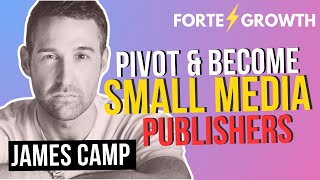
Jameson Camp explains how niche-site owners can evolve into small media publishers by mixing long-tail SEO content with opinion pieces and community contributions. He's skeptical of Google's algorithm opacity and advocates diversifying traffic through Bing, DuckDuckGo, paid social, and newsletters. Camp is scaling NanoFlips into AllInAcquisitions.com and targeting acquisitions in the $5-15 million range.
Chapters
Welcome to another Forte Growth episode where we interview people doing awesome things online. We go over their successes, insights, and any failures to keep you motivated and inspired. Sit back, let's go!
Welcome to the Forte Growth podcast. Make sure you get your links, digital PR, and everything done by Gareth at Forte Analytica. But today we have Jameson Camp Campbell. I'm sure most of you are familiar with him, at least within Twitter and as a website owner slash entrepreneur. If not, Jameson Campbell has been in the game for many, many years, over a decade buying and selling websites and a bunch of other stuff. And we go into some of the things that he's currently doing in the wake of the recent Google updates. So one of his sites got smashed by the helpful content updates. And now he's just going all out trying to smash Facebook traffic. So it's pretty interesting what he's trying to do there, what he's experimenting with. Same thing with his short-form video content that he's crushing right now. So he's doing a lot of things there. And we also dive into AI, of course. I mean, I think every podcast in the space now has to have some element of AI. So we go into the AI processes he's using to do some interesting stuff with images with a piece of software that he's using there. And then obviously using some AI writers and things like that too. And also we just dive into a little bit of a Google, Google and their AI stuff and what he's doing. So. A lot of it centered around his processes and what he's doing, but also into, you know, is the way he will create sites now different to what he was doing before? He talked a lot about being like a media company, kind of doing more editorial style content versus just SEO, which is an interesting take as well for anyone who was building their niche site. So sit back and enjoy. All right. Welcome to the Forte Growth Podcast. Make sure you get all your SEO needs done by Gareth Boyd and Forte Analytica. Any of your links, digital PR, all that good stuff. But today we have Jameson Camp on. Welcome, James.
What's going on? Thanks, Jameson. Good to be here.
No, thanks for coming out. We've chatted a couple of times before. It's always good chatting to you. I mean, actually, you joined our Twitter Space, not, oh, actually, that might have been a while ago now, a month ago, when Gareth and I were co-hosting a Twitter Space. It's shit. I think that one went for like 3 hours. You jumped in the other end and gave some wisdom there. But what are you up to? What are you up to now? Because I see you're sending out more emails and tweets.
Yeah. Yeah. It was funny. I was having a, we're doing a couple of different things, but I had a conversation with someone the other day and I really recognized it's only become clear to me in the past year or two. Like I'm really not, I do a lot of SEO and I've been doing a lot of SEO for like 15 years. I'm not an SEO, right? Like that is really not what my sweet spot is. It is like something I'm very good at and there's people way better that work with me at it than me., but it's just like, for me, I'm what I would call traffic agnostic. I really don't care how they get the traffic. I just love traffic. Right. And so it happens to be that in most scenarios, like I'm a good SEO and the team's a good SEO, but like in most scenarios, SEO is the lowest hanging fruit, right? Especially when we talk about the content side, especially when you're, and you're sort of monetizing from display and affiliate very basically. Right. So what I'm working on now, a couple of different things. One is I had one of my sites got hit pretty aggressively in the HCU, Helpful Content Update. And I decided, as I was saying to you before, like, it's kind of in the mud. Like, let's take it to the mud. Like, let's go. Let's see where this, let's see what really what we can do with this because we're going to do everything that I would recommend anyone do, right? Then all the white hat stuff, I would say we cranked on AI content for that site. They were just, it was just going very, very well with just straight AI content and like really crappy images and like We got hit. It is what it is. That's the game I played. You can play a different game, but that's the one I was playing with this site. I outsourced like 95% of it, was not even looking at what was getting done. I actually was looking at some of the articles the other day and I was like, oh my God, like I can't believe these were up. And I, and we brought someone in to come and do edits and clean up some articles and they showed me some stuff and I was like, I'm so embarrassed. I was like, I cannot even believe that we had these up. But so we're, you know, rewriting articles, adding a lot of unique images, adding videos, like doing everything I'd recommend someone do, but it was a reminder. I do think we're going through one of the more fundamental shifts in organic search that I've seen in 15+ years of doing this. Right. And I think that it was a reminder that I am traffic agnostic and I have driven obscene amounts of traffic from other channels than just Google before. And in my, in my thesis, that is that we all need to become little media companies and no media company, even worth its skin, literally survives just off Google traffic. So I am testing with this site, for example, we're testing Facebook traffic, organic Facebook traffic, building pages, paying for likes. And then, yeah, I'll just say what the plan is. We're going to outsource this, but sort of go copy competitors with up-to-the-minute, up-to-date news. And literally as it comes out, rewrite them with ChatGPT 5 minutes later and not worry at all about SEO for that content. Just worry about feeding it directly to those pages, being up to the minute, us being the first source of the information for those groups of people. And then hoping that some of it gets caught up. I mean, my biggest wins, we were just crushing Google News and stuff. Right. And I think that if we do this correctly, I think we'll be in Google News again, because if you look at Google News, it is not binary. It is not sort of zero sum is what I mean. It's not zero sum. One person gets an article in. It's tens of people get articles in, right? For the exact same topic. And so I don't know much about Discover, but I would love to play in that world too. And my hope is that sort of we can, we can, we can crush that. So. That's one thing we're doing is really putting together a bunch of SOPs and process specifically for taking content sites and finding different niche, different ways to drive traffic. Another one is we actually did some testing with some YouTube pages we have in the comment community section and just like posting interesting content. We're getting 300 clicks from one post, right? And so it's like, it's, oh, well, if I can build a theme page with, basically is the goal here. So that we're doing that. Then I'm running sort of, I've decided to rebuild my newsletter, which is NanoFlips into onlineacquisitions.com. That'll launch next year. In the scheme of that, we are going to, I've decided there's two things I want to do, which is run one more cohort-based program where I sort of try and help people buy a bunch of sites and then also start really trying to figure out how to help much higher quality people and much lower quality. So right now we sort of bucket everyone together. The ideas will be like more like buy-side advisor. It'll be one-on-one figure it out. And then everyone else, you can buy programs that we can just, you can do on your own. And that works for that. So doing that. And then 2 months ago, launch some of our link builders. I just like, you know what, let's see if we could sell backlinks. And I literally put a little, like a 2-line, like, you know, snippet inside my newsletter, inside a full newsletter. And a Stripe payment link. No sales copy, no landing page or anything. We sold 3 slots for link building. And so I like to build into demand as opposed to looking for demand. And so it's clear to me that there's an opportunity for a small backlink building agency as well. So those are like the 3 things on my plate right now, and I'm a wee bit overwhelmed, but I'm really excited. That's a lot. I posted the other day on Twitter that we're putting out content on like 7 social channels and everyone was like, wow, how do you do that? And I'll make it abundantly clear, like It's not just me. Like, it's just like, there's a team of really cool people that I work with, you know, like I wish, like I actually don't wish it was just me. It would be overwhelming.
So anyway, what, what the Facebook page is doing, so you're buying likes to posts. Are you putting the link to the website directly in the post as well?
So we're playing around with it. Really the goal here is gonna be the, the question was, does it go into a comment or does it go into the post? My, my, my bet it's gonna go into the post for now really is what we're, what we're, what we're playing with, my bet is that it's going to be real bell curvy, right? Like the vast majority are going to fall in the middle and get like almost no clicks at all. And some are going to get zero clicks. And then some are going to carry the weight of everything else, right? It's going to be, and those will be really viral. And so the reality is that the other, the other angle we're taking with it is just not just viral content, but it's news, right? So it's up to, up to, up to date news, right? Things that are super interesting that have no longevity. That after 48 hours are totally irrelevant. Maybe after 7 days are totally irrelevant. So we'll just run that for as long as we can.
Gotcha. So you, are you advertising the articles directly or you just advertising your page as a page-like campaign?
We're advertising the pages as page-like campaigns. Okay. And then the idea will be to build up, cause I, right now we're getting likes, 15, 16 cents a like for US likes. I'd like to get that under 10 cents. My math, my back of the envelope math is that like at 8 cents a like, 100,000 likes cost me $8,000. Yeah. You know, and then, you know, at a, at a 0.2% click through, not 2%, at a 0.2% click through, that's 200 clicks an article on average. And I think that seems very reasonable and some will be less, some will be way more. There's 200 clicks on average. If we're putting out 10 pieces of content a day, you know, using AI and not worried about it being. Really high quality SEO friendly, just engaging and interesting and apropos of the moment. 2,000 sessions a day. If you know that's 60,000 sessions a month, that math at a $15 RPM is $900. Would I pay $8,000 to make $900? I would. And then the reality is that your OpEx stays the same. Your cost of post-match stays the same even as you scale, right? So let's all of a sudden say I'm willing to spend— that works. I'm willing to spend $80,000. Over the next year to build a million-like page, right? And now all of a sudden we're doing 600,000 sessions a month instead of, you know, will I, would I happily pay, you know, then the math still works out there, but then the team member that's getting paid to write those articles, $500 to $1,000 a month to pull in 9,000. I mean, I'll play that game all day, you know? And I think for me, what's really interesting, this is, I'm getting a little bored with some of the content site stuff these days. Again, that I want to sort of try and take a bigger swing at something. But, you know, as long as I'm out here talking about, you know, driving traffic, I'm going to always try to have my hands in something. And like, I want to be able to show people how to do this, right? Like, I think it's sort of, it's interesting. It's just fun. You and I were talking about for this call about shiny object syndrome, right? Like, and like, how do we squash that? Like for me, like, is this going to change my life? Not drastically, but like, it's, I love experimenting. I love having fun and I want to, I love making, figuring out how to make shit work. So hopefully, hopefully it works.
Yeah, for sure. Is there a point in time where you see, for example, you get your 100,000 Facebook likes that you turn off ads and let it organically grow?
Yeah. I mean, I think that, that just starts looking at sort of the P&L and seeing if it makes sense to do that. You know, if it, if I am going viral, if we are creating super viral content, then we can let it organically grow. But like if it comes out to be that in general, and I don't know, by the way, the RPM, I'm guessing it's a pretty reasonable RPM, you know what I mean? Like, you know, if there, but like obviously some affiliate content will crush that, you know, if you can make it go viral. And I mean, you know, this is just, everything's cyclical. First of all, I think that people forget this is what everyone did back in the day. This is how Bored Panda worked. This is how BuzzFeed worked. I'm just trying to bring that shit back. Right. So if I gotta like run a quiz, the way it used to work, by the way, was quizzes and you had to click 10 pages of the quiz. Right. I tried this with, with, with a paid ad at one point with a site I had called Quiz Visions. And it was horoscopes. But the idea was that you would have to like fill out 10 different questions on the quiz to get your horoscope. But each time a new page loads, each new question serves you a whole new set of display ads. Yeah. Right. And so like each visit ends up getting basically some disappear, some go all the way through. If you end up sticking around like 5 page visits for a visitor, right? So if it, Mike, my, to answer your question, if it can just crank away, it'd be a super viral on its own for sure. But if it ends up being that for a dollar we put in, it has like a 6-month payback period, like I'm very comfortable with that as a business, you know, to keep putting dollars behind it.
Have you noticed like there's a certain page size that's needed before Facebook starts pushing your stuff?
So from my testing, I'm going to assume it's about $10K, but because the CTRs I'm talking about are pretty low, right? I think that the organic reach is pretty low on Facebook these days. So we're talking about a 0.1%, a 0.2% CTR. That means, this is gonna make people vomit when they hear, but you know, 0.1% CTR and 10,000 likes is 10 clicks, you know? And so when you look at laws and averages, that means that like out of 10 posts, if one gets 100 and the others get zero, it still averages out to the right CTR that you're looking for. So I think about 10K is where I wanna see it. The other silent, the other thing that I, I've spoken to people, I know they're doing millions of sessions a month from Facebook. Is it really, is it? And I, I don't know Facebook as well as I know Instagram and Twitter and TikTok, and, and we're actually playing with Shorts a lot these days on YouTube, but is consistency. And I, and I, every time I want to believe that it's not consistency, it really is. And especially with like when you have personal brand attached to a real brand, people get used to seeing a face, to seeing a name, to seeing a style, to the point that they just automatically, their brain subconsciously, as soon as they see it in their feed, will then decide to engage with it because They like, if you go on Instagram, you'll see yourself do it all the time. You'll like double tap liking a photo of someone that you follow already before image before you even have taken in what it is. And that's because that person is really in your, in your brain enough. But so to answer your question, I think consistency and more like 10K would be the minimum. I mean, I'm down to throw a couple K at this and see where it goes.
Nice. And then with the, with the Google News thing as well, because you used to have to apply for Google News. Now you don't, right? It just, Google just picks you up. If you stop publishing.
No. And so that's Google. So Discover, I think Google just picks you up. Yeah. News, I think you still do have to apply. Okay. I don't know. I have not been in Google News since 2020, but that was like a game changer for us. And by the way, in terms of like backlinks, and here's the other side of this, is if I start driving 60,000 sessions a month from Facebook, I guarantee you there's a lift in terms of SEO as well, right? There's fantastic social signals. There's more sharing. There's more like link building. It's much more and it's super, super, super organic. You see this when you're running paid with display. You start spending a lot of money on display traffic, you end up ranking a lot higher. Everything gets a lift because, well, first of all, you have links to your website on like displays where they're running them like att.com and shit, you know, these massive, you know, amazon.com. But one thing that I think that a lot of the content site community misses out on with SEO is that like when you're running a bigger brand, like it's the orchestra. And when you're running lots of paid, it's the orchestra that works and you cannot, attribution gets really messy and tough because all ships rise on high tide. So when you've got lots of organic, so like when you're running lots of paid, for example, on social, your branded search is going to come out, come up higher. Right. And so like, then you'd start bidding on, on your brand, on your branded search terms. But then you're also going to get more click-through when people search for you as well, right? Which ends up having longer sites, all these different metrics. I think that sort of make everything, all ships rise on high tide, so to speak.
So gotcha.
These days, hopefully I'm in. We'll hope that the guest is trying to be nice.
And I think a lot of people are starting to go down this road as well, trying to create almost like news or discover or more clickbaity stuff to get pushed in that kind of discover sphere. But I guess the question comes, what do you do with that content after it's had its life through, through Discover All News? Because you don't have—
this is a question.
If you know 10 articles, if you're doing 10 articles a day, that's— I mean, you've got to fill up your sitemap pretty big, pretty quick. And then what?
Yeah, I mean, I used to do 10 articles a day on an old site I had, but it was very different. We were not even thinking, you know, SEO was like a secondary function of it. It did very well from SEO perspective, but it was It was up to the minute news. It was like, that's what we were. We're a news website, a financial news website. Excuse me. I don't know is the answer. I just like to throw shit at the wall and make it work. What I will tell you is that I think that in this, sometimes I think that when we worry about SEO, and I started this off by saying I'm not the best SEO, I'm a good SEO, but part of that is by sort of trying to step outside the brain of just being an SEO. Like, And to recognize that like New York Times, 10 articles a day, bro. I'm, you know what I mean? Like, you're so, you know what I mean? Like AP, 10 articles a day, PR Newswire, Cision, any of their Globe Newswire. By the way, everything that goes on Globe Newswire also goes out on tens of thousands of other websites every day because they're press releases and they get picked up by other websites every day. So it's all duplicate content and they're putting out thousands of non-SEO-related articles every day. And they're cranking and ranking. And so I think that that's like, I think that there's like a, there is a stage to it where I'm, what I'm sort of convinced now is that with a lot of these Google updates we've seen this year, which have been seismic for a lot of people is more like thinking, how do I prove to Google that I'm actually trying to be useful and helpful and interesting and not just trying to over-optimize for long-tail SEO? And so my guess is that some of that, which seems like it could be negative, may actually have a halo effect and be better. Who knows? I could be just losing my mind here. So we'll see. Fingers crossed.
Yeah, I think that's a good point because it kind of ties back to what you're saying about being a media company. I think now more people are realizing that Google itself, yeah, we can't just rely on writing SEO optimized content and just get traffic from Google. We probably need to start playing the other games. YouTube, Instagram, Twitter, whatever it is, just to build out other sources of traffic. Otherwise you get stuck in a situation like, you know, a lot of people are now where Google's decided to rank Reddit, Quora, and all these other random parasites and stuff above everyone else. And then, you know, then you run into the issues that people are having now. But I mean, you mentioned as well, you're, we'll go to the short stuff in a sec, but the, sure, you're posting on the, on the YouTube community. That's a. I've done a few posts on there, nothing crazy, but I'm assuming you need a relatively big following for that stuff to be seen and engaged with well.
So I want to caveat this. We have like, we've been playing with building some theme pages. We have 100,000 followers on a page, on subs, sorry, on a YouTube page. But when we post to the community page, we get 300 clicks on each link. So I get that 100,000 is a lot, right? I get that it's not like super easy for people, but That is literally just with us, and it's kind of sound like a monster here, but it's just copying viral scenes from other pages and recreating videos and then posting them in Shorts. And I'll show you, I don't want to show it to the pod right now, but I'll show you afterwards, like one page we're working on right now that like, it's just a, you know, it's just a team in Pakistan that's putting these videos together and we're getting 10,000, 20,000 views a video and You know, and some of them will end, you know, and like, they're just going viral, you know, and it's not that I'm, I'm not a viral genius. I've always said this. I'm not that creative. I'm just good at like copying and iterating. You know what I mean? Like, that's, that's that. And by the way, you know, my, my shtick has been for a few years. Everyone knows me as the guy who talks about buying and flipping websites, right? So here's the reality. If you build a content site, but then you also have a YouTube page with 100,000 subs and a Facebook page with 250,000 likes and an email list with 30,000 subscribers. Promise you, you're more likely to get a massive, a real exit for that business than just relying on Google. For sure. For sure. Like, because you start entering into the, going into the strategics world as opposed to just going into people that are buying cash flow. Like, my plan is with this site is like, if I can do it, is to go sell it to like someone that's a much bigger player in the space that just wants to like take all of our subscribers and merge us in, you know what I mean? As opposed to just like, just add it to the cash flow for their property.
So are you with your shorts, are you, you're repurposing for like TikTok, Instagram Reels, etc. Are you changing anything on those or are they all the same video?
So we are, I'm not posting them on TikTok. We are doing them on, right now they're just going to Facebook and, and Shorts as, as a Reel, as a Short and then a Facebook Reel. What I will say is like I posted some today and like, the algorithm never ceases to fucking amaze me because I have videos that like we have 100 on this new, on this new YouTube page, only 146 subs, right?, but I'll post a video and it gets like 18,000 fucking views and bring us in 30 new subs. And then I post it to fucking a Facebook page with, you know, 200 likes that we just started. It gets 136 views. I don't, the, the, here's the, the problem is that like I have videos of myself, my, of my own shit on TikTok with 2 million views. Then when I posted to my channel, yeah. Then when I posted to my new IG, got 1,300 views. Didn't go viral on IG. Somebody else stitched, took my fucking TikTok, did not say a word on it, just superimposed green screen themselves and pointed to, mm-hmm, mm-hmm, and the comment was like, he's totally right. And they are into a couple million views on Instagram with it. And so you just never know. You know what I mean? It just really is just like, and it's frustrating. It's so frustrating because I knew when I took it to IG, I was like, I had 2 million views on this with TikTok. It'll crush on Instagram, like 1,200 views.
Oh my God.
Were you selling anything?
Sorry? Were you selling anything on that 2 million view show?
Not at all. Not at all. I mean, soft selling, very top of funnel, like awareness for sure. I mean, I'm sure I got a few hundred email subscribers from it. Do you mean like, but it brought me 10,000 followers on TikTok when I did it, you know? And by the way, probably my top 3 most lowest effort videos I've ever created in my life. I mean, just me sitting on my couch, like responding to something somebody said.
So, so what are you using TikTok for exactly? Just as a lead generation platform?
I was using it honestly, the algo hates me now. I hadn't posted in like 9 months and now I post anything and it gets like 300 views. It was that I would post them no matter what, get like 2,000 to 5,000 and most things would hit to like 20,000 to 50,000. I just, in the same way I'm doing this with these Facebook pages, I don't know, like I just like, this is what I geek out on. And this is the only thing I've been really, I found fun my entire life. Clearly I like making money, right? Like it is, I then use, there's two things I want to do with either then use these skills for my business or consulting other people's businesses. But like, this is the only type of shit that I would just do for fun. You know what I mean? Like, and luckily for me, I think most people find it really boring. So like it makes it sort of my moat is that two things that I would do things that other people won't and B, that like I find things fun that some people think are stupid. So, but yeah, so some lead gen, but I never really did, never did well with TikTok for business. Twitter always was, was, was the best for me on like a massive, massive multiple for sure. For sure.
Have you, have you been on LinkedIn recently as well, playing around with it? LinkedIn Pulse, Parasite Fox?
I don't know how to do it, man. I don't know how to do it. People love it. I just don't know, like. I'm pretty crass, you know what I mean? Like to the point where I think some people hate me or think that I'm like, I don't fit into their box of what like a, you know, a website owner or, you know, an entrepreneur should be like. And so I don't know if I fit into the LinkedIn box. I would love to make it work for me. The problem is that I'm so dopamine driven that like it's tough for me to do things for 60 days straight and have zero results. And I've got 6,000 followers on LinkedIn. I've tried., but it just never resulted in what I really wanted. You know what I mean?
Yeah. No, I feel you with that. I feel you with that. And you've also, you've talked about obviously with your nano flips about, I guess, I guess you're bringing back that service. I've seen a bunch of your emails come out about helping people buying sites and revamping them. I want to know though, are you, how is that, how is the way you're teaching that changing? Because obviously, you know, I think originally you could just, you could just tell people to, post 30 to 100 articles and you're going to start making $1,000 a month.
It's changed so much. Dude, James, it's changed so much. And that's sort of what a lot of, part of the reason that we're, well, I say me, we, there's 11 people in general that sort of work on my team, um, that we're all doing and putting together in is that A, super different from a long time ago. For me, even when I started NanoFlips 2 and a half years ago, like The amount of people that had never heard of like Mediavine or Ezoic or AdThrive was just mind-boggling. It was just, there was just such clear, like alpha to be made from just changing, you know, ad networks essentially. And that's pretty gone now. Although one thing we've found is that like, I had a couple of people, a couple of clients this year that we found that they found on their own. And we sort of then took what had them create SOPs and we did it together to find off-market deals of like not, because the route is a lot of the stuff you see in brokerages and marketplaces is pretty garbage. But there are tons of, there are millions of websites that are still sitting there just cranking on AdSense, you know. And so in general, there still is some opportunity there, but a lot of that has changed. That's one round playing around with all this Facebook stuff, Facebook and Pinterest and Shorts. And because I just think that there's like, there's still obscene opportunity. It's just, it's become less. It used to be like dumb easy. It used to be like comically easy to do. And it just has just gotten harder, you know, and what we're trying to do is figure out what are the better opportunities for people in terms of like finding deal flow partially. And then in terms of how you're driving traffic, to be honest, there's also cooler tools. I'm not going to get a dollar for this, but like shout out to Lasso, which is like the best, one of the best tools. I generally, I'm sure they are asking me to promote it for an affiliate link every day. It's free. I mean, Lasso is not free. Here's my promo for free. Shout out to Lasso. Like one of the best tools I've ever used in terms of like being able to change revenue for websites. I had someone in our cohort last program earlier this summer and one of the cohorts we were running about this, buy a website on Empire Flippers on $90K and make changes with Lasso and like make an extra $1,000 a month from it, like literally within a week. Now I don't want to pretend that that's the super, super normal thing, but these things exist, right? And then they shortchange. And then it's about, and then they were like looking at different affiliate networks, right? And like where, like everyone just, here's the reality. Most people are fucking lazy. So most people will just run AdSense and most people will just run Amazon Associates. That's it, right? That is where 90% of, of where everyone's brain goes. And so if you're willing to put in that effort into like, by the way, you're, there's no negotiating. You don't call Jeff Bezos and renegotiate that deal, but there are plenty of affiliate programs that you can negotiate higher payouts out, for example. You know, and that literally just like getting on the phone with your affiliate manager, you know, and being like, we're sending, you've been sending you this volume for blah, blah, blah. So, I mean, I used to own an affiliate network, so I'm just aware that like there's margin there to negotiate. But so how's it changed? We're looking at different ways of driving traffic. Does not mean staying away from SEO. SEO is amazing still and magic. And then we're looking at sort of what are the sort of different tools for driving revenue as well as the landscape changes a bit.
Nice. Have you, I guess, negotiated seller financing deals on websites before?
Or have you helped someone do that? Yeah, I've negotiated seller financing on e-commerce brands. I have advised on several content site transactions for seller financing, some of which I was blown away by. In general, seller financing is much more a function of closing valuation gaps than it is getting a website for free. Right. So it's much more like the seller is down to finance 20% of it. Right. Like, and so like, that's much more common. I have seen two deals this year that were very seller financed. There were deals that I worked on, people that was sort of blown away. Like someone put down $20K out of $120K. That was sort of, but that was also totally off-market deal. The person we did cold outreach to them, you know what I mean? Like they just, they were like, yeah, whatever. Let's hope I make some money. I'll, I just don't want to run it anymore. But yeah, so seller financing, but the seller financing sweet spot is more like to close valuation gaps for much more like, how do I come up with the 20% difference? You know, and honestly, I think it's a great function of keeping sellers involved, right? Like, especially like, you know, we have what's called Founder's Edge, right? And so like, if you built something from scratch yourself, you understand it, you know, like, you know what your audience likes the most, et cetera, et cetera. And so I would love to keep you incentivized to stay involved. You know what I mean? Not just like, not just contractually, here's your 30-day post-purchase support. I mean, like, for real, you like, no one's getting paid. You know what I mean? Like, you're not going to get your last fucking $40 grand unless you're still giving me said support. And so to intertwine seller financing and post-purchase support, I think is a sweet spot to do that.
So how would you typically structure the payout on that? Are you doing a certain percentage of revenue? Is it a flat fee each month? Is there a certain way that you have found works well?
Yeah, I mean, I think if you're lucky, you can structure it as a percentage of revenue. That's going to be tougher, to be completely candid with you. Like, that's the dream as a buyer is to structure it through like a royalty. More likely, if I'm a seller, it really depends on like what, you know, it's just a marketplace, right? It's an exchange of buyers and sellers. If I'm an off-market seller and I didn't think, you know, there's not a bunch of buyers, you can keep your seller financing. Someone else is going to give me all the money up front, right? And then if I do seller finance, I'm going to say, I want these payments whether you make money or not. It's irrelevant to me. You're financing it. I'm acting as a bank. I don't really care how you make the money. You're just going to pay me. But what I've seen with the deals I'm talking about that we saw this year, that I saw that I advised on this year, it was more like, oh, these people didn't, there was not, they weren't, off-market deals. There were blogs that had just been sitting there. They were making decent money. And the person was like, you know what? Like, yeah, sure. I'll take a piece of the revenue. You know what I mean? Why not? And that was because for them, they were like, one of them, I think someone was just making like $3,000 a month, like relatively passively. And someone was like, hey, like I'll give you, you know, I'm going to give you $20,000, $25,000 upfront and we'll increase it. We'll pay you off over time with the revenue. That's actually worked out very well for them. That was actually I don't want to say the niche, but it was a very, very clever, interesting niche I never thought of. And the other one very vaguely was, was a rock climbing one. And what's nice about the off-market deals is what you find a lot. And this is just like going into like Ahrefs and like digging and then like pulling contact information, you know what I mean? And contacting people. But with a lot of stuff that's on like marketplaces, it's often like people like me and you, right? It's like people that look at this as a business. When you can start digging into finding like people that just passionately started these blogs, you end up with much higher quality websites for sale. And if there's no other buyers, then there's not, you know, then there's no price point in their mind of what they think it should be worth. There's no sort of demand for it. So it's easier to negotiate.
Nice. And what's your take then on, on finding, I guess, some of those off-market deals? And for example, building maybe say a mini network within your niche. So let's just take for example, you're rock climbing, maybe you have climbing site and you have another climbing, a few other climbing sites, they'll kind of support each other. You know, but before a lot of these updates, again, you know, you could kind of run multiple sites like this because you're just pumping long tail keyword content on most of them to get traffic. But now it's almost like every site needs to be its own little media company. So if you have a bunch of network, many network sites within your portfolio, you're having to do all this, all the SEO stuff, then you're having to do probably YouTube and socials for every other site as well, which becomes an absolute mission. Is that something, does that maybe change? I don't even know what your view was initially, but does that change your view at all on having like a portfolio like that within the same niche?
Last time I had a big portfolio of sites, right? Like in general now, like for the past 3 years, it's been like, we'll have like one main thing that we're working on and then I'll have like a small thing I'm trying to do as a case study or a side hustle or whatever. Right. But last time I had like a real portfolio of sites, we did, they were all in the same niche and we were keeping them separate. I think that that's not a game I would play anymore. I would be merging sites together much more likely to your point, right? Like, and that's, I mean, again, it's not something I'm doing currently since I don't have a bunch of sites that are sitting in the same niche, but I would not want to own 6 rock climbing blogs, for example. I just wouldn't, you know, that sounds like a nightmare to me from an OpEx perspective, like for how much it costs from operational perspective. I'd be looking at sort of merging them together. I think what's interesting, I saw someone break this down today. This has been my thesis a lot for buying sites as well, and I think people aren't recognizing it, is that when you understand what it costs to build backlinks, both in time and cost, if you're paying for them, which everyone is, and everyone wants to pretend they're not paying for backlinks, but even if you're just spending, everyone is paying dollars for backlinks or 90% of this industry. And the other 10% is paying with time for backlinks and through obscene, like just outreach on their own. Is that like you start going and you find a good site., right? Even if you're thinking that you might, that maybe you wanted some proof later on, but you find a decent site, even if it's been hit by an update a little bit on the content side, from a cost per backlink analysis, most sites are way undervalued, right? Like if you wanted to go build at like, you know, at like, you know, $150 to $250 for a good guest post, you know, like on a decent fucking DA website. Sorry, I curse so much. Think about a website with 1,000 links. I'm just really serious, right? Like you're talking about $100,000, $200,000. So there's a lot of authority and power in that. I think that, and that website might be making $2,000 a month, right? So that website you're probably buying for $60K. So there's a bunch of different ways to skin that cat. I think that people don't recognize some of the value of buying good websites that have, even if they've been hit a little bit, that have good backlinks. And have real link authority and domain authority, then start thinking about sort of cleaning up said content. But yeah, I don't know. I sort of rambled there. Hopefully that answers what you asked.
You're good. And then I guess on the topic of AI as well, it's always the hot topic. How are you using AI within your, I guess, within your process? I mean, starting with like maybe even AI writers, you mentioned about AI content. Is there any specific writer you're using? And then is there any AI software you're using that's not for writing that is in your workflow?
I mean, I was using Byword like crazy. I mean, I just, I mean, I'll shout them out. I should be getting affiliate links from all this shit. They're not even affiliate links. Like, this is why I think the brand should just be sponsoring me. This is what happens, by the way, in a lot of the DTC world, right? It's like people will get paid to be a Shopify person and talk about Shopify specifically. But Buyword's great. I just think there's a much— we had a much bigger reckoning of like, I got risky with it, man. I just got lazy. I just like gave it to someone on my team who I love and I trust and he's great. I originally bought a website from him years ago and ended up hiring him because he's great. And I just was like, yeah, run with it, dude. Do these clusters, blah, blah, blah. And because he doesn't own the website, he was like, whatever, you know? And, you know, and, and just built a lot of shitty content. I'm not saying that the wording came out shitty, but like, it was clear from the images it was putting out that it was bad. So what is it called that we use for images? I'll pull it right now. Cause it, cause this, it's really good.
Wasn't like DALL-E, was it?
DALL-E or? No, no, no. It is called. Uh, I'm gonna keep talking so I don't just waste all of our time, but it is, so we use Byword. Byword's a great tool. ChatGPT is really good. You just have to like prompt it and then understand that it's not going to write a full-length article for you. You know, it's much more about, it's much more about having like a brief and an outline and then having it do pieces for you, then you're fact-checking and stuff, right? But ChatGPT is great. And then we have, let's see. We are doing, we use, God, what is this tool? I still want to share it with everyone. I'll find it by the end, but I don't want to waste everyone's time with this. There is an AI tool we're using for images, which was chaos for me in the beginning. I can't, what I'll tell you is that some images will never come out right in the way you want it to. But I had this recognition that if you could take real images and then feed it to AI, you could make it create almost identical images that were not identical and were original and looked 98% real. And so that's what we've been doing. And so it would take like actual photos of people. Like we look up whatever photo you want. It could be on Getty instead of paying Getty $500 for the photo, get that photo and we feed it in and then it's coming out as an AI version of that with photorealistic mode on. It's coming out 95% the same, but it is not. I mean, I'm sure, like, God, I shouldn't say this out loud. I'm sure you're going to sue by Getty now. But my point is, yeah, I think you see where I'm going with that, right? And then you flip it, for example, you know what I mean? Put it through AI and then flip it inverse for like product shots. You definitely can flip product shots, just throw a background on there. It's a night. I don't think it's picking up on it as much. But so we're using Leonardo, I think it's called, for images. We use Leonardo for images and then a mixture of ChatGPT and Byword for for content. And I've been playing around with like Descript and stuff for voices for videos, but we're not there yet. It's not where I want to be.
Nice. Have you been playing around with GPTs at all? Like building those GPTs people are doing?
So I have not. I mean, I played around with one. I think that the interesting fun place it could be would be to sort of maybe embed it on our site, like to replace search and keep like real on-site time really, really, really high. But yeah, I've been playing around with them a little bit, but not fully. I don't know exactly how to use it yet. There's definitely something there, right? And the search volume that's existing on ChatGPT is super high. Obviously people are going to it. The question is like, how do we start owning that? Right. And I don't know yet. I've got no clue, but this is why I'm mad. This is why I just spend thousands of dollars trying to make things work that don't work, you know, and then sometimes they do work, you know, so you never know is my point.
Perfect. What's your, what's your take on, I guess, Google's AI play with, with the current SERPs? I don't know if you're seeing much going on there in terms of SGE or I'm seeing now if I search like best keywords, I get like an e-commerce, I must be in a test thing, but I'm in like a, shows like a page that's just all e-commerce stores for the best keywords. And then it has a filter down the side where you can kind of filter like, oh yeah, like when you're actually like talking about shipping.
Yeah. First of all, it's one of the most visually assaulting search experiences of my life. I don't know if you feel the same way. It does not want to search there. It generally doesn't. Right.
Yeah.
I think that by the way, they've got enough data that they're going to start seeing that, like, you know, that that's not getting people to click through so well. So like if you search like best, like fishing poles. On the left side and it'd be like, what? It's like, you sure? It's like almost like an eBay criteria thing, like a price point. Like, yeah, it's chaos. I actually hate it immensely. It's not what I came here. It's not what I go to Google for. And at that point, I feel like it might as well just be on Amazon. Yeah. You know what I mean? And be able to just purchase directly. But how do I feel about it? I hate it. I think this is one of the reasons I'm sort of trying to think about like, different channels as being— I think that again, most SEOs come at this from like, there's only one source of traffic and that's Google. That's just not true. It's just like obscenely not true. You know, and then, you know, even more into sort of building, like if you have a real niche of rock climbing, like if you, let's say you're doing in the rock climbing example, 200,000 sessions a month in rock climbing, like maybe you should build a Discord community for your rock climbing page, you know what I mean? For your rock climbing site. Maybe we should, you know, like, where can you own this audience? Right? When I was running forums back in the day, I mean, forums are dead now, but forums were the hottest thing in the world back in the day. I can tell you, you know what's crazy about a forum? Is that when people are engaged, they don't view 1 page, they don't view 10 pages, they don't view 20 pages. They view hundreds of pages, right? They view hundreds of posts. That is what happens. You scroll through forums all day. You're addicted to it. You're in that community. You want to talk about page views from like an RPM perspective. You can have 10,000 people a day on a forum and be doing millions and millions of page views on that forum. Right. Actually, someone asked me the other day what we used to build forums on. And I was like, I think it was called PHP Bulletin Board or something. And there were, and this was a, so like a 25-year-old was like, dude, I've only ever heard people. I've only heard of PHP once. And I was like, oh yeah, this is like Zee Bulletin or something, you know, but it's just like a different. And we used to have auto forums that were, they're probably crushed with GPT now,, but they were just like creating like all these automated form posts and stuff anyway to seed them, but at a different, a different time. But my point is, I think that it's worth thinking about sort of if you can capture traffic from a different, from Google still, I don't think Google's going away in the next decade. I can't, I don't know where we're at 20 years from now. I mean, hopefully we're all plugged into the Matrix living sick lives, but the next decade Google's gonna be around, you know, in the same, I mean, libraries are still around, my God, you know, and I, I think That's, you know, and they will be for some time. So if you can get traffic from Google and from other sources, then give them a reason to stick around. Like most content sites, most affiliate site people think of this as like, you come to me, you search on Google for a query, I answer your query, and then they disappear. And that is like just fundamentally a losing game for you, right? It's a winning game for Google because in perpetuity, they're going to keep going back to Google for that query. Right. But like, if you, if you can be the Bloomberg, you know, if you know, like if you can be the media outlet and it's in which someone is going to that place automatically for the news, for their interesting, you know, for their community, then you sort of sidestep Google, right? Like you get that direct traffic, right? Which is a whole different bag of tricks, but that also requires putting in an obscene amount of content. Right. Yeah. So anyway, I don't know. I'm figuring it out as we go. I still think we've got a few more years of just like very simple SEO, you know, and changing of, you know, ad networks and that kind of stuff. And then by the time that runs out, I will have figured out the next way to beat the system. And that's sort of, I think, where if you're an SEO or you're an internet marketer, it's just a game we're playing, you know, essentially we're all just trying to figure out how to beat the system. And Google's just trying to figure out how to beat the millions of us trying to beat its system. Right.
That's, yeah.
That's just the game we're playing forever.
Funnily enough, an example of that I just had during this podcast, I had my Discord notification pop up with someone in my community asking a supplement question that, you know, you could probably type that into Google, but he's decided to, to ask me and the community.
Well, yeah, it's much more authority, right? Yeah. There's much more authority in the community. 100%. And then by the way, chatbots are getting to such a good place. I mean, I think that like you could send that, you know, people do it all the time with paid Instagram DMs. But, you know, when we talk about GPTs, agents, right? Like your community, I don't know how it works yet, but whether it's inside a Discord plugin or whether it's you embedding somewhere, if you're loading in all your content into your GPT and the searchable database that is existing into that, I'm sure, I don't know, but my guess is that you could say only give information that comes from this database and someone says, what's the best Yeah, what's the best supplement for sleep? I'm making this up, right? And then melatonin. Oh, melatonin is the best one. But then it's pulling to your affiliate link or it's pulling to your checkout link, right?
It sounds like, oh yeah, just have someone pay you every month, blah, blah, blah. But man, it is, it is killer. The amount of stuff you have to do to retain members and get new members and try to get, getting new members faster than you're losing members, dude. 100%.
It is. But I think, by the way, for those of us who want to win, that's, you know, again, I've been doing this forever. You and I spoken about this before, man. Back in the day, it was like, let's just throw out, you buy an exact match domain, you throw a bunch of keywords in white on a white background at the bottom of the page and you just put a bunch of, then you buy a bunch of, do you remember when, I don't even know if people know what this is, but when Sape came out, like all the Russian Sape links and stuff, like all these, you know, I mean, it's just, This game just evolves forever. I think the biggest lie, the biggest lie that we're, that we believe in, not just SEO, but all business. And then I'm only 35 years old, 15 years of being an entrepreneur. I've only realized this this year that the real lie we tell ourselves is that when you figure something out, that scales and then that's it. And that's it. When you, you have these clients, they'll stick around forever, or this traffic will stick around forever. That's the lie we tell ourselves to make ourselves feel better about not taking a W-2. Because on a W-2 paycheck, it's just, it's here every 2 weeks. By the way, that lie is a lie too, because you can get fired. Yep. Because when I, as an employer, start doing poorly, I cut you, I cut the team before I cut myself. Right. But the reality is that you are figuring out what works and running that as long as you can. And then if you're going to work again and run it as long as you can. Now, the bigger business becomes, obviously then becomes mitigated a bit, right? Because there's enough things that are working that like the downs aren't as down. But you know, $7 million, man, you're constantly iterating, trying to figure out, you know, you think like when you run paid traffic, for me at least, I used to always think like, oh, this campaign works. Excellent. Well, it works at $100 a spend. So if I add 2 zeros, it works at $10,000 a spend a day. And that means we're making this wrong. That will die out. That angle will die. Do you know what I mean? Like it's always iteration. And so that's the one thing that I've realized is that no matter what, all business is iteration. There's going to be ups and downs. The question is how good you are at starting. Them.
On the topic of iteration, obviously we talked a little bit about, you mentioned people are kind of stuck or SEOs or Google doesn't like sites that are just going after these long tail queries. I mean, I think, I think we've both seen that just on the SERPs as well, but how does that change? For example, if you're going to start a new site or you're helping someone with a newer site in terms of keyword research and content generation, because lots of people were still going after long tails because it's low competition. But you know, we see people getting spanked for doing it. So is there another way that you're seeing it or should be done?
So my thought is you still go after long tail, but you just need to be supplementing it with a bunch of content that's not just going after SEO, right? So for me, and I think this is a great opportunity when you only buy niche sites, this is only, only exists for niche sites, is like, let's just keep using rock climbing as the example. I promise you, you can go on Facebook and find a rock climbing group and find someone that wants to write for free. For your rock climbing blog, like for sure, from an expert opinion that has very specific, unique perspective and that will not be SEO focused. I think that's great to have. I think it's great to have. I think it's great to have editorial style content that just, it, by the way, it's not just great for Google. It's great because people that actually are reading, you want people to come back to your website. If your website is just a fucking list of reviews of best rock climbing equipment, then at some point, if I'm a true rock climber, I'm not just going to your website every day. But if every day there's new fun perspective about rock climbing and El Capitan and I don't know, whatever, I'm not a rock climber, but all these different like things to do, they're written by other people's perspective. Like then I might come back to it more often to see what's new and interesting. And then while I'm there, when I decide, oh, I need a new carabiner. Again, I apologize to rock climbers. I have no clue what is rock climbing gear, but when I need a new carabiner in a search, I don't, I, you know, I think, oh, let me go check Best Rock Climbing R Us. I don't know. That sounds like a bad, let me, you get my point as opposed to just going to Google and saying, what's the best carabiner because I now trust and believe in what's coming from. So I think that having editorial content that's not SEO focused not only serves Google, and so we still go after the long tail, like the long tail and be SEO focused, but also be creating content. That's one thing we're doing. And if you have a niche site that has any sort of traffic, and this becomes easier when you're buying something, you buy something, let's get, you know, 50,000 sessions a month. It's not hard to find someone in your industry. It's a passionate hobbyist who say, I mean, this is what contributors are. You think Forbes pays contributors? They do not. You think Entrepreneur pays contributors? They do not. I'm a contributor for entrepreneur.com and I was for Huffington Post and business.com. Oh, look, LA Weekly, they don't pay me. We're just excited to be able to get content on there. And so I think that's an important thing to remember. So to answer your question, what would I suggest? I would still suggest going after long tail. I would try and front load a lot of that if I could, because it could take a while., but then I would also be going after like non-SEO focused content at all. By the way, if you have some authority, that content's going to end up ranking for some shit anyway. You know what I mean? Like somewhere. And anyway, so that's, that, that's what I would be doing.
So it'd be like more, more opinion style pieces and someone's thoughts about, I don't know, some kind of, I don't know, rock climbing that well either, but the latest record or something like world climbing record or something about the buildup to the Olympics or something like that. Cause they have speed climbing now.
Yeah, my 3, tell me about your last trip at rock climbing. Tell me about what, you know what I mean? Like whatever it is, I don't know, you know, like it's probably easier to do like something like I know like F1 or something, but you get my point, I think, right? Because it creates interesting content. I think it starts to tell Google a couple of things. A, that this is not just, I'm not saying do not optimize the content if you can. I would do some pretty simple Yoast shit. I mean, I would try and make it like somewhat SEO friendly., but I wouldn't, I wouldn't be worried about like keyword density and like LSI and like all, you know what I mean? I wouldn't be like over optimizing these articles. I would just keep them opinionated. Also, it's going to increase like time on site. People are reading all these different things. That's my thesis. Again, the one thing about this algorithm is none of us know. I don't think Google fucking knows what's going on with their algorithm. No way. No way. When you make constant iterations for two decades straight with hundreds of thousands of different employees looking at it. They're, oh, that are affecting hundreds of billions of web pages. There is not a chance in hell they really know the Frankenstein they've created. They're just trying to control the monster a little bit. And that's why I think they're trying to keep all these updates going all the time, right? They're like, oh, fuck, that wasn't good. You know, maybe we need to fix it. But when you fix one thing and you go back to fix another, it probably breaks another thing. And so there's no, there's no exact answer here is my point.
Yeah. But I mean, just recently I saw what? A 12-year-old Reddit thread ranking for like drug terms, like drug side effect terms or other stuff. And I was like, damn, this thing's old. Doesn't even have that much in it.
I mean, there's no— there's no— the reality is I don't— like, the cat's still out of the bag. They're just trying to do their best to hold it in, you know what I mean? But it's such chaos. I think they got such chaos going on over there. So the real one I want to figure out is how to like, you know, ironically, whenever I get smacked in Google, like rip and Bing, And I would, if I just, I mean, knock on wood, that always happens to me almost without fail. I don't want that to stop happening, but I would love to figure out how to just rank in Bing. I would give up on Google. Yeah. I mean, I would just go after, I'd be like, you guys can all fight over Google. I'll take, I'll take the scraps. You know what I mean? And just go after much, much, much bigger. What I think is really interesting is to see the, the Ahrefs search engine, like where that one goes, um, which I think are I, good luck to them.
That is, I don't know how, yeah, I just don't know how you take any market share right now. I mean, that's all just Google antitrust lawsuit, whatever happens there. But I mean, outside of that, I don't know how anyone gets any market share because no one's going to any of these other search engines. The only thing that people are going to other search engines for is because the privacy and people want to go somewhere else.
I think DuckDuckGo gets a tiny bit of I'm sorry, China, but yeah, it's just not— there are better people than I. I'm really good at building 7 and 8, 6-figure to 8, low 8-figure businesses. That's my sweet spot. You will not catch me trying to build a billion-dollar business. It's just not for me, you know, unless— let me hold that back. If I had come to some conclusion, you know, and by the way, that's to go back to sort of your first question here about what I'm working on. The goal here for me is to take everything I'm working on and over the next 9 months, I mean, because I set a date and I think it's important people set dates trying to follow. I would like NanoFlips to turn into allinacquisitions.com. I will still be chairman of the board and run it, but I will probably step away from that business in a big regard, bring in people that are, you know, already half this, half the content we put out, like in terms of like when we work with clients, like we have other people that are like full-time SEOs that are talking about it because I'm just not. Full-time at Technical SEO, which is like, this is not what I do for a living. Right? Like, and so like the bigger that grows, I want to find something really big and exciting for me to try and crack again. And whether that means buying, I sent a text to someone today, like I really want to buy something that's between $5 and $15 million. Right? Like that's like, or figure out something I can build that'll be, you know, bigger than that. So that's my, I've set some timelines for me is that like next year I'm going to do everything I can to sort of Play with this business, teach everyone how to sort of get my hands dirty, show people that there's a million ways to drive traffic other than just Google without forgetting about Google and help a bunch of people buy businesses and then sort of go and try and find my own big one to buy, you know, like, cause that's what gets me excited. You know what I mean? I'm not at all demeaning buying a $40,000 blog that shoots a stick. I mean, that's, but like, I, it's just not what it's at 35. It's not where, where, you know, what I want to do for the rest of my life.
I love it. I love it. And I think that's a great way to end this podcast. But where can people find you, Jameson, and follow what you're doing?
Let's see. So on Twitter, it's going to be confusing. On Twitter, it's @JamesonCamp. And what else? I'm the same with TikTok. On Instagram, it is @thejamescamp. And so, and then nandoflips.com. Yeah, I try to get my face out there as much as possible, you know, so you'll, I think people find me in their feed at some point, whether they like it or not.
Perfect. I just followed you on Instagram. I didn't realize you're on Instagram. Yeah, I just—
oh yeah, we're messing with it. We'll see how it goes.
Nice. I see your TikTok style and your green screen style videos and stuff. I like it.
Yeah, yeah, yeah. We're just— I'm just taking— that's just me repurposing my TikToks.
Perfect. Well, everyone can, uh, check those out. Thanks for coming on, James. Appreciate it.
More from Jameson



You wont believe what else the founder started #opensea #mergersandacquisitions #venturecapital