James Camp talks about his 8-figure exit and his favorite types of businesses on EP16 of TWIDM
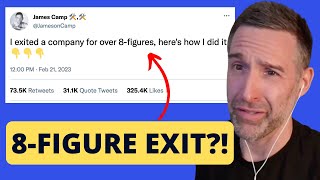
James Camp sold a portfolio of content sites and equity stakes for a low 8-figure exit in 2020, then shifted to buying micro-sites and growing a newsletter. He breaks down the economics of content sites, the volatility of Google rankings, and why margins matter more than scale.
Chapters
All right. Welcome to This Week in Digital Marketing. I'm Jackie Chow. Joining with me today is James Delacey and James Camp.
James Camp. What's going on, you guys?
All good, man. What's going on with you?
Just sort of worried about balloons flying over America. You know, Exhaustion Day. Had a call recently with someone who's a friend of mine who's Special Forces, and he was like, things aren't always what they seem. And all this balloon stuff happened. So I guess I'm getting— I guess I'm loading up on supplies. A good friend of mine told me, goes, we got to get some rice and beans. And I was like, if it's aliens, have fun with your rice and beans, bro. Yeah, we'll see where it goes.
All the prepper sites are absolutely killing it right now. Oh yeah, survival prepper sites.
Yeah, yeah, I bet. Yeah. So, yo, why don't you give our audience like a quick introduction? How did you get started in this space? And maybe your background as well.
Cool. Um, I'm just like a, like, I'm an internet kid is what I like to say. I'm 34. And I just, I would never compare myself to like a luminary, like a, like, like a Carnegie or Mellon or, but I will say, there's, if you ever read Malcolm Gladwell's Outliers, you'll find that like 95% of all the richest people on the planet were born in the United States between like 1864 and 1894. And just because they were in the US during the Industrial Revolution. So I'm 34 years old. I just happened to grow up on, on, you know, on CD-ROM, AOL and the CD-ROM. And so like that was just very serendipitous timing for me to discover the internet. And yeah, I started blogging when I was like 15 and I'll never forget this. I had an article, 2 articles go viral on StumbleUpon and Digg, which I don't even think exists anymore. And I made like $32 and I was like— It's a blast from the past. Oh dude, it was like I knew and like I'm sure I had some random thing before that, but that was like the defining moment. Moment of like, I'm gonna do internet money stuff in some regard. And then I went down like an affiliate marketing rabbit hole. And when I say that, I mean like running a lot of paid traffic to affiliate offers, sort of, I think a little different than we see on Twitter, people talking about affiliate marketing. And ended up building an ad network called LiquidOffers that I sold, I guess, 2 years after that. I was about 20. It was tiny, but it felt like a major win. Um, and I was like running Black Hat World. I was a moderator on Black Hat World. I was like 17 and Wicked Fire.
Oh wait, what was your, uh, I don't, I'll tell you off the podcast.
I'll tell you your name off the podcast. Cause, but I was, but it was just, I don't know, maybe it was me, but it was Black Hat World was a different thing 17 years ago. Right. It was, it was very different. It was mostly like really sketchy black hat stuff, like iFraming ringtone offers and Anyway, I'm writing pages of— anyway, yeah, sort of after that, sort of, you know, convinced, somehow convinced some people at big companies to give me contracts to do like much more upmarket offering, real digital strategy work. And then when I was 27, I decided to move to Kuala Lumpur, which was, you know, a little apropos of a tweet I think you had recently. I lived in Bangsar South. Anyway, ran around, did some teaching at accelerators like Magic, which is in like Putrajaya, outside KL. And then Launchpad in London with Google. Came back to the States to visit my family. I had a friend who worked at a prop firm and traded oil derivatives and was like, hey man, you work at Google and McKinsey, right? And I was like, yeah, why? He's like, I just started a blog about marijuana investing. Do you want to get in on this? And he convinced me to like drop everything I was doing And this was 2016, and we ended up building— it was good timing for cannabis equities. And so we built like sort of the largest financial news site in the cannabis space at the time, ended up taking equity instead of cash from a lot of advertisers. And then a lot of them went public and just got very lucky serendipitous timing, ended up building a bunch of other sites in the cannabis niche around it and sold that stuff in 2020, had nothing to do, found Twitter. And, or refound Twitter and started tweeting about sites I wanted to buy. And that turned into me building a newsletter called NanoFlips where I started talking about deal flow in the space. And yeah, now I try and buy and sell small internet businesses. That's sort of what I do. Is that a decent breakdown? That was a long one, I'm sorry.
No, solid breakdown. You should have seen one of my guests, Tom, in the FBA space. I think his intro was about 15 minutes. So I think you're fine.
You're fine.
Okay, good, good, good.
I can ramble.
So, yeah. Yeah. So, your NanoFlips newsletter, let's talk about that. Sure. It's got hella newsletter subscribers. How did you get that? Is it all through Twitter? Did you run ads?
All organic. Yeah. All organic Twitter. You know, and what's ironic is that you'll see— what you see now is me plugging it all the time. And that's like the desperation thing, which is ironic because it's sort of the opposite of what maybe the perspective is. But like when that was crushing, I was doing 300 subs a day, some days 400 subs a day. You know, that was just when I was blowing up on Twitter and I was plugging it, but it was super organic, right? And now I have it being plugged after a tweet hits like 50 fucking likes or something. But it's become clear to me that Twitter is— I love Twitter. It's my baby. It is the world. I've made such good friends off it. I'll never leave it alone. But I don't want to, like, for lack of a better term, whore it out. And that feels like what I've been doing with plugging my newsletter recently. So I think the answer is to go find a new channel, probably run some paid, and then let Twitter just be the networking magic that it truly, truly is. That's the real magic of Twitter is the network, I think.
Yeah, no, I tend to agree. I've met tons of people off Twitter, some very smart people. But yeah, man, one of the things I'm working on this week was actually growing the newsletter. I see you conversing with Marketing Max. That guy's great, we should get him on the pod.
Max is the man. Yeah, Max lives right near me. We have dinner together next week. He sold his agency to a good friend of mine. Like, and it was just serendipitous, just by chance. I was with a good friend and he was like, do you know Max Bitnass? I was like, I do. He goes, I bought his agency. And I had been trying to buy Max's agency at one point. So it just happened to be serendipitous.
Yeah. Nice. His, yeah, his newsletter content on Twitter is great. I think his playbook is pretty solid. I'm trying to do something probably similar. But yeah, I think my paid ad side is doing okay. I'm not getting as high, like as low of a CPA as he is.— well, yeah, I'm really scaling on Twitter. So any tips you have for growing on Twitter or the newsletter is welcome, but you just mentioned it was all through organic and you didn't plug it as much as you're doing now before.
No, it was just more thoughtful. It was the end of threads. It was the end of threads. What's nice about a thread, and this is just the algo changing and stuff, but what's nice about a thread is that it's almost like an LP. It's like almost like a really thought-out landing page, right? So by the time those subs are super high quality, like way higher quality than through paid. Right? Because like the— and you combine that with the magic of social proof, which is that if you are in— listen, I don't think that I'm anyone important by any stretch of the imagination, but a bunch of important people happen to follow me on Twitter. And so like, if you're in the marketing and entrepreneurship space or in venture capital, there are lots of big important people that follow me. And so Twitter will show you other people that you follow that follows the person you're going to, right? So if you've decided to sign up for NanoFlips through one of my threads, and you go check my profile first. And for example, you see like I sold a company, I sold a hearing aid company last year to Open Store. So Open Store is Keith Rabois' PE shop out of Miami. And so now Keith follows me on Twitter, right? And so like, candidly, like if you're interested in venture capital or you know PayPal Mafia is, or you know that world, all of a sudden you see Keith follows me and Jason, all these people follow me. I'm not saying that they should or shouldn't. I'm just saying that like, it creates another layer of social proof that by the time you've signed up for my newsletter, you're much more bought in into sort of being a subscriber, if that makes sense.
Yeah, no, got it, got it. And was your key to success on Twitter just Threads? 'Cause that's what I'm trying to go through right now. It's going well, it's going well, but it's not, still not at your level, man.
How would it take you? So, dude, if you got, just the game has changed, right? I just happened to be serendipitous timing, right? I had nothing to do. It was 2020. Everyone was all over the internet, right? This was peak COVID, right? We sold this, we sold this, this DMA Holdings I had. It was a portfolio of content sites and equity and other businesses. We sold that on July 2nd, 2020. So I was just like, had nothing to do, obscene amounts of time. And I ended up being in a group of people. And that group of people was this guy Mitchell Baldridge and Cody Sanchez and like a bunch of people that are big. And we were all, and my friend Colin. Who now is one of my best friends on the planet. And we all had like 2,000 followers and we're all like, we're gonna, we had just listened to a pod where Sean Puri and Sam Parr had made a bet to see who'd get to 100,000 first. And we were all like, we're gonna do the same thing. And so we just got super competitive with it. We all were just crushing Threads. But even Threads, dude, I've like, don't even have to do, I don't have a Thread that has more than like 50 likes on it in like 3 months. You know, it's like, it's just so different. I used to bang 10,000 likes on a Thread, you know? So the algo's changed. I also think that Threads are, The zeitgeist of what is interesting to people has changed a little bit on the platform.
Yeah, it is, right? I think Twitter is heading towards more of a shitposting era. Let's just say that. No, it's very interesting. You mentioned Cody Sanchez. She's crushing it on socials right now, huh? Mm-hmm. Holy cow.
Cody's huge, dude.
Yeah. Yeah, she's absolutely crushing it on all platforms. James, I don't know if you know Cody Sanchez.
Have you heard of her?
No, no. She's like the, what is it? The small boring business.
Yeah, she's doing, I mean, to be honest with you in, in, I don't know. Do you know Alex Hormozy, James? Yeah. Okay. So I think that in our little world, right, we all think of Alex Hormozy as so big. Cody has twice as many followers as Alex on every channel right now. Right. She's a million on TikTok, a million on YouTube, a million on IG, right? Like these become these numbers, especially in the business space. Like, I don't want to get into it. She's never told me, that's for sure. But I could, I could back of the envelope some of the money she's making from audience. And it's, and it's like obscene. It's, it's like the type of numbers that you have to be doing like $100 million plus in a traditional business to like spit off that type of, you know, that type of cash flow. So anyway, she's crushing it. She's, she's a machine. She's really good at it. She's got a fantastic team. I think her background in private equity has like allowed her to understand like structuring, running a team. Whereas I think a lot of the people that come up from Twitter don't have that background. They think about like being a solopreneur, which is really tough. Like for me, one tough thing I've had, I've never run a team of more than 8 direct people underneath me. And that was a real fucking struggle. It's like me, sorry, excuse my language. It's like me on YouTube, just like Googling, like how to run a Scrum, you know, because I've never been, I had never worked on a team of people. Like I never knew what managing people was like, you know? So it was like, It's not, you know, and you normally learn from experience. And so I never saw it. So I think Cody had seen a lot of that and been, you know, privy to a lot of that. Yeah.
Cool. James, you mentioned like running your own team. Like, what does your team look like now? Like, what are you working on day to day? Is it, you know, flips 100% or do you got some like side flips on the side? You also mentioned an open store, which I want to talk about afterwards, but yeah.
Sure. So currently I have, 3 sites and NanoFlips. One of them is like the bane of my existence. I've never had a content site that struggled so much ever. And the past 12 months have made me rethink a whole lot. And I mean, I remember Panda and Penguin. I mean, I've been doing this forever. Right. And so like, but I have, I have a site I could show you guys GSC right now, Search Console. And it's like, Crushing, crushing, crushing, disappeared for 3 months. Crushing, crushing, crushing, disappeared for 3 months. Crushing, crushing, right? And so not even like weird normal drops, no manual penalties, nothing. It just like disappears from SERPs for 3 months and then is on page 1 for every keyword for 3 months and then disappears from SERPs for 3 months. And so crazy. That's really, really frustrated me.
Nice. What was, how, how much did you buy that site for? And, uh, we don't have to talk about the niche, but like, Can you give me a broad—
I'll give you, yeah, I'll give you broad niche stuff. So actually it was a pretty small site. It was about $11,000. I bought it because it's in a really, it's in sports industry. What I'll say, it's in a nascent sports industry where I think it's just the opportunity is massive. And so I rode, I'm a really firm believer in like all ships rise in high tide. Like I think that with my cannabis portfolio, my portfolio of cannabis sites, like yeah, we did a great job, but I also understand that I just rode the wave of like what media and attention was looking at, right? And so at one point we were just Google News approved and we were just like anything we put, we would just copy a press release and put on our site. We were number one on Google for pot stock, like every single stock we wrote about. But so this is in a sports niche that I think is just like exploding and has a lot of opportunity. And I sort of saw the alignment as like, I thought it was currently when I bought it, it was just about like product review stuff, and I saw the opportunity to make it about news as I've done very well in the news space before. And in the US, the domino that is falling is sports betting. And so I think there's, I think that, you know, I don't, wouldn't try and get into a gambling site. That seems like it's an exhausting venture. That's really tough. But if you could crush a niche sports site and change the monetization over to like DraftKings partnerships, right? Like in, and, and Barstool partnerships, you end up really, really, really positioning yourself to make a lot more money. So a lot of, I, you know, I'm like a decent SEO, but I'm not the best. But I think that most of what I see often is that like people monetize really lazily and sometimes the juice is not worth the squeeze to try and monetize better. But when it is, like for example, like when a gambling affiliate, you know, payout is like $200, you know what I mean? And you buy a site that's making $300, from Amazon Associates, it's not rocket science to see how you could triple the value of that site pretty easily. And so that's sort of the bet I've been making on that one.
That's interesting as well because I'm in similar niches and I've seen, I've looked that up before, like the various DraftKings and stuff like that, but it's all the, a lot of it is gambling-related sites ranking for those terms. How are you looking to go after those within the specific sports? Take for example, football and you're like trying to do football bets or whatever.
So I'm a pretty big proponent of newsletters and I think it's really interesting to circle back to newsletter stuff. Like I'm not so worried about top of funnel ranking for betting keywords. I think that's like sort of like a, just a, that's a nightmare. I mean, obviously now all the fucking people will sell me backlinks for pharma and betting and like, that's obviously you can go that route if you want to do that. But I think of it more as like just very clear indicator to who the people are going to be that are the readers of it, and then capturing them and then trying to push that upon them later on. And the other alternative is I think that a lot of, I was very, very, very lucky to, just 'cause I grew up in the right place and went to the right school with some of the right people, but I got to play in some really upmarket opportunities. I would say that a lot of, I think the internet marketing community doesn't see. And so you end up having these like big agency world internet marketers that don't know like the little solopreneur world where the solopreneurs are making 10 times as much money. But most of the little solopreneur world have no clue that like an engagement with like a BCG or McKinsey or Bain, like what that actually looks like or what people really pay. And so to go with that, like I'm not worried about taking a DraftKings affiliate link. Like for me it's like going and like getting on the horn with DraftKings and like actually like selling them a direct ad sponsorship, right? As opposed to like, and understanding what, like figuring out who the AOR is for DraftKings. Do you see what I'm saying? Like, or something similar as opposed to just pulling affiliate links from OfferVault or something, you know what I mean? And, or from some CPA network. Yeah, it's like CJ or something for them.
Yeah, I had a guy call, get on the phone with him. Shit, it must have been last year or the year before. And it was like, they wanted to place like Bet365, all that stuff on my sites. Banners, but it was done through almost like an ad CPM model. They'll pay you whatever it was, $20, but it wasn't any better than like a display ad network, which was interesting.
So I don't know how that works. I had done this whole, I tried to, God, a couple years back I really tried to run traffic arbitrage and lost a lot of money trying to run from Facebook paid PPC traffic from Facebook into basically, I had a site, I called it Quiz Visions. And the idea was it was the same Bored Panda, the same model, right? Like basically just page after page after page in which you're trying to capture an RPM that eventually adds up to be higher than what you paid per click. Um, and I went down a giant rabbit hole into programmatic display. We ended up building our own ad server, spent a lot of money on that and like basically setting up our own header bidding, like everything in a way that like, we shouldn't have, but the truth is no one would let me do it, right? You go to Mediavine or like Lockerdome and tell them you wanted to start running a traffic arb, they're gonna be like, okay, there's no way we're letting you put our ads there, right? So, I sort of had to go that route, but it was a reminder and to circle back to when I was an affiliate, when I was a kid, I mean, I was running $10,000+ a month of top line, not profit, but of affiliate traffic or revenue. And when I was 17, and then I started getting paid, the big offer I was running was FCR, streetcreditreport.com. And I was running enough volume through there that FCR started paying me $48 a lead. And I realized the street payout on that offer was like $25 to $28. So I literally, and I was a moderator on a couple of large internet marketing forums and friends of the owners. When we launched our CPA network, we literally just launched on the forums and we had like 4,000 publishers in the first week, right? Because we like talk about authority, it's the same thing. Happening on Twitter essentially, right? But there's this authority and we were just being, we were just brokering that offer. And so my point is, James, to circle back, is that like if anyone on a CPM or RPM or CP, anyone, anyone, any advertisement you're running for someone is someone else's arb, right? And so like there's like margin to be captured if you can figure out how to go all the way to the, to, and if the real answer is if you can have your own products, right? But so I think that like it's, uh, I think that if you, the closer you get to the actual AOR of an offer or the actual company, the more revenue you cap. 'Cause very often by the time an ad is on your site, it's gone through like 4 brokers essentially. They're all taking like an extra 5 or 10% per click, you know? And so like it ends up making a pretty big difference, right? So we'll see if I can pull it off. Otherwise I'll sell the site.
Right, right, right. When you said it's like crushing for like your respective terms, how long does it crush it for? I'm just trying to figure out what happened, you know? Bought it for $10K. Did it go up in value shortly? Like, did it like moon and then it went back down?
It's like a roller coaster ride. Yeah, so I bought it, I bought it for like, I think $10,500. I think it was originally to sell for like $11,500 or something. And I negotiated that for $10,500. I mean, this was like a pretty friendly agreement. I didn't even sign the, the, the, the AP. Yeah, didn't even sign the APA. I was like, I'll just wire you the money. Cause I knew the person, you know what I mean? Like, and thank God. And obviously that's not best practices by any stretch of the imagination, but it all worked out and it was growing, you know, it was growing. I was adding, you know, added a ton of content to it that candidly right now we're probably like month 5 or 6. And if I don't see a lot of that content starting to show up somewhere, I mean, it's been doing SERP dances, but like actually start to have some sort of actual ranking. So pretty low. I mean, it has a D— it has like a DR of like 60, this site, right? So like when I'm targeting super low competition keywords that are like informational, I, some of them should be ranking somewhere. Right. Um, and, uh, yeah, grew. I was doing, and then I was hitting like $450 or $500 a month and then just disappeared. I mean, it's still ironically, and this is such a weird thing. I don't understand. The moment it dropped out of Google was the moment it popped up to page 1 on Bing for all of its search terms. Right. And so like, so odd, like saved me a little bit, right? Like it's like right now I think, I mean, I could pull it up and I think it's made like $180 in the trailing 30 days. Like it's not a total loss. Right. And I don't think it'll ever be a total loss obviously, but it's been frustrating because it's one of the things that it's not, I guess I should be grateful it's not a massive site, but because it's such a small site, like the, the juice, like the effort that I'm putting into it, like I've bought it thinking this is going to be easy, easy, easy wins. And now I'm like 5 months into it, like working on something that like, made me $180 last month. So, and by the way, prior I had done this shitty little case study site last year before that with a dog frisbee site. I bought $400 in Bitcoin and I, then I grew its revenue and sold it for like $1,250. And I just did it because I wanted to have like a fully, everyone can see this. Here's the URL. You don't have to be like a super master to do this. Like here's, I'm identifying keywords. So now basically I'm a year in to working on these projects that dollar for time have been fucking horrific.
So, yeah. Holy cow. Is your typical deal size the, again, the low 5 figures or I don't even know.
It's a great question. Typical deal size is like—
When you buy, sorry.
Yeah. Yeah. That's a great question. So, I'd say buying for me has always been sub $100K. Actually, one thing was $100K flat. But everything I've purchased has been sub $100K. I've been, knock on wood, very lucky, I think, to not really have— I mean, I'm sure— I mean, there's— I have a million things I started from scratch that I took serious L's on, you know what I mean? Like burned through investors' money, that all gone, you know? But like, I've been very, very lucky to have never bought something that turned into an L for me. And sort of, I'm sort of refusing to let it be that with this site as well. You know, like, and if it is, you know, I had this epiphany yesterday. I was like, okay, worst comes to worst. I've made $2,000 off it. I probably spent $2,000 on it. If I sell it for $7,500 and I lose $3,000, that would not be the worst L of my life. And that would just be the worst. That's the worst case scenario right now. But I don't think it's going to happen. I'm pretty sure I'm going to turn around and flip it for more. Yeah.
Sounds like a plan. Yo, I'm the king of Ls. I take them straight to the chin.
Yeah, relatable, bro.
Relatable. No, man, dude, I'm still recovering. Still looking at my wounds. Yeah, unlike the two James here, they only take major dubs here. No, I'm still struggling here. Still struggling. No, the recent update really hit me, but I'll be fine. I'll be fine. That's why I take way more exits and I take way more money off the table nowadays just to be sure.
Totally. I mean, I was very, very, very blessed. In 2020, we had a low 8-figure exit. And so, that really sort of changed my risk appetite in a pretty dramatic way.
And you had a low-figure, 8-figure exit. Can you talk about that?
Sure.
What the heck?
What is it? It was a portfolio of sites and blocks of equity in other companies. And I just timed the market really right. Again, it was not genius. It was just fucking serendipity. Excuse my language. I was really, really lucky. Timing. And it was— I mean, I was the smallest. I was a co-founder. Not really. Someone founded it. I bought in 3 months after they founded it. It was like I told you, my friend had been like, oh, I started this blog. Do you want to help me with it? And I was like, oh, sure. I raised equity rounds, debt rounds. I was diluted pretty good, right? So I don't want anyone to think that everyone assumes I walked away with like, oh, 8 figures. I walked away with 6 figures in cash and 7 figures in public stock in a company that we sold to. Great.
Are you fully vested now?
By now, I, as of— I don't want to go too into it. I don't talk about— okay, okay. And I'll go over the very high level. I don't ever talk about the exact company, although anyone who really, really, really digs could find it. But it's because I still own the equity, and I'm only in the past month have had my restrictions moved on my shares to be able to sell them. And I would prefer to not have the 100,000 people that follow me be trading a stock that like holds a large piece of my net worth in it. And so if that makes sense. Yeah, sure.
So yeah. Yeah, got it. Holy cow. Nice exit. Um, thanks. Yeah, solid, especially on the equity side. Uh, but I'm guessing it went down throughout the last couple months because of the— Oh, 2022 must have been tough to look at, huh?
I'm probably down 70% in the paper I was given, in the stock I was given.
Holy cow.
That's right. So whatever. I'm still fine. It's not like the end of the world. But I do think it's a really important lesson for people to recognize that when people get exits over $1 million, it's very often much more complex than it sounds like on the surface. It is very rare for an all-cash one-time payout for a business. It happens for sure. But I'd say that it's much more common to have earnouts, seller financing, like, you know, mixes of stock and cash, you know, and so I just think it's, it's, you know, it's just a reality, you know, that I think people should recognize.
Yeah, I think especially on the higher end, if you're well into 7 figures, I think that's extremely common. Okay, yeah, cool. Yo, let's talk about your exit to Open Store. You mentioned hearing it.
Sure.
Can you talk about that? How do you feel about Open Store? James, do you, James Delacey, do you know what Open Store is by Keith Rourke? Do you know Opendoor, the real estate one?
Yep. I used the Opendoor app, I think. Wait.
Yeah. Yeah.
No, no, another one.
Yeah.
I know.
So it's like a similar concept and pretty much Open Store, what they do is they buy your site within 2 weeks. Is there a sales pitch?
And pitch is the word there.
Yeah. All they have to do is like plug into your store and then they can send you an offer and then it's like extremely quick. And after speaking with some people, it's like, it seems like a pretty handy exit. They pay typically—
What's the advantage to selling to Open Store versus selling on the market?
They're so fast. They're so— wait, wait.
Is that the only thing?
Just speed? Yeah, yeah. And the multiples are slightly below market rate, but it was all right. Jameson Camp, maybe you can talk about how was working with them?
Faster than any other transaction I've done. Definitely not as— not 2 weeks though, which is interesting because in all fairness, anything I've actually ever done that's been over like $10,000 or $20,000, like it's never— closing dates never happen when they say they're going to close. Took us like 3 months, candidly. Um, which was really not too bad for about a million dollar transaction. So like, that's, you know, like I can't super complain, but there are, uh, it just was not as, it was definitely easier, but it was not as easy as promised. If that's a fair way to break it down. Um, I actually was very lucky. I had a partner and he did 90% of the heavy lifting, which was like really useful for that. I will say weird different things I learned about. And when you start playing, I don't know how much you guys play in the Shopify e-commerce world ever, but this was a brand built on Shopify. And so obviously cash flow management becomes complex. So we had Shopify Capital loans out and I actually didn't know you can't sell a Shopify store while you have a Shopify Capital, where you have an open line of credit with Shopify Capital. So we're like, wiring off $120K from one account to another account just to try and close the transaction last second to make sure it all gets done. I will say OpenStore, nothing negative to say about them at all. I will say though, the vibe to me is more bankers than operators. And I do think that ironically, which becomes really complex is that, and you guys probably know as operators, but from my perspective is that like running a sub-$10 million a year online business means you need to be able to operate it, right? Like, it is not, it's not like buying it and stepping away, right? And just having somebody else run it. And so what I found that the Open Store team was really nice and really great, but very young and much more, much more bankers, finance people, right?
You know, I think, I don't want to go into their defense. I love bashing on Open Store, but I think in their defense here, it might be just the finance people, uh, dealing with the transaction and then they have operators in the background. Um, but I think they're, like you mentioned, there's prob— there will be a disconnect if it's set up like that because you can't pass on all the details from, uh, the finance team and the, the actual operational side.
Yeah. And I've seen that as well too, right? So when I put— I had a company, I tried to we bought the hearing aid brand was I was trying to do my own little aggregator, right? Like I just thought like, and I'm an op— I say I'm a marketer who moonlights as a banker. I'm not really a banker. I just have done some M&A transactions and been around some much, much larger ones enough to sort of really to speak to them. And I put together a company called Common Commerce and I added a bunch of people to my board. 'Cause I know that a lot of, I've accomplished some stuff, but having some good gray hair, more than mine, makes a big difference when you wanna do larger transactions. And some of the people I add to my board are CEOs or CFOs of multi-billion dollar companies that are just my friends, right? And they just were like, oh sure, I'll lend my name to it. And I would have them look at deals with me. And it's funny because for me, when I look at a deal, I wanna get inside ad manager, I wanna get inside Shopify, I wanna get inside Klaviyo, I wanna get inside GA, I wanna understand how things are running. And everyone that I added to the board was like, they wanna look at P&L, cash flow. They could care less about the actual mechanics of the business. Right. And so that became clear to me. Good reminder that the bigger you become, you know, the people— when you buy a $200 million company, you know, you could buy a $200 million company, not know how to run it. You just hire someone to run it. Right. That's sort of what private equity firms do anyway. Right. Very different than buying— to my point about buying a $50,000 blog. You know, it's not rocket science to run a $50,000 blog. I believe anyone can do it, but you have to learn how to do it. Right. You don't just like I find that often people think you buy like a $10,000 website and then just outsource it all. Well, yeah, if you want to take an L for the first year, maybe, right? But in general, like there's not enough margin, $300 a month in profit, $400 a month in profit doesn't leave you enough margin to pay people very much, you know? Um, maybe some content, but that's about it.
Yeah, no, I, I think there, especially if you're not the one operating and you buy these sites, um, it really eats into your margins, especially. Yeah. Especially if you don't know the world as much, you'll probably get quoted out the ass for writers, operators, so on and so forth. So yeah, but I guess we'll see. So you ended up exiting this, you partnered up with someone and with an operator, it sounds like, right? With the hearing aid?
Yeah, actually with the original owner, with the original owner.
Oh, okay.
Okay. Okay. It was really, it was like a, Yeah, it was a really cool, interesting transaction because I was originally a consultant for them and sort of like they came into the business, hired me as a consultant. I was like, oh, I could grow this. You want to sell me part of this? It's like, you want to just— you want to be a partner in this? And he was like, okay, sure. But then it became like it was more complex. It doesn't— didn't need to be, but because like I put in a new holdco, right? So then it had to do, you know, so there's like a share swap. So he didn't have a taxable transaction, but then he ended up owning a piece of the parent co anyway. But it was great because he was already the CEO and paying himself to be the CEO, right? And so it didn't, it wasn't massive difference there. He's just the free extra free cash flow just didn't go to him anymore, you know?
Gotcha. And when you guys exited, did he have to stay on to work with the team out?
No, OpenSource took it fully. I mean, yeah, for transition, but yeah, but he didn't, he doesn't work on it.
Sick. That's a dub right there.
Great. That's the best one. That's the biggest dub I've had in a minute. I mean, to be honest with you, that was a good one. To be really honest with you, we— I legally, like on paper, acquired this business in March of— or maybe February. I have to look. But anyway, we bought it and sold it in less than 12 months and grew it to like, to like basically from like $600K a year to $3 million a year. In less than 12 months. And that was sort of like, I mean, to be honest with you, like I sometimes have to remind myself of that 'cause that was like such a, such a dub, you know?
You know what I mean?
Yeah. Yeah. And that's not realistic to, to always do.
Yeah. Okay. And now that you've dealt with so many business models, like you've done the consulting side, it seems like you've done the content sites, you've done e-commerce.
Sure.
Is there like a favorite for you? 'Cause James DeLacy knows I hate e-commerce. I hate the cash flow of an e-commerce company. I hate dealing with the logistics.
Yeah. Well, you hate it 'cause it's physical goods. I'll tell you what the answer— I wanna sell ones and zeros for the rest of my life, essentially software and information. I, I think I, I'd like to make, I've made some small play last year into the online education space. I think it's still a mired world because of the scammers that have existed in it forever. Kindly though, if you wanna be a media buyer, an SEO, a copywriter, have fun at Wharton, have fun at Booth, you know, they're, they're a waste of your time. You should buy a course, right? That's just the reality. Agreed. Yeah. And so I think that there's a really big opportunity as the sort of zeitgeist of the big business world is starting to view online education as real. MasterClass did a really good example of that, except the thing is they did a terrible job with their product. It's very entertaining, but you won't learn anything from MasterClass. Perfect example is that it's in the Delta Entertainment System. If I can watch it on the back of a headrest on a flight, It's not really classwork. It's really entertainment. And so I think there's a major opportunity with— I mean, I listen, I am, I'm an advisor to some software companies. I'm advisor to a couple physical products companies. Like there's a cannabis, the pre-roll company I own a piece of, I've been a partner in from the very beginning that is like very celebrity driven. And so it's done well because of that. But in general, like, where do I want to put my time? Like, I think ones and zeros. I think, I think, you know, as much as like the internet, as AI stuff like terrifies me and algorithms terrify me, I think that if I were to make a bet on the, the reason you hate e-commerce is because you're looking at like, you know, to run great cold on a private label good, you probably need 75% plus gross margins, which are really hard, are tough to find unless you're like in supplements or beauty. But you know, when you start playing with ones and zeros, it becomes the margins are automatically 85%, 90%, 95%. And so that's where I think for me, there's a larger online education play I'd like to play in. And I would love to buy a little software business. Ironically, when I sold my company, they basically gave me like a 12-month little tour of their other firms, which they basically was a consultant for all of them, fractional CMO. And I spent about 4 months running a $400 million healthcare company and not running, but being a fractional CMO for one of the telemedicine companies. So I learned a lot about asynchronous funnels. And stuff like that for prescribing like ED medication and stuff. But I've never owned a software company other than like owning 0.02% of it. So that's the front, like that's the next thing I wanna do. I wanna buy like a micro SaaS or build one off of my audience. 'Cause I think that there's like a great opportunity there.
All right.
Sorry, Jackie.
I just wanna jump in here. You mentioned Jameson Camp, 75% margins on supplements. What supplements are these?
I don't know, dude. Any, dude, any of the like, any vitamin C, any sort of like, What about sports supplements?
Protein powders, mass gainers, all that stuff?
Yeah, definitely. I mean, if you— I can introduce you to suppliers for more than probably 85% gross margins on this.
Okay, we're trading off of this.
Yeah, please. Yeah, dude. I mean, that's the only space I'd play in there, right? Supplements are great. Consumable margins are insane. The other side about consumable is what I'll tell you when we sold to Open Store. I'm going to tell a dirty little secret. I didn't sell that company. Didn't— sold the assets of that company, right? They did asset sale. And so, you know, I think that people—
that's normal though, right?
It is normal, but it's normal because they don't want to get sued, right? So if someone put a hearing aid in, they fuck up their— their— if someone put a hearing aid in that I sold them and Open Store bought the whole company, there's a bunch of reasons. You can write stuff down, all this stuff. But, but most importantly, when you think about consumables or things you put in your ears and stuff like that, right? Like is that if someone got hurt from a hearing aid, I still get sued, right? Because I— the company that sold some, I still own it, right? Versus if they bought the company, that the owners of that company get sued, right? So with supplements, the only thing I've done—
I get careful about—
I had a piece of and ran digital for a company called Kanuka. It's a CBD and manuka honey skincare brand. We were doing about $13 million a year. I sold that equity, my equity in that, when, when I sold my holdings company in 2020. And you've learned about really weird stuff about claims you can make about the dermis. Like, you can't— when, like, things penetrating your skin, once they get into your bloodstream, claims become sketchy. People can get sick. So, the things that you ingest and they're consumable are great, but there's a double-edged sword there, which is that, like, you're just— you open yourself up to lawsuits much more likely. You open yourself up to weird claims. You got to be careful with the supplement space. But, yeah, you do supplements right. That's the business to be in for sure. For sure, for sure.
Yeah, yeah, Jameson Camp, um, I used to do supplements, I told you, right?
Um, yeah, you said you're doing, uh, like lion's mane and stuff like that or something?
Lion's mane. Regen's saying, uh, yeah, margins were 85%. Um, just source from China. They're all, uh, they have all the qualifications because they— the people you buy from in the US, they just source from China and bring it in anyways.
Yeah, so you just have a middleman basically.
Yeah. Yeah. So that's, that's probably why you don't see the margins as high. You probably went with like a US guy. But no, it's pretty interesting. So Jameson Camp, are you gonna be focused on your newsletter this year or you mentioned online education. Are you gonna, are you going the course route?
Yeah, so I did a small, I did a small course last year and didn't ever want to. It's so funny. Like I now have been saying—
Full circle. We've gone full circle.
Full circle. Yeah. It's like, I always say like you either die a hero or live long enough to see yourself sell a course on the internet. And I've lived long enough to see myself sell a course on the internet. I think that a lot of, a lot of it for me has been like trying to understand how to teach, right? Because I wasn't— I hated school. I did really horrifically in school. I went to 5 high schools. First time I got kicked out of school was 4th grade. And so like education for me was a struggle growing up. And I like to hope that it wasn't intellectual capacity was that I just really didn't want to be there. And so, when it came to teaching, because apropos of us talking about sort of me not having the experience inside of traditional work environment very much to understand how people led massive teams, I didn't really ever pay attention to school. And even then, I don't think that the traditional way of education is actually how you teach very well. So, something that's been really interesting for me is like to learn how to actually teach really well and get results for people. And that's really, I think, important. It's more like a trade school. I think we're looking at this like this, the online version of trade schools having massive opportunity. And I think that that's really what it becomes exciting to me because again, like if you want to be a welder, don't go to Wharton. If you wanna be a media buyer, don't go to Wharton. I don't care that it's a top B-school in the United States and probably top 5 in the world. Like you will not learn that there. Like it is not possible. And as someone who took, you know, I'd taken plenty of marketing classes in college, none of them taught me anything. I don't mean to like knock on my own—
I mean, they're like 10 years behind, to be frank.
Easily.
And every time, by the time they iterate, it's like the trend is long gone.
Yeah, they're always behind. And the problem is because of financial incentives very often. I generally believe this, right? And so, the problem is that for me, the only way for me to really sit here and teach is I have two options. There's a couple people I really liked and I'm happy to share with, or I can get a dopamine hit from tweeting. And I need to get back to more being useful tweets. It's become very platitudiny in the recent, but like the way I blew up on Twitter was incredibly tangible tactical stuff, right? And so I need to get back to that. But so then the problem becomes when you spend that much time, you either have to have someone who's really rich and willing to give away their time for free, or you have to incentivize the educator to make money. And the problem is that in a college, there's no financial incentive, right, for professors, right? So the idea that someone's going to work 80 hours a week to go make 60 or 70 grand a year if they're really good at what they do, it's really tough unless that person already has a lot of money and wants to do that, right? So the financial incentive has to align, I think, and the online education component makes sense to do it in that regard. So I'm gonna focus on newsletter a lot. You touched on Max earlier. Max is crushing it in the newsletter space right now. I think it's very, the unit economics are very simple when you figure out in the newsletter space, right? It's like a subcost X I, you know, right now with NanoFlips, I charge between $500 and $700 for, between $50 and $70, sorry, RPM. So for every 1,000 readers, let's just say the low end of that, that means I get 5 cents per reader per send, right? So if I do 1 cent a week right now, if I did 2 cents, it'd be 10 cents a week for, or, you know, $55.20 a year. So if we forget churn for the sake of this, because that just complicates the math that I can't do, It goes very simple that as long as that I become, you know, if I can spend up to $5 a sub and be self-liquidating in 12 months on that, whatever, break even in 12 months, that's a very simple, like, let's just pour gasoline on that fire. As long as you have the 12-month attrition inside of you, it gets a little different at scale and stuff. But so newsletter is going to grow a lot. The big secret here is I want to flip NanoFlips one day. Probably not a big secret. I don't talk about selling online businesses. I'd love to sell NanoFlips. And one thing I want to do, I just bought OnlineAcquisitions.com. So I would like to sort of change it. I'll keep NanoFlips as is, but build a little bit of more of an upmarket M&A advisory, which I've done a bit of in my life. And I would love to exit to like an institution, or if not an institution, then one of the brokerages, right? I think that I'm a very easy acquisition for a Flippa or an Empire Flippers or an Acquire.com. If I can come and say, hey, I have 100,000 subs, they're all looking to buy businesses. And by the way, we also make $2.5 million a year in free cash flow. I think that's a pretty— not a rocket science exit. So that's the hope.
Yeah, that's a compelling story. Yeah, I think for me personally, it's not so much growing the newsletter because you can turn on ads and you can crank it and you can probably get $3 to $5 per sub. Yeah. For me personally, it was harder to find like advertisers because then totally Marketing Max makes it seem like it's so easy to find sponsorships because I think maybe he has like a sales team already. He's building like a pipeline and then you just go in and just, it's like a plug and play. So I think this year I've been looking really into that. Yeah, we should share some notes, Jameson Camp.
100%. When we're not on this, I will, I'll, I'll, I'll, I'm happy to reference you to a couple like basically agencies that will just, that just, you know, do exactly that. I mean, I can tell you who I use. I just use ConvertKit. ConvertKit sells all my ad space with it. So they don't sell out all of them candidly. But there are a couple other agencies I know that basically are just AORs for newsletters. And then I think Max does, from my conversation with him this week, unless I'm mistaken, does have a full-time salesperson. That's out there selling. The problem with the newsletter sales is that it's the same audience, right? So you burn through advertisers, right? And so, you know, it's not that they're a bad audience, it's that after you've bought 4 cents from me, 5 cents from me, like until I fully re-up my audience all over again, right? Like how much do you wanna send to the exact same audience again and again and again? For me, what I've had to be careful with is most of the advertisers that wanna advertise with me, their backend is crazy. It's like Masterworks, it's like funds. It's— and so for me, like, I don't want to, I don't want to send my readers to invest in something that I don't invest in myself. You know what I mean? Like, or that I have, you know, like that feels like a sort of misalignment. Yeah. No, I hear you. Yeah.
No, I think to speak on the same audience thing, one tactic. So we were lucky enough to get some sponsorships for the podcast, newsletter, et cetera, so on and so forth. But I've just been pouring— Yeah, no, let's just mention it during the recap. No, um, no, no, no.
You doing an ad read right now?
Yeah, we could, we could, we could. Um, but anyways, uh, everything I do, uh, every sponsorship we take, the revenue, at least on my end, is I just pour it right back into growing the newsletter. Because I don't need like a couple grand, it's whatever. But if you just make it into some sort of weird ad flywheel, every, let's just say sponsorship you sell, you just put that right back into growth. Then you can bring this, hey, we grew the list by 3K last month. You can hop on again. We're gonna throw it back. Throw all their budget back into growing the list. So you, you'll be able to benefit from it. But yeah, I think it's a, it's a, something interesting here with the newsletter.
Yeah. Well, the other side of it is, and what I may do candidly, and I've, this thing, I've fleshed it a lot recently, is like, I just may do, I have about 15,000 subscribers on Nanoflips right now. I've had about 22,000 in total. I've had churn from info product launches that was aggressive, like much stronger churn than you would see from a normal send, because when you send 10 promo emails in 7 days, A lot more people unsub than, than if you send a normal newsletter and you know, what I may end up doing is, is just adding another send and a little bit of extra like phone calls, Q&A, that kind of stuff. Not a full community and having a paid newsletter at like $49 or $97. Right. And so, and I, and for many people it will be inaccessible and it's fine. Look at the free one, but even at like a 2% conversion rate, which I think is doable at like that level of a ticket into that newsletter. And I just know because of what I've sold in that newsletter before, you know, 2% conversion rate, 300 subs. I mean, we could cut it in half and say 1%. I'm sure I could convert 1%, you know, like 150 subs at $100 a month is $15,000 a month, right? And that's MRR, right? That's very different than going out and selling ad sales every month, you know, like, and it becomes a much more compelling offer to sell, you know, you get, you probably get like an extra an extra 12 months of multiple boost onto it, right? 'Cause it's recurring. And so, you know, shout out to Max, who's the one who suggested that to me actually, 'cause I was like talking to him, I was like, oh man, it's very simple math, ads as well. He was like, why don't you just fucking charge, you know, why don't you just do an extra send and some Q&As and some, you know, adding a bunch of package to it and make it $97 a month. And I think that may be the right answer there, right? Because then at scale too, becomes, much more justifiable. You're earning at that level, I'm earning a dollar a month per sub, right? That's, that's so, and all of a sudden if it costs me 5 to acquire a sub, and again, forget the math, the math of conversion rate into paid, but you know, then I'm, then I'm self-liquidating in 5 months. I was very lucky too. I did a JV in 2020. I sold my company, first business I reached out to, and I did, I did a JV with a company called Agora. Agora Financial, which is a very large publishing company. Yeah, they do about a billion a year in newsletters. They're like sort of secretly the monsters there. But you learn a lot about like self-liquidating on the front end tripwires, then co-reg to pay for it, you know what I mean? And then all of a sudden you're making money acquiring a subscriber before you're even sending anything to them, you know? And yeah, it's a pretty decent opportunity as well.
Hmm. All right. I mean, it seems like newsletters can be a heavy focus for you this year. Yeah. And anything else? Are you, oh yeah. How do you feel about the AI movement? Do you think it's gonna hit the content sites?
Yeah. Well, here's what, let me give you my, I wanna be completely transparent and say that I clearly have a dog in this fight and that's that I own content sites, right? So like, yeah, I am, I like, I'm not, I see some people saying the sky is falling, Chicken Little, the sky is falling, the sky is falling. I think a lot of it's fear porn, you know what I mean? That's fine. I do think my bet is that we are going to see certain keywords have pretty significant drops, right? And that's, that's, that's, that's just the reality. I think we're going to see, and you saw on Bing with GPT already, sort of basically featured snippets getting replaced. Anyway, go on Bing anyway and go through a Bing search. It's crazy the level of details that exist on certain search results. I was looking at mine the other day. Whoa. Um, so I think we end up inevitably in the next— in our lifetimes, gentlemen, I believe we probably see most of the jobs that we all do online today as is today get pretty replaced in our lifetimes. I'm not so worried about the next 5 years. I think that we live in like a little bubble. I'm amazed how fast— it's great that ChatGPT was the fastest to a million users, like that's cool and all, but I think that the— like, I don't think the average I don't think any human, myself included, can really comprehend what 8 billion people is. And we still onboard like 200,000 people to the internet every day that have never been on the internet before. So my bet is that from a search perspective, certain keywords look at pretty significant drops. And I think that this just leans into what I've seen over the past 15 years of doing this, which is that when I first got into this, you would buy an EMD, an exact match domain. We'd put up content and then in the bottom of the page in white, we would keyword stuff on top of a white background. And we'd rank number 1 like clockwork essentially. Right? Like, and it was, and then SAPE came out, which I don't even know if people know what SAPE is anymore, but a bunch of like Russian, basically PBN stuff. Right. Um, and it's all changing all the time. It always gets tougher. And what I'm finding is that I used to push people, not push people, but be like, oh yeah, anyone can buy a content site. No, I think that basically content sites, authority blog, authority sites, niche sites, whatever you wanna call them. I think are gonna, the ones that are gonna do well are gonna be really predicated on having real eat in Google's mind and videos and photos and making things unique. I do not see a total end to search. I could be wrong. I've been wrong before. I obviously would be pretty upset if I was. I, what I am doing though is waiting over the next 2 to 3 months to see how this really starts rolling out, how Bard rolls out, how, how ChatGPT rolls out inside Bing before I make any total changes into the way that I do things. So it freaks me out. I hate it. But I think as in anything in this world, to bring this back to, you know, full circle to Malcolm Gladwell's Outliers, just as everyone lost their job making shit by hand, the greatest, wealthiest people the world has ever known were created during the Industrial Revolution. And so inevitably, people are going to be hurt by AI, and others will use it as a tool and make more money. My hope is to be the latter. My plan is to be the latter, if that makes sense.
Yeah, no, I agree. I think there will be, whoever capitalizes on this the most will probably be the first trillionaire on the planet.
I mean, you know what I would do, for example, like, and I tweeted this the other day, but like ChatGPT, let's say you have like, you know, a giant authority site, content site that's got a bunch of like decent money pages. Just go, you know, let's say there's 30 pages that bring tons of traffic, 50, whatever. Go use ChatGPT to go make 50 bespoke lead magnets and, and have a popup on each one of those pages that is particularly made specifically to that page and go build a, and go build an email list that way. You know what I mean? Like, and I think that that's an amazing opportunity. One thing that to me is the real opportunity. If you can, if you got a 6-figure budget for a website, I had a friend who bought a site, was doing 200,000 uniques. This is a crazy story. He negotiated on Flippa, bought it for $5,000, 200,000 uniques. It took him 7 months of negotiating. No one else wanted to buy it. Cause it was like, it's built on PHP. And he was like, I gotta learn all these database things, all this stuff. Anyway, 200,000 uniques, 50% US traffic. I mean, pretty clear, you know, newsletter, forget even just display ads and affiliate stuff. It was pretty clear newsletter opportunities there, right? Like, mm-hmm. Like really quickly you're capturing 2, 3, 4,000 new subs a month, you know, for free. And within a 24-month timeframe, your email list is worth more than the website is, right? And obviously, you know, search isn't destroying your newsletter. So anyway, that was my little rant there about the opportunity in that regard.
Yeah, no, I think I'm personally sitting on my hands. I wouldn't want to be caught holding the bag, so to speak, in the, let's say if there is a content site Armageddon, that's why I've been sitting on my hands the last couple months. We'll see. I've been reviewing some deals. Where do you get your deal flow currently? Is it private?
Yeah. Yeah. So this is funny, man, because I don't think I have— everything has been off market. I mean, obviously, I mean, for the past couple years, and that's become tough for me. Because just to be really candid with people, I obviously tell people to go look at all the marketplaces and brokerages because that's where you have to go look. But I'd bet you also, Jack, you get DMs all the time, people trying to sell you stuff, right? So, one thing I tell people is that when you're really getting into this, if you're really looking to buy sites, start tweeting about it, start talking about it, start partaking in these communities. Because I mean, every deal I've done over the past— I mean, off-market's relative, right? But I mean, they've not been through a Flippa or a Empire Flippers in the past 3 or 4 years. You know, it's all DMs or a friend calls me up and says like, oh hey, like, do you want to buy this? And I say no, I know someone else wants to buy it. I've actually brokered some deals that way myself.
Yeah, right. I think these marketplace deals tend to be, well, not very much good deals. They're probably a bit inflated because they got to pay the platforms. Versus the DD they have to go through on Empire Flippers is pretty intense. Most of the time I would just rather work privately. You move a bit quicker. Yeah. And it's hard to get scammed nowadays with all the tools available to us, right?
So it's— Well, it's hard to get scammed if you actually like try not to get scammed, which is what I find really interesting. Which is that like, I'll tell people all the time, like I had someone who today as a favor, um, I'm like looking through their analytics for them, trying to understand, just break down some stuff for them and there's off a site they bought. And, and at first I was like, is this even installed correctly without even checking to see if the tags are there? You know what I mean? Like, cause there's no traffic ever. And he's like, oh, it's new analytics. I just installed it after I bought the site. But now it's been like 2 weeks and there's been no hits on it. And For me, it's like, oh, you did, you actually even get added into the original analytics? Do you mean, did you just like take it at face value? To your point, like as long as you really dig in, it's, you know, it's pretty easy to verify most things. Yeah.
Unless you're working for your— one of your like, one of your readers got scammed or what?
What happened? Yeah. I mean, he bought like a $300 website. I mean, it was like a tiny, it was like, oh, okay. Like a tiny starter site. You know what I mean?
It's, oh, go, go, go.
You know, it's almost, You know, I don't want to say this to him, but it's probably a great lesson he learned for $300. You know what I mean?
$300, dude, cost of doing business.
That's like, uh, yeah. And now he knows, right?
Yeah.
Now he knows. I mean, to be honest with you, that's, you know, you, that's the best way to learn is to have something like that happen. You know what I mean? Um, but yeah, it's off-market deals are the way to go. I think that what's interesting is that I think if anyone really put in the effort, could just start. I had one person, cause I told you, I do, I did a couple small cohorts last year to help people buy sites. And one person, the last one bought a— this is sick. I don't want to give away the site, but bought a site in the horoscope space that they paid $20,000 down and seller financed the rest of it as a partner with the seller because the seller had bought it years ago, didn't have done anything to it. It's making like $5,000 or $6,000 a month on its own. And they did it by just cold emailing the website owner and was like, hey, I love this site, you want to sell it? And I think that, I think that actually, I've never done it like that, I don't think. But like, I bet if you just put in the fucking effort doing that for a month, you end up with some pretty good deals on your plate, you know?
Yeah, I either always sell or finance, or I keep them on board. I got a significant percentage, not Like I, I would take majority, it would be either 60/40 or 70/30, 80/20. But yeah, that it helps them stay engaged. They're the expert in their niche. Also you got an operator and maybe you got a future employee as well.
It's great.
Totally. Yeah. Yeah. Hey, thanks for hopping on today. Is there a final note for people just starting out in the industry? Like what would you recommend them do? Would you still recommend them get into the the niche website flipping game or, 'cause there's still an arbitrage play available for the next, at least couple years.
Totally. Well, what's funny about that is that like, I think that myself and some other people have destroyed some of the arbitrage ironically. Mm-hmm. Because when I first started tweeting about this, I was, you, there were literally sites for sale over Flippa that you were just using AdSense. And I like was just like, anyone with literally half a brain can, if you have sub 50,000 visits, can go switch to Ezoic. Can you have over 50,000, go to Mediavine or AdThrive. And you'll, yeah, and, and, and ARB that pretty quick and you can flip that site pretty quick. And that's pretty gone these days. I don't think like I'm the reason, but I've been part of the, the reason I think that, that, that there's less of those. I would say wait the next 4, 6 weeks. I wanna see what happens at, you know, with, with AI. With that said, I'm sure you guys all saw that Google now basically had to change their stance on AI and say that they're okay with AI content, which is like really interesting to me. And I don't know how to take that yet. I would say that still, I would never, I always tell everyone, if you're looking at buying an online business, buying a website, that like, if you have no experience, that your best bet is gonna be a content site. And you should probably just try and build one from scratch first, just so you can learn how to install WordPress and a plugin and do that shit. Post that, I could teach anyone like very basic. I mean, if you buy a site that's got like a DR of 60, forget the shitty site I am dealing with right now. It's pretty easy to find low competition keywords to write decent content for and rank pretty quickly, right? Like that's not total rocket science. With that said, most people love— Jackie, I love that you don't love e-com because everyone I know wants to be involved with e-com. It seems sexy. It seems cool. But I tell everyone is that like, unless you have experience at an agency or in working for a DTC brand before, I wouldn't go buy an e-commerce brand. It wouldn't just— it's like, it's a, it's a, it's a lot tougher. To, um, and anyone you can learn to do it, just the, the, the learning curve is steeper, right? Um, and the amount of time you put in is steeper because everything, what's nice to go sort of what, what, what, what Jameson and I were talking about earlier with like sort of ad rates coming, you know, is that on a content site, the only, you make money by being that middleman, right? Essentially, you, you know, you are a bridge, right? This is traditionally how it's worked. You are a bridge between someone looking for an answer You give them the answer and you get paid as an affiliate or for a display ad for giving that answer. The difference between e-com is you can make more money, but you own the backend, right? So now you have to deal with the backend. You have to like actually sell to that customer. You have to deal with fulfillment. Did he just cut out? You have to deal with customer service.
Yeah.
Did I cut out?
You can say it again.
Yeah, there we go.
Okay. I got you.
I said the difference with e-com is that you can make more money. There's more margin because you're not going through the middleman. You're getting rid of the middleman. But you have to then fulfill that for that customer. You have to go ship that product. You have to go deal with customer service. You need to do, you know, email flows, everything. So for everyone starting out, I'd say that I'm still a big proponent of content sites, niche sites. Um, I don't think they're going to listen. Google has to get their data from somewhere. A, B, I think that people— I was at Ezoic. I'll tell it very quick because I know we're over time. Sorry. I'll tell a very quick anecdote. I was down at the Ezoic offices in Carlsbad like 2 months ago. Mm-hmm. And they had me and some other big publishers there, and then they had sort of people come speak to us about the industry. And there was an algorithm expert who came and basically talking about, uh, my pitch to people has always been that Google's business model is so beautiful, it is so perfect that all they have to do is give you the best search results forever and you'll always keep coming back. And the person was like, I actually don't think that's what's happening. I said, what do you think is happening? And they said, I think that Google— and we were talking about why you can find TikTok in Google search results now instead of just a YouTube Short, right? And I was like, because they want you to have the best answer. And the person was like, I think it's because of antitrust. I think that Google is just afraid that the government is going to shut them down at any moment. So most of the decisions that they make are to avoid the government shutdown. So if when you search Google, you could only find Google results, like for video, then you might run into an antitrust issue, right? And so I think there's two things about, about, about AI content and search engines that people are discounting. One is copyright. And so there's a lot to be said about taking other people's work, repurposing it and making money off of it, and, and, and, and then combining that with impeding on them making money and running their business, right? And so I think that anyone can make an argument that Google is, is, uh, a major part of running any online business today. And so that Google making it impossible for people to get traffic from stealing people's content and then making it so you can't get traffic even if they cite it, that you are impeding on business of small businesses in the United States. I think that there may be some weird antitrust stuff. And what we're seeing even in the copyright space is Getty is already suing half the AI image generators, right? Because they're finding literally like little white boxes on the fake images, which are just clearly more Getty.
That's their fault though. They're training, with Getty Images, with the— Totally. Yeah, that's interesting. No, I do agree with the fact that there's probably some antitrust issues. I mean, I think a good example is what happened to the lyrics websites. You know how they got caught just scraping lyrics websites and—
I didn't know that.
Okay. Yeah. Yeah. So lyrics now show up as like a rich snippet. First place doesn't get any clicks. And obviously these guys were, what is it, ABC Lyrics or whatever.
Sure.
ABC Lyrics. Used to get a ton of traffic. Then Google introduced this, destroyed them. And then they had a hypothesis that Google was scraping their website. So they started like adding random characters in between the lyrics and that's how they found out. And they took them to court and won.
It's pretty interesting.
So I think this, this is a pretty good example of what we can expect to happen in the AI space moving forward.
But yeah, it's scary but fun and exciting, you know what I mean? Like, I don't know what, you know, like, no, it is exciting. I just don't believe my sum up of that would be that like I've spoken to a couple people who are also sort of, I think, well known in our little circle and they are like, search engines are over, it's fully done. And I just, and I just think it's fear porn. I think it's like, It just feels like, listen, I think in the same way in 2008, we had this tech bubble in 2000, right? Like, cool, right? Then it disappeared. And 20 years later, you have the massive giants that exist today. I think that we went through a crypto bubble. I'm still bullish on a lot of crypto. I think 99% of what we think of as crypto will never, ever, ever exist in the future. And in 20 years, we'll see what exists. I think we're going through an AI bubble. And what I mean by that is like, first of all, except for GPT, half these AI sites everyone loves now already existed 6 months ago, a year ago, and no one was just talking about them. It's just that AI's hot. So we are going to see this bubble, this zeitgeist. Everyone's obsessed with AI right now, and I do think it's gonna change the world, but I do think that in 24 months we're gonna see a lot less talk about it and certain things are gonna, are gonna stick around and certain things are gonna go away forever. That's my take.
Yeah, that's amazing. No, I agree with that. Definitely a bubble going on. But we'll see what happens. James, where can people find you? NanoFlips.com, guys, go sign up for his newsletter. But what's your tagline?
On Twitter, I'm @JamesonCamp, or JamesonCamp is how you spell it. My name is James. And yeah, same thing on every social media profile. I mean, same thing on TikTok, which I try and mess with a little bit. At some point I'm going to expand outside Twitter, but that's where I live for now. That's my little cave of the internet that I feel safe. Nice.
Perfect. Well, if you guys are listening on YouTube, go hit the like button. Spotify, go rate it. Same with Apple Podcasts. Yeah, thanks a lot for listening, guys. All right. Thanks, Jameson Camp.
More from Jameson



You wont believe what else the founder started #opensea #mergersandacquisitions #venturecapital