Can You Build a Tech Product without a Technical Co-Founder?
Toby Scragg, founder of Blue Mongoose, built a tech company without writing code using no-code tools like Bubble and AI development with Claude. He warns against building before validating with customers, over-hiring, and hiring salespeople to fix sales problems. Founders should stay lean, be their own salesperson, and chase cash flow over unicorn growth.
Chapters
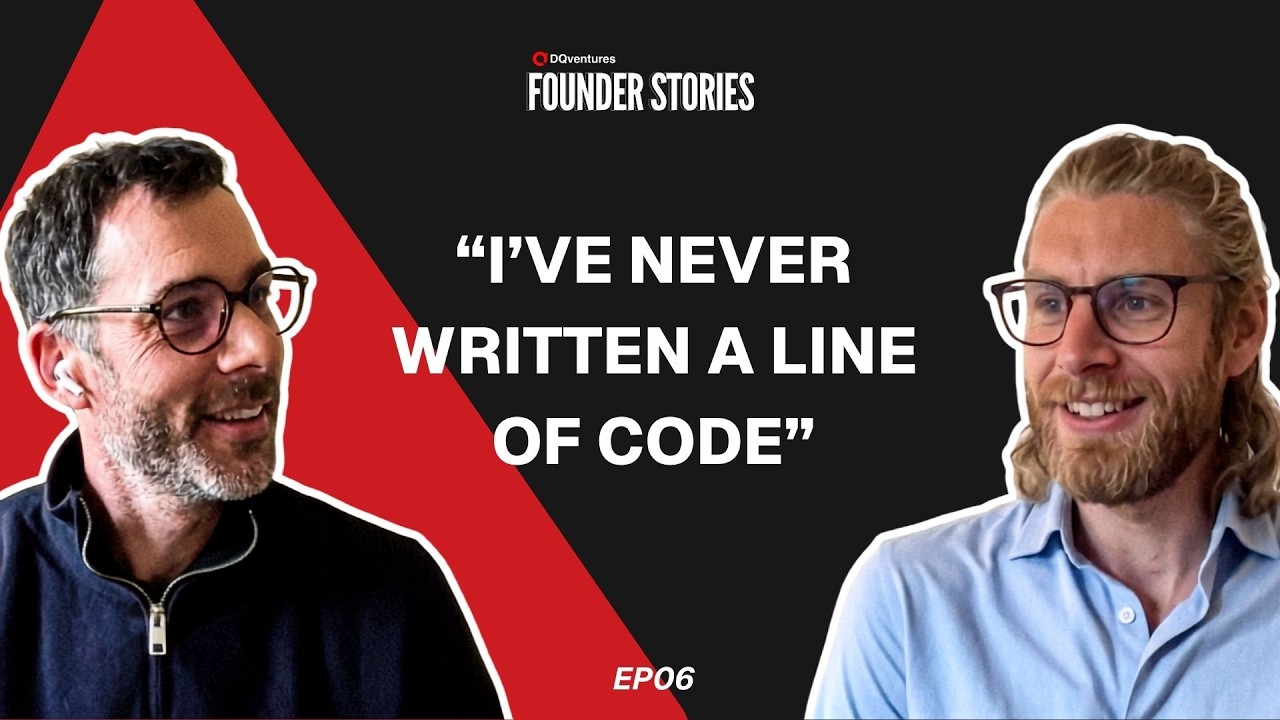
I've never written a line of code in my life. I feel when I'm using Core Code that I'm just managing an incredible team. I think that skill set is more important than actually needing someone hyper-technical at this point.
The line between product and service is merging. That was your insight. Tell me about that.
If we kind of go back to SaaS, you raise half a million quid and then you build a product so good that 1,000 customers can use the same product because it's so expensive to build your own product that you're kind of willing to use the same product as 1,000 other people. I think now the cost of developing software is just gonna keep going down, right? Because of that, IC clients are gonna get much, much more demanding. Consultancies, they're gonna look at this and say, why don't we just build project management tools for our niche industries?
The temptation is always to throw yourself into the product and build and build and build because it's fun and it's easy and you're just working with your imagination. It's like drawing pretty pictures. You can lose yourself. But actually, the thing that's gonna make your business succeed or fail is can you get any clients?
Don't hire a salesperson to fix a sales problem. If you as a founder can't sell it, you're not doing the right thing. If you can't look a user, client in the eyes and get them across the line, the efficiency of each subsequent marginal salesperson, right, is less than you. So that's not the problem and it's going to be seriously expensive.
Imagine that overnight BlueMongo stopped existing and you were going to start again. What would you, what would you do?
I wouldn't build a team. Anything that I did now, I would do...
Hi, I'm James Green, co-founder of DQ Ventures. If you're an experienced professional thinking about starting your own business, then please listen to this before you quit. Most of the startup and founder-related podcasts out there that you'll listen to are recorded with founders who've raised millions in capital, are on their way to either a huge trade sale or maybe an IPO, whereas that is just such a tiny percentage of real founders. And you never hear from people who are building real businesses, who are focused on revenue rather than trying to go and raise capital from a VC. And so, we want to record real conversations with people who are building the kind of company that you as a listener might well be building, or might be likely to build, and try and find some of the learnings from those kinds of founders that you won't hear on the majority of podcasts. And so today, I'm very happy to be joined by a member of our portfolio, Toby Scragg, who is the founder of Blue Mongoose. Toby has been through a bunch of very different changes because he's right at the forefront of trying to build technology for businesses that maybe haven't built technology before, or founders that haven't built technology before. And so, he began in the world of no-code and has graduated now into, into very much into AI. And so, we're going to talk to Toby, not just about what it was like to start a business, but also what it's like to build technology. So, welcome, Toby. Thanks for joining us.
Thank you for having me.
So Toby's quite unique in our, in our DQ portfolio because he, he had actually been a founder before. It wasn't completely his own business, a bit like a Rocket Internet where you were parachuted in as the founder.
Indeed, yeah. And then I've kind of had a bit of both, so had a kind of Rocket Internet style experience and then a more kind of traditional VC-backed business as well, where I was one of the founders.
Yeah, you've been there and done it. And you were a VC for a while as well. You're on the dark side.
Exactly. So, that was in London, um, before any of my kind of entrepreneurial endeavors.
Oh yeah, exactly. Based on all the experience that you'd had, what made you decide to launch Blue Mongoose?
Sure. So, when we were building products before I'd even kind of started thinking about Blue Mongoose, Me and my co-founder, we both, we weren't technical, and we always felt a bit hamstrung either working with agencies or working with, like, trying to hire a CTO, this kind of mythical hire. And it's less the case now, but back then, 5, 6 years ago, yeah, building tech was much more difficult, much more expensive. It was always quite annoying, to be honest. My plan after I kind of moved on from that company was to learn how to do it myself, and no-code was the best option at the time. So Bubble, Glide, tools like these, I'd always been interested in them, got into that, and then just got excited really about how many people I knew wanted this. And then instead of learning to do it myself, built a team, which was probably a bit too early and the wrong call looking back, but we can get onto that later. We grew pretty quickly, predominantly Building products for people like me, i.e., non-technical co-founders, domain expertise, good idea, etc., etc., and tried to do a better job than the experiences that I had before, right? Yeah, we kind of grew unevenly, mixed success, to about 12 people at our peak, which was maybe 9 months ago. Yeah, then Claude Code came along and kind of changed absolutely everything, really. It's really interesting to kind of experience a classic innovator's dilemma from the inside, to be honest. And I had an itchy feeling for a while that something wasn't quite right, to be honest, where you're kind of racing horses while everyone else is mucking around with motorbikes. But it took me a while to make the leap, especially when you have, like, you're telling clients every day that what you're doing is the right thing, when you have lots of people on the payroll who are very, very good at doing the old things well. But you just got this feeling, and I took myself off and just for a couple of months just got really, really super deep and basically proved to myself what was and wasn't possible. And it just kind of absolutely blew my mind. And then Yeah, so we had a pretty tumultuous 3 to 6 months where we stopped using Bubble, transitioned over to agentic development, yeah, had big changes in the team because of that. Also stopped working so much with startups and focused on more mature businesses, right?
Mm-hmm.
And yeah, it's interesting how you described us right at the start, where you said that we are building technology for companies that don't have technology, and that's kind of the thread between the startups and the bigger You can have that one for free.
Perfect.
And it's kind of what I hoped the no-code movement would deliver, to be honest. I've never enjoyed running the business more than I have now.
What do you think is behind that happiness? Is it the fact that you— we've talked about this separately— that you now have total control over the quality of the work that you're doing.
It's like that saying where you can't be happier than your unhappiest child. For me, I cannot be happier than my unhappiest client. It's a bit of like a hamstring, if you know what I mean, like Achilles heel, sorry. And I just feel like we're doing a much, much, much better job. I see like a clearer path to like a more efficient automated business as well. A big bit of the kind of unsung benefits of agentic development, I think, is all of the ancillary things that you can do, the automated QA, the automated product analytics, the automated everything, really. I enjoy building machines, things that work, processes that work, much more than I enjoy managing people. I think just everyone's happy. Developers don't like to be managed either. It's just a much, much better fit for, like, what I'm good at.
Okay. Let's take a quick break and hear from one of our portfolio companies.
Most biotech companies focus on the science when they're building a clinical trial. But at the same time, one of the most expensive mistakes you can make is getting patient reality wrong, or getting it too late. Hi, I'm Marcello. I'm the founder of Common Signups. I worked in the healthcare space pharmaceutical companies, biotechnology companies for the past 8 years, and focus now on the moment before key decisions get locked in by using real-world patient needs, real patient language to pressure test hypotheses, to pressure test assumptions about how a disease is actually experienced. If you are a biotech company designing a clinical trial, or in the process of shaping your positioning, or preparing for investors negotiations, you can find out more at commonsignups.com.
If we go back to the startup days, and I know you've moved on from building for startups, but my experience of early-stage startup founders, non-technical founders, is that they Expect to find a CTO who's going to jump in unpaid, equity only, join the dream, slightly smaller equity stake, and do a load of work and make everything work. No, no mistakes. Everything's going to be perfect.
Yeah.
For not that much money or no money. Was that your experience when you were working with startups?
I think to a certain extent that is amplified by investors as well. who kind of require it, like, won't look at you if you don't have one, all of this kind of stuff, right?
It's a go.
Yeah. In our, in our term sheet from our investor, this well-known VC, it was kind of, it was a soft condition, right? But we had to go and get one, you know, and it was a major sticking point in every round of follow-up funding with additional investors after that. Right. So in this kind of startup ecosystem, there is this definite belief that it is a hard requirement, for sure. Yeah, when you've taken a little bit of VC funding, it's very, very difficult to stop taking it. You know, that's very much, like, in the psyche of founders to get it. And I think you're right that the perception versus reality of what that person will actually do for how much is quite different.
Yeah, I mean, I've worked with a few CTOs, and the first thing they want to do is go and hire some developers because they don't want to do the building themselves. They want to be the mastermind behind the architecture and the strategy. What is the reality now with, with the AI tools that you've got? Can a non-technical founder build a technical business without a CTO now, do you think?
I think it's getting easier and easier. Right. I think the answer in 1 to 2 years could very much be different. Now, I've never written a line of code in my life. If you have experience managing developers, managing designers, managing people from products, managing QAs, managing architects, Then I feel when I'm using Claude Code that I'm just managing an incredible team, right? That said, okay, you've got a meeting with the client's client's tech team, you know, and you can't Claude Code your way through that. You just gotta, like, know it, right? Or you look like an idiot. Yeah, I think broadly though, we are moving towards this kind of democratization of access to technology, right? The no-code promise. It very much depends on the type of business that you're building as well. I wouldn't suggest someone non-technical goes to try to train their own LLM at this point, this kind of stuff. Then again, 2, 3 years ago, I would have said that about a SaaS product. So, who knows where we're going to be in a couple of years.
Having worked with hundreds of early or first-time founders, the temptation is always to throw yourself into the product and build and build and build because it's fun and it's easy and you're just working with your imagination.
Yeah.
Uh, it's like drawing pretty pictures. You can lose yourself. But actually, the thing that's going to make your business succeed or fail is, can you get any clients?
Yeah.
So the last thing I'd be advising, um, professionals who are thinking about starting their company to do would be take 3 months off and learn Clojure code. Through the development of Deque Ventures, when we started this, we thought we were just going to build tech product companies. That's where the money is. That's where the multiples on revenue are. and the exits are. And then we quickly realized through some fairly painful lessons that we could sell the dream and we could help people raise money for product companies. Investors were, back then at least, willing to back entrepreneurs with some industry insights and deep expertise that weren't technical. But what we realized was that product companies are actually really difficult to build. And if you don't come from that world, then chances are you're not going to succeed. And so, we pivoted somewhat towards businesses that could at least survive on some kind of service and then productize that service later. So, add a layer of technology once you've got clients, once you're delivering value.
Yeah.
But the line between product and service is Merging. That was your insight. Tell me about that.
If we kind of go back to SaaS, like why SaaS products were so popular, right? It's because, like you say, you raise half a million quid, you build a product, and then you build a product so good that 1,000 customers can use the same product, right? And the advantage of that is because it's so expensive to build your own product that you're kind of willing to use the same product as 1,000 other people. And That's why SaaS was so popular, right? I think now the cost of developing software is just going to keep going down, right? It's that democratization point, essentially. And because of that, I see clients are going to get much, much more demanding. It's the reason that the Asanas, the Monday.coms, all of these guys' share price has gone through the floor, right?
Yeah.
Because these generic horizontal project management tools, people are looking at it and it's like, I could just build that in an afternoon. Where I see that going is that consultancies, they're going to look at this and say, hey, we used to do kind of, use that monday.com example, like project management advisory operationally type stuff. Why don't we just build like a project management tool for our niche industry? And then that's where I see the merging, right? That people are going to start thinking, okay, I was really good at kind of advising this vertical, now I can build a product as well. On the other side, if you're a consultancy, if you're an agency, if you don't build some kind of technology, even if it's just internal, but I do think that companies like that are going to start building more products, then you're just going to fall behind. And so I think we've got forces on both sides that on the product side, they need to get more bespoke. They probably need to do more kind of customization and that kind of side. And then on the consultancy side, they need to get more tech and AI-enabled, right? And I think the convergence of those 2 worlds, at least we'll see more overlap. Accenture is not going to become Salesforce overnight, you know, but I believe that we will see them doing more of each other's, like, competence.
You've built tech for us, we've used your tech internally, you've built tech for our portfolio companies, You've basically, in your previous life and in your current life, you've built technology that works, and you've also seen technology that doesn't work. What would you say if you were talking to someone who was out there thinking about building a business, whether it be service with a technical bent or a product that had some consulting in it, as this future seems to suggest, what would you say are the most common pitfalls that people should be looking out for that you've seen?
It's a classic, and just almost kind of now incredibly boring to say, but it's still building a product before you've spoken to any customers, right? That still happens. Trying to build too much. Especially people from a more corporate background that are used to, like, really good comprehensive tech solutions that have taken 5, 10 years to build. That's what they're used to using, right?
Just one more feature.
Exactly. Just one more feature. And I totally get it. See it and guilty of it, right? I think now if I was pitching to more clients, I would think like, shit, in the time it used to take me to do a pitch deck, I can now just whip up like a pretty epic prototype. Maybe I should just do that, right? I would now invest a bit more in demonstrating what a solution could look like before I built it.
So then imagine that overnight Blue Mongo stopped existing and you were going to start again. What would you, what would you do?
Oh, that's a good question. Take a long time off to decide. I think whenever you mix competency areas, good things happen. I've always been, and we've had tons of conversations about this, but, like, long-term equity investing is always super interesting to me. Combining what I understand about technology and AI into that world, I think, would be super cool. I wouldn't build a team. I know that. Like, anything that I did now, I would do by myself.
Like, a team at all? Because even now, you've got a small team, haven't you?
When things are bad, they're much, much, much worse the bigger the team that you have, right? I would really try and keep things quite tight. So, Yeah, you just don't have to fire anyone if you're wrong, right? Yeah, it's bad enough being wrong. It's doubly bad being wrong and having to fire someone that you like, right?
It's funny because we, we had, um, one of our portfolio companies that had a slight cash flow issue due to overexpansion, overextension. Things going really well, but you'll know this from your, your past life that It's cash flow that kills businesses. And they had a bit of a cash flow issue and needed some external support, which they got, and everything was fine. But Ollie, my fellow co-founder of Deque, he said to them that, he said, you really need to build a buffer for these kinds of things because it's okay now, you can go and you can find somebody to help you out. But when you're 10 times the size, that problem isn't only 10 times bigger, it's It's completely different because now you need to raise millions of dollars to get you through this cash flow issue, and maybe there's no one out there willing to give you it, and your business dies completely.
I think it's important to have, like, a number that you need in life, right? Money. I mean, I realized that £10 million does not make me happier than— does not make me 10 times happier than a million, you know, just kind of optimizing What is the probability-weighted most likely way that I can get to what this number might look like, or 40%, 50% of the way there, whilst not nuking every other aspect of my life? I guess I would be less focused on the area that I was going into and more thinking about criteria like that. And things like, is this going to take me 2, 3 years to get my first customer? Am I going after massive enterprises with gigantic sales cycles? That would be a hard No, for me, the reverse of that. Can I kind of build something that there's tons of clients or users that are easy to find, that you can reach easily, get feedback from?
That's taking the Deque investment thesis and then one-upping it big time. Because, as you know, part of the reason we started Deque was we found all these people who were out there thinking they're going to build the next unicorn, and they want to raise venture capital. They don't realize what a poison chalice that is, that the day that you raise venture capital is the day that you start reporting to someone else, get driven daily, weekly, monthly to hit your growth targets, grow no matter what. It doesn't matter if you're not sleeping, it doesn't matter if you're sleeping in the office, just hit those targets. And I think a lot of people just don't ask themselves, is that really the life they want? They just think on I want all the money that that person gets when they exit. They don't want the 10 years, 15 years of terrible graft in the meantime, ups and downs, thinking you're going out of business, thinking you're going to lose everything.
And so we took—
we thought, okay, well, we'll build— we'll help people build profitable businesses. We'll take a stake right at the beginning so that we can, we can still make money if we have a $10 million exit, uh, and those people are still going to make life-changing money. But like you say, do you really need life-changing money if you're doing work you love and enjoying getting up every day?
I think with that kind of VC, right, like, and I, if I was a founder, unless I was kind of like just incredibly mission-driven almost, right, like, and that kind of that money, like the big money basically, that's available when you have very, very little traction, which is what those VCs are good at doing.
Yeah.
Unless you're either mission-driven and you kind of need that amount of money to win the market, or just kind of existentially, you just want to see your face on the COVID of Forbes, right? That kind of business, right? Like, then I would seriously look at other funding routes, having like seen the situation from a lot of different sides. And yeah, fair play to people that want that, no issue. Fair play for the people writing those checks. But, um, I think it's important to understand what it is and, um, yeah, the expectations.
Yeah, what the game is. I think a lot of people think that the VC industry exists to support people with good ideas, Which it does not. The VC industry exists to bet on the 5 or 10 companies per year that actually change the face of the planet and make an absolute fortune in doing so. And it does not exist to serve anyone outside those.
Where VC came from and where it's been the last 10, 15 years is quite different, right? Super, super deep tech, like Silicon Valley, like really, really innovative stuff. And then kind of shifted to just investing in like just another human resource management system or another CRM, right? Basically just funding this SaaS boom. And now I do see that the pendulum is kind of moving the other way, that it's now going back more towards putting a lot of money on a small number of kind of deep tech winners, which makes sense. There's going to be a reduction in the number of funds because of that, basically. I think we'll see less unicorns and more like medium-sized businesses being built, which I think is much healthier and better for founders, better for the economy, all that kind of stuff.
One thing we've learned at DQ Ventures is that the best founders never start. Hi, I'm Sam, one of the general partners here at DQ. We want to unlock experienced professionals from their corporate careers and back them to build their own business. So Ollie and I created Founder Unlocked, a series of podcasts sharing some of the lessons we've learned over more than 20 years of building and selling businesses.
We bootstrapped the business for the first 7 years, so we didn't take any external capital. And in 2017, uh, we exited the business to Concentrix, and the 4 founders actually left on day 1.
We talk about everything from validating your idea to winning your first customers. That is the best evidence that you can get that there's actually value to what you're offering, like someone is willing to pay you for it.
And there's nothing more exciting than, than getting that first customer. One of our portfolio companies, Clever Benefits, which is based in Sweden, so about 6 weeks ago she landed her first paying customer. The excitement And from all of us, from her as well as from us, was amazing.
To how to fundraise.
Fundraising is not the only option for your company, and, and nor is it the goal.
Check it out on YouTube at DQ Ventures Official or wherever you listen to your podcasts.
One of the things that we think is really important is investing in people with deep domain expertise who really understand a problem. So we're looking for evidence of unsolved pain.
Yeah.
As one of the key criteria that we look for. And maybe actually this is maybe a difference between us and you is that we're looking to build a portfolio of companies, whereas you're looking at that as how you would build your own company. What we're looking for is to accelerate people who've already noticed a problem that's that's worth solving, and then giving them the tools to accelerate them, and then take a piece of it. How important do you think it is to have domain expertise when you're building a business?
It definitely helps. And I think if you're a first-time founder, it's even more important. It probably makes sense to do something you know a lot about. The first few sales of any business, B2B or B2C, but I think especially B2B are the most difficult. And if you can, if you have an existing network and understanding and credibility that will open the door and help you close deals as well, then yeah, I think it probably makes sense. It's not an excuse for not talking to customers if you think you know them, right? I would really advise first-time founders, especially outside of their domain, don't try and build anything where it's winner takes all, right? It's hard for a winner-takes-all business to niche down. Always give yourself the ability to target a smaller segment of the audience with a narrower product. It's just, you have less surface area to be wrong on, basically. Don't, like, create a plan that means that you need to raise external capital, at least before you've kind of proven that you can get clients and that kind of stuff.
Which means don't build something that requires massive scale and advertising revenue in order to make money.
Yeah, and don't hire a salesperson to fix a sales problem.
Yeah, that's a great one, actually.
If you as a founder can't sell it, you're not doing the right thing.
A family friend of ours had a plastering business, and he had, I don't know, 100 employees. And my dad asked him once, he said, you know, if you had a contract and none of your people turned up, could you go and do the work yourself? And he said, Of course I could. What kind of a boss would I be if I couldn't do the work myself? And I think that's something that a lot of people building businesses now don't necessarily think.
You've got to earn the right to continue to do what you do and—
See the opportunities.
Thanks, Tobes.
Cool. I always find talking to Tobes really interesting. He's a bit of a kindred spirit. So that was great. That was Toby Scragg of Blue Mongoose. And if you liked that interview and you'd like more of the same, look for Founder Stories on YouTube under DQ Ventures Official, or find it wherever you get your podcasts.
More from James



How Marcello Patané Turned An Idea Into Paying Customers in the European Biotech Sector

Why you should interview people who rejected you (as well as your customers).