The Risk of Starting a Business vs The Risk of Never Trying

In this 2026 interview, DQ Ventures co‑founder James Green talks with seasoned recruiter‑entrepreneur Rob Bryson, founder of WeNetwork, and briefly with Rachel, founder of the travel‑companion platform Journey. The conversation explores why experienced professionals often hesitate to leave well‑paid corporate roles, debunking the myth that there is ever a “perfect” time to start a business. Rob recounts his personal journey from building recruitment divisions at Michael Page and Robert Walters to launching WeNetwork in 2020, describing the market gap he saw for agile, cross‑border recruitment firms in Asia. He discusses the multifaceted risks of entrepreneurship—financial, career, family, and personal stress—and how those risks can be mitigated by leveraging prior industry expertise and networks, such as DQ Ventures. Key founder traits are highlighted: resilience, sales ability, and tolerance for risk and stress. Rob shares concrete missteps (first invoice, hiring a non‑entrepreneurial recruiter, rapid growth strain) and the impact on his personal life, especially the time‑consumption and reduced family interaction. The interview also touches on the role of DQ Ventures in de‑risking founder journeys, the differences between service‑led and product‑led go‑to‑market strategies, and a brief showcase of Rachel’s Journey platform that solves a travel‑companion problem. The episode ends with practical contact information for WeNetwork and a call‑to‑action for aspiring founders to apply to DQ Ventures.
Chapters
People talk about entrepreneurship as if it's easy.
Would I be earning more money if I had stayed in my job? Yes, 100%. Would I go back and change it? 100% no. Do you still feel that?
100%, and both are still true. I still earn less than I used to earn. I still wouldn't change it for a second. I remember shaking when I resigned. It was horrible. The risk to me was having eternal regret of not doing it. I'd have always wondered, what if? Should I have? Could I have? Will I be able to? Am I capable of doing it? It's almost dangerous for people to say you should go and set up your own company if you want to make money. What I'd love the most was building businesses from scratch. When I discovered that that's what I loved the most, the natural progression was, well, I wonder if I can do it myself. I think one of the things that isn't talked about enough, and I'm lucky enough to be naturally reasonably good at it, is—
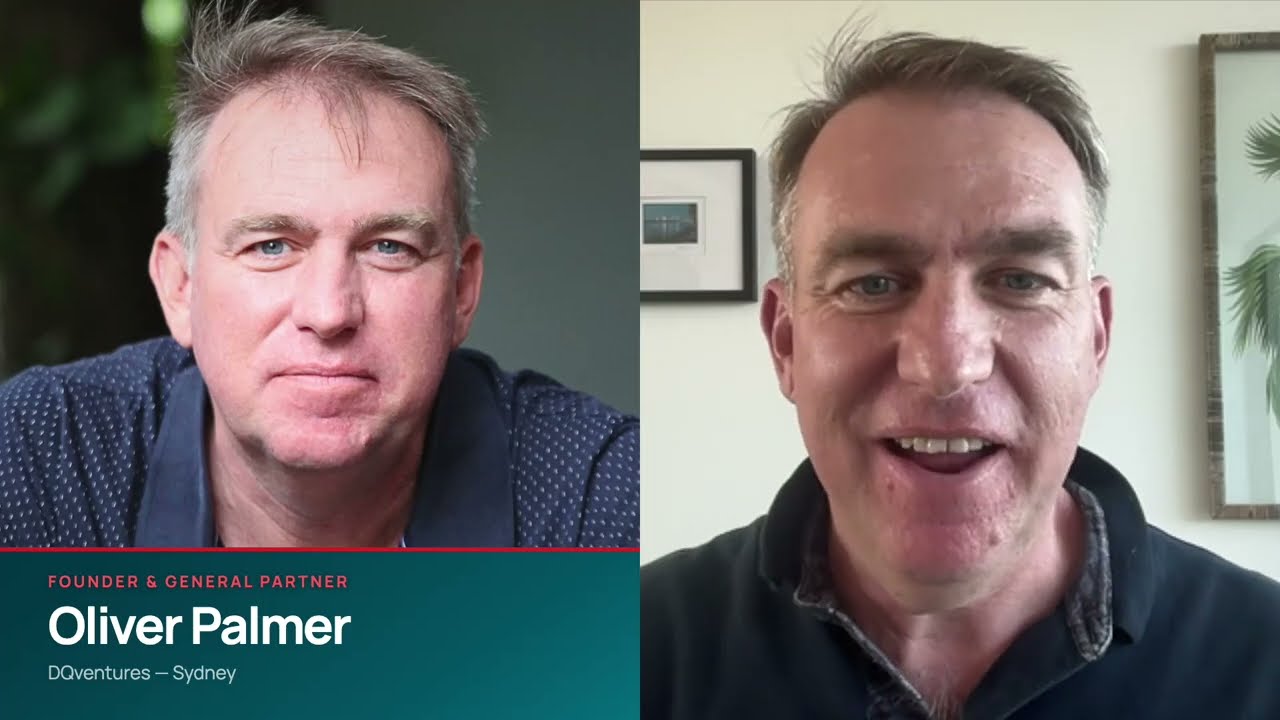
Hi, I'm James Green, co-founder of DQ Ventures. If you're an experienced professional thinking about starting your own business, then please listen to this before you quit. The internet is filled with stories from 1% of business owners and startup founders. And those are the 1% that make it big. But what good is that to you, really? The likelihood is that you are not the 1%, unfortunately. So what is everyone else feeling and hearing? And what is it that nobody is telling you? What is it really like to start your own business? At Dekey Ventures, we are helping experienced professionals to de-risk the decision to start their own business. And I want to help you de-risk that decision too. I want you to avoid regretting never starting your own company, but maybe more importantly, I want you to avoid regretting starting your own company. If you're an experienced professional, chances are you're earning a good salary, you're used to some of the finer things in life, holidays, meals out. A lot of that stuff goes away, potentially temporarily, but potentially longer term when you start your own business. The goal here is to hear stories from real founders who have left a corporate job, started their own business and are on that journey and are not building a unicorn, are not backed by Sequoia Capital, and are not necessarily one of these people you read about in TechCrunch. So, I'm very happy to be joined here by my friend, Rob, Rob Bryson, who is the founder of a recruitment business in Asia Pacific called We Network. Rob and I actually go back 20 years, so we've known each other a long time. But when describing our business, DQ Ventures, to Rob about 6 or 7 years ago, just over a beer, he said, well, actually, I'm thinking about starting my own business. You can help me. And that was basically how Rob became DQ Ventures' first portfolio company. I'm going to stop talking now. I'm going to introduce Rob, and we're going to hear all about this in Rob's own words.
Hi, I'm Rob. I'm the founder of WeNetwork. We're a recruitment company based in Asia. Hoping to support people that are growing their organizations and companies across the continent. We are now operating in 7 countries, including Japan, Thailand, Vietnam, Malaysia, Singapore, Indonesia, and Australia. We want to work with founders, want to work with people who are in-country to help them on their talent demands, talent challenges, and talent growth opportunities. I founded the business in 2020. So we're now nearly 6 years old and most proud, I think, of honestly the leadership team that we have now. The country leaders are better than I am, really, and they really know their stuff. They know their countries pretty well. So we're very excited about where we've been over the last 5 years, but frankly, we're just getting started. I'm super excited about the next 5 years. I think the opportunity in Asia is enormous, and if you can get the balance right technology and humanity, then this region is going to absolutely explode. And I'm super excited about connecting talent with opportunity because I think that will be brilliant for the whole of Asia and very exciting for us as a business.
So, Rob, we're going to break this into 2 different parts. First of all, we're going to talk about timing, because timing is an important thing when you're starting your own business, and especially when you're leaving a well-paid career. A lot of people I know in corporate jobs or in jobs full stop say to themselves, I want to build a business, but I don't feel like the timing is right. From what I see, from my side of the table, I don't think the timing is ever right. It's a bit like having a child. It's never the right time, but at some point, you just got to go and do it and suck it up, deal with whatever comes your way. And the second part, we're going to talk about whether or not people feel that they are cut out for entrepreneurship. One of the things that we often hear from people is, people tell me that if I was an entrepreneur, I would already have started my own company. So maybe I'm not an entrepreneur. That's a real bugbear for me, people who see entrepreneurship in black and white. And my view is that there's all shades of entrepreneurship and it's all about timing. So we'll start with the timing point. Rob, I'm going to let you do some talking. So what I'd like to know is, before you actually started We Network, how long were you thinking about it?
Always toyed with the concept. I suppose I'm lucky enough to be in an industry that has got a large number of people that have gone on and set up their own companies. And so one is aware of that being a possible, if you like, choice or opportunity at some point. So I was always aware of it, but I absolutely loved my career over 20 years in 2 big corporate recruitment companies and loved my time at both of them. So it was never particularly serious until I think perhaps towards the end of said time, I was then becoming slightly disenchanted with what I was doing and analyzed where and what I'd enjoyed in my career and what I'd loved the most. And what I'd loved the most was building businesses from scratch. And when I discovered that that's what I loved the most, then the natural progression was, well, I wonder if I can do it myself. And that process probably took about a year before actually deciding to do it.
So, so tell us about that. Tell us about how you built a business from scratch before you did it for yourself.
Well, I've got to be hesitant to say from scratch. It's very different building a business from zero, if you like, when you've got the backing and support of a multinational company. In my journey, There are probably 2 main jobs I liked the most before doing my own thing. And one was helping build Michael Pages, which is a big recruitment company's business in Scotland, from I think it was about 6 people through to 80-odd people in the early 2000s. And then my favorite job that I did in my entire corporate career was building Robert Walters's business in Indonesia from a multi-dollar loss business to a team of 50 and multimillion profit business. And they were both great fun. They were both scary. They were both risky. They were both fraught with chaos, opportunity, and disaster. And I found I thrived on that. And so therefore, I found a natural, I suppose, inclination to go and do something pretty similarly crazy off my own bat.
Yeah, sounds very familiar. Sounds a lot like a startup. What was the specific gap that you saw that you wanted to exploit with your own business? Or was there a gap, or was there just an industry you thought I can do this better. I know how to do it. I'm going to go and do it.
Yeah. I mean, I'd love to say I'm one of these sort of geniuses that's found a new way of inventing recruitment anew differently and suddenly being, you know, solving the world's problems when it comes to talent supply and talent demand. But no, sadly, that's not the truth. I think there was and is and still is a gap in Asia for medium-sized, reasonable-sized, nimble recruitment companies that are able to navigate cross-border opportunities at scale for companies that are trying to grow, whether that be in Tokyo, whether that be in Jakarta, whether that be in Bangkok or Singapore or Sydney or wherever else happens to be. And I firmly believe that is an opportunity in the market. So I wouldn't say it's a gap in terms of a new product or a new idea or anything, just a slightly different way of doing things. And I think the second thing for me was the gap, if you like, was in my own mind and where I was at. So this is something I felt I really wanted to do. The point you raised earlier on about it's never the right time to be an entrepreneur, I think, yeah, has some validity. But at the same time, if you really want to do it, you're just going to go and do it.
And what was the risk? What would you have done if it didn't work? You know, how did you see the risk of taking that step?
Quite considerable, I think, financial risk. You know, we touched on earlier that 20-odd years in corporate and had a good job, well-paid job with good people around me and all that type of thing. So there was definitely an element of personal risk from that aspect in the sense that I'm not somebody who changed jobs very often. I think, in fact, you told me you noticed on my LinkedIn that I changed jobs every 9 years and 7 months a few years ago. So there's always the risk and element of doing something new. So that was risky, if you like. But fundamentally, and I think people misunderstand risk when they're setting up by themselves or setting up their own thing, whatever it happens to be, in that if you were good at what you did before and you liked it and you've had a career in it, there is always the opportunity to go back into that. So I think fundamentally, if I'd gone in to do We Network and we failed and been a complete disaster, then I would have been able to find something similar to what I've been doing before. So from that element, you can actually say the risk is mitigated quite considerably. And I think people actually don't necessarily consider that because I think actually a failed entrepreneurial journey can be really, really valuable for somebody's career if they go back into corporate thereafter.
And do you see that as you're obviously a recruiter? So you see people taking these steps and then returning to corporate. Do you really believe that that is seen as a positive sometimes?
100%. But it is cultural. So it will depend where in the world you are and who you're working with and which companies you're working with. I think, for example, in Asia, we can learn quite a lot from the US with that mindset. I think if, for example, you took that mindset to Japan, then it's a very different story.
So another question for you on risk. I know there was one, but how many moments were there in the last 5 or 6 years that you thought, Oh my God, this was a mistake. Why did I do this?
About 1,132 or something.
Tell us about a big one.
Yeah, no, I'm slightly joking. I am slightly joking. It's not, oh my God, what have I done? It's like, oh my goodness, I cannot believe I'm doing this. That could be something as simple as, Sending my first invoice and trying to work out how to actually use a computer properly in terms of how to put logos and lines in the right place and get the tax right and all that type of thing and sending out. I'm literally like, I am so bad at this. I've never been thankful enough in the past for people who are able, other people to do their job properly because they do things like that really well and effectively. So I think that's one. I've made a couple of mistakes in hiring. And at certain points, we probably grew a bit too fast, which caused quite a lot of stress to me, probably more than anybody else. And then definitely at those points, I was like, what the heck have I done? Life would be a lot easier if I hadn't done this. So yeah, it's definitely part of the journey, put it that way.
I can remember at least one occasion of you saying, Would I be earning more money if I had stayed in my job? Yes, 100%. Would I go back and change it? 100% no. So I think that's quite an interesting insight. Do you still feel that?
100%, and both are still true. So I still earn less than I used to earn. I still wouldn't change it for a second.
And why?
What is it that you love We touched on earlier, I love building and I'm good at aspects of the job that make me good at what I do now. There are elements of it that I'm not good at at all that I battle with every day and trying to find support in the people around me to help me cover up, if you like, or be better for those things. But I think if you go into an entrepreneurial journey with the aim of making money fast, you are in real trouble. In my opinion, the problem I think we have in the modern world is everyone celebrates success or outlandish or off-the-ratio success extremely well. And they're the stories that everyone hears and gets excited by. And of course, everyone talks about the unicorns and whatever else has happened in the world and all these incredibly successful people. What they don't talk about is the tens and tens and tens of thousands of people that haven't made it, even though they probably had just as much talent, Just as good an idea, or for whatever reason it didn't work. And therefore, I think it's almost dangerous for people to say you should go and set up your own company if you want to make money, because you might do, but there's a high chance you won't. And I'm lucky enough that I make reasonable money, if you like, at the moment. And I have aspirations and envisage at some point in the future making more money than I used to make. And I believe we're on track to do that. But we're definitely not there yet, and we're 5 years in.
One final point I wanted to touch on here is that I know a lot of people leave or want to leave their well-paid job because they don't like their company, they don't like their team, and in particular, they don't like their boss. Often people, you know, they say people don't leave a company, they leave a boss. But you know that I know your old boss, and he's an absolute legend and Amazing person, and from what I understand, an amazing boss. So in your case, you're actually leaving a very happy situation to go and do this. What do you think was the risk for you in not starting your own business? What would you have been giving up if you'd stayed in that pretty happy environment?
Well, that's quite a good question. I think for me, the decision to do what I did was nothing to do with my old company or situation or my old boss. I liked them all. No, I remember shaking when I resigned. It was horrible. For me, the journey was that— and I remember saying to the guys you're talking about, I'm not sure if I'm allowed to mention them on here or not, but the guys you're talking about and saying, I have to do this. I feel a need to do this. So the risk to me was having eternal regret of not doing it. I'd have always wondered What if? Should I have? Could I have? Will I be able to? Am I capable of doing it? So all those type of things, I think, would be the, the big risk in not doing it.
Yeah, well, you know that we set up DQ to help people avoid regretting starting their business, but also avoid getting to 65 and thinking, God, why didn't I take a risk? Why didn't I go for that idea? What could have happened? And that's a pretty painful thing to have to think when you retire. If you can have that option to test it and do it without too much risk, then that presumably is a good thing.
Yeah, I think so. Absolutely.
Okay. So you mentioned here a few things in that last answer, which was all the questions you asked yourself. Is now the right time? Is this the right opportunity? Am I the right person? Am I cut out for entrepreneurship? And that's the next section that we wanted to talk about. I mean, I know you pretty well. I would say you're entrepreneurial and probably always have been. Do you consider yourself an entrepreneur? Do you think that you're an entrepreneur? Entrepreneur sounds almost like a brag to me. Yeah, you wouldn't introduce yourself at a party and say, hi, I'm an entrepreneur.
You'd instantly think that you sound a bit of a D-I-C-K if you And I personally find this quite interesting. I think entrepreneur is a dangerous title, and I think it has almost become a brand, and people have a perception of what an entrepreneur is. And actually, I don't really like it. And also, I don't like even though people call you founders or whatever. Personally, I've opened a business and we're building a business. I'm a business runner, if you like. I run a business. That's, if you like, what I sort of consider it as. Rather than perhaps the sort of clichéd version of black t-shirts and Silicon Valley and all that type of thing. But I do think there are some traits in anybody, whatever title you give it, who start up their own business that I think are really important. And I think if you don't have at least some of those traits, then it might not be the right option for you at whatever stage in your journey that you're at.
Like what? I mean, this is pretty often written about, like resilience, but But in your words, what would be those traits?
Yeah, I mean, resilience is definitely an important one. I think it definitely is. It also depends what type of business you're building as well. And we're building a people business. So I think the ability to build teams and scale through people and process and service-led, if you like, industry that we're in rather than the product-led industry that, for example, the tech guys tend to be in. But I think one of the things that isn't talked about enough, and I'm lucky enough to be naturally reasonably good at it is sales, the ability to sell. And when you start a company at the early stage, it's the founders that have to sell because you don't have anybody else. And I think having spoken to lots and lots of people who have started their own businesses, I think one of the biggest challenges people have, they might have a great product, they might have a great idea, they might set up a great company, but they're poor at sales. And if you're poor at sales, then you've got real trouble because how on earth do you get revenue in through the door? So, I think that's under-talked about in the business community when it comes to startups. I think another thing that you have to be aware of, and we've talked about this a bit today, is your tolerance for risk, and to an extent, your tolerance for stress. And risk isn't so much, oh, I've left my corporate job, but I'm now in the startup world. It's risk in terms of When you hire somebody and it's just you, it's an enormous risk. When you're running a big company and you've got 1,000 people in and you hire one person, there's now one person out of 1,000. When there's one of you, it's one out of 2 or 3 out of 10 or whatever it is. So there's risk in hiring, there's risk in cash flow, there's risk in how fast do we grow or not grow. There's risk in every single decision you make to a much greater extent than there is when you're in an corporate job or corporate world. And therefore, you have to live with that every day. And that's actually quite tiring. It's quite hard work living with that and your mind just going like this all the time. So, I think to me, just thinking off the cuff, they're probably 3 of the biggest areas that are really important when you're running your own business from the start.
So, can you give us some color on that? Because the story is always the best way to understand something. So, Taking those one by one. So give me an example of a time where someone who wasn't good at sales would have not achieved something that you achieved. Can you think of an example like that? Like, you were really happy you pulled that off?
Yeah, I absolutely can. I can within our business. I don't want to name names or anything like that, but one of the guys we hired in the early days is really quite a strong and always has been corporate recruiter, good on paper, good guy, super good guy, good at his job, well thought of in senior position in senior businesses and so on. And he worked with us for nearly a couple of years. And he and I will admit now to this day, and we're still good friends, that it was absolutely the wrong thing for him to do is come and work with us, that the environment isn't right for him. He's not an entrepreneurial guy. He likes the structure and the support around him of of a good corporate office and all those type of things. And from my perspective, you know, bringing him in and knowing that actually quite quickly and then doing nothing about it didn't help either.
Yeah.
So that caused me quite a lot of sleepless nights, both in terms of personal relationships, as in I don't want to mess up this personal relationship, and also in terms of fundamentally, if you're paying people quite a lot of money and there's no revenue coming in, then obviously it's a struggle for any small business.
Really good advice. There's another thing that you talk about which I want to touch on, which is, because I want to talk about some of the learnings through the process and also some of the things that nobody tells you. And something you've told me, which I really love and believe is true, is that when people are thinking about starting their own business, that all they're thinking about really is, what's the risk to me? You know, what's the risk to my career? What's my reputation going to be if this doesn't work out? What's my financial position going to be? Something that's never talked about is the risk to your family and to your spouse in particular. And you've talked about this a lot with me privately, and I don't want to get into your private life, but can you give me an example of how that came as an unexpected risk? What you would tell someone who's who's thinking about starting their own business and what they— what should they know about that?
Yeah, I think that's a really good point, Jim, because it's really important. I'd hesitate to say the word unexpected in the sense that I talked to my wife a lot about this possible journey and, um, you know, should we embark on it. It is absolutely a we. Well, certainly in our case, it's a we, um, and we chose to go down that path. And I sometimes think very difficult in any relationship But my wife is very supportive of me. Therefore, she was going to say, yes, do it. And I think she would have said, yes, do it, even if I'd thought there'd have been less chance of success than I thought there was, which is potentially quite dangerous. But the thing that really has struck me, and she has been amazing in the support over these 5 years and will continue to be so, I hope, over the next 5 years or whatever, is that it's pretty consuming running your own business. To an extent, you have to be prepared, whether you admit it to yourself or not, or you want to say it out loud to yourself, you're really probably quite selfish or potentially being quite selfish. You're spending time, for example, if I'm spending time in Australia where my family is at the moment, I'm working Singapore hours, so I'm not around in the evenings. And if I'm traveling in my now early 50s and I'm traveling to sometimes 2 and a half weeks a month. And so you miss out on family time and all that type of stuff. And we have less money than we had before. So her lifestyle suffers from that aspect. And you have to be sort of aware of these things because otherwise you're gonna have a breakdown in your own relationship, or you might just have a breakdown. So it is something that you need, I think, to to really consider and really talk through with those that are close to you. And because it is, it is an all-in, you know, people talk about entrepreneurship as if it's easy. And so often it's talked about in the context— and this is not criticism, just an observation— of guys and girls in their early 20s who, without any issues at all from a responsibility perspective, can just go and do stuff. Yeah. When you've got responsibilities, you can just go and do stuff, but you have to be aware that you have those responsibilities and work through those responsibilities and make sure that you're in a position to really, I suppose, ultimately, hopefully not let anybody down.
Wow. Yeah, love it. That's why, you know, when I was in my angel investing journey and realized that the money I was making was nearly always from a company founded by an older, more experienced professional, And when I started looking for more people like that, I realized there aren't that many of them because quite sensibly, most people realize they've got responsibilities and costs that they have to meet. And it's just the risk for someone who's further into their career is so much higher.
So I just want to interject quickly on that one because I agree with you, the risk is higher in terms of changing your financial status or whatever it happens to be to the downside. But interestingly enough, the risk is mitigated, I believe, and your chance of success increases.
That's true.
And I think people don't talk about that enough. And it's not because older people are geniuses or have better ideas or they work harder or less harder than younger people and so on. It just means that if you're quite experienced and you have quite a lot of knowledge in your own industry, then hopefully you know quite a lot about your own industry. And perhaps even more importantly, you have contacts and knowledge. You know, DQ is an example for me, and the opportunity to leverage those contacts maybe into customers or maybe into advisors or maybe into board members or maybe into distribution channels or whatever it happens to be. So yes, there's more risk on one side, but there's less risk on the other. And I think it can balance itself out.
100%. And that is why DQ's investment thesis is to invest in older more experienced people. And we've got a list of 6 reasons why experienced people have a higher chance of success. And the statistics are there to prove it. There are many studies that show your chances of success increase with age. And actually, even a 60-year-old has a higher chance of success than a 50-year-old. It just keeps compounding as your network grows and your experience grows.
You're telling me I should have waited till I was 90?
Exactly. Yeah, you just went too soon. Okay. Let's take a quick break and hear from one of our portfolio companies.
Hi, I'm Rachel, and I'm the founder of Journey. Journey began when I had to fly back from the UK with my 3 children under the age of 4 by myself with a 2-month-old baby, and I realized that it was something I didn't think I could do alone without an extra pair of hands. I posted an ad on Facebook looking for a companion or somebody who could help me. My children, and it went viral. I had thousands of people comment, respond, message me, and media outlets reaching out to run a story on me. And that's when I realized that this was a problem that was more widely spread than just me. We launched Journey in June 2025, and since then we've had more than 50 journeys that have completed. The thing I'm most excited about is getting more people matched together so that more people can travel the world, do the things they want to do, see the people they want to see, and not be held back by the challenge of the bike.
The last thing I wanted to just touch on is Deque, because obviously we've been working together on this business and you're doing all the work now, certainly. But I'd quite like to understand from your point of view, being as transparent as you can, because for anyone who's considering working with Deque that might be listening to this, I want the truth. One of the things that you mentioned before is how it's difficult and selfish to embark on a startup. I believe that it's also very lonely as a founder, because even though you went on the journey with your wife, making that decision with you, as I did, I find it very difficult to talk to my wife about the stresses of the job, because there's so much context to it. And it's very personal, but it's also very complicated. And maybe it's because I'm a man, I don't know. I'm not very good at sharing stress. I tend to suck it up. But I feel like that's one of the roles, one of the key roles that we play as DQ is being there as that sounding board, which sounds insignificant, but I think it is actually quite significant. But I'd like to hear in your words, what is the best thing and the worst thing about Working with Deque and having had Deque in this journey with you?
Yeah, I think it's a very interesting point you raise, this loneliness piece. Definitely. And interesting enough, it doesn't actually have to be a founder journey, but a journey where you feel as if you're alone. For example, we recently opened our Malaysian office, and the guy that runs that, who I think is a superstar, one of his challenges, and one of the things I like about him, and one of the reasons we hired him, is is very open and honest and clear about how he's going through the process. And I think that's really important. And he says, God, this is really quite lonely, isn't it? And he's going through the process that I went through and I think that you're going through. And so I think anything that you can do to mitigate that is of value. And as you raised it, I'm quite happy to say that Deque absolutely helped provide that function for me. But it is wider than that. So if I can try and explain is, A, you and the team operated as a sounding board for me to reduce that loneliness, if you like, but also to help me with stuff that I knew and still honestly don't know much about. When you start a journey from big corporate to your own business, it's actually quite scary. Like, my God, as I said earlier, I don't know how to do an invoice. There's so much stuff you have no idea what you're doing and you make it up as you go along. And DeeQ absolutely helped reduce that amount of material that I didn't know what I was doing. So, for example, how to deal with VCs if we're interested in dealing with VCs, how to raise money, how to do ESOPs, what is a sensible and not sensible equity structure, all sorts of stuff. So I found that very valuable. And as part of the same theme, I think, You probably remember, Jim, we talked in the first few years where you're sort of operating almost as our board and holding me accountable because I think it's quite easy to get ahead of yourself in the type of world that I live in and make poor decisions or not make decisions fast enough or not consider other options because your sphere of knowledge is only this big and maybe could be that big. And I found Deque very helpful for that. In terms of the worst thing, is it me? A bit nitpicky. I don't think there are too many worse things. I think the challenge, and I think you would admit you guys have found this and we've certainly found this, is go-to-market outbound sales strategy, etc., in professional services tends to be quite different to how it would be in a SaaS company, for example, e-commerce company, whatever it is. And I think I've had frustration, not with Deque necessarily, but you've been on that journey with me. The frustration that we keep sort of trying this, we keep saying it's going to work, but we're seeing no evidence really that it is working. So, I think that's not the worst thing as such, but it's just being aware actually from my side and our side that You guys as a group are outstanding founders and really good at so many things in your own rights and your own careers and so on. But service companies are quite different perhaps to product-led companies, for want of a better expression.
Okay, cool. Rob, that was really interesting. I love some of those stories. I didn't know that you were shaking when you handed in your your notice, but I can totally understand why. But I would've thought that your employer would've realized that you'd reached your 9-year, 7-month natural job-hopping timeline, so you were bound to leave.
Yeah, couldn't get to 10 years.
Yeah, I'm going to keep an eye, by the way, on when We Network's been going for 10 years, because I know that's the time to Pull the ripcord.
Step away. Absolutely.
Do you want to tell anyone who's listening how they can find out more about We Network? And because I'm sure there are some high-growth company operatives or owners even listening to this that might be interested in using your services. How do they reach you?
Yeah, well, certainly all sensible operatives and high-growth companies endeavor to do all their own recruitment. Of course they will. But we're there to help out and catch Anybody who might need assistance or indeed market entry advice for Asia, because there's a lot of crazy stuff in Asia and there's a lot of great stuff in Asia. And having someone help you navigate that from a talent perspective can be quite useful. So from our perspective, you can check us out on the website at any point, which is www.wenetworkasia.com. There's quite a lot of information about us there as a business. We're in, what are we now, 7 countries? Which is quite terrifying. So we're in Japan, we're in Thailand, we're in Vietnam, we're in Singapore, we're in Indonesia, we're in Malaysia, and we're in Australia. And we really try and help and work with companies that are growing, that are trying to push the envelope on whatever it is that they do. And some of the things we do that perhaps you might not find normal, if you like, when it comes to the recruitment world is we allow you to fragment any fees over a year or more. We allow you to do employer of record if you don't have a legal entity in that country for whatever reason and you don't want to yet at the very start, or whatever happens to be. We'll also do payroll, we'll also do contracting, we'll also do fragmented work as well, should that be something that's of interest to you. So the main thing I think is, if you want to talk about anything, there's certainly no fee. We don't charge for consulting. Then feel free to reach out to me or any of the guys and girls that run the countries because they've got deep local knowledge. They've all been in those countries for a long time and know them pretty well.
Awesome. Cool. I like, by the way, that you say www. That's what people of our generation say. Apparently people don't say that anymore. They just say wenetworkasia.com.
It did cross my mind and interest up even when I typed it into something the other day. I'm like, where's the www bit? Dramatically. So, goodness, I'm not a tech founder because it'd be a disaster.
Great.
Thanks, Rob. If you enjoyed that interview and you would like to get more of the same, you can find us on YouTube. This is the Founder Stories series, and the channel is DQ Ventures Official. You can probably also find it wherever you get your podcasts. If you're an aspiring founder who wants to get out of the day job, but feels like maybe now is not the right time, or you might not be the right person for that challenge, we'd love to hear from you. There's no cost to talking to us. Drop us an application at dqventures.com/apply.
More from James



How Marcello Patané Turned An Idea Into Paying Customers in the European Biotech Sector

Why you should interview people who rejected you (as well as your customers).