What Is a Minimum Viable Business (MVB) — And Why Does It Matter? | Part 3

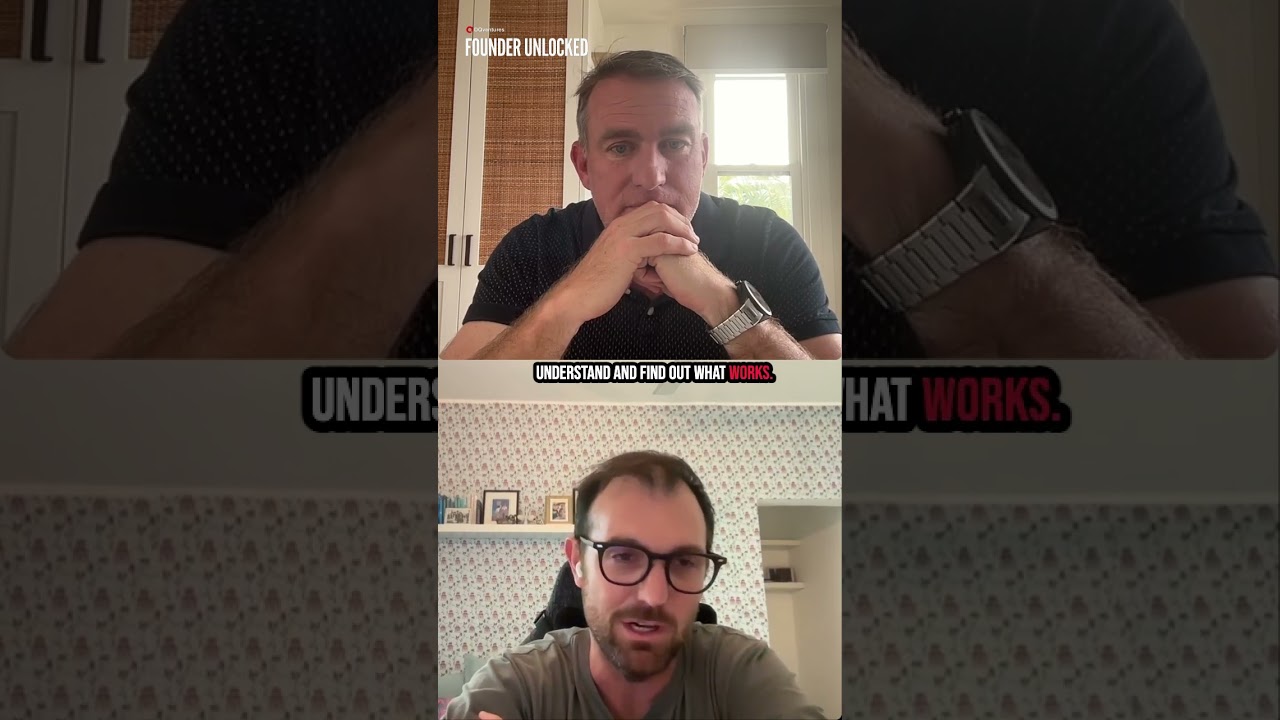
In this episode of Founder Unlocked, hosts Oliver and Sam explore the concept of a Minimum Viable Business (MVB) and how it differs from a Minimum Viable Product (MVP). They illustrate the idea with a personal story about converting Motorola Razr ringtones, showing how a simple, low‑effort operation generated $16,000 in revenue and revealed a repeatable, profitable business model. The conversation then defines MVB as the combination of a repeatable sales process, operational delivery, and unit economics that together prove a venture can sustainably make money. Throughout the episode they discuss the importance of market timing, staying ahead of technology trends, and building a system around the product rather than focusing solely on the product itself. Multiple case studies – Journey, Music Run Out, Blue Mongoose, Julix, and others – demonstrate how founders pivoted, validated problems, and built supporting infrastructure (project managers, CTO‑as‑a‑service, corporate secretarial services) to scale. The hosts also advise experienced professionals transitioning from corporate roles on how to adopt a CEO mindset, plan for future hiring, and leverage a portfolio ecosystem (Deque, Blue Mongoose, Julix, WeNetwork) to accelerate growth. The episode concludes with a reminder that a successful MVP is not a perfect product but a sustainable system that solves a real, repeatable problem and generates repeatable revenue.
Chapters
I don't know if you remember the Motorola Razr handset, Sam?
Yes, the fancy flippy one.
That's right. Well, Motorola launched that, and overnight everyone seemed to have a Motorola Razr. And for some reason, the Motorola Razr had a different ringtone format to every other handset on the market. And so one of our suppliers came to us and said, we're getting so many requests for ringtones for this particular handset. We don't have any content for it. We feel like we're missing a huge part of the market. What can you do about it? And so my business partner at the time, Luke, had a chat with Steve. They sat down and they agreed that we would convert all of our catalog of Nokia Polyphonic ringtones into the formats that the Motorola Razr could handle. And he charged him $20 a ringtone. And so 800 ringtones, $20 a ringtone, it was a $16,000 deal. We didn't have the kind of capabilities or the technology, but Pretty quickly, I found that there was a converter that moved, that converted the ringtones from one format into another. So, I pushed a button, and 800 of our ringtones were converted into the format for the Motorola Razr. It took about a minute and a half to do the conversion. It took us about 2 hours to put all of the content into an Excel spreadsheet and identify what the file names were. And then, a week later, we delivered it to the supplier, and he was super happy, and they paid us $16,000 for what was probably about 2 and a half hours' work. And so for us, that was a real aha moment. We'd gone from sort of plugging away, creating a ringtone, selling it for $50, getting another request, selling it for $50, to getting $16,000 for 2.5 hours' work. And we recognized at that point that we had a minimum viable business. Hi, I'm Ollie.
And I'm Sam, and we're here on another episode of Founder Unlocked. Today we're going to be talking about MVB. Yeah, you heard me, that was a B, not a P. So what is the difference there? Minimum viable business rather than minimum viable product. That's what we talk about at DQ Ventures. So what is a minimum viable business? Well, It's not just focused on your product, not just focused on your solution. It's really the system around your product or solution. It's the repeatable sales process. It's the operational delivery of your solution. And then it's the unit economics that make it a business, as in, can you actually make money from this?
And I think it's really interesting in that that can be a real aha moment for you. If you've got a product or you've built a solution and something works and you're sort of plugging away and it's kind of sort of working and some people have used it and you might have had someone pay for it. We talked in a previous episode about how exciting it was to get that first dollar in the door, to get that first check from a paying customer. But really, when you've established that you actually have a business and you've got something that you think can repeat and can go on to become something that could sustain staff and employees and lead to all the things that you've ever dreamed of, That's really what we feel is sort of demonstrating that minimum viable business piece.
Yeah. And I think a key part of that, Ol, is the money piece. Getting paid repeatedly for something shows that you've actually got some path to profitability there. The viable business bit is really important. Can you do that repeatedly and consistently? Can you go and find more of those people? who are gonna pay you that money.
Absolutely. And not only, you know, once we'd sold it once, could we sell it again? Do you have a product, you know, it's creating a movie or writing a book, you can sell it many, many, many times. It's about, yeah, talking about what you've got when you do something and what other opportunities that leads to. It's really important that you don't spend all of your money and all of your time creating this MVP, this minimum viable product, and then not have the ability to actually get it out there in front of people to look at how you might market this product, how you might push it out to other people. So it's all the other things that kind of hang around the solution to that problem that you've identified that really go into making your business kind of something that is viable.
Yeah. And I think that that's such a key thing, particularly when we think about the experienced professionals who are transitioning into owning their own business, is that often in their roles, they're very focused on one thing. So they might have been a product leader, so they're very focused on that product. As they move into starting their own business, they now have to focus on being the CEO of their own company. So they have to look at it holistically. They're not just looking at the product, they are looking at the sales, they are looking at the operations, they are looking at the finances behind the whole thing. And that really is why we focus on that minimum viable business rather than just on the product piece. I think often as well, when people talk about that minimum viable product, We tend to go into that wanting to perfect the product before we put it in front of people. And it's over-engineered, over-manufactured, and we're putting all those assumptions that we had, where we talked about assumptions being the mother of all fuck-ups, like that's super important that we're not doing that. We're actually saying, okay, let's put this into market, let's get feedback, let's see if people like it, let's see if they're willing to pay for it, let's go and see if more people are willing to pay for it. Okay, can we understand a little bit more about what's working, what's not working? So we're not kind of holding that product too closely, too tightly, and we're actually allowing ourselves to get proper kind of feedback and validation on that.
Yeah, and I think that's such a key point as well. It'd be sort of 2 things. One is that kind of failure to launch, that waiting for the perfect product, having to have that feature, and actually never getting something into the market or spending so much money that you haven't got a thing. But the sort of the flip side to that is that someone once said that if you're not embarrassed by your initial product, then you've waited too long to get it into market. And I think that's so true. But one of the things that leads to is that people giving you feedback, it might not quite do exactly what they want. So you'll get feedback from your customers. They'll tell you they want this feature or that there's a bug and you have to be able to handle that. So if you're a sort of solo founder with no support and doing it on your own, It's hard enough just getting your minimum viable product into the market, let alone thinking about your minimum viable business.
Right.
And once you have got that product, how do you handle that feedback? How do you take on board all of the customer requests and fix the bugs that need fixing, but also plan those features that are gonna come, you'll need to put into the product in order to cater for a larger audience? So I think getting an understanding of what that needs and how you can plan for that and how you can sort of create a process that not only lets you repeat those sales that you need to increase revenue, et cetera, but also further develop your product and build a real business.
Yeah, no, that makes sense. I think an example that I can give of when we were starting the Music Run Out, one of the things that we were very focused on in terms of the product side was the event experience, creating this great event experience. People have a great run, they have a great party, there's good acts, there's good musicians. What we realized quite quickly was actually that's very important, But the economics around the whole event is just as important. So if we overly focused on the experience at the start, we were going to very quickly run out of money and we were not going to have a business that was going to be able to scale. So we had to try and get the price point right in terms of what we were charging per ticket, how many people we could get through the event without detracting on the event experience. And then we realized that, okay, the other commercial side of it, bringing in commercial partners, brands to actually then come and activate around the event made the event model sustainable. But without those 2 parts, it was never going to work. So if we just focused on just delivering that product piece and forgot about the commercial model, we wouldn't have got to that minimum viable business.
It's so interesting. And all of these things, all of this experience sort of comes together in terms of how we work with sort of older founders to build those businesses. One great example within the Deque portfolio is Journey, which we've mentioned a couple of times, which is all around kind of travelers helping travelers. So if you're flying with 3 young children and you need a nanny on the flight, Journey will help you with that. Or if your elderly parents are coming and having to transfer through airports, then what Journey does is match you up with a traveler on the same flight so that they can assist you. It's a fantastic business, but when we first sort of set it up and it was just this minimum sort of viable product, it was literally just a platform that allowed you to register as a The commercial model was really around similar to kind of Uber, where Uber takes a little bit of payment from the travelers. The founder, Rachel, was spending an awful lot of time coordinating travelers, making sure everyone was on the same flight, all this, for then getting sort of $15 or $20 for each of those sort of instances. And that was just not viable.
Yeah.
So we sat down and we worked through kind of what the opportunity was and established that the way this would work both for the travelers and keeping that sort of customer first was to sort of charge people a minimum, a very small fee to register on the site in order to get someone to help them on their flights. And she's had over 20,000 people register on the site. She's monetized those people. They're perfectly happy to pay $10 a year, I think it is, in order to have their details available if somebody's flying from Sydney to London and they can then assist with a family. And so she's turned from just doing the sort of single trips, she suddenly managed to monetize her entire audience. And that's And that's turned it into a viable business. But it's those sorts of things. It's that understanding that even if you've got something, you've got a product in the market, there's so much more to it. There's so many more pieces and elements that go into making a business sort of become amazing.
And I think that your point there on the unit economics, which is really understanding what revenue can we go and get, how repeatable is that revenue, and then understanding what that costs us. You know, putting those two things together, often you hear people focus on one and not the other. It tends to be we focus on revenue and we forget about cost. What we're trying to do is really make sure that we understand the types of revenue that you're getting. You know, how sustainable is it? How easy is it for you to go and get it? How do we think that's going to grow? Understanding that is so important because that's the core driver of your business. And then, you know, the other side of that is that we talk about that repeatable sales motion. That's about understanding how you're going to market and communicate to your audience and then being able to reach and find them consistently. Because if you can't acquire those new people at the start, then you can't grow. So I think that is just such an important bit that we focus on as well as the product. Don't get us wrong, we have to have a great product, we have to have a good experience. But we really focus on what is the core part of the product. We talked last episode about really niching down and understanding the problem that you're solving for this initial early customer. Well, when we think about that product or that solution that we're looking at, it is focusing on that key value proposition and how it solves that problem for that customer. And then it's about finding more of those people. So I think that's the kind of context around minimum viable business.
The other thing as well is it's helping you peer into the future. It's helping you understand what you're going to need down the track. So many times as a solo founder, you're wearing every hat that you can do. You've outsourced the development to a company overseas, and then suddenly, you know, it's working or it's not working, but then you've got to think about, well, how do I market this? Or actually, that outsourced sort of company is perhaps they've built their thing, but they're not going to be there to support it, or it's too expensive to support them. And I think one of the key value adds around Deque is both getting that business set up and understanding all the things that it needs, but it's then in helping you solve those problems. How do I find a project manager? Blue Mongoose, for example, was inundated with kind of requests for development, and they were super busy, and that was great and all going really well, but the projects were starting to fall apart because there was only a single project manager in the business. The founder was the project manager.
Yeah.
He had outsourced developers to help him, but he couldn't, literally didn't have enough time in the day to be able able to work on all the projects that he had. So reaching out to a wider network, using Deque's contacts, getting the right kind of project manager in place who has worked really closely with Toby and has now enabled him to sort of cater for 3 times as many kind of inbound requests as he could have done before. So having a team who can help you find a marketing manager, bring in an internal CTO, find that right project manager, or even say to you, look, in 3 months' time, you're going to need someone to fill this role. If we don't start planning now, things are going to start to fall apart. We've seen that before. I think that's really the beauty of minimum viable business is not just kind of understanding all those things, it's then planning for the future and saying, right, in 3 or 6 or 9 months, this is where we're going to need to be. And how do we make sure we've got all the elements in place to support that so that we can continue to grow the company?
When you're in the trenches and you're physically doing it, often you're not able to see that because your head is just down. And you're kind of executing and you can't see those things that are coming. So you then need to make sure that you bring in the team to be able to deliver against that. Other things that we so commonly see is you're overly focused on what you think is the right thing and you haven't got the feedback mechanisms in place to actually listen to the customer and hear what they're saying is important and not important. And that comes back to some of the validation stuff we talked about. The other thing is just not actually measuring the important parts of your business. If you don't understand the unit economics, you don't understand what the key kind of core performance indicators are that are actually driving your business, then you're going to be focusing on the wrong thing. And if you start focusing on the wrong thing at the start, very quickly you go off track and you spend a lot of time and a lot of energy being off track. And that can be quite soul destroying for a founder at the start. And I think that that's one of the things that at Deque we can help with is putting in place that system, putting in place that kind of navigation so that we can actually ensure that we're going in the right direction as quickly as possible to be able to kind of build that momentum in the early stages to continue to learn, but actually start seeing those successes. Because when you get those successes, as you talked about earlier, those are the best best moments, you know, you start to really feel positive and confident and kind of that what you're actually doing is working and you are getting that traction.
So talking about sort of minimum viable business and just remembering back to the Tigerspike days, when we first started the company, we were creating ringtones and we basically worked out how to plug the keyboard into a computer and we're creating polyphonic ringtones for the Nokias and the Siemens and the Motorola handsets that were on the market. And we were sort of, we were charging $50 for each of the ringtones we created. And then, you know, different suppliers were selling them to the general public. One of the things from TigerSpike's perspective, that's a real kind of aha moment in our history was, I don't know if you remember the Motorola Razr handset, Sam?
Yes, the fancy flippy one.
That's right. Well, Motorola launched that and overnight everyone seemed to have a Motorola Razr. And for some reason, the Motorola Razr had a different ringtone format to every other handset on the market. And so one of our suppliers came to us and said, we're getting so many requests for ringtones for this particular handset. We don't have any content for it. We feel like we're missing a huge part of the market. What can you do about it? And so my business partner at the time, Luke, had a chat with Steve. They sat down and they agreed that we would convert all of our catalog of Nokia polyphonic ringtones into the formats that the Motorola Razr could handle. And he charged him $20 a ringtone. And so 800 ringtones, $20 a ringtone, it was a $16,000 deal. We didn't have the kind of capabilities or the technology, but pretty quickly I found that there was a converter that moved, that converted the ringtones from one format into another. So I pushed a button and 800 of our ringtones were converted into the format for the Motorola Razr. It took about a minute and a half to do the conversion. It took us about 2 hours to put all of the content into an Excel spreadsheet and identify what the file names were.
Wow.
And then a week later, we delivered it to the supplier and he was super happy and they paid us $16,000 for what was probably about 2.5 hours work. And so for us, that was a real aha moment. We'd gone from sort of plugging away, creating a ringtone, selling it for $50, getting another request, selling it for $50, to getting $16,000 for 2.5 hours work. And we recognized at that point that we had a minimum viable business.
Yeah.
We knew that if we sort of kept ourselves at the forefront of mobile technology and kept on top of this rapidly changing marketplace, then we'd be able to grow a business, hire staff, and build it into something that was much bigger than either of us had imagined. So for us, that minimum viable business piece was all around kind of being aware of what was happening, being kind of having something in place. We created something, we'd done our MVP piece, we were able to create ringtones.
Yeah.
But we hadn't, you know, up until that moment, we hadn't really worked out how we were gonna create that step change into a viable business. And for us, that moment was when we recognized that there was a business and there was a company and this was going to grow into something huge.
It's the bits around the product that you realized at that point, the unit economics around it, selling a ringtone for 50. Can we monetize this catalog in different ways for different phones? Then we can go to different suppliers. It really starts to kind of build out how you're going to make money. And I'll imagine, Olle, that as Tigerspike grew, you probably left ringtones in your dust and your business evolved onto other things, but that's where you started as the ringtone guy.
Absolutely. I mean, the interesting thing for us was that we always used to say that we worked on color screen phones, so we sort of missed the SMS. There were a bunch of SMS companies that did a lot of texting and that sort of stuff. in the early 2000s. And we were all about—
This is Snake times.
It's Snake times, your Nokia 3310s and then the green, the blue screen one that came out. So we were always the color screen phones. And for us, it was all about what content you could put on color screen phones. And although we had the ringtone catalog and then by monetizing that in different ways, that was great. We also learned a lot about mobile technology. And so we sort of recognized that our niche, our sort of play was to build software on the back of this hardware revolution. So my little brother always looks back and says, oh, you were so lucky, Oliver. You just got in at the right time. It was right place, right time. You started building for mobile before they got big. How did you know it was going to happen? And I was like, it's always the right time. People who built websites in '98, '99 were suddenly there at the right place, right time for .com. We started mobile in 2005, 2006. People who've been doing sort of AI businesses for the last sort of 4 or 5 years are now right at the forefront of what's happening. So it's always about sort of being there with a product and having something that you can sort of work with, but then having those other things around it, being flexible and understanding what it's gonna take because technology changes so quickly. And to avoid that kind of technical obsolescence means that you've gotta sort of stay on top of things. You've gotta be able to, like you said, monetize in different ways, have a view on where you're taking a particular product, but also be adaptable and understand that if a new kind of new technology moves into the marketplace or a new hardware, a new way in which people are doing things, you want to be there and be capable of sort of taking advantage of that and monetizing and commercializing your opportunity when you can.
But it's interesting because you could have reflected at that point that your business was a business of building ringtones, but you didn't. As you just articulated, your business was about building the software for mobile hardware, and that allows your business to evolve as those needs change because that hardware technology as we've seen, has just become revolutionary over the last 15-plus years. And I think that's so important because you're actually focused on the business that you're building and not just focused on a specific product there. You're able to evolve as you grow.
And if you look at where things are at today in terms of, look at something like a Slack, where Slack kind of recognized that the problem was that business communications was challenging, right? Lots of things were sort of caught up in people's email. If somebody left the business, a lot of that knowledge kind of left with that person if their email got shut down. And what Slack did was didn't just say, well, email's got it solved. There's nothing else that can be any better. They came up with a sort of a communications tool for business, which solves that problem. And now it sort of permeates throughout an organization. Everybody's on Slack. New kind of recruits come on and read Slack channels in order to get a feel for what's going on in work. Instant communications happen. So, there's always opportunities. You don't have to sort of wait for the next sort of mobile hardware revolution. There's always different ways ways in which new things can come into a market, solve a particular problem, even if it's only in a small way. The best example that I know of is Atlassian, which was founded at a similar time to Tigerspike, and their product conference was all about just helping developers sort of share and work on bugs together. Very small thing. It was, I found a bug, developer A finds a bug, developer B fixes it, and that sped up the development process. And because, as they used to say, sort of software is eating the world, they were creating the tools to allow people to develop software faster. So, being able to sort of identify that, and then expand from there. Atlassian is now a multi-billion-dollar company on the NASDAQ in the US, and they've got, you know, a whole range of different products on the marketplace focused around software. But they started by solving one particular problem, which was helping developers sort of develop software better.
I'd been an entrepreneur since my kind of mid to late 20s, and I had had had all kinds of different businesses with lots of failures. You know, I tried all kinds of things that, you know, I think a lot of people start out with. Um, you know, this is going back, what, 15 years ago when it was the dropshipping phase. You know, I tried that, tried affiliate marketing. I was manufacturing kitchen utensils in China at one point, shipping to the US to sell on Amazon. I was, you know, I had a web design business at one point. I, I tried lots of different things. I had one that worked, uh, called coworker.com that got acquired. Uh, but definitely before that. I tried lots of things. And I think it's because, you know, one, I've always enjoyed kind of starting new projects, but also, I've always been a bit of a skill collector. And I think that every time, you know, you take on a new project or a new challenge, you get to learn a new set of skills. So, there's probably 3 things. One, what is the fastest way we can solve this problem? You know, a lot of people come to us convinced that they need a SaaS or a mobile app, like, straight away. And although, you know, it does make sense for those, maybe to be on the radar or the roadmap for a little bit later down the line. 9 times out of 10, starting with a productized service actually makes more sense. So, that'd be one, the fastest way we can solve it. 2, what is the easiest delivery method for the solution? You know, I think it's easy to fall into the trap of thinking you need a product with bells and whistles to kind of do what you imagine, you know, that it needs to do for the customer. But, you know, So, it's great to have a big vision of what you want later, but for the MVP, you've really got to, like, strip it down to, like, what is the easiest thing or easiest way I can deliver this solution to someone? And then the third one would be, you know, how do we get this in front of the right people in the right way where it's just a no-brainer for them to sign up? You know, it doesn't matter how great the offer is if the right people don't see it. So, you know, once we get to that stage, it's a pretty intense combination of strategy and execution?
Getting that first customer is amazing. Getting that second and third customer is then equally as exciting. It's then about supporting them, and it's about thinking, you know, what can I do from here? Like, I've got something, it's going somewhere. I think the other thing as well is recognizing that, you know, the world is a big place. And if you're building a business in Australia, or in Sweden, or where a number of our portfolio companies are, there's also a big wide world out there. And everybody talks about, okay, well, this is gonna be— it might work well in this country, but when I take take it to America, it's gonna be awesome. And that's great, but how are you gonna plan that? And is the US the right market for you? Now, if you've got a business based in Singapore, Singapore is a sort of fantastic economy to— fantastic place to build a company because it's relatively affluent. There's a lot of Western businesses there, but it's also very different from KL, from Bangkok. And so just because you've got a business that works in one place, Doesn't mean that the same thing is going to jump across and work perfectly somewhere else. But it does mean that if you plan it properly and you create the right kind of tweaks and changes and get your minimum viable business kind of business strategy in place, then you can open up new markets and you can start to sort of monetize in different countries.
What you're describing there is the system that we build around things. And I think that that is the most important bit. We're not just focused on Proving that we can build a product, and we will work with you to build that minimum viable product. But we actually want to build the system that supports that product to prove that we can repeatedly go out and sell the product so that we can actually have a profitable business that can grow and scale.
So a great example of a DQ portfolio company kind of going through that sort of transition and also kind of how it's sort of supporting DeeQ and the rest of the portfolio companies is Blue Mongoose.
Yeah.
Blue Mongoose was DeeQ's 12th company, which we started with Toby back in 2023. So at the time, we had worked with a bunch of early-stage businesses and every single one of them had needed some sort of digital product, whether it was an app or a platform or a website or some sort of solution was required to sort of solve the problem that the founder had identified. And we'd been talking about perhaps our own idea of founding our own sort of early-stage tech company, but I was sort of quite hesitant to do that because I think with businesses, it's really important that the founder has a singular focus on what they do.
Yeah.
And Deque's sort of singular focus was helping other founders start their companies. It wasn't about building their platforms or building their apps for for them. And James came across Toby. He had had some experience in VC and with tech companies previously, and he had this idea of having a business which used freelancers to develop no-code solutions for startups. So not actually writing the code, using products that are in the market like Bubble or other products like that. He was based in Vietnam at the time, and we basically handed across some of the the development that was required for our portfolio companies, and he was working on those. And so now, and he's grown his business dramatically from there. He's moved to Portugal, he's got a number of employees and a whole range of sort of freelancers who are working for him. And from Deque's perspective, this is fantastic because not only have we helped start a very successful technology company, but it also allows us to build things for our own portfolio companies. So we're sort of a sales channel for Blue Mongoose in any DQ portfolio companies that requires an early-stage sort of tech platform MVP or MLP, as I like to call them. I talk about minimum lovable products because customers have to love them. It's really, really important. You can't build something clunky and not very good as your MVP because the customer will hate it. You won't get any of the right kind of feedback. So Toby and BlueMongoose are incredible at delivering extremely cost-effective, innovative early-stage tech solutions to what those problems are. And I think the beauty of what he's done and how his company has evolved is that he often sort of acts as a sort of fractional CTO within companies. So he'll sit alongside you and help you understand what the technical requirements are for your organization. And he loves working with startups. So it's this kind of perfect marriage for Deque, because we've got this tech company that we can use to build stuff. We've got someone who can help us understand what the long-term technical requirements are. And we've got someone who can act as a CTO who really knows the kind of the insides of the technical requirements of your early-stage company. So Blue Mongoose is a fantastic sort of example of how a portfolio company that Deque kind of incubated and got started and got going has now become an integral part of how we work with the rest of the Deque portfolio.
I think one of the things that's cool about where Toby started is his ICP was that non-technical founder who wanted to have that minimum viable product. I think it's really important to stress, as Toby has grown, he's also now working with AI automation as one of the use cases that he's looking at, which again, hugely relevant to some of the things that we're looking at. So being able to kind of work with him drive business his way creates that win-win.
Yeah. One of the things we like to do is we like from within the DeCure portfolio to use companies wherever we can. We have, you know, BlueMongoose, which can build that technical solution for you, can then help you through those early stage sort of technical development pathways with Julix, which is a corporate secretarial business based in Singapore. They register companies for us. They do the filings and have a director, all of the things that you need to have a company if Southeast Asia is somewhere where you want to be based. Singapore is a very, um, you know, business-friendly environment.
Yeah.
So Julix sort of registers a number of DQ portfolio companies for us and then manages the tax and filings going forward. Um, so there's always kind of ways of— and, and likewise, we're sort of feeding into them. There's this incredibly powerful synergistic relationship between what DQ does, the portfolio companies that, that we've worked with, and how they work with the other portfolio Yeah, we've got Rob as well, We Network. Yeah, that's absolutely. So Rob was our very first company. Rob was ex-Robert Walters based in Singapore, and he kind of wanted to get out of that sort of side, out of working for a big company, but he wanted to have his own recruitment firm. So while he was on his gardening leave and had his hands sort of tied, we registered his company, we applied for his license in order to enable him to practice as a recruitment firm and got that all set up for him. We Networks, grown dramatically, now operates in 4 countries. I think now they've just opened up in Japan, growing dramatically, and they'll turn over nearly $3 million this year. So, and again, that's, you know, the companies that we have that are looking for to find the right kind of staff, the right kind of team to bring in. We've got a recruitment firm that is kind of under our umbrella that can help them do that. And we've sort of identified some other key areas within, you know, what a startup needs. And if there are people who are looking to found business in that space, then we've got an instant kind of client base for them that they can use. So it's a super exciting sort of time for what we're doing and what we're building.
So, well, what is a successful MVP?
Well, I think a successful MVP, it really depends on what it is you want. There's no one right answer. It's not as if once you hit this milestone or you make this much money or you've got your 72nd customer, that means you have a sort of a successful for the MVP. I think it really comes down to what it is that you need. If we have a founder who comes to us and says, you know, I can't possibly leave my job unless I'm earning $200,000 a year, I've got 2 kids in school, and I've got to pay my rent and what have you, then a successful MVP has to be able to support a founder with that requirement. It has to be making a minimum of $200,000 a year in free cash that it can pay out either as a salary or a dividend. Whereas if a founder comes to us and says, look, I've got 3 years of savings, I want to quit my job in 6 months, I'm completely over But I really, I just need to be making sort of $50,000 or $80,000 a year to cover some basic things, and I'll use my savings to support me while the business grows. Then a successful MVP might be something that wins 2 or 3 customers and makes sort of $70,000 or $80,000 and can pay that founder $50,000 in the first year, as long as there's a view that the next year it might make $150,000.
Yeah.
And the year after that, it might make $250,000. So, I think the sort of the green flags we look for in an MVP come down to what it is that the founder is looking for. And I think the key thing to remember as a sort of founder moving across is that what the MVP is all about doing is helping you peer into the future and get an understanding of when those things are going to happen.
So, like, what happens when there isn't a viable business? We don't achieve that MVP.
So, I think the key is to try and sort of recognize that as early as possible. If you spend a long time sort of plugging away at something that doesn't really solve a problem, that's when issues arise. So, a good example is one of DQ portfolio companies, which is Julix. When Pat and Dan first came to us, they had an idea around sort of changing the way reviews on websites work. And they were looking at ways in which they could perhaps monetize and get better reviews onto websites, give consumers better information about products, because their hypothesis was that the review kind of process was broken and that you could just put up fake reviews. There might be 100 reviews, but nobody ever saw anything other than the most recent 2 or 3. And so we worked with them for about, I think about 6 or 8 weeks on this. And but pretty early on in the piece, we sort of recognized both from our research and from talking to e-commerce websites, from a number of contacts in that industry, that this just wasn't really something people cared about. The reviews on a website were something that you put up there, a negative review fell off quite quickly. Most websites just promoted the positive reviews and there wasn't really anything that you could change about that.
Yes.
So we sort of sat down with them and we said, look, there isn't an opportunity to create a minimum viable business. We sort of had a long conversation and they understood this too. And then the following week, a couple of weeks later, Arjun said to them, you know, we've really enjoyed working with you guys over the last few weeks. And we feel that there's a real opportunity in the corporate secretarial space within Singapore. There's only 2 other companies there. They're not doing a particularly good job. They're not serving the customers. And we think that with the right kind of backing and the right foundation, you could build a phenomenal business around in that corporate secretarial space. And that was really the genesis of Julix.
Okay.
It went from an idea that didn't sort of meet the criteria, didn't tick the box from an MVP perspective, to something that once they got their head around understanding what it would take, it matched some of the skill sets that they had previously. And there was this enormous opportunity in Southeast Asia to create a company that could really kind of take advantage of what was going on in that space.
That's a pretty big pivot. But if we go back to what we talked about the other day, it's understanding, does the solution solve that problem? Is it a real problem? More than that, is it a hair-on-fire problem that I'm willing to pay for to make this go away? Those are the things that we're looking for.
I think it does sort of talk to kind of one of the traits that we look for, which is kind of working with the right people. We want to work with people who, you know, we felt very strongly that Pat and Dan were the kind of founders we wanted to work with. And we felt with the right kind of business, they would build and they would succeed and it would be amazing. And that's exactly what's proven to be true, even if the idea was sort of quite dramatically different from the one that came to us in the first place.
Working with good people, building viable businesses, that's really what we're all about.
Absolutely. Absolutely.
So I think what we covered today is Your MVP is not about building the perfect product. It's about building a sustainable system around solving a real problem for a customer that you can repeatedly find, acquire, and convince to give you some money.
And next time, we're going to be talking about how and when you make that transition from corporate into being founder and CEO of your own business. So, what are the factors that we look for What flexibility do you have? The key for us is that we provide the environment to make that as sort of a seamless transition as possible. But what are some of the things you need to know? What's the difference between working in a corporate and then working in a startup? So not only is it about timing, it's also about kind of knowing what to expect, what to look for, and also how exciting it can be. It can be one of the— it can be the best thing you ever do. So if you're looking to come build something with Deque, listen to what we've got to say next time.
More from James



How Marcello Patané Turned An Idea Into Paying Customers in the European Biotech Sector

Why you should interview people who rejected you (as well as your customers).