How Will You Evolve From Success to SignIfigance
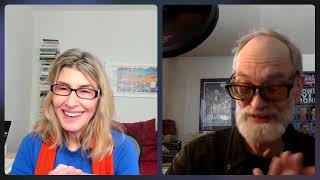
Janet Macaluso left nearly 30 years in corporate talent development to start a lifestyle business in Malaga, Spain. She works with successful midlife professionals using experiential programs like hiking and olive grove visits to help them shift from success to significance through a living-systems approach instead of traditional fragmented models.
Chapters
Hey, everybody, and welcome back. Those of you that are here by invited audience, those that you follow the show, ubiquitous audience one and all. However you happened upon today's show, thank you for being there. Please continue to do so. We continue to grow exponentially with your great help and paying it forward. We appreciate that. And as you heard in the bio and a little inside joke which we already talked about with Janet, my guest today in studio about my little thing with names and the hurdles and so forth, I know I wrote it correctly. So I welcomed Janet, my guest today and she's going to expand upon what her name really is in her background as well. Welcome, Janet, and thank you for being here today. We really appreciate it. Thank you so much.
Bill. Yes. So my name is Janet Macaluso and I'm a proud Bostonian living in Cambridge, Massachusetts. However, where I am right now is part of my story as well. And I'm in southern Spain, have a little apartment here. But that was part of my, I'll call it my master criminal plan. Okay. And over the last five years before we bought this place, I was planning what was I going to do for my next act. I've spent nearly three decades in corporate organizations and in the last three jobs I was the head of leadership or learning and talent management, organization development. I know a lot about learning and I now have decided to go on my own during it's called the great Resignation, but I think of it as the great regeneration. And I've regenerated myself and I'd like to help others kind of like minded people, I call them successful midlife professionals who want to go from success to significance, whatever that looks like could be being a good grandparent. I'll say one more thing, then I'm going to take a breath. And when I talk about successful midlife, we're now in the longevity economy, or what's called the 100 year era. So we're living three decades longer than people in the 19th century were living. And we could maybe tack on those three decades when we're old and we have nothing else to do and we're just lying around. Why not do what you and I are doing now, which is take that extra gift and embed it in the middle of our life now, kind of like a house with an atrium and it has sunlight coming in and we can actually do something and expand our midlife so then the end will be maybe shorter. So I'll stop and see what questions or reactions you have.
Well, first of all, I love the atrium analogy. I think that's so beautiful and so apropos, number one. So kudos to you and some of the questions that we talked about briefly in the chat room, the green room and what have you. We can get to those however, you know, you want to address those. But I have one real quickly. And for this old man brain buffer, everybody's edification. How long, and I'm sure that's clearly defined on your website, has this Spain endeavor actually been in existence, if you will? How long have you been doing that element of what you do?
I've been on my own for about a year and a half.
Yeah.
Yes, yes. And actually, you know, we bought this home when it was being renovated. I'm in Malaga, Spain, so if anyone wants to come and visit. It's the birthplace of Picasso. And so it's. And it's lovely. So we bought this place while it was being renovated, invaded. And a lot of Malaga now is getting gentrified. Yet when it was finished, Covid hit, and we know that it hit really hard in Spain. So we did come for a year to enter the company, but I was paying the mortgage still.
Right. I'm sorry, Covid didn't get in the way of that, did it paying you? I teased a little bit. Go ahead, go ahead, go ahead, go ahead. I'm sorry, continue.
Yeah. So. So finally last summer I got to be here and I come back and forth. I spend a couple of months here at a time, and then I go back home. And for the summer I will be in Cambridge, Massachusetts, with. With my. I'll always call that home and, and enjoy the. The lovely weather there. It's a little too hot, but in the wintertime, the definitely be back in Spain. And that's my plan. I have spent the time designing my second half of my life and what I want to do, doing it my way. Because, you know, as we grow up, it's sort of like you go shuffling through school and you have your parents, the teachers, the coaches, it then telling us what to do. Then, you know, oh, I'm supposed to be on the success track and work, have a mortgage, have kids, family, all of that. It's kind of been carved out. And then there comes a point when you say, wait a minute, I'm My life. I know is. Is.
Pardon me.
It's going to end at some point. Can I do it my way? And that's where I started. It took me five years of designing what I call a lifestyle business. Yes, this is a business. But it's. I. I'm. I Want to have a life. And my business is inside my life versus in corporate. It was kind of the other way around.
It's. I'll interject that, I'll interject that on a personal note, I left corporate America the first time. Well, totally. I left it totally in 1995. And it was a lot of things then and you know, flash forward, whatever that is now, 20 some seven years later or whatever. So I went on my own sole proprietor, all of that. My point was, is I had, you know, a lot of business school training, a lot of marketing, sales and whatever. That's what I left with sitting in many of the things that you know about. Unrealistic flowcharts, all of that. I just had enough of all of it. You know what, you know what it's all about. So then my dilemma was because I never went to trade school and that's basically all I ever knew from a little kid entrepreneur in one shape form or another is marketing. So it's like, now what do I do? So I synonymized, you know, I empathize with you at that moment. Like, well, what do you do now? As you know, if you sold lug nuts or whatever you did do in corporate America, what do you do to break, break all of that and start anew? So kudos to you to stay. That came, that revelation came relatively quickly after you left.
No, no.
Okay. It takes time. It takes.
It takes time.
It takes time.
Time. I'll tell you how I designed it and then I'll tell you. This is part of what I help do is that my last job was headquartered in Switzerland. And so I would fly to Switzerland every six weeks or so and we would take our executives, their, their leadership teams to build team building. We would take them to Spain and we would take them hiking and we had a curriculum, asking them questions and having them sit under a tree in the shade and answer them and go for walks with someone and we get them kind of hot and sweaty and break them down and build them back up as a team.
And exactly.
While I was learning how to facilitate these leadership programs for our leaders, I had to go through it myself first. Sure. I looked around and I'm saying, oh my God, I'm getting paid for this. I'm doing what I love, which is I'm kind of a one trick pony, always leadership development, but I'm doing it in environment, which is outdoors and Spanish and all of this. Is it possible that I could create my own life doing that? And that's the beginning. That took five years and so now that I've done that, what I'm doing now is helping other leaders who either they want to develop in place, they don't have to necessarily exit.
Correct.
Like you and I have.
Correct.
I have a couple who are working with me, have gone higher up in their organization to higher levels. Right.
And could I just interject one quick thing? Because that's so key, the midlife, as it's. As it said and as it's entitled. Because that is for all of us that have been there. And I'd like to think it was just yesterday, that was a while ago.
But.
But anyway. But anyway, you are literally and figuratively at a crossroads within your career, within your life, within the world, that whatever goes on in the decades there, you are of that age, and so on and so forth. But I mean, it is truly a crossroads of all encompassing. So my point is, is having been that age, everybody, once upon a time, I was you. You do, you do have those focuses because you have a while to go. Unless you're independently wealthy or whatever, you have a while to. So what do you do? Whether it's within your structured career, as you say, get a breath of fresh air or whatever. But how beautiful is it when you come up with the gift that this planet is and you have a career that's so giving, that you're giving back within it? How beautiful is that? So.
Right.
Kudos to you to having that revelation and making it happen. That's wonderful.
Thank you.
That's beautiful.
You know, it's a work in progress. And I have to say what's interesting is I'm doing things now that are way beyond my comfort zone, that I never expected to do like all this. I'm in social media. If you could look me up on. I have a website or LinkedIn, Facebook. I never, in fact, I have an assistant. And when I first started 18 months ago, I said something like, oh, look, we have 30 friends now on Facebook. And he said, they're all my friends. You only had 13 and they were all your relatives. And so I didn't want to do any of that. I was more of a lurker. But going through the work of saying, what do I want to, what role do I want to play? And the contribution that I want to give, with all my experience and who I am, my way.
Right.
I knew what I wanted and it was. It's so compelling to me to be able to help other midlife professionals.
It's so rewarding. It's so rewarding.
Right. And the Thing is, I'm doing things now because I have grown myself. I'm now the puppeteer, not the puppet of my life.
Correct, correct. Another great analogy. Continue, continue.
Right, right.
In business, in corporate or whatever. That's right.
Yeah. So, yeah, I think it's really. And that's what I help others do is what is it? By the way, I spent all of this time, and I feel like a little bit of. Quite a bit of a rebel in my, my change of my stance and my perspective and philosophy because I used to bring in experts and gurus and they. And we would say share your best practices and show. We, we would assess the leaders on a, like a 360 degree feedback. The boss.
Correct.
Here's the direct reports and assess them on these core competencies and everything. What I realize now is that by my bringing in the gurus with their bags of tricks, I was actually outsourcing the development of my people. It's like, who wants feedback? And the consultants would, they would interview all those people, they'd write a report and they give it to you. And I have to say, you know, I started my career in corporate almost 30 years ago with Fidelity Investments in Boston. And I learned one of my first things. I got certified to do these 360 degree feedback things.
Right.
And consultants. I'm sorry if I'm annoying some of your reader listeners that consultants are still doing the exact same thing. The world has changed. They just do this pedal, the same thing, and then they offer it to different clients now. And what I'm realizing is that I have learned over the last six years, while I've been designing my exit strategy, I'm now taking what I'm calling a living systems approach because I realized that a lot of the things, and you might be able to remember this, that we learned in work in corporate, they really came from the industrial age.
They really did belt right.
You know, that worked really well for factory when all the widgets were supposed to look like the same. Anything on the sides of the bell curve were scrap. So they wanted everything to be average. And then once they perfected that, you know, Henry Ford said, I wanted a pair of hands to do the work, but it came with a person who had desires, who had dreams, who had headaches. And so, so what happened is then they started this behavioral training and organizational psychology, right? And it was based on training rats in a maze, carrot with a stick. I learned all that stuff and I didn't know and I learned from the gurus who were teaching me this. And I Would put people in slate them and rate them in boxes with nine boxes all different types of rating. And I realize now that when you have a fragmented piecemeal siloed thinking you have a fragmented piecemeal siloed world.
Absolutely, absolutely. I, I Same same exact premise. I call it the pegboards. That same same thing, you know, same same premise like a pegboard or whatever. Anyway, continue. We can't. We're kin resol. We're kin resolves on that because we've been there, done that. But continue.
I'm glad. Thank you. And so you know this has been my kind of revelation is that those that taking a living systems approach which is to see everything fresh and new and alive the first time we've never been together here this one single moment.
Right, right.
And so why would I copy and paste what I learned 30 years ago for you and your unique situation? And so that's what brings in innovation actually.
Exactly. And kudos to you that for a number of, for a number of reasons so many key points. The industrial thing and for Henry Ford and in that time frame that was, that's, that was the thing to do to accommod, you know, the industrial and all of that Rockefeller with. Oh you can go as far back and it's true on the history of the industrialization and it's so true. My point is, is however many years ago that was in those same templates, graphs, pie charts, what that are still the blips and this is where you should be and then that's extrapolated that we talked about in the green room. If you're selling lug nuts, Girodas pencils, corporate whatever, to whatever degree. And by the way, I'm envious. I went to a lot of off campus training. I never got to go to Spain or Switzerland. That's awesome. I teased a little bit, but that's awesome. But I mean you do. I feel as though as you said so eloquently, you bring people back just to in tunement what they don't have in their busy, busy hustle bustle lives under that promise. They, they probably don't even have time to know, hey, I didn't realize that mountain was five miles from my house or whatever. They're that busy that they can't even get out to enjoy. So when they do, the revelation is that maybe they do come down enough and then you have that interaction at such a different level they can loosen the ties. Back in my day it was all three piece suit and you had to be all Prim and proper and all that stuff. Continue, Continue.
Right, yeah. And part of my dream, I haven't gotten to it because of the COVID slowed my progress, but we did do the hiking here in Spain through some olive groves. And so part of what I want to do is take leaders or my clients and groups through hiking, but go through an olive grove farm.
And many people get to do that. How many people get to do that if they're not native or, you know, how many people get to do that?
Right, right.
Awesome. Continue. That's beautiful.
And have some, you know, nice olive oil, maybe some wine with that as well.
Exactly.
And.
And I mean, what better source for both if you imbibe in either or. What better source than Spain?
Exactly. Right, Right. Continue. So just a little more about kind of the exciting and scary part of my transformation, which I believe that when it's exciting and scary, we're really alive.
We are.
You know, when you're doing the same thing that you could do in your.
Sleep, like it's the epitome of. It's the epitome of by rote. It's the epitome of by rote, wrote or almost robotized, if you will. Continue, continue.
Yes, yes. So that I'd say, you know, is the chewing gum lost the flavor? Or sometimes I'll say, do you have 10 years experience or one year 10 times. Right. And so for me, this new approach that is kind of, you know, going against the traditional way of learning and development, but you know, Einstein has said is that if you're still using the same looking for to answer today's problems with the same approach that got you to them, you're not going to get resolve them. And so I believe that in the 21st century versus we talked about the industrial age.
Right.
The issues that we're facing now, whether it's politics or the environment or you name the issues, that there is no playbook, there's no textbook written for them now. So just being smart isn't enough. You know, I sometimes when I show a little clip from Goodwill Hunting, when I'm forgetting his. His name, the lead one or Ben.
Or Ben Affleck or the other one.
Well, no, it was a psychologist now.
Oh, okay. Robin. Robin Williams. I'm older. Robin Williams. Robin Williams.
Yeah. Together we're a whole brain.
There you go. Thank you. Thank you. And you're three quarters of it. But continue, Continue, continue, continue.
So. So Robin Williams says to, you know, this genius, he said something to the effect of, you know, you can rattle off Dates and figures and Michelangelo, you know, his political persuasions, when he died, when he was born. But I bet you can't tell me what it smells like inside the Sistine Chapel.
Exactly. I remember that line from the movie. Exactly, exactly.
So that, that is that books and playbooks aren't going to get us to where we need to go in this really complex world. So, so what we need is a state of being and I call it a higher level consciousness, thinking and discerning. And you use the word robotic. It's like really? I believe as I'm learning about consciousness and while I even say that word, don't you dare even think that I, I am, because I don't, I don't, I don't. I think that most of us are asleep 90 of the time.
I agree, I agree. Yeah, I agree. With eyes open or with eyes shut? With eyes open or with eyes.
Yeah. You know, we, we end up in the car and we say, how did we get here? We're in the driveway.
How many times have you done that? Sometimes that's almost frightening. What happened to the five towns while I'm going to the sixth one? Really? Sometimes it is frightening that you just get that distracted or whatever. Continue.
Right. So a lot of what I help leaders do besides actually thinking about their next level of contribution.
Right.
It's also at a higher level consciousness. And the difference for me, I think is I used to think about leadership and learning and development as self development, self improvement and oh, okay, I'm learning this or I'm helping my people learn this so they can help their teams. But now with this living systems approach, I realize that we're all interconnected, you and I. I'm a, I'm a living system. You and I are a social system and we live in a community, in a planetary system.
Correct. But I often use the analogy again, same difference, just phraseology. A different way. I often use it my crazy. It's a multiple. If you take a jigsaw puzzle for anybody that's a fan of jigsaw puzzle. If you take a multi piece jigsaw puzzle, all those pieces and you get the true character personality traits, which is great. You get those that want to see what you know on the COVID Oh, it's going to be the sailboat with the sun over the lake or whatever. Then there's those that. Don't tell me, don't tell me, don't. I want to assimilate it together. My point on all of that is life, medicine, whatever. It's so intricate. In those pieces, Legos, if you want to go snapping together, interconnecting. Just a different way to say what you said is there's so many pieces, variables, parts of life and all of it too. And they have to work synergistically. And until they do, it's a. It's an adjunct thing and an learning process. And okay, we got the moon is. If you're doing the puzzle, I can see that it's the moon in the blue sky, but what the heck is going on down here? If you haven't looked at the COVID of the puzzle? Crazy analogy, but same kind of a long roundabout way of saying exactly what you said.
I think it's taking understanding holes instead of fragments.
Correct me.
You know, I cure deeply about global warming. And I think that from the industrial age, people thought that nature was a machine, the world was a machine, and that the Earth was this exploitable resource and that I'm separate from you, you. And we're all kind of fragmented in this. And now we're realizing that's wrong. We're all interconnected. If I pollute, it's going to go.
Over here and vice versa and so on and so on and so on with the interconnectability and the vice versa. Exactly. It's a network. And not in a corporate term of no network, but I mean, it's a network.
Although. Yeah, I mean, in some ways it does have similarities though, right?
It really does. I mean, they are one of the same in that regard. Then as we all know, they can get convoluted. Hey, we want you to market 5,827 widgets in a state that has five people in it or what? All those crazy things, all those crazy bills. Okay, so we promised that I would try to keep you on the clock. And we know how. I have to remind myself to do everything for today. And I've invited Janet back at any time. It's such an involved subject and there's so much to talk about. And we both concurred. We could stay here all night if we were both afforded the time to do so, to continue, leave us with whatever terminal A prolific or profound something to think about. Inspiration moving forward in this new world as it turns forward on its axis. What do we do? How do we do it moving forward? What would you say at this point?
I would say if your listeners could think of, let's say, some project or piece of. I don't want to say peace, because that's fragmented. Some project or initiative or something that they're working on like you work on your podcast, right. So thinking of something that's important to you and have that in mind and then to assess whatever it is that you just chose in your mind and say, is that sourced? The way I work on this, is it sourced from the industrial age of thinking that's putting everything in its fragmented pieces, breaking it down to the tiny widget so that you can reassemble it someone else? Or is it maybe behavioral, which is a little bit better carrot and stick. And then there was this. After that there was the human development movement, which is empathy and listening and team building and noogies on the head. I did all of that. And what I'm saying is you think about that these sources of I call them world views or paradigms that source our thinking about how we work in the world and the living systems approach would be is more of am I able to evolve the capacity of others whom I'm working with their capability to their next level of potential. It's different than solving existing problems. It's evolving their potential. And I have to evolve my potential. Like I mentioned doing these things that I didn't really want to go on podcasting and things like that, but I had to become the puppet here of my life to be to do that. So that's what I would leave your listeners with. And I did that when I assessed my performance management that I was offering my global corporation. And I realized it's coming from a mix of industrial age and behavioralism. And I want to do more in the world.
I think that's so beautiful and it's a beautiful way to end this because it does reinforce that we are each other's as humanoids on this planet, the catalyst for each other's expansion, development, growth, discovery and all the things you said so greatly here today at the show. So thank you. Namaste for having been here today. And you're going to hang just a couple of quick seconds. We're going to say goodbye to everybody today. And audience, please do pay it forward and do have take the opportunity to reach out to Janet for sure and definitely going to get Janet back when it's for tourists with a busy schedule, you know, when she comes back with us in New England, you know, us poor sir. Geez I cheese and jest. We're, we're kindred souls because she's a New England fan. And we're going to talk about that off air at another time.
Absolutely.
Bye bye everybody. We'll see you the next day tomorrow. And bye bye. For now. And may God bless to all of you. Peace, everybody, and thanks for being there.
More from Janet


Why Training Doesn't Change People (What 13 Years of Harvard Research Found Instead)








