Janet Macaluso, Learning2LEAD Founder on Ways to Self Transform Your Success to Significance
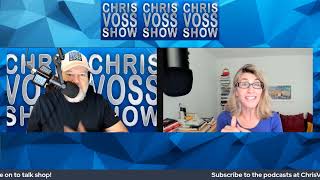
Janet Macaluso, founder of Learning2LEAD, moved from flight attendant to Harvard to corporate leadership, then shifted to a Socratic coaching approach. She works with professionals 40+ on transformational change using a living-systems model that takes three to five years and focuses on self, team, and stakeholders.
Chapters
You wanted the best. You've got the best podcast, the hottest podcast in the world. The Chris Voss Show. The preeminent podcast, with guests so smart you may experience serious brain bleed. The CEOs, authors, thought leaders, visionaries, and motivators. Get ready. Get ready. Strap yourself in. Keep your hands, arms, and legs inside the vehicle at all times, because you're about to go on a monster education roller coaster with your brain. Now, here's your host, Chris Voss.
Hi, folks, it's Voss here from the ChrisVossShow.com the Chris Voss Show.com. i gotta tell you, I almost forgot doing that 10 years ago. And then you guys just kind of stopped doing it. And you just run up to me at shows going, the Chris Vos show. And I'm like, call security, damn it. But there it is. What are you gonna do? We love you guys. The Chris Voss Show. Family is the family that loves you but doesn't judge you, and at least not as harshly as your dad that one time you took apart his watch when you were five because you thought you could put it back together, and you didn't, and it was his favorite watch. Welcome the scars of Chris Voss's childhood. There you go. The podcast. Billionaires, CEOs, entrepreneurs, the newest, hottest newsmakers and authors come on the show to talk about their stuff and make you smarter and sexier because. Because everybody knows if you're smarter, you're more sexy. You have this glow. This glow. Most people that listen to Chris Voss show, they tell me, chris, I have this glow, and I don't know what it's about. And I think I got it from the movie Oppenheimer. That's a nuclear joke, people, if you connect the two. But it's kind of a roundabout, so you could take that home as homework and figure that one out. That joke's not that funny, Chris. Yes, it is. Stop it. Anyway, guys, we have an amazing woman on the show and a brilliant mind as well. She is on to turn us on to several different things of. Of brilliance. And she's going to give you some epiphanies of some interesting spins she has on how to make your life great, your. Your perception, and how you're bringing in the world. And. And she's just brilliant. I mean, what more do you want, guys? She's brilliant, damn it. And we have her on the show. Janet Macaluso is on the show with us today. She heads leading. I'm sorry. She heads learning to lead. She helps people transform their success to significance and live your legacy with her programs and everything she does as a coach. And, you know, I've been talking to her for a while and reading more about her and she has some paradigms. They have these things in the world called paradigms, ladies and gentlemen. And paradigms are a way of looking at the world from outside of the box or from different angles and shifting them. You can awaken your mind to go, wow, I never really thought of things that way. So this is going to be one of those shows and if it's not, well, we're just going to call her afterwards and be like, what was that? No, we're not. It's going to be wonderful. After three decades in corporate leadership development, Janet, I put a lot of pressure on. I'm sorry. Janet. She founded Learning to Lead to help successful midlife change makers, practical visionaries and lifelong learners transform their success to significance. She combines modern science with ancient wisdom. There should be like some sort of Chinese sound bite that goes through there. Janet takes a 21st century antihero approach, developing professionals for their next chapter in life and work. She offers online masterminds and hiking retreats in Spain, where she's actually calling in from now. Welcome to the show, Janet. How are you?
I'm great. A little jet lagged. As I mentioned before the show. I just arrived in Malaga, Spain 24 hours ago. But I'm jazzed up to be here. Chris.
There you go. She's jazzed on the show and I need to add that to the intro. People are jazzed to be on the show. We'll see if we can get the reading guy to do that. So, Janet, give us your.com so people can find you on the interweb, which is in the sky.
Thank you. Learningtolead.com and it's the number two. So learning number two, lead.com learningtolead.com There you go.
And so tell us, give us a 30,000 overview. I mean from in your words, of what you do, how you do it and help you help, how you help your clients do it.
What I do and what I have been doing for the last couple of years has changed from the 30 years before that. So the 30 years before that, I was always in corporate global companies. For the last 15 years, I've been the head of leadership development, organization, design and development, working with global corporate leaders. And I would hire, I'm from Boston and Spain now and I would hire the local university professors, the gurus, the ones who've written the books and have all the best practices. And I would bring them in to the company I was working with. I had a budget and we would develop our leaders and that's what I did. Kind of copy paste, rinse and repeat for 30 years, more or less. But I'd say over the last six years my philosophy has changed now since I retired in Covid. Like many people, the great and you could call it great resignation, I call it the great regeneration. But in the great regeneration I started my own firm learning to lead. And the difference now is that I'm saying, and I was saying this when I had my last job is when we take outside experts in gurus and bring them in to give us feedback to do these 360 degree feedback surveys where they ask the boss, the peers, your direct reports, how's Janet doing? Then they write up a report what they all said and they give you this feedback. I'm calling that now outsourcing your development where you're outsourcing it to someone else. And the approach that I'm using now in my own company of learning to lead is this self determining, a Socratic method where I'm actually helping to develop people's internal capabilities versus looking outside for the answers. Long winded, but hopefully you can build off of that or you might have some questions. Chris?
Definitely. I love the paradigm shifts that you have and there's a lot we're going to talk about today. So if people aren't ready, get ready to have your paradigm shifted, eh? And it's kind of like a chiropractic, you know when he, he pushes in that one muscle and it pops and you go ah. And it hurts for a second but then it feels really good. It's kind of like that. That's what we're going to be doing today. Just puns, plenty of paradigm shifts and when you leave, you'll stand more upright. So there you go. We put a lot of weight on you, Janet, to make sure people's backs are in place when they leave the show. So there you go. Now you have an interesting journey. A hero's journey. Well, a hero's journey. Everyone kind of has one because just the fact that we get through life is kind of heroic. The fact that you're all still standing at this point. For those of us who are still standing, I'm sitting. You went from a college dropout to a flight attendant to an aerobics instructor to a global corporate executive with a master's in Education from Harvard and a Master of Science in Organizational Change from Pepperdine University. And tell us how that journey Went, what made you. You know, what made you go down those roads? And what. What were the things that got you crossing those lines and getting on the different paths?
I grew up in a place called Somerville, a little city near Boston. But when I grew up there, it's quite gentrified now and expensive. But when I grew up there, it was called Slumerville, not Somerville. So the epitome for me was becoming a flight attendant. And as I became a flight attendant and got bored doing that, saying, it's really easy to continue on this path because you have more seniority and you're. You can choose, pick and choose, but you're always working on an airplane. And that when I projected myself in the future, it didn't resonate with me.
What drew you to that? Were you trying to get out of Slumville? Were you trying to get a small town, usa and see the world?
Yes, I worked in. There's this local Boston area that. Where all the tourists go, called Faneuil Hall. And I was a cocktail waitress at a place called Crickets at the time. And a woman, another waitress, she said to me, I'm going to become a flight attendant. And I thought, that's interesting. And this. This is kind of funny. I'm going to tell you this. I applied to two different airlines. One is. Was Eastern Airlines, which is now went bankrupt and defunct, doesn't exist. And the other one was Delta Airlines, which still exists. So I went on the interview with Delta. They flew me there. That was like the first time I ever flew on an airplane and went to Atlanta, their headquarters, and they ended up putting me on the wait list, saying they decreased the size of their applicant pool for the next cohort, and I'm on the wait list for the next one. I don't know where I got this, Chris. I wrote them a letter back saying there was a mistake in not hiring me and that I had already had a job offer from Eastern, but I wanted Delta. And I got a phone call. And I remember because I'm from Boston and I pack my car, so I had a very strong Boston accent. I pick up the phone, and someone from y' all from. From Atlanta, Georgia, is saying she wants me to come back to the headquarters. Because, yes, they read my letter and they want me. So I don't know where I got that, but I had a little bit of drive, I think, even back then, at 17 years old.
What would that be called in. In Boston lingo? Chutzpah, or what would. What would that be called there? Wicked Smart, Wicked smart. I knew there was something that, that sounds about right.
This show, for those who wicked pissa is also.
All right, can we say that on the show? Yeah, I don't know.
Too late.
YouTube will be fine with it. It's the, it's the four letter words that they, we, we can, we can pass a couple of those too. The first four letter words, it's just when the F bomb gets too crazy. So wicked pisser. I have some jokes about that after bars in Thailand, but we won't go there. So anyway, the jokes that end up on the, on the floor. So this is really interesting and, and, and, and props to you for pushing, pushing the boundary there and pushing out and going, hey, you know, stand up for yourself and saying you're, you missed a good thing. And then playing the, playing a good little negotiation game where you're like, hey, you know, Eastern's picking me up and that's brilliant. There you go.
Yeah, well, and then from there just to finish the long career, I applied, I went part time to undergrad at Harvard, has an extension school, an evening school, and I don't know about now, but at the time when I went was, which was about 30 years ago, 25 years ago, they had. Most of my professors were Harvard day school professors who also taught at the extension school. So I got a very good education. I went one class and I did okay while I still was a flight attendant. Then I did another till I gradually felt strong enough to continue full time. One of my professors loved me and recommended that I go to the graduate school of Education. And that's when I started. As you can see, my career career was a little different perhaps than the traditional way and because I had spent five years as a flight attendant and so before I went back to school and so I loved the idea of learning and developing and growing and that's when I got a master's in education and continued on from there.
What made you want to leave being a flight attendant?
I wanted to use more of my brain.
Oh, okay, okay.
Felt a little bit more of robotic. You can almost do it in your sleep and it, it's physically, physically hard and I just, I wanted to try. But you know, the thing is I didn't cut the cord, sever it completely. I took those baby steps of taking what, one class and seeing how I did and then another one before I finally felt the confidence that geez, I think I can go back to school, get my degree. And so I was trying it out before just cutting completely there you Go.
And now here you are, 27 years in corporate and you join what you call the Great regeneration and founded your company, learning to lead. Tell us what the great regeneration is.
Let's see the approach that I take. And this gets back to how my approach is different from what it was. I'm going to educate your folks. As you mentioned, talking about paradigms. Paradigms is a way of seeing the world, a worldview we might not know. Like, I have these glasses on, I might not even know that I have a certain paradigm. And I'm going to explain four different paradigms for us. There's probably many. But let me start at the paradigm of the industrial age, where back then there were craftsmen, mostly craftsmen, who were handicrafts, making unique work of their own, whatever it happened to be. And then in the industrial age, they lured those artisans into the factory and told them, here, sit in the row and make this widget all over, every day, doing the same thing over and over. So going from something that was very unique in one of a kind with their craft, to the industrial age, where things were very mechanical, robotic linear A to B. And at the time, what they were trying to do was, if you think about the bell curve, the camel's hump, they wanted everything to be average. Anything to the left or the right of average was considered waste or scrap. So that makes sense, of course, to perfect the assembly line. But then Henry Ford said, I wanted a pair of hands. They came with a human because humans have personalities and moods and different levels of energy. And so the psychologist started coming in and saying, wait a minute, from the industrial age, they started saying, I can actually use these behavioralism techniques that we've studied, rats in a maze. And we can use the same carrot and stick behavioral methods to train your people. So then we got into the age of the paradigm of behavioralism, and I started doing a lot of that type of stuff. And I want you to think how much of that is still alive today. Carrot and stick incentives that we're not even aware of. I'm going to give you two more paradigms. The third one is, wait a minute. Now it becomes like the human development movement came in and said, wait a minute, these are humans and they're not rats in a maze. And we need empathy in love, in emotional intelligence. This is where most of my work for 30 years focused building EQ active listening sensitivity. This is great. Now I will say that if we stop here, and this is what I mainly focused on for my career, and many of my colleagues still do we are leaving development on the table because there's another paradigm. And that paradigm for the 21st century is a living systems approach. A holistic, not fragment. Not trying to break, break up and fragment in silo and piecemeal like you see in organizations all the time. It's to see the wholeness of us like a living system. And you might be thinking, well, what's a living system?
That was my next question.
If you take it apart, can you put it back together? Because frog. There you go. You did it to your watch. Or a frog. If you can't put it together, it's not a living system. I talked a lot. I'm gonna stop and see if you have reactions to the four paradigms.
There you go. No, please tell us more about the living systems and how it works. I believe, you know, purposeful life and different things are in there. Finding yourself in social structures. Let's talk a little bit about that and what a living system looks like. I mean, when you say you can build it, what does that mean exactly? If you build it within yourself externally, or is it a mixture of both?
One of the things I think is important for all of us is to remember that life. Living systems, life. Life is in a process of becoming. If you look at nature in a forest or children or a group, we are continually becoming. So the question I ask is, do you want to do it deliberately and intentionally or just leave it to chance?
Yeah. And life will usually force some sort of change on you, whether you want. You know, I have some people that are like, I don't want to change. You're like, life's going to kick your ass one way or another, so you better get moving.
Exactly. So this living systems is thinking, is understanding that we are nested inside other living systems. So I have cells and organs and tissue in my body. That's all inside. Nested inside my body. You and I are a social system in a community of your listeners in another community. And so you can see how that this is a living system. I'm not fragmenting and slicing and dicing this living system. Organic. And so then the question I do. And you might want to try this for yourself as a listener. One of the living systems frameworks I use is three concentric circles. And for simplicity, let's say the little one in the middle is myself. And it's yourself, Chris. The next. And that's called the first line of work. In this case, the second line, the middle circle is your second line of work. And this is your team. Okay. You Have a team. I have a team. The collaborators who support you in the work. Now, the third line of work, there are beloved customers, patients, stakeholders. And the difference where I work now versus before is I help leaders first identify, choose a meaningful purpose. And what is that third line of work? That, let's say it's a group, a cause that you're very interested in moving forward. And let's say that that's the third line of work. Where are they going to? Or where is it going to? It might be a cause like global warming. Okay, where is it going to? And think that through and say, where does it want to go next? That I could help build its capability to evolve to its next level. And then once you figure that out, you might think about this, Chris, it could be wrong, but if you think about your beloved audience and listeners as your third line, where are they going? And what's their next level of potential?
Yeah, they're going to listen to the next episode after this one and the next level.
And then you say, what is required of me to be able to deliver on helping them? That's different than me doing personal development, personal improvement, self development. I'm looking out at that. What is a meaningful purpose where I can contribute and make a role, and how can I develop to play a role in that?
There you go. And that's what we do every day on the show. You nailed it. The show for the first 10 years was like a tech show. It was pretty much talking about social media and Google and Silicon Valley stuff, and it was a lot of our Silicon Valley and tech people and things of that nature. And then Covid hit and we said. And I decided, you know, I want to talk about something that matters. I want to inspire people from all walks of life. I want to talk about everything and anything that Chris Voss wants to talk about. But I wanted to inspire and improve the world and to talk about the hard things, talk about the soft things, talk about the. The good things, talk about the bad things, but talk about life, you know, and I'm tired of just being segmented this little thing. And so we opened up the aperture of the show and I've loved it ever since. I love it now because I. I love talking about everything and I love, like running down, you know, stuff like with what you do. Paradigm shifts. I love paradigm shifts because sometimes how you see the world, you know, it changes how you interpret it and can change your experience, really.
So life is a process of becoming.
There you go.
And you evolved to your next. What I call Best future self. Okay. When Covid hit, you evolved and you thought about, what are your beloveds? I call them the third line. Your beloveds. What would be useful for them to grow? My question would be then, Chris, and I'll answer this for myself as well, but what did that require of you personally to grow?
I. It actually didn't require much for me to grow. I've always been interested in that. But what it did require me to. To do was every day, and we do this on the show to try and grow, to be a better host, to be a better at bringing great guests to the show and. And interviewing them and then serving our serious. What we call beloved, our beloved audience. We're have to make shirts for that now. It's going to be like, you know, where they call it the Biebers? Our audience is going to be called the beloved. It sounds like we're starting a cult, though. Is it a cult? I don't know. We'll find out. But I get to be king if it is. I just want that noted. Now, someone write that down. But. And so, you know, we wanted some. But we. We did want something to prove a life. We realized that Cove was very dark, and a friend of mine said there's. I was very dangerous. We lost hundreds of thousands of dollars with COVID overnight. Literally just all the rents are canceling and the. You know, the touring interviews that we used to do. And so I was pretty depressed. My friend wrote on a. On a post, he said, there's two things you do right now. You either find a lifter or you be a lifter. And that really struck me, and I realized that I had some pretty good assets with what we built with the show, and I had a leadership position that I needed to restep back into in a dark moment for a lot of people, including myself, and I need to quit worrying about my little pity party. And so I said, fuck it. I'm gonna talk about what I want for the first time in my life and everything I want. And I've always been somebody who's tracked everything, so I've always kind of been this madman who keeps a library of that. But to me, it's. It's about contributing to a better world. And. And if. If my audience is getting smarter during. I'm gonna. Don't maybe come over there. I will come over there and. And we'll have a conversation about how you're not smarter. So I love the concept of what you talk about. Do you find. You talk about this thing about building A purposeful life and finding your purpose in life. And are there a lot of people that you find really know their purpose in life or they need to work on discovering it?
Thank you for asking that because I have a specific opinion. There's many books that I have seen because I study what a lot of what I'm trying to offer people. And there's all this, these lines and books and programs about find your purpose. It's like it's going to fall down from heaven and I'll trip over it. And now all good. Now I know my purpose. That's a lot of what people are proclaiming to do. I have a different approach which gets back to looking out in the world. And we're all unique beings. Nature doesn't repeat herself. There's only one of a kind. And we certainly know this with you Chris.
There is, there is. He broke the mold after me mainly.
Because so, so how do I. When I look out and see what is important in the world, that that resonates with me. And then from there and you found your place, what you're doing right now. And I'm looking out and I'm saying, wait a minute. I know leadership development. I've changed my approach like dramatically. I probably have annoyed a number of my colleagues because I say if you hire someone to tell you the answer, you're outsourcing. So it's about really finding your something that's interesting to you that you say this is exciting. It's kind of has my name on it and it's a little bit scary. Okay. And it probably I have some criteria like that and so to think about and I could play a role. I don't have all the skills. So for example, while I was in corporate for all those decades, I was more of a lurker. I was not on social media and I just like more of a private person. But I realized am I going to be the puppet or the puppeteer similar to when Covid hit and you had to keep your knees bent and pivot. And for me I said I don't want to. I don't have a predilection to external going out there social media. But this calling that I have is so strong and compelling for me to help like minded change me change people who have like a. A conscious leaning approach, they want to do more and be more in the world. Then I have to up my game and I have. I'm on social media now.
There you go. And your journey through your life. We talked about where you start out in the airline industry, you know, you've been going through that process, becoming. I like this analogy because, you know, it. Throughout my life I've done different things. You know, it seems like every 10 years I'm on a new hobby or whatever, you know, as a photographer for 10 years, you know, I still have my main courses of work, but you know, there were things that projects that I really consumed by. I call them my adventures. And so I go do some adventures in something for a while and then I'd be like, I don't really, I'm not really into this anymore. I'm gonna do it. I'm doing something else. You know, like people always say, how come you don't get a tattoo, Chris? And I'm like, because I'd be sick of it after like five or 10 years. And I want it off me and I want something different. Of course, some people just paint their whole selves up or put a sleeve on. I've seen the people that black out everything and I'm like, well, you ran out of room there. But you know, it's always becoming. And I would hope that I was always becoming better and smarter, but that isn't happening, so. But anyway. But I like the idea because that's really, as you put it, you know, like a forest or a flower or growth. You know, we're kind of like those old trees and we're becoming and evolving into something better. And hopefully we get better with age, let's put it that way. But I'm not. So there you go. There's one thing I wanted to ask you about too, that you do in your coaching and training. You call it the ABCD Effective Path for Transformation, Transformational Change. How does that work and what is that about? If you could tease a little bit.
Of it out in corporate, where I would work for so many years, leaders would say, I need you to train my people. And way back when I started, we did three day in person sessions and then it went to two day one day. And then it was, oh, can you do it online and can you do a lunch and learn? It just kept shrinking and shrinking all the time. And now what I've learned with this abcd Effective Transformational Change, is those things don't really change. They don't latch on to change. So I'll explain what I mean by that is first of all, the background. It's an unpublished study from Harvard that went on research study with three different schools. If I can remember, it was the Business School Psychology department and the School of Education, where I went, these multidisciplinary departments studied the most incorrigible cases of change. So we're talking about delinquents or drug addicts, you know them, right? So alcoholics, the folks who had really hard, who were, who had been in jail. And they said, well, what does it take for change? And they studied them for 13 years and this is what it came out with. And I tell folks it's not going to be a little lunch and learn. That's going to make a change. So my method is based on this study. AB stands for active blending, meaning throughout my day. Can I blend in throughout my day? This new way of being versus I go to a weekend workshop and I'm done. I'm saying we need to build it into the day. So for instance, I practice something called heart math, a certain way of regulating coherent brain waves. Every time I fill my water bottle, the water, the filtered water comes very slowly. That's an opportunity for me to practice heart math. So I am actively blending, as an example, coherent heart rates throughout my day into a new way of being. That's the ab, active blending. The next level is called cadence, which means are we learning and developing on a regular cadence like going back to the well for, or do you think once and done? I took the course, I don't need any. I'm perfect now. No, I'm saying there needs to be a regular cadence. So when I work with folks, my one on one coaches, it's twice a month. In my mastermind, it's twice a month as well, sometimes even more a regular cadence because we're talking about transformation and becoming conscious and it's so easy to forget it. So that's the C active blending, ab, C cadence, D duration. This might be the bad news in corporate, in big companies, but I also believe for humans this takes duration. Takes like three to five years of making changes. So we go back to this original study with these like really tough cases where they had to create a whole new identity. I'm not an alcoholic anymore. I'm a healthy person. I'm not someone who's been in jail. I am a moral person. So the identity, this takes time. That's the duration has been shown at least three years, especially in corporate. And then E is interesting. It means environment. And so you might have heard, I think I've heard you say this, Chris. You're the average of the five closest people you hang out with. So your environment plays a key role. And are you surrounded by people who are supporting you and Uplifting you and helping your growth. That's the ABCDE effective path.
There you go. I love those paradigms and I love thinking it from those different ways. Now, you mentioned some of the programs you do. You do the mastermind and you do coaching and you work with people. You even have a place on the thing where they can ask if you're a fit. Tell me about what sort of people out there might be listening. What sort of clients do you work with, where are they in their life, et cetera, et cetera.
So typically work with folks who are 40 and above and who are consciously leaning. They're realizing if you look around the world now and you say, well, that industrial age way of thinking that is more robotic or mechanical, it's not working anymore. Look at the world. We need to have a 21st century approach. So those are folks who are, who are. I also call them change makers and willing to learn. Call it also an anti hero approach because don't look at me for the answer. Just yesterday I think I said, I could be wrong. I have a premise, but I could be wrong. Don't trust me. So it's folks who really don't want to look to the guru for the answer. I want a mentor. I work with folks who saying, yeah, show me some questions so I can develop my own point of view and grow and think differently versus relying on someone else. And then I work with typically corporate folks who are either looking for another job in another place. So someone just moved. I helped her move from one job to another and then now she just became a CEO. And also though they could want to move up in their own business, where they are, but at a higher level, a different way of thinking. And so those are folks, yet they could be folks like me who are saying we're now in the longevity era, the era of the 100 year life, right? And so I'm at a certain age in my life and I'm thinking I can do this job in my sleep. The chewing gum has lost its flavor. I'm good at it, I'm enjoying it, but what am I going to do next? And those folks, I can help them design what their next best place is. And that's how I took me five years of planning and designing and working it out. But now I live part time here in Malaga, Spain. There you go, folks.
Yeah, there you go. And I love this concept. You know, you, you were talking about how we live in what's called the longevity era. Tell us a little bit more about that. Why we need to plan a little bit more for our future self in the next chapter of living our 100 year life.
I got certified as a retired professional retirement retirement coach, non financial. I won't deal with your, your retirement fund, damn it. But, but what I learned is that the Social Security was founded and started when we were living to about 68 years old. So they said, oh, we'll start Social Security, you can get some of your pension when you're 65 so that the government will only pay you three years, then you'll be dead. We are now living three decades longer than we were when that system was developed. And you know there's systems for your children going to school and then high school and university and then high potential fast track corporate programs, you get married, mortgage, there's like a whole infrastructure story. What is there after you've made it in your career and you're 40 plus? There isn't really another way to go. That's what I want to help folks who are smart, experienced and the world needs change makers more than ever. And if I can help them do it consciously and deliberately with the structured approach, that's what I'm here for.
There you go. And, and I like your concept of how we need to think more about the longevity of things. You know, as you mentioned, when they came with Social Security, most people weren't getting close to 65. It was actually a really good bet for the government because like yeah, like 10 of people are going to cash in on this. They live long enough now, now the government's like oh crap, that backfired. So in, in. And your concept of living yourself as something that's always growing, always changing, always becoming, as you put it, is really important. And you know, people, people go through life and, and they see retirement as like, well I'm gonna retire and just, I don't know, go sit in a chair and lazy boy and I don't know, be Archie Bunker for us. Your life, Gen Z are gonna have to look up that joke reference. And you know, years ago I saw Warren Buffett made this comment, he said, you know, they were like, when you gonna retire, Warren? And he's like I'm gonna retire seven years after I die. And so I started saying that, thinking about that because to me, I don't want to ever really retire. I don't know what I do. I'd be bored out of my skull. I mean I'm, I'm a single guy with two, with two huskies. Like I don't know what I do. Like I Just be bored. And I'm always bored anyway. Now in my life I've been poured 55 years. You know, like I said, I've always come over like what kind of adventures of crap can I get, can we get Chris Voss into this week? And so, you know, I just, I just never saw it appealing, the whole, I don't know, gold, go sit at home, watch Archie Bunker TV and drool in your oatmeal. I don't know, I hate to shame people that are probably doing that thing. That was my pinnacle, Chris. I thought that would, I, that's my thing. But. Sorry, I see the demographics. I'm sure I'm not losing too many people on that end of the scale.
It's interesting. Chris, you're onto something. Because what I have learned in my research there is this dark side of, of retirement that no one talks about. One of them is that retired people watch more than 40 hours of, of TV a week. That's a full time job and they're depressed. I'm not saying everyone, I'm just saying what I have learned is that there's nothing to do that where's your purpose for getting up in the world in the morning? Right. And so I do believe that at a certain age we can decide how much to work and how much to play. And that's pretty cool to have control, control over that like I'm doing now and I think you are, I'm not sure. But to do, but to totally retire and sit on the couch, it's unhealthy.
Yeah, yeah, I, I never want to do it. And, and as you've talked about, we're in the era of longevity. So there are a lot of people on us that are easily going to, you know, 80, 90, 100, sometimes more than that. We were talking earlier on the show, before the show about the Blue Zones 100 year Netflix series and I posted and talked about on my Facebook, somebody said to me like Chris, do you really want to live to 100? And I'm like, I don't know man. I, I might. I mean there's they, hopefully they have all sorts of replacement parts like a Chevy dealership for, you know, hey, do you want a new kneecap, a new livers, new spleen? Here you go. Just order that up. Yeah, just go and install that. That or they'll just take my head like that one Futurama show and stick it on a, on a pike in a jar with some good fermenting and you know, who knows? I don't know. Man, I, I'm halfway there, so a little over halfway there.
Me too. If you're, if you're healthy, what would you. I think you could. And I'm not sure if you have learned about this, but around 40 years old, our intelligence, the way our brain works moves from something that as in our younger age was called fluid intelligence. And if you've been around kids, I know with young people I'm saying something and then all of a sudden they get it up on the screen and, and they know everything about it. And that's the fluid intelligence is for the younger folks. Once you hit, I think it's 35 or 40 years old. We have what's called crystallized intelligence and we're able to see patterns. We have more wisdom, we're better mentors for younger folks. We have more experience. So for me and for the folks that I work with, it's how to be able to gather this crystallized experience intelligence in the experience that we've earned and use it our way in the world.
There you go. There you go. I love the concepts and brilliance that you put up there and you've done, you do a lot on your website between all the different features that you have and what goes into it. And I think that's what's really amazing. You let me see if I can pull these up. There was a whole list you had of the different coaching aspects that you do. You do certified heart math coach. Search inside yourself professional retirement coach. The immunity to change facilitator Tiny habits coach. High performance coaching and professional coaching. There's a lot of certifications you got going on there.
I do and, and part of it was because of my profession was leadership and learning and development. But truth to be told, probably it was from an insecurity like I need to have more of this to be a credible person. And that was part of, I think this paradigm of look to the experts who know the answer. And that's what I did. Now using this more Socratic method, the anti hero approach, it's more of self determining myself and the folks I work with building their own premises and beliefs on their own lived experience. It's quite different than following the guru.
There you go. Well, it sounds like you're becoming too, you're, you're constantly improving and growing. So this is a, you know, people coach, what they know is a reflection of their own life. So how can people onboard with you, how can people reach out to get to know you better? I actually see there's a tab on your website how can people reach out to you and see if they're a good fit for working with you?
So I'm on LinkedIn. Janet Macaluso. M A C A L U s O. That's one. My website again is learning number two lead.com learningtolead.com and I would say and then my email directly is janetearningtolead.com so I mentioned I do one on one coaching. I also have a mastermind going on and also I do corporate work with corporations. I don't do a lot of that because it's very customized. But I do work with leadership teams and or organizations on their very how to apply a more conscious approach, a more living systems approach to their stakeholders so that they're helping to evolve the capability of their people as well and their customers. So those are the three ways that I work, coaching, mastermind or a few corporate clients.
There you go. That's awesome sauce. And they can reach out to you as well. Well, Janet, it's been wonderful to have you on the show and very insightful and you've changed our paradigms. Darn it. So there you go. We love it. And that's the way we learn and teach here on the Chris Foss show. Give us your.coms one more time as we go out on the show.
Sure. Learningtolead.com and my email directly is janetearningtolead.com it's been a pleasure. I really enjoy getting to know you and a lot of fun too, Chris. Thank you.
There you go. And it's been fun to have you as well. And you really opened everyone's minds and you're coming to us all the way from Spain. So I guess we'll release you to go wander the streets and get those tapas that's right over there and the wonderful food and stuff. I must be hungry or something. Did I skip breakfast? Yeah, that's probably what it is. Anyway, Janet, thank you very much for coming on the show. We really appreciate it. Thanks for audience for tuning in. Go to goodreads. Com Fortress Christmas LinkedIn. Com Fortress Christvos See this on the LinkedIn newsletter here in the upcoming couple of weeks. Go to TikTok at ChristVoss1 and YouTube. Com. Thanks for tuning in. Be good to each other, change your paradigms and we'll see you guys next time. And that should have us out. Great.
More from Janet


Why Training Doesn't Change People (What 13 Years of Harvard Research Found Instead)








