Phantom Electric Ghost Interviews Janet Macaluso
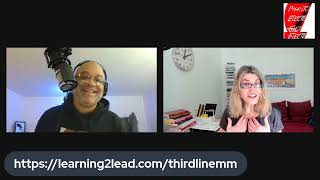
Janet Macaluso, who spent three decades in corporate leadership development, talks about shifting from success to significance by founding Learning to Lead. She critiques bell-curve performance management, advocates for a living-systems approach to leadership, and explains how travel, music, and emotional intelligence shaped her thinking about what makes leaders creative and effective.
Chapters
This is Family Electric Ghost and we're live on the air for the first time with Janet Macaluso. And how are you doing?
I'm doing great. Thank you very much for having me.
Let everybody know that we are a featured podcast on Newsly and if you use the coupon Code Ghost, you can receive one month free trial subscription so you can stop scrolling and start listening. You can listen to your favorite podcast converted from video to audio on Newsly. Use coupon Code Ghost to get one month free premium subscription and stop scrolling and start listening. We'll be on Newsly within a couple hours and wanted to thank you again for being on the show. It's always fun to talk to new people and that's something that we're into. And well, to start with you, I give the title for this. People on the audio podcast sometimes can't read the text of the stuff that we have. We're going to call this episode how will you evolve from success to significance? So that's kind of framing our discussion and maybe we can talk in those terms. But you had like three decades in corporate leadership development. You founded Leading to learn to help the successful people, midlife change makers, practical visionaries and lifelong learners. So we're going to kind of frame it in that kind of tech discussion. But so I don't know where you want to start, so.
Okay. And please, I'm Italian, so I'm very comfortable being interrupted. And so if you feel like doing that, any part, let me know. So I grew up in Somerville, Massachusetts, Massachusetts. When I grew up there, it was called Slummerville, Massachusetts. Now it's more of sustainable, it's quite green, lots of bicycles, etc. And I live now in two places in Cambridge, Massachusetts, and where I am right now, which is in southern Spain, Malaga, Spain, which is the birthplace of Picasso. And this was part of my kind of master criminal plan that took me five years planning out, looking, deciding very hard for me to leave corporate after almost three decades. But it's what I'm doing and I'm loving it and I'm wanting to help other people, midlife professionals, think about their next best future self, their next chapter, and how I can help them go there. It doesn't mean that they move to Spain like I do. I have several clients who are moving up in their organization, but it is consciously, deliberately evolving to the next place. Any more questions?
No, no. I just find it interesting because there's a little background with me. I actually worked in Japan for two years from 2004 to 2006. And it was really exciting to be in a different business culture. And it affected my daughter because she went to preschool in kindergarten in Japan. And to this day, she has a Japanese, like, Shinto motif in her artwork, which was, like, you know, priceless to have that kind of influence. And it's actually given her kind of a unique feel to her work. And I didn't even expect that to be one of the outcomes, but, you know.
Well, I would say especially my oldest son has traveled quite a bit, and he went to university in Europe. And I believe that the cultural exposure is an education. And so he would say to me, could I go to Italy to learn Italian for the summer? And I'm going to say, yes. He's learning language, and he's also learning the culture and seeing the differences that if he just stays in Cambridge, Massachusetts, he's never going to see. It's a great education, I believe.
Yeah, it's definitely good to travel. And the experience as an artist, as a creative person, we kind of soak up things. You know, I'm a producer, I'm a musician, as my other passion. And when I. I kind of like. A lot of what we do is observation. And then we take our skill set and we'll. We're even. Like, if we're observing people, we can turn that into a song. You know, we could just go on, you know, go through the. In the middle of the street or. Like, when I was in Japan, I noticed some people I wrote some songs about, like, things that I saw that I translated. And so the experience of the. If you have a wider experience, you give that much more depth to your. Your artistic work. And it also influenced, you know, my. My business culture because I learned about, like, zero defect kind of methodology from Japan, Japanese, like, enchinto culture, and kind of like just the Bushido type of culture. And just the different aspects that I was able to bring to. Even to my business work that I do, it is very, you know, I think it's significant for anybody to get out of their comfort zone. And that's what I try to do in my life. I've tried to push out of different zones when I felt like, oh, like, I need to move further.
Yeah, you mentioned a couple things I'd like to talk about. The observing is just so important, and it's a lot of. I used to work with leaders on emotional intelligence and very smart people who. Whether it was their scientific skills or their engineering skills, they were well educated. Educated and very analytic, analytical. But they would Miss these social cues that were maybe someone's glancing away or their voice changed and their tone of voice changed, or their body language. All of that is data that is so rich. But if you don't see that, you're losing out on really a true connection. And you can walk out of a meeting and think that was great. And the people are saying that was terrible because you missed the signals. Right?
That's the one thing like I, I'm in it. But my. When I went to school, I went to school at Bowdoin in Brunswick, Maine. And it's kind of a holistic education, kind of old school. And the idea is I was a sociology and a political science double major. And a lot of what I loved about sociology, they learned about concepts like anomie and you learn about, you know, the microcosm and the macrocosm and human interactions from individual to group. You know, it's not like psychology, but you learn about group behavior, which I thought found very important in a lot of the stuff I do to actually understand like how, how humans act in different when they start to put build into little groups and micro groups and macro groups and how that, how, you know, if you miss the cues, you know, you can lose the crowd, but you can lose the room because you're not paying attention to how human beings have the non verbal communication. And there's other things going, even the verbal communications, you're missing the boat. You're so narrowly focused that you're not like listening to the room.
No. I have done this little workshop and have coached my clients. I call it Conscious Communications. And I give this example that might be fun for your audience to hear. I was giving a presentation to a manager years ago about the findings that I came up with after a number of interviews. And I'm going through the slides, the presentation, and I notice that he looks at his watch. I'm also aware of my own psychological luggage. So my little thought bubbles think, oh, he's bored. I'm going too slowly is kind of the negative. And so what I do is I skip a couple of slides and I go, I'll just jump over these and go to this part. And he said, whoa, whoa, what are you doing? I want to see those. But I knew enough part of my Conscious Conversations piece to get to really authentic relationships. I said to him in a totally non accusatory way, I told him the data that I saw and I said, I saw you look at the watch. And when I saw that, I assumed that I was going too slowly for You. So I, I tell you that in kind of the pieces, because that's an important part of authentic communication. But I was wrong because he said to me, you see those bagels over there on the countertop in this office? They always fed their employees. So yes, he says, I was looking at the watch to see if what time it was and if it's close to lunch, I don't have to eat the bagel, but I can wait a little bit. He said it had nothing to do with my presentation. It only had to do with that. But if I didn't share my assumptions about what I, you know, what I saw and how I interpreted that, we would have lost. He would have said, you know, Janet, she just jumped ahead and went too fast and was. Was out of control. And so I caught myself in the moment. And so I just thought I'd share that about observations and how you can use that to see. Stay connected in relationships.
Yeah, definitely. Because, you know, my producer role, when I work with another artist, what I try to do is like, some producers will be kind of like the teacher or the professor that red marks your paper and that can like, initially, like, really depress an artist and cause like less engagement. Right. So what I like to do is like, I like to listen to their demo and then, you know, actually give the. Give, you know, give the me show that I actually paid attention to what they initially put down and then try to actually make that demo become the best version of themselves. Instead of trying to turn it into somebody else or trying to turn it into what I sound like. I like to bring out the things that make them an individual. And it's a different style because some producers will just repeat, like what they do and actually transform the artist into them or into artists that they produced, but not actually keep a lot of the original cape. You know, what is good about that individual artist. And today we have a lot of cloning. We have a lot of people just like take beats, take samples, take things. And I, I'm kind of an old school person where I want somebody to actually play it and show me. And even if they make mistakes and even if they're not the best guitar player, the fact that they sing and play guitar or play piano, something can be very delicate and very unique about when somebody does that. They don't have to be Elton John or Billy Joel. They. If they're just true to their own heart, it can sound fantastic. And so that's where I try to get into like the happy accents that are originality or Honesty, I try to keep that kind of communication going with the people I work with.
And this is what I liked about you as I was listening to some of your podcasts and that I am not a professional musician, but I've worked, I saw the parallels because I work with, with leaders and companies often and they hire mini me exactly like themselves. And then you have no diversity at all. So, you know, and the fact that you said essence, that's a big part of what work on, because I'm going to give a little background because I think it's important for you and your listeners to understand this perspective, because I believe I was. And most of the people who don't study this are what I call paradigm blind. It's like we have these lenses on that we don't even know we're wearing, but they color our world. And so I'll give you a little background to explain this, that a lot of the work that we're doing today came out of the industrial age. Where in the industrial age there were before that happened, there were handicraft people out in the farms or in their little workshops tinkering and making one of a kind from their essence. They would make their artisan handicrafts. But then they were lured into the cities and into the factories where they were in rows and told to do the exact same thing over and over again. The managers were the brains and they're the ones who started this with the stopwatch, the time and motion studies. And those workers who were artisans, they were told just do the same thing over and over again. And they were measured on a bell curve. And you probably heard of bell curve. And if you in school or you have children, you know about teachers in society and you know, maybe even in your social science studies we talk about bell curves. And they came into existence really forcefully in the industrial age, where anything on the edges, on the skews, not in the camel's back, that was considered scrap. And so in Henry Ford said, I wanted a pair of hands, but they were attached to a human. And these humans had aspirations and dreams and creativity, innovation, and maybe an argument with their spouses. You know, they were live, live people. But what Henry Ford wanted was the same thing over and over again. And so what happened was there was a John Watson, a psychologist, said, well, I can train people just like I trained rats into this behavioralism. And that's where carrot and stick incentives came into play. But what happened is we lost our true n of 1 Number of 1 unique non displaceable essence that's at the core of us. And trying to what I call peanut butter. Evenly spread the peanut butter so everyone looks the same. So I'll take a breath and see what reaction you have to that before I go on to anymore.
Yeah, well, I'm very much, you know, I'm in the IT industry and I'm a musician and producer and what I've, you know, kind of seen. And I'd like to kind of give an example, like the difference between if you get like a Ferrari versus like a car that's in a mass production mode because you get something like a Ferrari or a Lamborghini, they're hand built. Right. They're very customized. If you go back into history, you think of like Bugatti, you think about like, you know, the, or some of the early car companies that went away, like Hudson and Tucker, they had more individual like differences. They were on the other side of the curve. They like, they're not, they weren't the same. And it's the same thing. Like, like one of my instruments is a Moog. Moog is a hand built analog non digital synthesizer. It's still being built in the style that it was originally designed back in the late 50s. And it's not, you know, doesn't use samples, it's not digital, it's fully analog circuitry and they're hand built. And they actually say when you get one that it will not sound like even the same model in the same range. It has variation, it has behavior, it has temperature behavior, which means it behaves differently when you turn it on versus it being 30 minutes on or an hour on. And I love it because it makes me sound unique and I kind of treat it like a member of the band because I like the fact that it has the variation that it has. It's not stable, that it's unstable. And I use that instability for creativity. So I don't sound like everybody else.
Yeah, that's a great example. Thank you. In this industrial age, where things certainly were slower, but it was kind of, the thinking was very linear. And what you're talking about with your living systems, musical instruments, this is the work that I do now is I take a living systems approach to the work that I do because we're not in the industrial age, but we still have kind of these paradigms, worldviews that we're not even aware of anymore. You probably have heard like the fish can't see the water. We don't even know that we're using them anymore. And I'LL just give a simple example. I was talking two weeks ago to a head of HR for a company, and he was saying that the leaders were complaining because the employees now don't. Some of them don't want to come back to work after Covid. They like working from home. I'm not arguing one way or the other. My point is, what the leader said is, well, they had no problem coming to the office before COVID and now it's after Covid and they don't want to. I said back to them, but they're not seeing that those are living systems, human beings. And the world has changed since COVID And it's not the same snapshot, static snapshot that you took before and now saying, go back to the old way. We are living social and planetary systems dynamic and always moving. And you can't use this copy and paste generic spray and pray method. And so I loved your example of your, your musical instrument is a living system as well.
Well, I was one of these people that was, you know, road warrior. And I was. I happened to go on a plane, fly out on Sunday and come back on Thursday because they felt like, you know, and in the last two years, I'm at a fully remote IT job and we work with people in Mumbai, we work with, with people in Canada. We're all over the place, right? And we found in our business that they used to think having to be face to face and me traveling on the plane was a really important. Found that actually more productive. When I'm at home, I do more hours, I get more done because I'm not in the Uber, I'm not in the plane, I'm not getting stuck in traffic. And so I can focus without having, you know, when the kind of work we do is like, it's design work. And putting me on a plane, put me in Uber, takes me away from doing the design, right? And so if I can actually be comfortable at home and not have the stress of traveling, that actually gets the work done faster. So the idea that, oh, I have to be in that cube, you got to watch me like the factory worker, like on the clock. You don't necessarily have to do that with somebody that's a creative technical worker that's doing like design. I do things. It's hard to cookie cut me because we built stuff that didn't exist. So it's very creative. And so it's less like if you're in a job where you're, you can be kind of clocked and you put into that Bell curve. But when you're designing something that's never been designed, it's hard to measure how well how you should be doing because you never did it before.
This is exactly what I say about the. I sometimes talk about three different ages, if you will, or paradigms. One we could say is the behavioral paradigm. And then, and that started with, what I was talking about was with the industrial age and then training people with the carrot and the stick and create, offering them here, do it this way with the best practices. There's someone else's generic practices that may or may not have worked for them, but it doesn't mean that you can just paste them onto your unique situation and it's going to work. But that's this kind of behavioral paradigm. And then along the way, the psychologist started saying, wait a minute, they're human beings and we need empathy. And this is the human development era. This is the era that I grew up in and did most of my career in. And I think empathy, listening, we talked about observation, emotional intelligence, all of those things are really important. But if we stop at the human development paradigm, which by the way, a lot of my colleagues still do, so I'm probably making enemies. But there's another way, and that is a living systems paradigm that it has to deal with, with complexity because we've gone from kind of simple linear A to B to complicated. And now we're in total either chaos or complexity. And there is no playbook or textbook that people can go to to find their answer. Now it's your state of being. And so for you, in talking about, you know, all the logistics of traveling and things that you have to do with, your state of is not consistent or coherent with the work you have to do, which is design. And so that's what I talk a lot about with the people I'm working with now is are you using an old paradigm that you're not even aware of, a way of thinking that now we're in this world of complexity and it's about your state of being and your inner resilience, becoming aware of, of that that will make you do better and think better. What do you think about that?
Yeah, well, I think a lot of times what I found is like, if you want somebody to be like following like a six sigma black belt, right, and you're building off of like a paradigm that's like, okay, it's got that kind of structure. But what if you're in something that's like chaos theory, right? What are you doing? Something where you you don't know how to do it. You're doing very elaborate algorithms, like mathematical algorithms. You're trying to get certain behaviors to happen that you have never gotten to work before. So it's hard to measure if you're being successful. And you have to keep on prototyping and prototyping and making changes. And you might not hit dates like you go on a project and you got to hit that date. But the question is, like, are you creating quality work? And one thing I learned in Japan is, like, we had American managers wanted to hit management by deadline. We had Japanese that said unless it's like close to 99% perfect, they weren't going to release it. And that was their measure. It had to be like 99.9. And an American guy would say, well, you could be like, 85. And the Japanese manager said, no way, because we're going to have to apologize to the client. And they actually would have these big convention centers book when they made mistakes and apologize to clients, which the American people were like, oh, we never do that. So that's why we gotta have it like 99.9. You can't have it like 85. And when I was managing the. The Japanese staff, I had to learn, like, why they did. Instead of trying to force it down their throat to drop it down to 85. I finally convinced, like, kind of a negotiation to get, like, in the middle. So maybe we could do like 92 or 93. We don't have to, but. But, like, that was something that people just want to do top down and say it's going to be like 85 and you're going to do it. But I'm like, like being living in Japan, I started, you know, understanding because I had Sensei's teaching me the language. I had interpreters, and I was able to kind of start to understand that you just can't come in top down. When you go into a different culture kind of force like a square peg in a round hole, it's not a good strategy. And it's the same thing in creativity. If you just clone and sample and cut and paste, it's not the same as actually having a raw, like. Like jazz fusion session and then just recording it and then finding the nuggets of brilliance in it and then working on that instead of trying to target for something they already exist. Like, why don't you let people be the artists that they are and let.
Their essence shine through? Right? You know, you mentioned a number of things. And I took a note, I wrote Counterintuitive, because I do believe that standards, what did you call them? Six Sigma types of standards. You know, we do want our medicines or our airplanes to. To be accurate for sure. Yet.
Yeah, certain things you have to have that.
Exactly. But the thinking is not to take the thinking that worked in one specific arena and then spread that all over to the children sitting in desks and they're all going through the standard tests. The same type of education, or even you see it when you look at tract housing and they all look the same. It's this thinking that gets applied with. It works in one arena and then it becomes a generic flatland versus allowing our diversity in our uniqueness to come through. Because if you look at living systems, they're diverse, they're not all equal. You mentioned a couple things. I wanted to say this. You mentioned something about the metrics and I work with clients and we talk about not only the metrics that we have internally. The businesses are important, but what about the customer's metrics? And are we helping the customer evolve to their next level of potential? Because if you think through the living systems paradigm, we're always growing and evolving and changing. Just as that example after Covid, people want things differently. And so how do we do we not only look not just internally, but help the customer evolve to their next level? You might think of it as a professional musician. How do you think about the success indicators for your listeners and your audience? What is helping them, your listeners, evolve to their next level of potential? That's what I'm interested in. Not fixing existing problems. Because if they're existing problems, they came from the past and we're evolving into the future. Let's figure out how do we help and support that.
One of the things I find interesting sometimes is the whole idea. Like if you get people, they say, well, I want people to be creative. But if you look at the cultural environment at the workplace, they don't really actually give any kind of credit to people being creative because they end up being on the other side of the bell curve. Right. If you're creative, you did something that didn't exist, so then the person doesn't know what to do with it. Right? Because they, they're used to getting the same thing all the time. So if you do something that's a little odd or different, the individuality of that gets pushed out. And that's actually where the creature. How do you get a Bill Gates and a Steve Jobs? Because they went to the garage and they were playing around with stuff to make stuff that didn't exist. Right. So if you're trying to measure the first Apple with the first Microsoft stuff, it didn't fit into anything because it wasn't like anything else. And that's, that's the problem when you have the cookie cutter type of thing, you track house. If somebody wants to create a totally different design, right. If it's not going to fit in that track house, it's going to get rejected, right? It's gonna. Because people said, well that's not in the same zone. And it's, you know, in creativity. Creativity. Today you got AI being used for musicians to create like beats. And then what it does, it just this scours the universe of beats and this replicates what already exists.
Exactly.
You're never gonna get a brand new concept like something Prince did with like When Doves Cry, because he took the baseline out, used a brand new type of instrument, the Lynn drum machine, and programmed it in a way that nobody else had ever done. And when Warner Brothers heard it, they said, well that's the demo. Where's the bass? They initially rejected When Doves Cry. They said that's not good. It's not, it's not finished. And he pushed and said it's finished. That's what it is. And, and, and he did that many times with them because they kept on trying to make him sound like the past. And you know, one of the other stories, I'll just say when he was 17 years old for his first album, they wanted Maurice White from Earth, Wind and Fire to produce them. And they thought that he would be very impressed as a 17 year old musician to have a Grammy award winning producer produce his first record. He said, no way. I'm playing everything, I'm producing it all myself. I have a vision, I'm doing it. 17 years old, he where he wanted to be. The problem in the industry is most people would have actually took Maurice White. You know, they would have actually took somebody. It would have sounded. Prince would have sounded like Earth, Wind and Fire. And he probably wouldn't have the individuality that made him who he was.
Right.
So that did. That's what I, I try to like identify that I don't want to do that with the people I work with.
It's so lonely. I find, I think, you know, I have been very creative in business and there's been this common thread for me that the work that I would try to bring to the system, they would say, oh, we are not ready for that. Yeah, that's where we want to Go, but we're not ready. And it's really lonely to be creative and think at this next level of potential when all those turkeys are saying, no, it's got to be consistent. The thing that really disrupted me was looking at the work that I did. So apologies for folks who work in business who have had to deal with the annual performance review. So I'm sorry, but for the last three jobs, so over 15 years that fell under my function as I was the head of that function. And so the amount of hours and if you were to turn that into opportunity, but went into every employee, writing their goals and then writing their evaluations, getting feedback, the managers rolling it all up and putting it into a bell curve where basically the leaders are rating, ranking, slotting, putting human, unique, human individuals often into nine boxes and plugging them into one of those. I'll tell you, they were often wrong. They would have someone as average. He would end up being a superstar. The superstars weren't. But it's like I think that, and I understand in complexity, dynamic environments that businesses are often grasping for precision and predictability. But those bell curves, rating rankings, slotting, slating people, it is the illusion of predictability. And that's what I'm trying to share with the world. I don't know if any of that resonates.
Yeah, what resonates is like I, I, I've been with a lot of creative individuals that kind of, because of that kind of performance review bureaucracy, they just like got fed up because they actually, if you look at, there were people that were really high performing people and they didn't get measured correctly in that, in that system. Kind of like the SAT sometimes doesn't measure very creative people. And you remember Einstein didn't get measured, right. He got Ds. Brilliant. So he's like the grading system didn't measure him because he was kind of outside of it and going way beyond it. And so what the problem is is that you missed that, that and then you measure incorrectly and then that person gets disheartened. This, you know, they don't feel the love that they leave. So you actually forced a lot of really good people out and then they go make their own businesses or they become consultants. I'm a consultant because I got tired of that system which kind of had a glass ceiling for kind of like the way I look and then had a glass ceiling because I was creative. And so I was getting the double whammy me and I was actually doing really well. And as an independent consultant, I've been able to hit six figures and do very well because I'm not in that design that nobody measures me like that as a consultant.
Right.
I measured by whether I do it or I don't do it. Whether I come up with it, I get it done and my contract gets renewed because I get it done. And so I don't have to fall into the bureaucratic kind of nonsense of that. And so I like that it's more freeing for me because I'm that kind of person. I don't like that bureaucracy. It's kind of boring and it really doesn't measure me correctly. And I've found that I do a lot better when I'm a consultant.
I wonder if that has something to do with all of this great resignation that I call great regeneration because it is an opportunity. And this is a lot of the work I mentioned earlier about helping midlife professionals who you know, we're now living in this longevity economy or the 100 year life. So 50 is mid career. And so you know, there's been infrastructure up until this time, whether it's the elementary school, high school, college, then you get on the career tracks, you get married, you get a mortgage, you have children and then you know, you're supposed to be stable and retire and done. And there is. What do you do now when there's 30 extra years at the end of than there were at the beginning of the 19th century, but there's no social infrastructure in place. And that's actually the hole that I want to enter and help folks deal with is how can you bring your unique essence into the world. Because at this point when you're at mid career, you're realizing my life isn't going to go on forever. And how do I design my unique life?
That's one thing I found is like I had been with big companies, like 4 to 500 companies and then I started going independent. So the last 10 years, and I'm a child in the 70s, I'm in my 50s and what's happened is like in our industry I have certain skill sets because I understand like old school mainframe systems plus modern like cloud based systems. I learned a lot of things because I didn't stay in the same position. I learned multiple technologies compared to people who stayed in the same position and they were good at one thing. I learned like 10 or 10 types of things, right. I get in my toolbox, I got multiple things I can go. I've been in multiple aspects of industries like cross cross things, banking, insurance, cloud based Systems, all kinds of stuff. And so I didn't just stay in one, just oh, all I have is this. And because I've done that, I've been able to be able to, you know, in periods where people are getting laid off, I've been able to work and I've been able to, you know, and it's not been the same group of companies. I go from one place to the next, but it's more evolving and that's kind of like the way things are. So I'm, I'm better suited because I've done more interviews. I've been with different companies, different cultures, different environments. And so I can handle that change versus somebody stayed in the same position for 15, 20 years. And so I feel like totally, you know, able to manage the kind of change in the chaos and model we're in. Plus I do things like podcasting is like my side passion and production of music. So I've got lots of legs so I could like be fine just doing podcasting or doing consulting or doing music production. I got other things I can do. I just don't have to be identified with my one career.
Right. That's beautiful. You know, I tell, used to tell my teams, keep your knees bent, like going over the moguls all the time. It's just. And how that we started the conversation talking about another culture, another language gives us, it's an education. And like same with me as I've been in, whether it's finance or semiconductor chips or pharma or other consulting, that all of those different industries gave me a broader perspective versus just kind of the one trick pony. That's deep, but you know, that could go away. So my company is called Learning to Lead, but I sign my emails Learning and Unlearning because I believe that we have to unlearn probably more than we need to learn. What is your reaction to that?
Yeah, well, I'm kind of being like it, like it initially started on Cobalt mainframes, right. And that is a very, it's a very specific technology and I can still use it to this day. But it has a mindset. This idea is like waterfall design. So you have to do waterfall design. It doesn't fit into the modern kind of like, you know, basically like if you're doing a user, user, user, like user story versus a use case, it's not agile. It's very dependent on a lot of connections. And you got to see the big picture. It's like 100 page documents to describe what you're going to do versus index cards that you can throw up on the wall. And it's very hard to do. And there's a lot of companies like banks and insurance companies that still have these systems systems and, and then they want to do agile but the, the technology they're using doesn't really work with agile. And so like it's not like the cloud, it's not like iOS, it's not like, you know, Windows. It's totally different tech and it is very dependent on old school way of thinking and you're kind of stuck on the assembly line type of thing and it's like very sequential. And so the one thing I've learned is like, you know, learning about the more modern cloud based systems or the kind of blockchain systems is kind of where I like to be. So I have a hand in everything. But I do have that mainframe because there are people still using it, but it's just good to have different likes. I know guys, they're just mainframe and say, well, I can keep on working. I said eventually those are all going to get replaced. Right. If you don't learn about the blockchain, you don't like the cloud, you don't learn about the other things you're gonna get like, like bye, you're gonna be gone.
Yeah, the legacy systems. You know, that's something that I'd be curious to hear your thoughts on this because I don't think I have been able to crack that nut in corporate now maybe now that I'm out and taking now for the last six years focusing very deeply on a living systems approach, I might think of it differently if I had the opportunity. But I mentioned that I use this living systems approach and I feel a little bit lonely like you sometimes that, that we're different than this, the pinstripe corporate world. So when I would bring in my wonderful ideas, they would say it's great, but we have the old system and for us to be able to implement this new way of evaluating people, which I was saying instead of you evaluating me, because by the way, the research shows that you're most likely wrong, is that you evaluate yourself and you say, and for me I could say something like, when I really needed a delicate or important project to be completed, how likely do I choose Phantom to be that person? And if I choose, because I'm answering it for myself, how often do I choose my person? Then that's correlated with me versus my trying to get inside your head and assess you. And that's what I was trying to move the system to have managers assess themselves about how they deal with their employees. They said that it's a great idea but the IT system can't handle it. And that's where I got stuck all the time.
That's interesting because I kind of point out like that this thing happening in school like if you have a math teacher where like 30 kids in the class and only two or three of them are really getting it. It's not that those kids aren't aren't smart. It's that the teacher is failing in my opinion. It's like then they've been measuring the kids wrong because the teacher is not getting that over. They're not reading the room, they're not reading the diversity of the students and figuring out different ways to teach. And so that's the part like when I went to school our methodology was we were being blue booked test in Bowdoin because it's a holistic type of thinking. So in order for the professor to you to finish the course you had to write in a blue book in your own words answers to what you had learned in your own words. Not just forces you to think and make arguments kind of like a lawyer do this kind of old school thinking which is more like Socratic method which you actually really learn. Because if you can put it into your own words and the professor says oh yeah, you did get it or you didn't get it but like it it you have more room to use your thinking, thinking critical thinking and really tie things together instead of just like you know, maybe cheating on a test and knowing what they were answers work and you saw somebody else's last year's result or whatever it you really know that you learned it.
And that's I this is what has been so transformational for me. And the work I do is that I use the Socratic method now versus and again I was the executive in charge of leadership development organization development. And I would hire consultants to come in and say oh these are high potentials. And so they got more money and more attention. They got the consultants and the consultants would do a 360 degree feedback. The boss, the peers and the direct reports. The consultants would interview them, they'd write up a report and then they would hand it over. But that is all outsourcing the development to the consultants. And by the way I started my work 30 years ago. That's the first thing I learned how to do that. And that's still going on today. And I'm saying why aren't we Building the thinking, the critical thinking and discernment that is needed to elevate our state of being in this world of chaos and complexity because we said there's no textbook. But if we're able to discern and think at a higher quality using the Socratic method and then actually you have frameworks that you can rely on versus a nine step recipe that I'm going to follow, this is what is so transforming and I believe this is what's needed in schools and in business and, and don't get me going. I'll need another hour.
Yeah, yeah, it's definitely what I believe. You know, when I've been in, the companies I've stayed with are ones that kind of follow more of a Socratic method and, or maybe and they pay for performance. And also being a diverse candidate myself, you know, I'm usually like the only person that looks like me in the room, even on the virtual room because it's like the way the world is, it doesn't really how to get through. And I was able to do it because, you know, I went to Bowdoin, I worked in Japan, I worked for these four to five companies. But everywhere I was, I never really saw a lot of other people look like me, right. I was like, I was able to push through the wall and get in. And even then I've hit ceilings where people didn't feel comfortable pushing me or promoting me. And I've decided, okay, I'm not playing that game. I just, I work independently as a consultant. But it really kind of annoyed me that I able to go on the, you know, I was in one corporate structure. I tried to get to a director level after I left, went to job in Japan and all these people who are more like salespeople got promoted and I was more of a technician and I didn't get promoted even though I did all the work and I got a big bonus. They didn't feel comfortable with me being in that room because maybe my honesty in the way I am, I'm not gonna, I'm not gonna go on the golf course and kind of kiss what I need. I tell the truth and people don't like that. Some people don't like that because they don't want you to do that. Even they say they want you to do it, but you do it and they don't promote you. So, but, so I had to say, well, I'm not playing that anymore. But it is frustrating because when I go to try to help kids, I try to get kids into saying you need to learn math and algebra and calculus as much as possible and learn logic because then they can't mess with you and then you can go get certifications and you can get into this industry and maybe you won't be in the boardroom, but you can be a technician getting paid a lot of money. And so I try to get a lot of the people who are like, you know, African Americans, Latinos to get into this business. But from, from the point of view is like once you get the logic and the math, they can't mess with you. At least you can get the position. The other, the other battle was to get into the boardroom, to get into management. That's a different battle for a different day. But get to be that technician and eventually we'll be able to break through, you know.
Yeah, that's my two points on that. One is that over my 30 years, it's amazing to me to see how leaders who see a person in one presentation and they're usually very polished in this presentation and they're an extrovert and then the leaders think this person is great. But everyone on the team in their day to day knows that this guy was just showboating and in it knows how to schmooze and it's the worker beast that get things done. But there's such a discrepancy with the leaders just seeing that first superficial thing and thinking the best of those people. So this leads me to my second point which is especially regarding what you're saying is like you were unique in the, in the workforce and how do we bring more of unique diversity into the, into the workforce and my work when I started I really focused on self development and self improvement. That was part of the human development movement that I bought into. But especially and then I went into teams. But I'm at the point now where I'm thinking about self and systems. So when I talk to people and they, they say what do I do? Or do they want to work with me or not? And I'll say I'm not just going to improve yourself. You will improve, but it's about how do you help improve your ecosystem. I don't care what your people or causes are, but we are in a living system. We're embedded and nested in a living system. So you're saying you're helping these young kids and telling them what to classes to take. That's great and because that will help the system that we're in and that's a lot of where the work Is it's not just about selfish. Let me go to the beauty spa on leadership. How do I develop so that I can help help my beloveds, whoever they happen to be.
Yeah, just trying to get the generate. What I found is like the American education system right now still doesn't really train for the IT world. It's not really trained right. Like a lot of things like. And you'll find the IT companies have gone and created their own training program like AWS Salesforce. They have their own certifications because if you go into the college systems, they're not really training you to do it right. They're not doing what you need to learn how to do what I do. I'm a business system analyst. I learned it by doing. I was a kid that was into. I went and got a Texas instrument PC back in the 70s building my own like space Invader game. I was a Star Trek kid. I was a comic book collector. I was in the science fiction reason I had the asthma. So I kind of naturally fell into like early software design and I got into because I was a techie and I was like a nerd and I was in the science fiction and so I had a love for it and I did it outside the courses. I took my first comp sci class at Bowdoin. I didn't like it. I started hanging around a bunch of hackers. I actually learned more from them than the professor. And I dropped a class and I got in. I've been in it for almost 30 years and I don't have a comp sci degree. I have a liberal arts degree. So when I said well how could that be? It's more because it's thinking right. And I didn't like the rigidity of what the professor was teaching. And when I saw that what the hackers were doing, they were doing stuff that was better than what the professor was doing and the professor wasn't. It wasn't documented. And I found it's like, you know, just having this knowledge from people who just love it. Like musicians that love it. I learned more about it. And so you know that's a different aspect is a different way to get into it. It's not the traditional way. I didn't come in like from a traditional perspective.
I have two master's degrees but I tell a number of younger people just get a certificate because for the master, the universities to get certified to be offer their diplomas they have to tell the students to take statistics or some other kind of random off topic classes. But if you get a certificate in something that's laser focused or like you kind of the school of hard knocks. Right. I always would say I want my people to have their PhD, poor, hungry and determined. And it seemed like you had it as well.
Yeah, just like if you, if you get into it because like you went and built a space every other game from scratch and then you say well I like code, well, I like to understand why it works. And then it got into business system analysis which is the in between role, between a programmer in the business and being able to write a research paper coming out of Bowdoin with that Socratic method. I am constantly writing research papers for the last 30 years. That's what I do. I look at a business problem from a business case and then agnostic of the software. Software solve the problem from a kind of pseudo code analytical business problems. You need to do A, B and C. You could use dot, you could use blockchain, you could use Agile, you could use cobol, you could use whatever. But this is the core problem and it, I don't care what tech you use, I'm going to write out what the solution is from a kind of pseudocode logical perspective. You've got this issue, you're getting these problems, these are different options and then we can go to different programmers and figure out how we're going to solve it. But I'm going to solve it from kind of like a research paper perspective. And that's what we do as business analysts. And it's a different type of thing. It's not like learning COBOL or learning being a technician, being like a factory worker, programmer. It's a thinking job, it's beautiful.
And I don't know if in that situation you're thinking about the humans involved. And one of my thesis in grad school, because I was actually a flight attendant for four or five years, was looking at airline pilots in a crisis situation and studying that and NASA came up with this term human factors that we, you know, there was a technical issue but the way that the humans addressed the technical issue is what escalated the accident. Often that they would hear the conversations in the black boxes. So I don't know if your work, when you're talking about systems, if it also looks at the human factors as well.
We looked at actors, we have this idea in Agile where you have an actor can be a person, it can be a system and you have actors interacting with the system. Right. So it's kind of like these stick figures on these drawings and the actor could the Actor actually could be a Cobalt mainframe, or the actor could be a CSR salesperson. The actor could be somebody touching a UI on a phone, right? And so that we go and we map out who the actors are, Is it a system, is it a human being? Is that going to interact with another human being? Is it going to act with another subsystem? And we map out the context diagram of what all these interactions are. So we have these actors that are human and non human talking to systems, you know, talking to like government agencies like the SEC or the NSAD or the fda. And so we have to go and find out, well, what are you going to do? You got to get a rule, you got to get a law, you got to get this, you got to satisfy the customer. You gotta like make sure you do this and do an X and Y. And we, we map all the algorithms out with these human being factors, the same where the customer wants, you know, this to be solved. So we have, then we have the government is that you can't do it because you can't do it because it's a law. So you have to satisfy that. So you have to go through all these levels and say, well, how can you exactly make everything work?
Working in pharma, I'm kind of familiar with all of the stakeholders, but I think your education with this Socratic method really helps you think systemically, which is probably a good way to close as we're coming up with time. But just how do we help ourselves think systemically and our ecosystem? Because you can see there's so much polarity, black or white, right or wrong, versus seeing the whole system and the dynamic interplays.
Yeah, definitely. What I find that my creativity and people would say, well, how does music affect your work? Is it's totally separate. I don't think it's a silo. Like a lot of the stuff I do creatively with my music affects like how I think when I'm solving problems at work. Because I'm willing to do something a little out the box, you know, if I'm willing to go and listen. Like I listen to my moke instead of trying to tame my moog, I actually listen to what it gives me and I go with what it gives me.
Beautiful.
And sometimes like you have to be like, you find something. Like they take an accident. Like you're doing programming, you grab algorithms. It doesn't give you what you expected, but you're like, oh, I can use that. But if you said I wasn't working on that I'm just gonna wipe it out because it's not something I want. But if you think wider than where you are, you can find that you actually could use it. Really listening to your gut and yourself and, and not throwing things away when you should look at like everything that you can.
That's what's needed today. We're not in this linear world. It's far too fast, far too complex. And just as you're thinking, you, you go from music to programming. It's like that's all of you. You have all of these aspects. And we are as a system, a living and social and planetary system. We can't see the world in silos or piecemeal fragments anymore.
I wanted also for our audio audiences to kind of show people or tell people what your link is. So you have learningtolead.com thirdlinemm. Well, what do they get there?
Well, if they go to learningtolead.com, they'll see some videos I have explaining my perspective. So that's my main website. I'm also forming right now a third line, Mastermind. And that is with a small cohort of people who are interested in elevating their own thinking and state of being in order to be more and do more for their ecosystem. It's not just about being selfishly brilliant, but in order to do something their next chapter, etc. And so if folks are interested in that, it would be the learningtolead.com thirdline MM for mastermind.
That's great because I'm still getting mindful that we have a lot of audience actually only listens to the audio. So I have to like, remember to mention things that are not there.
Thank you.
Thank you again for being on the program. It was great. This morning I am an early bird. I actually get up and I'm gonna make some pancakes.
Fantastic. I really appreciate it. I enjoyed our time together. I could go on again. Hopefully we will have another conversation at some point.
Yeah. Yeah. I like that. In the past, in past, since 2016, we've been podcasting. We've had guests come on multiple times and we arrange follow up interviews. So if you want to do that, I think outside, I think Pod Match only lets us do do one but that doesn't mean we can't do more. We. You can contact me separately. We could do something else.
Great. I put my thumbs up for your audio audience.
Thank you. Have a great, great day. Like I let everybody know, this will be on a lot of platforms. I heart radio, Apple podcast, Google play. We'll send you the links through our communication and you'll be able to share that with your audience sometime today. We'll have all those links out there.
Great. Thanks again. Really appreciated it.
Good day.
More from Janet


Why Training Doesn't Change People (What 13 Years of Harvard Research Found Instead)








