From No-Code to $100K ARR: Building Memelord | Jason Levin and Sam Lessin
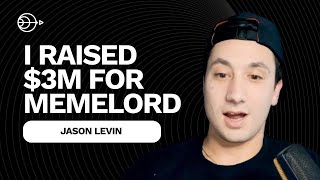
Jason Levin built Memelord, a $100K ARR no-code SaaS on Bubble, after writing Memes Make Millions. He sees memes as the densest form of communication and memetic warfare as a way to influence thoughts at scale, with plans to subsidize AI video credits so users can make movies.
Chapters
And you realize that Elon wasn't joking. Memes really do control the universe because memes are ideas, ideas influence thoughts, thoughts influence actions. And if you can influence actions from the smallest unit of production, then you can control the world or at least influence the action.
So listen, I have been down, as you know, the deep rabbit hole of memes, memetic warfare, templates for speech, the new power, et cetera. You are years ahead of me on this and spending 100% of your time on it where I am at best a casual dabbler. And believer. I would love to hear a little bit of which I don't actually know. You and I have talked about a lot of things, but not this. It's like, how did you go so far down the rabbit hole that you found yourself building the version of Memelord in Bubble and doing this ridiculous stuff and kind of becoming and working on this platform? Yeah, kind of the engine for, for memetic communication. I just love to hear the backstory. I actually don't know.
Of course, man. So I was writing on Twitter, just sharing my ideas and started a podcast interviewing my friends. Jack Raines was one of them. Love that guy. You know, Charlie Light, he's another. And I found out that these guys were making money making memes and silly stuff. And I was like, that's crazy. Like, you know, I vote. That was my dream was make money being silly, right? Not doing boring stuff, but being silly and making good money. And they opened my eyes to this possibility that you could do that and make a lot of money doing it. And once I found that, man, like it was like just following my curiosity and everything that I loved. And so I ended up writing this book called Memes Make Millions. And, you know, the whole idea is this underground world of meme pages. Who is behind them, right? Like, who are these weirdos and how do they make the money? And so I, you know, found out their strategies, all the different ways that they can make money, how they find brand sponsorships, how they start new companies, how even they launch, you know, small venture funds and stuff like that and how they, you know, use their audience and humor to make money. And from there, you know, I learned two things. One was their strategies, which I then, you know, used for myself. And number two was the problems that they faced, which was, you know, having to be terminally online and not knowing what memes are coming out and scrolling all the time. They didn't have a good software for it. They're all using all sorts of crappy software that hasn't been touched in 10 years. And, and then the third thing was just how seriously that people are taking memes and how seriously I should be taking them. And so from there, you know, It was a very slow evolution of just learning more and more every day. I've been deep in this world for 5 years and I still am learning something new every single day. And, you know, I just wanted to build the software for me, my friends, the people in this book. And it turns out that as you know, an audience grows, you find more and more people like you and like the weirdos out there. And so I built it for myself as the number one power user and all my friends. And there's a lot of us out there.
But I want to go deeper, like I want to go deeper with you on this. Because I get it, but I kind of want to hear more. Like, there's a, there's a huge spectrum between you're like, this is a lolsy way to make money and like you're curious about the community to like the level of research and investment and kind of what you've put into building this platform. Like, what brought you— what, like, tell me the story of that. You know, how did you go that far down the rabbit hole?
Yeah. So I would say a couple of things. One is seeing, you know, Elon say, who controls the memes controls the universe. At first you read that as a joke. And then you learn about Richard Dawkins, the creator of the word meme, who says that memes are the smallest units of cultural transmission. And you think about it more and more and more and more. And at least for me, and you realize that Elon wasn't joking. Memes really do control the universe because memes are ideas. Ideas influence thoughts. Thoughts influence actions. And if you can influence actions from the smallest unit of production, the same way that, you know, Elon vertically integrates his factories from the smallest units, building the transformers and all that stuff, right? Then you can control the world or at least influence the actions, right? And, you know, at least for me, that is where the idea memetic warfare, you know, took hold in my mind. There's that good quote of Inception. It's like, you know, once an idea takes hold in your mind, you can't lose it. And for me, it became super, super important. And, you know, I didn't come up with the word memetic warfare. There have been papers for 20 years, research papers where I started reading those too, you know, You know, most people think research papers are just physics and biotech, and I don't understand any of that stuff, but I do understand memes and psychology and that kind of stuff. And so, you know, 20 years ago, there were proposals for a Department of Memetic Warfare for the U.S. government. There's really— there's Army. Yeah, yeah. Army, you know, research papers all about that stuff. Right. You know, Ukraine was running 3 meme accounts during the war trying to, you know, amp up their people and also make fun of Putin. And so, again, like I said, every day just learning more and more. To the point where, you know, it became my life and it is every day is living and breathing this, you know, from there just also meeting people who are not just silly meme lords, but people who are working alongside world leaders, working alongside billionaires, working alongside, you know, Hollywood producers and people who are having major impact who take this stuff seriously was kind of like, it was surreal for me. It was like, holy shit, like, am I not taking what I'm doing seriously enough? I wrote the book on it and am I not taking it seriously enough? So, dude, I wish I could say it was like this, this gradual white light, but it was just 5 years of like digging down a rabbit hole the same way some AI founder does a PhD in, you know, AI. I did mine in memes and memetics and, and silly marketing. Yeah, I wish it was some, you know, white light acid trip like Steve Jobs or something, but it just wasn't.
You know, you've been following this if you're building great software, kind of what the key components like. I mean, I'm, you know, you get, you know, what's the trending memes of the day? How do you integrate it? Obviously, there's a huge amount there and a huge more to go. Give me your like 2030 vision of how the world works. It's your point. It's like memes aren't new and people have been discussing them theoretically for a long time. The internet accelerates them, but where are we going?
Yeah, I would say we are going to a world where attention spans are going down. Internet online time is going up. Combine the two. People want to be entertained. Add in AI taking away some of the work that you have to do. You have more free time and people want to be entertained. You know, there's a book in the 1970s called Amusing Ourselves to Death. And this guy, you know, predicted social media in the '70s, right? He's like, once the 24-hour news cycle came out, he was like, oh, like You know, there's a lot more useless stuff now, right? A lot more silly stuff because you just need to fill it. And now we have 24-hour news cycle, but it's all on our phones and all of us are citizen journalists. So the way that I see the world going is we are all becoming creators, creatives. It's the number one dream job. And now it's easier than ever to make stuff. It's really about having taste, spending the time doing it. Anybody could just make silly AI slop. Very quickly. But if you really want to have taste and make art, like, you know, our launch video and spend the time doing that, it's really about storytelling and taking the time to do that. I see a world of like a very, very barbell kind of theory of like there's going to be more and more AI slop, but there's going to be more and more beautiful stuff that people are making at all times. And at the end of the day, like, you know, we're just going to be consuming and creating so much more of the quantities.
But let me push you like I want to push you on this, which is like in my mind, the big difference, like I would argue, and you can challenge me on this, that like marketing slogans versus modern memetics are different, right? Like, and let me kind of give you my kind of my take on this, but I want you to push me on it. My take on it is like in the mass media culture of the last century, right? The thing we talk about is memetics or something would be something that like was fun to repeat or you would repeat in a social context to be the same as everyone else, right? It was like an expression of communality. And so controlling what those touchpoints were effectively of communality was a big deal of being a member of a group. The difference of modern memes and modern meaning and what you now do is you're incepting a template which has to be personalizable and riffable in order for people to want to transmit it, because what they're actually looking for is not, I want to feel connected to a group as one member of the group, but I want to be acknowledged as an individual separate from the group. And that's like a fundamentally different dynamic. One, I'm curious if you think that's bullshit or you agree with that. And two, I'm kind of curious, to the extent that that's right or partially right, what does this look like in 10, 20, 30 years? Like, you know, do we— is it— does it— does it stretch in new directions or are we in like a terminal state?
Yeah, I would say that's fairly accurate, but it depends the meme template. It depends the person. Some people just want to, you know, look cool in the group chat. Some people want tens of millions of views. Some people want to make money with it. Some people just want to make their girlfriend laugh. So I would say it's very different per person. But I really do think, you know, 10 to 20 years is like we're all pushing ideas. We're all, we're all creating content in some aspect. And like I said before, as attention spans go down, internet time goes up. You need to make it as simple as possible. You know, Elon said it himself, which is memes are the densest form of communication. You could fit so many ideas in a meme. I mean, I wrote in my book 3 years before Elon said that. I mean, You know, is, is pictures speak a thousand words, but memes speak a million. And so, you know, if you want to share an idea as viral as possible, as simple as possible, you do it in a funny, simple, templated way, the way that exact way that you're talking about. And I think we're all doing that, whether it's the government is now posting memes, multiple governments, not just ours. And they're not doing it like people think that ICE is posting memes as like some weird fascist show of power. No, they're doing it. For virality and recruitment because it's hyping up the people who are into it, like young men who are actually going to work there. You know, they don't care what other people think, you know. And so, you know, just like I think there's also a fundamental difference here that we've been seeing for 20 years, which is the difference between propaganda and memetic warfare. And so propaganda is not a new idea. You know, it's, it's, it's, it's 100-plus years old. Edward Bernays, Father of PR, you know, the Nazis stole it, whatever. But memetic warfare and is a social media a form where, you know, propaganda is, is one guy to many people. Memetic warfare is one to many to many more to many more, right? Exponential. And if you have the power like we do to seize the memes of production, where we are texting people all day different meme templates, right, then what you're able to do is, is give people ideas. And, uh, we, we, uh, we take that privilege and, and we're going to push out the bad ideas, I hope, and, uh, and, and win the good ideas. We're in a time right now of idea warfare. It's why on the COVID of our site, you know, the keyboard is the new battlefield. Gad Saad, you know, he has a great book that just came out about suicidal empathy. Right. It is a terrible, terrible mind virus. He also wrote The Parasitic Mind. You know, Elon wasn't joking about mind viruses. You know, Neal Stephenson talks about it, you know, in Snow Crash, right?
100%. One of my favorite things I've gotten over the years to know Neil Stevenson. I still am totally starstruck every time we have a conversation.
Yeah, same, same. I met him a few weeks ago at Long Journeys investor retreat, and I just thanked him. I was just so grateful because Snow Crash got me started. Where I think, you know, I think what's weird is like I've had bad mind viruses and we all have, right? And especially right now, we're all, we're all getting pushed mind viruses in different ways and And I think that's where we're at right now is we gotta let the best memes win. And so if you're starting a vibe coding revolution, you want to use memes and you want to push that idea that you could just do things, right? You know, the you could just do things meme is perfect for that, right? If you're a defense tech company and you want to push the importance of that and fuck China and we need to save America, that's a meme right there. You want to amp people up with patriotism, right? And excitement. These are all just simple memes and ideas, but everything comes down to the basic root, you know?
I get it. I get it.
Yeah, yeah. No, I know you do. But yeah, I think I know you were also curious about what we're using money for and stuff like that, I think was.
Yeah. Give me, give me that story.
Yeah, of course. So as you know, we grew Memelord with Bubble. I built it to $100K ARR myself like a madman. I don't know how to code. I found people smarter than me, you know, recruited an ex-government engineer to come make memes and win the memetic warfare. And so we're gonna be, you know, using the money to grow out our engineering team and most importantly subsidize AI video credits and make it cheaper for our users to make movies and crazy videos. I think the same way that anybody can vibe code ideas now, we're hitting a point where anybody could start TV shows, anybody can create movies, even, you know, actual movies, full-length movies, I'm saying. And, um, it's really just a matter of time and hard work. I think, um, you know, we, we're extremely excited, grateful, uh, and, uh, as I said in my, my recent tweet, we're gonna save that money and spend it well. Um, you know, we made our launch video for $300, uh, blood, sweat, and tears. I didn't go outside for 3 days, and it was some of the best times of my life. Because I think what a lot of people get wrong about AI is it doesn't do everything for you. You still have to work really hard. And, um, you know, uh, people are going to be able to— anybody can make AI slop, but can you make beautiful art using AI? That's, that's, that's what we're pushing our users to do. Can you make real movies? Uh, and, and we're gonna make— we're gonna make sure they can do that.
Here's my question for you on this, like, in terms of making movies, etc., is like, I see you doing that and I'm like, huh, like, what This seems like a lot of work is almost fair to put it, right? Like, you know what I mean? Like, I'm not saying that it's like not the right thing to do, but it's, it's like a very, like, I understand that the cost curves are in your favor over time and like all that type of stuff. But how do you think about the amount, like the, the beauty of, if you take it like the world of like you have a picture and you're putting some text on it or whatever is like the form factor is pretty rudimentary, but it's like super cheap to generate and that means it's like it's really easy to be able to remix on their own. You know, you can look at what, like, for instance, even, you know, Mark and Meta is doing with their like AI feed, right? Where it's like it's highly tuned for remixability in a lot of ways. So like, but talk to me how you think about that and like where the, like how much production value to put in and like what are the key properties of like a template that's adaptable?
I think you get out what you put in really. Like for me, like I care about my art so much, man. Like, you know, like I before, like I got into tech, I was, I was just straight up artist. Artist, you know, like really, really care about it. I have my collages over here, you know, I've had them in galleries. I've, you know, won photo contests and like I found tech 5, 7 years ago really. But like, you know, at the end of the day, you know, art is everything to me and it's why I care so much about the design. And so, uh, it really depends on what you want to get out of it. Like for me, right? Like I said, 3 days I didn't go outside and those were some of the best days of my life. Like I literally messaged my team. I was like, this is the happiest I've ever been. I got to play on my software. For 10 hours today. And yes, you know, I can't do that every day. And, you know, there is— I become the director and have my whole team doing that. And, you know, there's a team that we scale out. But I think, A, I had the most fun time ever. It was amazing. And I got to make my vision come true. A lot of founders want to quickly delegate their visions, but I got to do exactly what I wanted and show that. And people could feel that. And I know that for a fact that they know that they felt that and they— that I didn't delegate it. And so whether you're a founder, an artist, whoever, it's a good use of time. Making art is a good use of time. And as we have more and more free time, I think more people will be able to spend time doing that. Secondly, I also think that A, it's getting cheaper, B, it's getting easier where you can make things faster and faster. You get better at it. It's a skill just like anything else. You know, it was a skill that I learned very hard was, you know, you can't just generate the clips. You gotta write the script the same way that, you know, Quentin Tarantino, you start with a script so you don't waste time making the movies and filming stupid stuff, right? So you start with the script and then you go do it. Like, I don't know, personally, I find it really fun. We're going to be building out, you know, our whole team. We want to be the top best, you know, AI funny moviemakers in the world. And so for me, it's worth that time to get incredibly good at it and invest in that.
Do you think though, just to push you, and again, I'm curious, Jason Levin, because the question of like almost— now again, the really abstract one is like, what is art, right?
To some degree. Yeah.
Like, how much do you think like You think about Tarantino or a single great thing or a single great story. Like, at what level do you write that versus is the remixability and like the ability for people to take it and make it their own, like actually one of the core components of what great storytelling and great art is, right? Like, I think— or put differently, some would argue, right, that some of the most famous stories in history, the Old Testament, um, the Odyssey, the Iliad, right? The amazing part in theory, right, is that the core work hasn't changed in thousands of years. And yet they're also the most remixed stories in history. Right. And so if you think about like the core stories of it, like the reason they're powerful is both because the core canon is consistent forever, but they're infinitely recontextualizable, right, for different eras and ownable in different ways. How do you think about that in terms of like, when you think about like creating this platform for storytelling and art, like, how do you think about that? Right? Like, is it what component dominates? What's more important than the model error? Like, how do you think about, you know, those things fitting together?
We are all remix machines. No idea is original. It is very arrogant to think so, considering humanity has been alive for 10,000+ years. Um, you know, every idea comes from the hero's journey, biblical ideas, exactly what you're saying. Uh, we are all remix machines. Uh, you know, I had this blocker to making art when I was 17, 18, 19, because I was like, oh, nothing's original. I'm not unique. And then I read this book, Austin Kleon's, uh, Think Like an Artist. Um, and it really was transformative to me of when he said, um, You know, good artists copy, great artists steal. But he talked, you know, that's Picasso. But he talked a lot more about that, that, you know, all ideas come from somewhere and you make them your own and you remix them the same way. And so I, I don't know. I don't think— I think the only thing you could do is remix art so much that eventually it becomes your own style and people see that. But that takes— it takes years to do. You know, I've been making Photoshop art since I was, you know, 15, 16. Making Grateful Dead stickers, and now I have this weird style. But at first I was just copying other people's and, you know, remixing it to my own. And really, it's a crime of obsession and passion where, yeah, I think at the end of the day, the reason why memes are so powerful is because they're infinitely remixable. And that's what makes them beautiful, is anybody could put their spin on it and you could become an artist very, very easily. And really memes to me, what I've realized is memes are the gateway drug to making art. Memes, it starts out, you just add a little format and then you're like, huh, what happens if I right-click, AI edit, switch this, add a weird filter, blah, blah, blah, blah, blah. And now it's like suddenly I'm making cool art that I might throw on a poster. I might do this, right? Like, it's a beautiful feeling to watch people you know, have that creativity. It's gotten to the point where, you know, my stepdad, who runs a kitchen business, is making stuff on Memelord to promote his kitchen business. I'm very proud that he's now able to use it. It's easy enough where anybody can have fun and be creative to some degree.
I love it. Well, what else? I mean, like, I'm excited for the journey you're on. Like, you're on it. You know, it's, it's, it's exciting. I think, like, it's great to see you getting out there in the world with kind of the platform and kind of really pushing and experimenting pretty aggressively in all the good ways. You know, I'm super curious to see where it goes, but I don't know. Anything else we should talk about or cover that we can clip up and share to the world?
Si.
What are you worried about? That's always my favorite question. This doesn't work, or like we look back and you're like, wow, that was a totally wrong set of decisions. Like, what do you think? What's, uh, talk to me about that.
Uh, what do I worry about is, um, will people be as obsessed as me about making movies? And videos, or will they just jump to the quick, uh, AI video generator that gives you 5-second slop? And I worry about that, but at the same time, I think to myself that, uh, people have been making movies for a long time. I think about the Spielberg quote I repeated again and again: pain is temporary, uh, art is forever. And there are people out there who, who do care and will put tens of hours into Memelord. We already have people who are buying extra AI credits because they're running out 3 days after launch. So there are people, it's the power users, the same way that, you know, the average person might use TikTok to edit, the power users will use Final Cut and Adobe Premiere and stuff like that. And we want them to find Memelord and do that. So that's What I worry about is finding those people. I worry that Hollywood will not allow me, right, or will fight against me as the guy who is working with politicians. But at the end of the day, I'm going to fight my way into it. I'll do whatever we need to, blood, sweat, and tears to sell into studios. And we're already started some conversations there and record labels and stuff like that. I think if you make a good enough software, you know, people won't care about, about that stuff. Those are the things I worry about. I worry. Yeah, those are the main things I would say.
Yeah. Fair enough.
Fair enough.
Look, I'm psyched for you. I'm glad you got out there with the kind of the next steps.
I appreciate it.
I'm very excited. I mean, I'm, as you know, really interested in all this stuff, but in particular kind of this if you think about how do you think about creation, adaptation, and like community all at once, right? So rather than thinking about you deliver a fully baked piece of art and it is what it is and it either moves or it doesn't, you know, that kind of iterative thing is extremely interesting and powerful.








