He runs a $20M VC fund for creator software (Beehiiv, ElevenLabs, and more)
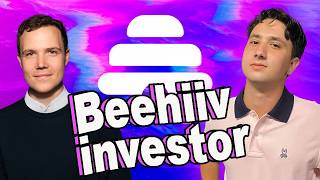
In a conversational interview, Sascha Koletzky, partner at Creative Ventures, walks through the firm’s investment philosophy and portfolio, explaining why they backed creator‑focused startups like Beehive, ElevenLabs, Feels, Practica, and Glyph. He describes the founding story of Beehive, the importance of strong founding teams, full‑stack engineering, and modular product design that drives rapid shipping. Koletzky discusses the broader AI landscape, arguing that AI will likely reduce free time by raising the marginal value of work, and reflects on the shifting definitions of AGI and safe superintelligence. He shares thoughts on emerging platforms such as WhatsApp as an ad/app ecosystem, the role of universal basic income, the rise of indie‑hackers, and the evolving dynamics of venture capital in a world of cheap AI‑powered development. The conversation blends personal anecdotes, market observations, and forward‑looking speculation, offering insight into how a $20M creator‑software fund evaluates opportunities and envisions the future of work and creator economies.
Chapters
I think AI is going to give us less free time because you can supercharge your time. And as soon as the marginal benefit for each hour working increases, the marginal cost of any leisure time also increases. Any moment that you're not like hacking on your new AI idea or using ChatGPT to learn about the Roman Empire or whatever it is to make yourself more successful is wasted time.
You invested in Beehive. Why?
So we first invested in that actually pre-launch round. The story of it is that I saw a tweet from Tyler saying, I'm starting a new company with some of my colleagues from Morning Brew to like democratize the tech stack or whatever. And I like to think that it was as if I had some vision of the fact that it's going to be a big company, but I just DM'd him. I just thought, why not? Give it a try. It was actually while we were raising our own Fund 1. So we didn't even have a fund yet. We were actually raising our Fund 1 at the time. So it was pretty much our first investment from this kind of what you call warehousing. So we didn't even have a fund. We had to like borrow the money to invest in the company. And then once we've raised the fund, we then put it into a fund as our first deal. And so yeah, we, I mean, the main thing is like, it's all the obvious stuff. Like, the team, there's nothing better than when a founder says, we've done exactly this thing already and all we need to do is run it back. That's kind of what's their original thing was like, we did this at Morning Brew. We built everything a newsletter creator needs to distribute their content to, you know, many of these people. We've done that already. Now we're just going to do it for everybody, not just one client. And yeah, so that's, that's, that was our thesis at the time. The team was like super, super, super strong. We had a pretty good insight because we like know a bit about creators and that kind of world, that social media world. That like Substack was completely not fit for purpose in a million different ways, which I know you, Jason Levin, probably know better than anybody. But then on the other hand, Mailchimp was also a shitty legacy SaaS company that everybody hated. So I was like, wait a sec, this thing on the one side of the kind of sexy startup version, every kind of sucks in a better, in some very obvious ways. And this legacy SaaS version also sucks. Like maybe something in the middle can, can, can start to work. So that, yeah, it was really those two things. And, um, yeah. That's how we got conviction.
Dude, Tyler is a force of nature, an absolute force of nature.
Yeah. And that was, that's actually become more of, so we've invested in Beehive a number of times. Uh, the first time was before they launched. The next round was the round that we kind of coalesced and led and put together. The first round, it wasn't, I mean, it was, Tyler was super impressive. It's clear he knew what he was doing. And he was obviously a very good founder, but he hadn't, he hadn't built the company yet. He hadn't, he hadn't actually shown anything yet. And so it was clear that he was very strong, but that was our first check. The second check, which was actually a much bigger check into their seed extension round, that was when it was clear he was an absolute beast. Yeah, that was where like after his launch and his, you've probably heard about his like monthly investor updates and just like the intensity with which they were shipping after launch. It was like 100 out of 100 clear that the guy was an absolute beast.
Yeah, for me, so I started out on Substack. Like 3 or 4 years ago, and Tyler just DMs me, says like, yo, you should switch to Beehive. You know, this is like 3 or 4 years ago, so earlier, before AI.
So he wasn't— he actually wrote that email?
Yeah, yeah, he definitely was. He's always been just like, you know, a DM away, which is always sick, like talking about product features or anytime I have an issue, which is like really what made me switch was like I couldn't really even name anybody on Substack, but I can name like 10 people on Beehive's team. Like they have perfected the creator mafia, the beehive mafia. I mean, really, again, they just ran that back from Morning Brew, right? And we kind of invented that strategy, right?
And, uh, see somebody on Twitter with a bee emoji that isn't with beehives and I'm like, well, I see somebody who just loves bees and I'm like, what the fuck?
Exactly, exactly. A fraud. And so, yeah, I made the switch. It was, it was very clear. Also, one of the big things that I, I think is really important for writers is like, Substack feels like it's the place for intellectual writers and ex-journalists who don't give a shit about making money, and maybe they're already rich, maybe like, you know, whatever it might be. Whereas Beehive, like, their entire thing is we help writers make money. And as like a writer who wants to make money, like, that is the place. Like, and they show you all the tools. Like, it's not like the intellectual whatever BS that Substack is that I I just don't like, you know.
Yeah, I think this is true of like many of our investments, but like the, the mass kind of dumbed down version of everything is always a bigger and better market than this like sure 1% version. Everything.
Yeah. What other investments could that?
I would say that definitely true of ElevenLabs, like ElevenLabs, you know, they, they got big at the beginning. Through some very unfortunate channels. They didn't intend to at all, but they got big through kind of like, you know, 4chan. They were big with like, do you remember those memes of like, um, Barack Obama playing video games? Uh, Joe Biden with the, with the, um, AI voices. And like, that was how they— and now it's like, obviously they're doing e-readers and they're doing New York Times and they're doing all that, all that kind of stuff. But, uh, at the beginning it was very much like idiots are the biggest scam on earth type investment thesis.
That is hilarious, dude. 11Labs is so easy to use. Like, it's insane. I think we talked about it, but today, I literally in a weekend, me and my friend built an app to like own a voice where you upload it and like on Telegram and shit. Yeah, yeah, the dead person idea that we talked about and you're like, yeah, like the founder of something similar went crazy and killed itself. I was like, Yeah. All right. Yeah. Passing that. But where was I? Uh, yeah, we like, it's so easy to use. It's crazy. You just upload a voice and you're good to go. So I like that.
Yeah. They've got the amazing combination of like incredible technology people, but also like very good product people who just made their amazing technology, like super easy to use. Similar to OpenAI, I guess we could say with ChatGPT. Yeah.
Yeah.
100%.
I'm curious. I, I was just reviewing Creator Ventures, uh, portfolio again. Um, and I saw Feels, a new dating app. What's the deal with that?
Yes, we did that. We invested in that early round. They're French. It's like a kind of, the thesis is like a TikTok for dating. So it's basically like, you know, a lot of the value that you get from dating apps is like, not just from meeting people, but it's also like a kind of entertainment product. But a lot of them are not that entertaining. So it kind of, it's very much video based. You're basically, users almost entirely have to use video to build their profile. And yeah, it's become the number one Gen Z dating app in— they're such a French company in France. They've expanded to Germany where it's growing there, and then, you know, maybe eventually it'll come to the US. Interesting.
That's so smart. That is like the underlying thesis, or the underlying thing that everybody knows is you just swipe for fun a lot of the time. Like, there's such a meme about it, like how girls will hang out and just like do it together. So why not make it more entertaining instead of the same?
Like the incels tragedy. The fact that, uh, all the girls are just not even intending to match with them.
Yeah, yeah, it's too funny. Wow. I, I think that's really smart, is, uh, realize that's a big realization. However they figured that out was just like, oh geez.
Yeah, yeah, exactly, exactly. But it takes, you know, you've also got to nail the product. There's dating apps, you've got a, you know, it's, it's also very much monetization business because you have to grow through acquisition, and so you have to monetize. So that's where they've been really good, is like they monetize very, very, very effectively.
How do they do it? Out of curiosity.
Oh, same way as, I mean, same way as every other dating app. Monthly, now increasingly weekly subscriptions to basically see more profiles, to like more profiles, to see who likes you, all that kind of stuff.
I'm curious, has AI made it easier or harder to invest? Because like, you know, talking to a lot of founders, it's like, you know, I could go build this like very quickly and cheaper, like Where's kind of your head around that?
Well, I guess the only answer that's really true is we're going to have to see in 10 years what the answer to that question is. Because anyone who's too overconfident about the answer to that question is probably a little bit overconfident. I think, you know, there's different ways to invest in AI. You can invest in, you know, all the things that facilitate AI. Very simply, there's, you can break this down in much more ways, but you can invest in the things that facilitate AI applications, whether that's, you know, chips or infrastructure or deep tech or any of that stuff. Or you can invest in the actual AI applications themselves. And most of what we do is on the AI applications themselves. So like whether it's consumer or some kind of semi-B2B stuff, but, but on the kind of fun bit of actually users using stuff. And I mean, my shtick on this is like, it feels like investing in the AI application layer is a really good place to invest, uh, at least right now because of the, all the capital and improvements and smart people that are going into the infrastructure to support those applications. So like every month a new amazing model has come out, comes out, or maybe that month the same models are just made 100 times cheaper, or there's some new modality like voice or images or multilingual and they're just every, there's just such this rapid iteration. We invested in a language learning app called Practica, which is the biggest AI avatar language learning company. So they teach you English, but it's an avatar actually teaching you and they've been super successful. It's been a really great investment for us. Nobody in America knows it because it actually teaches you English. English is the only language it teaches, but it's like very, very popular in many countries. And basically they, they obviously are great product builders, but they can just do nothing and their product gets better because ElevenLabs comes out with some new multilingual feature or OpenAI's, you know, product gets cheaper or better or faster. And so they can just improve their product just by like on autopilot, which is, which is amazing thing.
That is so cool to think about. So I don't know if you've seen Glyph around. It is kind of remixable AI images with text and stuff, and they were building it for 2 years or so, and I had seen them and I was like, okay, whatever. You know, I'm a bit— the idea was to make AI memes and funny stuff as well. And then all of a sudden Claude 3.5 Sonic comes out and it becomes unhinged and funny for the first time. And glyphs went viral, you know, and Jason Levin was posting glyphs and these AI memes. It was like, it just keeps improving. And every time there's a new model, that's really smart is like not having to jump into the infrastructure and just let them do the work for you.
Yeah, it's amazing. And it's like, uh, it's a bit like, you know, Moore's Law, stuff like that, back in the, back in the day. But like, if everything keeps getting faster, better, cheaper around you, your job as an application company gets much easier. But take the other side for a second, you know, like the market's going a bit crazy. So you don't have to be, you don't have to be, you know, Warren Buffett or some kind of genius to to work out that, you know, AI applications are an attractive thing to invest in right now. So the, you know, some of the valuations are getting really overheated and there's a lot of competition. So it's not, it's, you know, the problem with investing is whenever anything's a good idea, that gets priced in pretty quickly.
Do you ever think about AGI stuff? I feel like for me at least, it feels like just some basically made up to some degree where nobody really knows what it means, but like, what are the implications if it does happen, et cetera.
Yeah. I mean, I think it's one of those things where the target will keep shifting to, so that we never, it'll be like a mirage that will keep being on the horizon as we get closer to it. But people will just shift the definition to be even further away. So that's what I think. I think it's a bit like a kind of consciousness type argument where it becomes like almost circular when as soon as something machine gets closer or animal gets closer to it, We start to change the definition so it only applies to us humans. That matches or surpasses human capabilities across a wide range of cognitive tasks. But that wide range, as AI starts to do more that we can do, that wide range is going to start creeping and creeping and creeping further away. And I think the definition is just so broad as to be almost irrelevant.
I agree. I do agree. And I think that the SSI, Safe Superintelligence thing that just, uh, launched and they just raised a billion. I don't know what that even means. Uh, you guys know what it means, but here's a billion dollars, you guys are smart, go build something, you know?
Yeah, I think it's one of those things where I do, you know, a company's mission statement and then what it delivers don't always have to be the same, and that's kind of okay. So for example, you know, SpaceX's mission was to make humans multi-planetary, which is a big mission, much as making it safe superintelligence that, you know, can do everything. But then they started to monetize through Starlink and internet and satellites and launches and things like that. And so I think there's a, I think there's a pretty solid chance that SSI does something similar where they have this long goal, which actually, I think they've actually technically denied that they will do this, but there's a pretty good chance they have this huge lofty goal, build some amazing technology and then start to sell it for various interesting use cases.
I, I definitely see that becoming a B2B SaaS or something of the sort. Um, one thing that I did think about is already with AI tools, um, I feel like saving, saving time, right? It's going to be the best time for podcasts, for content, for entertainment in general, you know, if we all have a lot more free time, right? Might be the best time to start a podcast.
But do you think— I see, I see, I have the, I have the opposite view. I think that AI is going to give us less free time. Which is, I think, a somewhat contrarian view. The reason AI will give us, because, because I think AI will give us less free time because the marginal benefit of any time we spend working increases because you can actually supercharge your time. And as soon as the marginal benefit for each hour working increases, the marginal cost of any leisure time also increases, which basically means that any moment that you're not like hacking on your new AI idea or using ChatGPT to learn about the Roman Empire or whatever it is to make yourself more impressive or more successful is wasted time. I think builder culture, hustle culture, you know, Friday nights are for builders type mentality are the first early signs of this type of culture. Yeah.
I do agree with that. Ah, man, I think maybe it depends the person. Like I've been feeling that lately where any time not spent doing something with AI or working on something, I feel like my time is higher leverage at this point. And just in the last few months, like Midjourney, for example, it used to take me like, you know, 45 minutes to an hour to come up with something good for my newsletter cover images. And now with the new Midjourney, it takes like 5, you know, a few minutes of just like playing around. And I could just like go so much further. Right.
And so, you know, in the 1950s, 100%, like in the 1950s, the, you know, the office worker would go into the office, they would do, you know, that pen, paper, write their memos, do whatever people did. They'd get home and there would be nothing for them to actually do to improve their lives once they're home. Maybe they'd read the paper or they'd watch television or they'd hang out with their family, but there was actually no way of them giving themselves a better chance once they're at home. Whereas now that doesn't apply anymore. There's a huge cost, unfortunately. I think this is a real tragedy, by the way. I don't— I, I love the fact that we have lots of leisure time, and I think it's very sad, the fact that I'm, I'm worried the fact that I think it's going to decrease because of AI. Interesting.
I mean, it definitely feels more motivating to work right now than ever. I feel like I'm working constantly, and for better or worse, and There's this good book, I don't know if you've read Amusing Ourselves to Death. It's written— no, I haven't read that, but yeah, yeah, it was written like '80s, '90s predicting, you know, talking about the news, 24-hour news cycle, right? And we're just constantly amusing ourselves. And this guy predicted basically that we'd amuse ourselves so much and just spend all our time being amused. And, you know, to some degree it's similar where like right now Everybody's watching TikTok all the time, right? Coming for, you know, all the moments of our time, but in the same way, like working ourselves all the time. Like I said, I think it's— there's two types of people where like one will benefit and one will maybe not. I'm not sure.
You're absolutely right. I think you're absolutely right. I think some people will just, um, uh, will, will use the— will use the extra leverage they get just to kind of like, I guess, just chill. And yeah, I think that's absolutely right.
Yeah, there's a new show coming out on Fox, uh, called Universal Basic Guys, and it's Universal Basic—
what?
Universal Basic Guys. And it's— yeah, just like two schmucks who get universal basic income and just hang out all the time. Uh, it's like a Family Guy-esque show. Um, and I was like, that's a really good idea for a show.
That's a really good idea for a show.
Yeah, the cover's hilarious. They— it's just like two dumbasses with like checks that say universal basic income and $3,000. Yeah, I mean, I, I kind of do think it is a terrible idea, UBI. It just seems—
yeah, I love the— I love the idea of it. So I love the idea of it for people who super need the money. So, you know, there's this like— I think the idea kind of semi came about because, or at least was like co-created with this charity called GiveDirectly, which is basically this Africa support charity that just pays money directly, that you, the donor, give the money and it just gets paid directly to these mostly East African, mostly women, like villagers into their phone, their M-Pesa phone wallets. And they say like it works really, really well for them because they're more likely to start businesses and build wells and, you know, buy stuff that they need. But the problem with universal basic income for like slackers in just random American towns is that they're just more likely to chill because their basic needs are already met.
Yeah. And what do they say? An idle mind is a devil's workshop, like drugs and alcohol definitely going to go up if everybody's just got extra money playing around. I think, didn't Sam Altman do some study of that? And they saw, you know, the happiness go up for one year and then it just went right back to normal, you know?
Yeah, that's one of the great human tragedies. The fact that just that, that fact that it's all relative, you can't— it's any, any sustainable way of increasing happiness long term is just so difficult because people just get used to it.
Yeah, you just gotta constantly be improving all the time. I'm curious, have you been reading anything good or any investment stuff that's interesting?
Yeah, I mean, obviously work-wise, always looking at, we really are going through this application layer AI stuff and there's just so many different applications that are interesting. In terms of other stuff, I mean, I do like, I mean, loads of stuff. I love, I have, Pretty random interests. I'm actually currently in a kind of Greek myths rabbit hole. Yeah, yeah, yeah. Learning about Greek myths, especially how they started and all the different writers and how they spread through verbal tradition. And then people actually ended up writing them down and like so much of the stuff they had in their Greek myths are actually like amazingly, like I wouldn't say exactly, but they almost like predicted the theory of evolution in Greek myths. Like the way they described having, like how animals came about was like not that different to how Charles Darwin, and then everyone forgot it. And then kind of Charles Darwin came up with something much smarter.
Yeah. Looking at old knowledge is, is always good. I'm reading a book right now. Have you read, uh, Unincorporated Man? So good. It's really good. Um, it is sci-fi book, you know. 500 years in the future or so, and, uh, companies have equity in every human, and you have to like fight your way back to get it. So it's one, one man's, you know, goal.
Wait, how do you fight your way back? What do you mean? How do you, how do you, how, how does that work?
Work, work your way back, essentially.
Like, okay, like you, you have to, you have to work like a salary and then you pay back your equity, essentially.
Yeah, yeah, yeah. You, you, you're— when you're born, the government gets 5% of your equity.
Oh yeah, that's not too much.
Your employer gets like 20%.
But how do they know you're an employee when you're born? How do they know you're an employee?
Your parents get 20%, and then if you like go to college, it's like they get equity in your job and all this stuff. And so they control your life, essentially.
It's the government or the employer.
More the employer. Yeah, it's, it's weird. It's actually, um, it's, it's interesting. So like in this, you know, futuristic society or whatever, uh, they've agreed and admitted that the government is very inefficient. So it's just very corporate and like the corporations are like the strong things. They control the money supply actually. Like Amex has their own money supply. Like I was thinking about this other day actually, which was basically like US government, you know, it's super inefficient, right? Like there's so many opportunities to just build shit that the government sucks at. Like I was, you know, joking around about a bathroom, basically like a bathroom rental thing in New York or whatever, right? Because the government sucks at building public bathrooms. Like, there needs to be somebody who does that.
You do surge pricing at peak times, 2 AM, everything else is $50.
Exactly. Exactly. Yeah, I would love to just replace the government in any way we can.
Yeah. Yeah. I mean, I'm originally European. It pains me to hear that, but I think you're probably right. I think you're probably accurate there.
Yeah.
Yeah.
We'll see. Do you find like startup founders are less inclined to take capital right now?
So, you know, what's crazy is that in my experience, even founders who are building very successful companies, in many cases they're profitable. A lot of them still want to raise capital. And so I think it's something to do with that. There are basically non-financial benefits. Of taking venture capital money, whether it's that somebody else is pricing your company, which helps you get employees, whether it's a bit of signal, whether it's, you know, even if it's just more cash that isn't kind of de-risking help when you're, when you ultimately want to exit. But I have not seen any kind of, um, I have, I've seen a lot of sentiment shift against VCs. I've seen a lot of like, you know, people quite reasonably, you know, hating on VCs publicly, which I I totally am in favor of, but I haven't actually seen many people who've decided not to take VCs that I think would have a few years ago, even when they're profitable, because the VC primary round of investing new money into a company has just in many cases morphed into VC secondary rounds where VCs will buy portions of companies that are profitable from the founders.
Yeah, I, was talking to a friend last night about raising capital. He said, you know, he probably wouldn't do it now with, with this much AI, but then he was like, yeah, you know what, maybe I would because you could just grow so much faster with like as much if you're given an influx of cash. And it's not even about hiring engineers necessarily, it's about growth. So yeah, it's interesting.
How do you— I think eventually it will happen though. I think it's, I think it's a short-term thing. I think I think if companies really do become insanely capital efficient and they just simply do not need money, it is definitely going to be a challenge for VCs who are trying to give them the money that they don't need.
What's your thoughts on the indie hackers who are making, you know, is that kind of, do you think that'll become more normalized? I kind of thought it will be.
I personally think it will be too. Like the fact that people can build like fully fledged products on their own. It's a bit like what we were talking about earlier with the, like, foundational and infrastructural AI allowing for, you know, AI applications to be built very easily. But it's kind of the same with, like, things like open-source software and no-code and things like that that just allow, like, individual people to build pretty great products. And for a fund that, you know, we're called Creative Ventures, you know, we do all kinds of consumer and application software, but we are like foundationally about being a creator and creating things and using your audience to do that. And so for us, like, it's so amazing to see these people with audiences just build stuff and then ship it themselves without having to have a big team to do it.
Yeah, dude, I am one of them right now. It's a lot of fun where I grew this audience around memes, this whole niche that people thought was kind of stupid. And now, you know, growing meme alerts and using no-code and, you using engineers and totally, uh, you know, it's, it's been quite fun and, and seeing, we see it at Product Hunt so much where, you know, I say this, uh, people get pissed off, but it's like the trick to winning Product Hunt, have distribution. That's simple. Like nobody, nobody wants to hear that. At least like a lot of people are just like, ah, it's, it's bullshit. Like the people with distribution always win. It's like, stop complaining, go build the damn thing.
Yeah, that's part of the game. Exactly.
Like that's just the game that we live in. We live in an attention economy. And so the reason why Mark Lau, Peter Levels, whoever, are just killing the game, it's because they have been doing it for a decade. You know, they've been building it for so long. Yeah, I'm very bullish on using your distribution. I'm really excited. Back to Beehive for a second. Tyler starting his newsletter, I find that fascinating. Basically dogfooding his own app and building his own newsletter, which is like good for Beehive. Yeah, I think that's just super smart. I don't know.
Absolutely agree. And you know, they, that it's not just him, like I think they had like a big offside and they basically decided that like all of them should be dogfooding their app. And so it's actually pretty much all the employees have some kind of newsletter. I think all their investors should also have some kind of newsletter or blog.
You got one.
Yeah, exactly. Oh yeah, thank you. Yeah, so I think it's very important.
I think it's so smart. And we have that at Product Hunt too, where a lot of the team is working on side projects and just shipping products on Product Hunt, launching on Product Hunt. I, yeah, it's just like, it's good for the mentality of the team for sure.
Yeah.
Dogfooding as much as you can. Yeah, it's definitely, I'm curious for Beehive specifically, what, how do they ship so fast and so consistently? What is the secret to their product velocity sauce?
They've done a really good job of talking about some of this stuff and actually Tyler's done a good job of documenting it all and they've got a deep bench who, of team who also talk about it, but you know, from what I've gathered just from the outside as an investor, it's a combination of like, it's the way it's people they have and what they're doing with them. They have a super, super, super strong team. It started with, you know, Tyler, as you know, is not the only co-founder of Beehive. They've got Ben and Jake, who are very, very, very strong software engineers who can just ship all day very, very, very strongly. And that's how it all started. And they got, you know, had various CTO, you know, unfortunate situations at first. And that was very sad, but then they landed on a very strong CTO, Noah, who can manage the team really effectively. And they just hire super, super high quality people. So the people they hire are just very, very, very high quality, but maybe that's a bit less of an interesting point because a lot of people have high quality people. I think what's really interesting about what they do is pretty much all their engineers are full stack. So by full stack, I mean really full stack. So they'll do the backend, they'll do the frontend, they'll even do the design a lot of the time. They were pretty late to hire even one designer or one product manager. So the engineers kind of like own the entire new feature that they're building and are completely, totally responsible for it. And at the back of their mind, they know that this is going to, when they get launched, they're going to be the one who's blamed. If it's late or if it's slow or if it's buggy or whatever, like they fully have to own that. And so they do it, they do it quickly and they do it well. Beehive's like a great company to do that because the product's so modular. Like they have this core editor and publishing experience and then all the features are some kind of like bit on top of that, that kind of plugs into that or a new setting or a new dashboard or whatever. And Tyler's constructed the team very smartly to take advantage of that. There are other companies that can't do that for whatever reason, where everything's much more interrelated and you have to have a backend team and a frontend team and all that kind of stuff.
Yeah. I think their velocity has been so inspirational for a lot of startups.
Yeah.
Um, I know at Product Hunt we talk about it. It's like, how do we get that? You know, that shipping velocity or like it's, it's really cool to see. Um, the momentum is really powerful too. Uh, where everybody looks forward to new features coming out. There's something about the momentum online and the real community that the team has built to watch that. It's been fun.
Most definitely. Yeah, they've done an amazing job.
WhatsApp groups. We talked about this a while ago and WhatsApp apps and apps built on WhatsApp, maybe Telegram too. What's your thoughts on that?
Yeah, so I mean, this is like, as people say, like when you're early to a theme, well, I'm either early to the next big thing, or I'm just a fucking idiot and it's never going to happen. But basically one of the things that Casper, my co-founder, and I at Creative Ventures are very excited about for the long term is WhatsApp as an ad platform. And the reason for that is that, and it's early, right? There are not many, pretty much there may be $1 billion company that's built on WhatsApp in Latin America. for, you know, community operations and stuff. But I think that there will be many in, you know, 10, 20 years. And that's the kind of timeline that we need to think of as VCs. And the reason I think there'll be many is that there are billions of WhatsApp daily active users. Unfortunately, very few of them are in the United States, which means everybody who's, you know, in control of large pools of capital has no idea what I'm talking about when I say this. But yeah, that there are so many WhatsApp users, and from many WhatsApp users. It's the number one, like, time spent in app in their entire phone. And then all at the same time as that, Meta is trying to turn WhatsApp into an app platform. Now, it's never going to be probably a WeChat, like, probably in China, WeChat is like an app store itself. And most of people's even doing— people book a cab on WeChat and do all kinds of stuff on WeChat. It may never get to that level, but I think Meta sees that and views it as a big opportunity. And so all finally, the final thing that also coalescing at the same time is this, this AI LLM shift, which basically allows for things like support to be much more automated and much faster through WhatsApp and other chat apps. So yeah, I think WhatsApp is going to be a big app platform for the future. I eventually think it will even happen in the US. That's very contrarian because everybody seems to disagree with me, but I think it will eventually happen in the US. And so yeah, that's what we're investing behind.
I think it definitely could. If WhatsApp gains enough popularity, if Zuck gets enough drip, I think it could. But I do definitely see it. I mean, talking to friends overseas, they, the number one question is like, WhatsApp, like, you know, can we have your WhatsApp? And so I definitely see that. I think really bullish on X as the everything platform. So I almost could see them, you know, maybe doing that, but I think it would be almost internally. They, I don't think they'd open it up to let people build apps too much on top of it, although it'd be so nice if they did.
Yeah, maybe. Yeah, you never know. But, um, yeah, on the WhatsApp thing, it's funny, like somebody, I once heard somebody say that if a guy, it was a, it was a, it was a woman who said if a guy tried in America saying if a guy tried to ask her out on a date using WhatsApp, she just wouldn't show up. Basically, it's like iMessage or, iMessage or nothing. So there's definitely some kind of weird American stigma against WhatsApp being like for poor people or some shit like that. I don't know. I think eventually, I think it's going to take a very, very long time to get over that, but eventually I think it'll happen.
They just need the blue bubbles. That's really it.
They need the blue bubbles.
Yeah.
They actually made a very slight feature change, which was to, I mean, as you know, WhatsApp is green. The message is also green, but about 6 months ago, they made a very slight changed to actually make the send button, which was blue even though the messages were green, but they changed the send button from blue to green. So they're trying to, I think they're trying to double down on this green thing.
Double down.
Like, all right, all right, let's, they're doubling down.
Green all the way. Cool, man. I think that's a, a good place to close. I'm curious, where, where can, uh, people find you? Can you tell the listeners?
Yeah, I'm a, I'm on Twitter like you, and I'm on @sashakalecki on I mean, I don't really post on LinkedIn unless something, unless, unless something huge happens in my life, but I'm also on LinkedIn, Sascha Koletzky. And, um, yeah, creative, you know, if you're a founder looking to raise money, you can reach out to me or my co-founder Casper Lee directly. And yeah, would love to, love to hear about what you're building.
Sweet. All right. Thanks, Ben.
All right. Thanks.








