He's fighting tech addiction (screen time coach)
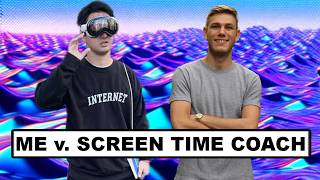
Randy, a screen-time coach, talks tools for managing tech addiction: physical blockers like the Brick, apps like Freedom and Opal, and a metric called the Digital Distraction Ratio that separates essential screen time from distraction. They explore how to balance creation versus consumption and emerging business opportunities in digital wellness.
Chapters
All right, Randy, my friend, my friend. It's good to see you.
It's great to see you as well. Appreciate you having me.
100%, sir. Dude, I remember we tried to film a podcast at your place and we had like no setup, and so it was just, we looked like that meme of those 4 kids who were just like talking.
Yeah, it was a disaster. The mic was like falling onto the couch. We didn't even know where to look at each other. It was a mess.
It was so bad. It was so bad. Well, we've both come a far, a long way. And are both working on some pretty cool stuff. So I want to find out more about digital minimalism and what you're working on. As always, it's a lot of fun to talk about and it's fun to debate because I am the digital maximalist. So maybe you could give listeners a little bit about what you're working on.
Yeah, for sure. It's funny because like you said, I think you're the antithesis of this idea in terms of the fact that you are always online, you're chronically online, you love it, and you want to maximize the amount of time that you spend online because it works for you and that's totally valid. But one of the ideas that I've been kind of going down the rabbit hole on is this idea of digital minimalism, digital wellness, you know, people being more mindful about how they build their relationship with technology, how much time they spend on social media, how much time they spend on their phones. Are the devices and the software, the tools that they use in their lives serving them, or are they serving it? And so you're seeing, you know, this huge trend of dumb phones and teens quitting social media and books like The Anxious Generation that are getting a ton of press which kind of shine a light on all the negative implications of social media and kind of smartphone addiction on teenagers. So that led me deep down this rabbit hole, experimenting a bit more in my own life about, you know, weaning myself off of certain platforms and, uh, habits that weren't serving me, and added some real clarity to my life. And has even led me into going and building, you know, a suite of products in the space and kind of figuring out that this is the next big problem that I want to tackle. And so, yeah, I'm, I'm very excited. I'm, I'm happy to chat about it and that like there's, you know, people on both sides, you can see the value. So I'm excited.
Yeah, I get it. Trust me, I do get digital minimalism. So if you've been listening or reading my work for a while, you know, I used to write a wellness tech blog. So writing about this kind of stuff, and at some point it was just like, screw it. I need to stay happy. But I love making stuff on the internet, you know, and I love being online. I love talking to my friends. It's how, it's how we met. It's how I met a lot of my good friends. But there is still part of me that is digital minimalist. So I want to go through, talk about some of the tools that I've used. I want to hear about some of your tools. Maybe we could go kind of tool for tool and talk about some cool stuff. You ready? I got some next to me. Sorry, I didn't tell you to. I didn't tell you to prep, but I got a few next to me. 100% that you know of. All right. So number 1, this bad boy, the Brick. Um, I think you have one. Uh, I have one. It's just a tool. You put it on your fridge, on your whiteboard, wherever. And it, uh, bricks your phone, literally locks the whole thing, right? And why is it so cool? Like you could just go on airplane mode. I think the Brick's really cool because you have to stand up and actually go do it. It's, it's a forcing function, right? So I am this super online digital maximalist person, but when I need to grind online, right, and not be distracted, or then I like to use it. How do you use the brick? What's, what's kind of been your purpose? Like, do you have a routine with it or what?
Yeah, I'm perpetually bricked up. Like, I just always have my phone on the brick, so I leave it on my fridge, like, like you said, and every distracting app on my phone I have bricked out and I don't tap and untap. I just leave it. And I know that my phone is a place where I use it for calls, for texts, for my emails, but it's not going to be a place where I, you know, scroll on Instagram. I still use Instagram on my laptop, but given the fact that I spend a lot of time, you know, out, um, at meetings, I'm with friends, I know that I'm not— I'm kind of putting a forcing function on how much time I'm going to spend there. And I think, you know, that whole category of distraction blockers is really interesting because you have software distraction blockers like Opal and Freedom that help, right? You're able to set limits limits on which apps you want to block, but there's such a low level of friction to being able to bypass those. You can really just say like, yeah, let me in, and they let you in. Whereas the Brick, especially if you either keep your phone perpetually bricked or you leave it at home while you go to the gym or you travel, you go to the office, there's almost no way for you to get back in there. So just the amount of friction that's needed to get in there is, uh, super powerful. And I also think it's interesting because like at its core, the product itself is pretty simple, right? It's an NFC chip around some type of, you know, 3D printed object or plastic object. And I know you and I were talking about this before, there's a lot of competitors that are popping up. And I think, you know, competition is just good for the broader market in general, but it has been interesting to see how people put their own spin on it. So for example, I met a founder of a company called 4REM, which is the same concept as physical distraction blocker NFC chip, but specifically geared towards sleep. So whereas, or whereas, uh, Briffy is focused towards productivity and kind of making the most out of your work. This is specifically geared towards keeping your phone out of the bedroom. And so their app is slightly different where it kind of like you'll set your schedule of, oh, I want these apps to start blocking at 10 PM and they'll automatically pop on. Um, so you don't need to tap it, but if you wanted to turn it off, you need to go and tap it to the physical device. I felt that that idea of kind of having basically the same product but just targeting a completely different demographic, completely different marketing, was really, really genius. And now I've been using it for for my own sleep too and playing around with it and it's been really cool.
Nice. Yeah, I found the Brick because, uh, my boy Jordan Mix tweeted about it and then I talked to the Brick team. These guys, like two college kids, engineers, solving their own problem that they faced. Uh, like you said, you know, very, very cheap to make and they were selling them for like $20 and I know they were printing money on Instagram ads and everything. So like you said, competition is good and I do like the variation as well. For me, sleep is the big problem. Like I don't have any problem with using my phone during the day. A lot and like, it's cool. I use it to make money, but you're 100% right when it comes to bedtime. Um, and you start delaying yourself more and more. I get exhausted and exhausted and, you know, maybe I should be drinking some tea, relaxing, reading a book, and I end up scrolling, right? It's like not a good use of time. Um, and it's hard, dude, when, when your, you know, career is tied to social media, you could keep saying, I'm, I'm gonna keep working, but at a certain point it's just not worth it anymore. You know, it's, it's, uh, you need that sleep.
It stimulates you and yeah, it keeps you up. And I think, uh, I wrote about how it was either Mark Rudolph or Reed Hastings, one of the Netflix co-founders said that Netflix's biggest competitor is sleep. And it's not all the other, you know, different streaming services, it's sleep. And it's true. And it's the same thing here where that's one of the kind of biggest life unlocks that people I think don't realize when it's like, oh, I'm going to quit spending time on social media or quit scrolling before bed. It's just the extra sleep, the clarity, the emotional kind of fortitude that comes along with getting a good night's sleep is something that easily gets taken away when we're just constantly scrolling. So it's very interesting.
Yeah, I had an Oura Ring for a while. That definitely helped, helped me figure out that I get the most deep sleep between 12:00 and 2:00 AM and I really notice it. So when I'm up past 2:00 AM, that's the point where I wake up the next day and I just feel terrible. But if I get to bed before that, I feel pretty solid. I feel like I had this conversation a few years ago with somebody where, with Michael Brandt actually, he's a founder of HVMN, Ketone IQ. And so, you know, getting an Oura Ring, getting something like that, Whoop, whatever it might be, it's a good, it's like a software upgrade, right? And you get this software upgrade, your body works and you learn something new for a couple years. Eventually the software decreases, you know, in efficiency and you need it again. And this conversation is really coming at a good time for me personally and why I wanted to have it. You know, we were at my wedding, I guess a month ago, 2 months ago, and you were bricked up the entire time talking to me about it. So it's definitely something I've been thinking a lot about as well. I want to bring up another product, which is not in the quote unquote digital minimalism field, but probably because it's so new. So So this is called the AI Friend. It is, you know, an AI wearable that you wear around your neck. You know, it's— I put mine on a gold chain because why not? My grandpa's old gold chain. And what it does, it records your conversations, gives you transcripts, and it gives you notes. And so I think this is— it's obviously digital maximalist because you've got this on while you're going on a walk. But at the same time, like, it is kind of digital minimalist. You're not typing while you're on a walk, you're not looking at your phone. You can look at your surroundings and take notes just by talking either to yourself or towards a friend without checking your phone, without getting distracted. What are your thoughts on that? Could you see yourself using that? Like, do you think it's healthy?
Yeah, I mean, at the core of everything, I think it's ultimately intentionality. Like what might work for you might not work for me or some other person and, you know, you spending 10 hours tweeting and being on Twitter and making deals. Like it's ultimately almost even the conversation of like creating versus consuming. Like if you're spent 10 hours of creating is very different than 10 hours of consuming. And I don't think necessarily the hours of screen time is the tell of all, you know, if this is good or bad.
Yeah, let's dive into this, dude. Yeah, dude. Screen time. Tell me your thesis there. We've talked about this a bit. Let's, let's hear the screen time thesis.
But the screen time thesis is that not all screen time is created equal. So ultimately, like I said, the key is intentionality and our phones and our computers and our devices, they are tools. They are tools to make our lives easier. They are tools to help us make money, do our jobs, build better relationships with the people around us. If you use those tools for their intended purpose, then you could spend as much time as you want as long as you're getting those positive benefits. It's when you use the tools and you kind of get sucked into the dopamine, the notifications, the apps that are designed to specifically take your attention away from what matters is what gets dangerous. So like if you're using Google Maps to get home from a 5-hour road trip, your screen time is going to say you spend maybe, you know, 7 hours on your phone in your day total. That from the kind of outside in might be like, holy shit, you spent 7 hours, but really used it really good. So I was thinking, you know, how is there a way to quantify the level of distraction that we get from our phones each day? Because Apple screen time metrics are pretty bare bones. They give you total time and they give you total notifications and the total amount of pickups. And so I ultimately broke it down into fixed screen time and variable screen time, similar to if you were, you know, managing your money and doing a budget. So fixed screen time is the time that we spend on our screens for kind of essential use cases, things that I talked about, Google Maps, calculator, calling a loved one, stuff that's pretty consistent on a day-to-day basis. Then you have your variable screen time, and these names aren't perfect, but you have your variable screen time, which is your social media, your TikTok, your Instagram, you know, stuff that you don't intend to use on a day-to-day. It doesn't necessarily bring massive value to your life. It's not mission critical, and it kind of varies in how much time you spend per day. And so as far as calculating whether screen time is good or bad, I developed this ratio called the digital distraction ratio, which is essentially variable screen time divided by your total number of waking hours. And you essentially get a percentage of how much time you're spending on these distracting apps. And so I, again, it's not perfect, but I think it's a hell of a lot better than just this core bare bones all-encompassing screen time metric. And so I aim to keep my digital distraction ratio as low as possible. I'm doing some coaching with clients and people who are trying to build these healthy relationships and even giving them that framework and that kind of metric to shoot for is something that has made it a lot easier in their lives. So tying it back to the AI stuff, you know, I think that's a perfect example of intentional AI use where, or intentional tech use where you know that it's serving a specific purpose. It may actually. Free up your brainpower to, like you said, be more present, be with the people around you, kind of the same way that we use like Fireflies or Otter so that we don't need to take notes during our calls so we can be more present. That's a very intentional use of technology. And so, yeah, I think in your case it works perfectly.
Yeah, it's funny. I think it is all about the intention because when I'm on Twitter to write and I'm, you know, drafting a tweet or a thoughtful thread or even just making, you know, a goofy meme and having fun, feel joy. I feel relaxed. But then, you know, when I'm just kind of scrolling, killing time on the subway instead of, you know, looking around, maybe reading a book, I'm just killing time really. And that just feels terrible. There's something just anxiety-inducing about it that is awful. It's actually, you know, I was making a lot of Instagram videos for a while. I was going super viral with some of them, right? And that was addicting in itself. And then it led me to be on Instagram more. And scroll on feeds and I'm on Instagram maybe 30 seconds a day at this point. I have a blocker on at 1 minute because I'm just never on and really only on when Erica, my wife, posts photos and I need to go like them, you know, show some love. But that's it. I don't even have TikTok on my phone, no YouTube Shorts or anything like that. Um, and so I think you're right. It's all about like finding what works for you. Because, you know, I was with a friend last night, um, who doesn't have Twitter, you know, finds it way too addicting, but he has Instagram and, you know, that's what works for him. Different strokes, different folks. But I think you're right about like what works for you, the right balance. Um, are you spending more time creating than consuming? Uh, I think that's, that's a really important thing to think about. And when you're in that consuming phase, um, how do you just like get out of it, you know? Do you ever get so frustrated that you just want to throw your phone down? Because it happens to me all the time. I'll be like scrolling shit and I just, I need, I need a break.
Yeah. I mean, it's funny you said the thing about spending time on Instagram to post your videos, then realizing that you're getting sucked into the negative side of it. Cause the same thing with TikTok for me, whereas for years I've not had TikTok on my phone, like 2+ years, never really fell into it in general. Didn't even have it break. It just was not a thing in my life. And then I've been trying to kind of build this short form video muscle and create a bit more and kind of. Push some of the new ideas and products that I'm working on, which is a whole level of irony in itself. But I download TikTok to post these videos, and then like you said, next thing you know, I'm taking a shit and I'm like 30 minutes have scrolled, whereas like, I don't know what I was doing before, maybe like reading the information on the back of a shampoo bottle or something. Like, I wasn't scrolling TikTok. And that's where it's so addicting. We don't even realize that it's like whenever there's a ping of boredom or some little period that we need to fill space, we'll go to reach for those apps. Like even one of the people I was working with in coaching, he's like, I knew that Twitter was a problem, so I deleted, uh, Twitter off my phone. So then I went to TikTok and then I deleted TikTok. So then I opened up LinkedIn and it was just like searching for some type of information to consume, to fill the boredom and fill this almost like fear of spending time alone with your thoughts or with yourself. That's super interesting to me. And I think, you know, with the digitally native Gen Z and even whatever they call the Gen Alpha, the younger ones, like they have not had a single period of time to, you know, sit alone with their thoughts. And I'm fascinated, one, how it impacts them in the day to day, but more how it impacts them going into the workforce and what that means for a lot of us. And so that's a topic that I spend a lot of time thinking about.
Yeah, my little brother was glued to his phone growing up, like, you know, iPad kid basically. And video game, you know, big gamer. And now he's in college and he's hitting that point where he's realizing, oh my God, like I wasted a lot of my life just playing games and like checked out basically. And you know, he's starting to meditate now where he is like, who the hell am I? Right? Who am I without this phone to scroll on? Right? And I've spent a lot of time meditating, especially in college. I feel like that's that point where you learn a lot about yourself, your first time on your own.
And.
Meditation and figuring out who your brain is without connected to a phone, really powerful. I still like to, like to do it. I feel like it helps you be more intentional and less about craving. Dude, I do that where if I'm, if I don't want to check Twitter, I'll go check LinkedIn, right? And it's like, why am I checking LinkedIn? I have a job. Like, I don't really need to check LinkedIn, you know, like I have posts that are auto-scheduled. And I think one of the big things is scheduling outposts because when you schedule outposts, you know that your stuff, your content is working. Working for you all the time. Uh, you focus on the creation aspect, you go schedule stuff out, you don't have to be engaging as much, you don't have to be making stuff on the spot with whatever's trending. You just have stuff flying out all the time, making money for you, right? And so I definitely feel best when I sit down, batch out my work, schedule it. Like right now my LinkedIn posts are scheduled 2 weeks in advance. Feels great. Yeah.
Yeah.
I, I don't have to check LinkedIn for 2 weeks. I really don't. And I also have like an auto, I have an automation on with another app called Phantom Buster that just accepts my LinkedIn invites and sends them my newsletter, right? I don't have to check LinkedIn. Will I? Probably. But like, I don't have to. So I think, I think it'd be nice, like, from a business perspective, every social media app should have some, I don't know, some, some good scheduler in there, some like way you can automate it without checking it too much.
Well, that's where, uh, the Newsfeed Eradicator that we were also talking about comes into play. So That is a really cool tool that I found probably last month, and it was actually the main Google Chrome extension that's free, that's been getting a lot of love. It's completely free and probably should have launched within the last 2, 3 months. But essentially what it does is it takes your newsfeed on Twitter, on LinkedIn, on Instagram, if you're going on your computer, and it eliminates it and it replaces it with a quote. So you still have all of the functionality for the rest of the app. So you can go search for profiles and see their profile. You can check your notifications, you can answer your DMs, but the feed, the infinite scroll, the most addicting part of the entire app that we all know is completely removed. And so coupling that with scheduling out your posts, right? So, cause engaging on your posts is such a core part of building a following on social media. You want to, especially if people are showing you love, you want to create that discourse. You want to show them love back. So pairing scheduling out your posts, so you don't need to be on there to post them. And having the Newsfeed Eradicator so that when you do go on the platforms, the most addicting part of it is gone. You can just see your notifications, see who shows love, click into the post, write a comment, go answer a DM, and get off of it. I think that that's really cool and it's free. It's like the most bare bones. The front end is like the most basic HTML and CSS and it works. You pick your app, you set how long you want the Eradicator to go for, and It just works. And I think that it's going to be really interesting when someone brings that to TikTok because whereas—
Dude, I saw somebody bring that to TikTok. It's now their app. They, I forget their name, but they're doing $10K a month now. And it's just the thing that it just pauses your TikTok and makes you basically, uh, take a breath or whatever.
I'm curious. Well, there's ClearSpace that does that. I'm not sure if that's what you're talking about. Cause there's ClearSpace, which when you open it, it makes you like take 10 seconds of deep breaths and adds a little bit of friction to it, but in terms of specifically removing the For You feed, which is like, whereas TikTok compared to Twitter, I think that is the whole TikTok product. Whereas I feel like Twitter has a bit more to it, right? There's like the trending section and you can kind of go search and people search for different things. They use it for a communication tool, whereas like TikTok, you do just infinite scroll. I haven't seen anyone release a well-functioning newsfeed eradicator. There's an app called BeTimeful. That's been trying to do it. It's got like the UX was really terrible. It's got some pretty poor reviews, but at least they're directionally there. But I think that that's going to be, going to be huge when someone can kind of crack that nut. Yeah.
Um, I definitely agree. Like I, when you said your thesis a few months ago, so for those listening, I guess I didn't really introduce Randy too well, but Randy's been running an agency, a content agency for the last 2 years plus, right? And started kind of thinking about this stuff, digital mindfulness. And your thesis was, correct me if I'm wrong, but basically the same way that people have needed fitness coaches, we're going to need social media coaches and digital mindfulness coaches the next like 5, 10 years. And especially high elite performers are going to need this and going to be able to spend for it. And, um, I was like, oh my God, yes, this is, this is so true. And like, there are therapists who help with this stuff and Internet Addicts Anonymous and all this stuff. But I think specifically in the business world, you're definitely right. Talking about this weekend alone, Randy, Trump gets shot on Saturday, completely derails Eric and I Saturday afternoon and evening, right? Just nonstop checking Twitter, right? Nonstop. And it's not just me.
I think everyone is. Yeah.
I mean, it was, it was everyone. And I get it when it comes to something this big, it was pretty bad. Like I was pretty, you know, it was, it was pretty rough. We tried watching a movie and we were like, no phones. And then, you know, a minute goes on and it's like, we gotta see what bangers are coming out. Like what memes, what do they know about the shooter, whatever. And it's like, oh my God, the last few days have just been insane. Um, I don't wanna see my screen time. That's gonna make me embarrassed, man.
Um, yeah, I mean, like you said before and you talked about the thesis, you, you more or less know that, right? It's like the closest analogy I draw to. Is junk food and eating well and working out, where it's like, we all know that you shouldn't stuff your face with Big Macs and that you should work out 3 to 5 times a week and that you should live an active lifestyle. But some people more than others need that accountability. They need that push. They show up to the gym and they have no idea, you know, how to lift a weight, what's proper form. And so the same way that there are personal trainers, nutritionists, dietitians to help people with that accountability and build that plan, I think there will be, you know, digital wellness coaches to help guide them and to live whatever version of healthy is right for them. And so in your case, it's like different strokes for different folks. Like some person who has trouble with Instagram and suffers from body image issues and self-comparison in that regard compared to a Twitter founder who, or a founder who's on Twitter who might compare against like ARR and MRR to some dude who's addicted to porn. Like there's just so many different strategies, tactics, approaches that you need to use to help achieve whatever that version of healthy is. And for example, like taking it back to the Trump stuff, you know, some people, my parents who aren't on social media, they found out about it like 5 hours after I'd already known about it. And I was like, oh, I've been on Twitter forever. Whereas like someone like that who might want to spend less time on their phone because they're scrolling through Netflix or they're playing games. They might not need to worry about a newsfeed eradicator. They might need a completely different method, practice, mindset change. And so that's why I think the, uh, you know, coaching is really important and focusing a lot more on the offline aspects, whether that's bringing people together in real life, whether that's using offline projects or kind of hybrid products like the BRICK to help do that, or using technology as a vehicle to go and scale that offline impact. Because I don't think that a distraction blocker, um, that's purely software is enough friction and is kind of solving the problem type of tech.
I saw a good, uh, tweet from a Brick competitor. It was like trying to solve a software issue with software is a bad idea. Like you need hardware for that. So whether it's a Brick or the Light Phone, dumb phones or whatever they might be, basically whole different hardware. There's also been kind of an e-ink revolution. Daylight Just came out with basically an E Ink iPad on steroids from— is that the best way to describe it? Maybe. I use my Kindle personally every night. I love, love E Ink. I find it so much easier on the eyes. No distractions, right? Let's talk about some, some business models here too, as well, actually, 'cause there's, you know, there's the coaching aspect, like you're saying, which is one-on-one, maybe retreats as well. Um, there's apps, there's hardware, there's events. I know you're hosting an event in a few weeks, and then there's also other stuff that there's new software, there's new hardware. Where's your head at? I know you're thinking about all sorts of business models. Where's your head at these days?
Yeah, I think first, just as an industry, it's really interesting how small it is given how large the TAM of the problem is, and it's a global problem that's affecting literally everyone who owns a smartphone. The amount of funding and the amount of products, services, and content in this space to serve that problem is very low. And that either means two things, that people don't want it and they're just happy being addicted and they've kind of accepted it as this broader way of life, or that we're early and that this is something that as more, you know, research comes out, as just general society evolves, as the digitally native generation grows up and starts to be more mindful about their tech uses, this is something that they are going to go and seek out. And that's something that I'm betting on. As far as business models, I agree that the dumb phone aspect is very interesting, and the hardware aspect in general is interesting. I think hardware is really important, but you need to get it down to an accessible price point. Right now, all of the, um, dumb phones, one, from a price point standpoint, are just like basically the same as buying a smartphone where it's completely nerfed down. And I know that they need to do that because of just MOQs and producing hardware is expensive, but there are so many people who need this. And, you know, data shows that a lot of these like marginalized communities and low-income communities are actually some of the people that are spending the most time on their phones and it's having some of the largest negative impacts on them. And so that model of having just super, super expensive hardware tech that is inferior to the tech that's out there is really troubling. And then you're having some smartphone companies who are adding, you know, other third-party apps to it and they're almost recreating smartphones, but like you said, with E Ink. And so there's this balance between how do you keep a lot of the main essentials that the smartphone have without diluting it, whereas like, I don't think I could use a Light Phone right now because there is, especially as a business owner, just different things that I need on my phone to function. Um, but I don't want to, you know, have the full package, or I don't want to even have the ability to go on Instagram or TikTok. And so I think people haven't really fully cracked the dumb phone market, even though searches for dumb phones are up, you know, like 50— I think I saw a stat, it was like 5,400% in the last 12 months. Teens are switching in for flip phones. Like, there's clearly a transition towards that movement, but as far as like doing it en masse, I don't think they're fully there yet. Um, I'm much more focused on, like I said, the offline business model. So you mentioned coaching, you know, what are the ways that you can use underlying tech to scale that coaching? So whether that is incorporating some type of coaching or accountability into existing software apps where you already have their screen time data, but you can go and you can share that with some coach on the other side and have it done via other—
like future, almost like a future for digital health.
Yeah, the future. There's another company called My Body Tutor who does it for nutrition and dieting where they give you an accountability partner, they help you map out your nutrition plan, you have a text partner, and I think they have some underlying like web app or mobile app to help facilitate that communication. And then the events, like you said, are really important, right? There's epidemics of isolation and loneliness in Japan. There's this way of life called hikikomori, which is not only, you know, teens, it's adults that are just physically withdrawing from the world in isolation and spending the entire entirety of their lives in their rooms, in their houses, and not seeing the outside world and spending a lot of that time, you know, on technology. I think as, as technology advances, AI advances, spatial computing advances, and we get more immersive forms of technology and it's introduced to people at a younger age, that's only going to increase. So I'm really focused on how can you bring people together, like you said, through events and retreats and re-foster that sense of just relationship building, physical products. Here's a sample sneak preview of a mindfulness journal. You know, imagine digital detoxing is the same as like a dry January or a 75 Hard where you do 30, 60-day challenges? What are the types of resources, whether that's content online and digital products or offline, that people are going to need to use to reflect, to meditate, right? You have all these breathwork apps, you have Calm, you know, what are all of these different business models that can be built in this space that no one's really touching right now? And outside of the physical distraction blockers and outside of software distraction blockers, that's really the only kind of building that's going on in the space from a venture side of things. I think Opal raised like $4 million seed round. That's the biggest that I've seen.
Oh, Calm is valued at $2 billion.
Yeah, but that's not a, that's not a, uh, like specifically digital minimalism.
Yeah, I guess you're right. That's just meditation.
Yeah.
Yeah.
But from a specific, you know, minimizing or being more mindful about your tech focus, there's no investment.
And I keep hearing people say it makes sense, right? Because like Silicon Valley is all about building software to work longer hours or work, work harder, work faster. And so, you know, it's hard when, when you're asking people to take time off their phone, but I, but I think something about that, your distraction ratio as a SaaS, like there's something there where like it calculates, you know, I've seen Rize. I don't know if you're, if you're familiar with that app, Rize, you know, it tracks your screen time. It's really intense version of like screen time analytics and it's for work. It's pretty cool, but I think there's something there where, you know, it just tracks Maybe even a Google Chrome extension tracks how much of your time are you spending like browsing Pornhub versus, you know, versus actually writing on Google Docs or something like that. Uh, the hard thing really is like you're asking people, you know, I, what you're talking about as well as like the mobile phone revolution or whatever, are people switching to flip phones? You can only do that if you're rich. You can't really do that. If you're broke, like you're hustling for every opportunity you can. There's this whole idea of like offline is the new luxury, right? And like you can only really be offline if you have the money to like be offline at this point.
For sure. I mean, that's why I see both sides, right? Because I've seen plenty of people that I've spoken to that are like, well, why would I ever bend against people using less technology? And agree, like people are going to use a hell of a lot more technology and there's only going to be more technology. And that's the issue where I think we're going to hit this point of overload. Where people, um, say, wow, I need to figure out a way to manage this. And to your point of the, you know, being— needing to have a certain amount of money to go and like buy a dumb phone, yes. To go completely off the grid and not work, yes. And so it's figuring out how can you offer a lot of these product services in ways that are affordable and accessible to the everyday person. And that's where I think it gets really interesting, like you said, because it is something that a ton of people struggle with, like switching to a dumb phone or switching to a flip phone. That's actually probably the most cost-effective option, right? You're probably—
it is. Yes. It's cost-effective in the sense that it's cheap money, but you're not able to— right, right. Because you can't do any business on a flip phone really. Like you can only do it if you're like— the only people I know who have flip phones that I've heard of are authors who have already made it and they're not tweeting. They're not hustling for opportunities and freelance opportunities. They have book contracts and they could get off their phones, right? Right? But everybody else who's trying to make it, you know, you kind of need an iPhone or an Android or whatever to go even just apply on LinkedIn or reply to emails or whatever. Like you can really only get offline if you're rich as fuck, right? Or if you're fine being broke, if you're, if you're fine.
The social cost too though, there's a social cost, right? If you're a kid and all of your, your friends are on Instagram and you're trying to stay up to date with things that are going on, like You are isolating yourself by not associating with that. And that's where I think you even see this. There's this company, probably one of the biggest companies in this space from even just a revenue standpoint, this company called Yonder, which, uh, makes these physical phone pouches that are magnetic and they sell them to schools. And when you get to school, you need to put your phone in this pouch. And the way that you can unlock it is by tapping this magnet to, um, this kind of like base that either lives in like the principal's office or maybe at the front of the class. And these schools are buying this for their students. They're forcing it upon their students. And no shit that the students don't want to use it. And that's where I think it's one of those things where we need to see some type of collective shift the same way that it was like, oh shit, cigarettes aren't cool anymore, they're bad for you, let's stop smoking. Or now in very kind of like liberal rich places you're seeing, maybe it's not even liberal, but like New York SF, you're seeing the sobriety movement, which I don't think is indicative of the rest of the country, but you're seeing a lot of people, you know, go towards living a more sober conscious lifestyle. And I think once you see that collective perspective shift in lifestyle, that's when the products and the businesses and the services can come to life. But otherwise, I, I agree with you, there's cost from the monetary perspective, but there's just such a high kind of opportunity cost that you miss out, whether it's in business deals, social functions, dating, you know, other things, of going completely off-grid or completely offline. And that's why I talk a lot about intentionality, because I don't think the solution is becoming a Luddite, moving to woods, never using your phone. Like, that's just not realistic for anyone. It's how do you, you know, again, use it more intentionally? How do you have frameworks and ideas in place that when something new comes out, right, like the app, like the Vision Pro, let's say it gets to a smaller form factor and it's in goggles or contacts, how do you smartly and intentionally integrate that in your life so it doesn't ruin your life?
Bro, my Vision Pro, $4,000 fat machine. That's what that thing was, brother. Like, I spent 3 weeks up until 3 AM. I'm probably going to cut that part out. But yeah, the Vision Pro is a $4,000 fat machine at this point. And it is just sitting in my fucking, you know, sitting in my closet. But you know what happens when Vision Pro gets smaller? I don't know. That's crazy. Or Meta Ray-Bans.
That's the bet. Yeah, right. That's the bet that it becomes so widespread. People are so immersed, they're spending more time on technology. It's taking them away from their relationships. It's hurting their work. It's hurting their health. And they're forced to go put actions in place. Not that people are going to spend less time on technology because they're not. And that's not the way that I think the future should go. Right? Like, I think I'm a, at a higher level, a techno optimist. Right? But I just think that there needs to be guardrails.
Oh, I got to tell you about my day yesterday. So inspired by our conversation, I re-downloaded Freedom. I don't know if you've ever used Freedom. So Freedom is a website blocker, super simple. You just set a timer, set the websites you want to block. And I had the most productive day ever. I just blocked Twitter like crazy and I just wrote and scheduled my post hours and it was amazing. I got to read all the blog archives of, uh, Elad Gil and Andrew Chen, not all their blogs, but a bunch of 'em and get to do like this deep work that I've just haven't been able to do in a while and just get to schedule out posts for the week, get a bunch of client work done just from using this app called Freedom. And I literally did feel freedom. And they also have timers built in there too, where you could set it from, you know, 9:00 PM to 9:00 AM or whatever it might be. And so I'll be experimenting a lot more with that. Um, and definitely feeling inspired by it. But I agree, man, it's, it's hard because like, there is such an addictive element, but it's also fun, right? Like, I love Twitter. I love making memes and, You know, DMing with my friends and doing all this dumb shit. So it's not even just the money. It's really confusing when social media, when you start making money off of it and your career's tied to it. Like, it's very confusing when, you know, Erica, my wife, she'll, you know, ask me like to get off Twitter and it's like, I'm in the middle, like, I'm not scrolling, like I'm working. And am I?
Yeah.
Yes. Most of the time, but sometimes I'm not, you know, it's like. Or if I get a DM from someone. Yeah.
The amount of scrolling that I've chalked up to market research that like was just me wasting a ton of time is, is crazy. And, but that's like what you talked about, about using freedom and experimenting. Like that was really the catalyst for all this where I was inching up on, as someone who runs a content agency, as someone who's chronically online and sometimes needs to be and gets clients and meets friends, you know, I met you through Twitter and the. It's hard to draw that balance. And even if you think about it in fixed and variable screen time, it's hard to discern which buckets things fall in. And so I was kind of inching up on this period of burnout and was spending a ton of time on social and noticing that it actually wasn't for any type of productive purpose. I was just like really overwhelmed. I was spending a ton of time on a ton of things and I decided, all right, I'm going to cut this all out cold turkey. And so I added as much possible friction as I possibly could through a bunch of different, you know, tactics. So that was the brick, that was changing my, having my girlfriend change my Twitter password.
Oh, I dude, not cool with that. That's crazy, bro.
So many other, you know, Opal on the computer, just like blocking every single thing I possibly could. And you know, it freed up a fuck ton of time that I at first didn't know what to do with. And I reinvested into reading and thinking about what was next. And I worked out more. I finally had time to cook. Even that 6 weeks, which I think is a really small period in the grand scheme of things, the— obviously the first like few days were tough as hell, and like even the first couple weeks I kind of felt that urge. But after that, I didn't have the desire to even go on Twitter after. And it was just like this awakening of, wow, yes, there's some things that I'm missing out on, right? Like I'm a huge Knicks fan, the Knicks were in the playoffs. Not being able to watch some of that Twitter stuff was really tough, and I actually ended up making a specific niche, like burner Twitter account only for the Knicks, which I think is actually a cool tactic of people making specific niche accounts only for certain interests and allowing them to go on certain times of the day. But doing all of that was just like a mind-bending exercise of, wow, there actually is enough time in the day. I'm just not allocating it properly. And it allowed me to kind of rethink what I wanted to invest my time in, what my goals were. It gave me the clarity to think about, you know, what could these possible businesses be? In this space. And yeah, it's something that I would just definitely recommend everyone doing, even if it's not permanent, right? Even if you go back to the apps, figure out what you can cut out, what you don't need, and then almost reintroduce it mindfully back into your life. And that's even with these, like, uh, you know, these journals that I'm building that we talked about. It's, it's if a digital detox comes and you like this trend and you're doing 30 days, how do you kind of process those thoughts and how do you mindfully reintroduce it back to your life? And I think that that's something that we're going to see a lot more people doing in the future.
So you didn't mention about the journals, but the journals are going to have NFC chips in it that break your phone, right? That's the plan.
It's a thought right now.
V1 will not happen, man. You can do it. It needs to happen and I will be your first customer. So I bought a very fancy Moleskine notebook that is, you know, digital or whatever. So I have this digital pen and it literally has a camera in here that takes photos of it and it connects to my app. And I was like, oh my God, this is genius. Like, I'm gonna be able to take screenshots and post 'em on Twitter and then, you know, do all this cool stuff and I'm never gonna forget my notes again cuz it'll all be in this place and it, you know, syncs and does OCR so I know the words and I can just turn it into tweets. Well, wanna know what this notebook does, man? It just distracts the hell outta me because I try to use it and it takes forever to load sometimes. So I literally have to wait to write down notes because it's, it's actually loading. Syncing from my last note-taking, whatever, experience. And then also, it doesn't do it right sometimes. So I have to like redo it. And I also have to be connected to the app sometimes if I want to see it like that it's working. And so instead of being able to take more notes, I actually am taking almost less notes and feeling less peaceful about it. So I want that notebook that you are making with an NFC chip built in. So I just scan, my phone is off and I could actually take notes because I genuinely do believe like the best thing you could do for your business is put away your phone and start taking notes in a notebook. And that is when I find out the best stuff about my life, about my business, whatever. Like go do an 80/20 analysis on your life and your business in a notebook. That's where the really smart strategy stuff happens is in a notebook, not, you know, while scrolling, right? And so I want that NFC chip notebook to happen, brother. That's all I got to say on that.
Hey, it's a possibility. There is a non-zero percent chance I would need to develop an app to run alongside it, which would obviously add a layer of complexity to it. But so far, the reception of the notebooks has been positive. And even just passing along the papers to the clients I'm working with on the coaching side, it seems to make a real impact in their lives. And so I'm excited for that. And we'll see, because right now there's no blueprint. For kind of businesses that have been built in this space. There's no kind of marketing examples that you can pull from. And so, like I said, it could be either we're early and this is a space that is going to blossom and there's going to be billion-dollar businesses built around, which is something that I truly believe in, or no one wants it, or you're too early. And so we're gonna see, and I'm excited to, to test that out. And there's a lot of irony in needing to market these things on digital channels where people are, and I've gotten that feedback from some people who are like, you're doing a great job. That's exactly what you're supposed to be doing. And some people who, you know, even when they see me creating content about this or even probably doing this podcast would say, oh, you're part of the problem. You're contributing to the problem. So I think this, this, this early space that, you know, no one has really tried to tackle much yet. There's no blueprints for success. There's no case studies that you can point to of this worked and this didn't. And that's part of what really excites me.
Yeah. Yes, it's definitely exciting. And there is irony obviously in making content to tell people to get off social media or get off scrolling sometimes. But I think like you said, it's the intentionality of it that's really important because, you know, talking on a podcast is very different than scrolling Twitter for 45 minutes. Right. And the same thing goes for listening to a podcast or whatever it might be is like, That's even deeper than say just scrolling, right? Hopefully if it's a good one. But yeah. Um, yeah, 100%. Dude, I'm excited to see where this takes you, what products you develop with stuff. Um, I feel like, is there, is there anything else that we should cover on this?
No, I think I would just leave people with a challenge to try to implement some of this stuff in your own life. You know, take a look, whether it's, you know, writing in a handwritten journal, like Jason Levin said, go offline for a bit, do an analysis of this idea that it's like a very common time management framework, rocks, pebbles, sand. So you have your rocks. Have you heard about this? No, tell me about it. So I'll jump into this before we dip, but I think this is a great way that I've thought about even prior to thinking, you know, what should I limit? It's like, where, what are the most important things in my life that I want to invest time into as opposed to social media or as opposed to my phone? So it's this idea that's been around for years. I did not come up with this, called the rocks, pebbles, sand framework. So if you imagine your life as a jar, jar, and you have your 3 things that you're filling the jar with. You have your rocks, your pebbles, your sand. Each one represents a different aspect of your life. So you have your rocks that are these big core pillars of your life. So family, work, religion, Twitter, porn, NFTs, crypto, meme coins. So all the big things are your rocks. Your pebbles are the important but not much critical things. So It could be things like developing new skills, social events, playing a sport that you really love, other hobbies that you want to allocate time for in your day. And then you have your sand, which is all the trivial stuff that can kind of just like take up time. So social media, porn, eat ones. What?
That's the rocks, brother.
And so the way that this works is if you try to pour in the sand first and then Add on the rocks and the pebbles, the jar overflows, nothing fits. But if you put in the rocks first, throw on the pebbles, and then you layer on the sand, and the sand kind of creeps through all the way to the bottom, it forms around those core pillars, everything fits, and then there's room to spare. And you can look up on YouTube, there's like some really, you know, powerful visuals of people actually going to do this. So you see how it really works. But I think it's a really great framework for just, you know, time management and identifying your priorities in your life. Figure out your rocks and pebbles, figure out what the sand is, and then you have an idea of, okay, when I do inevitably save X amount of hours' time by cutting out of these apps, not being on my phone, what am I going to go and invest the time into? Because if you just cut out a bunch of time and you just sit around with a fuck ton of time, you're going to have no idea what to do with it. But if you go and invest it, if your, you know, pebble or your rock is reading, and then you went from reading zero books to now reading 4 books a month, 2 books a month, whatever it is, you can directly attribute that time that you saved, assuming you keep all else time management-wise in your life constant, to that newfound hobby or that newfound time. And so doing that for me has been, uh, super powerful. And I would definitely urge people to do that as well prior to, you know, going in and playing around with a lot of these different tools, identify those rocks, identify those pebbles, then kind of build those strategies and tactics of how you want to intentionally modify your tech usage. And if you do, you know, shameless plug, I don't even really make money off this, but I built this directory of digital detox tools aptly named digitaldetoxtools.com where I have, you know, all of the different software blockers, physical distraction blockers, offline products, other types of things like that, dumb phones where you can go kind of check out things that might work for you. So definitely would recommend heading over there if you kind of just want to see what's out there and you're new to this space. And then start to put some of that stuff in practice because even the people who I haven't spoken to in years, like when I post on LinkedIn now, I have like people from high school coming out of the woodwork. So I have friends, I have random people messaging me being like, oh, I'm trying to spend more time with my girl. Thank you for this. Or, um, I really know I should turn off my notifications, but your newsletter was the push that I needed. And it's something that like we all struggle with. It's not widely spoken about. But everyone, like I said, kind of knows that we shouldn't spend that much time. And so I think having that conversation, putting the content out there, showing people that there actually are products and services to go and help them modify that and ideally help them live more fulfilled lives is, uh, really powerful. So yeah, I'd leave you guys with that.
Yeah. On that point, dude, turning off notifications for social media. I have none on. You guys see me all on Twitter all the time and I am, but I don't have notifications on for anything. And like, None at all, because it's just too much. It's too distracting. You know, I want, if I'm on a walk with my wife, I want to be on a walk with my wife. I don't wear an Apple Watch for the same reason. Apple Watch is so distracting.
Those are crazy. I could never, man.
You're just, it's boom, boom. Like you look like insane. Like stop checking your fricking Apple Watch. We're on a walk here. You know, like it's insane. I think, um, so I really think you can be a social media creator. You could be a cyberpunk, a crazy. Be, you know, meme lord maniac and also be digitally mindful. Maybe there's something there. Mindful marketing, mindful memes. Dude, this has been a pleasure and we should chill soon. I'll probably see you in a few days or something at some point.
Yeah, 100%. I appreciate you having me on to talk about this. Like I said, I think it's something that we all struggle with and it's important to have these conversations. And even, you know, you and I have talked about it. I know how much time you spend online and how—
I don't know what you're talking about.
But even, even to hear you admit, you know, oh, there's probably some things I could change.
I know, dude, I invited you on for a debate and really I just wanted a tutoring session. Honestly, that's, that's really it, bro.
Well, hopefully it served its purpose.
Yeah, 100%. All right. Thanks, bro.








