How Shocking Content Goes Viral w/ Citizen's Social Media Manager Mara Huberman
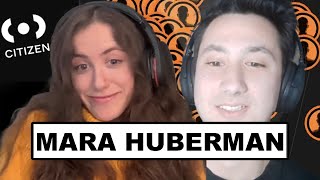
Mara Huberman, social media manager for Citizen, explains how raw, shocking content drives virality and keeps users safe. Her ropes-course TikTok hit 8 million views. She shares cross-platform strategies using CapCut and VidIQ, and how Citizen expanded to seven new cities through organic social and influencer partnerships.
Chapters
How do you grow on social media with shocking content? I talked to the queen of shock herself, Mara Huberman. Mara was the social media manager for New York Post. Now she's a social media manager at Citizen, where she spreads shocking content happening in cities all across the world, all in an effort to keep you safer and alert you of potential dangerous things happening. Mara is the queen of shock. She is the queen of going viral with crazy shocking content. And she also wrote a book, a very shocking book indeed, called 575. It is 575 raunchy, silly, very funny haikus. You're gonna hear some of them along with all of her tips, tricks, and tools for going viral and blowing up the internet. I hope you enjoy. This was a very fun conversation.
Mara, what's it like being the social media manager for Citizen?
It is honestly amazing and chaotic. It sounds pretty pretty much what you think it would be. I am 24/7 in the know of everything that's going on. And so a lot of good, a lot of bad, honestly, mostly like bad, crazy stuff. And then it's my job to make sure that you see it and you get inspired to download Citizen and actually get the notifications in real time, participate on Citizen, go live and so on and so forth. I've— today actually marks exactly my 6th month of being at the company, and it's genuinely been a crazy time. I will say like my first week there were these crazy floods that was happening in New York City at the end of September in 2023. And my— literally that Friday we got over a million views on TikTok. Which had never been done before. So it was like really start, starting strong, like coming in, hitting a million in the first week, and then genuinely has just skyrocketed since there.
That's amazing. I remember we were hanging out and you were scrolling through the Instagram showing me some of the greatest hits, let's say, uh, really like the worst things possible. But what kind of What kind of things do you find works well on social media? Why is it that the chaos, why do we love it?
Yeah, we love shocking content. I think it goes back to, if you think about early days of the internet, what struck gold other than children and puppies were these like crazy shock content videos. Obviously children, like funny children and cute puppies like still reign supreme on the internet, but then you have the Tosh.0 types stuff where it's crazy, it's shocking, your jaw's on the floor. There's all these different things going on. And it's all— and what's great about Citizen is that it's all real. This is all live video. Nothing's doctored. There's no AI component. There's no editing component that makes it CGI or fake and whatever reason. So I think if you go back to like when the internet first started, other than like videos of children being silly and adorable puppies, like the other bread and butter was just like crazy videos that are like, for lack of a better word, shocking. Like think about Tosh.0, think about Ridiculousness, like all of those shows really fed off of this shocking content. And it's either stupid stuff or like actual real stuff that happens. And that's where Citizen comes in, where it's all captured live on Citizen Cam within our app. So nothing is doctored. There's no AI, there's no CGI. Everything is real and captured by a person either narrating or just shooting that happens to be nearby this incident. And there's an element of that authenticity that also really strikes especially in the post-perfect Instagram era that we live in today where everything doesn't have to be all doctored and nice. Like any posting in real time works, at least that's from, that's our biggest strategy at the moment. And really just when your jaw is on the floor, you want to share it. You're like, you gotta see this. Can you believe this happened? And that really plays into social media and in all the different algorithms of these platforms, because sharing is like the key sign of engaging content. And so the more something gets shared, the more it gets pushed out into the algorithm and the, the more the view count, the more the followers, all of it follows. I think what's interesting. About shocking content is so raw. And I think people can feel like they were there. And so I think there's that type of like relatability or it's, oh my God, what if this happened to me kind of scenario?
Yeah, that's what I was trying to do with Subway Reader, which was like, it looks like a Snapchat, right? It just looked like somebody was just there taking a Snapchat. And that's a lot of what Citizen really feels like, is that it's just some kid on the bus taking a snapshot. And I think, like you said, everything feels so over-filtered a lot of the time on Instagram, on TikTok. And really the, I feel like the Zoomers, especially the youngsters, really just love the unfiltered kind of just raw stuff. And it's really been, this whole thing has really been changing my thought process around content. People want authenticity, and as AI becomes even more and more everywhere, we're gonna want authenticity more and more.
So I completely agree. And I will say I, not doctoring it, but I actually had an early days experience on TikTok where I went viral for shocking, literally for shocking content. There was a video I titled it, this is, and humor comes into play so so much. I titled the video Teen Girls Get Slammed. With that, what you will. It was me and a girl from my high school, and we were on a ropes course. The, the adult facilitating the ropes course left a ladder, and we swung into the ladder, and it hit me directly in like my lower back. And you can— in the video, you can hear me cry on impact. But then it's like the perfect comedy sketch because there's actually a button to it. After we swing back and we hit the guy and he like dives headfirst into the ladder and broke his finger. And it was like this whole like total shitstorm of events captured on camera, just so happened to be captured on camera. Like literally the Spanish teacher was just excited that we were going up. And so she started filming and years later, friends of mine were like, Mara, You actually, funny enough, when this, when I first got this video, I put it on YouTube and it got like a decent amount of views on YouTube. I acquired like probably 1,000 subscribers from this video, but I was not trying to become a YouTuber by any means. Years later, I am actually working at Comedy Central and a girlfriend of mine says, Mara, you gotta put this on TikTok. This is November of 2019. So TikTok was already like big in China, but not where, no nowhere near big in America because it wasn't COVID yet. And I put it on, it has at this moment of time around like 8 million views. I acquired 35 million followers off of one video. I'm working at Comedy Central. I'm just like sitting back in my chair, oh my God, this is crazy.
Did you say 35 million or—
No, no, 35,000. Sorry. Okay. 35,000 followers. Excuse me, 35,000 followers. I'm sitting back in my chair like, what is happening? This assistant behind me is like, you should quit your job and become a TikToker. I was like, honestly, like, where is my celebrity web redemption from Tosh.0? I like really threw my hat in the ring for that and I never got it. So unfortunate.
That's still incredible and great title. Honestly, fantastic.
Thank you. But so exactly. And so humor plays a lot. And so I think at Citizen, obviously we have to toe the line. Between being funny and being newsworthy and being serious and being heartfelt because there's so many different emotions. There's man wielding axe at Popeyes. And it's okay, you can make a joke, like you can go like WorldStar on it or you can just let it be and let other people make a joke. And I think that's the approach that we're taking at the moment where it's not like you'll find these incidents and there will be humor baked into the copy, but it won't be so overt. And I think that subtle cleverness really shines, at least with certain audiences.
Wait, with the axe one, because lowkey, my fiancée texted me last week saying, hey, I just saw a dude with an axe on the subway.
Literally, that happens probably twice a week. We have a fan on Twitter who will retweet, or she'll post all of the like axe type or like wielding machete type posts on Twitter. And she's in what I know, I know who she is just on Twitter. She goes, meanwhile in Los Angeles, dot like man wielding axe on Liberia.
So she's just the guy who like everywhere around the world, she is just showing off people with machetes and axes. That's—
There's a niche for everything. She's keeping her audience informed with the important stuff.
I wonder if she like sells machetes on the low key, like this is her marketing plan.
She actually just has She has a knife sharpening shop.
Yo, honestly, really smart. Great way to get people in who need sharp machetes. Where do you even buy a machete? I wouldn't even know.
That's the biggest question. I honestly think— I wonder what they constitute as a machete. I don't think it's necessarily— it might just be like a large knife.
Yeah, I'm not sure if a sword is actually the podcast before this for listeners was a guy who makes sells swords on the internet. That is his job. He like, it's over 8 figures selling swords on the internet. And so they were banned.
Are they like real swords or like cosplay swords?
Samurais, katanas, samurai swords.
That's sick.
So they are wild swords and it's like they were banned as weapons from advertising. So he started a TikTok and grew it super, super well and YouTube. And it's the same thing. It's like shocking content. Who, the dude like cuts stuff with his swords and boom.
But yeah, honestly, if he did just the first thing that went into my mind was like Fruit Ninja. If he was just like Fruit Ninja IRL with his swords, that's sick.
Yeah. The dude has done everything. 9 million YouTube subs, crazy TikTok, insane.
That's interesting. Like when you talk about YouTube, I used to run, so like my back, I have a bit of a background in news, in news and social. I ran the New York Post YouTube account for about a year and a half or so, and I really helped to grow that. Them. And what was crazy, it was the same, it's similar to Citizen. It was just like the most shocking content on YouTube was the bread and butter. It was like the number one video week over week. It ended up, I like the last time I checked it had 33 million views like over its lifetime, or no, excuse me, 300 million views over its lifetime. It's like these lions mauling an elephant, and that just got a ton of views. And then that— this is back in 2022, I believe, or 2021. Jan— call it January '22. The algorithm changed, and they— and YouTube started doxing content that they deemed like unsafe or 18+. And so all of a sudden our like month over month, like double digit percent increases in revenue dropped because our videos weren't getting shown, the ads weren't being shown on the videos. Like it's crazy how much money you can make on YouTube. And so when I came to Citizen, I was like, why is there not a YouTube? And so that was one of the first things. So listeners, if you're listening, and you're a fan of mine, or at least laughed a little bit at something I said, please subscribe to Citizen YouTube because we need the subs. It started in October and now we're almost at 2,000, but it's a long road and YouTube changed their monetization strategy, which like benefits normal creators, which is good, but it's challenging as a brand.
What advice would you have for other brands or creators on monetizing on YouTube?
I think the biggest thing for creators is Shorts. It's so much easier to monetize once you hit that 3 million Shorts mark. So basically the backtrack is you have, you used to have 1,000 subs and 4,000 watch hours. So like boom, we hit that goal a little like back in January for Citizen, but now the, now it's shifted. So you can either have 500 subs and 4,000 watch hours in regular videos or 3 million video views in a 90-day period on Shorts. So if you're a creator who's on YouTube, the biggest thing is to cross-promote your YouTube on every single platform. So linking out to Facebook, if you use Facebook, even if you don't, still link out. I swear, like there are people, like there are still views to be had on Facebook, Instagram links, Twitter links, reshare all the content. Make sure you either have a Linktree or a Later link in bio that has all of your socials in one. Do you have an email? If you have an email thread, whatever, be sure to tie in those YouTube videos, post them on LinkedIn, whatever, so that once it gets the viewership and the subs involved, that's— then you're— then you can excel from there. There's a lot of different YouTube tips. Tips and tricks that like any digital marketer will tell you other than what I'm saying, which is be consistent, make sure your thumbnails are optimized. Like metadata is actually really important and I use vidIQ. I think that's a really helpful tool. There's even a free version where you can type in keywords for the metadata and if you're lazy, just go to ChatGPT. Like I have some of my coordinators that just like I give them a prompt and I'm like, put this prompt in, do our incident title and that, and have ChatGPT generate the metadata for you if you're in a time crunch, because even that is better than just having nothing. And there's a lot of ways that you can automate your metadata and automate your YouTube settings. I think really just keeping people on your channel for as long as possible is huge. Playlisting being one of them. And then of course, like trending audio for Shorts and being cool and clever and funny and authentic. And it's, it's interesting. So basically what we do all the time. Exactly.
It's like being cool and clever and funny.
Being cool and funny and hot. Because like, if you're not any of those things, then just try and be funny or at least like educational. I don't know. But that's my strategy.
Yeah.
The interesting thing is all of these platforms, it's effectively the same. There was a time where you needed to have different videos for every platform, but if you have success in a type of vertical on TikTok, there will also be that niche on YouTube. And if you wanna diversify your platforms just for your own sake of making your life hard and giving your audience different, like, I get it. If you're, if you want to give your audience different perspectives of who you are as a creator, that's fine. Like maybe long form on YouTube, but YouTube's investing in short form. And of course now TikTok and Instagram are investing in long form. It's all the same thing. Repurposing content is such a huge tool in your toolbox because then you don't have to be as original every fucking time.
Yeah, absolutely. So when I was growing Subway Reader, my Instagram, now it's just I am Jason Levin. Subway Reader is dead. Rest in peace, Subway Reader. Because now the National Guard are on the subway and it's just not worth it. So. I'm gonna start posting funny videos myself without me riding on the subway. But it was a great hack to grow my Instagram now at 16K. So thank you, Subway Reader. But I used this tool called repurpose.io and it would just, I'd post on Instagram, then it would get repurposed to TikTok and YouTube Shorts. I wouldn't have to check 'em. It, it did it all for me and that way I could edit natively in Instagram. And I hate TikTok. I hate. Using it. I just thought it was a time suck. So there were multiple times where I was going super viral on TikTok. I didn't know for 2 or 3 days because I just didn't have notifications. I didn't check the app. And that is the ideal experience as a creator is to be chilling by the pool with your family or whatever. And then you just open your phone. Oh, I went viral.
Cool.
Like when that video, the fight video of me on the subway was going viral. I had no idea for like days. It was I just forgot, you know, that's awesome.
Shout out repurpose.io. Yeah.
Shout out repurpose.io. It's fantastic tool, but that's really helpful stuff to know because I am growing my YouTube. So I've got my YouTube as well as I'm actually just joining Product Hunt now as the head of growth and then also advising a few other startups, but going full-time at Product Hunt as head of growth and leaving the YouTube and Twitter. And something we're thinking a lot about is the same as you, is like video is now the universal language. Twitter is going to video first as well. And so we're doing daily product videos, trying to make them as funny, goofy, crazy products, like you're saying, shocking. And then also just posting that everywhere, right? Videos are universal. It is beautiful as a writer. I was a little, I was like, I, I do love the text of it. Like I love text is universal, but video is, you could do so much. It's crazy. It could be everywhere. It could be on Twitter, LinkedIn, Instagram, YouTube, Facebook. For my mom to see. It's amazing. I love video. I'm falling in love with the video form. That's what I have to say here.
It's awesome. I know you mentioned briefly that you dislike TikTok and editing within TikTok. I agree, editing within TikTok is such a pain. But what I find the best video editing tool is actually owned by TikTok. It's called CapCut. I do everything in CapCut, even for Instagram. And then what I've found, but maybe this is a question for repurpose.io users like yourself. It's just, I find that I have to edit a video in TikTok, like edit a video in CapCut without subtitles, put it into Instagram with the Instagram native things, put it into TikTok and doctor it up for TikTok native subtitles, captions, whatever, and then have it just go, have it be there. So that it doesn't, like it's native to the platform and gets recognized as native instead of like necessarily repurposed. I don't know if that actually helps or hurts or does anything.
It's all thesis in the head. It's all, it does, nobody really knows. When I was doing it, it was totally working just fine.
That's great.
I think it might be just in our heads sometimes, but I'm not sure. I, 'cause I agree, it's oh, if you natively edit it, it should be. Liked more or like it should, yeah, it should be upvoted more.
Yeah.
But who knows if that's really true and if it's good content regardless. Personally, like I was favoring Instagram, so I wanted to edit it natively in Instagram and then it would get posted everywhere.
And so it was like, yeah, I think it makes sense as long as you're, I'm like working with an editor right now and I'm like, as long as it's within the, the safe zones.
Yeah.
That's all that matters.
That makes sense. I really like what you're saying though about if you wanna make your life harder, go show different multiple sides of yourself because that is what I had been doing and struggling with was like I had the humor stuff only on Instagram. I had the serious stuff on Twitter, both on YouTube, and it's, oh my God, I was driving myself crazy. It's like figuring out, just keep it simple. Make dope videos, make funny, make serious. You could do both. And, and really thinking about it with the long term in mind. I also, I'm curious, I don't know if you're allowed to say, but New York Post, how much are those babies bringing in on YouTube or how much were they at the height of the New York Post?
This was a while ago. I'll ballpark. I can say percentages effectively when I started, it was a 600% year over year increase in revenue from year, like from the year prior to the year I was there, which like I took like that credit was really like, it was a lot of hard work, a lot of hours, a lot of real-time posting, optimizing, making everything look like beautiful and really growing those accounts. But they were, it was a healthy chunk of change, which hopefully I can also create for Citizen. It's a little bit harder at the moment just with the start, starting from scratch without any influencer help on YouTube. That being said, we do a lot of influencer help on Twitter. Which is awesome. I think working with influencers, especially underrated influencers is like underrated, meaning like people don't necessarily know who they are. They don't necessarily have millions of followers, but also are in markets that are quite different from your classic girly, girly pop who, who wants you to buy her, uh, Stanley Cup or whatever is incredibly helpful to our marketing strategy and especially our social strategy.
Understood. We're definitely experimenting with that for Product Hunt and starting to feature different influencers in both our videos as well as Twitter and everything. It's been fun. I'm curious, you wrote— oh yeah.
No, please, please.
Oh no, I'm just switching the topic. You wrote a book. A badass book that made me laugh super duper hard. It's called 575. Everybody should check it out. Where can people find it? It is—
thank you. It is on Amazon. It's so funny. I'm actually in the process of a move right now and I was like, I need to bring a book. Like, I, I need to show off 575. This is actually a project I wrote with my old roommate. We were sophomores in college and it just stemmed one night from a, we were talking about lifetime goals. A lifetime goal of mine was to write a coffee table book. And I was like, you know what would be funny? Writing 575 haikus, given the format is 5 syllables, 7 syllables, 5 syllables. And my roommate sitting next to me, she's a fantastic illustrator. And she's, oh, amazing. Why don't I illustrate that? And it's a done deal. I was like, Okay, perfect. Like absolutely done deal. So here is, I'm also a sommelier, so a lot of wine content, but that's just like an excerpt of some haikus and a beautiful illustration.
Read some haikus because I couldn't stop laughing listening or reading some of these haikus when I got my hands on a book.
Why not? They're fairly irreverent haikus.
Good.
Yes, they are dirty. I actually, I need to send you this video. I'll post it on my Instagram. There is a video of a young girl. She's in a lobby of where my parents live. My parents have a book in their lobby. A young girl picks up the book and starts reading it, and her facial expression goes from this— shuts the book and runs away. It's so funny. I like it. Actually, that video, I love that video. I'll share it. Here's one of my favorites. It's called A Medieval Morning of a One Night Stand. Peekaboo, sweetheart. Hast thou awoken yet? Good. Then get the fuck out.
So good.
There's some that are just so college. Yeah, there's— I also love skiing. And so here's the illustration. It goes, not good at skiing? Get the fuck up. Skiing down the hill, hoping you don't fall on face. Realize you suck. Not good at skiing? Get the fuck out. I will do one more. This is actually— I won't do that one. Let's see. But they're all just irreverent. Oh, this one's so true. It's called Fears. Men and women share a mutual fear of one day becoming bald.
It is scary. Honestly, quite terrifying.
Yeah. I mean, they make a minoxidil pill for women too. Crazy.
Minoxidil. What the hell is that?
Yeah, the nice hair growth serum. All right, last one I will also do with wine.
All right, Miss Simone. Miss Somalian Pirate.
That's what I'm calling you.
Mara the Somalian Pirate.
Yeah. Argh.
Yo, that might be a good totally separate business is pirate. Yes. But like Somalian pirate, Somolier, like that is your, that's your niche just for pirate themed parties, right?
I have to get new business cards. Oh shit. I have my business. I have my Som business. It's called Som Fun. And I do corporate, like friends and corporate events. It's very fun. Honestly. This is the last one I'll read. It's called On a Date. Please give me more wine. My glass is empty and you're getting less funny.
I remember that one. Yeah, that hits. We've all been on those dates before, unfortunately.
Unfortunately.
All right.
Yeah.
I don't drink wine, but no, educate. The listeners. Why do they really taste different? Come on, they don't taste different. It's just different colors.
Nah. I mean, the different colors taste different, but even the same colors taste different. It's one of those things where it doesn't need to be highbrow, in my opinion. I think what I try and do is bring it down to a really low basic level. It's like, all right, You can categorize things in different ways. There's fruity notes, there's earthy notes. There's literally, you can say this tastes like grapes and that can be correct. There you go. I think my, one of my dad's friends has this great way to impress somebody when, when you're drinking wine with somebody who knows about wine, just pretend this is a wine glass. So first thing you do, you look at it, just, just give it, just, tilt it a little bit into the light and look at it. You're like, make it just an audible noise. Okay. And then you swirl it around and you smell it. And then you ponder for a moment. You go, there's a lot going on in there. And then you're like, there's a lot going on in there. Write this down. There's a lot going on in there. And then you take a sip. You don't have to do that, but it makes you seem a little bit more legit. And you go, hmm, that's good juice. That's all you have to do. It's all you have to do. And then people will be like, yeah, it is.
So if you're on a date with a girl, if you're listening to this, you know the process, the sniff, the there's a lot going on in there. That's good juice. It's the 3-step.
Exactly. 3-step wine tasting. That's all you gotta do. I think I actually developed a cheat sheet. That I honestly one day might sell. I think in order to get this cheat sheet, you have to hire me as sommelier. But this cheat sheet basically has literally everything you could possibly say to sound smart. It had like literally everything you could say. There's like what you can talk about with acidity and with tannins and with sweetness. And then there's also literally all of the different comparisons you can make, whether that be, ah, I get some strawberry and raspberry, which is under red fruit, whereas, oh, I get some tertiary notes like caramel and chestnut. And so it's like literally has, it's a cheat sheet for just like all the words. And if you just memorize the words, you can probably just plug and play.
I like it. I like it. I think my go-to would be like, that's a little earthy. Is that a thing?
There you go. It is a thing. Being earthy is totally a thing unless you're talking about like a young Pinot Noir and that's 1000% not gonna be earthy. Interesting.
Walk us through. Yeah. Walk us through the sommelier business. How much does it cost to hire someone like yourself? And then curious, what was the training like and where can people get this fricking cheat sheet? To sound smart on dates. I think this would be a bestseller.
So basically, answering a little bit back and forth, the process of becoming a SOM is not one that's that challenging. Honestly, I got into it literally during COVID I was living at home, super depressed. My dad was on this list of things I always wanted to accomplish with my life. Becoming a SOM was on it. And so my father was like, hey, Mara, let's go do this. I was like, done. Online course. We did it through the Wine and Spirits Education Trust. It's actually based in London, but they have schools all over the United States. I know there's one in New York. We actually, at the time I was living in Los Angeles and we did the one that's based in Las Vegas. And it was an online course where they send you a book. It costs around $500 to take. And then you have to have separate costs of like wine. And then they did really interesting activities where like you purchased tartic acid and like a tea bag. And basically that was an activity where you got to feel the tannins on your tongue and the acidity in your mouth and like where it hits, what low acidity, medium acidity, high acidity, low tannin, medium tannin, high tannin really means. So that's really interesting. And then the costs go up from there, from level 1 to level 2. I'm actually a level 3 sommelier. That was actually an in in-person course that I did in New York City. There was an online component and then two— it was a hybrid actually. So it was online component and then two in-person classes because there was a tasting portion of the exam. So it's a tasting portion and a written portion. And it was honestly very challenging. And then within WSET, like Wine and Spirits Education Trust, there's five levels. So after this Level 3, there's Level 4, which is diploma, which is another really big jump. And then 5, which is effectively like master sommelier. But at the moment I'm sticking with 3 for now. And then to answer the question of like, how does it— like people get into the sommelier business in a lot of different ways, mainly just working at restaurants, working at wineries, being— there's so many different facets to the industry, whether you are a person who gives tours at the winery or an actual winemaker. Like you don't have to be a wine— you don't have to be a sommelier to be a winemaker, but like it honestly, like it makes sense. There's like wine PR where I actually know a girl who's doing her WSET just so that she can be more knowledgeable while marketing wine. There's people at restaurants. I actually did my course with the head sommelier at Torrisi who wasn't even like a certified sommelier. He was just like within the industry and became a somm because he worked at a restaurant. I do private somm for hire is effectively like my niche. And so under my company Somm Fun, I have honestly what I'm what I'm going to do literally right after this is put my cheat sheet on my website, samphan.ai. And, and then you can probably download it for what, like $5, something like that. Sounds like a good price to sound super knowledgeable. And the last portion of your question is my, my Samphan, me, I do completely customizable like some experiences. So whether you want to have a party of 50 people at your office or like hire entertainment for a small get-together at a dinner or something like that, it's very customizable. I work hand in hand with you. If you have a chef, I work with the chef. All of the above.
That's amazing. I find it so interesting because I'm a coffee freak for sure. Although, cheers. You can find me usually just drinking cold brew by the gallon like a madman. But I really want, I wanna become a coffee, not a snob. I wanna become a coffee snob, but without the snob part.
I just wanna become a coffee aficionado.
Coffee aficionado. I like it. I like it. Yes, I do. And I went to a coffee bean thing in Costa Rica to see how the coffee was made and everything and learned that like light roasts are actually stronger than dark roasts because when you roast the bean, the caffeine comes out, right? And so it gets lighter or whatever it gets. Uh, the lighter beans are roasted longer or whatever. Yeah.
That's, no, that's so, yes, it's, yes, that is correct. Yes. Where are your favorite, where are your favorite beans from?
I don't know. See, I, I just don't even know, like cold brew.
Like, I want—
maybe I just become a cold brew snob. I'm not sure.
I mean, that— there's definitely a niche for that.
I think I'm lost. I think I'm, I think I'm lost in the coffee sauce.
I don't know. My favorite cold brew is that of Think Coffee. It always— it'll getcha. It's so good. Their beans are from Nicaragua, I believe. It's delicious.
Interesting. And so you're about to travel the world. Are you excited?
I'm so excited. So I, my fiancé and I are huge travel, like addicted to travel effectively. We counted last year, we went on 52 flights, so it's like effectively a flight a week. But next on Sunday, we're gonna relocate to London for a little bit. And I literally cannot wait. It's gonna be really nice. And then we're gonna become nomadic. So from there, probably be in the West Coast for the summer and go back, come back to New York in the fall and then maybe test out Texas or, or Miami. I don't know. So we'll see.
Amazing. I gotta say, like seeing all the shit that you see on Citizen and last weekend or last week had a thing with my fiancée where the whole Uber thing, it gets a little scarier being in New York. And do you— that doesn't have anything to do with it, I assume.
Honestly, it doesn't have anything to do with it, but it does impact parts. I'm not going to say seeing all of this impacts my mental health, but it does necessarily— it does impact my awareness. So for instance, I'm at a brunch the other day for my friend's birthday, and I get a notification on Citizen that goes, woman on subway, like, woman pushed on subway, severed two feet. It's— that is insane. And every— I— the subways right now are just actually— I don't know if it's that it's something new. I don't know if it's that there are an influx of people coming into New York, but the subways are actually quite dangerous. And it's one of those things where it's— I still take them twice a day, every day to get to and from, but I'm hyper alert. Like, I— if I'm wearing engagement ring, I'll turn it around, keep my hands in pockets, stand all the way back against the wall so that no one can push me. I just— it's pretty crazy. This week alone, there has been at least 7 subway casualties. Um, in the past—
7 casualties?
I've only seen one. That I'm aware of. There was a big one that happened last night in Harlem. It was interesting because 2 weeks ago there was one at Hoyt-Schreinerman Street. I'm not sure if I'm pronouncing that correctly. Street in Brooklyn. And I was going to go see my best friend's new apartment. And I was, I, and then we stopped at that stop and I was like, oh my God, I know this stop. And she's what? And I was like, I'm not like, you have to be here literally every day. I'm not gonna tell you. So it's just like small things like that that make you more aware, which is what Citizen is there for, to make you aware and informed so you can go about your life in a way that makes you safer is helpful, but it is nerve-wracking at the same time. But I will say I get notifications and I see what's going on Citizen every day, all day. And it's really helpful to many, like to, to people, especially in dangerous communities, just so that they know what's going on.
It's so helpful. My fiancée and I both have Citizen and love it. Was very happy to work with you on the quick little campaign we did and We use the app all the time. It's always terrifying to, like, I remember, so that day that I got on a fight, or the day that I got in a fight with somebody on the subway, as I get off the subway, I get a Citizen Alert that like somebody was shot, like in a similar place. I was like, oh, the guy just got mad, shot somebody? No, but all right, I guess I'm not gonna ride the subway back. It's just very helpful if you're living in a city. So if you're listening to this in New York. LA, we're at checkoutcitizen.
Yeah. And like right now we're actually expanding coverage to a bunch of places. So our next, we just expanded coverage to Austin, Houston, and Charlotte, North Carolina. And then on April, in April, we'll be expanding coverage to Cleveland, Cincinnati, Atlanta, and San Diego. And if you're in the US, you can use Citizen. It's a. Free app to download in the App Store. There's a lot of helpful tools. There's a sex offender map so you can see who's living near you. I think that's something that is like surprising and helpful, especially like I saw a tweet actually from somebody being like, thank God for Citizen App telling me about this registered offender. I noticed this guy was being weirdly nice to me. Like this guy was being creepy and weird. In the laundry room. And then I get an alert that there's a sex offender in my building and it was him. So now I know to like probably avoid this person.
Yeah, that— oh man, crazy.
Did you end up— did you watch the Nickelodeon documentary? No, no, that is— I highly recommend if you were like me and loved Drake and Josh and The Amanda Show. Like, it's a very eye-opening documentary.
Yeah, dark.
Yeah, so dark.
Very sad.
Um, yeah, but there's also good things in the app too. Sorry, before— I'm like, before the last thing, which I know like really could have helped the situation that you experienced this weekend, is there's 24/7 agents on the phone who can help you navigate any emergency situation or like safety situation if you're feeling unsafe. For instance, there was somebody— this was in Compton Somebody was really paranoid that there was going to be a drive-by shooting happen— happening at their home. And so they connected with a safety agent and stayed on the line and made sure that this person was protected and safe the entire, like, for effectively the entire day, like repeated check-ins, like making sure things are okay. And so it's just like a nice, it's a safety net for sure. Wow.
That is really incredible. I'm curious, how do you, how are you thinking about rolling out to many cities? I'm speaking in a couple weeks actually with Emil Michael, who was the COO of Uber when they were rolling out into China, Italy, et cetera. And I've heard him previously say that the hardest place for Uber was actually Italy because of the mafia. I was like, whoa, because they all control the taxis. So I'm curious, is it all guerrilla marketing or how do you get the word out about Citizen or how do, how? Listeners get the word out about a new app when they're launching in new cities potentially?
Yeah, I think we have, luckily we don't have to deal with the mafia. I think that's the first and foremost. Glad we're not dealing with mafia folk right now. We got the IOC though. Right now we're just in the US. And this is actually almost like a re-rolling out. So these markets have experienced coverage in the past, which actually makes my job so slightly easier because it's not like we're back, but it's effectively expect more notifications from us because we're covering you again. And so we're able to retarget our users in a way, like our, the people who already have downloaded Citizen in the past by sending them a notification. We are also doing email marketing to existing users, encouraging people to share with their family, encouraging existing users to share with their family members in these family members and friends in these cities. There's, we're doing blog posts, we're doing paid ads on Twitter. We're also using some influencer ads, but effectively like the main value add of Citizen is it work, or not necessarily value add, but like Citizen works regardless of where you are in the United States. So you can download it and you can experience certain features, but when we reroll out, you'll just get more like safety alerts that are really present to you. Our marketing strategy is that it is like, is very just like organic social media arm, paid social media arm, influencer arm, in-app targeting, in-app retargeting via email, and then hopefully like potentially doing some stunts within the city.
Interesting. So a lot of ads and retargeting. I think you showed me, or I saw the ad dashboard that you had open for Twitter. You guys are one of the few brands I think that are having success in Twitter ads. I see a lot of people complaining. So what's been some tricks? Why is Twitter working? Are you bullish on the future of advertising on Twitter or X or whatever the hell it's called these days?
Yeah, I honestly am. I am bullish on X advertising given that they're heavily pushing it across like with internally. So for instance, there you can buy pre-roll ads on a MrBeast video. They're real. They're having this whole like X News spinoff where you can effectively buy ads that get shown to non-premium subscribers of X. Which I think it's just interesting that they're like going that route. I think we're doing app install campaigns and our CPI for an app install campaign is so low. And I think the success of that is we're doing incredibly general campaigns. So like that's the nature of our product is that we're not hyper-targeted. We are literally for every single US citizen. That's it. And so there's not an age limit, there's not a gender, there's like everyone in the US should be aware and informed. And if you have a cell phone, that's all you need to get Citizen. And so what's interesting is we did a little bit of testing, just like Android via iOS and like effectively our Twitter ad partner was like we tried it, we tried doing Android. Our CPI was like $30. We're like, all right, screw Android. We're going to focus all our attention on iOS. And they were like, yeah, that's definitely the right thing to do. Our ads are all one by one. They are shocking content or like live action video. We did run static ads. They don't perform nearly as well. Video, like we said before, is king at the moment. And I think will be interesting to see is how like AI video will play into the creation of ads. You already see that happening a bit. I don't know, I was in the subway to get back to my apartment and I saw this ad from, I wanna say it was apartments.com or something. It was like about breaking a lease or like getting a mortgage. It was effectively this campaign. I think it was StreetEasy. It was a StreetEasy campaign. And it looked like AI.
Maybe it was.
I honestly think it could have been. And it was like AI image with pithy copy that was like millennial targeted. That's one thing that we actually find a lot of success on for Twitter in particular is working with Gen Z influencers. And I think that's definitely a, a really good place to, to start with influencer marketing, given that they're so native to every platform and that they are used to, like, I think the key is to make it not look like an ad, but if you work with Gen Z style influencers, that has shown a lot of success for us.
That's fascinating. Advertising right now is all, don't make it look like an ad. Which is what I talk about in my book, Memes Make Millions, is all about all these memes are marketing. Not all of them, but a lot of memes are just marketing. Whether it's marketing for your page, marketing for a brand, whatever. Memes are the magic. They are the best marketing cuz you're not expecting it.
Um, it's so true. Yeah.
One last thing. Yeah. AI videos for Citizen are gonna be crazy. There is a photo going viral on Twitter right now of a Cybertruck crashed, and it was fake, and it looks very, very real. And it's wild.
That I would love to see that. We actually recently put— please do. We recently posted a Cybertruck actually did in real life crash in Beverly Hills. And that was interesting because it actually got picked up by the LA Times. Front page. That's so insane.
Is that the one into that like hotel or some shit?
Yeah. That Beverly Hills hotel.
That was so funny. That was, oh, you deserve that, man. Yo, sober up.
No, crazy.
Wild. This has been sick. I guess one last question is just any more tools, any more crazy apps that you use? You already dropped, I think it was called vidIQ. Yes.
VidIQ. VidIQ for YouTube. These are all, this is not an ad. This is not an advertisement. This is just my recommendations. Recommendations. I'm not being paid by these tools. vidIQ is awesome. Meltwater is great for social listening. I know some people like TweetDeck. I think Meltwater, you have the Boolean formulas and you can just like literally it aggregates everything from the online. When I was at Showtime, we would do like weekly recaps of all of our television shows and do like really in-depth listening and like try and figure out the themes of what people were talking about so that we could lean in. And either capitalize that with that on our marketing or even like it would influence like future seasons of a show.
Don't they do that with Love is Blind and all that stuff?
Or Love Island? Every smart marketer will do that. Like you want— every smart marketer should be listening to what their end user says and try and incorporate that. We do that at Citizen too. Like I see all these tweets Being like, hey, what, what if it was like this? Or, oh, can we have our— I, there'll be tweets that are like, we like the old UX more. Okay, let's actually think about what it would mean to go back to the previous UX and like how we could make that better. I think taking customer feedback into as serious consideration as necessary for to grow. If you're not listening to your audience, then you're just your own echo chamber of, and either not making people happy or not making people as happy as they could be. So it's like a very important for innovation and growth. That being said, Meltwater is an awesome tool for social listening in particular. And then CapCut for video editing, Canva for all the people who don't know how to use Adobe Photoshop like myself. And then I think there's, it's still in beta right now, but I have a friend I went to Hebrew school with, reached out to me and had me test his tool. It's called Trendy.ai and basically it just capitalizes on all the trends on TikTok. And so it's pretty much just like a funnel that will show you all the all the trending video in your niche using your hashtags, shows like A/B comparisons of what performed better than this other video. It's very interesting. I don't know what stage it's at right now, but that was super cool. Wow.
Pulling back those Hebrew school connections.
Nice. Seriously, let's go. You never know. Everyone's important. You never know who you're going to want to keep in your life. In a second.
I was thinking about that earlier. It's, you can never have too many connections, really.
It's true.
Like Facebook's at a limit of 5,000. Nah, you can have more.
You can make more. There's always 500+ on LinkedIn. They don't need to know how many more is the plus.
True. This has been awesome. I really, I learned some sick tools, so I appreciate that. I can't wait to test them out.
Same here. Same here with your tool. I'm excited to learn, learn more.
Cool. All right. Thanks, Jason Levin.
It was great talking with you.








